
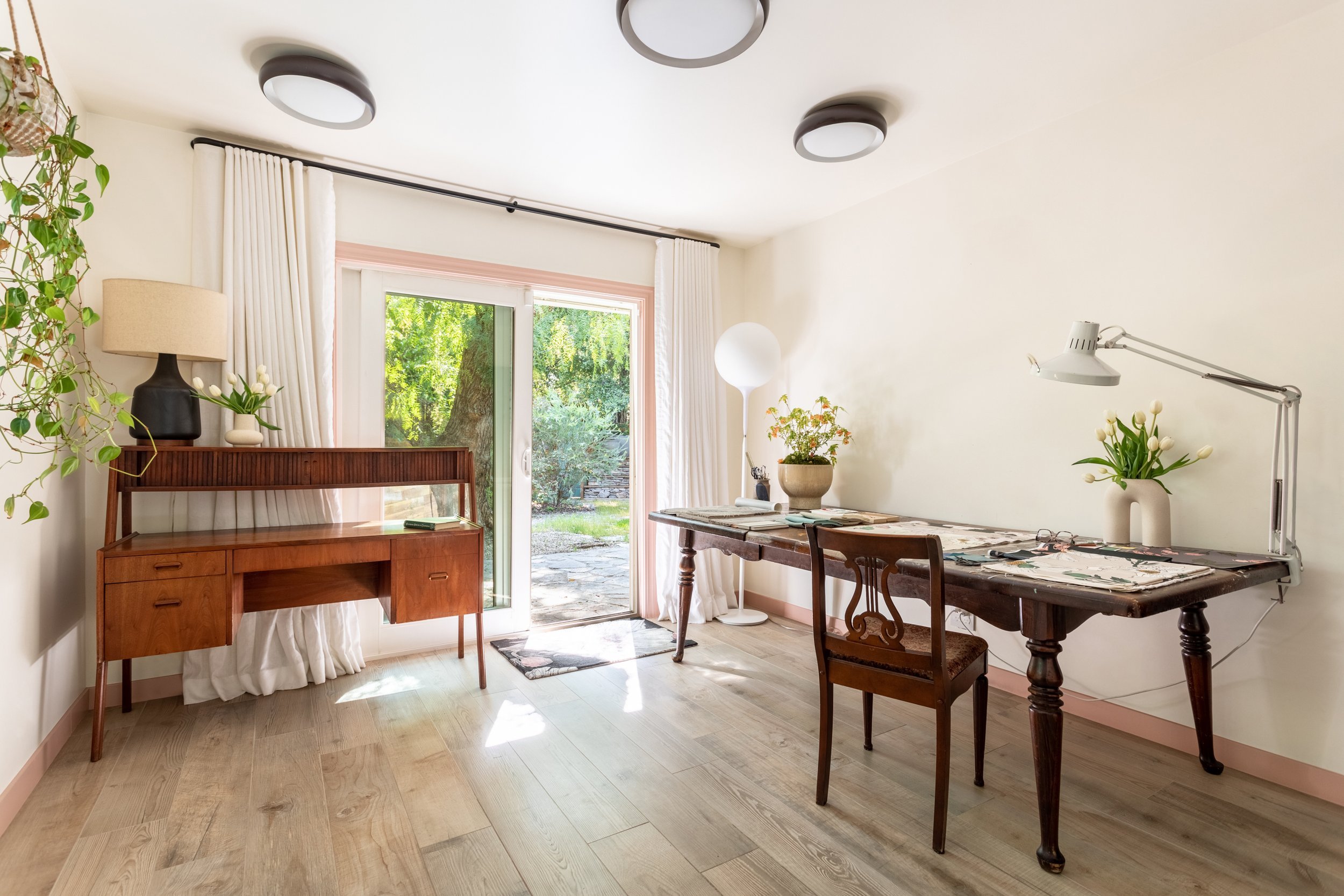
INTERIOR DESIGN FOR PEOPLE WITH ADHD
Sarah Barnard’s approach to designing for people with ADHD is rooted in empathy and wellness, focusing on how the built environment can support cognitive ease. By utilizing trauma-informed practices and neuroinclusive design, the studio aims to create healing spaces that serve as supportive partners in daily life, minimizing environmental stressors while maximizing personal strengths.
Executive Function and Spatial Flow
Predictable and Intuitive Layouts: Clear, unobstructed pathways and organized spatial planning to help reduce visual noise and cognitive load.
Functional Zoning: Clearly defined zones for specific activities like high-focus work vs. restorative downtime to assist with daily transitions and focus.
Energy-Optimized Design: Furniture plans that help to reduce friction in daily routines, even during periods of low energy or overwhelm.
Visible Organization: Implementing custom storage solutions that prioritize visibility, such as open shelving or glass-front cabinetry, to reduce the out-of-sight, out of mind challenge.
Sensory Regulation and Focus
Acoustic Softening: High-performance sound-absorbing textiles and specialized insulation help to minimize distracting echoes or sudden noises.
Circadian Lighting Support: Programmable lighting systems that mimic natural daylight cycles to help stabilize sleep-wake cycles and promote alertness during the day.
Layered and Dimmable Lighting: Providing a range of customizable lighting options, from soft ambient light to focused task lighting, enables users to adjust their environment based on the specific task at hand.
Biophilic Stress Reduction: Integrating natural elements such as indoor plants, organic materials, and views of nature helps to provide a grounding, restorative atmosphere.
Adaptability and Environmental Control
Smart Home Empowerment: Discreetly integrating voice-activated technology for lighting, climate, and security. This allows hands-free, screen-free interaction with the home, helping reduce reliance on complex control panels or text-heavy interfaces.
Tactile Grounding: Incorporating high-quality, natural textiles with varied textures to provide a grounding physical experience and serve as subtle markers for different functional zones.
Visual Clarity: Utilizing matte finishes and soothing color stories to help reduce reflective glare and visual overstimulation.
Advocacy and Collaboration
Intermediary Services: The studio acts as a liaison with contractors and craftspeople to communicate the specific sensory and functional requirements of the design throughout the construction process.
Collaborative Site Visits: Scheduling meetings and site visits around the client’s routine to help facilitate a low-stress, supportive environment during the decision-making process.
Supportive Home Organization: The design team provides organization services for kitchens, bathrooms, closets, home offices, and children’s bedrooms or playrooms. We work collaboratively to implement intuitive, sustainable systems designed to help reduce the energy required for tidying and locating items.