

Hummingbird Hill: The Art of Inclusive Design
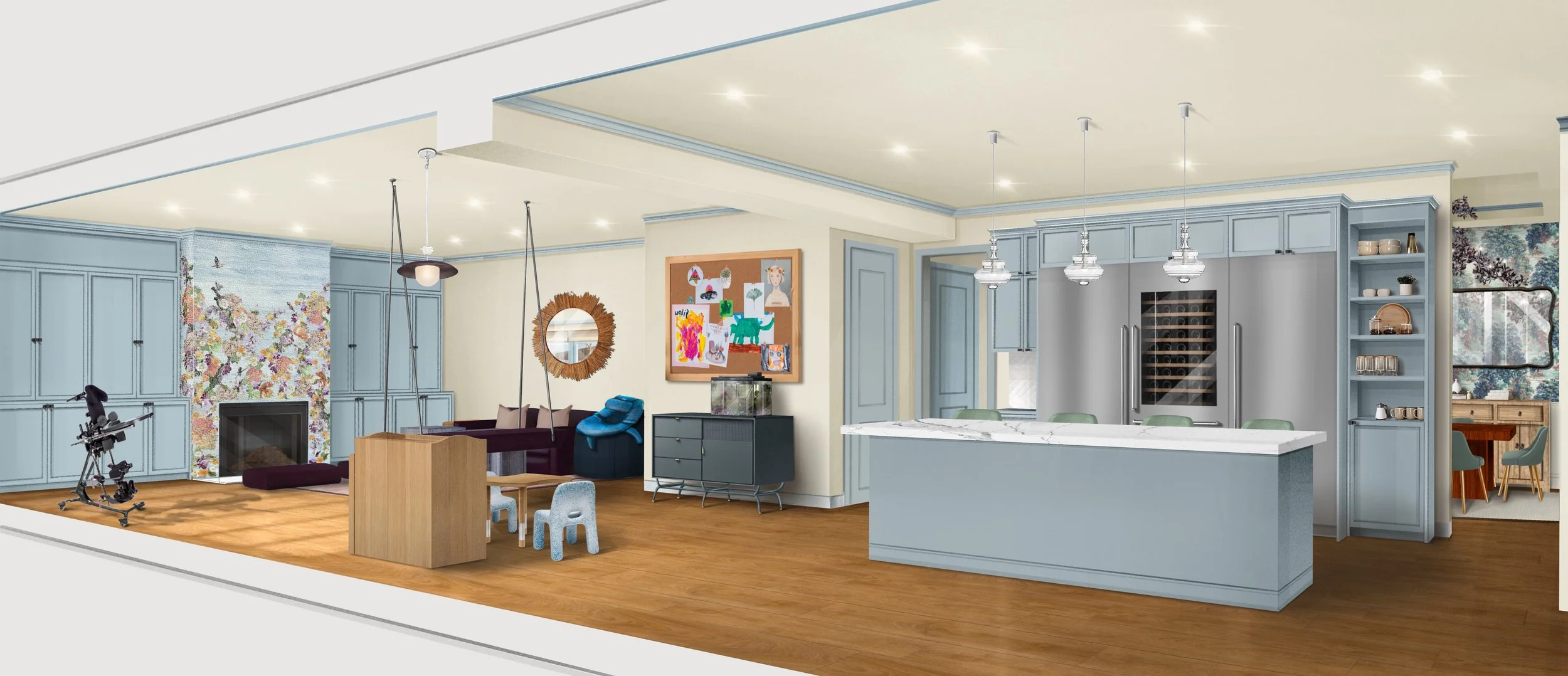
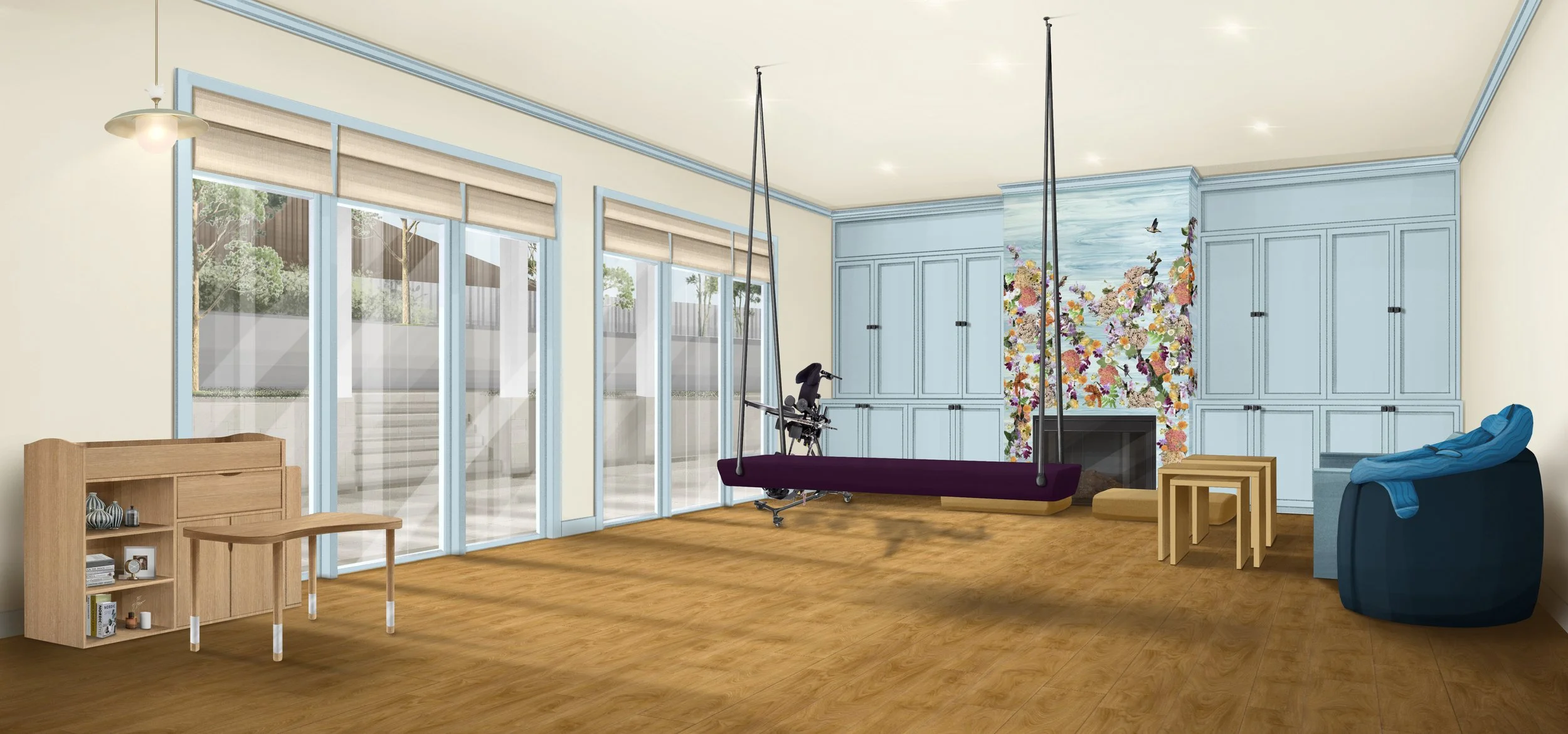
Conceived as a joyful, multi-functional sanctuary, the residential narrative begins in this vibrant family room engineered to balance creative play with therapeutic support. A plum-colored tulip pendant light illuminates a dedicated children's art table paired with eco-friendly chairs crafted from upcycled toys, sitting adjacent to a custom blue storage console and an expansive pinboard gallery. The comprehensive interior design plan natively integrates specialized pediatric mobility equipment, featuring a dedicated zone that seamlessly accommodates the user's stander within the active family environment. Overhead, a structurally reinforced ceiling securely anchors a therapeutic swing upholstered in outdoor-rated velvet. Fluid, safe travel across the room is assisted by an exceptionally flat, washable area rug.
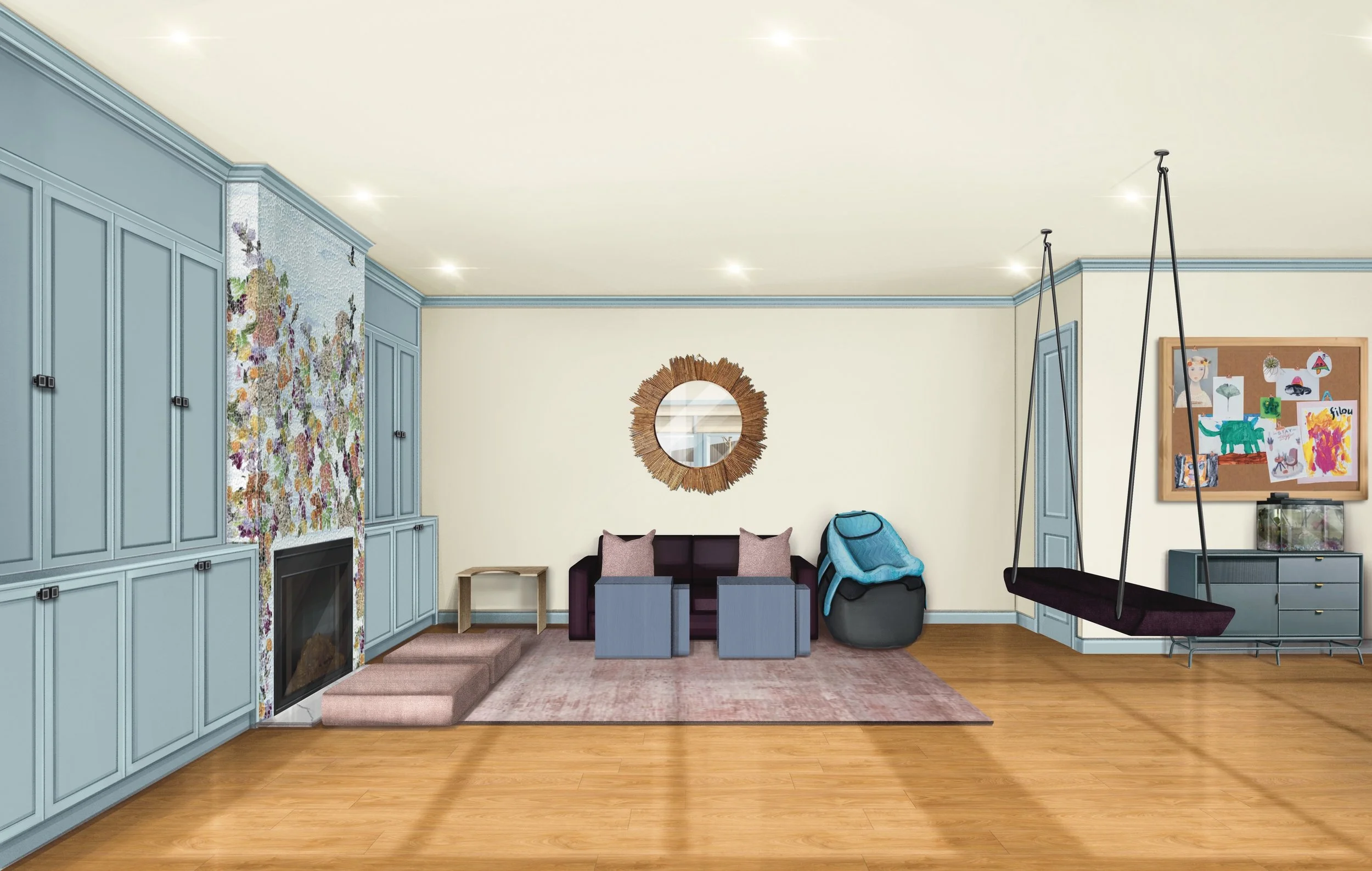
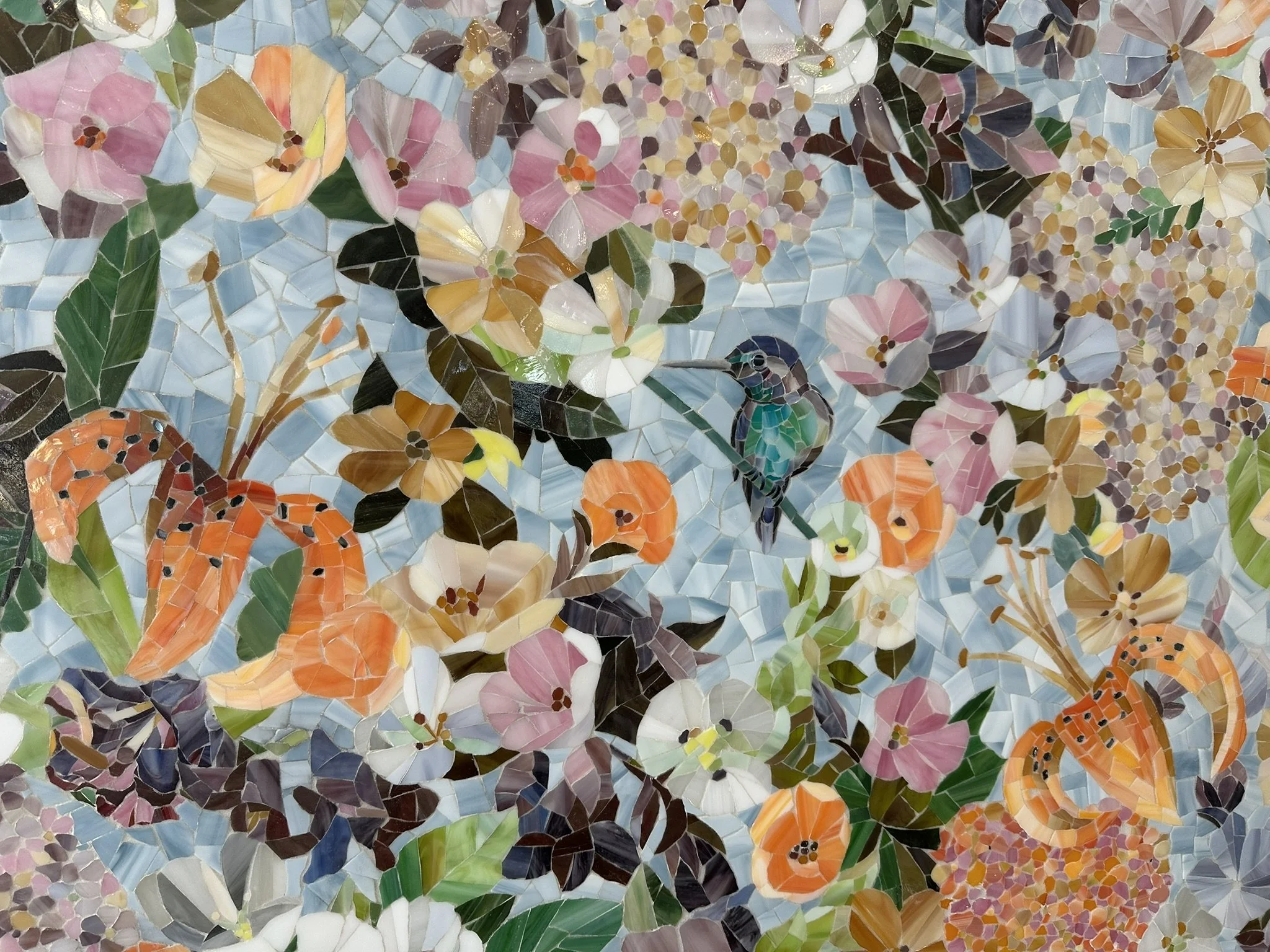
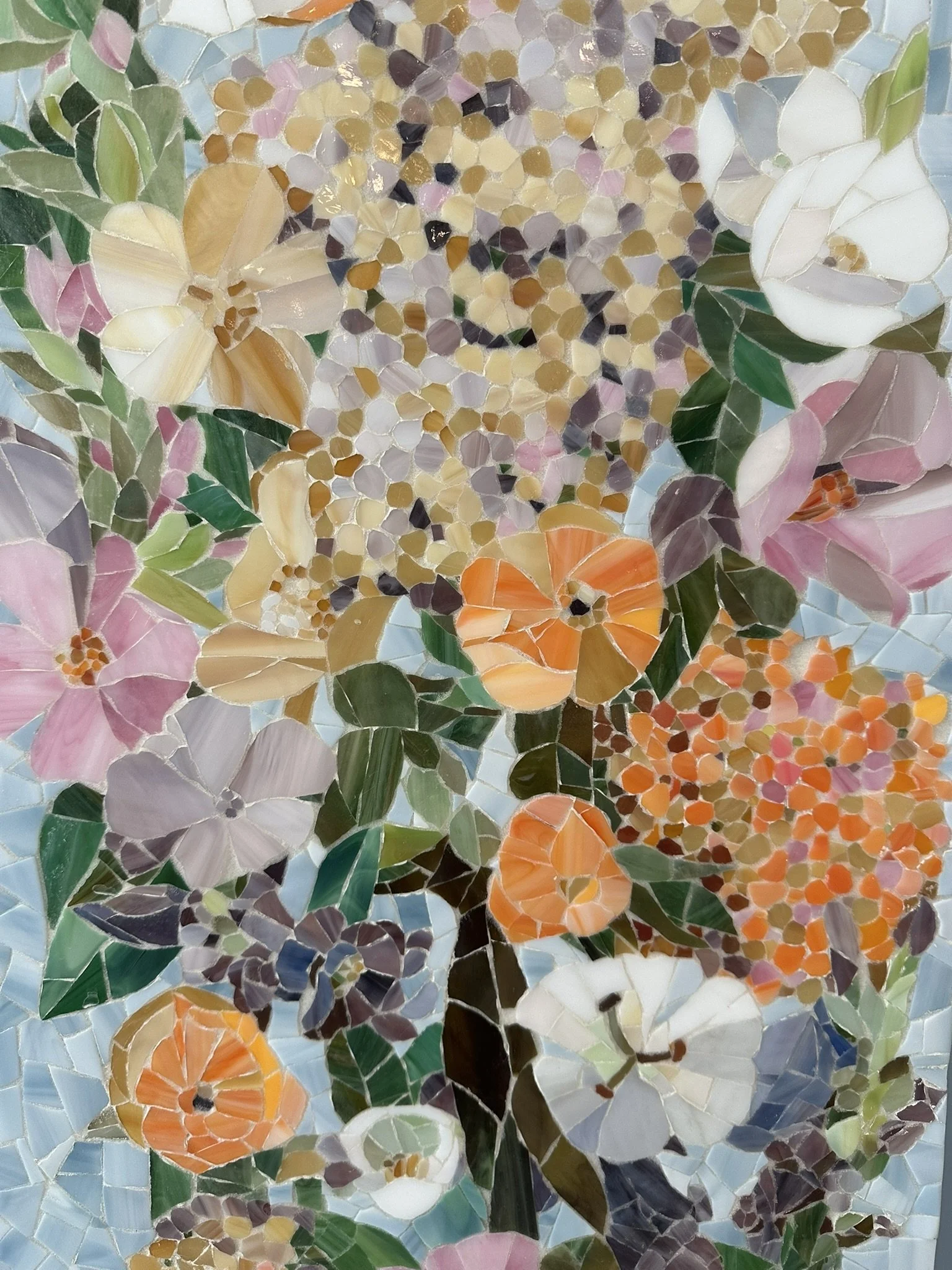
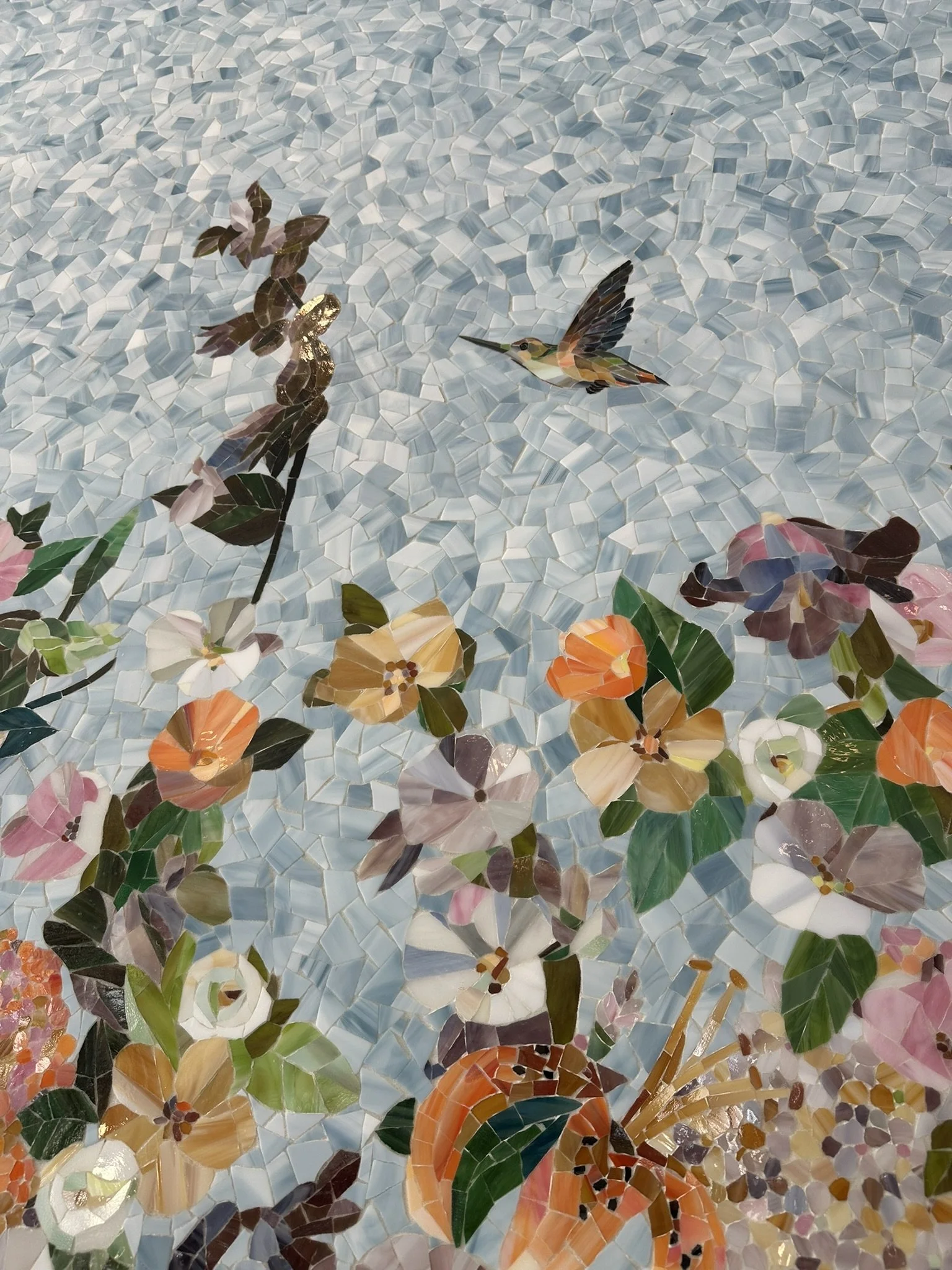
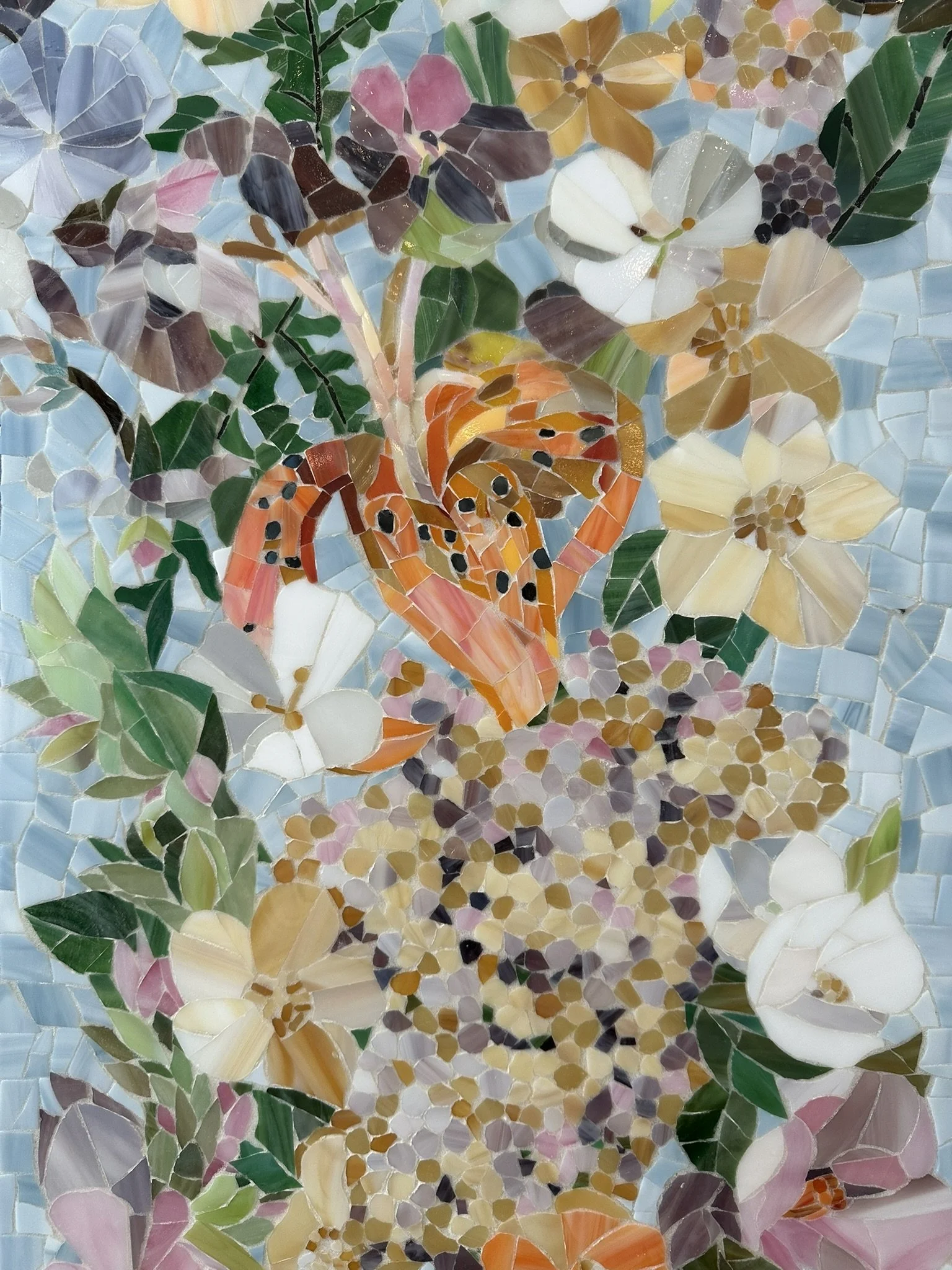
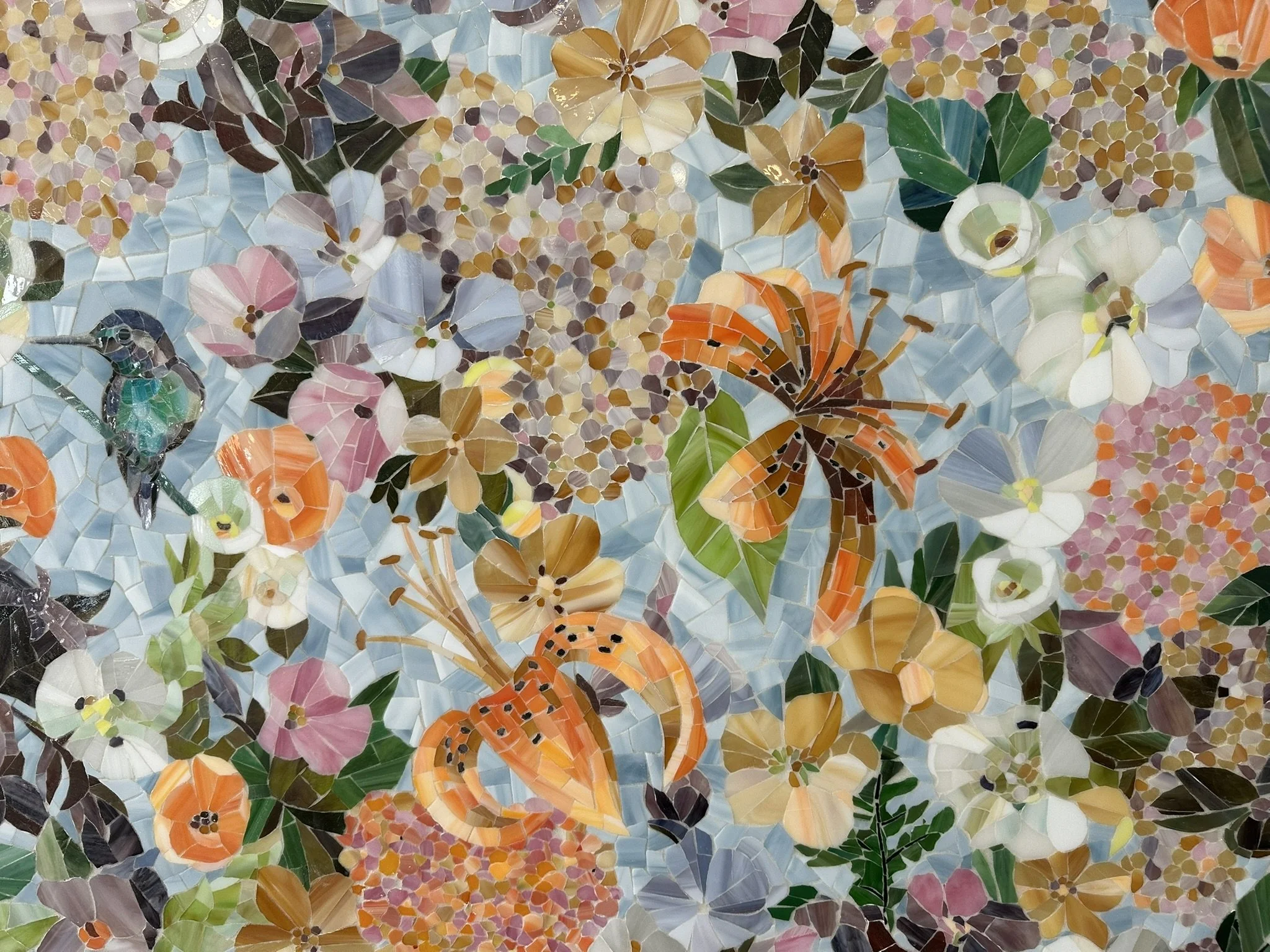
This perspective features the room’s deeper connection to the natural world, anchored by a vintage sunburst mirror hanging above a family sofa reupholstered in a high-performance, easy-to-clean textile. The true focal point is a magnificent, one-of-a-kind fine-art mosaic mural celebrating regional California wildlife, intricately depicting Curly Herissantia, Cambria Bush mallow, Salmon Beauty Yarrow, Palmer's Indian Mallow, Humboldt's Lily, Golden back Fern, and Allen's Hummingbird. A specialized postural support beanbag system rests nearby, providing a comfortable, supportive environment. Mirroring the home's pet-inclusive philosophy, custom dog beds crafted from coordinating textiles ensure companion animals are warmly welcomed in this shared oasis. The layout balances a warm, traditional aesthetic with a footprint built for long-term durability.
This detailed view highlights the meticulous artistry of the custom mosaic mural, bringing the vibrant ecosystem of California's flora and fauna directly into the home's interior. The design beautifully showcases the delicate textures of native species like Humboldt's Lily and Palmer's Indian Mallow, offering a highly tactile and visual experience for family members. This artwork exemplifies the project's core philosophy of naturalist glamour, connecting therapeutic, accessible spaces to fine art.
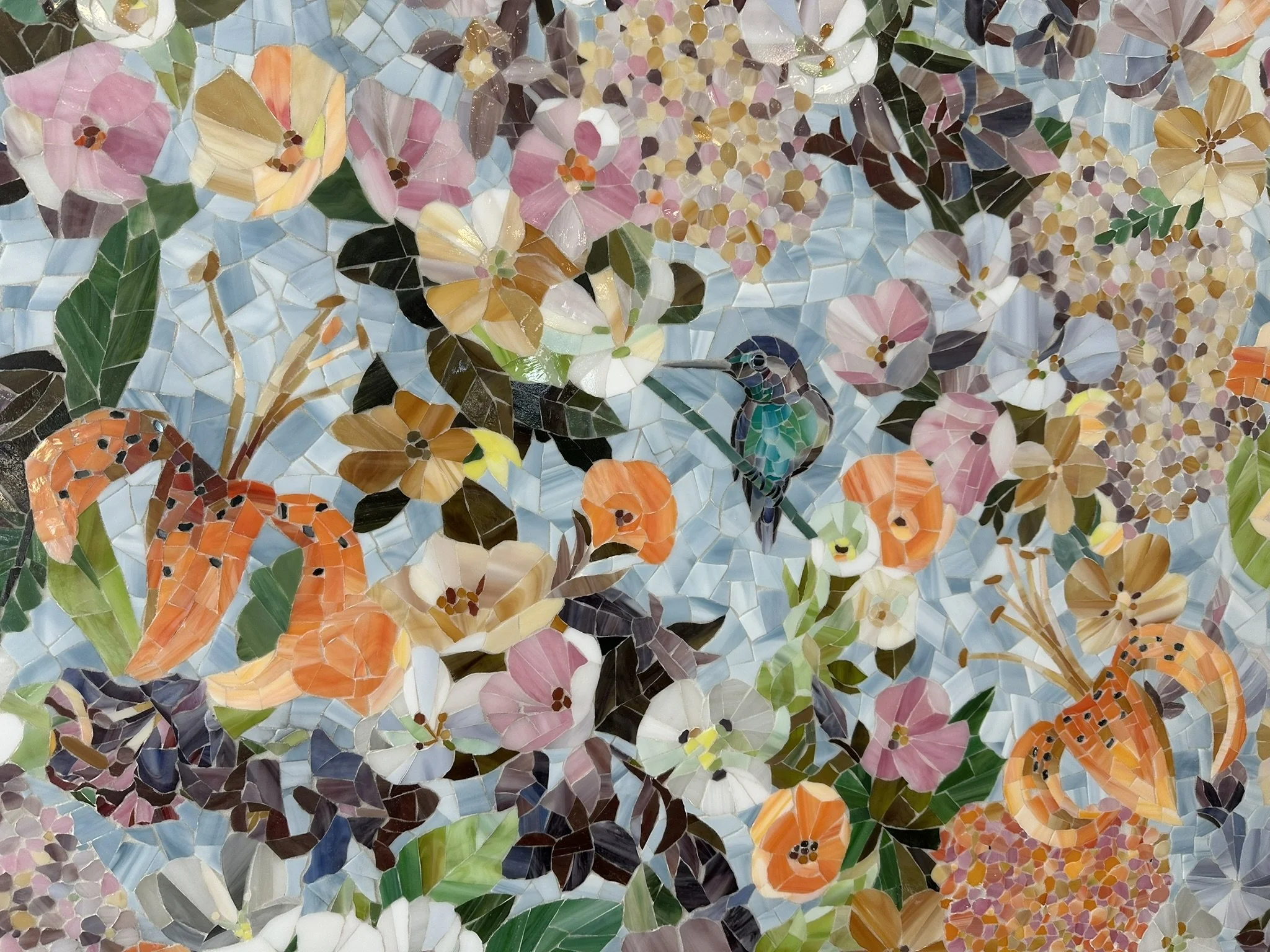
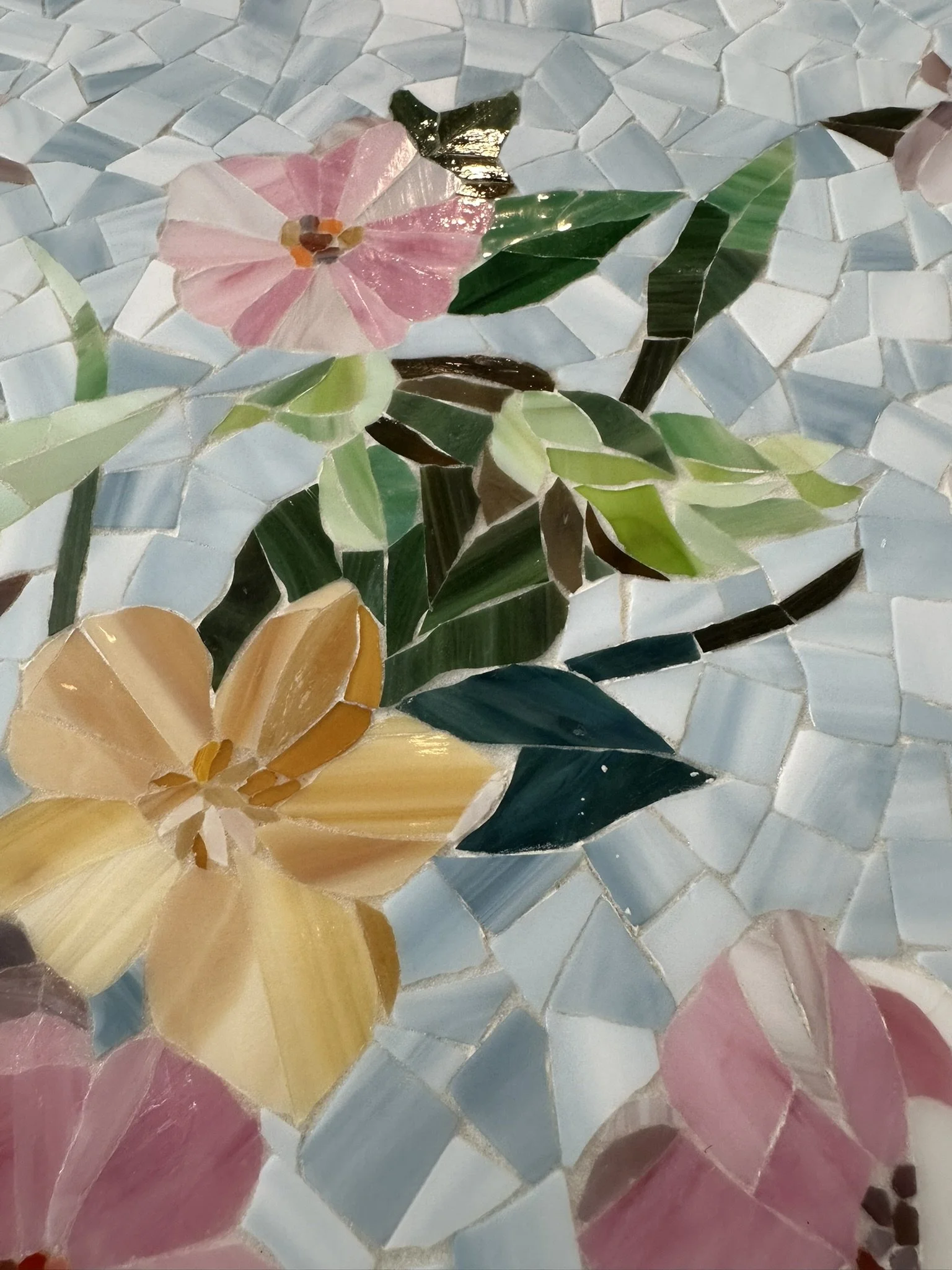
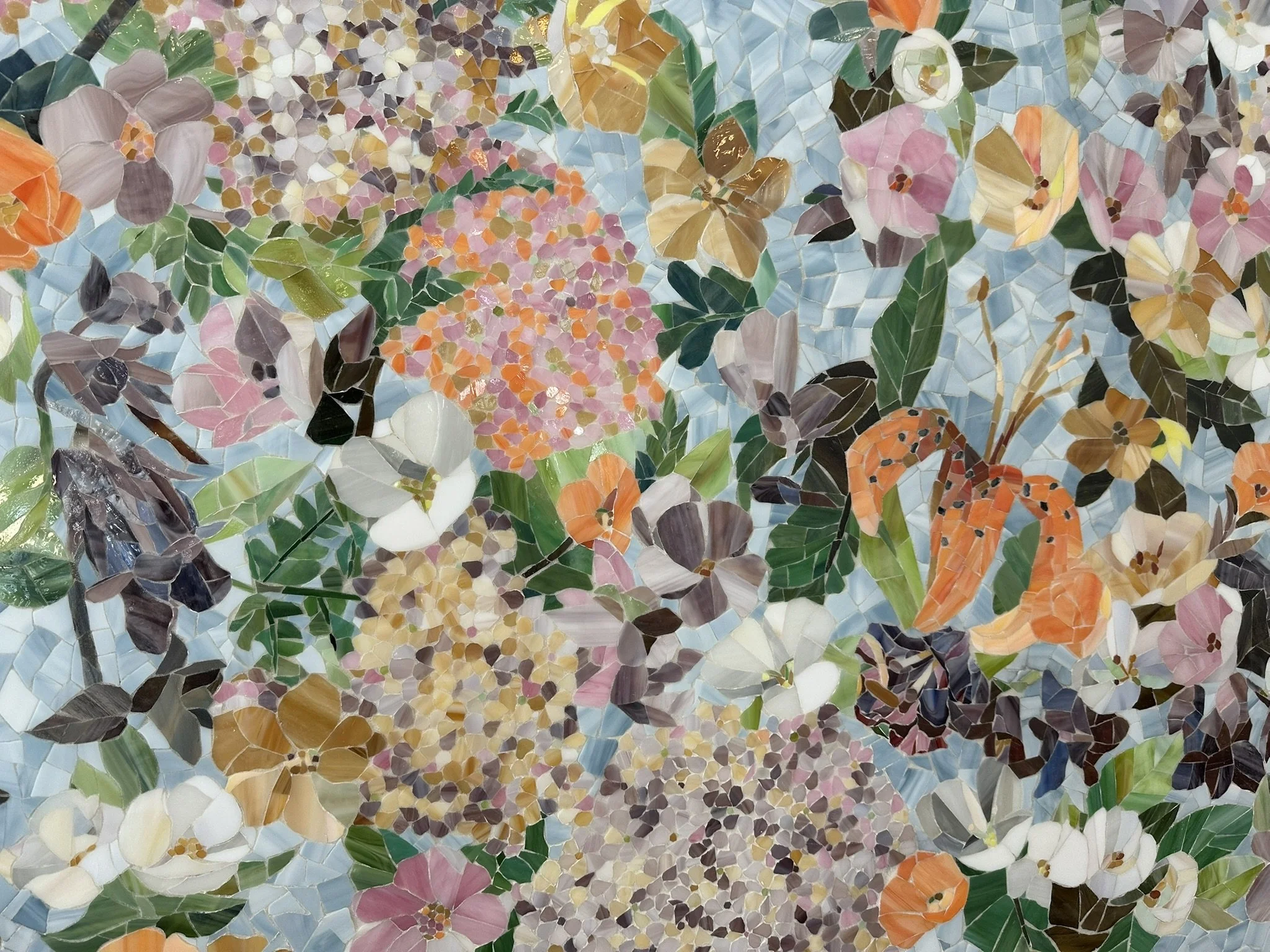
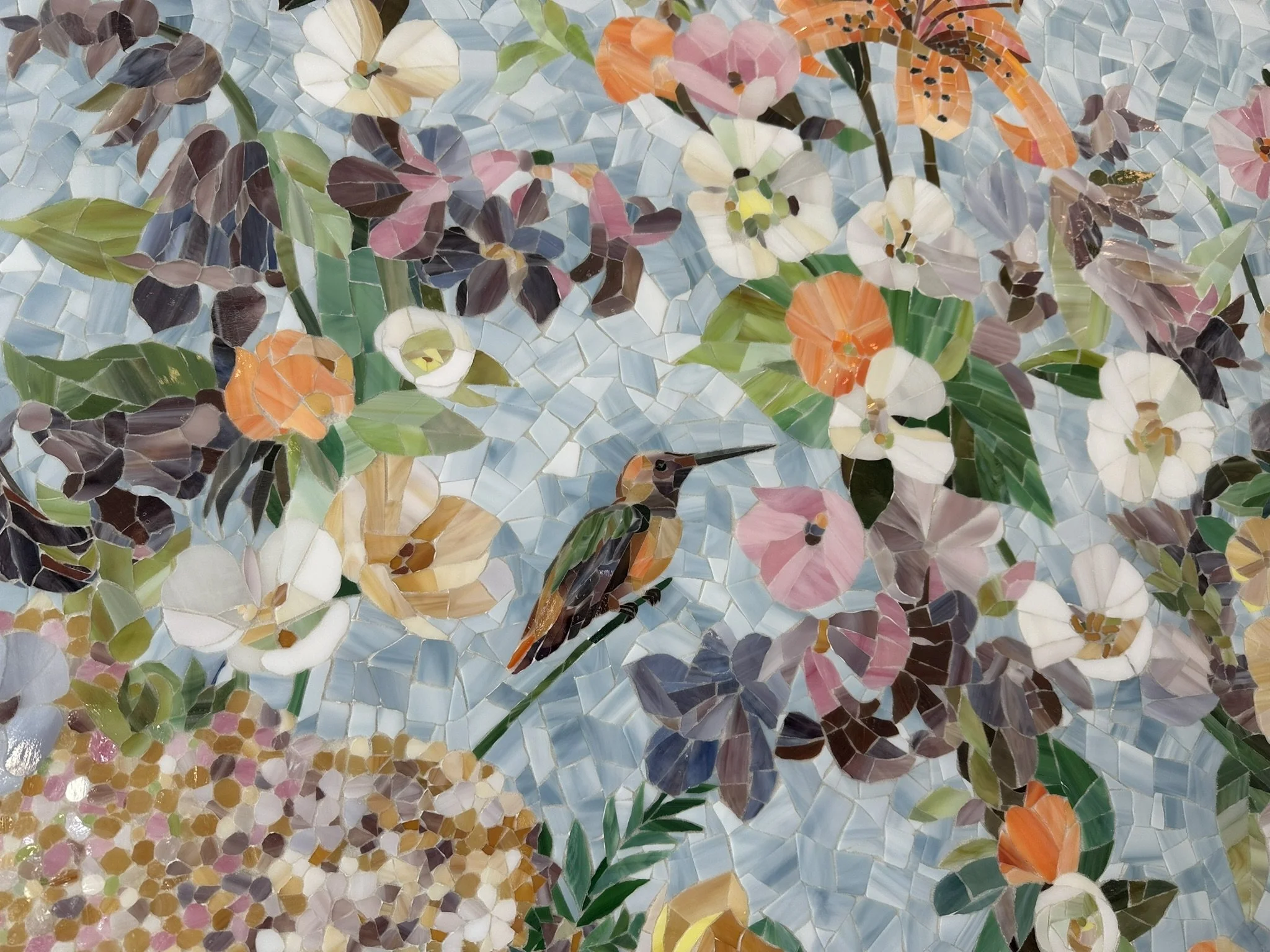
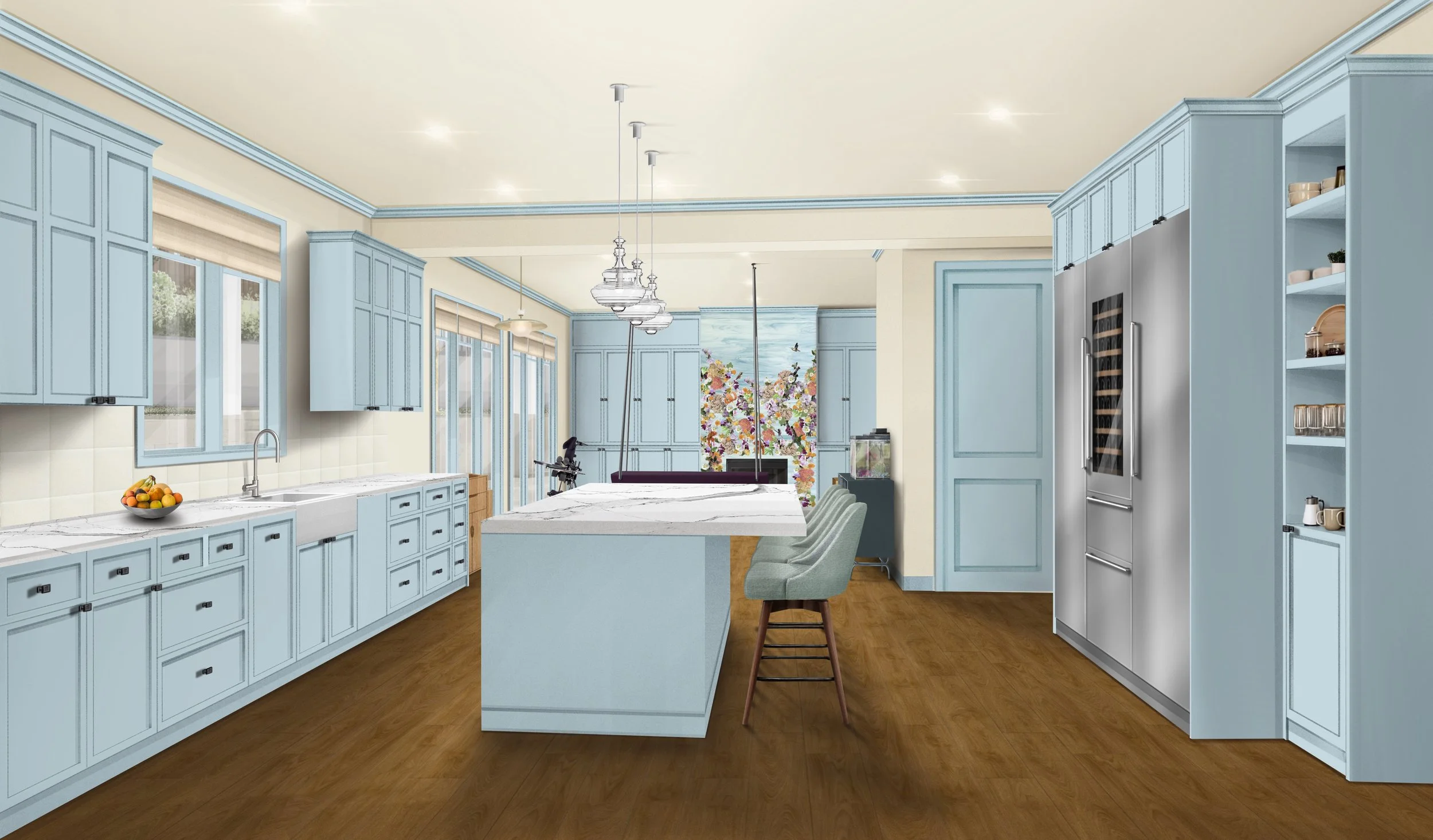
From the kitchen, the interior design maintains visual continuity by carrying the same pale sky blue palette from the family room's built-in cabinetry and trim directly onto the custom kitchen millwork. A backsplash of three-dimensionally carved marble features a subtle floral pattern that acts as a delicate texture from a distance and reveals deep artisan detail up close. Sturdy counter stools are wrapped in a resilient indoor-outdoor textile that remains remarkably soft to the touch. This perspective highlights the project's open-concept layout, featuring flush flooring and expansive pathways that keep the kitchen workstations fluidly connected to the family space, with the wildlife mural visible just beyond the counter.
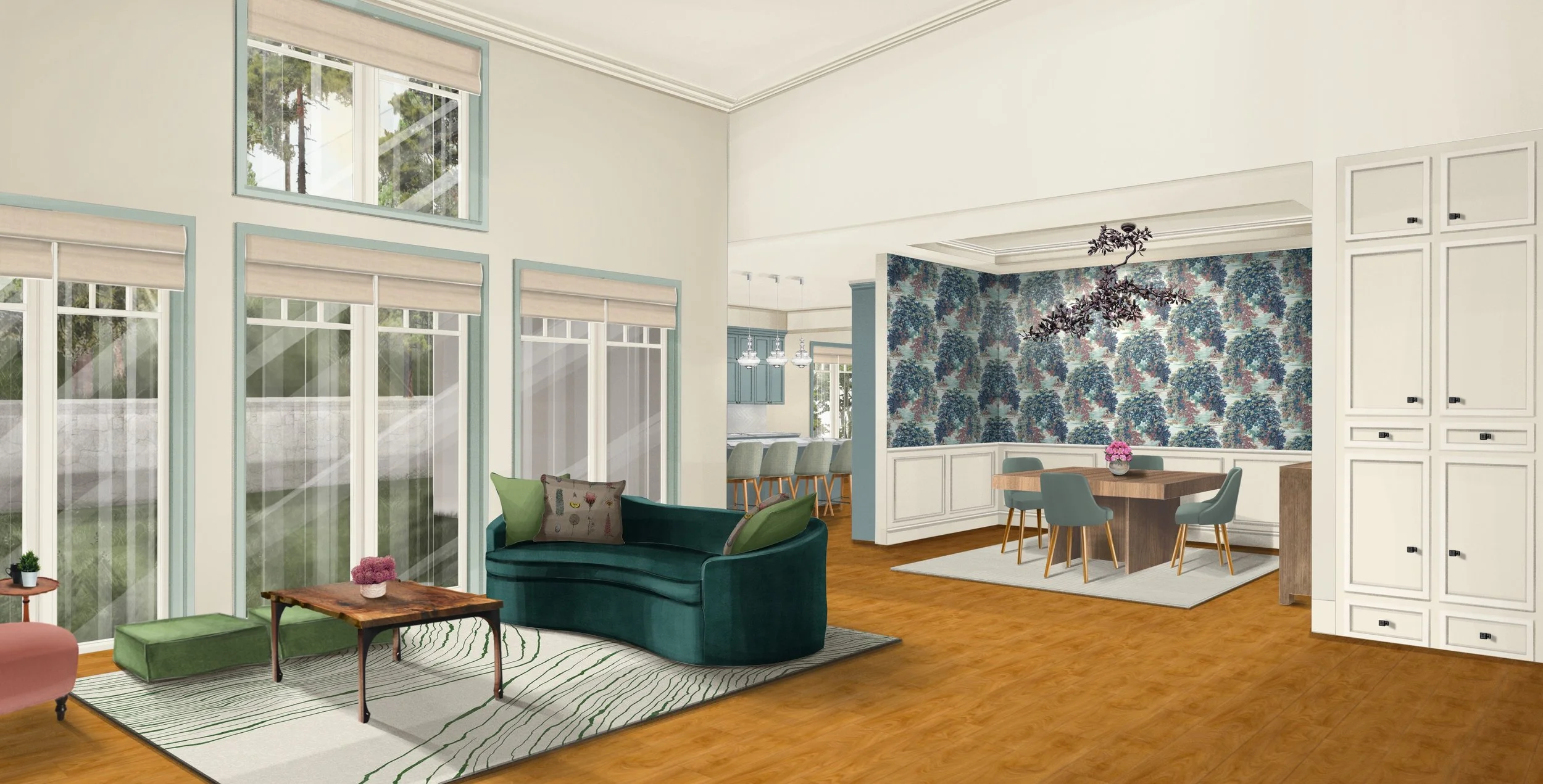
From the living room, the open floor plan provides a visual connection to the home's formal entertaining spaces, offering a clear view into the adjacent dining room, with the sky-blue kitchen visible in the distance. In the foreground, biophilic elegance shines through custom sofa toss pillows delicately embroidered with botanical motifs. Beyond the living area, the dining room features an elegant forest-patterned wallpaper in shades of teal, slate blue, and dusty rose, beautifully paired with a custom-fabricated oak-leaf chandelier. At the center sits a unique walnut dining table engineered with an internal self-storing leaf mechanism, accompanied by the family's original chairs thoughtfully reupholstered in a high-performance, healthcare-grade silicone faux leather. Grounding both spaces, a continuous flat floor surface and low-profile rugs help family members using mobility devices navigate seamlessly between rooms.
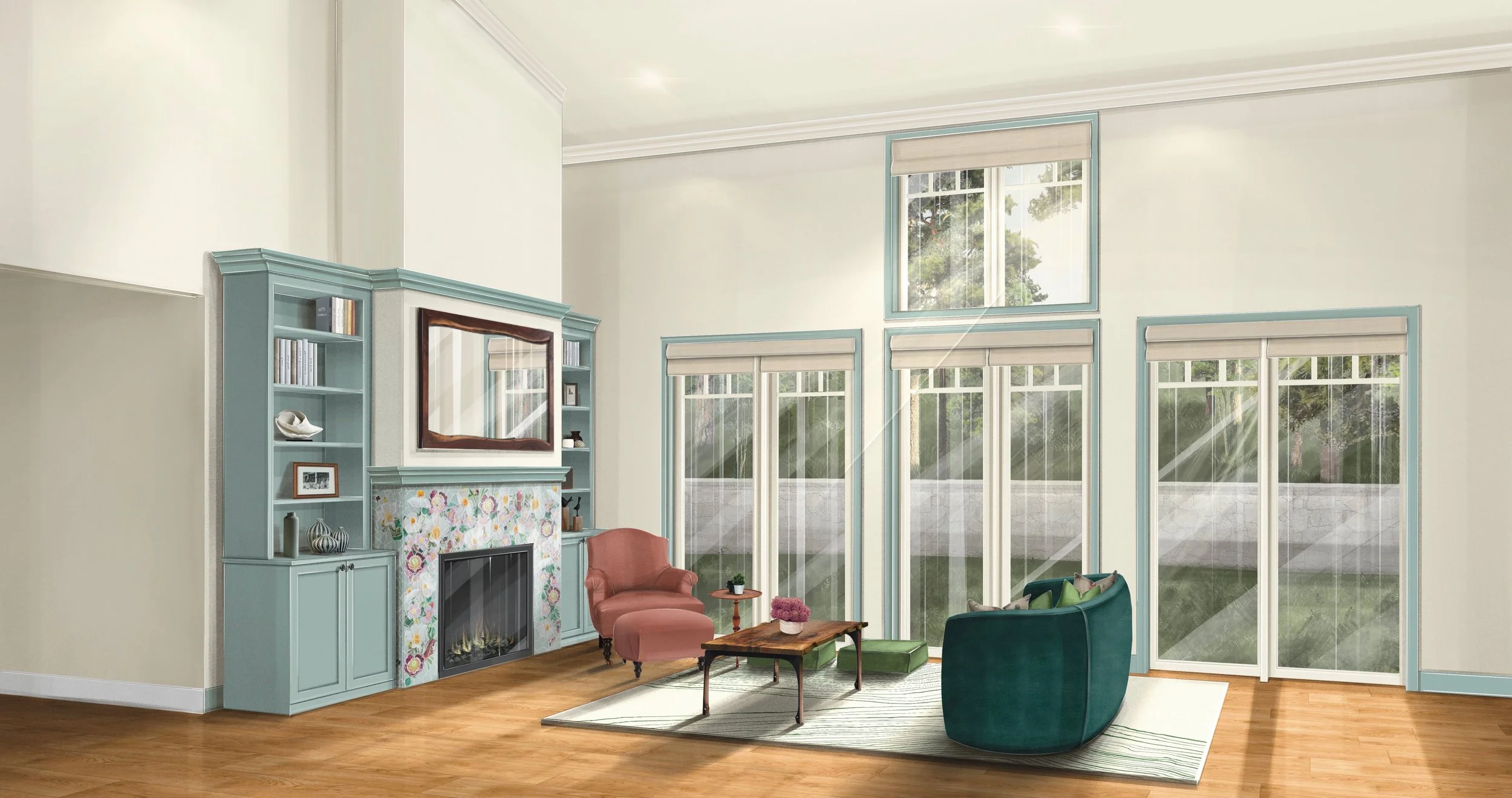
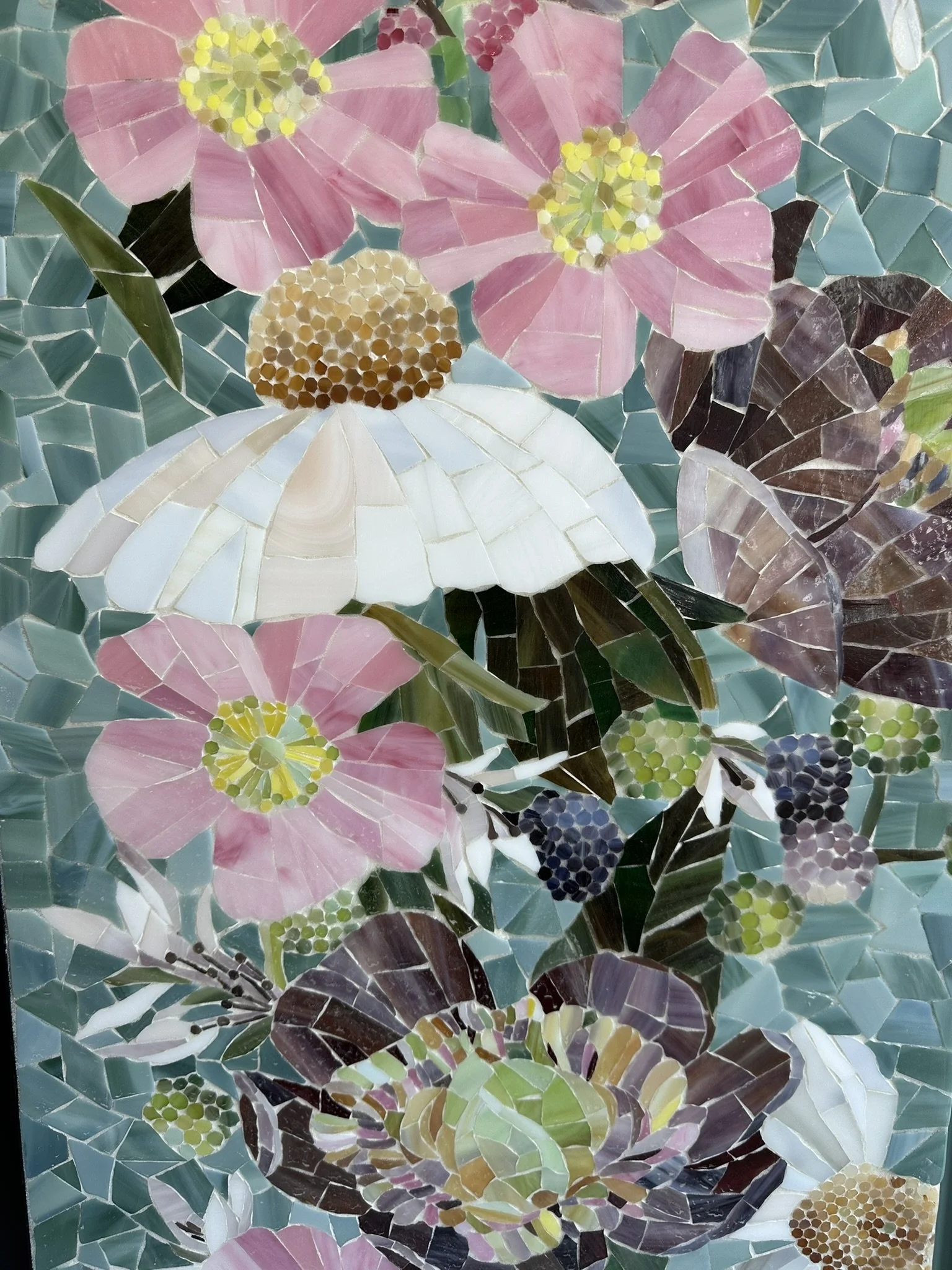
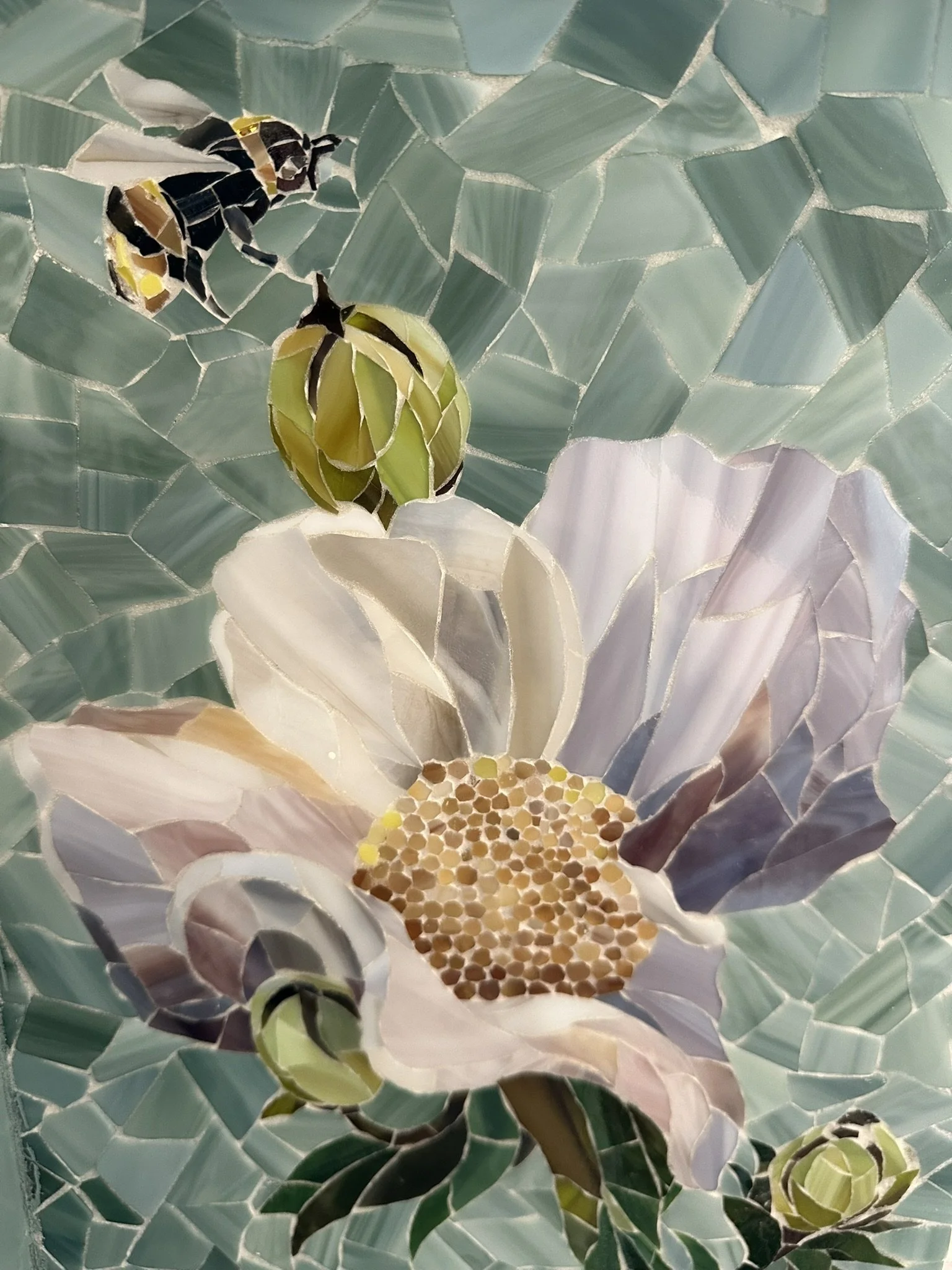
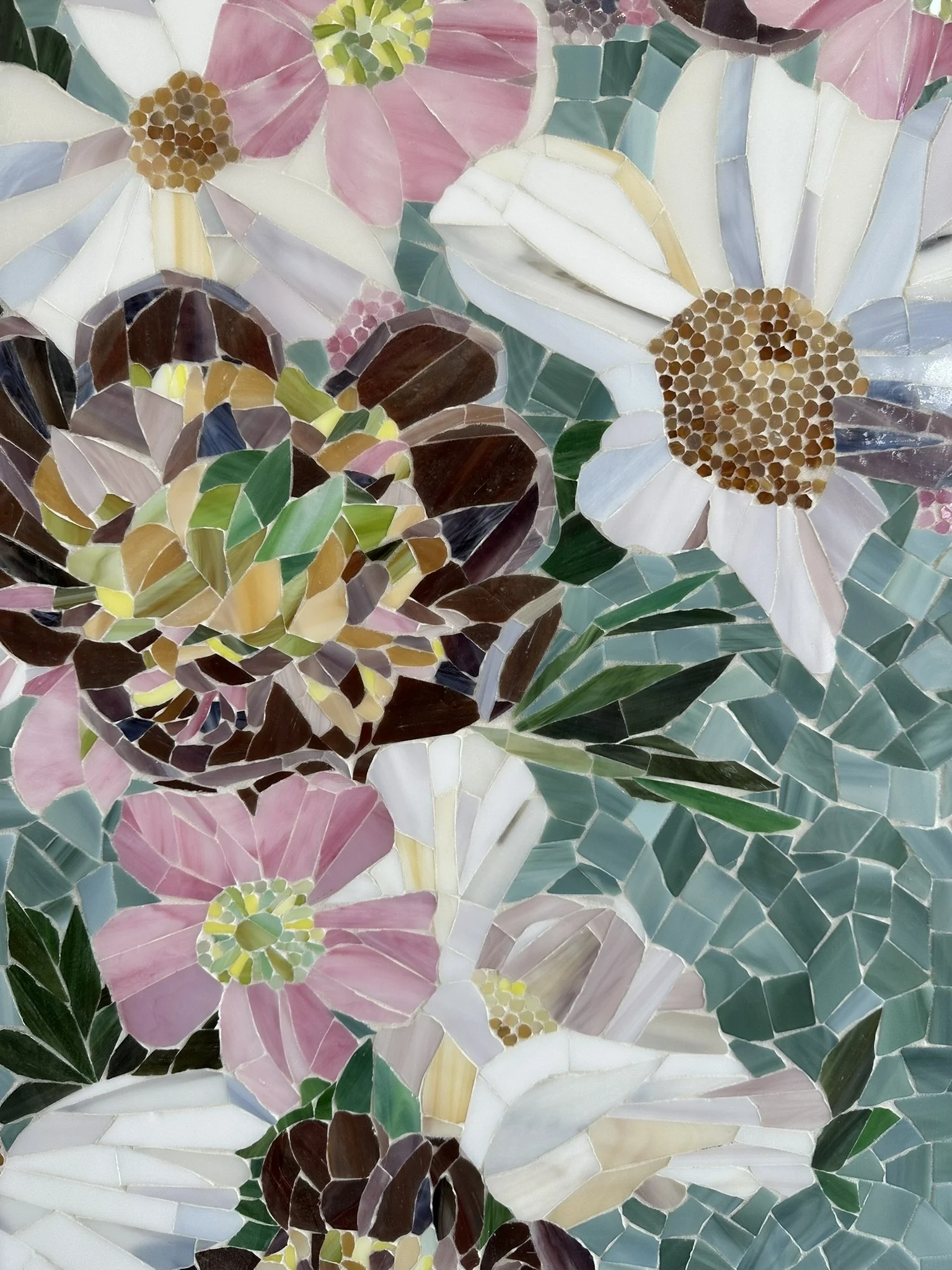
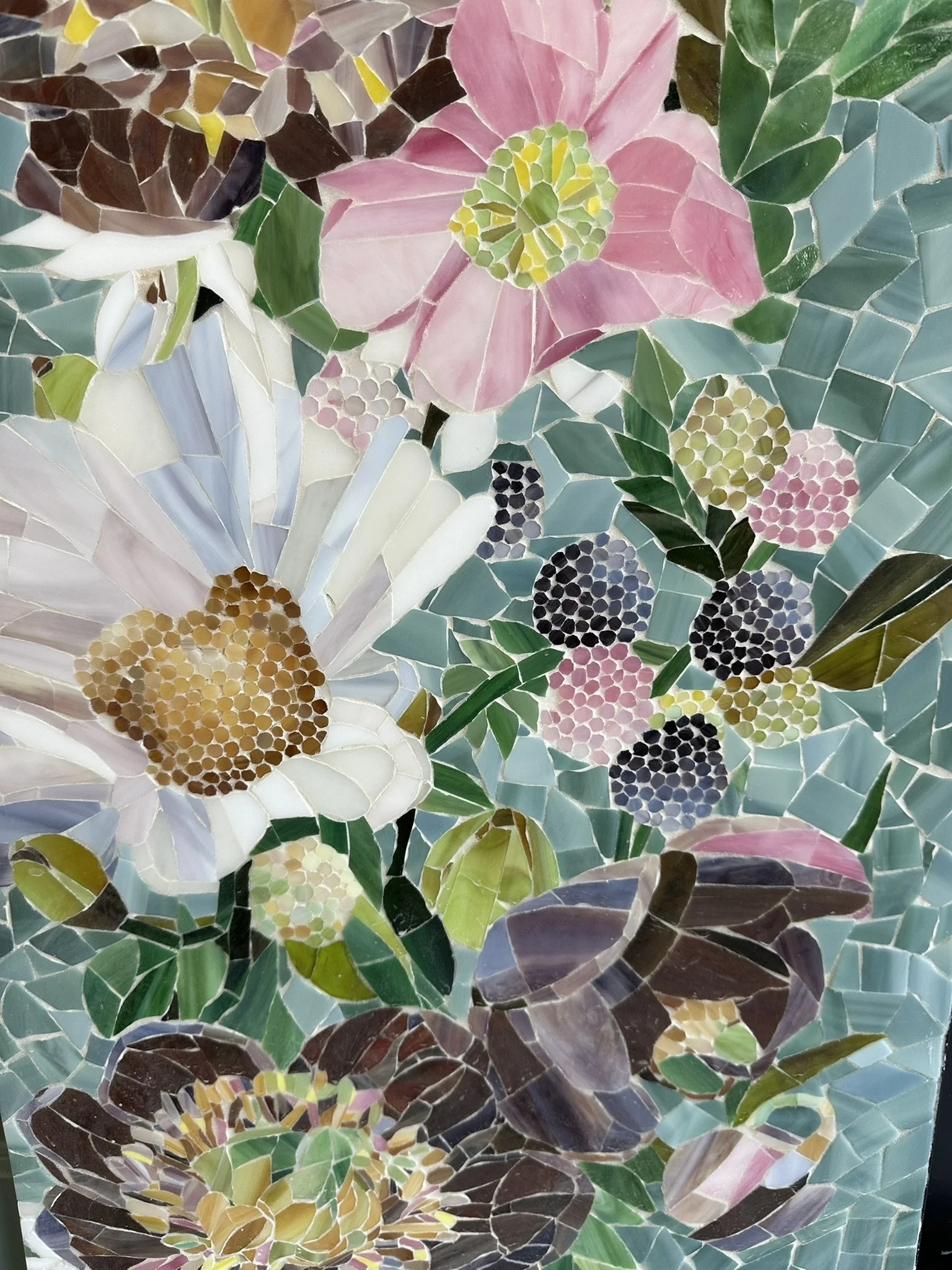
The formal living room centers on a custom mosaic fireplace surround that celebrates regional biodiversity and serves as the primary visual anchor of the space. The intricate artisan tile work brings the local landscape indoors by accurately depicting California native Peonies, Matilija Poppies, California Wild Roses, California Blackberries, and the Bombus californicus bumblebee. This vibrant floral motif bridges architectural details and fine art practice. Flanking the detailed hearth, custom cabinetry and clean architectural moldings provide a structured, traditional frame that balances the organic movement of the custom mosaic. To support inclusive wellness, the seating area maintains a wide turning radius and a low-profile, washable area rug.
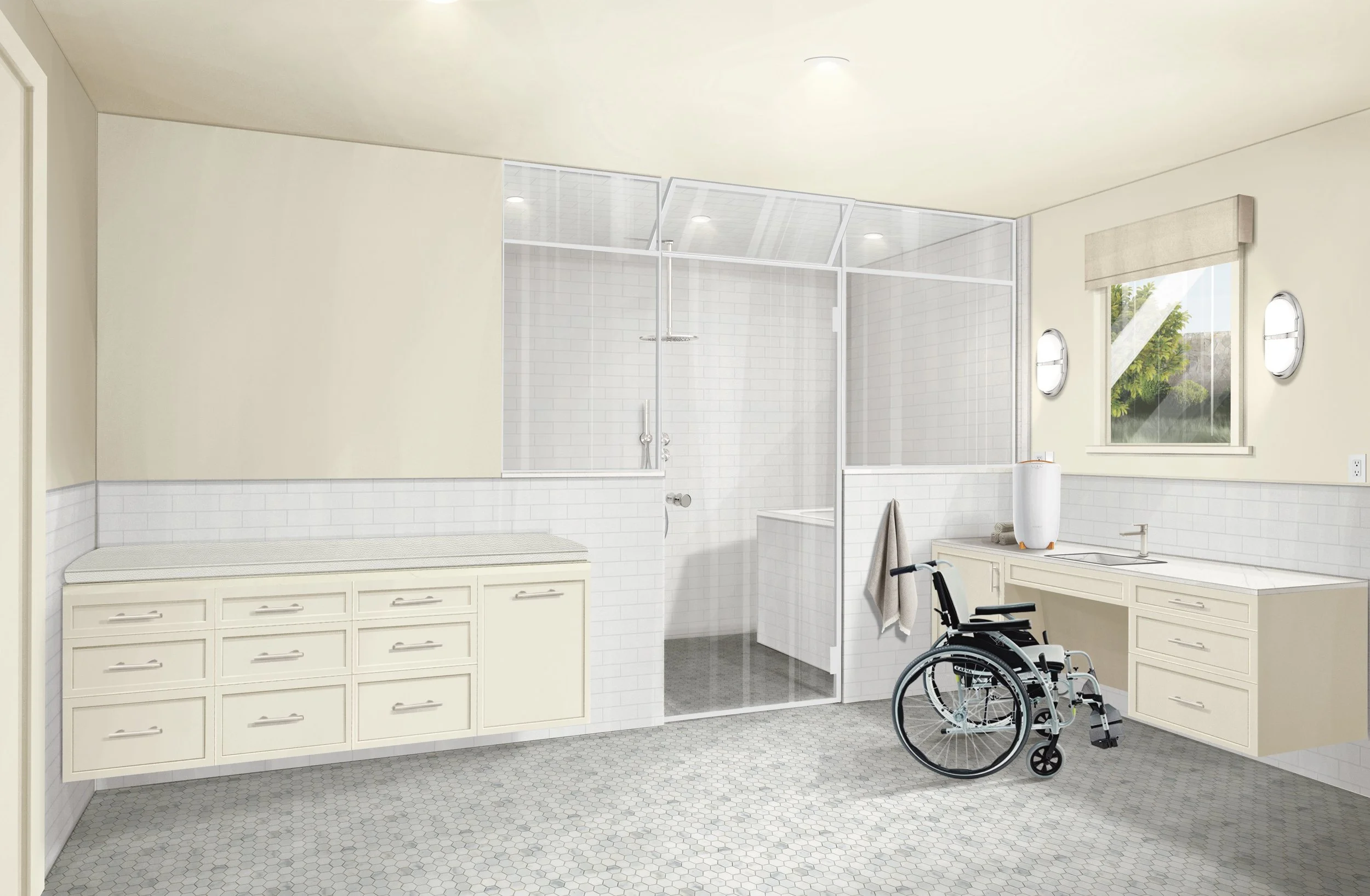
Tailored specifically for a family member with a vision impairment who uses a wheelchair, this inclusive bathroom combines traditional styling and premium materials with universal design principles. The vanity is engineered for a seated user, featuring an angled protective panel at the knee space alongside a 9-inch clear toe space below all surrounding wall-mounted cabinetry. In place of a mirror, a window features a motorized window treatment for easy, hands-free operation. The countertop hosts a freestanding towel warmer, adjacent to specialized cabinetry configured to hold a Diaper Genie and a silicone-leather changing-table cushion designed to accommodate the family member as they grow.
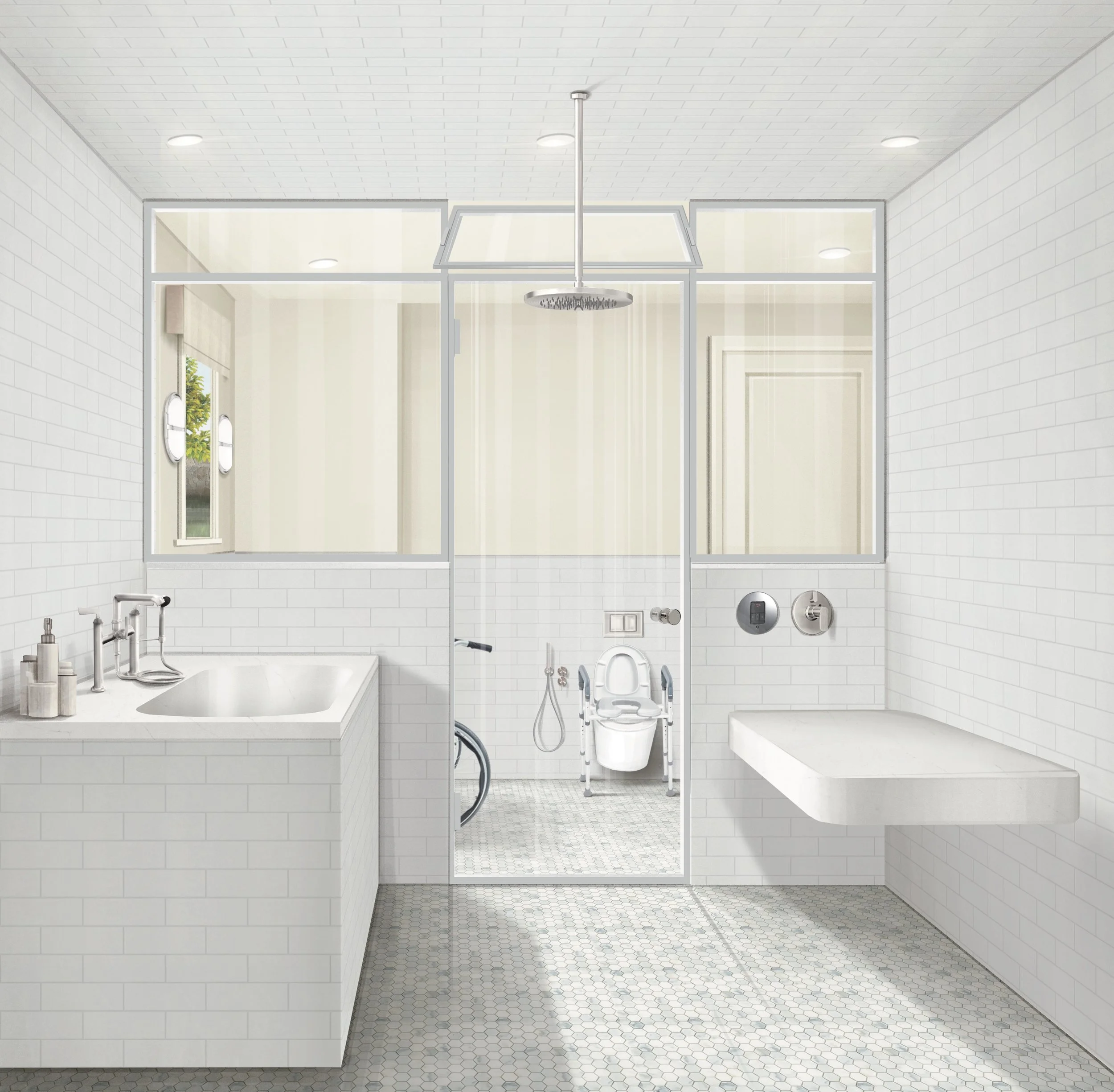
This view from inside the steam enclosure showcases a barrier-free wet room area designed with a curbless transition to comfortably accommodate a user and two caregivers simultaneously. Designed with an ample, open scale, the space highlights a raised bathtub outfitted with a therapeutic jet system, a wall-mounted shower table, an overhead rain shower experience, and a flexible hand shower. The custom glass enclosure features an operable vent in the upper portion to facilitate using the space with or without a steam experience. Functional design is woven discreetly throughout, including a vanity cabinet configured for pass-through access to the bathtub motor and a utility closet providing a dedicated service access point for the steam system.
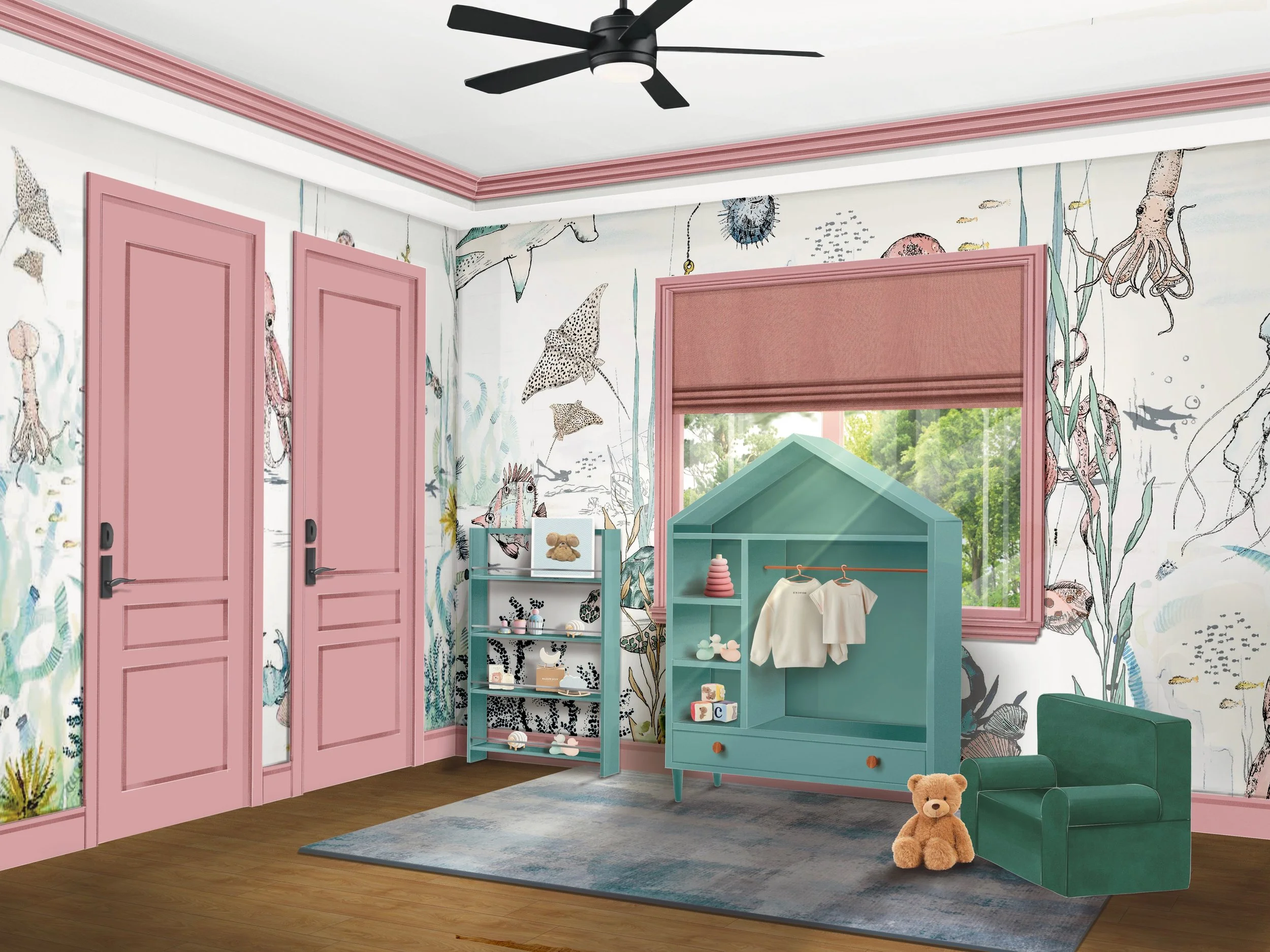
The child's bedroom interior design introduces a whimsical underwater-themed wallpaper rendered in soft pinks and varying shades of teal, creating an imaginative environment. Custom, child-height storage solutions and open shelving are meticulously designed to promote independent movement, keeping toys and belongings easily reachable. A child-sized upholstered armchair in deep teal provides a comfortable, supportive reading spot tailored perfectly to the scale of the room. The custom closets feature a forward-thinking design, making them fully accessible to the child now and easily adaptable to their needs as they grow. Grounded by a flat, washable rug and motorized window treatments for hands-free operation, the layout beautifully ensures a safe, navigable, and healthy space for play and rest.
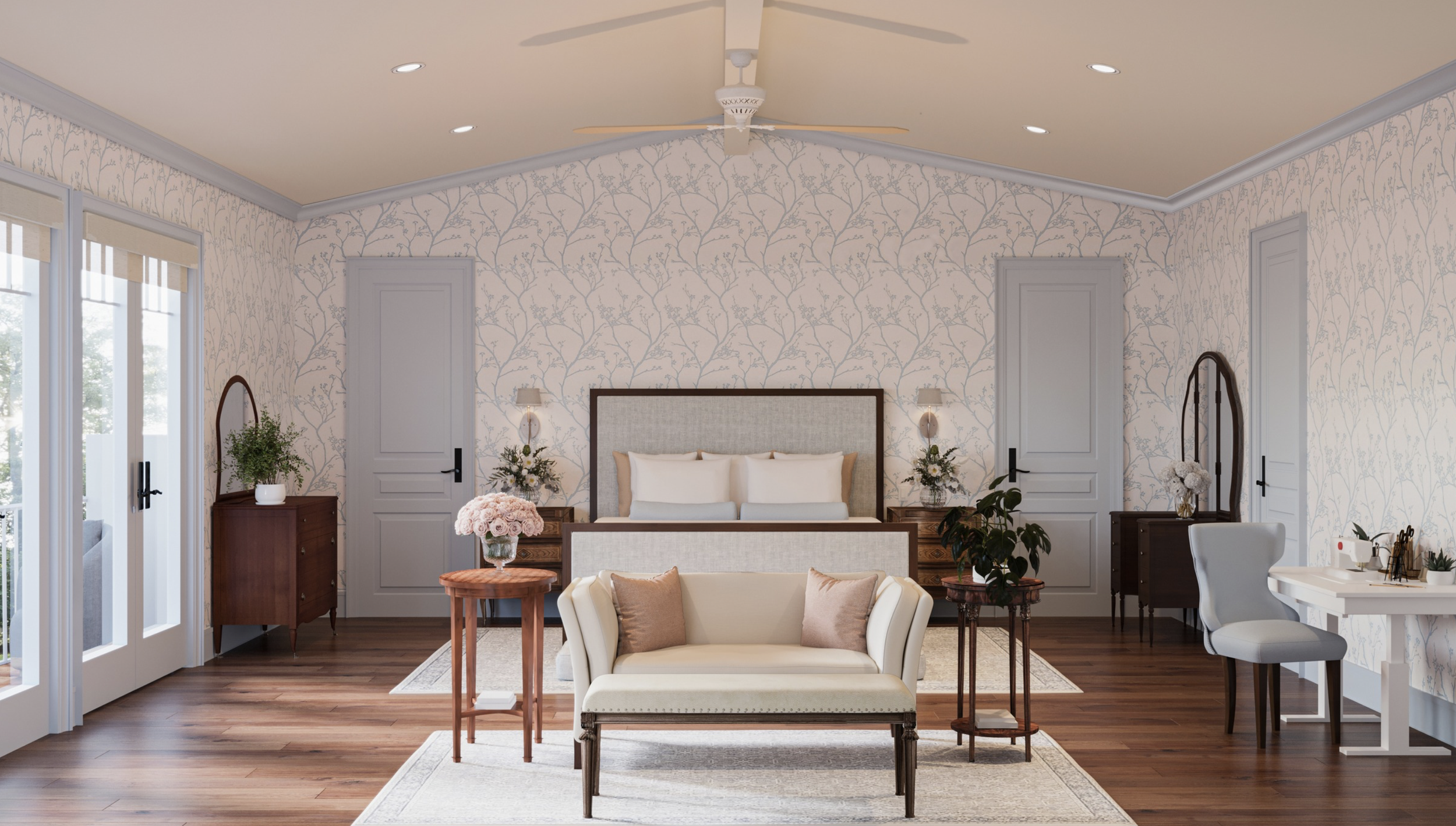
The primary bedroom transitions the residential narrative into a calm, restorative retreat, utilizing a soothing icy-blue palette and delicate floral wallpaper. Keeping holistic family health at the forefront, the custom-made bed is crafted with natural materials and dressed in certified organic linens. This view highlights how the client's treasured original antique dressers are balanced on opposing walls. Universal design principles extend into the room's functional corners, featuring a sewing table tailored to comfortably accommodate different physical needs and postures.
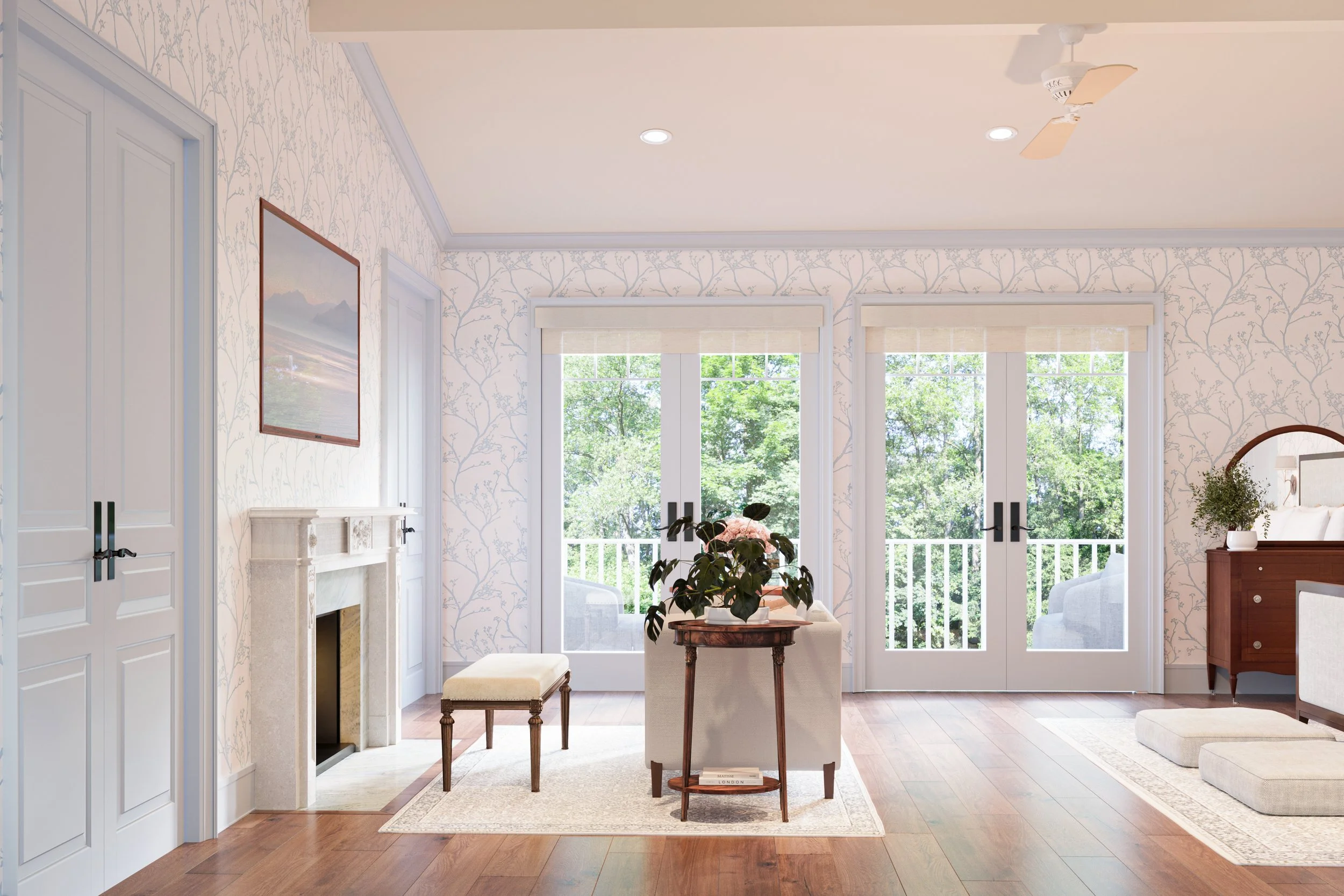
This perspective of the primary bedroom centers on a bright seating area framed by expansive double glass doors, showcasing the project's blend of historic charm and layout accessibility. The arrangement displays a curated reproduction bench and an authentic antique side table that ground the sitting space. Neatly integrated into the floor plan, custom pet beds upholstered in a high-performance, coordinating textile ensure the family's companion animals are warmly accommodated.
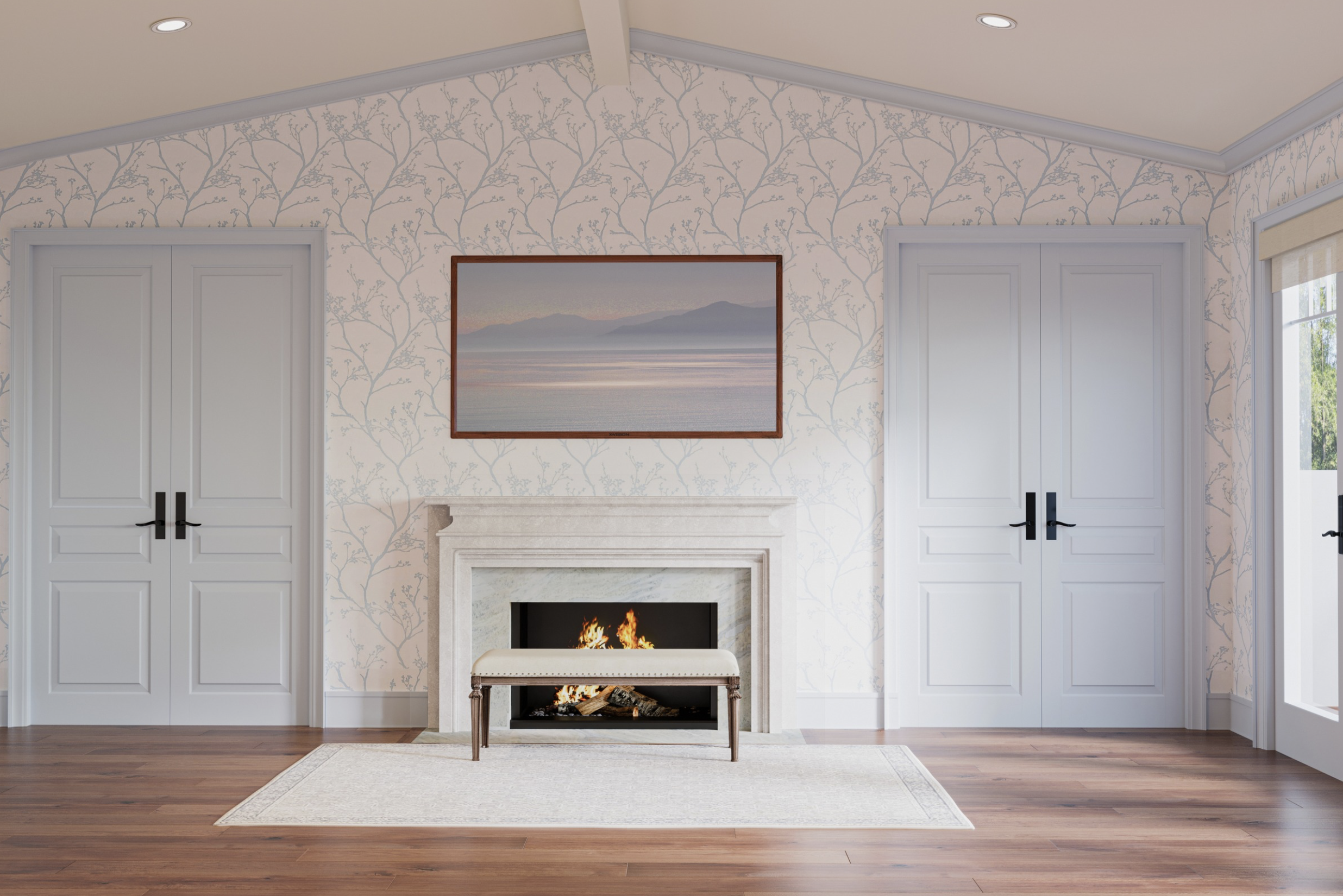
This final view showcases the primary bedroom's architectural symmetry, centering on a custom limestone fireplace with a natural stone slip and a flush hearth seamlessly integrated into the hardwood flooring. Above the mantle, a fine art photograph of the Salton Sea elegantly conceals a hidden television. The room’s delicate floral wallpaper wraps the walls in a soft pattern, framing the double doors and creating a balanced, classic layout. Grounded by a low-profile, flat area rug and a soothing color palette, this space highlights the project's thoughtful neuro-inclusive interior design principles, emphasizing a classic aesthetic and sensory calm.
Sarah Barnard is a WELL and LEED accredited interior designer and creator of environments that support mental, physical, and emotional wellbeing. She creates highly personalized, restorative spaces that are deeply connected to art and the preservation of the environment. A certified California Naturalist, Sarah believes in celebrating nature through responsible design that works symbiotically with the local environment.
An advocate for consciousness, inclusivity, and compassion in the creative process, Sarah has appeared in Architectural Digest, Elle Décor, Vogue, HGTV, and many other publications. Sarah was recognized as a "Ones to Watch" Scholar by the American Society of Interior Designers (ASID) and has been awarded "Best of Houzz Design" for seven consecutive years. Sarah's MFA in visual arts from Claremont Graduate University informs her practice and innovative approach toward interior design as creating a living work of art.

Canyon Calm: Design Strategies for an Unpredictable Climate
Resilience as Coastal Stewardship
The mid-afternoon sun in Topanga Canyon often creates a sensory intensity where the air feels static and the landscape particularly fragile. During Climate Week in Los Angeles, this environmental reality serves as a catalyst for estate owners to move beyond passive design trends toward a more active and intentional form of stewardship. In high-fire-severity zones, protecting a coastal property requires navigating the complex intersection of high-end aesthetic integrity and technical necessity. It is a fundamental shift in perspective that views the home not merely as a site of leisure, but as a responsive biological ally. Navigating these requirements demands an authoritative oversight grounded in specialized credentials to ensure a residence remains a restorative retreat.
Thermal Batteries and the Diurnal Cycle
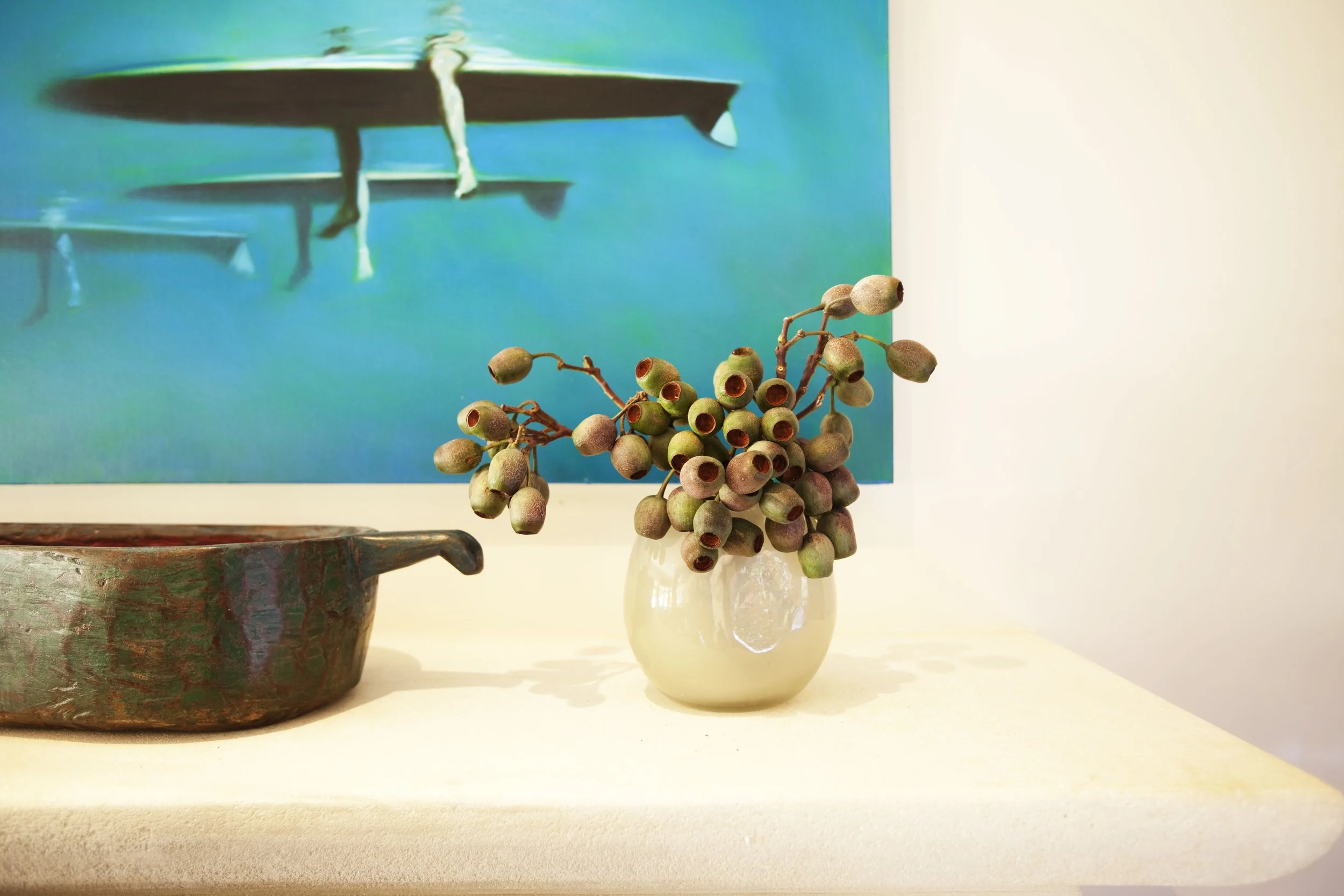
In luxury residential environments, significant functional value is found in materials that offer more than a prestigious pedigree. Dense stones, such as honed basalt and limestone, possess the thermal mass required to manage the demanding diurnal heat cycle. High-mass stone may act as a silent thermal battery by wicking away the peak intensity of a mid-day sun, potentially supporting a sense of internal calm and preventing heat-related physiological stress. When a room manages its temperature effectively, it aims to provide the stable internal environment needed to facilitate high-level cognitive performance and physical recovery. The stone holds the cool long after the sun has shifted.
The Technical Defense of the Building Envelope
Strategic resilience begins with the technical precision of the building envelope. Utilizing layered protective materials, such as dual-paned tempered glass and non-combustible finishes, aims to defend the structural integrity of a property against environmental shifts. A critical component of this defensive strategy is the ember audit, which addresses the high-stakes reality that undetected gaps in vents or eaves may serve as entry points for wind-blown fire. This specialized approach to home hardening aims to mitigate vulnerabilities before they are tested by a local weather event. The house stands as a quiet, fortified retreat against the elements.
Sarah Barnard, LEED + WELL A.P., said, "By selecting enduring materials that buffer and protect, a home may better accommodate the physiological needs of its inhabitants while providing a meaningful layer of protection against environmental shifts."
Naturalism as a Strategic Shield
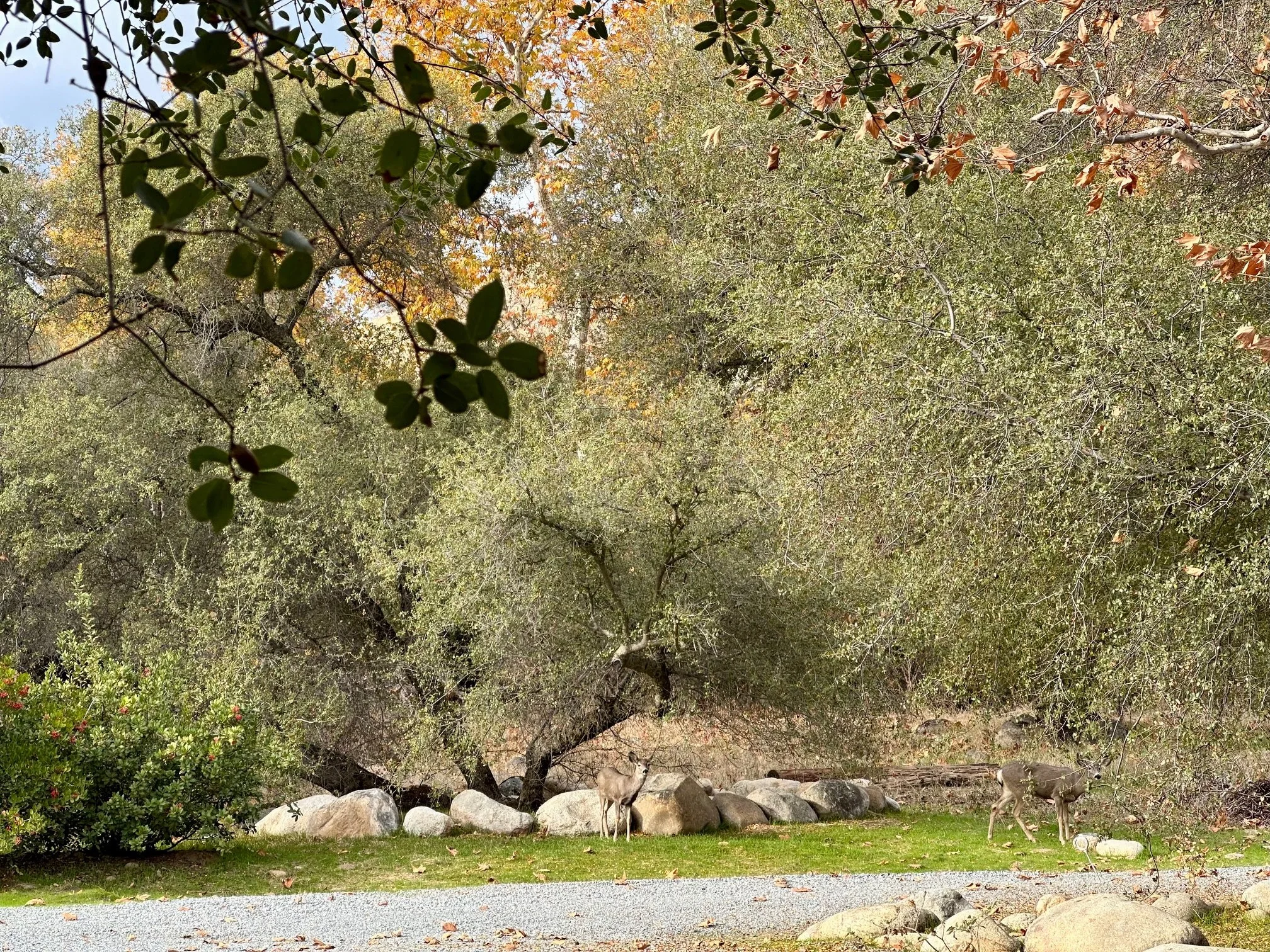
A property’s security extends beyond its walls to the immediate landscape. A symbiotic relationship with the local environment informs the selection of responsible landscaping that works in harmony with the unique constraints of the California coast. Rather than relying on thirsty, high-maintenance flora, a native-focused design may provide natural shading and moisture retention. This naturalist approach serves as a functional tool for environmental preparedness, potentially reducing a property’s reliance on mechanical climate control while aiming to preserve the restorative nature of the estate. It is an act of foresight that honors both the inhabitant and the local ecosystem.

The Enduring Sanctuary
A resilient home is intended to be a responsive ally engineered to support a sense of well-being even during periods of environmental fluctuation. These technical choices represent proactive, intelligent investments in a well-lived life where safety and restoration are woven into the home itself. A temperature-stable, hardened environment aims to provide the quiet and stability that may help support the deep stages of sleep and long-term vitality. By prioritizing enduring materials and ecological intelligence, an estate can remain a supportive sanctuary that stands the test of time.
Sarah Barnard, LEED + WELL A.P., is a leading designer of personalized, sustainable spaces that support mental, physical, and emotional wellbeing. She creates highly personalized, restorative spaces that are deeply connected to art and the preservation of the environment. An advocate for consciousness, inclusivity, and compassion in the creative process, Sarah has appeared in Architectural Digest, Elle Décor, Vogue, HGTV, and many other publications. Sarah was honored as a "Ones to Watch" Scholar by the American Society of Interior Designers (ASID).
Bibliography
Association of Collegiate Schools of Architecture (ACSA). (2026). Thermal Mass and Natural Ventilation: Performance Divergence in Hot Climates. acsa-arch.org/
Insurance Institute for Business & Home Safety (IBHS). (2025). Construction Costs for Wildfire-Resistant Homes: Los Angeles Regional Analysis. ibhs.org/wildfireready/
International WELL Building Institute (IWBI). (2023). WELL v2 Standard: Thermal Comfort and Physiological Recovery. v2.wellcertified.com/en/v2/thermal-comfort
National Center for Biotechnology Information (NCBI). (2024). Surviving Indoor Heat Stress: Impact of Overheating on Residential Thermal Comfort and Health. ncbi.nlm.nih.gov/pmc/
United States Green Building Council - Los Angeles (USGBC-LA). (2022). Wildfire Defense Landscaper Certificate Program. usgbc-la.org/programs/wildfire-defense-landscaper/

Beyond Order: Restorative Storage in Modern Design

A common philosophy of storage and organization starts with a period of purging, usually involving a rigid keep, donate, or trash approach. However, this process does not always acknowledge the emotional value of our possessions or fully consider how someone wants to live and feel in their home from a psychological standpoint.
“A common approach to organization often prioritizes elimination, yet it frequently fails to acknowledge the profound emotional resonance of the objects we choose to surround ourselves with,” says Sarah Barnard, WELL and LEED accredited interior designer. “Restorative design is not about what we can discard, but about how we can curate an environment that supports our emotional well-being and reflects our true intentions for how we wish to inhabit a space.”
Many homeowners need a more nuanced strategy that allows for emotion, uncertainty, and changing capacities. The traditional sorting pile is a helpful visual tool, but the criteria for what remains should be personal and reflect one's own history. It is essential to recognize how objects hold meaning, serving as cherished mementos, touchstones, or evolving pieces of a larger collection. If the home is a safe space for free expression, much-loved items play a vital role in self-expression and daily joy.

The Psychology of Curation
Organizing still benefits from a structured process, but the mindset should be rooted in the positive. “Sorting should be approached as an act of self-care rather than a chore of elimination,” Barnard notes. “Instead of asking what we can live without, we should ask how we want our home to support our mood and the daily rituals that bring us comfort.”
By using a feelings-first guide, homeowners can look beyond strict utility. While function is a common starting point, the emotional goal of a room is just as significant. An object might be functional and valued for its usability, or valued simply because it is beautiful. In high-end design, beauty is often a primary function, contributing to calm and visual delight. For many, collecting and curating is the source of joy itself. In these cases, the process is about honoring the collection rather than reducing it.
Managing Sentimental Thresholds
Sentimental items often need a different timeline. A memory box preserves items linked to a person, place, or thing without requiring an immediate decision on their permanent place. This gives time to assess the sentimental reasons for keeping or sorting objects. Items that offer tactile comfort, such as favorite textiles or calming-colored objects, should be seen and kept as sensory anchors at home.
For objects that trigger uncertainty, a holding strategy can help. It can be hard to make quick decisions about inherited pieces or items with complex histories. Placing these in a designated area for review gives time and control. The key is to set a plan to revisit the collection. This ensures the holding area is a temporary pause, not a source of hidden stress.

Architectural Systems for Restorative Living
Once curation is complete, focus shifts to systems to encourage a seamless daily experience. A sophisticated home needs a balance of open and closed storage. Open shelving or rails provide access to frequently used items and serve as display platforms. To prevent visual overload, pair these with closed cabinetry or integrated millwork.
In a home office, this might manifest as an elegant display shelf for books and art, paired with concealed filing or cabinetry for administrative essentials. In the kitchen, high-touch tools may remain on a beautiful tray on the counter, while secondary appliances are tucked into specialized drawers. For items that carry deep meaning but lack a functional place in the current layout, digital preservation is a thoughtful alternative. Scanning precious items like children’s art or archival correspondence keeps the memories accessible while reclaiming physical space for new experiences.
Intentional Visibility and Ease
Achieving a balance of visibility without overload is personal. While concealing belongings may lead to their eventual neglect, maintaining total visibility can inadvertently lead to sensory overload. Subtle storage tools can help strike this balance. Shallow trays, baskets, or pull-out shelves in larger cabinets prevent items from becoming buried. Clear or semi-clear bins in closed closets maintain order and allow for quick identification.
Functionality means different things for everyone, and the goal of a sophisticated organizational system is to enhance the user's experience by creating an environment that feels intentional, paced, and restorative. By moving beyond the pressure of order for order’s sake, the modern home transcends simple organization to become a landscape deeply aligned with the lives lived within its walls.
Sarah Barnard is a WELL and LEED accredited interior designer and creator of environments that support mental, physical, and emotional wellbeing. She creates highly personalized, restorative spaces that are deeply connected to art and the preservation of the environment. A certified California Naturalist, Sarah believes in celebrating nature through responsible design that works symbiotically with the local environment.
An advocate for consciousness, inclusivity, and compassion in the creative process, Sarah has appeared in Architectural Digest, Elle Décor, Vogue, HGTV, and many other publications. Sarah was recognized as a "Ones to Watch" Scholar by the American Society of Interior Designers (ASID) and has been awarded "Best of Houzz Design" for seven consecutive years. Sarah's MFA in visual arts from Claremont Graduate University informs her practice and innovative approach toward interior design as creating a living work of art.
The Architecture of Autonomy: Elevating Wellness through Individual Sleeping Sanctuaries
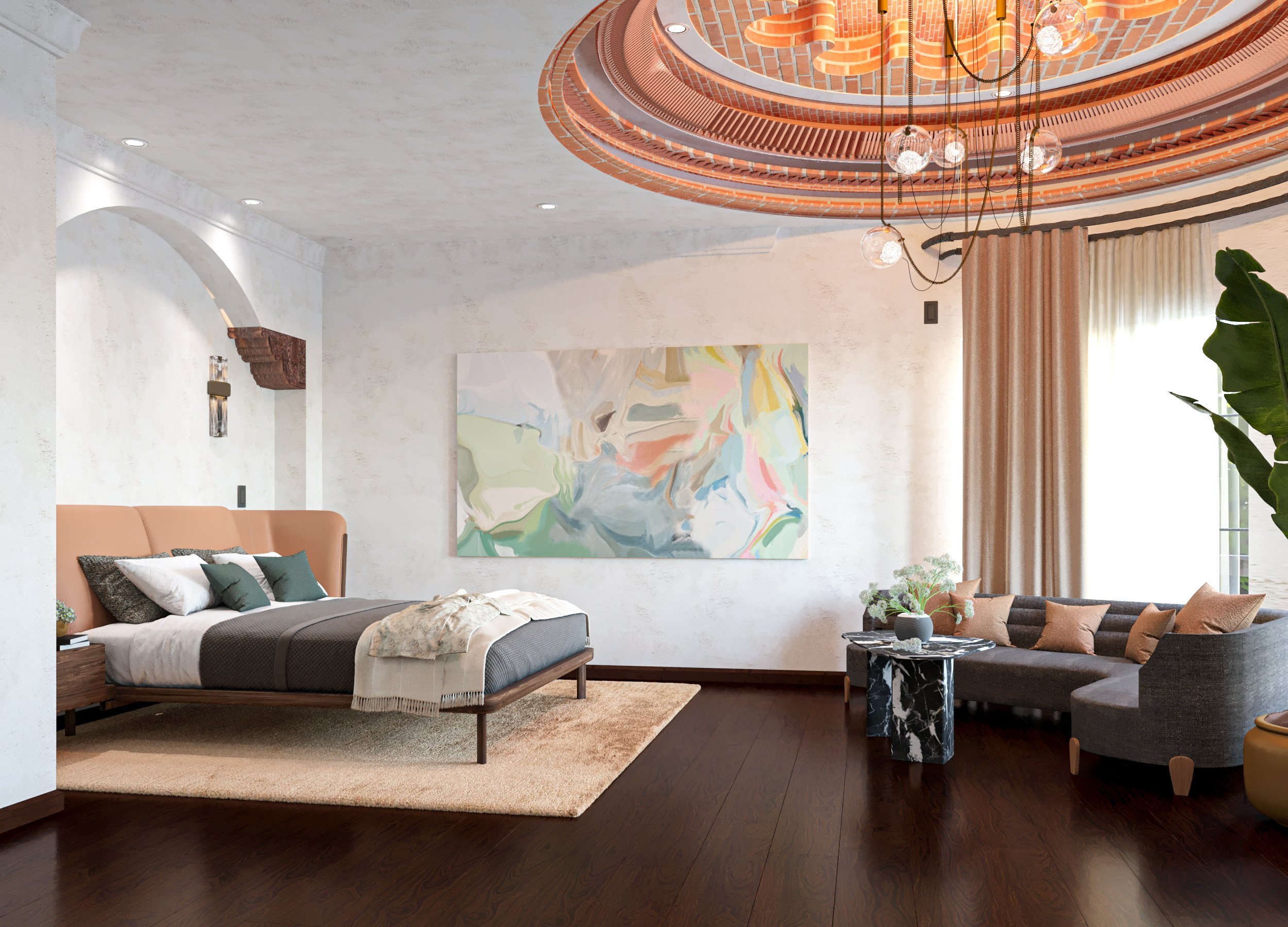
In high-end residential design, luxury is often defined by the removal of friction. We create environments that anticipate needs, soothe the senses, and provide a seamless backdrop for a life well-lived. While traditional floor plans have prioritized the shared primary suite as the pinnacle of domestic harmony, a more sophisticated perspective is emerging, looking to historical precedent and modern biological science to reclaim the luxury of personal space.
By prioritizing individual sleeping sanctuaries, we move beyond the limitations of shared environments and embrace the Architecture of Autonomy. This approach does not signal a departure from partnership; it honors the individual’s biological needs and identity, ultimately fostering a deeper, more intentional connection.
The Sovereign Precedent: A Legacy of Privacy
The concept of the shared bed is a relatively modern standard. Historically, the elite maintained distinct private chambers as a symbol of status and dignity. In royal courts, the separate chamber was not a sign of a distant marriage but a recognition of individual sovereignty. These suites facilitated the ceremony of one’s day, rising and retiring, allowing each person to maintain their own schedule and sensory preferences without imposition.
In contemporary design, we are returning to this regal standard. By shifting the narrative from a shared master to dual primaries, it gives homeowners the freedom to inhabit spaces that are entirely their own. This is not a compromise of intimacy but an elevation of it, transforming togetherness from a default setting into a meaningful, chosen event.
Biological Precision and Environmental Optimization
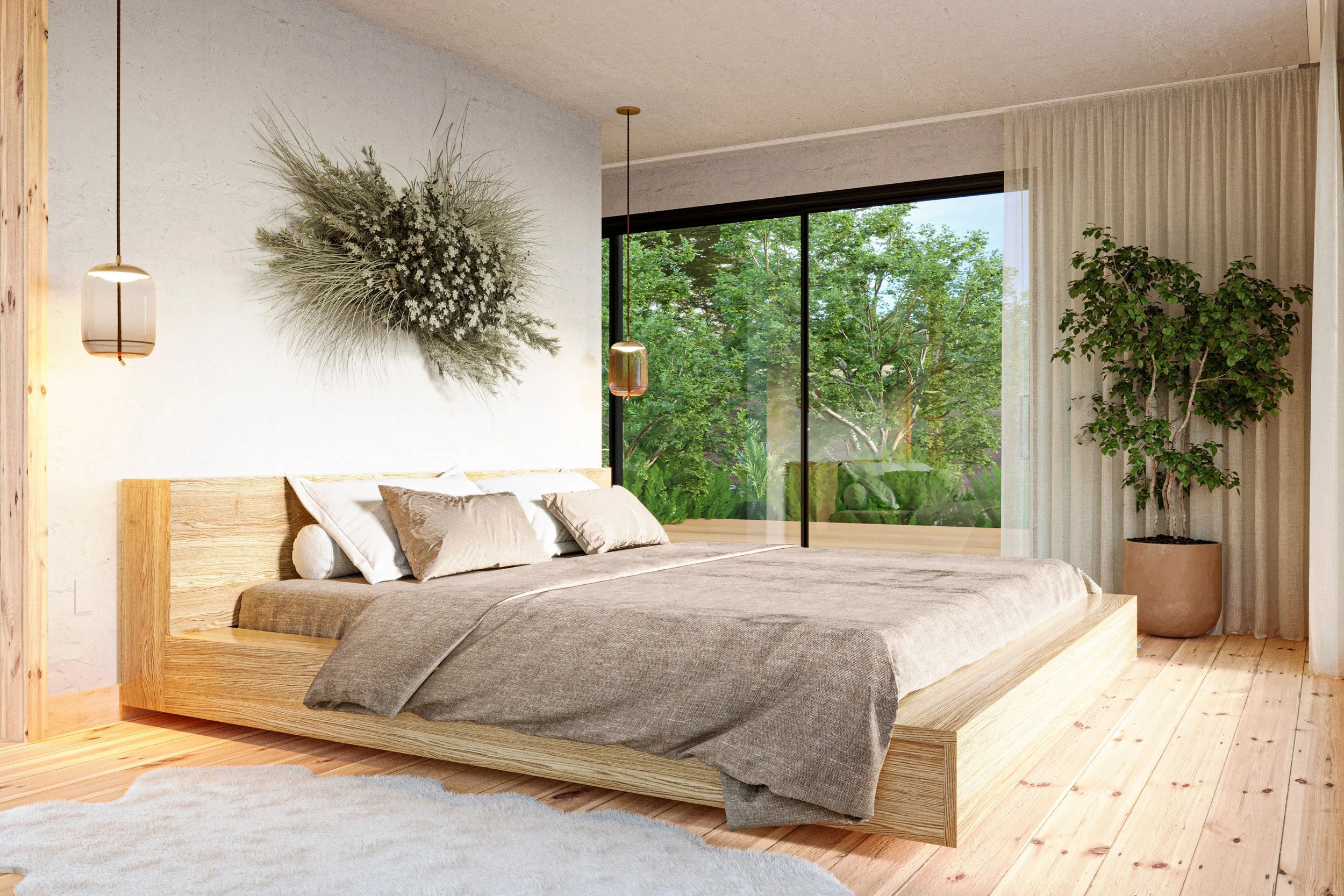
True restorative sleep is a highly individualized biological process. What one person requires for peak cognitive performance, such as a specific temperature, mattress firmness, or total darkness, may disrupt their partner.
Research demonstrates that a significant portion of an individual's sleep quality can be negatively influenced by a partner’s movements, differing sleep-wake cycles, or environmental preferences (Sleep Research Society, 2024). In a shared environment, one partner is almost always making a biological concession. Individual sanctuaries allow for the implementation of precision environmental controls tailored to the inhabitant’s specific circadian needs. One partner may opt for a suite designed with automated blackout shielding to facilitate deep, undisturbed rest, while the other prefers a space that welcomes natural morning light to stimulate a healthy awakening response (International WELL Building Institute, 2020). By removing these external disruptions, we ensure that both partners reach the deepest stages of restoration, arriving at the start of their day refreshed and emotionally resilient.
The Luxury of Unfiltered Identity
Beyond the biological benefits, separate suites offer an opportunity for aesthetic expression. In a shared bedroom, design is often a series of concessions, perhaps a neutral palette chosen to satisfy two tastes. In an autonomous sanctuary, the room becomes a pure reflection of the individual.
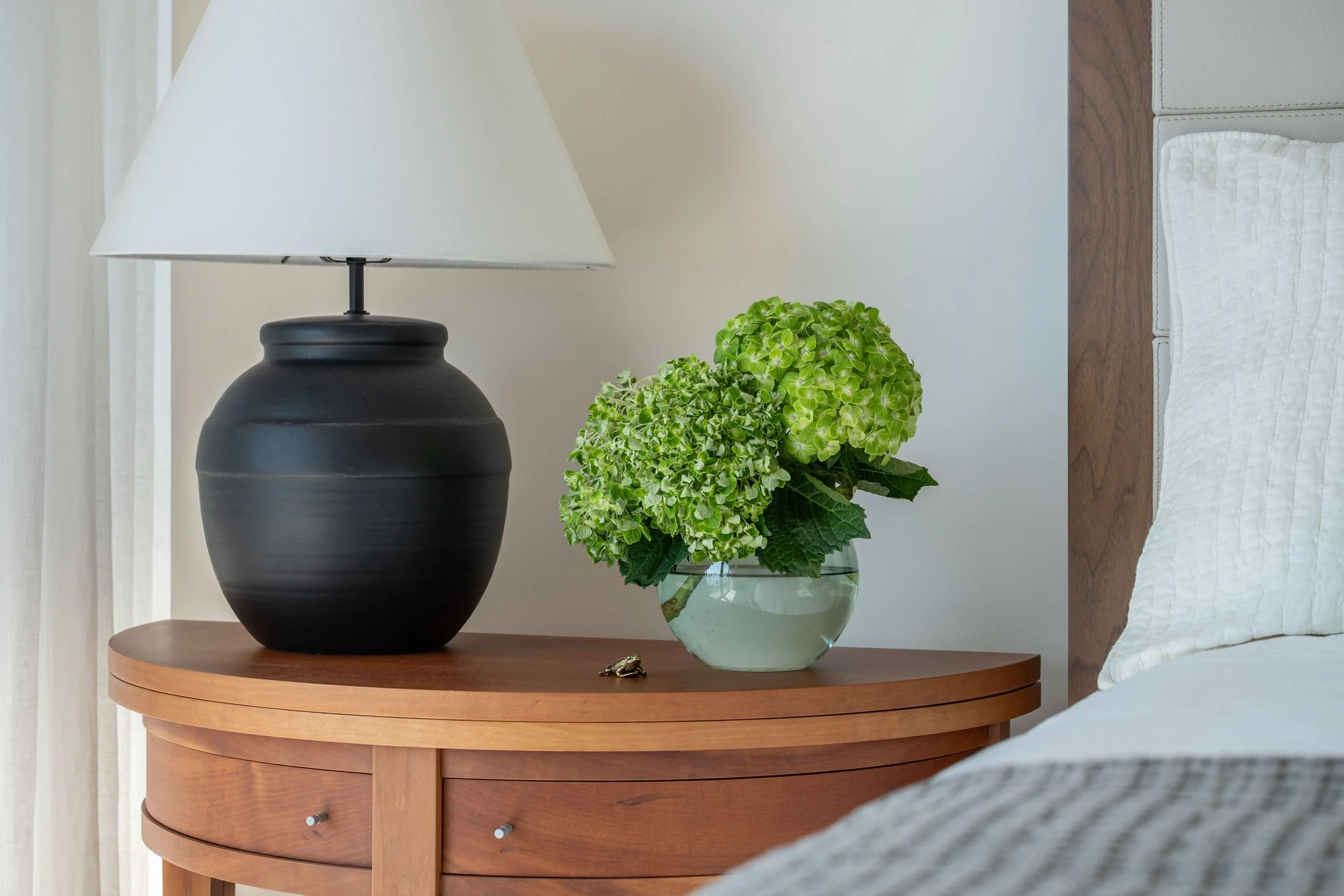
These separate suites honor different personal narratives and tactile preferences. One suite may be a soft, monochromatic cocoon of organic cotton, while the other is a crisp, architectural space featuring curated art. This level of personalization allows the home to function as a holistic sanctuary, where the environment aligns perfectly with the inhabitant’s internal world.
Cultivating Mystery and Intentionality
There is a profound psychological benefit to physical boundaries. Academic studies suggest that couples who maintain high levels of personal autonomy often report greater long-term relationship satisfaction (Storm, 2023).
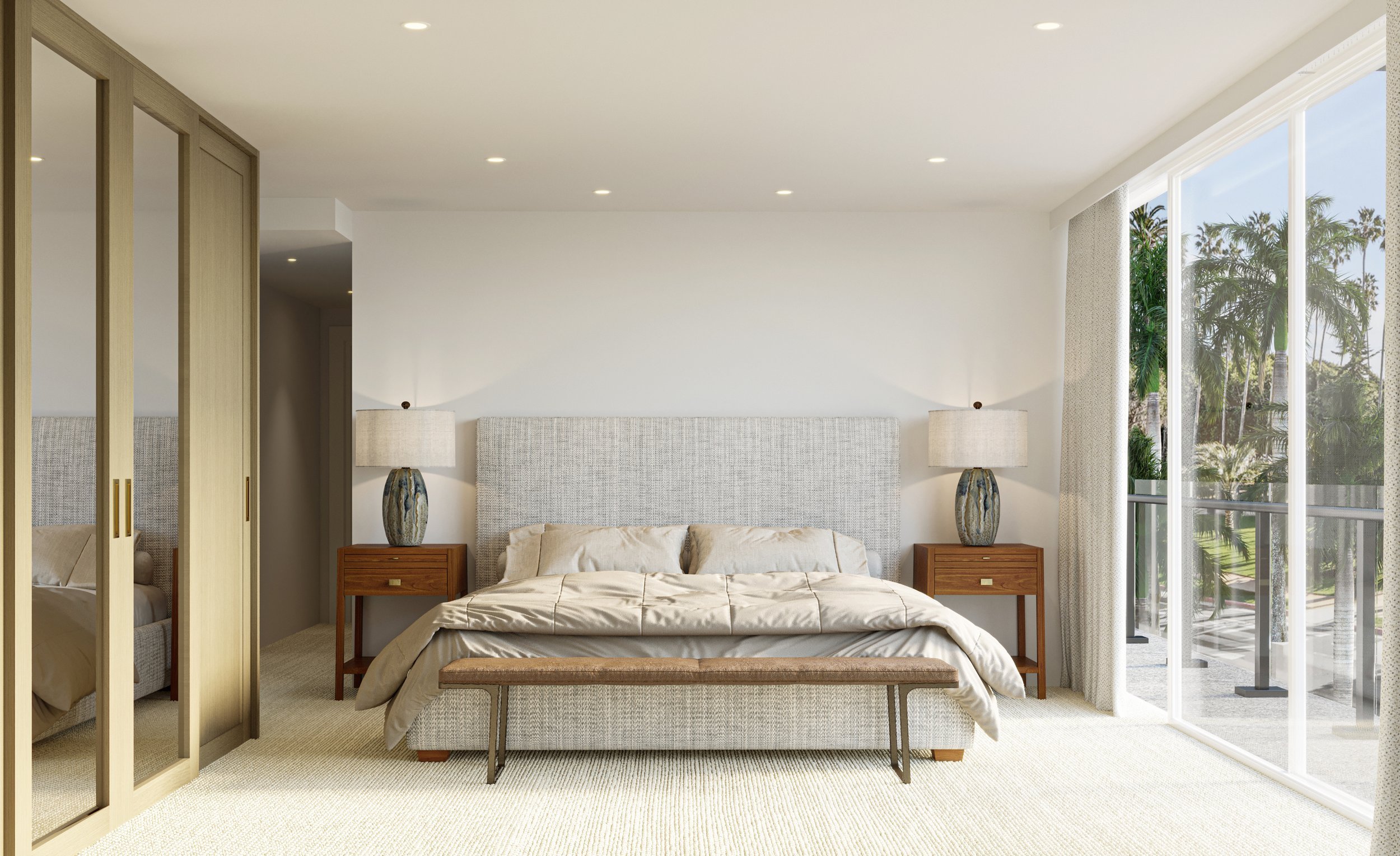
Sharing every mundane detail of one's morning and evening routine can, over time, diminish the sense of mystery that fuels attraction. Individual dressing areas and bathrooms allow for the big reveal. When partners meet for an evening or retire to one another’s chamber, they do so with intentionality. They have had space to prepare, center themselves, and show up for their partner as their best selves. Inviting a partner into one’s private domain mirrors the romantic traditions of high society, making being together a curated experience rather than a habitual necessity.
Lifespan Design: The Wellness Wing
A forward-thinking home must also account for life’s transitions. We often design one primary sanctuary on the ground level, not out of immediate need but as a proactive wellness wing.
These spaces use universal design principles, incorporating curbless showers and wider clearances without sacrificing luxury. A dedicated space for recovery or health management allows for individualized care without disrupting the partner’s well-being (Troxel, 2021). Whether for temporary recovery or a long-term shift in mobility, these suites ensure the home remains a place of comfort and dignity, not a source of stress.
Conclusion: Living Without Compromise
In the modern luxury home, the most valuable commodity is the ability to live as one chooses. The shift toward individual sleeping sanctuaries represents a maturation of residential design, moving away from societal expectations and toward a more enlightened understanding of health, identity, and partnership.
By designing for autonomy, we create homes that do more than house us; they support our biology and protect our relationships. Living like royalty is not about the size of the bed, but the quality of rest and the freedom to be oneself.

Sarah Barnard is a WELL and LEED accredited interior designer and creator of environments that support mental, physical, and emotional wellbeing. She creates highly personalized, restorative spaces that are deeply connected to art and the preservation of the environment. A certified California Naturalist, Sarah believes in celebrating nature through responsible design that works symbiotically with the local environment.
An advocate for consciousness, inclusivity, and compassion in the creative process, Sarah has appeared in Architectural Digest, Elle Décor, Vogue, HGTV, and many other publications. Sarah was recognized as a "Ones to Watch" Scholar by the American Society of Interior Designers (ASID) and has been awarded "Best of Houzz Design" for seven consecutive years. Sarah's MFA in visual arts from Claremont Graduate University informs her practice and innovative approach toward interior design as creating a living work of art.
Works Cited
International WELL Building Institute. WELL Building Standard v2. 2020.
Pulling Back the Sheets: Exploring the Impact of Sleep on Couples' Relationships. Sleep Research Society, 2024.
Storm, Nina. "The Importance of Personal Space in a Relationship." University of California, Berkeley, 2023.
Troxel, Wendy M. "Multilevel Analysis of Sleep and Relationship Quality." PubMed Central, National Institutes of Health, 2021.
The Future of Flourishing: A First Look at the Unified WELL Standard
We believe the environments we inhabit should do more than house our daily activities; they should actively support our well-being. This philosophy is why we closely follow the evolution of the WELL Building Standard, the global benchmark for health-centric design.
Recently, the International WELL Building Institute (IWBI) shared a significant milestone: the next version of the WELL Standard is now open for public comment through May 1. This "One WELL" vision is a thoughtful reimagining of how we create, measure, and sustain spaces that put people first.
A Unified Vision for Health
The most significant shift in this update is the move toward a unified, harmonized standard. Previously, different types of projects, from commercial offices to residential spaces, navigated separate frameworks. The new preview consolidates these into a single cohesive system.
This "One WELL" approach ensures that whether we design a private sanctuary or a community hub, the core principles of human health remain consistent and accessible. It’s a more intuitive way to look at the building blocks of wellness, making it easier for designers and inhabitants to understand how a space supports them.

What is Changing?
While the rigorous, evidence-based strategies that define WELL remain the foundation, the way we interact with them is becoming more streamlined. Key updates in this preview:
Integrated Ratings and Certification: In a shift that honors every effort made toward health, the new structure ensures that "every step forward counts." Points earned toward specific health, safety, or equity ratings now count toward full WELL Certification.
Thematic Groupings: Strategies are now organized into intuitive themes. This allows design teams to pinpoint goals, such as mental health support or restorative lighting, with greater precision.
Clearer, Global Language: The requirements have been rewritten to be clearer and more scannable. This shift away from dense technical jargon makes the standard more adaptable across global markets and easier for homeowners and business owners to implement with confidence.
Rewarding Progress: Preconditions, the mandatory baseline requirements, will now qualify for points across the board. This recognizes the value of these fundamental health features and rewards projects for their commitment to baseline excellence.

Designing for the Whole Person
At its heart, the evolution of the WELL Standard is about making "people-first places" the norm rather than the exception. By refining the concepts we've championed, like air, light, mind, and community, this update makes it simpler to weave wellness into the fabric of a building.
For example, the updated standard continues to prioritize:
Restorative Spaces: Creating opportunities for quiet reflection and connection to nature to mitigate daily stress.
Environmental Quality: Ensuring the invisible elements, the air we breathe and the water we drink, are held to the highest purity standards.
Inclusive Design: Expanding the community concept to ensure spaces are equitable, accessible, and welcoming to all, regardless of physical abilities or backgrounds.

Why Your Voice Matters
The IWBI is seeking feedback from the community of designers, architects, and occupants who live and work in these spaces. The public comment period is an opportunity to ensure the standard remains practical and impactful for real-world application.
By participating in this process, we contribute to a future where our buildings are tools for longevity and joy. As this new version moves from preview to final release, it promises to make the journey toward a healthier home or workplace more efficient and rewarding.
Sarah Barnard, WELL AP + LEED AP, is a leading interior designer of personalized, sustainable spaces that support mental, physical, and emotional wellbeing. She creates highly personalized, restorative spaces that are deeply connected to art and the preservation of the environment. An advocate for consciousness, inclusivity, and compassion in the creative process, Sarah has appeared in Architectural Digest, Elle Décor, Vogue, HGTV, and many other publications. Sarah was honored as a “Ones to Watch” Scholar by the American Society of Interior Designers (ASID).
References & Further Reading
For those interested in the rigorous science and evolving frameworks behind the One WELL vision, the following resources provide the foundational data and official guidelines used to develop these health-centric strategies:
Primary Sources
International WELL Building Institute (2026). The WELL Building Standard: Concept Directory. An overview of the eleven core categories of human health in the built environment.
International WELL Building Institute (2026). One WELL: A Unified Vision for the Future of Health. Official announcement regarding the harmonization of WELL programs and the public comment period.
IWBI Public Comment Portal (2026). Standard Preview and Feedback Forum. The active platform for reviewing side-by-side comparisons of v2 and the upcoming enhancements (Open through May 1, 2026).
Foundational Research
Allen, J. G., & Macomber, J. D. (2020). Healthy Buildings: How Indoor Spaces Drive Performance and Productivity. Harvard University Press. A key text often cited by IWBI regarding the economic and cognitive benefits of healthy offices.
World Health Organization (WHO). Guidelines for Indoor Air Quality. The scientific basis for many of the Air and Materials requirements found within the WELL Standard.
Global Wellness Institute. Wellness Architecture & Design Initiative. Research exploring the intersection of the built environment and holistic human health.

Feeling = Being: Why Emotional Design is More Than a Feeling
The Interior State: Designing for the Human Experience
The traditional discourse surrounding the home often prioritizes tangible assets, focusing on square footage, stylistic labels, and market value. However, for those who see their residence as a sanctuary, the true measure of a space lies in its invisible luxury: the profound impact it has on the occupant's internal state. Modern design is evolving beyond the purely aesthetic to embrace a more vital truth: our environments are the primary authors of our daily experience.
This perspective is rooted in the idea that feeling equals being. It suggests that a home is not just a physical structure but a specialized environment for cognitive recovery and emotional sovereignty. When we acknowledge that our surroundings dictate our internal reality, the role of interior design shifts from decoration to essential stewardship over the human condition.

The Biological Reality: Interiority as Objective Data
The concept that feelings are subjective or secondary to physical reality is increasingly challenged by neurobiological research. Studies suggest that the human brain may conceive of feelings as objective reality, processing emotional states with the same physiological weight as color, shape, or size (Cornell University). If an individual feels depleted by a chaotic or poorly lit room, their body is experiencing a literal, physical state of depletion.
This biological connection is explained by the interaction between feelings, thoughts, and behavior, often described as a cascading effect where each element influences the other (Cognitive Behavioral Therapy Los Angeles). For the high-achieving individual, the home must serve as a proactive tool to manage the constant internal labor of emotional regulation. By designing interiors that mitigate stress and reduce cortisol levels, we are not just creating a pleasant atmosphere but actively reducing the biological tax on an individual's health and longevity.
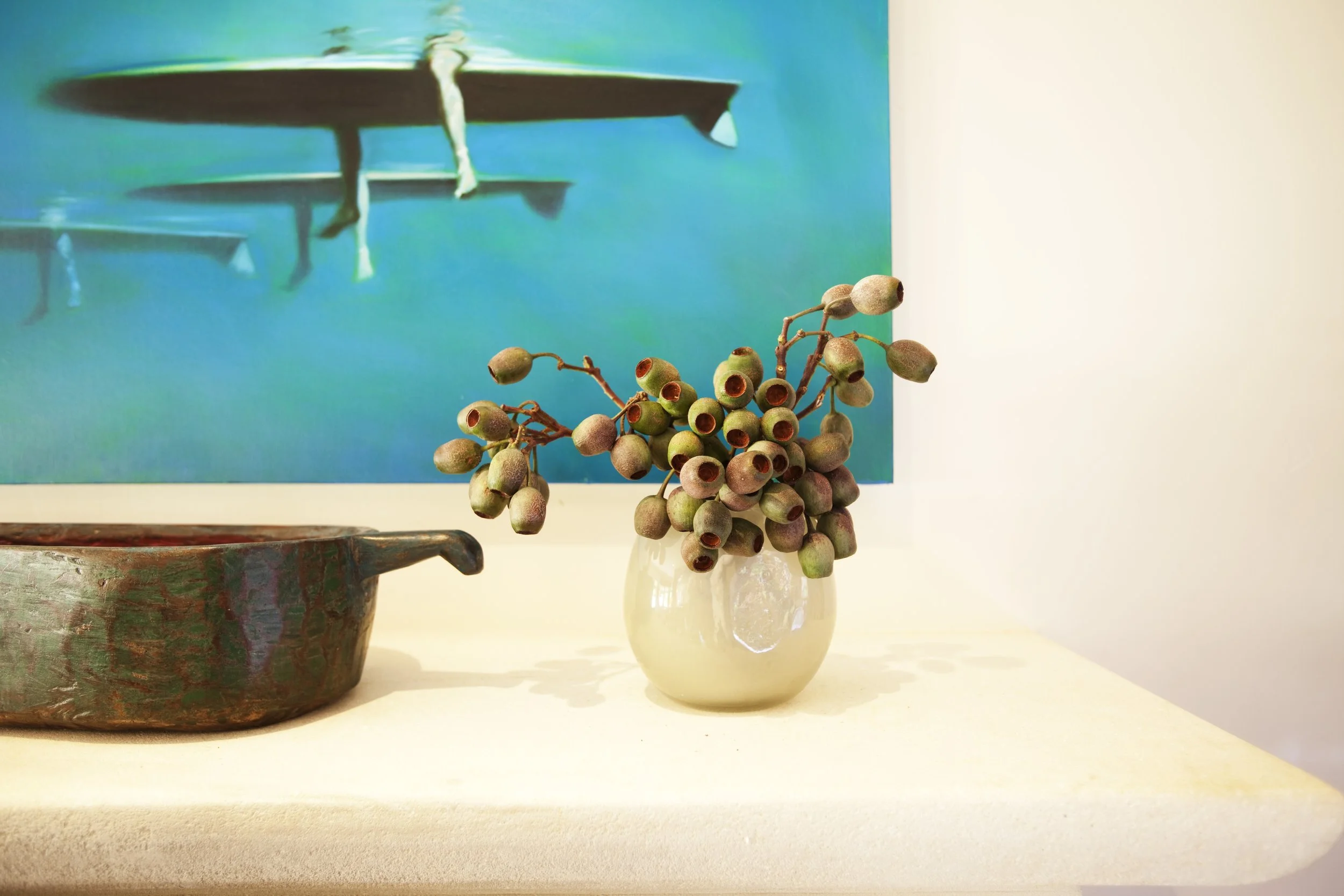
The Psychology of Space: How Interiors Map the Mind
The relationship between a person and their environment is deeply encoded in our neural pathways. Research indicates that specialized cells in the hippocampus are sensitive to the geometry and spatial arrangement of our surroundings (University of Waterloo). This means that the layout of a room is never neutral, as it is constantly being mapped by the brain to determine levels of ease or agitation.
Historically, this understanding was applied to monumental structures to evoke specific communal responses. Sacred buildings and cathedrals were designed to facilitate the lifting of the eyes, a physical action that encourages regions of the brain to become more absorbent of the environment (CNN Style). While these historic examples focused on public awe, the modern bespoke interior applies similar intentionality to private life, creating spaces that evoke states of exploration, contemplation, and profound safety.

The Restorative Toolkit: Engineering Serenity
To facilitate a supportive state of being, designers use a sophisticated toolkit rooted in wellness and biophilia. Biophilic design is not just about adding plants to a room but involves implementing specific patterns shown to reduce stress and enhance cognitive performance (Browning et al.). Patterns such as refuge, which provides a sense of enclosure and security, or mystery, which encourages gentle engagement, are essential for creating a restorative atmosphere.
Furthermore, wellness oriented design incorporates elements like curated natural light, color psychology, and sensory variability to support mental health (Marymount University). Even the geometry of furniture and fixtures plays a role, as research shows the neurological benefits of curving shapes over sharp angles (Sina et al.). These microrestorative interventions, whether an artfully placed aquarium or a quiet garden view, offer essential breaks from directed attention and help prevent the fatigue and burnout common in modern life.
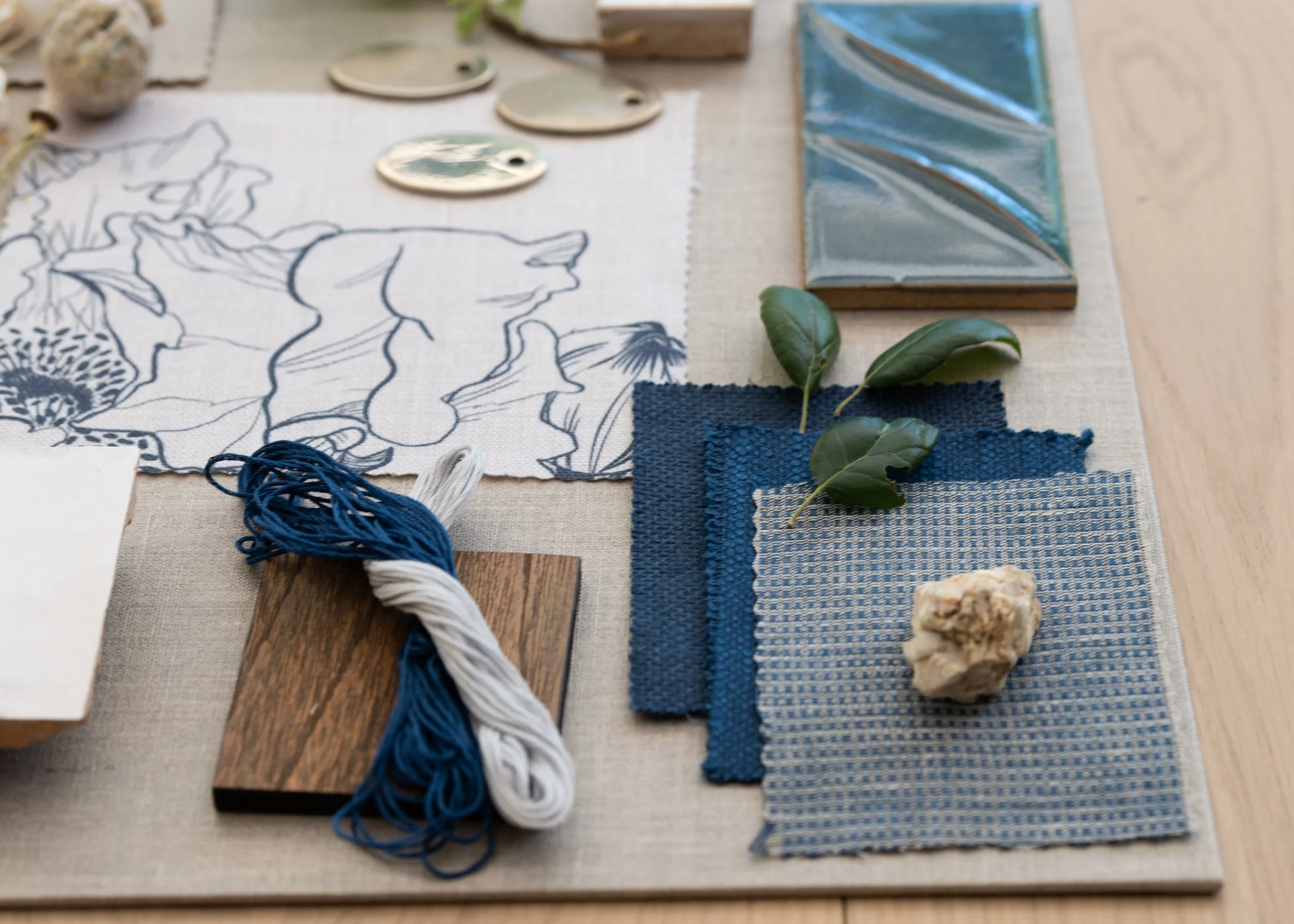
The Sarah Barnard Design Philosophy: Bespoke Emotional Sovereignty
The most critical aspect of designing for the interior state is recognizing individual perception. The interaction between sensory inputs and emotional response is highly personalized, as each person’s mind uses past experiences to inform how they perceive their current environment (Nautilus). Because there is no universal solution for well-being, true luxury must be bespoke.
The Sarah Barnard Design approach focuses on co-creating an environment that honors the client’s specific inner state. By naming the feelings we wish to cultivate, we can arrange our lives and homes to maximize time spent in positive energies. Ultimately, a well-designed interior serves as a sanctuary for the soul, providing the diversion and strength needed to navigate the world with grace. When our environment supports our feelings, it sustains our very being.
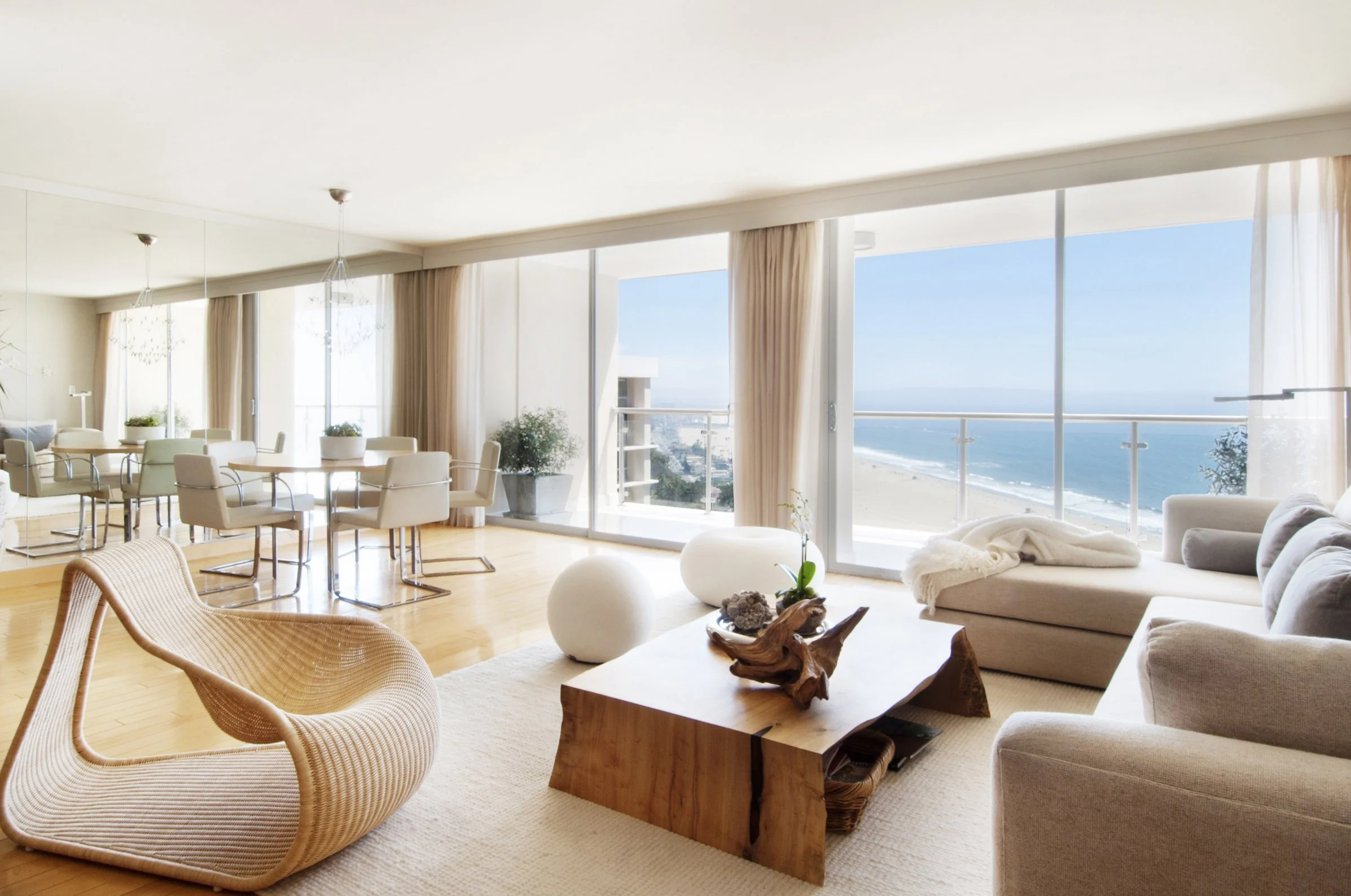
Sarah Barnard is a WELL and LEED accredited interior designer and creator of environments that support mental, physical, and emotional wellbeing. She creates highly personalized, restorative spaces that are deeply connected to art and the preservation of the environment. A certified California Naturalist, Sarah believes in celebrating nature through responsible design that works symbiotically with the local environment.
An advocate for consciousness, inclusivity, and compassion in the creative process, Sarah has appeared in Architectural Digest, Elle Décor, Vogue, HGTV, and many other publications. Sarah was recognized as a "Ones to Watch" Scholar by the American Society of Interior Designers (ASID) and has been awarded "Best of Houzz Design" for seven consecutive years. Sarah's MFA in visual arts from Claremont Graduate University informs her practice and innovative approach toward interior design as creating a living work of art.
Works Cited
Browning, William D., Catherine O. Ryan, and Joseph O. Clancy. 14 Patterns of Biophilic Design: Improving Health and Well-Being in the Built Environment. Terrapin Bright Green, 2014.
CNN Style. "How Architecture Affects Your Brain." CNN, 2024.
Cognitive Behavioral Therapy Los Angeles. "The CBT Model of Emotions." CBT-LA, 2024.
Cornell University. "Objective Feelings: New Research Suggests Our Brain Tells Us Feelings Are Reality." Cornell Human Ecology, 2024.
Marymount University. "Designing for Well-Being: The Role of Interior Architecture in Mental Health." Marymount Blog, 2024.
Nautilus. "How Emotions Connect Your Body and Brain." Nautilus, 2024.
Sina, Amanda, et al. "Impact of Curvature on Aesthetic Choices." National Library of Medicine, 2021.
University of Waterloo. "The Hidden Ways Architecture Affects How You Feel." Department of Psychology, 2024.

Creative Workspaces: Home Office Interior Design Reimagined
As a WELL and LEED-accredited interior designer specializing in spaces that support emotional and physical wellbeing, I have a particular passion for creative workspaces. Creative work can be inherently joyful and healing, and having a dedicated space, whether an entire room, a desk, or even a chair outdoors that is devoted to accessing a creative flow state, can be an excellent way to find support in the home. Even the intentionality of dedicating an area to creativity gives that work weight and importance, automatically making it a greater priority. The more care put into thinking about a creative space, or any space, the more likely it is to become a functional presence in life, which can be a great way to encourage positive and joyful habits.
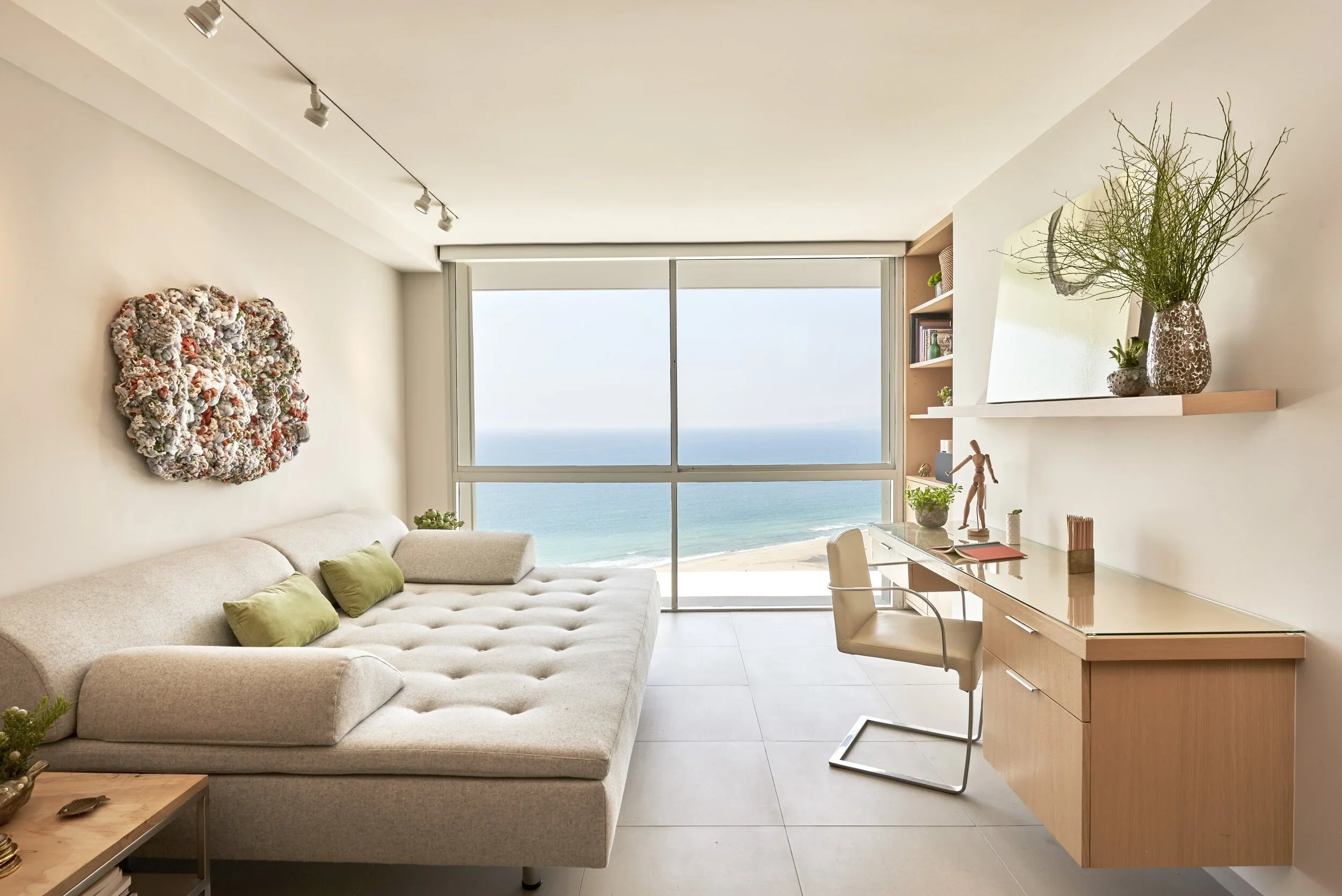
One of the things I talk about with many of my clients is designing a space that is specific to their needs and preferences, and working with them to feel comfortable eschewing any expectations they may feel obligated to meet about what a room should look or be like. Many of us adapt to the environments we are in, rather than adapting our spaces to meet our needs. Increasingly, people are craving spaces and routines that feel aligned with who we are, rather than trying to match expectations that feel out of step with what actually works for us. When I’m working, I try to take to heart the idea of meeting my own environmental and emotional needs. Not only does it support my best creative work, but it also helps reinforce how important it is for the client to have this same experience, and makes me feel more connected to my goals as a designer.
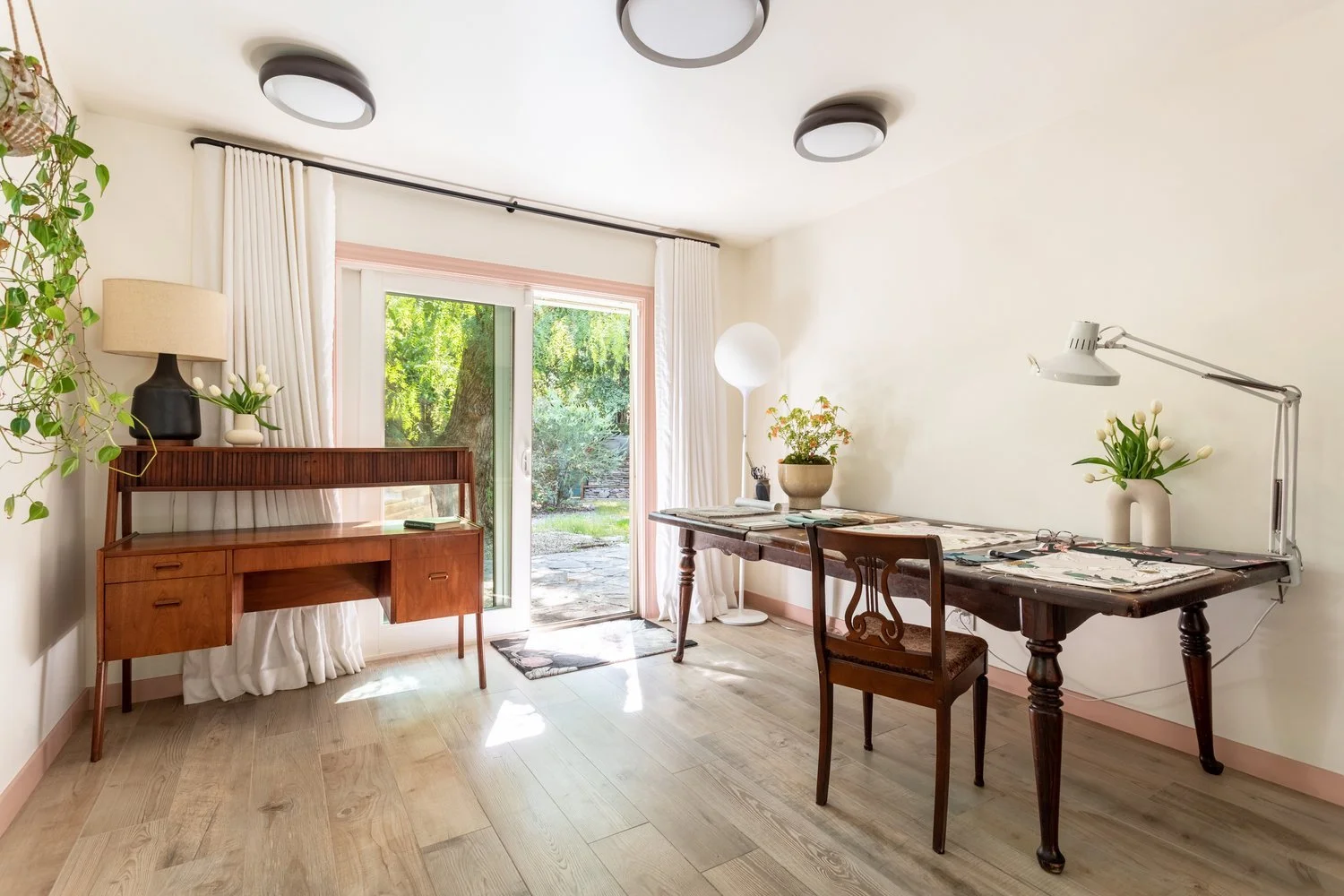
I’ve come to learn that different parts of the creative and work process may be best supported by different surroundings. When I’m waking up my brain and body, I like to start the day in the garden. Nature is a huge part of my creative work, but it’s also where I find the most joy and feel most connected to the world and to myself. I love the quiet acts of caretaking as I tend to my plants, and seeing them progress and change reflects the seasonality and natural rhythms of the earth. Seeing the plant life and the birds, and collecting pine cones and seed pods, all help me ground and relax in a way that lends itself to creative thinking throughout the day. While I don’t necessarily spend the time in my garden looking for inspiration, it always finds me. Many of the colors, textures, and imagery in my client work and in the products of my home goods studio, Kale Tree, are inspired by time spent in my garden.

After feeling fully immersed in nature and ready to begin my day in the studio, I’ve found that limited sensory input gives me the most mental space and clarity for creative expansion and problem-solving. Soft, natural lighting, silence, minimal to no scents, and no distracting textures all contribute to a profound external quiet that lets my internal world take focus, and that is really when I can enter a creative flow state where I do my best work. Then, I can tap into the imagery and inspiration that guide my designs and connect with my clients' desires without the distraction of a conflicting external space.
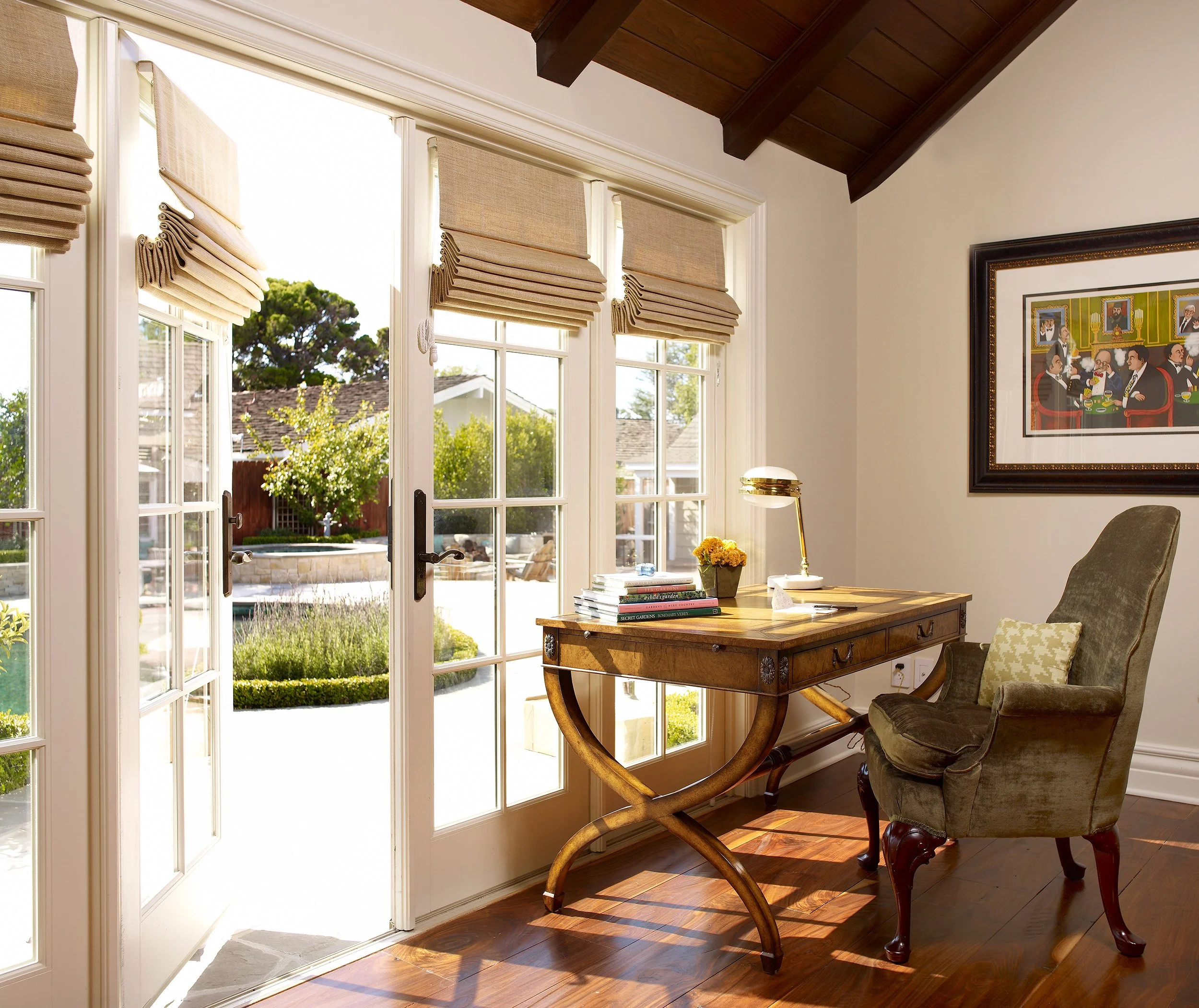
Knowing that I need such minimal sensory input has really emphasized the importance of encouraging clients to honor their personal sensory sensibilities. Every person needs a space as individual as they are, and it’s so important to evaluate what works best for them. If there is a moment when someone really feels they are in a flow state and connecting with a positive feeling, creatively, taking a step back afterward to take stock of their environment can be a good way to reflect on what’s most supportive.

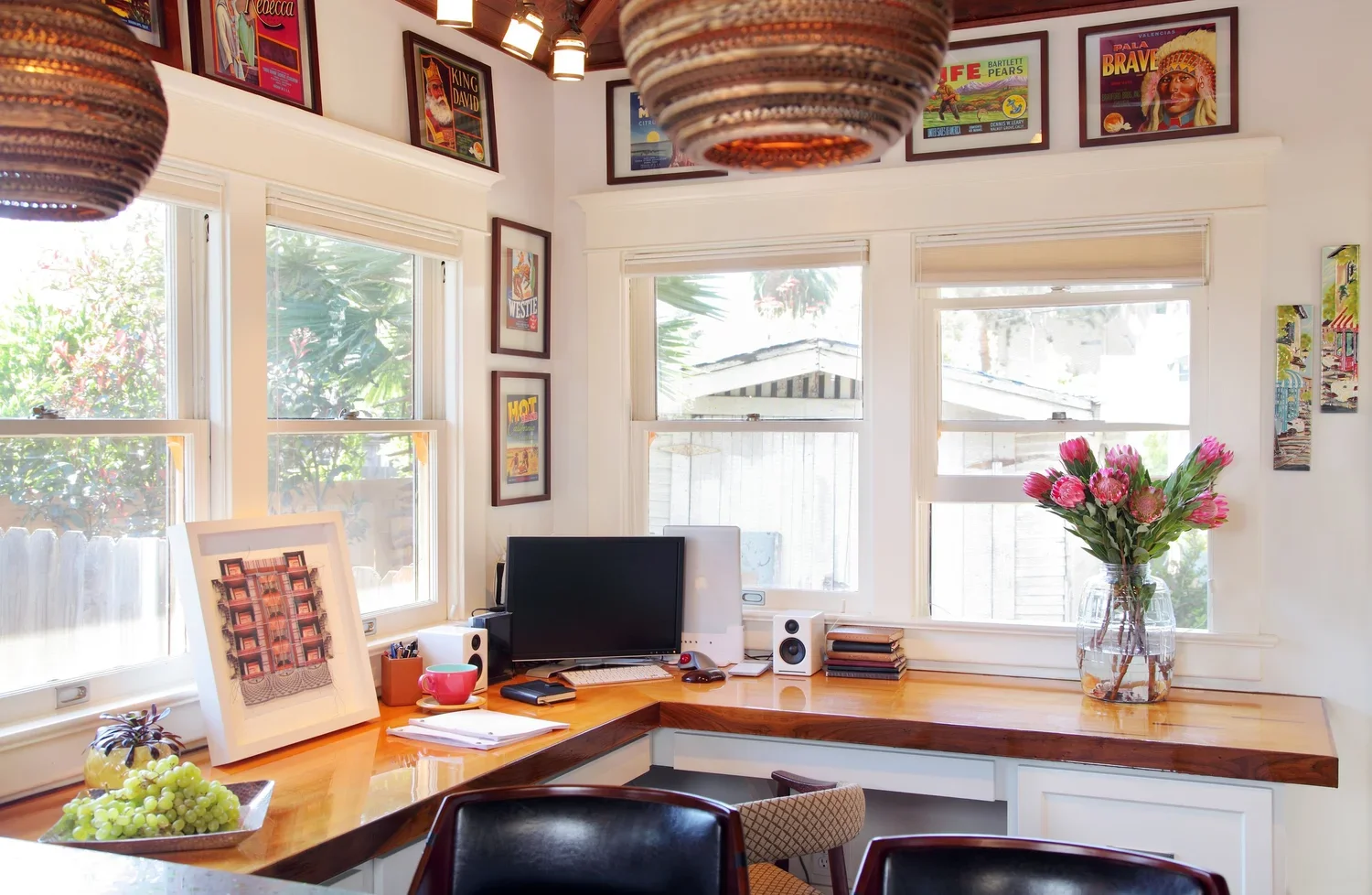
So often, expectations around design can override actual habits and preferences. A common anecdote from clients remodeling their homes is that, although they currently have a designated home office, they usually work at the kitchen table. Knowing this becomes a great opportunity to reconsider the idea of a home workspace and embrace personal sensibilities, rather than expectations about what a home office should be or look like. Is it the warmth and comfort of being around family? The openness of the space, or a more expansive view? Maybe it’s not abandoning a home office altogether, but creating a space that adapts more to a work environment that is actually pleasurable. Taking the time to evaluate what is supportive and what makes it easier for someone to access a flow state can lead to perhaps more unconventional spaces, but also more productive ones. Re-examining how we approach these concepts and environments is one of the most exciting parts of my job and one of the best ways to help my clients physically and emotionally.
Sarah Barnard is a WELL and LEED accredited designer and creator of environments that support mental, physical, and emotional wellbeing. She creates highly personalized, restorative spaces that are deeply connected to art and the preservation of the environment. A certified California Naturalist, Sarah believes in celebrating nature through responsible design that works symbiotically with the local environment.
An advocate for consciousness, inclusivity, and compassion in the creative process, Sarah has appeared in Architectural Digest, Elle Décor, Vogue, HGTV, and many other publications. Sarah was recognized as a "Ones to Watch" Scholar by the American Society of Interior Designers (ASID) and has been awarded "Best of Houzz Design" for seven consecutive years. Sarah's MFA in visual arts from Claremont Graduate University informs her practice and innovative approach toward interior design as creating a living work of art.