

Sarah Barnard Projects Earn Global Design Honors
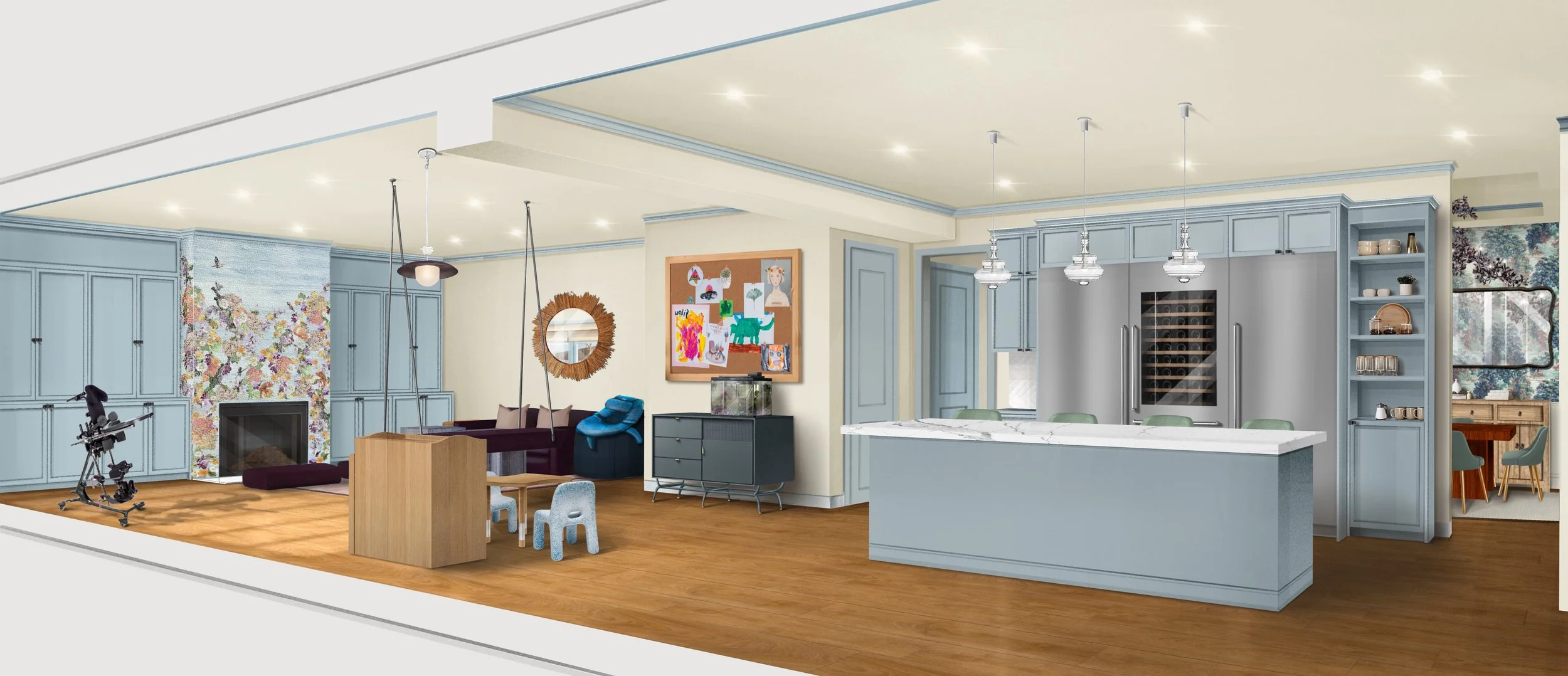
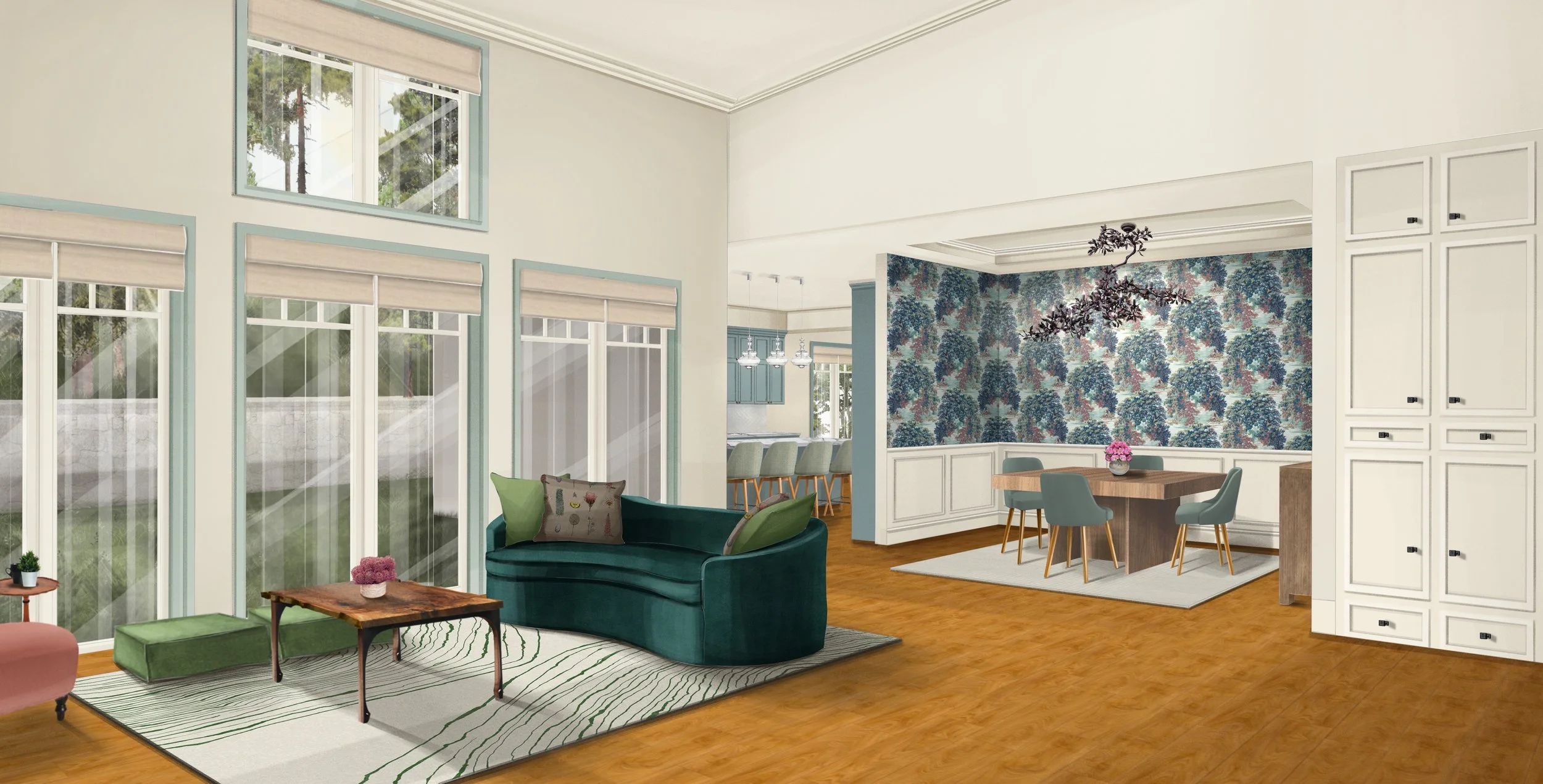
Hummingbird Hill by Sarah Barnard Design
Three projects designed by Sarah Barnard have been honored in the prestigious INT Interior Design Awards, with two named to the longlist and one selected for the shortlist.
The INT Interior Design Awards is a highly competitive global program celebrating exceptional interior architecture and design across more than 35 countries. Judged by an international panel of design professionals, these honors recognize standout projects from around the world that demonstrate exceptional innovation, execution, and design excellence.
Explore Sarah’s recently recognized work below:
Hummingbird Hill by Sarah Barnard Design
1. Hummingbird Hill
Named to the INT Interior Design Awards longlist in the Unbuilt Residential category, Hummingbird Hill demonstrates that luxury and specialized, supportive design can beautifully coexist. The estate integrates specialized pediatric environments, including a therapeutic swing, mobile stander zones, and a barrier-free supportive steam and wet room, into a high-end architectural framework.
Centered on holistic wellness, custom fine-art mosaics celebrate regional California wildlife and native flora. Featuring the project's namesake, the Allen’s hummingbird, these artisan details place family health and sensory calm at the center of the bespoke estate.

Coastal Calm by Sarah Barnard Design
2. Coastal Calm
Recognized on the longlist within the Apartments (100–200 sqm) category, Coastal Calm pairs material clarity with disciplined spatial flow to connect a private residence directly to its maritime environment. The open layout connects the living, dining, and kitchen zones while preserving uninterrupted ocean views.
Custom architectural millwork optimizes the footprint for functional luxury and media integration, while the overall layout thoughtfully incorporates the client's private art collection. Balancing rich textiles, natural oak, and stone surfaces, the interior introduces deliberate nature motifs alongside fine art to establish a unified design solution.
3. Inclusive Play Space
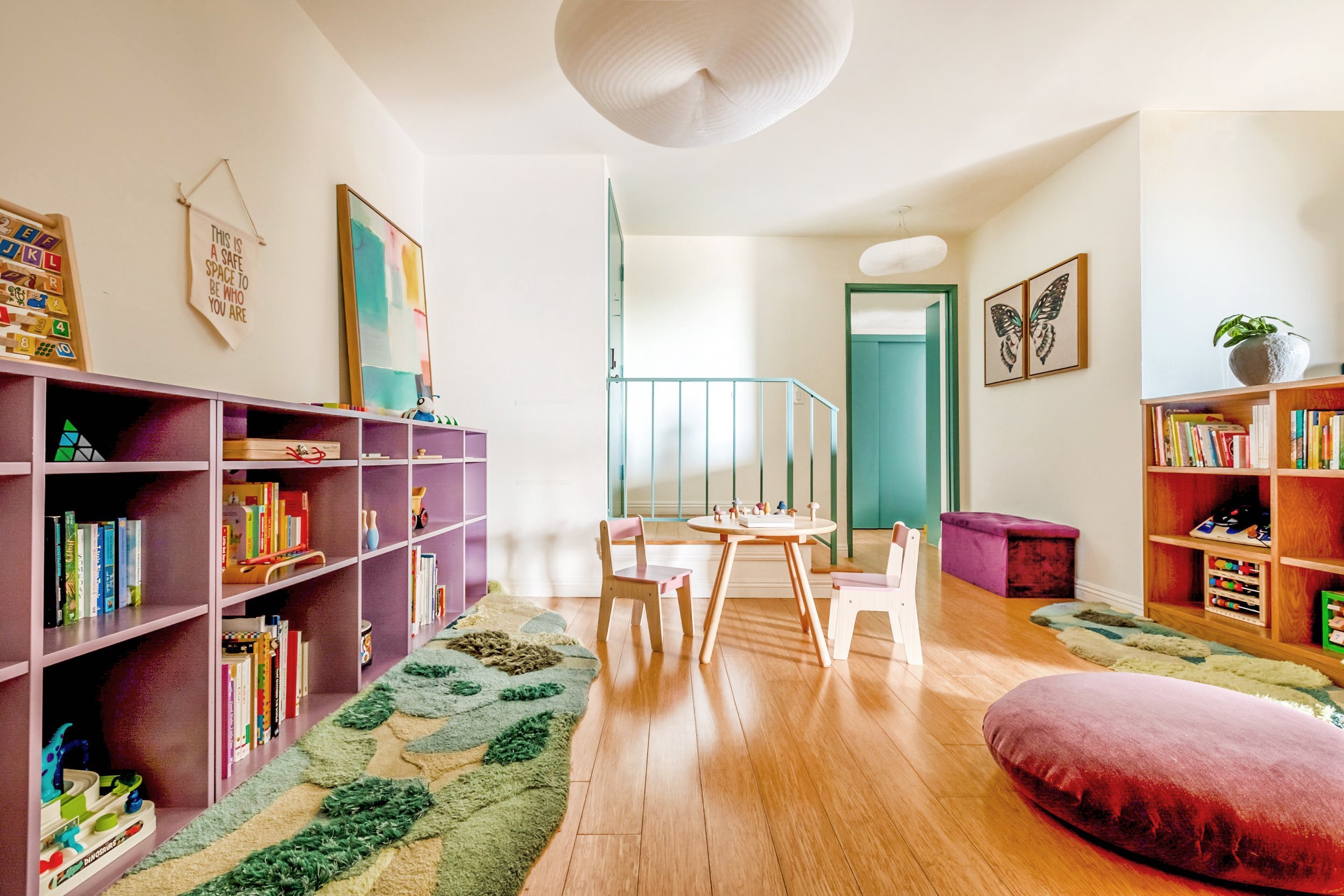
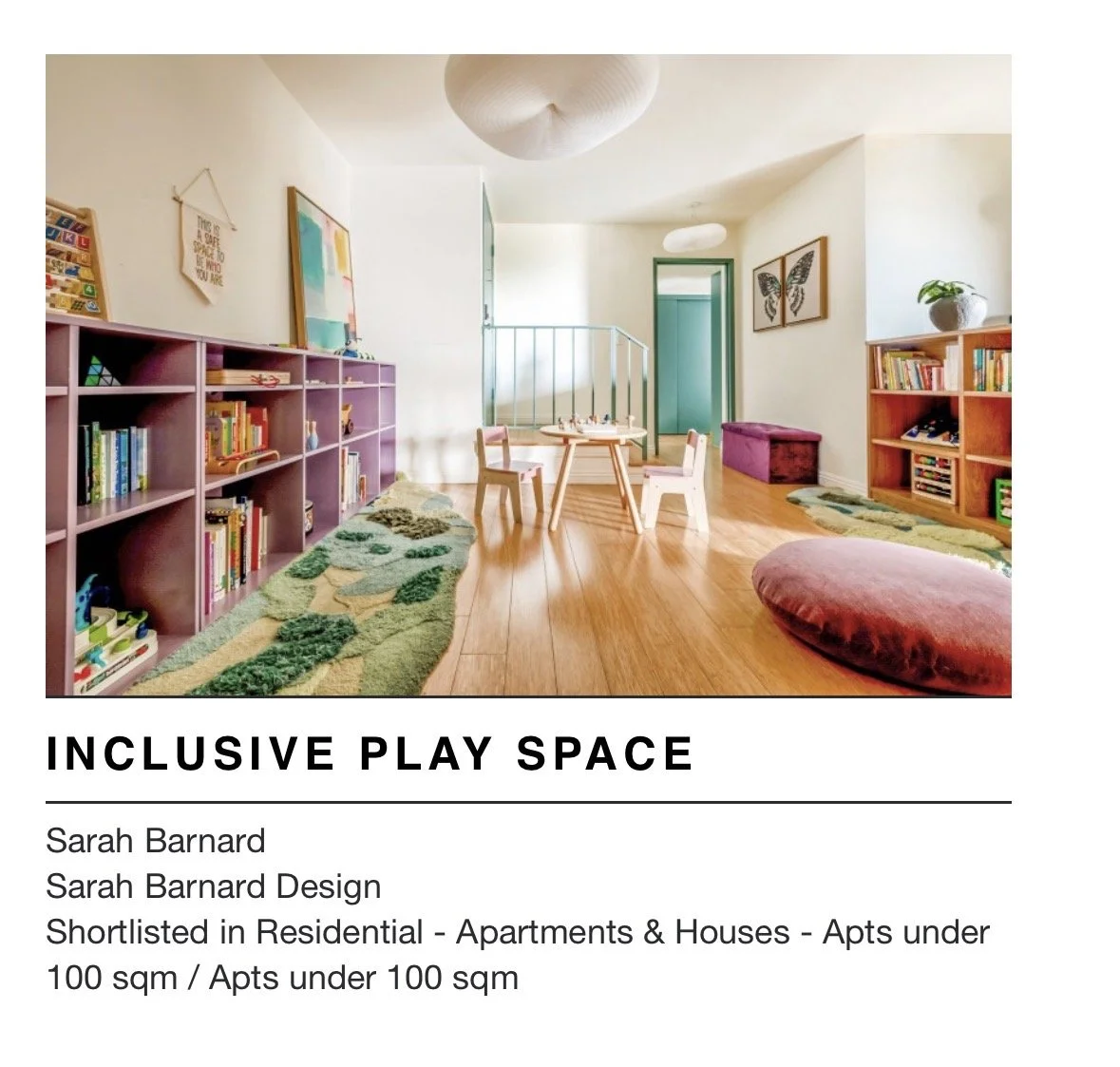
Earning a spot on the competitive shortlist in the Apartments (under 100 sqm) category, Inclusive Play Space was designed for an autistic, sensory-seeking child. This project seamlessly integrates clinical therapy into a compact residential setting. Custom 3D rugs with varied pile heights provide tactile stimulation while using negative space to define a running path.
The space features soft climbing forms, inspired by an aerial floral view, offering flexible configurations for physical play, leading up to an elevated bed that doubles as a crash pad. A custom treehouse with a circular portal and an escape tunnel lined with recycled glass pebble flooring provides a dedicated, high-sensory retreat.
A Shared Achievement
This international recognition highlights our studio’s dedication to pushing the boundaries of residential design. To have multiple projects selected by a global panel validates our commitment to creating highly tailored, innovative spaces that combine aesthetic excellence with deep functionality.
Thank you to our incredible clients for their trust and collaboration in bringing these recognized visions to life.

The Architecture of Autonomy: Elevating Wellness through Individual Sleeping Sanctuaries
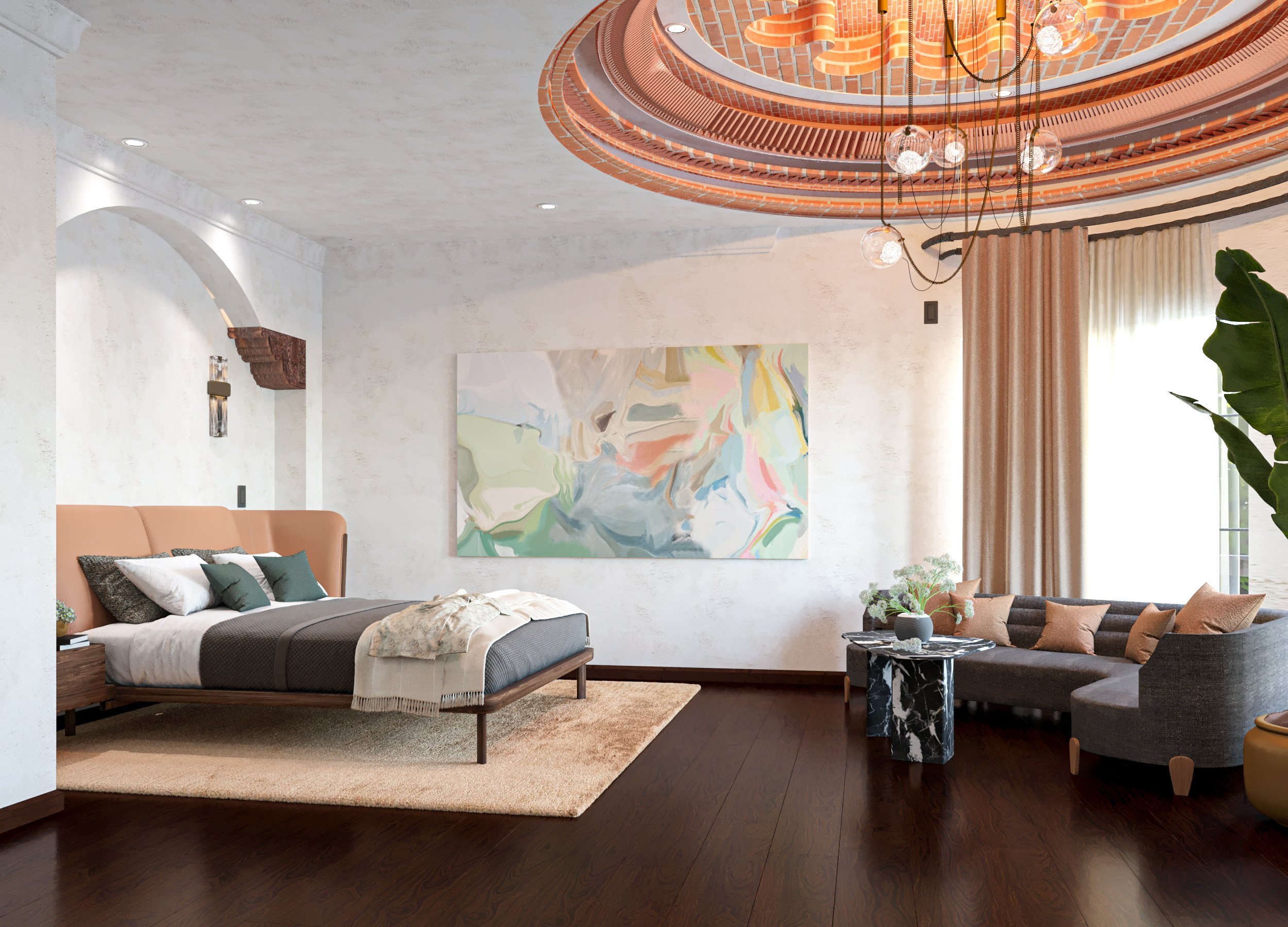
In high-end residential design, luxury is often defined by the removal of friction. We create environments that anticipate needs, soothe the senses, and provide a seamless backdrop for a life well-lived. While traditional floor plans have prioritized the shared primary suite as the pinnacle of domestic harmony, a more sophisticated perspective is emerging, looking to historical precedent and modern biological science to reclaim the luxury of personal space.
By prioritizing individual sleeping sanctuaries, we move beyond the limitations of shared environments and embrace the Architecture of Autonomy. This approach does not signal a departure from partnership; it honors the individual’s biological needs and identity, ultimately fostering a deeper, more intentional connection.
The Sovereign Precedent: A Legacy of Privacy
The concept of the shared bed is a relatively modern standard. Historically, the elite maintained distinct private chambers as a symbol of status and dignity. In royal courts, the separate chamber was not a sign of a distant marriage but a recognition of individual sovereignty. These suites facilitated the ceremony of one’s day, rising and retiring, allowing each person to maintain their own schedule and sensory preferences without imposition.
In contemporary design, we are returning to this regal standard. By shifting the narrative from a shared master to dual primaries, it gives homeowners the freedom to inhabit spaces that are entirely their own. This is not a compromise of intimacy but an elevation of it, transforming togetherness from a default setting into a meaningful, chosen event.
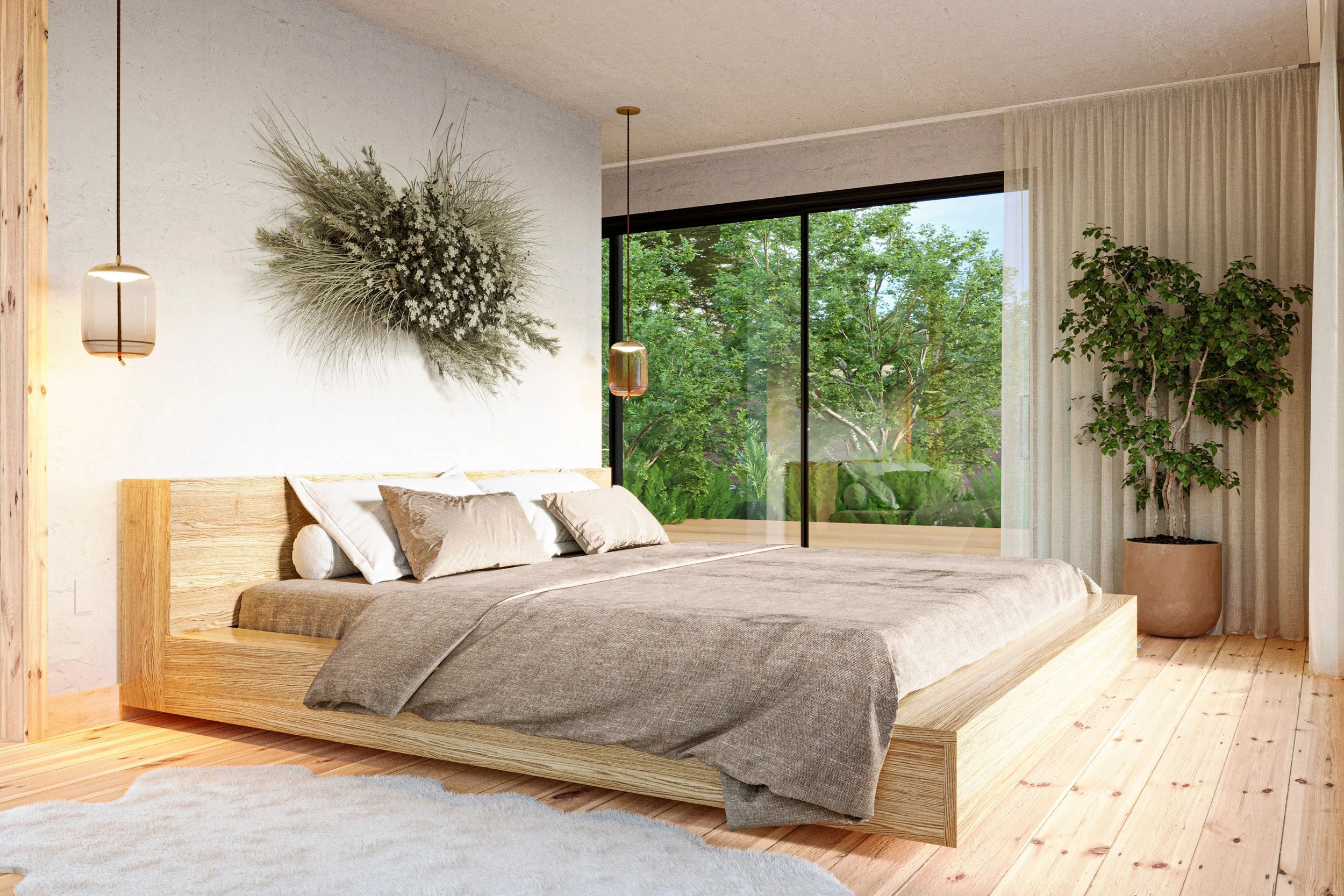
Biological Precision and Environmental Optimization
True restorative sleep is a highly individualized biological process. What one person requires for peak cognitive performance, such as a specific temperature, mattress firmness, or total darkness, may disrupt their partner.
Research demonstrates that a significant portion of an individual's sleep quality can be negatively influenced by a partner’s movements, differing sleep-wake cycles, or environmental preferences (Sleep Research Society, 2024). In a shared environment, one partner is almost always making a biological concession. Individual sanctuaries allow for the implementation of precision environmental controls tailored to the inhabitant’s specific circadian needs. One partner may opt for a suite designed with automated blackout shielding to facilitate deep, undisturbed rest, while the other prefers a space that welcomes natural morning light to stimulate a healthy awakening response (International WELL Building Institute, 2020). By removing these external disruptions, we ensure that both partners reach the deepest stages of restoration, arriving at the start of their day refreshed and emotionally resilient.
The Luxury of Unfiltered Identity
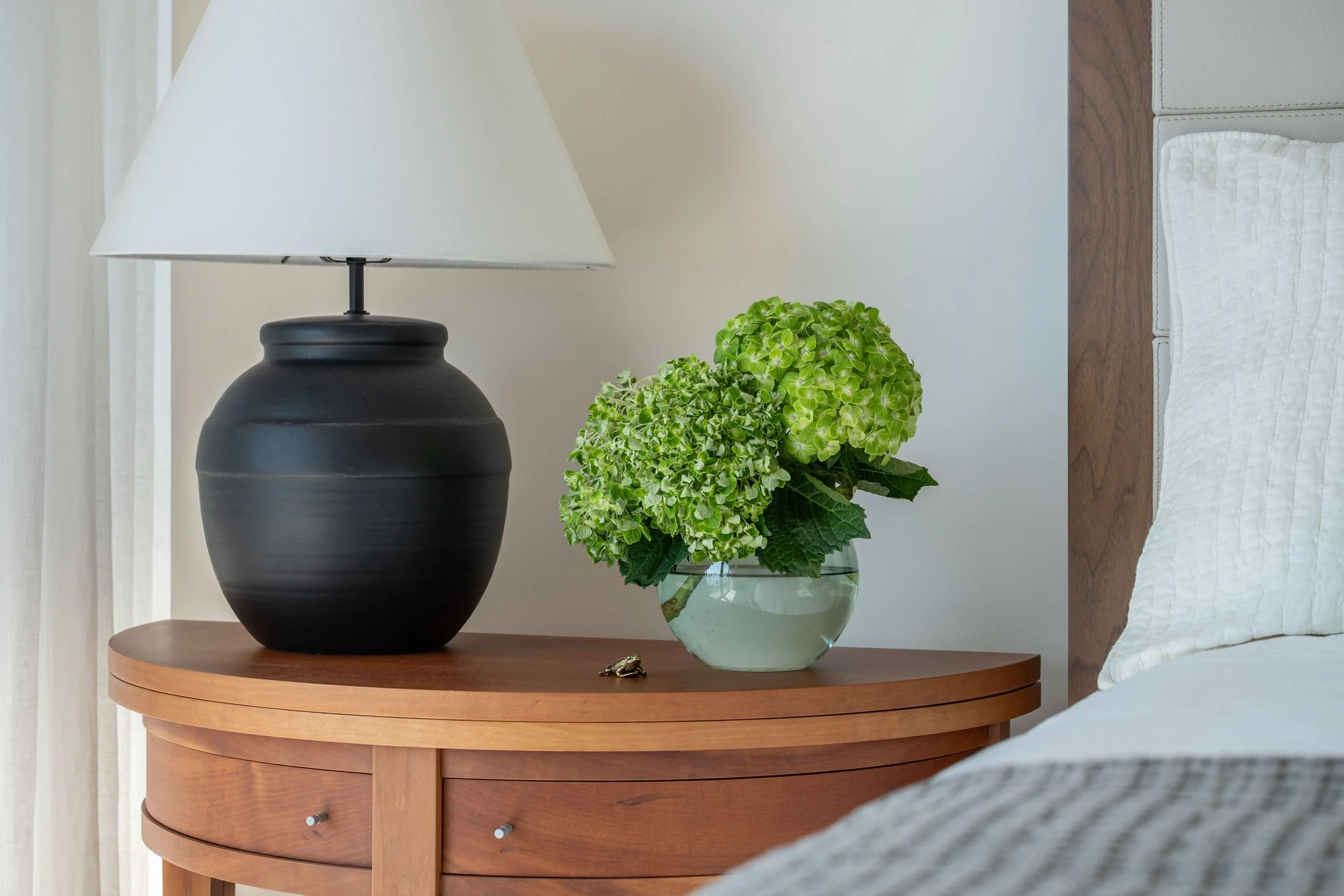
Beyond the biological benefits, separate suites offer an opportunity for aesthetic expression. In a shared bedroom, design is often a series of concessions, perhaps a neutral palette chosen to satisfy two tastes. In an autonomous sanctuary, the room becomes a pure reflection of the individual.
These separate suites honor different personal narratives and tactile preferences. One suite may be a soft, monochromatic cocoon of organic cotton, while the other is a crisp, architectural space featuring curated art. This level of personalization allows the home to function as a holistic sanctuary, where the environment aligns perfectly with the inhabitant’s internal world.
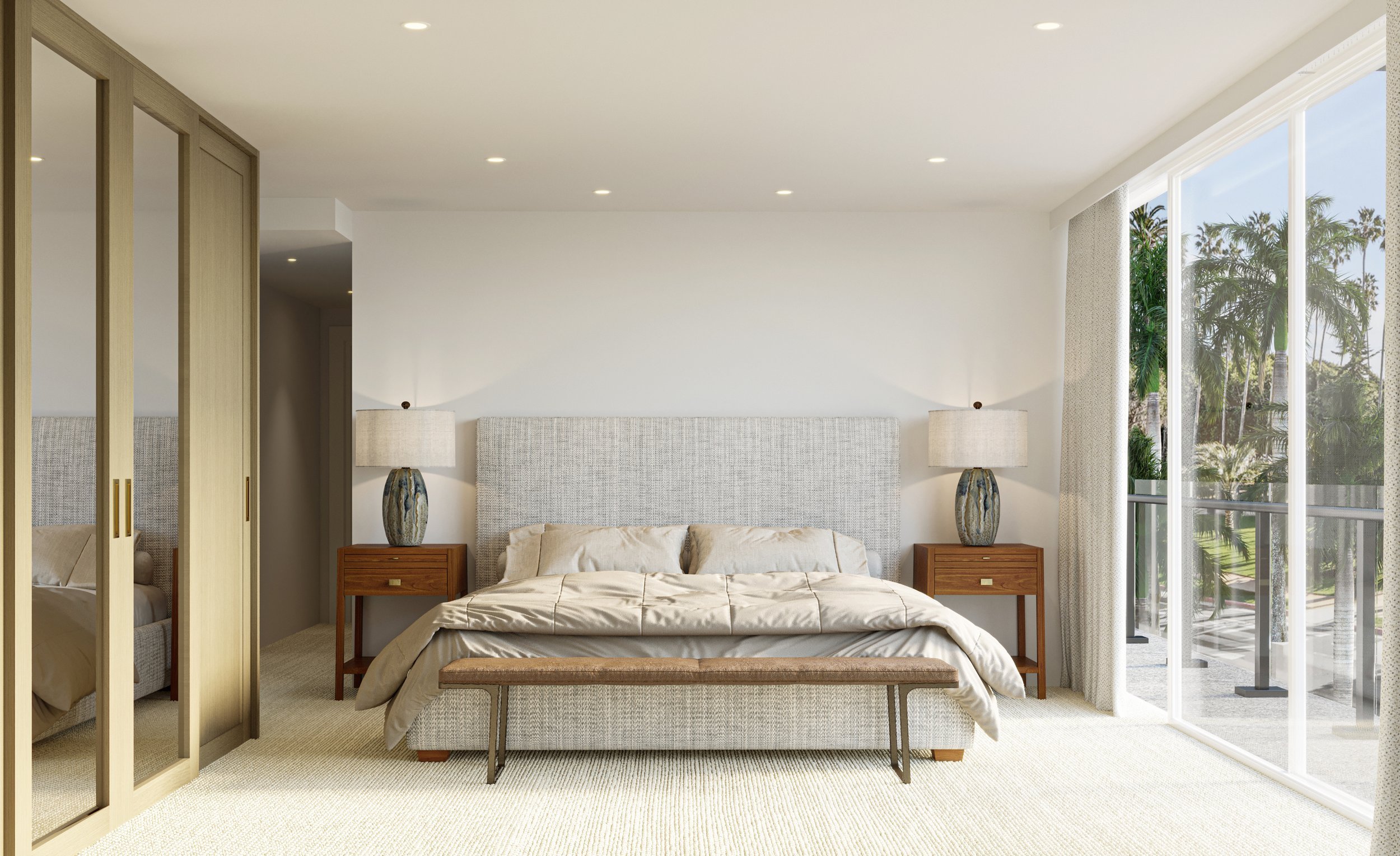
Cultivating Mystery and Intentionality
There is a profound psychological benefit to physical boundaries. Academic studies suggest that couples who maintain high levels of personal autonomy often report greater long-term relationship satisfaction (Storm, 2023).
Sharing every mundane detail of one's morning and evening routine can, over time, diminish the sense of mystery that fuels attraction. Individual dressing areas and bathrooms allow for the big reveal. When partners meet for an evening or retire to one another’s chamber, they do so with intentionality. They have had space to prepare, center themselves, and show up for their partner as their best selves. Inviting a partner into one’s private domain mirrors the romantic traditions of high society, making being together a curated experience rather than a habitual necessity.
Lifespan Design: The Wellness Wing
A forward-thinking home must also account for life’s transitions. We often design one primary sanctuary on the ground level, not out of immediate need but as a proactive wellness wing.
These spaces use universal design principles, incorporating curbless showers and wider clearances without sacrificing luxury. A dedicated space for recovery or health management allows for individualized care without disrupting the partner’s well-being (Troxel, 2021). Whether for temporary recovery or a long-term shift in mobility, these suites ensure the home remains a place of comfort and dignity, not a source of stress.
Conclusion: Living Without Compromise
In the modern luxury home, the most valuable commodity is the ability to live as one chooses. The shift toward individual sleeping sanctuaries represents a maturation of residential design, moving away from societal expectations and toward a more enlightened understanding of health, identity, and partnership.
By designing for autonomy, we create homes that do more than house us; they support our biology and protect our relationships. Living like royalty is not about the size of the bed, but the quality of rest and the freedom to be oneself.

Sarah Barnard is a WELL and LEED accredited interior designer and creator of environments that support mental, physical, and emotional wellbeing. She creates highly personalized, restorative spaces that are deeply connected to art and the preservation of the environment. A certified California Naturalist, Sarah believes in celebrating nature through responsible design that works symbiotically with the local environment.
An advocate for consciousness, inclusivity, and compassion in the creative process, Sarah has appeared in Architectural Digest, Elle Décor, Vogue, HGTV, and many other publications. Sarah was recognized as a "Ones to Watch" Scholar by the American Society of Interior Designers (ASID) and has been awarded "Best of Houzz Design" for seven consecutive years. Sarah's MFA in visual arts from Claremont Graduate University informs her practice and innovative approach toward interior design as creating a living work of art.
Works Cited
International WELL Building Institute. WELL Building Standard v2. 2020.
Pulling Back the Sheets: Exploring the Impact of Sleep on Couples' Relationships. Sleep Research Society, 2024.
Storm, Nina. "The Importance of Personal Space in a Relationship." University of California, Berkeley, 2023.
Troxel, Wendy M. "Multilevel Analysis of Sleep and Relationship Quality." PubMed Central, National Institutes of Health, 2021.

Sarah Barnard Wins 1st Place in Locale Magazine Los Angeles’s Favorite Interior Designer Poll

A flurry of votes were cast for the top 10 home designers competing for the title of Los Angeles’ Favorite Interior Designer. The contest, run by Locale Magazine and titled, “POLL: Who’s Your Favorite Interior Designer in Los Angeles?” was open from July 10th to July 16th, and allowed design fans to vote once per day through the contest’s closing.
The first-place winner, Sarah Barnard of Sarah Barnard Design, is a luxury interior designer with a focus on smart, sustainable home design and historic preservation. Known for her personable nature, experience with unusual requests, and her careful attention to detail, Sarah’s design practice contributes to the health and well-being of her clients. She understands that beauty and comfort can encourage physical and mental well-being and that our mental, physical, and emotional health are connected to the art and design of our surroundings.

With an elegant and approachable design aesthetic that is truly healthy and happy, Sarah has garnered a loyal following. Her clients are the 1% with a conscience. They own more than one multi-million dollar home; they are celebrities, entertainment executives, influencers and corporate leaders. They care about the environment and their impact on the world and thus choose quality, responsible design.
When the poll closed on July 16th, Sarah held 56.13% of the popular vote. The Locale Magazine article announcing the winners (on August 28th, 2018) captured Sarah’s secret to lasting relationships and returning clientele: “I am committed to meeting people where they are. My team is made up of diverse individuals, and we pride ourselves on enhancing the lifestyle of our clients through home design. An authentic home has the potential to be truly restorative and inspiring. Whether that means ultra-healthy materials for a new mom, blending two contrasting styles for a newlywed couple or utilizing universal design for a client with health concerns, it is always rewarding to help improve a client’s home and lifestyle.”

Featured first among the top 5 finalists and with a growing 39.8k following on Instagram, Sarah Barnard Design is consistently one of the highest ranking, top rated, most searched design firms on Houzz with over 1.8 million hits in the last year. Sarah’s projects have been featured in local, national, and international publications, and have placed prominently in several noted design competitions. She is committed to creating lasting spaces that contribute to the health and wellness of those who use them.
Sarah Barnard designs healthy, happy, personalized spaces that are deeply connected to nature and art.
To learn more about Sarah Barnard Design, please visit www.SarahBarnard.com.
Locale Magazine Top 5 Los Angeles Designers Article
Locale Magazine Top 10 Los Angeles Interior Designers Poll

Award Winning Los Angeles Interior Designer Achieves WELL Accreditation
Interior designer and Leadership in Energy and Environmental Design Accredited Professional (LEED AP), Sarah Barnard of Sarah Barnard Design has recently achieved recognition from the International WELL Building Institute (IWBI) as a WELL® Accredited Professional. The WELL Building Standard® is the premier standard for buildings, interior spaces and communities seeking to implement, validate and measure features that support and advance human health and wellness.


WELL was developed by integrating scientific and medical research on environmental health, behavioral factors, health outcomes and demographic risk factors that affect health with leading practices in building design and management. WELL Certification and the WELL AP credentialing program are third-party administered through IWBI’s collaboration with Green Business Certification Inc. (GBCI), which also administers LEED certification, the global green building program, and the LEED professional credentialing program. This relationship assures that WELL works seamlessly with LEED.

Sarah Barnard Design was established in 2003 with a focus on creating spaces that are respectful of history, healthy, art-forward, and deeply connected to nature. Sarah was LEED accredited in 2007 and WELL accredited in 2017. Some of her notable projects include the National Immigration Law Center, Heritage Square Museum, National Geographic Entertainment, and numerous beautiful residences.


Barnard was recently recognized as an American Society of Interior Designers (ASID) National Ones to Watch Scholar, was featured in the July 2017 Issue of Metropolis Magazine and is scheduled to guest lecture at the 2018 ASID National Student Summit, SCALE in Los Angeles, CA.
Sarah Barnard designs healthy, happy, personalized spaces that are deeply connected to nature and art.
To learn more about Sarah Barnard Design, please visit www.SarahBarnard.com.
For more information about WELL https://www.wellcertified.com/en

Sarah Barnard: LEED AP, Interior Designer, ASID Scholar Award Winner

Sarah Barnard has been recognised by the American Society of Interior Designers (ASID) as a rising leader in the interior design industry demonstrating exceptional leadership and a willingness to push the boundaries of the profession. Awarded with the highest honor of Scholar, the ASID recognises Sarah's commitment to fostering connectivity and growth throughout the community.


"As a LEED AP, I design healthy, sustainable interiors for non-profit organizations that work to protect our architectural and cultural heritage and fight for social and environmental justice."
Sarah has been committed to helping organizations that protect and advance our society as well as our humanity, standing firm in a quest to aid institutions such as: The Heritage Square Museum, the Santa Monica Conservancy and the Olmstead Preservation Association, working to protect architectural and cultural histories; the Downtown Women’s Center providing permanent supportive housing to homeless women; the National Immigration Law Center providing protection for immigrants, low-income workers and people of all genders and sexual orientations; Life Rolls On-Christopher and Dana Reeve Foundation, aiding and inspiring people with disabilities.
"These types of organizations have never been more important to our well-being, yet in present times, are at great risk. I understand that by providing pro-bono design services, securing donations of goods and services and by always continuing to encourage growth and expansion of a compassionate community, we can encourage each other to create a better world, with hope, beauty and dignity."

Sarah Barnard is a member of the American Society of Interior Designers (ASID), is certified by the National Kitchen and Bath Association (NKBA), and is recognized by the International Institute for Bau-Biologie & Ecology as a Building Biology Practitioner (BBP) and by the United States Green Building Council as a Leadership in Energy and Environmental Design Accredited Professional (LEED AP). She has served on the Santa Monica Conservancy's board of directors and specializes in sustainable interior design and historic preservation.
Undertaking a broad range of projects, all of which are grounded in smart design and mindful of healthy living, Sarah’s diverse body of work includes upscale private residences, chic restaurants, luxurious spas and impressive corporate headquarters. Her projects have been featured in local and national publications, and have placed prominently in several noted design competitions. Sarah holds a Master of Fine Arts degree from Claremont Graduate University as well as undergraduate degrees in Art and Interior Architectural Design. Her interior design practice is the culmination of education and interests in art, architecture, textiles and the environment and she has written several articles for important publications including the USGBC, United States Green Building Council.
Sarah Barnard, WELL AP and LEED AP, designs healthy, happy, personalized spaces that connect deeply to nature and art. Empathy and mindfulness are the foundation of her practice creating healing, supportive environments that enhance life.