


Feeling = Being: Why Emotional Design is More Than a Feeling
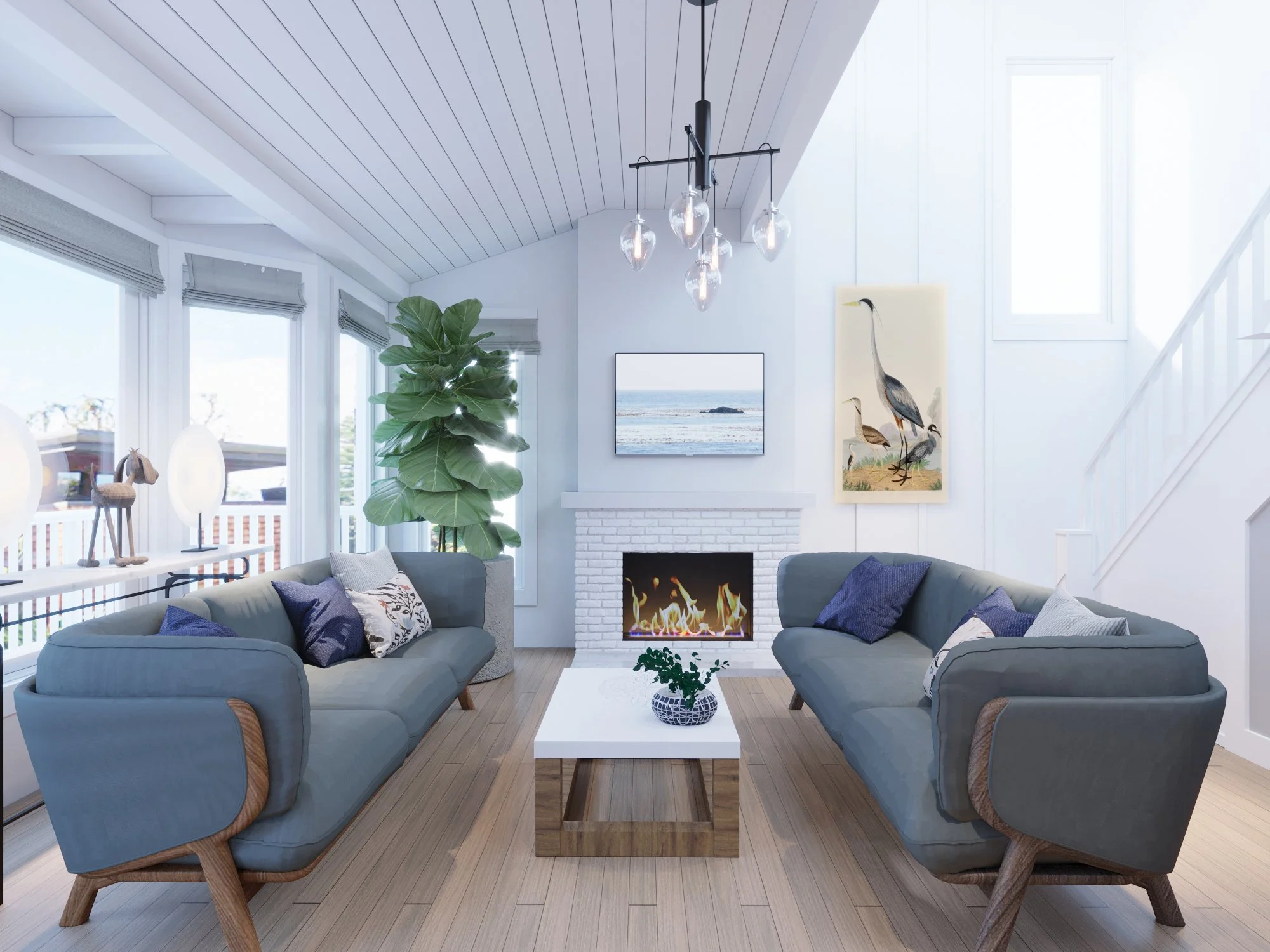
The Interior State: Designing for the Human Experience
The traditional discourse surrounding the home often prioritizes tangible assets, focusing on square footage, stylistic labels, and market value. However, for those who see their residence as a sanctuary, the true measure of a space lies in its invisible luxury: the profound impact it has on the occupant's internal state. Modern design is evolving beyond the purely aesthetic to embrace a more vital truth: our environments are the primary authors of our daily experience.
This perspective is rooted in the idea that feeling equals being. It suggests that a home is not just a physical structure but a specialized environment for cognitive recovery and emotional sovereignty. When we acknowledge that our surroundings dictate our internal reality, the role of interior design shifts from decoration to essential stewardship over the human condition.

The Biological Reality: Interiority as Objective Data
The concept that feelings are subjective or secondary to physical reality is increasingly challenged by neurobiological research. Studies suggest that the human brain may conceive of feelings as objective reality, processing emotional states with the same physiological weight as color, shape, or size (Cornell University). If an individual feels depleted by a chaotic or poorly lit room, their body is experiencing a literal, physical state of depletion.
This biological connection is explained by the interaction between feelings, thoughts, and behavior, often described as a cascading effect where each element influences the other (Cognitive Behavioral Therapy Los Angeles). For the high-achieving individual, the home must serve as a proactive tool to manage the constant internal labor of emotional regulation. By designing interiors that mitigate stress and reduce cortisol levels, we are not just creating a pleasant atmosphere but actively reducing the biological tax on an individual's health and longevity.
The Psychology of Space: How Interiors Map the Mind
The relationship between a person and their environment is deeply encoded in our neural pathways. Research indicates that specialized cells in the hippocampus are sensitive to the geometry and spatial arrangement of our surroundings (University of Waterloo). This means that the layout of a room is never neutral, as it is constantly being mapped by the brain to determine levels of ease or agitation.
Historically, this understanding was applied to monumental structures to evoke specific communal responses. Sacred buildings and cathedrals were designed to facilitate the lifting of the eyes, a physical action that encourages regions of the brain to become more absorbent of the environment (CNN Style). While these historic examples focused on public awe, the modern bespoke interior applies similar intentionality to private life, creating spaces that evoke states of exploration, contemplation, and profound safety.

The Restorative Toolkit: Engineering Serenity
To facilitate a supportive state of being, designers use a sophisticated toolkit rooted in wellness and biophilia. Biophilic design is not just about adding plants to a room but involves implementing specific patterns shown to reduce stress and enhance cognitive performance (Browning et al.). Patterns such as refuge, which provides a sense of enclosure and security, or mystery, which encourages gentle engagement, are essential for creating a restorative atmosphere.
Furthermore, wellness oriented design incorporates elements like curated natural light, color psychology, and sensory variability to support mental health (Marymount University). Even the geometry of furniture and fixtures plays a role, as research shows the neurological benefits of curving shapes over sharp angles (Sina et al.). These microrestorative interventions, whether an artfully placed aquarium or a quiet garden view, offer essential breaks from directed attention and help prevent the fatigue and burnout common in modern life.
The Sarah Barnard Design Philosophy: Bespoke Emotional Sovereignty
The most critical aspect of designing for the interior state is recognizing individual perception. The interaction between sensory inputs and emotional response is highly personalized, as each person’s mind uses past experiences to inform how they perceive their current environment (Nautilus). Because there is no universal solution for well-being, true luxury must be bespoke.
The Sarah Barnard Design approach focuses on co-creating an environment that honors the client’s specific inner state. By naming the feelings we wish to cultivate, we can arrange our lives and homes to maximize time spent in positive energies. Ultimately, a well-designed interior serves as a sanctuary for the soul, providing the diversion and strength needed to navigate the world with grace. When our environment supports our feelings, it sustains our very being.
Sarah Barnard is a WELL and LEED accredited interior designer and creator of environments that support mental, physical, and emotional wellbeing. She creates highly personalized, restorative spaces that are deeply connected to art and the preservation of the environment. A certified California Naturalist, Sarah believes in celebrating nature through responsible design that works symbiotically with the local environment.
An advocate for consciousness, inclusivity, and compassion in the creative process, Sarah has appeared in Architectural Digest, Elle Décor, Vogue, HGTV, and many other publications. Sarah was recognized as a "Ones to Watch" Scholar by the American Society of Interior Designers (ASID) and has been awarded "Best of Houzz Design" for seven consecutive years. Sarah's MFA in visual arts from Claremont Graduate University informs her practice and innovative approach toward interior design as creating a living work of art.
Works Cited
Browning, William D., Catherine O. Ryan, and Joseph O. Clancy. 14 Patterns of Biophilic Design: Improving Health and Well-Being in the Built Environment. Terrapin Bright Green, 2014.
CNN Style. "How Architecture Affects Your Brain." CNN, 2024.
Cognitive Behavioral Therapy Los Angeles. "The CBT Model of Emotions." CBT-LA, 2024.
Cornell University. "Objective Feelings: New Research Suggests Our Brain Tells Us Feelings Are Reality." Cornell Human Ecology, 2024.
Marymount University. "Designing for Well-Being: The Role of Interior Architecture in Mental Health." Marymount Blog, 2024.
Nautilus. "How Emotions Connect Your Body and Brain." Nautilus, 2024.
Sina, Amanda, et al. "Impact of Curvature on Aesthetic Choices." National Library of Medicine, 2021.
University of Waterloo. "The Hidden Ways Architecture Affects How You Feel." Department of Psychology, 2024.

There's No Place Like a Healthy Home for the Holidays

This year is already coming to a close, so that means the holidays are just around the corner! This year has been a challenging one, so let’s spread some holiday cheer by following some simple, yet meaningful home design ideas to brighten up the holidays.


Reconsidered Rituals
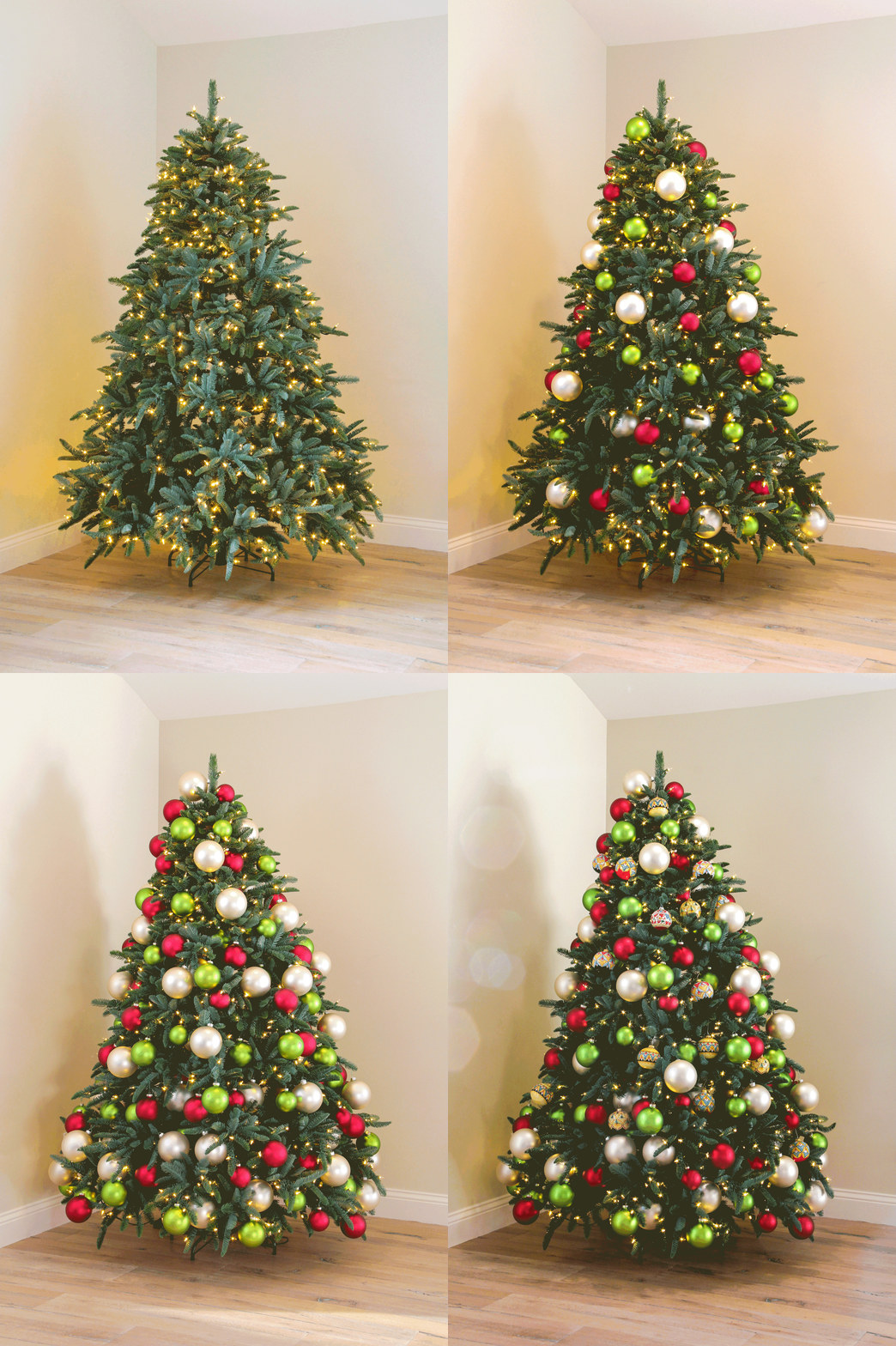
Part of having a healthy, happy home is creating family traditions. An easy practice anyone can start implementing is home decorating for the holidays. No matter what your family celebrates, it is fun getting into the winter spirit! Decorating can be anything from fashioning a homemade wreath for your front door to making your own candles for your menorah. Many of us are celebrating the holiday season differently than we have in the past, creating an opportunity to incorporate new traditions. Exchanging ornaments and a handwritten note is a special way to connect with loved ones you may not be able to see in person this year. This simple act may help you feel closer to family far away!

Reuse, Recycle, Rejoice
Fabricating handmade winter decorations is a great activity for your entire family! A fun and simple idea is to string together your own felt garland. Felt balls can be found in nearly any color imaginable to match your family’s needs. So whether you want red, green, and black for Kwanzaa or blue and white for Hanukkah, the options are endless! Felt garland is not only pretty to look at, but is made from wool, an inherently renewable and recyclable material. We like sourcing wool from small sustainable farms where the sheep are treated like family.
Choosing decorations inspired by things you love all year round will help your decor seem more personal to your family. If you're a bird lover, use this as a starting point when decorating. Look to local artists or online shops who make bespoke decorations that fit the holiday theme of your choice.


If your family celebrates Hanukah, you may want to opt for beeswax candles for your menorah since they don't produce any toxic chemicals or soot. Or if you’d rather use a vegan alternative, there are now organic vegetable wax candles made specifically for menorah’s!

The Serotonin Schedule
Decorating for the holidays early may alleviate stress and anxiety. According to Business Insider, psychologists have found that those who decorate early are much happier because it helps you tap into the holiday excitement before everyone else and leaves you feeling less stressed come Christmas time. Additionally, you can use this time of year as an opportunity to slow down, tend to your home mindfully, and take that time to appreciate and enjoy your home design. Take stock of what you have, and cull any items for donations that no longer serve you. Connecting with and expressing gratitude for your home is a great first step of decorating that may be a grounding and mood-boosting experience.
The Indoor Forest
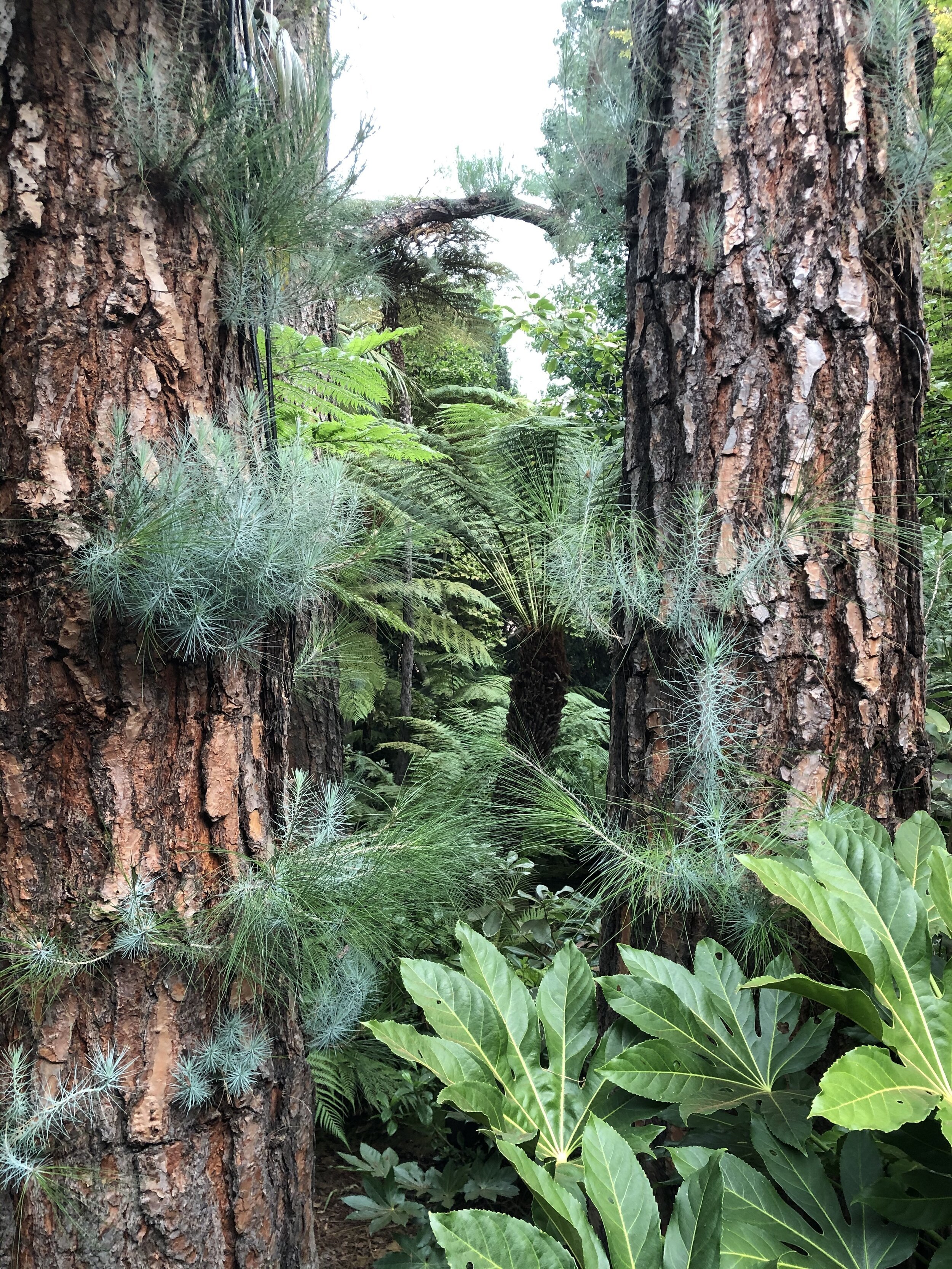
Biophilic design goes hand in hand with holiday home decor. Biophilia is our innate desire to be close to nature–and biophilic design aims to make healthy and comfortable interiors by meaningfully incorporating natural elements into our home design and work environments. A large component of holiday home decor is foliage. Greenery can be anything from a leafy garland on your mantle to mistletoe in your hallway. This holiday season, try decorating your home in more natural elements such as pinecones, nuts, and branches. If you live near a woody area you can forage for these items yourself, or if that isn’t an option for you, look to your local farmer’s market or nursery for help. Your house will feel like an organic winter wonderland full of crisp natural scents and foliage that's unique to your home.
Your incorporation of nature doesn't have to stop once the holidays are over - you can enjoy the benefits of biophilic home design all year round! Kale Tree Shop, founded by Sarah Barnard Design, is a great resource for nature inspired home goods. Each product takes inspiration from the natural world, ranging from abutilon wallpaper to ginkgo leaf wall sconces to upholstered chairs influenced by the silhouette of a great dane. Biophilic home design elements can bring joy and warmth to your home, no matter the season!

The Holiday Hormone Connection
Decorating for the holidays is not only fun, it can contribute to spikes in your dopamine levels, which is a hormone that boosts feelings of pleasure. One factor that leads to these enjoyable feelings are the bright lights and colors. Chromotherapy increases happiness and boosts your energy levels. Another prominent factor at play are all the cozy scents that come from Christmas trees, eucalyptus and pine scented candles, and homemade treats. So this year you may feel extra gratification when putting out holiday décor knowing that there may be real health benefits!

As you begin to prepare for the holidays, remember the importance of creating traditions with your family. Although the holidays may not be quite the same this year, surrounding yourself with winter décor that you thoughtfully sourced, may bring you some needed joy this season. So remember, think handmade, look to nature, and surround yourself with home design elements that make you happy, and you’ll have a beautiful winter wonderland right at home.
The Sarah Barnard Design family wishes you all the warmth and happiness!
Sarah Barnard is a WELL and LEED accredited designer and creator of environments that support mental, physical and emotional wellbeing. She creates highly personalized, restorative spaces that are deeply connected to art and the preservation of the environment. An advocate for consciousness, inclusivity, and compassion in the creative process, Sarah’s work has been recognized by Architectural Digest, Elle Décor, Real Simple, HGTV and many other publications. Sarah was recognized as a “Ones to Watch” Scholar by the American Society of Interior Designers (ASID).

Ocean View Penthouse: Contemporary Primary Bedroom

The calming blue views of the ocean and sky were the inspiration for the redesign of this ocean view primary bedroom retreat. By outfitting with eco-friendly finishes in leather, rattan, maple, and wool, the biophilic impact of every detail was considered to optimize health and well-being.
Matching low-profile bedside tables in dark walnut topped with orchids and the homeowner's favorite books flank the primary bed. The accompanying wall mounted swing arm lamps are perfect for reading. The custom commissioned artwork is reminiscent of an underwater world and adds peaceful minimalism and balance as a design element.
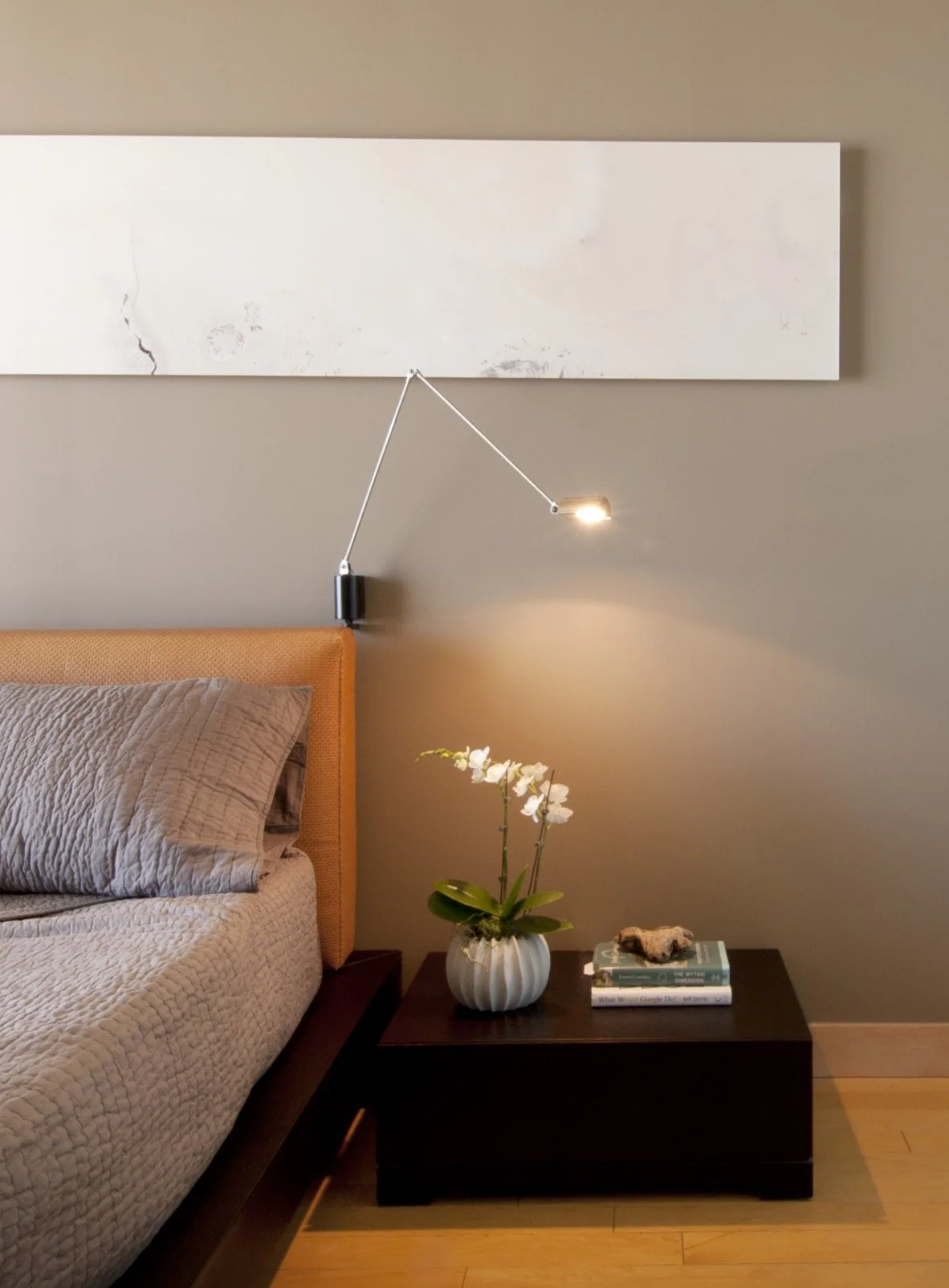
A custom wall-hung console tucks away electronics and compliments the deep wood bed frame. Antique stone pottery and a dollop of moss are the perfect home to this indoor bromeliad; touches of nature are everywhere throughout this environmentally conscious design. Pottery and other artisan elements were handmade by local craftspeople and paired with indigenous plant life.


Sarah Barnard designs healthy, happy, personalized spaces that are deeply connected to nature and art.
To learn more about Sarah Barnard Design, please visit www.SarahBarnard.com.
Photos by Brad Nicol