


Emerging Kitchen and Bath Trends for Wellness-Focused Sustainable Design
Smart home sustainability and wellness are in focus for kitchen and bathroom design. The annual Kitchen and Bath Industry Show (KBIS) welcomed interior designers, architects, kitchen and bath designers, custom home builders, and remodelers to get an early look at the kitchen and bath design trends that will rise in popularity in the coming year. This year's exhibition highlighted key trends, including bold colors and enhanced wellness features. There are many ways to refresh our kitchen and bath spaces, whether it's time for a complete remodel, fresh paint colors, or a new appliance to improve our daily lives.

Bold Colors: Embracing the power of color in kitchens and bathrooms was widely featured in creative displays. While cool tones are a more traditional choice, warm mid-century era shades are still in vogue, with an emphasis on color blocking to add a layer of interest.
Essential Oil Showers: Aromatherapy systems were abundantly on display. Showers can be transformed into a spa-like experience with the use of aromatherapy systems that inspire ritual through the use of essential oil mists.

Cradle to Cradle Certification: Interior designers showed increased interest in human-made stone comprised of recycled materials, with the Cradle to Cradle certification as a quarried stone alternative for countertops and shower walls.
Water Smart: From shower systems designed to prevent water waste by capturing, cleaning, and recycling excess shower water to wireless soil sensors for sprinkler systems that can calculate how much water a garden needs, sustainability remains a top priority in home design.

Clutter-Free Home: Sleek appliance options such as a touchpad induction cooktop allow for a simple, clutter-free kitchen by omitting burner grates and range control knobs. Ultra-modern shower setups with wireless touchpad controls and personalized temperature settings focus on function and form without bulky plumbing fixtures.

Sensible Style: Functionality and beautiful design belong together. Chef sinks can be a practical yet aesthetic design choice that allows food prep and cleaning accessories to be in one place. Stylish and versatile, chef sinks are an ideal option for those with smaller kitchens who prefer spending more time cooking and less time cleaning.
The annual Kitchen and Bath Industry Show gives attendees a glance into what technologies and trends will emerge in the upcoming year. As we look ahead, the spotlight is shining on all things colorful, wellness-centered, sustainable, and functional.
Sarah Barnard, WELL AP + LEED AP is a leading designer of personalized, sustainable spaces that support mental, physical, and emotional well being. She creates highly personalized, restorative spaces that are deeply connected to art and the preservation of the environment. An advocate for consciousness, inclusivity, and compassion in the creative process, Sarah has appeared in Architectural Digest, Elle Décor, Vogue, HGTV, and many other publications. Sarah was honored as a "Ones to Watch" Scholar by the American Society of Interior Designers (ASID).

NKBA Honors Sarah Barnard with "Praiseworthy Pick" for Person of the Year Award

Interior designer Sarah Barnard has received praiseworthy recognition from the National Kitchen and Bath Association (NKBA) for the "Person of the Year" award in their official publication, Kitchen and Bath Business (KBB).

Barnard was selected as a praiseworthy pick due to her innovative and influential approach to home design focused on wellness and sustainability. Being both WELL & LEED accredited, Sarah Barnard sets the example for California home design by creating livable spaces that benefit both our bodies and the environment.

Working with clients who prioritize personal and environmental wellness, Barnard encourages inclusive collaborations where clients feel safe to share details about their lives and unique preferences. By exploring solutions that fully support her client's lifestyle, Barnard provides an approach to home design centered around their physical and emotional needs. Additionally, her studio embraces the principle of one size fits one - every person has individual needs and will require an individualized space for optimal health and happiness.
In particular, Sarah Barnard's designs promote a relationship with nature, a connection known to help people feel calmer, happier and healthier. When nature isn't available, incorporating art into home design can help improve wellbeing. There have been studies about the reaction we have when viewing artwork, finding that beautiful art activates pleasure centers in the brain similar to falling in love.

Barnard also emphasizes the importance of sourcing non-toxic materials to produce environments that optimize our home health. For example, creating a space with improved indoor air quality can help to better sleep, reduce headaches, and in some cases, may help with allergies and breathing.
Sarah Barnard's notable accomplishments from 2021 are her bathroom designs created to serve as a peaceful retreat from the current world. Because of the COVID-19 pandemic, homes must now work harder to meet the needs of families. Stay-at-home orders removed many former sources of relaxation, and some clients feel as though the days of enjoying a spa in a group setting are gone forever. Because bathrooms are one of the few spaces in a home affording privacy, Barnard focuses on creating tranquil bathroom retreats that enrich daily moments of ritual and calm.

She recently designed a bathroom looking to pollinators as inspiration. The bathroom is honey-toned, with gold and copper-hued wall tile, warm lighting inspired by honeycombs, and has custom floor tiles made with marble and inlaid bees. The bathroom design is rooted in biophilic principles, inspiring a renewed nature-brain connection with each visit.
When personalized functionality, a visual connection to nature, and a non-toxic environment work together, design can help contribute to healthier, happier lives.

NKBA's praiseworthy pick recognizes Sarah Barnard as a leader in Kitchen and Bath design nationwide. Barnard's involvement with NKBA is longstanding, and she recently spoke at the KBIS Voices from the Industry event on "Creating Inclusive Environments." To learn more about how Barnard's team of wellness focused Los Angeles home designers can create a custom-tailored space to meet your specific needs, please book a consultation.
Sarah Barnard is a WELL and LEED accredited designer and creator of environments that support mental, physical and emotional wellbeing. She creates highly personalized, restorative spaces that are deeply connected to art and the preservation of the environment. An advocate for consciousness, inclusivity, and compassion in the creative process, Sarah’s work has been recognized by Architectural Digest, Elle Décor, Real Simple, HGTV and many other publications. Sarah was recognized as a “Ones to Watch” Scholar by the American Society of Interior Designers (ASID).

Designer Sarah Barnard on Why Empathy Is Central to Her Work

Article by Gwendolyn Purdom, originally featured Houzz.
Growing up with historic preservationist parents, Sarah Barnard got her introduction to architecture and home design at a young age.
“I grew up in historic homes, and my father was restoring furniture and light fixtures and stair railings and you name it,” the Los Angeles interior designer says. “Certainly, as things progressed in life, I think his talents became mine.”
The experience also shaped the way Barnard now approaches her work as the principal designer at Sarah Barnard Design — a firm built on sustainable, wellness-focused and otherwise mindful practices. (Barnard is a WELL accredited professional, a Building Biology practitioner and a LEED accredited professional.)
“Reducing, reusing, recycling — these types of things were not novel concepts,” Barnard says. “Being sensible and responsible in our choices and in our material specifications is something that’s always been a part of my life and definitely influences the way that I work.”
Barnard, who has been using Houzz to share project photos and to connect with fellow professionals on Pro-to-Pro discussion boards almost since the platform launched, has been seeing more and more clients, parents particularly, looking at their homes through a more thoughtful, holistic lens. Beyond being environmentally conscious, Barnard’s home design projects revolve around creating spaces that are personalized to support mental and physical health and happiness.
“If we all could be so lucky to exist in a space that is uniquely ours,” Barnard says. “There really is no happier environment than a space that is specially made for you.”

Q. You specialize in wellness design, sustainable design, and other mindful design practices. Why did you choose to make those specialties central to your work?
A. Empathy is really the foundation of our studio’s practice. Being able to meet our clients where they are and create environments that support them in living their best lives is really the heart of what we do.
My two primary credentials are LEED AP [accredited professional] and Well AP. LEED focuses more on environmental responsibility. WELL is focused more on human health. Those two things, along with historic preservation, really are the key focuses of my practice.

That said, the personalization piece is really where it’s at in terms of being able to adapt to a broad range of situations. Sometimes that is a client who is seeking a vegan or perhaps a sustainable and vegan environment.
Other times it might be something that’s more of a specific family need, like a child with developmental differences or a person who has 13 cats. Any personalized need that could be better accommodated through home design is something that we’re keen to help with.

Q. How do you work around challenges those specialties may present?
A. There are always limitations, and one thing we learn as design students and we practice throughout life is that limitations really drive design. With a big, broad, open scope the outcome could be anything, but the more limitations the project has to endure, the more specific the outcome.
An example of that is that we have a client who utilizes a prosthetic leg, and of course, this is something that is integral to her day-to-day function but not something that she would like to draw attention to. In the process of designing her home, it was disclosed at some point that she didn’t want certain types of textiles that would make it difficult for her to get up or get down. Something that might be more slippery, for example.
So, something that we may not have been aware of at the start of the project — once we’re armed with the information of what specific textures are going to be safest for her, then we can proceed accordingly in recommending those well-matched solutions.

Q. Where do you find inspiration?
A. On a personal level, I’m definitely very much connected to the natural world. For me, that means spending time in my garden, doing a heck of a lot of birdwatching, really being tuned in to the small daily differences — like what the birds are doing, what the plants are doing, what the caterpillars are doing.
Being in touch with what’s going on in the natural world is a really important way for me to stay grounded in my professional life. Those textures, colors, patterns, things that I experience in the outdoors definitely drive the solutions that I create indoors.

Q. What has been your most memorable client request? You worked with someone with 13 cats?
A. Yes. We made a special screened porch for the cats so that they could enter and exit the house safely without being eaten by a coyote or disturbing the neighborhood bird population. They were able to bask in the sun and live their happy lives safely and in a way that made the homeowner pleased.
I think perhaps the most fun request we’ve had in the last few years was that a young couple in the entertainment industry wanted an adult sleepover room. It was a very large space that would essentially have multi-functions for hosting parties, but the sofas would be modular and movable so that they could be reconfigured as king-sized beds. And if the party got late and movie-watching turned to sleep, 10 or more couples could camp in this room.

Q. Is there one particular project that changed your business in some way?
A. In my late 20s, I had the opportunity to design the West Coast offices for National Geographic Entertainment. And that certainly was an important project for us, because it was not only aesthetically in our dream wheelhouse, but it also was a client that more than ever before really was in alignment with our values and the things that we think are important. That definitely was a fantastic experience.

Q. What advice would you offer to pros who want to make their practice more sustainable or mindful?
A. The most critical skill in mindful design is listening — creating a space in which the client feels comfortable to share, and then really listening and asking follow-up questions, many of them, prior to offering any solutions. Probably the most common rookie designer mistake I see is, designers, want to view a space and immediately make recommendations. And in doing that they would have missed the most critical element of the space, which is the user.

PHOTO BY: STEVEN DEWALL
Q. What particular challenges is the interior design industry facing?
A. Interior designers have always had a singular challenge, which we will probably face for decades to come, and that is that many homeowners don’t actually understand what we do. Because of this sort of lack of education in the homeowner, they may misunderstand our services to be shopping. They may misunderstand our services to be a number of things that are not actually what interior design practice is fundamentally about. And because of this misinformation, I think designers may struggle to communicate their value to a person who perhaps hasn’t worked with a designer before or isn’t familiar with all the benefits a professional can bring to a project.
Because I have been in the game most of my adult life, I am fortunate to be approached regularly by clients who are knowledgeable, who do value what my team has to offer. I think in the rare occurrence where we’ve worked with a client who struggles to understand the process, we just remain patient and explain to whatever length necessary so that they can understand what is happening and why.
A great example of that would be, I had a client once and he said he didn’t need measuring; he just needed furniture. That’s an example of someone who just doesn’t understand the steps of the process. Being patient with him and explaining to him why measuring is critical to the process allowed him to remain in support of the work that we were doing and understand what we were delivering and why.

Q. What advice would you offer other pros on making their own design specialties stand out?
A. It’s like the advice that our moms all gave us as children, but it’s critical to be yourself — thinking about what’s really important to you and what are the things that you really, really are passionate about and being more a part of those things.
For example, for me, it’s nature and birds and that’s my truth. It’s easy for me to talk about nature and birds because that is my real life. It’s much more difficult to try to follow the trends of others and latch on to boho-chic or whatever is the latest thing. Because if the latest thing is not your thing, it’s never going to be authentic anyway.

Sarah Barnard designs healthy, happy, personalized spaces that connect deeply to nature and art. Empathy and mindfulness are the foundation of her practice creating healing, supportive environments that enhance life.

Remodeling Your Kitchen to Last Forever

As many people move towards preparing their meals, and as open-plan homes embrace nature and health, the modern kitchen is more important than ever. A kitchen must provide high-quality performance and functionality to cater to your specific needs and to add to the value of your home. Many homeowners know a remodeled kitchen would benefit their lifestyle, but do not want to commit to the expense and disruption of a remodel. The best way to approach a kitchen-remodeling project is to create a plan that focuses on your family’s specific needs to balance form and function and make your kitchen the ideal space for cooking and entertaining while being comfortable for everyone.
It is best to start by establishing what areas in the kitchen are most frequently in use. Take into consideration how many people might use it at once, and if there are children involved, make sure your kitchen accommodates their safety. Typically it is best to have the main functions of the kitchen–your stove, sink, and fridge–no more than six feet apart from each other. This calculation will help create a working triangle that benefits you by allowing easy maneuvering throughout the space. Identify areas that need extra storage for food, snacks, or dishes for display. Some particular functions require more space than others.

It is also essential to make your kitchen a space that you cannot only use, but enjoy. Make a list of what is important to you, and consult a designer if you can. She or he will help you decide what is realistic, possible and practical for your home, and determine what areas are the areas as focal points in the room. If you love to have people around while you are cooking, add seating at the counter. If many people use the kitchen together, consider implementing various food preparation areas. By considering using universal design methods, such as lower countertops, two-tiered kitchen islands, and under counter storage for food and appliances, homeowners and guests can access all areas of the kitchen with ease.
Often overlooked, lighting is hugely important to a kitchen. Determine what lighting options are best suitable for different kitchen zones. Interior designers can be especially useful in this area and will help define what lighting would be best for tasks and overall aesthetic value for the different spaces in your kitchen. Under cabinet lighting is a great technique to display a favorite kitchen item or to find kitchen products quickly. Recessed lighting and pendant lights can help create an even ambient light throughout the space.

Finally, when redesigning a kitchen, there should be a focus on making it a beautiful and pleasing place to be, as well as providing functionality. If the kitchen connects to the dining room or living areas, consider how it can relate visually to people entering the space. There should be a visual connection from the kitchen between its connecting rooms. If the kitchen has barriers from other areas, consider opening up those spaces so the rooms can connect visually and practically. Finally, consider storing appliances to look like they belong in the kitchen without standing out. To accomplish this, use panel-ready appliances or incorporating under counter microwaves or oven drawers to create extra counter space in a kitchen island.
A remodeled kitchen should work with the needs of the homeowners in a way that creates a space that can be used by everyone. Also, a kitchen should support the needs of your entire family’s lifestyle and still be a place of beauty and comfort. By implementing smart technology and planning, a kitchen can save time and energy. By focusing on functionality and durability, your kitchen can be a space that can be enjoyed by everyone for years to come.

Sarah Barnard is a member of the American Society of Interior Designers (ASID), is certified by the National Kitchen and Bath Association (NKBA), and is recognized by the International WELL Building Institute as a WELL Accredited Professional (WELL AP), the International Institute for Bau-Biologie & Ecology as a Building Biology Practitioner (BBP) and by the United States Green Building Council as a Leadership in Energy and Environmental Design Accredited Professional (LEED AP). She has served on the Santa Monica Conservancy's board of directors and specializes in sustainable interior design, health and wellness and historic preservation.
Undertaking a broad range of projects, all of which are grounded in smart design and mindful of healthy living, Sarah’s diverse body of work includes upscale private residences, chic restaurants, luxurious spas and impressive corporate headquarters. Her projects have been featured in local and national publications, and have placed prominently in several noted design competitions. Sarah holds a Master of Fine Arts degree from Claremont Graduate University as well as undergraduate degrees in Art and Interior Architectural Design. Her interior design practice is the culmination of education and interests in art, architecture, textiles and the environment and she has written several articles for important publications including the USGBC, United States Green Building Council.
Sarah Barnard, WELL AP and LEED AP, designs healthy, happy, personalized spaces that connect deeply to nature and art. Empathy and mindfulness are the foundation of her practice creating healing, supportive environments that enhance life.
Photos by Chas Metivier, Scott Van Dyke, Brad Nichol
Sarah Barnard designs healthy, happy, personalized spaces that are deeply connected to nature and art.
To learn more about Sarah Barnard Design, please visit www.SarahBarnard.com.

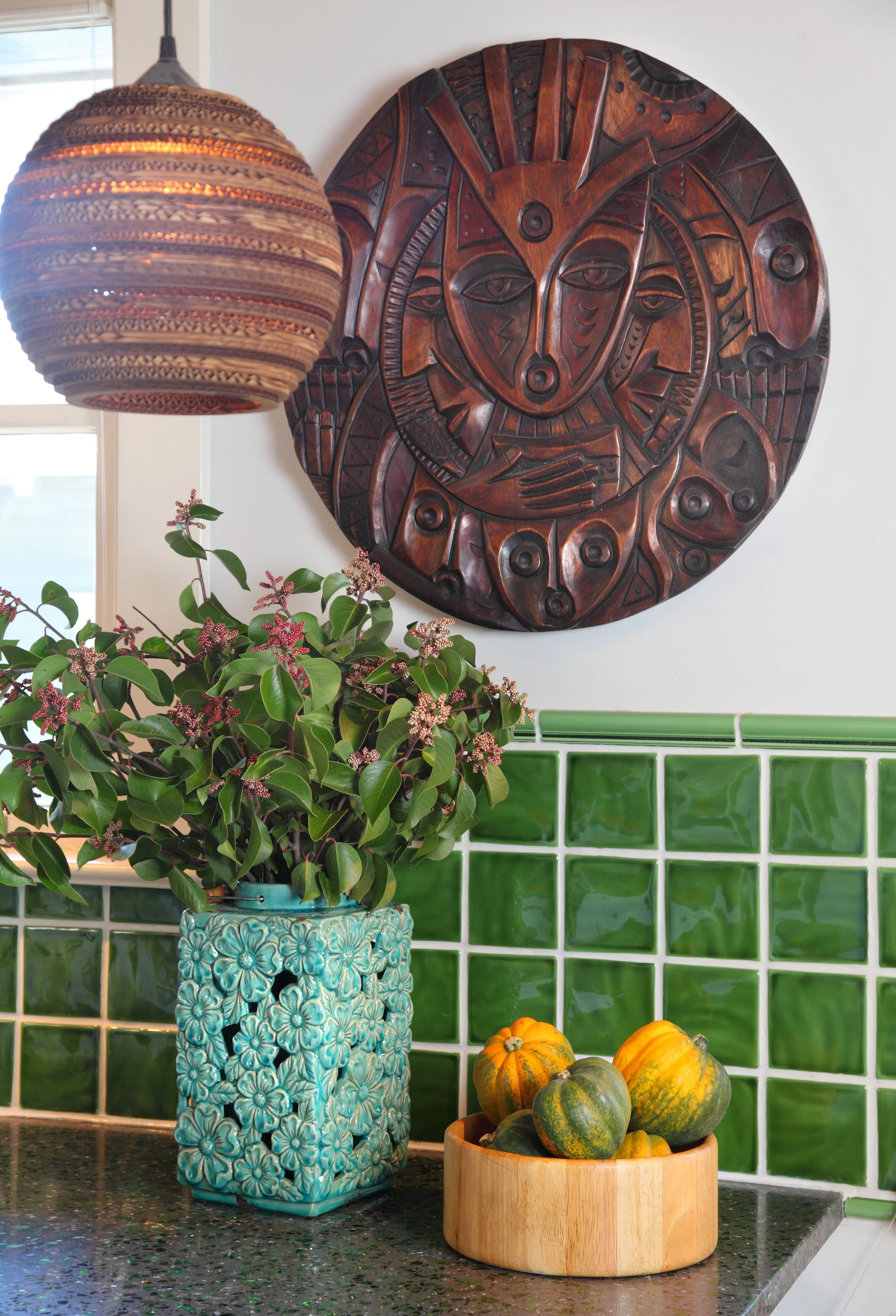
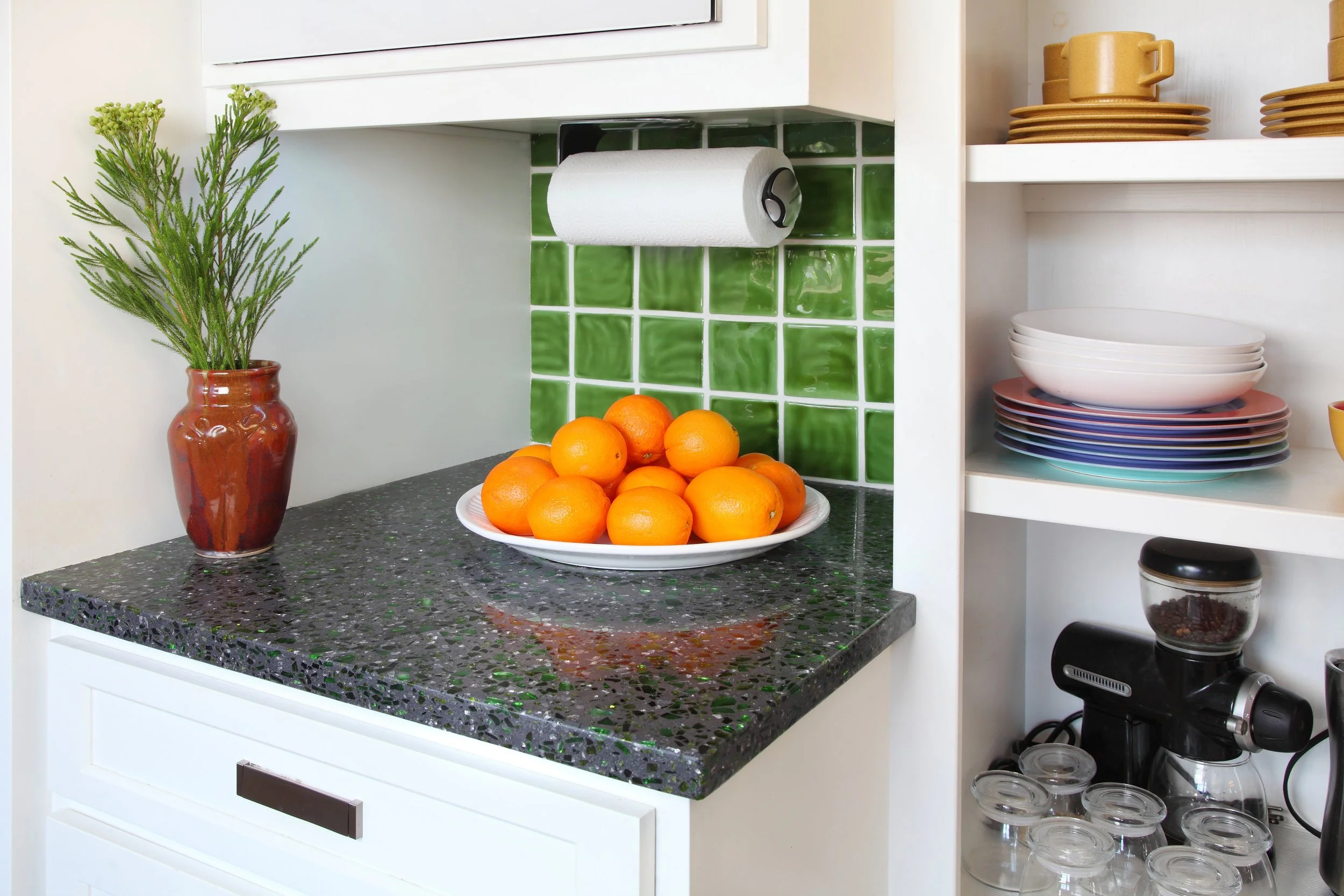
Historic Craftsman Bungalow: Heineken Green Kitchen

This bright bungalow features a custom remodeled kitchen with a collection of handmade elements reflecting the homeowners love of nature and commitment to sustainable materials. Locally made cabinets, countertops made with recycled Heineken bottles, handmade ceramic backsplash tile, and cardboard pendant lamps make for a truly unique space.
This cook's kitchen has a place for everything and everything in its place! Built-in wall shelving provides extra space for storage and creates a cheerful display of dishware and other kitchen utilities.
A hard-working home office tucked away in the corner of the kitchen. Custom designed to fit the compact space perfectly, this corner nook gets plenty of natural light. A countertop made from recycled bowling alley lumber makes the utilitarian space special! Framed artwork by Gwen Samuels adds unique handmade detail atop the desk.

Sarah Barnard designs healthy, happy, personalized spaces that are deeply connected to nature and art.
To learn more about Sarah Barnard Design, please visit www.SarahBarnard.com.
Photos by Chas Metivier

Ocean View Penthouse: Contemporary Kitchen Style
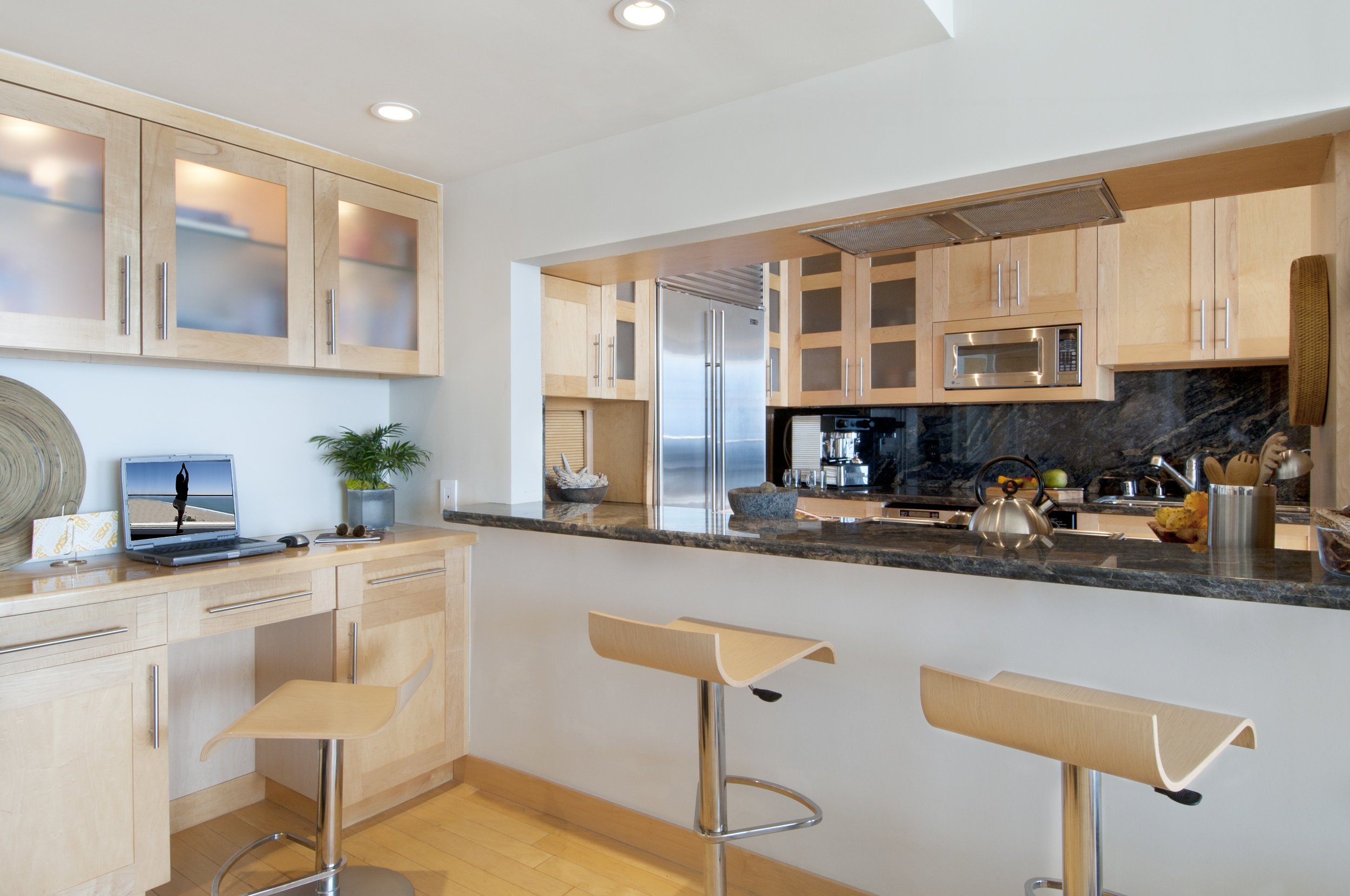
Maple cabinets and natural granite pair with stainless steel hardware in this ocean view penthouse kitchen. The light maple cabinetry maintains a spacious, airy feeling in the petite modern kitchen. Matching barstools turn a kitchen cut-out into the perfect breakfast nook. The adjacent custom built-in desk provides a tidy corner for paying bills or reading recipes on the web.
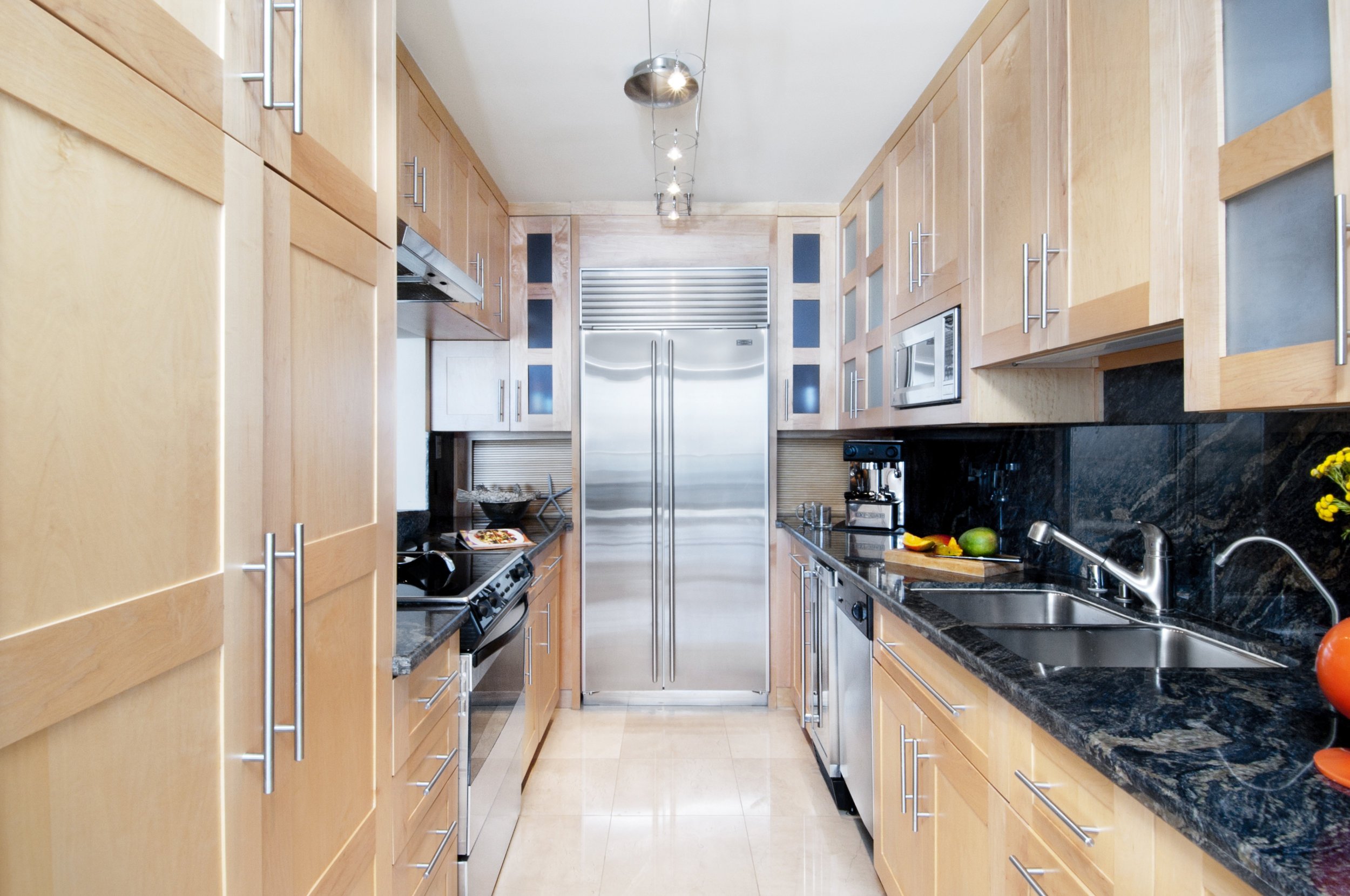
Natural wood, rattan and stone accessories make this modern kitchen lively and fun. Cable system track lighting illuminates the natural stone counters and floors. The architectural cut-out around the stove beautifully integrates the kitchen with the rest of the space allowing for more natural light.

The kitchen seamlessly flows into the adjacent dining area where a custom table of chrome and maple sets against a wall of mirrors. Tillandsia plants make a perfect centerpiece for beachfront dining. This modern kitchen design fully utilizes the compact space while preserving an open and integrated feeling with the rest of the penthouse.


Sarah Barnard designs healthy, happy, personalized spaces that are deeply connected to nature and art.
To learn more about Sarah Barnard Design, please visit www.SarahBarnard.com.
Photos by Brad Nicol

Traditional Walnut Kitchen in a Tudor Revival Estate

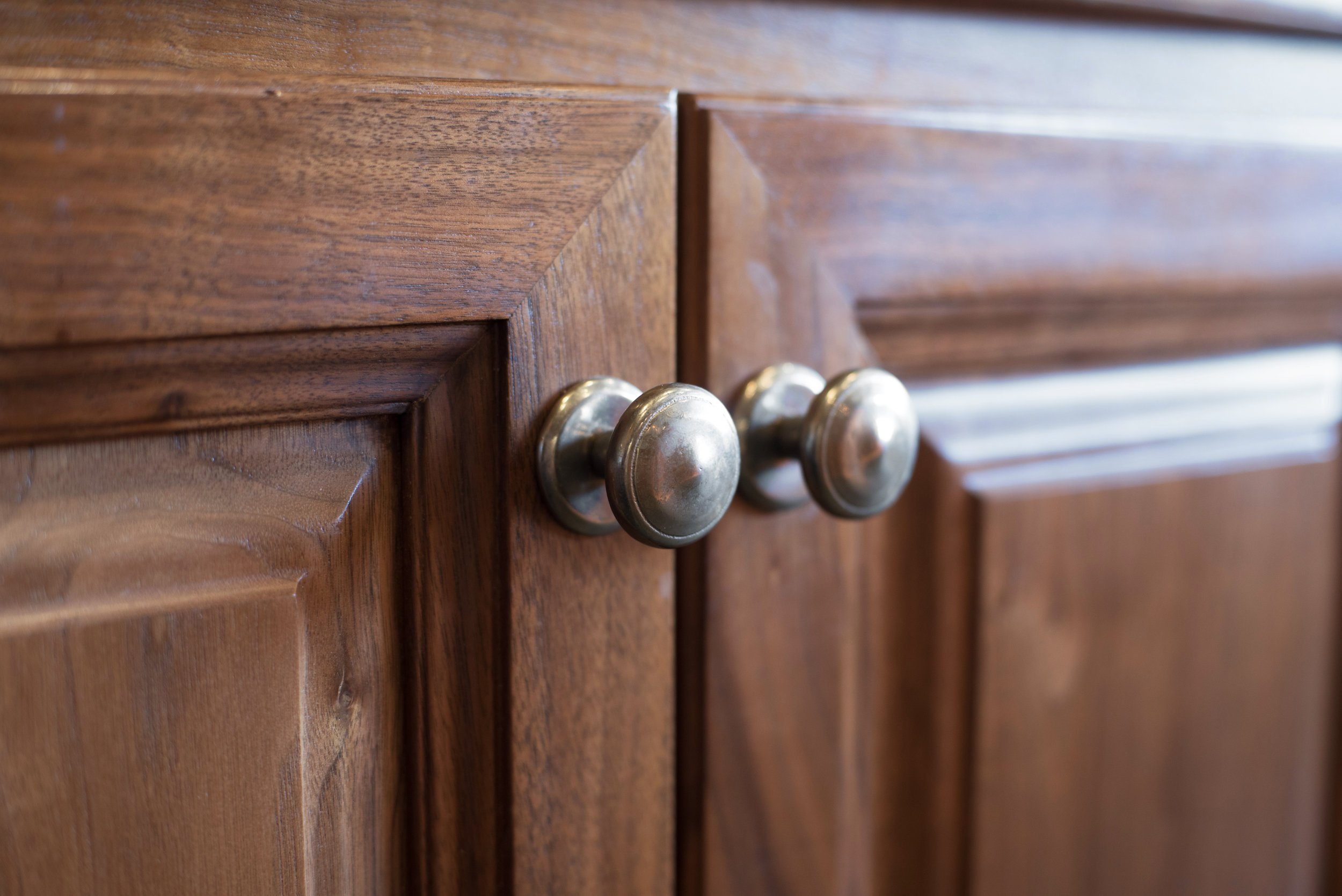
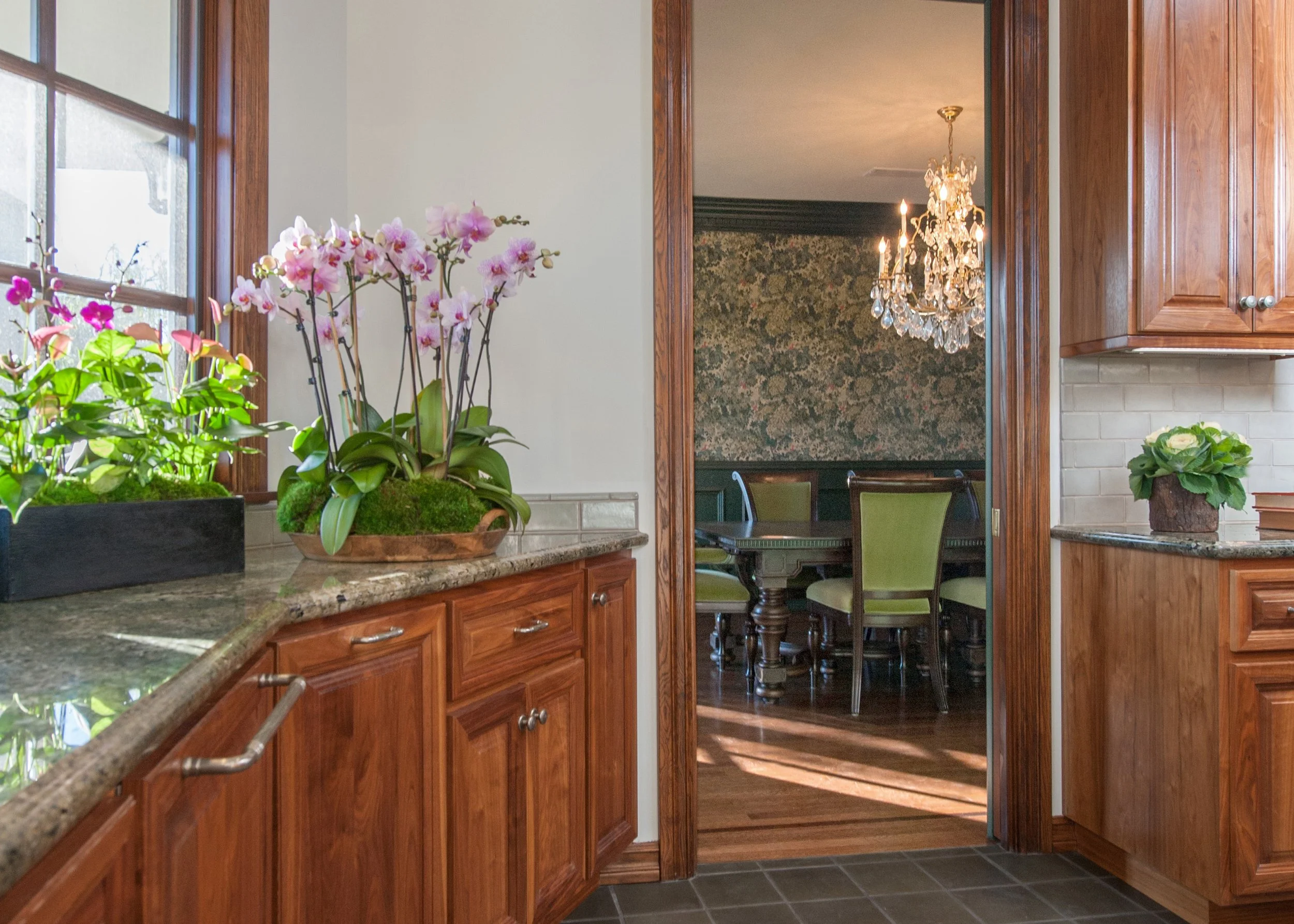
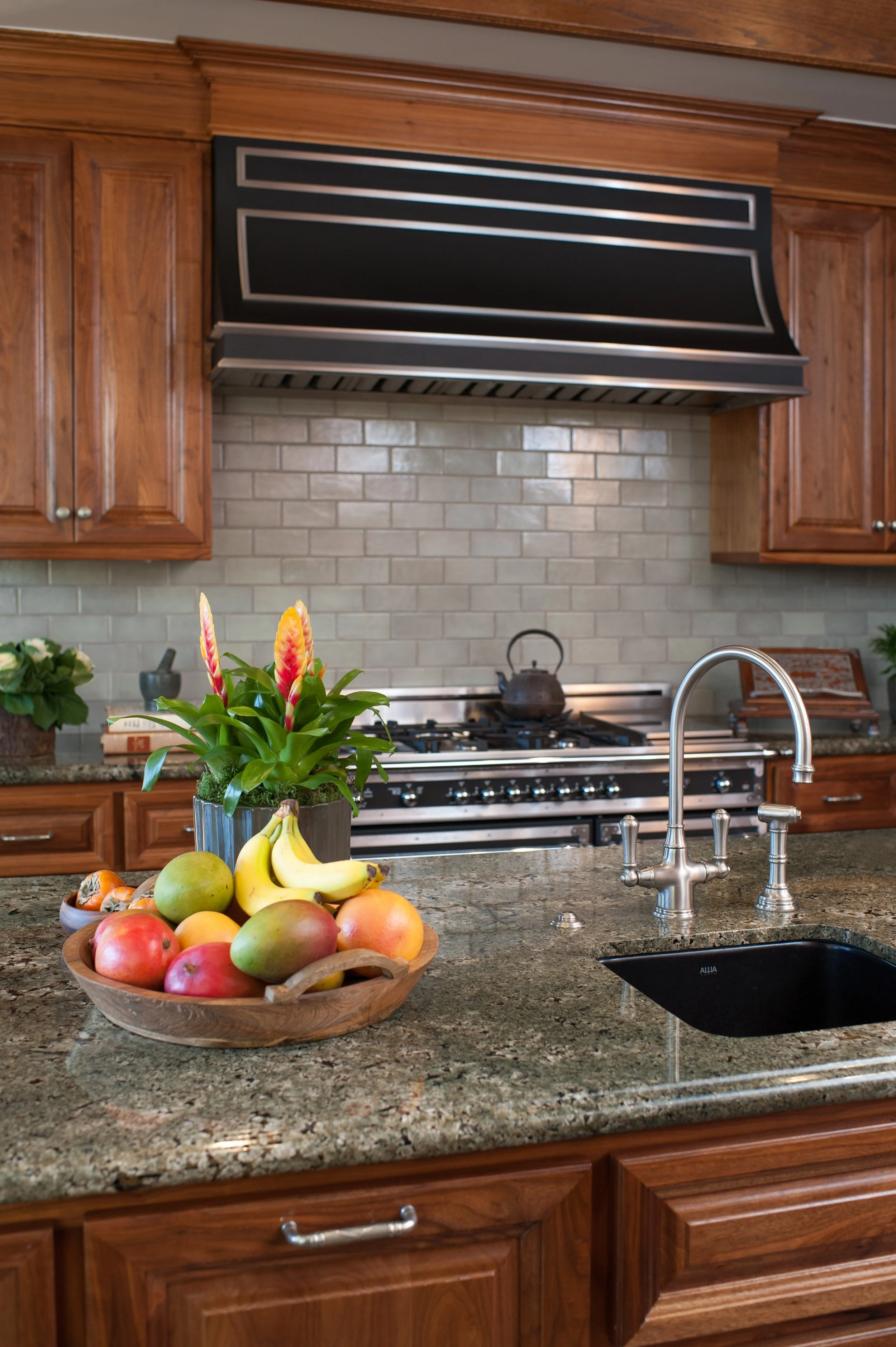
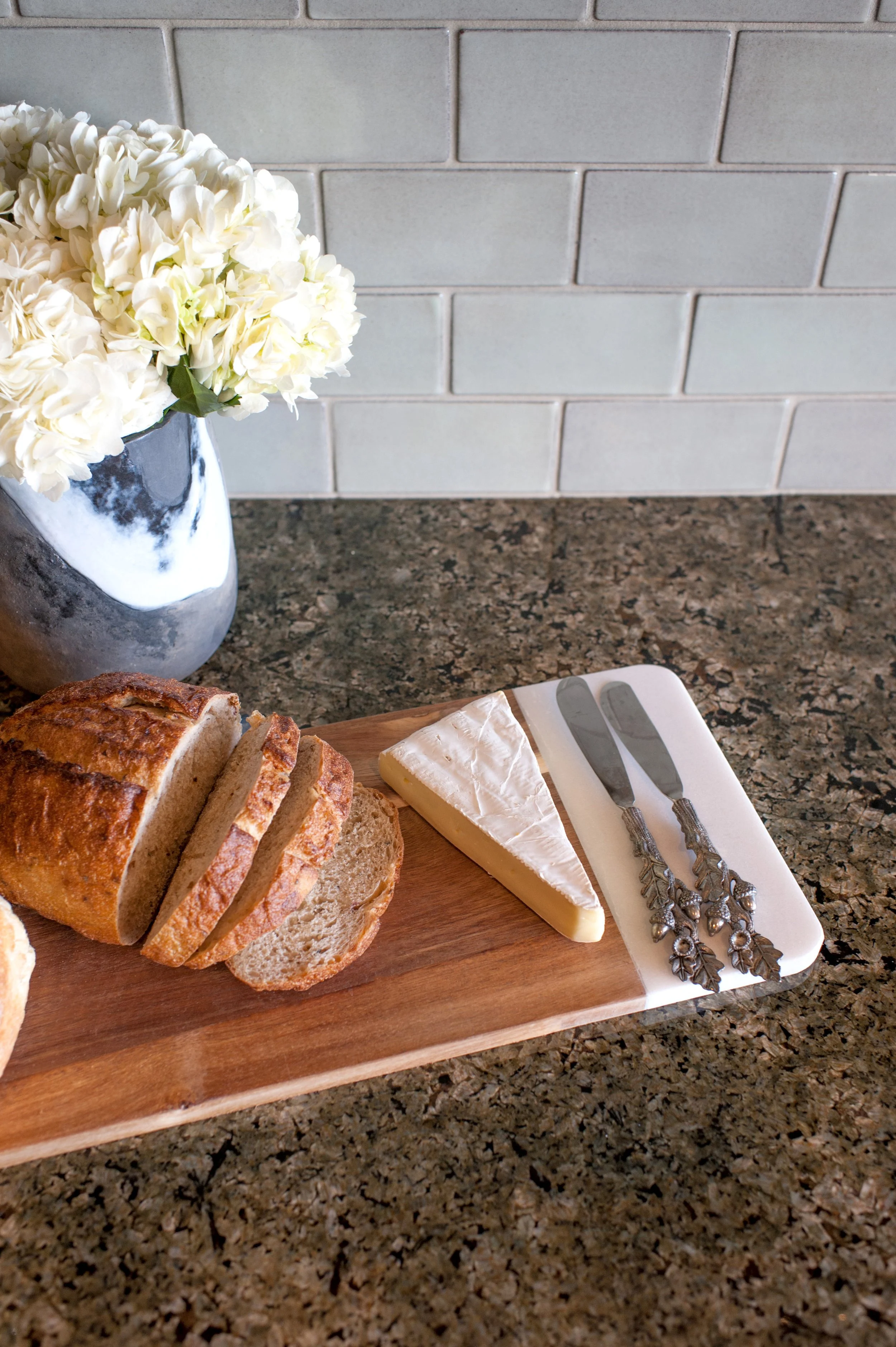
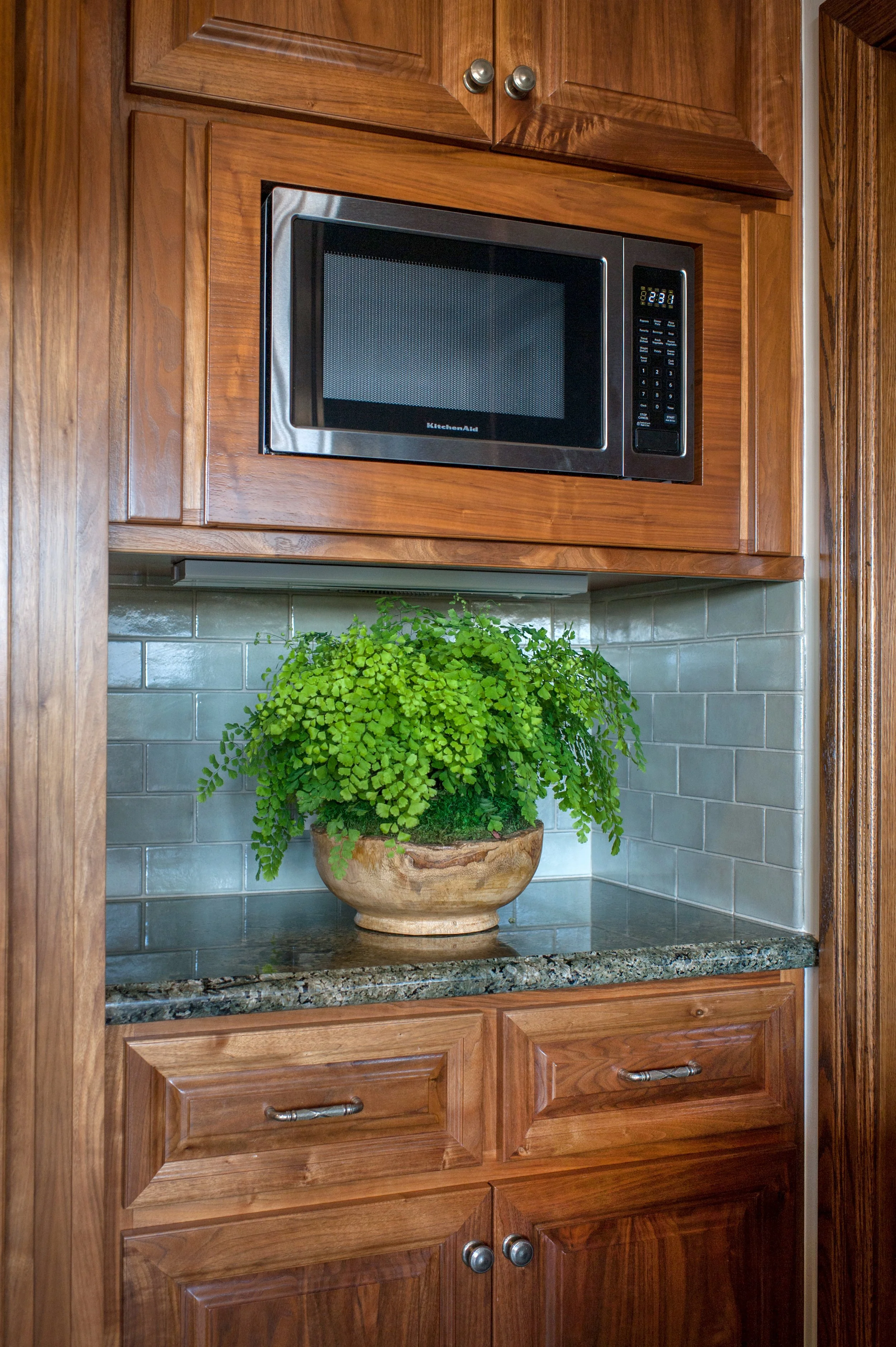
The kitchen windows frame a view of the Pacific Ocean at this Tudor revival estate. Bespoke cabinets in American Walnut are finished with white bronze hardware and paired with deep green granite counter tops. Hand made, and glazed artisan tile flooring expands into the conservatory. The soft angles of the American Walnut kitchen cabinets guide the entry to the adjoining dining room.
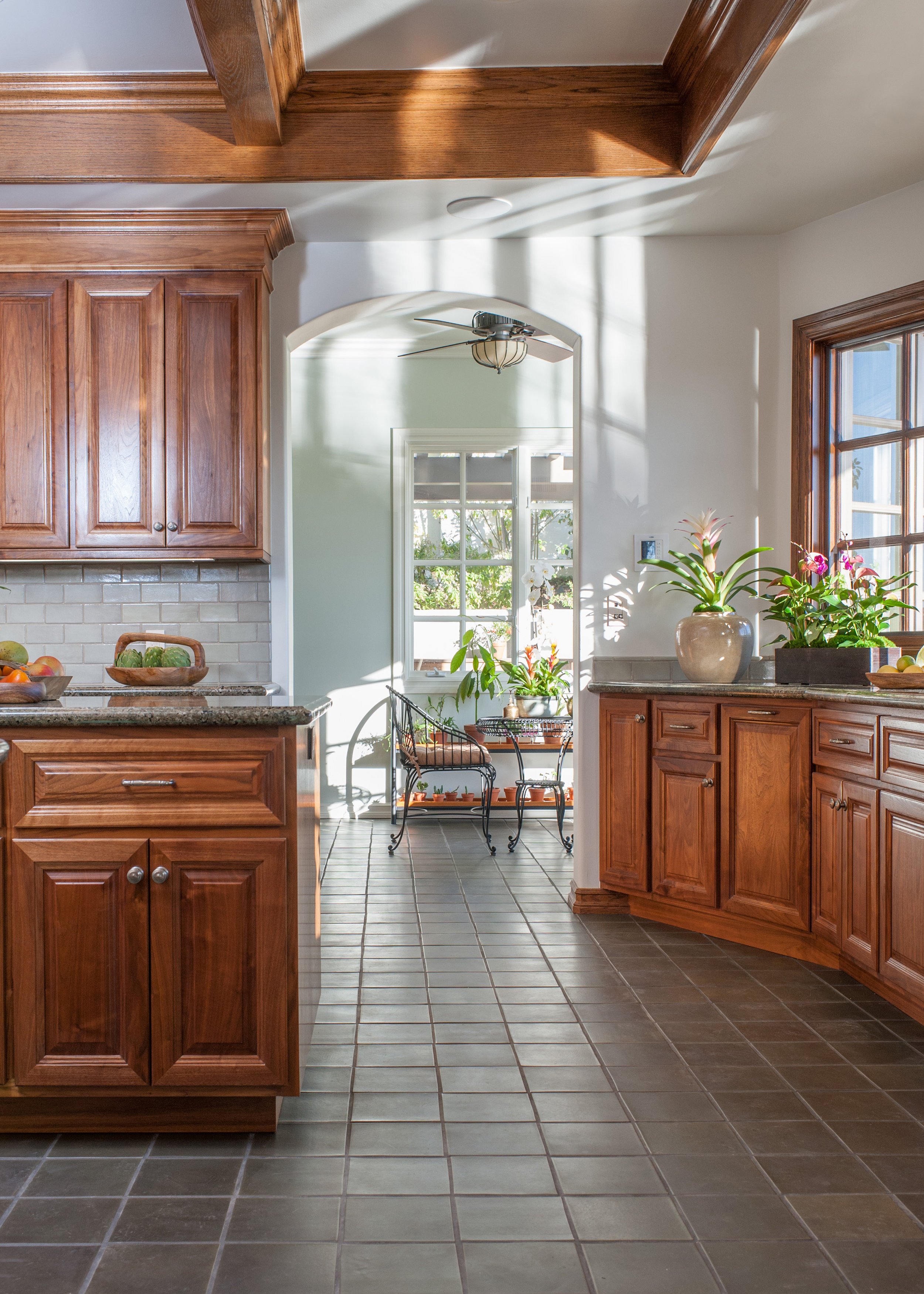
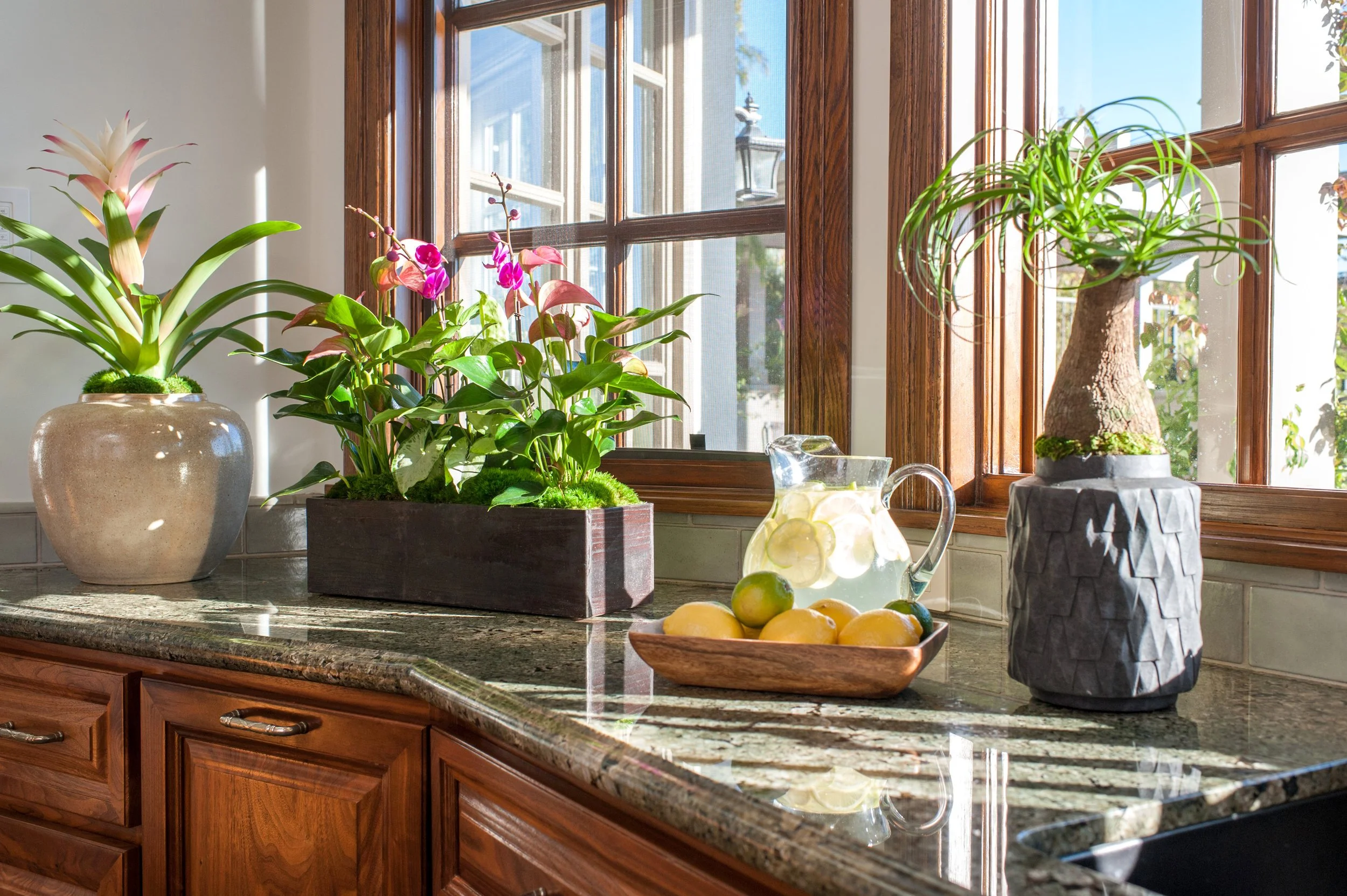

Sarah Barnard designed a one-of-a-kind hood in bronze to pair with a Bertazzoni Heritage range. It provides high performance and a traditional aesthetic, punctuated by an antique Japanese teapot. American Walnut cabinets, handmade ceramic backsplash tile, and dark green granite countertops make a hardworking kitchen elegant.

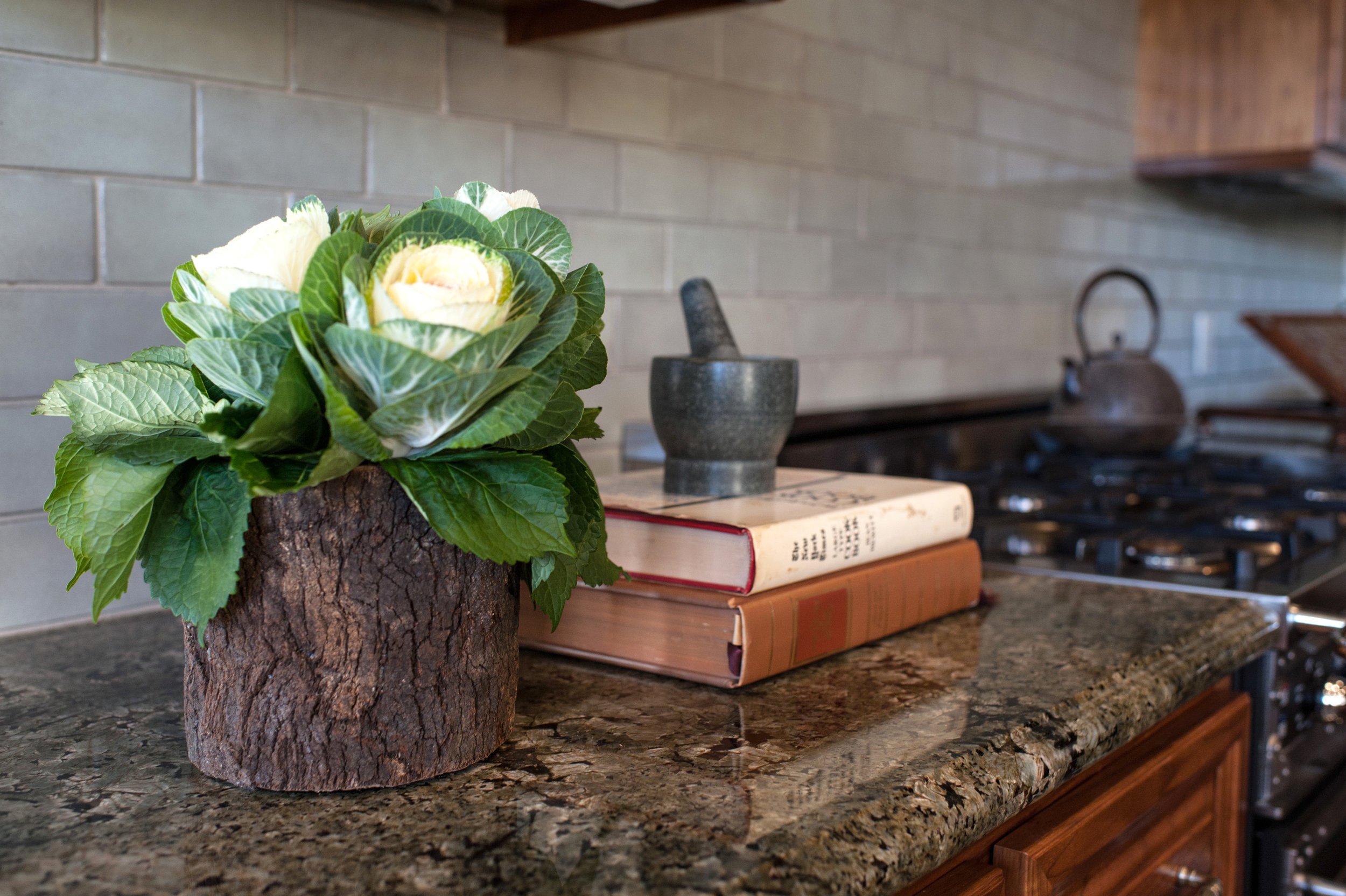
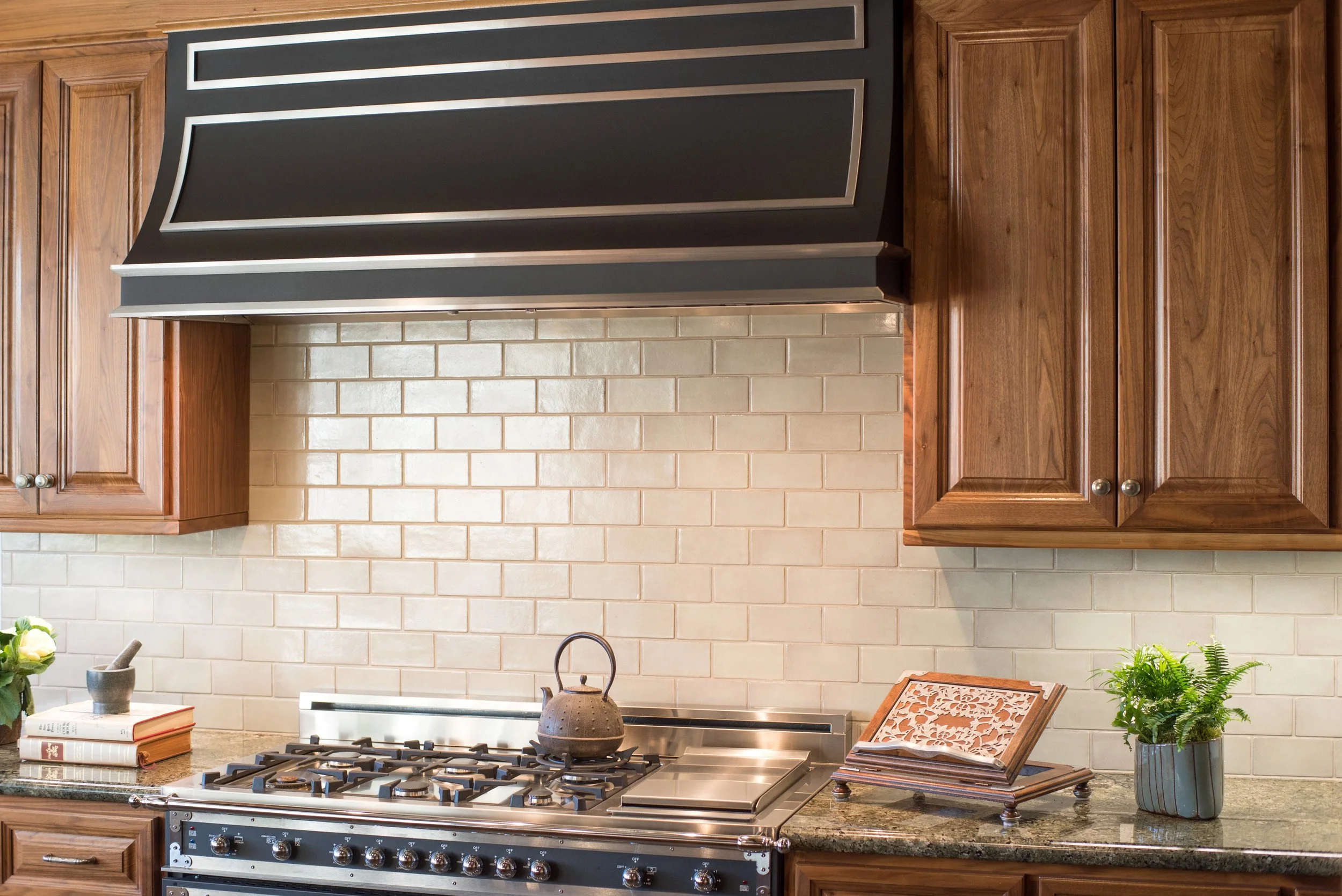
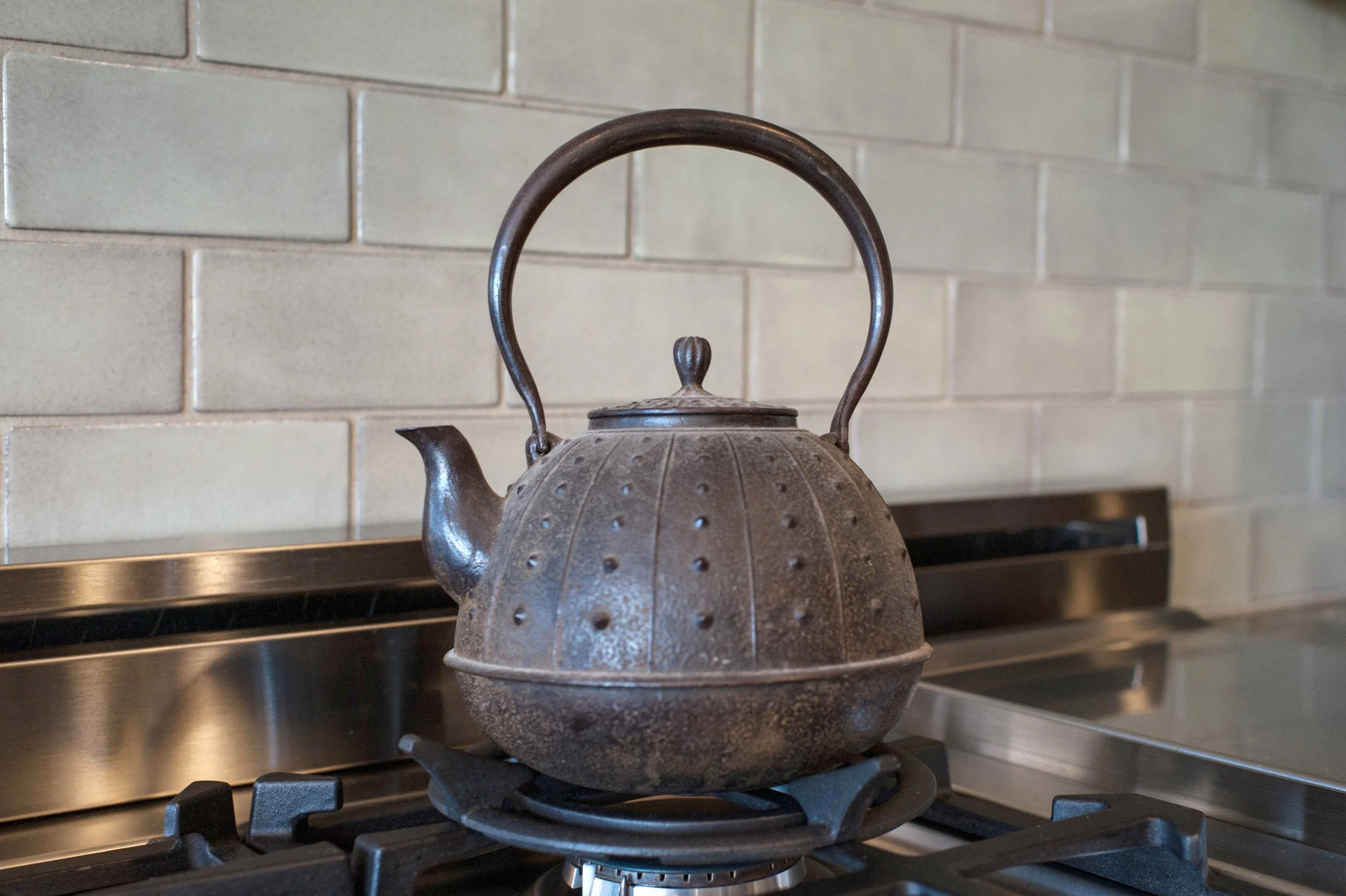

The original oak coffered ceiling was restored to complement the bespoke American Walnut kitchen cabinets. The center island is outfitted in dark green granite with satin nickel plumbing fixtures by Rohl. Three by six-inch backsplash tiles were handmade for the kitchen in an ash gloss glaze.

Sarah Barnard designs healthy, happy, personalized spaces that are deeply connected to nature and art.
To learn more about Sarah Barnard Design, please visit www.SarahBarnard.com.
Photos by Steven Dewall

Elle Decor: Designers Reveal Their Favorite Kitchen Paint
Sarah shares one of her favorite paint colors for kitchens.

FARROW & BALL CABBAGE WHITE 269
"It's a delightful, versatile neutral that pairs brilliantly with blues, greens, and grays. The hint of green elicits thoughts of the first days of spring and the taste of fresh garden vegetables."
Kloss, Kesley. Designers Reveal Their Favorite Kitchen Paint Colors. Elle Décor. April 2016
http://www.elledecor.com/design-decorate/color/tips/g3027/best-kitchen-paint-colors/
Sarah Barnard designs healthy, happy, personalized spaces that are deeply connected to nature and art.
To learn more about Sarah Barnard Design, please visit www.SarahBarnard.com.

Small Kitchen Design : Interior Strategies for Petite Spaces

Small kitchens have a terrible reputation for being cramped and undesirable. By improving your kitchen’s layout, you can maximize its performance and visual appeal. You can further enhance the function of your small kitchen by making smart design decisions when selecting appliances, surface materials, and architectural details.

Combining your appliances will optimize the total function of your kitchen when working with limited space. Take into consideration the Work Triangle of the refrigerator, sink, and stove. Make sure there are no obstructions, such as an island, and separate the household traffic from intersecting the triangle. Use your backsplash as storage with a stainless rod to hang kitchen utensils. Use appliances such as over range microwaves with built-in ventilation to save space. Reducing the number of required devices help your kitchen look less cramped.

Surface features along with architectural details add character and depth to your small space. When using the color white, whether it be on cabinetry or walls, it will reflect light giving the illusion of a larger area. Incorporating earth tones or low contrast color schemes on cabinets, backsplashes and flooring gives a textured look for added depth. Large windows can provide more natural light, which can allow your room to feel more spacious. A tip when choosing textures is always keeping in mind their aesthetic purpose. Consider using reflective materials as in stainless steel to expand the space visually.

Small kitchens can rise above their reputation of being cramped and cluttered when considering a few key elements. Optimizing the functionality to maximize your space will improve the layout as well as give it a starting point from which to work. Choosing the correct appliances to incorporate in the Work Triangle for your kitchen will help the layout take shape. Small kitchens can be impeccably designed making you almost forget the desire for a larger kitchen.

###
Working out of her Los Angeles based studio, Barnard works on interior design projects big and small, from sprawling corporate headquarters to cozy beachfront cottages. With a contemporary approach that employs traditional vocabulary, she defines her range of style as “innovative yet time-honored.” Sarah is intrigued by clients who have unusual requests and lives for a challenge and has yet to meet a client she doesn't like. Sarah loves designing for anyone with pets! She adores people who are avid collectors of anything they fancy.
Sarah is often retained by clients who have never worked with an interior designer because they thought designers weren’t for them (until now). She is known for delivering, on time, all the time. Sarah is incredibly down to earth, and people love her for her frankness. Sarah and her staff will go above and beyond for a client: build a custom sunroom for the kitties, organize and alphabetize boxes in the garage, take the kids out shopping for their bathroom tiles…etc.

Sarah Barnard Design undertakes residential interior design projects, commercial spaces and, even single rooms. She can assist you with space planning, color counseling, kitchen and bath remodeling, historic preservation, and all aspects of green design and healthy living: organic, non-toxic, sustainable and fair trade materials, energy and resource conservation, air and water purification, natural furnishings and fabrics and much more!
Story by: Claudia Casas Interiors by: Sarah Barnard

Sarah Barnard designs healthy, happy, personalized spaces that are deeply connected to nature and art.
To learn more about Sarah Barnard Design, please visit www.SarahBarnard.com.
References:
Small Kitchens by Jeffrey Holloway in Residential Design & Build Volume 77, Issue 5, 2012
ASID Design Research Database: http://www.asid.org/content/research-resources