


Ergonomic Home Design: the New Standard of Luxury Living

Our home should reflect who we are as a unique individual. Bespoke design creates an interior environment that is made specifically for us, customized to our particular aesthetic tastes as well as our physical and emotional needs. Customizing functional elements of our homes can positively affect our physical bodies and emotional well- being, limiting daily stress and improving our quality of life.
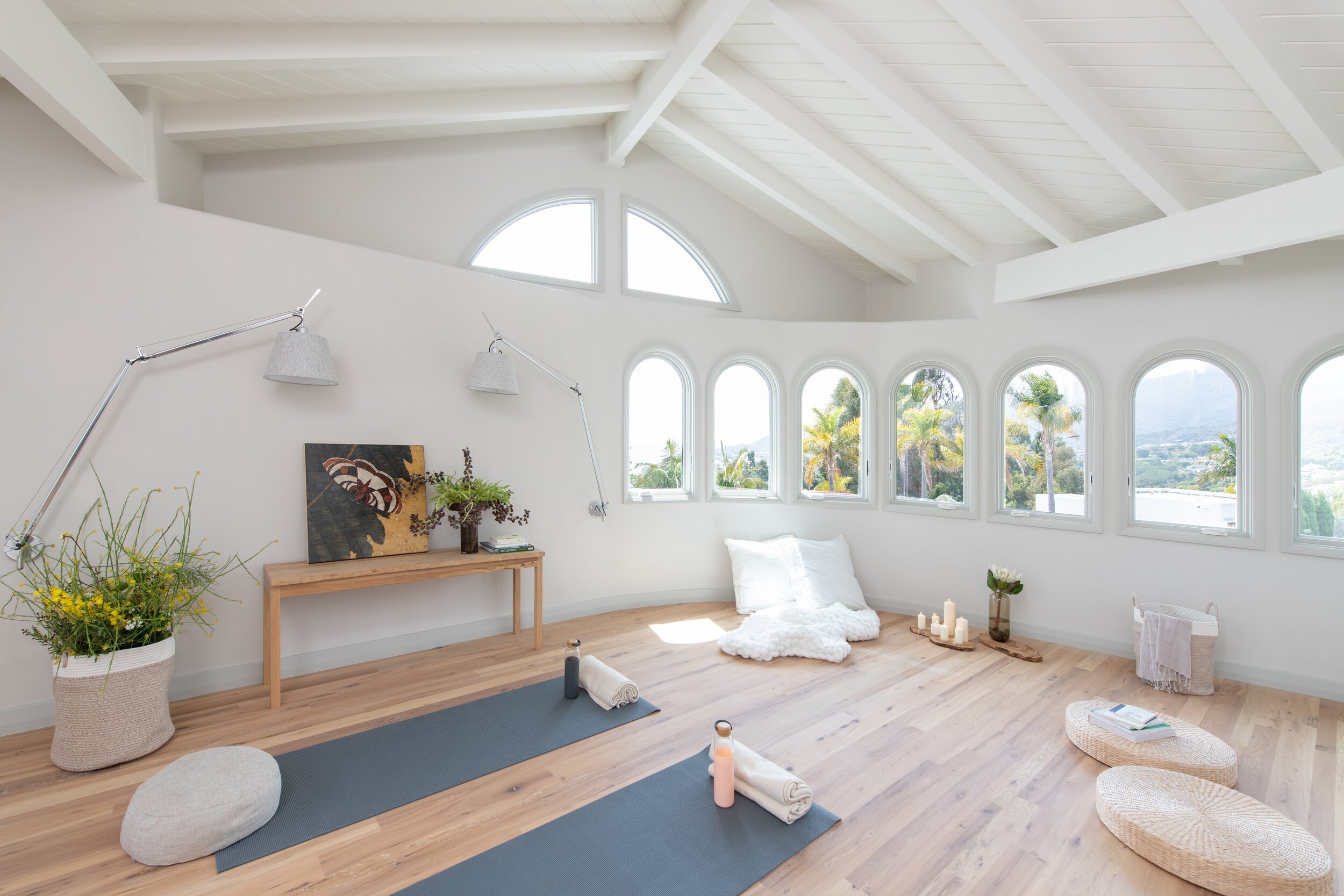
THIS WELLNESS ROOM FEATURES ART BY KAREN SIKIE, CREATING A CALMING, NATURE INSPIRED BACKDROP FOR YOGA OR MEDITATION
Our studio practice embodies these principles by approaching our clients with a sense of inclusiveness and sensitivity that allows ample space to voice their needs. We make an effort to interview all family members to custom craft a home that uniquely fits them and the way they utilize space. These homes often reflect a client's personal philosophy and can contribute to the achievement of their lifestyle goals. This can take the form of creating a soothing bedroom space, yoga or meditation room, or choosing vegan materials. A home that reflects who we truly are contributes to an environment of comfort, support, and peace that promotes joy and wellness in everyday life.

FURNITURE CAN BE CUSTOMIZED TO OUR SPECIFIC BODILY SCALE AND PHYSICAL NEEDS.
Ergonomic design, simply put, is people-focused design. Design that considers how we interact with an object or a space. Commonly associated with the functionality of workspaces and productivity (office chairs, desks, etc.), ergonomics can enrich our home lives through thoughtful, custom design. Our surroundings should be shaped to benefit us, and we shouldn't have to adapt or change ourselves to fit into our surroundings.
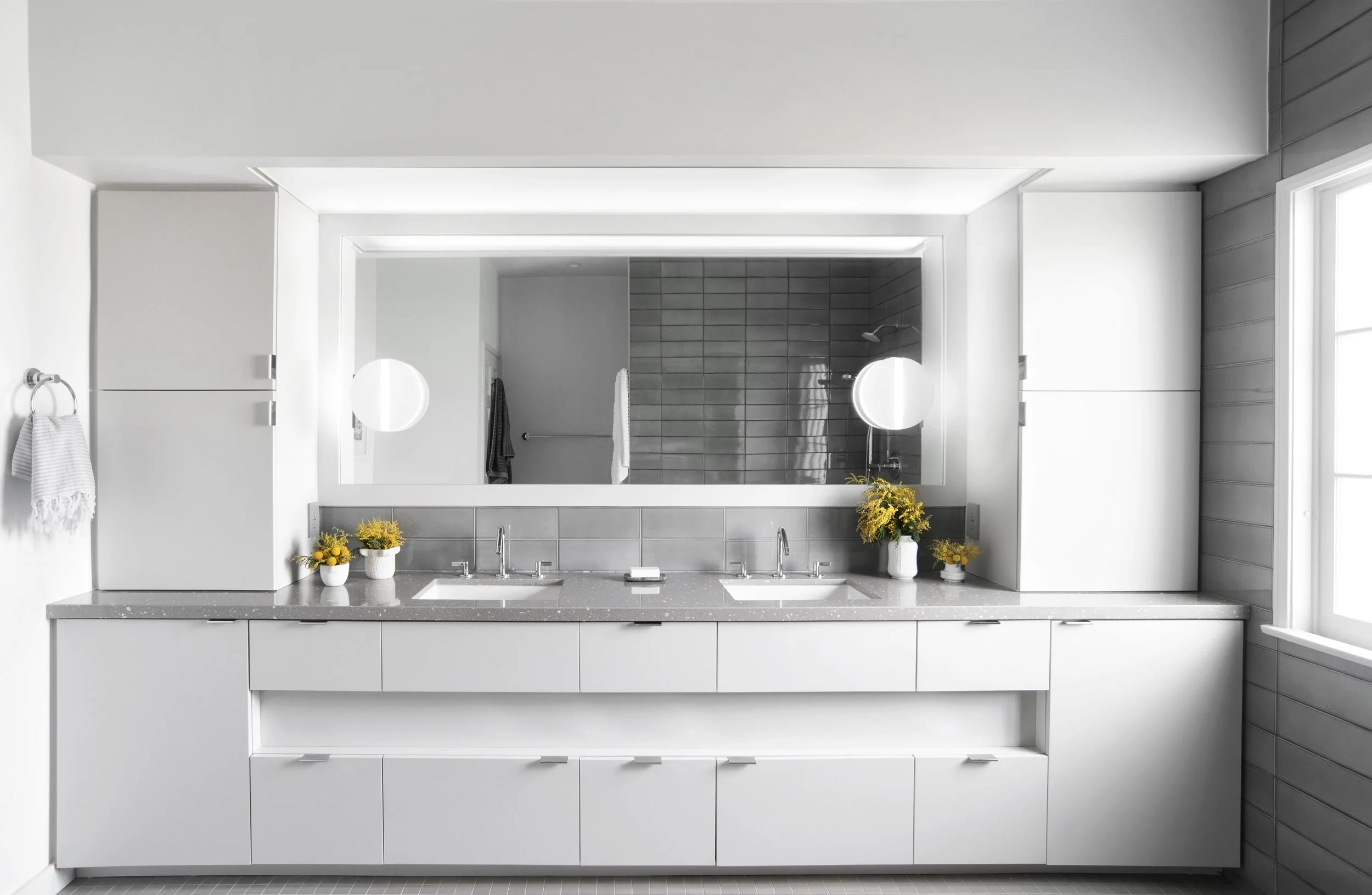
THE SCALE AND PLACEMENT OF CABINETRY, LIGHTING AND COUNTER HEIGHT ALL CONTRIBUTE TO PERSONALIZED COMFORT IN THE HOME.
Thoughts on the scale and proportion of the body and how this relates to our built environment date back to ancient Rome with the architect Vitruvius who argued that "buildings should be based on the symmetry and proportion of the human form. (1)" In 1948, the architect Le Corbusier expanded on Vitruvius's work to create a set of calculations that he referred to as The Modulor. These calculations would create a universal scale for buildings and furniture "aiming to provide the user with an intrinsic sense of well-being and comfort. (2)"
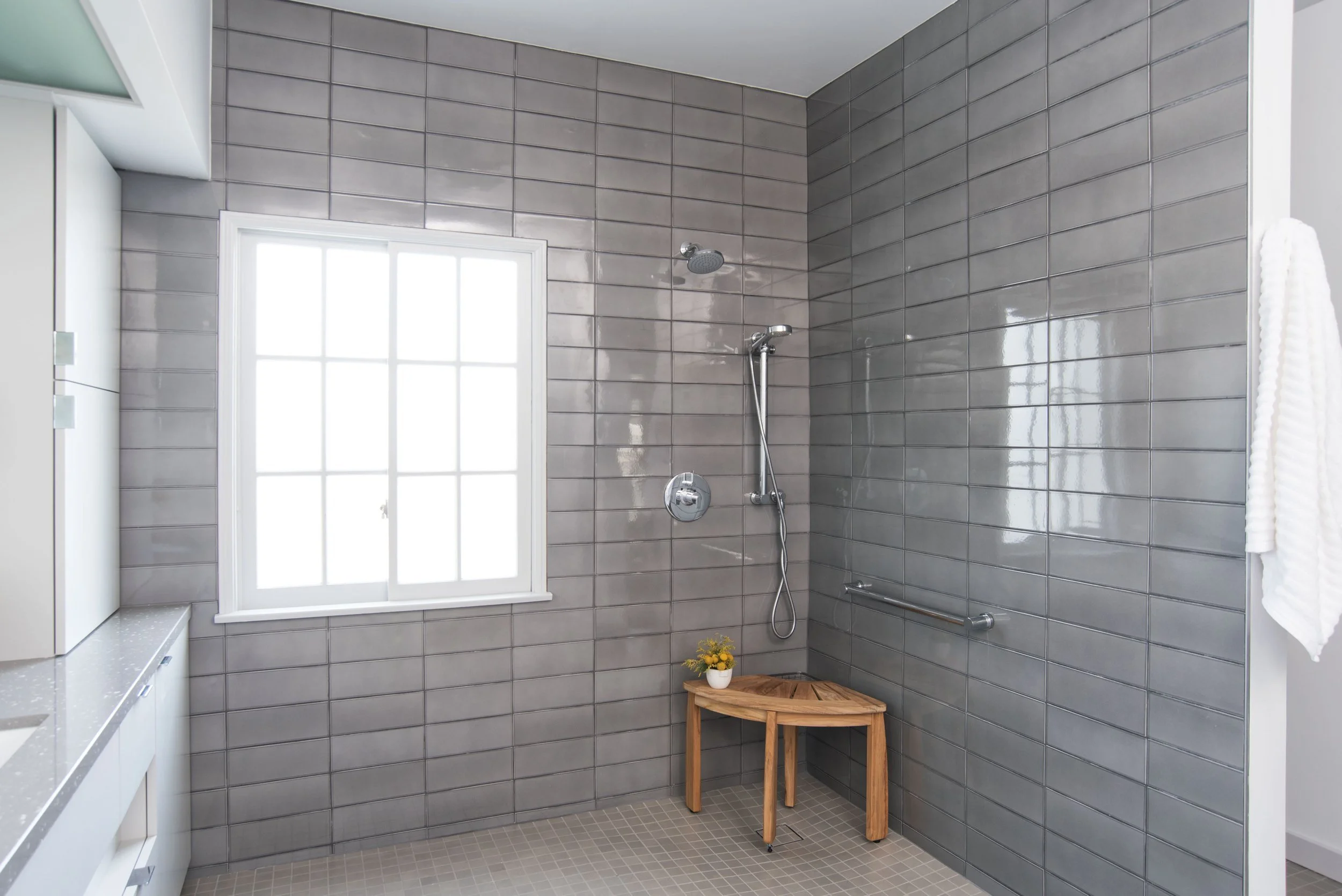
BATHROOM DESIGN CAN BE ADAPTED TO SUIT A DIVERSE RANGE OF PERSONAL AND PHYSICAL NEEDS.
Attitudes towards "universal" sets of bodily measurements, such as The Modulor, began to change in the 1960s as they excluded a diversity of body types, proportions, and abilities. "Is this an architecture shaped by the proportions of man or an attempt to shape its inhabitants? (3)" Today there are many regulations that determine standard measurements throughout the home, such as the Americans with Disabilities Act Standards for Accessible Design and the National Kitchen and Bath Association Planning Guidelines.

MANY KITCHEN FEATURES SUCH AS COUNTERTOP HEIGHT, SOFT CLOSING DRAWERS, FOOD STORAGE AND APPLIANCES CAN BE CUSTOMIZED TO SUIT OUR UNIQUE BODILY PROPORTIONS AND LIFESTYLE GOALS.
While it's more typical to talk about ergonomics in terms of an office chair or ADA compliance, more homeowners are living their best lives by having their homes perfectly fit to their bodies. When we start to think about our homes from an ergonomic viewpoint, we can customize many details to suit our unique physical proportions and emotional needs. Something as simple as customizing the height of kitchen countertops can encourage improved posture and physical ease in using the space. Similarly, we can build furniture and bedding precisely to fit our bodily dimensions, easing strain put on joints when getting in and out. We can customize anything from wall switch locations, automated lighting, window coverings, appliances, mirror height, and environmental sounds through ergonomic design to create the ultimate comfort and well-being at home.

THE SENSORY ELEMENTS OF A ROOM ARE AN IMPORTANT COMPONENT TO TAKE INTO ACCOUNT WITH ANY LIVING SPACE.
Sarah Barnard WELL AP + LEED AP, also takes sensory elements into account when designing a space. Features such as soft close doors and cabinets to reduce noise, storage solutions to create orderly and calm surroundings, and the selection of color and texture can all contribute to the comfort and emotional resonance of a room. Sarah has an in-depth understanding of color theory and color psychology, which explore how color affects our behaviors and emotions to create a color palette that matches your home to your personality — and when a space feels like 'you,' happiness will follow.

LIGHTING, TEXTURE AND COLOR ARE IMPORTANT SENSORY DETAILS TO TAKE INTO CONSIDERATION WHEN DESIGNING A SPACE FOR CHILDREN.
Sensory details such as color and texture play an important role when customizing spaces for children and can be particularly beneficial for neurodivergent children. Sensitivity needs to be taken towards environmental noise as well as lighting. Diffused and adjustable lighting allows levels to be dimmed to suit individual moods and needs. Avoiding wallpapers with busy patterns and choosing light neutral colors combined with soft textures can also encourage a soothing and calming tactile experience in the space.

ERGONOMIC DESIGN THAT THAT CUSTOMIZES THE PHYSICAL AND SENSORY ELEMENTS OF OUR HOME TO MEET OUR EMOTIONAL AND PHYSICAL NEEDS HAS THE ABILITY TO CREATE JOY AND WELLNESS IN EVERYDAY LIFE.
A home should not only reflect the physicality and identity of its owner, it should also be an extension of their personality which enhances day-to-day living. All of these small details, enhanced by ergonomic design, make movement around our home as effortless as possible, encouraging a symbiotic relationship between our home and body which nourishes us, encouraging joy and wellness.
Sarah Barnard, WELL AP + LEED AP, is a leading designer of personalized, sustainable spaces that support mental, physical, and emotional wellbeing. She creates highly personalized, restorative spaces that are deeply connected to art and the preservation of the environment. An advocate for consciousness, inclusivity, and compassion in the creative process, Sarah has appeared in Architectural Digest, Elle Décor, Vogue, HGTV, and many other publications. Sarah was honored as a “Ones to Watch” Scholar by the American Society of Interior Designers (ASID).
Works Cited
Souza, Eduardo. “The Evolution in Understanding of Human Scales in Architecture.” ArchDaily, ArchDaily, 15 Oct. 1 2020, https://www.archdaily.com/949316/the-evolution-in-understanding-of-human-scales-in-architecture.
Souza, Eduardo. “The Evolution in Understanding of Human Scales in Architecture.” ArchDaily, ArchDaily, 15 Oct. 2 2020, https://www.archdaily.com/949316/the-evolution-in-understanding-of-human-scales-in-architecture.
Souza, Eduardo. “The Evolution in Understanding of Human Scales in Architecture.” ArchDaily, ArchDaily, 15 Oct. 3 2020, https://www.archdaily.com/949316/the-evolution-in-understanding-of-human-scales-in-architecture.

LA DREAMS: LOS ANGELES LUXURY LIFESTYLES


Above: White fabric poufs provide extra seating for guests and are low enough to preserve the ocean view (Photo by Brad Nicol); Below: LA based interior designer Sarah Barnard (Photo by Erik Hyler)

The Queen of Space
BY: NATALIE FRIBERG
Incredible space requires the knowledge and capabilities of an incredible interior designer. But in the creative and innovative hub that is Los Angeles, there is no shortage of gifted specialists.
Starting in December, we set out on a mission: Uncover an interior design professional that is on the forefront of the industry, yet capable of producing the elements of superiority, class, and professionalism required by our readers.
Enter eco-chic interior designer Sarah Barnard. Recognized by the International Institute for Bau-Biologie & Ecology as a Building Biology Practitioner and by the United States Green Building Council as a LEED Accredited Professional, to name a few, Sarah brings a great degree of eco-friendly cognizance to each of her projects.

Above: Cotton velvet draperies in a saturated burgundy tone connect with the tiny berries in the woodland wall upholstery; Below: Better Times Peonies brighten a display of the homeowner's favorite things (Photos by Steven Dewall)

I enjoy giving classic styles a fresh face while preserving their vintage charm.
Overall, designing a home for a client is deeply personal. It requires establishing an essential level of trust, which I ensure through ongoing and open communications.
Q: Your mantra is: “Where smart design, sustainable choices and healthy living converge.” What do you mean by “smart design”?
SB: Smart design is design that’s healthy, beautiful, functional and enduring. I design homes to my client’s desires, lifestyle, and special needs.
Q: What are some options that homeowners have when considering sustainable choices?
SB: Stunning tiles, counter tops and even beautiful textiles are being designed out of creatively re-purposed materials. There are more energy-efficient light fixtures and avenues that bring more natural light into a home than ever before. Using local artisans to manufacture custom-made cabinetry and furniture is a responsible choice that homeowners can trust to deliver unique items of exceptional quality.
Q: How would you describe your design style?
SB: Each of my design projects is as unique as each of my clients. The foundation of a successful project is getting to know my clients well, including their personal interests and lifestyle choices as well as what colors and styles most appeal to them.
I take a contemporary approach to create a timeless look, keeping it fresh and sophisticated. I prefer details that have a personal meaning for the client: a motif that reflects a favorite place; an antique with family history; a special collection; or a child’s artwork.
One area I specialize in is healthy, sustainable design. I have exceptional resources that offer appealing natural furnishings and fabrics, energy-efficient fixtures, and organic and non-toxic materials to support a healthy lifestyle.
Another area I specialize in is historic preservation.

Q: Is there a favorite room you have designed or project you have completed?
SB: I am always up for a challenge and love it when clients bring me unusual requests; whether it’s designing a display room for a special mineral collection or crafting a custom kitchen into the perfect functional space. I also love designing for children and pets!
A passion of mine is designing both historic properties and modern architectural spaces. I always strive to bring harmony, balance and a connection to nature to the space.
Q: What design trends are you most excited about in 2017?
SB: There are three major themes and trends that I am excited about: Handmade furnishing items from natural materials, made by artists, not factories. Collecting! There has never been a better time to support the arts and start or expand a collection of paintings, sculptures and/or pottery. Customizable textiles printed by local artisans - personalization has never been easier!
Q: What do you recommend as first steps to those who may be unfamiliar with smart design and sustainable choices?
SB: Start small. Sometimes just a few simple changes can have an enormous impact on the health of your home or work environment. If you aren’t ready to redesign your entire home, I often recommend starting with the primary bedroom since this is where we spend a good portion of our time. This room above all others needs to feel restorative and calming.
Also, consult only with experienced designers. Professionals like myself can recommend smart, sustainable choices and create a wonderful experience you will never forget! ◆
Sarah Barnard designs healthy, happy, personalized spaces that are deeply connected to nature and art.
To learn more about Sarah Barnard Design, please visit www.SarahBarnard.com.