


Beyond Order: Restorative Storage in Modern Design
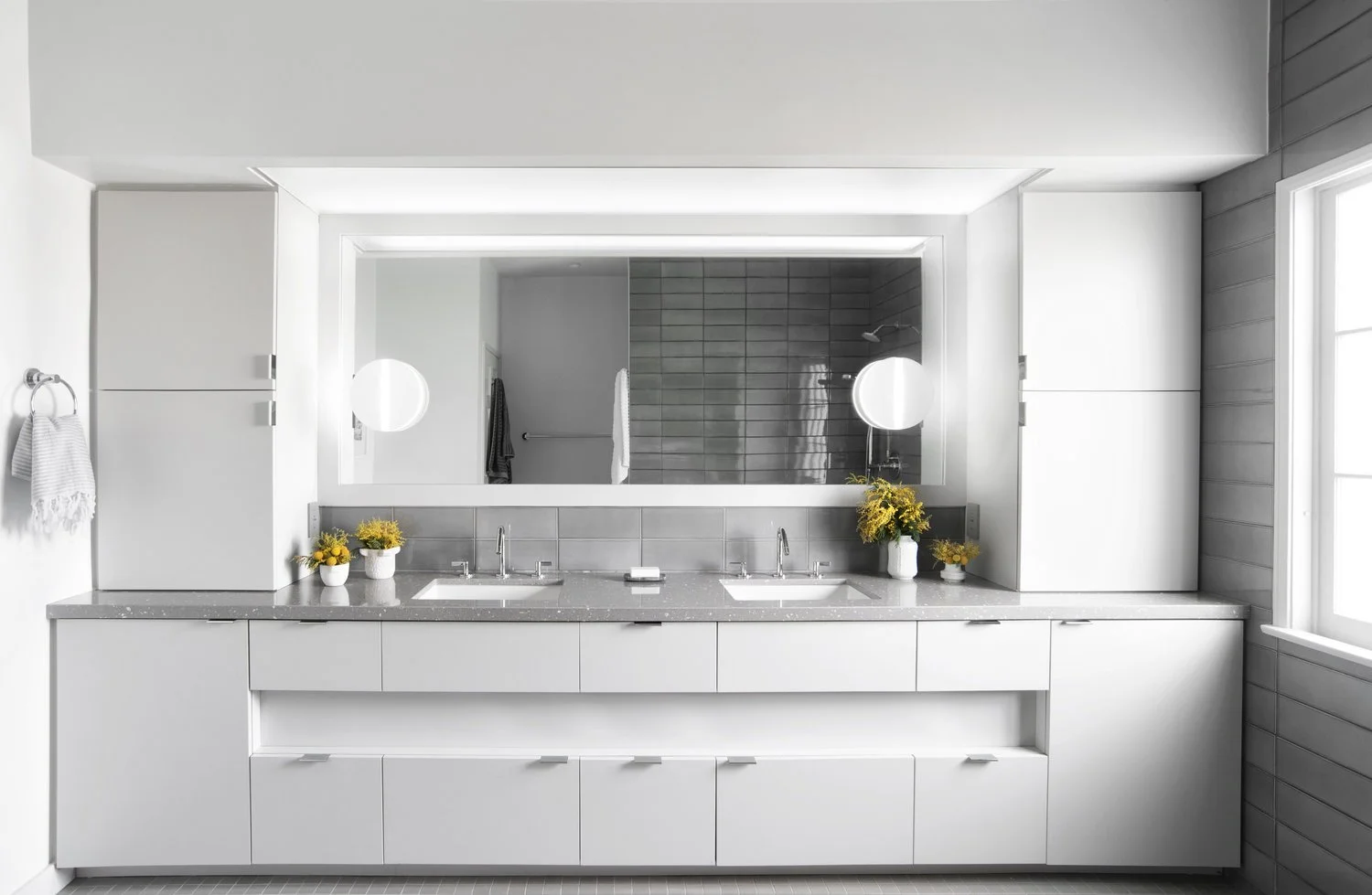
A common philosophy of storage and organization starts with a period of purging, usually involving a rigid keep, donate, or trash approach. However, this process does not always acknowledge the emotional value of our possessions or fully consider how someone wants to live and feel in their home from a psychological standpoint.
“A common approach to organization often prioritizes elimination, yet it frequently fails to acknowledge the profound emotional resonance of the objects we choose to surround ourselves with,” says Sarah Barnard, WELL and LEED accredited interior designer. “Restorative design is not about what we can discard, but about how we can curate an environment that supports our emotional well-being and reflects our true intentions for how we wish to inhabit a space.”
Many homeowners need a more nuanced strategy that allows for emotion, uncertainty, and changing capacities. The traditional sorting pile is a helpful visual tool, but the criteria for what remains should be personal and reflect one's own history. It is essential to recognize how objects hold meaning, serving as cherished mementos, touchstones, or evolving pieces of a larger collection. If the home is a safe space for free expression, much-loved items play a vital role in self-expression and daily joy.
The Psychology of Curation
Organizing still benefits from a structured process, but the mindset should be rooted in the positive. “Sorting should be approached as an act of self-care rather than a chore of elimination,” Barnard notes. “Instead of asking what we can live without, we should ask how we want our home to support our mood and the daily rituals that bring us comfort.”
By using a feelings-first guide, homeowners can look beyond strict utility. While function is a common starting point, the emotional goal of a room is just as significant. An object might be functional and valued for its usability, or valued simply because it is beautiful. In high-end design, beauty is often a primary function, contributing to calm and visual delight. For many, collecting and curating is the source of joy itself. In these cases, the process is about honoring the collection rather than reducing it.
Managing Sentimental Thresholds
Sentimental items often need a different timeline. A memory box preserves items linked to a person, place, or thing without requiring an immediate decision on their permanent place. This gives time to assess the sentimental reasons for keeping or sorting objects. Items that offer tactile comfort, such as favorite textiles or calming-colored objects, should be seen and kept as sensory anchors at home.
For objects that trigger uncertainty, a holding strategy can help. It can be hard to make quick decisions about inherited pieces or items with complex histories. Placing these in a designated area for review gives time and control. The key is to set a plan to revisit the collection. This ensures the holding area is a temporary pause, not a source of hidden stress.

Architectural Systems for Restorative Living
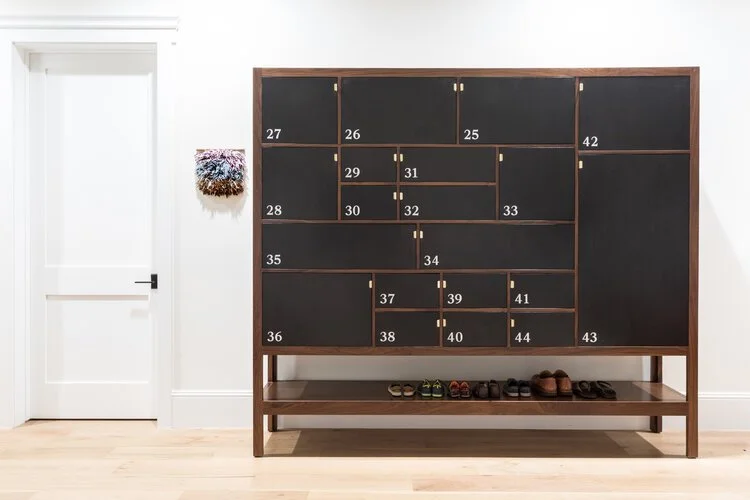
Once curation is complete, focus shifts to systems to encourage a seamless daily experience. A sophisticated home needs a balance of open and closed storage. Open shelving or rails provide access to frequently used items and serve as display platforms. To prevent visual overload, pair these with closed cabinetry or integrated millwork.
In a home office, this might manifest as an elegant display shelf for books and art, paired with concealed filing or cabinetry for administrative essentials. In the kitchen, high-touch tools may remain on a beautiful tray on the counter, while secondary appliances are tucked into specialized drawers. For items that carry deep meaning but lack a functional place in the current layout, digital preservation is a thoughtful alternative. Scanning precious items like children’s art or archival correspondence keeps the memories accessible while reclaiming physical space for new experiences.
Intentional Visibility and Ease
Achieving a balance of visibility without overload is personal. While concealing belongings may lead to their eventual neglect, maintaining total visibility can inadvertently lead to sensory overload. Subtle storage tools can help strike this balance. Shallow trays, baskets, or pull-out shelves in larger cabinets prevent items from becoming buried. Clear or semi-clear bins in closed closets maintain order and allow for quick identification.
Functionality means different things for everyone, and the goal of a sophisticated organizational system is to enhance the user's experience by creating an environment that feels intentional, paced, and restorative. By moving beyond the pressure of order for order’s sake, the modern home transcends simple organization to become a landscape deeply aligned with the lives lived within its walls.
Sarah Barnard is a WELL and LEED accredited interior designer and creator of environments that support mental, physical, and emotional wellbeing. She creates highly personalized, restorative spaces that are deeply connected to art and the preservation of the environment. A certified California Naturalist, Sarah believes in celebrating nature through responsible design that works symbiotically with the local environment.
An advocate for consciousness, inclusivity, and compassion in the creative process, Sarah has appeared in Architectural Digest, Elle Décor, Vogue, HGTV, and many other publications. Sarah was recognized as a "Ones to Watch" Scholar by the American Society of Interior Designers (ASID) and has been awarded "Best of Houzz Design" for seven consecutive years. Sarah's MFA in visual arts from Claremont Graduate University informs her practice and innovative approach toward interior design as creating a living work of art.

Sarah Barnard Celebrates Over Ten Years of LEED Accreditation

Leadership in Energy and Environmental Design Accredited Professional (LEED AP) designers bring their expertise to every project, creating healthy and environmentally responsible spaces for their clients. LEED certified buildings and homes provide lasting benefits for users, the surrounding community, project stakeholders, and the environment at large.

PHOTOS BY: BRAD NICOL
A sustainably designed, constructed, and maintained LEED-certified building positively affects the health of its employees or residents by improving air quality, reducing exposure to toxins, and ensuring adequate levels of natural light. LEED buildings yield lower operating costs and higher resale values and lease-up rates for property owners. They also consume less water and energy, reduce carbon emissions, and divert waste from landfills.

LEED-certified homes benefit not only their inhabitants but the community and environment. Green homes offer year-round comfort and healthy indoor environments. They, too, use less water and energy, which is a win for homeowners’ wallets but also reduces strain on the community’s resources. LEED-certified homes are known to sell faster and for more money, which can raise property values for the entire neighborhood.


Sarah Barnard is an interior designer, WELL AP, and Legacy LEED AP who recently celebrated the 13th anniversary of earning her LEED credentials. Legacy LEED AP is the title given to early participants in the program who passed the LEED exam before 2009 when the U.S. Green Building Council introduced specialties.

“I care about the future of our environment and work to ensure that my home design projects support wellness for people and the planet,” says Barnard. “The Legacy LEED AP credential demonstrates my long-standing commitment to healthy, sustainable design.”

As a leading expert in her field, Barnard has given lectures at the University of California, Los Angeles (UCLA), California State University, Northridge (CSUN), Fashion Institute of Design and Merchandising (FIDM), and SCALE: The American Society of Interior Designers (ASID) National Student Summit. She has presented at the LA Home and Garden Show, Pacific Design Center, California Preservation Foundation, and Textile Arts LA. Most recently, OM Chats hosted Barnard and fellow design leaders Adaeze Cadet (AIA, LEED AP BD+C, Vice President at HKS) and Julie Smith-Clementi (AIA, ISDA, Product Designer and Architect, Smith-Clementi) to take part in a multi-speaker conversation around the role of empathy in home design.
In 2017, Barnard was recognized as an ASID Ones to Watch scholar in the program’s inaugural class. ASID created the leadership development training program to promote diversity and propel the industry forward. Barnard confers with a national network of her fellow interior design scholars to share research and feedback.

While the LEED rating system focuses on the design, construction, and operation of buildings, the WELL Building Standard emphasizes the health and wellness of the people inside of them. The LEED and WELL programs are complementary and receiving accreditation with both has informed Barnard’s holistic approach to healthy, sustainable home design.

Barnard is an advocate for consciousness, inclusivity, and compassion in the creative process. Through her speaking engagements, pro-bono work, and writing, Barnard hopes to draw attention to these critical design objectives. Barnard is creating a future that includes greener buildings, healthier interiors, and enlightened home design.
