


Verdugo Mountains Retreat: A Nature Inspired Home among the Trees

The Verdugo Mountains are a unique natural environment in Los Angeles County, California. This mountain range, surrounded by urban development, is an isolated pocket of nature with abundant trees, flowering plants, and wildlife. Sarah Barnard Design recently transformed a ranch-style home in this beautiful, serene wilderness.

The garden surrounding this home was generously planted to provide beauty and sanctuary for pollinators and local wildlife, such as lizards, raccoons, foxes, coyotes, deer, and many birds who are regular visitors. This outdoor space is progressively rewilding with California native plants alongside beautiful ornamental plants that hold personal meaning to the household and grow well in this region. This green space blends the built environment of the home with its stunning natural surroundings, fostering an ecosystem that cultivates joy and mindfulness into daily life through simple acts such as coexisting with birds in the garden.


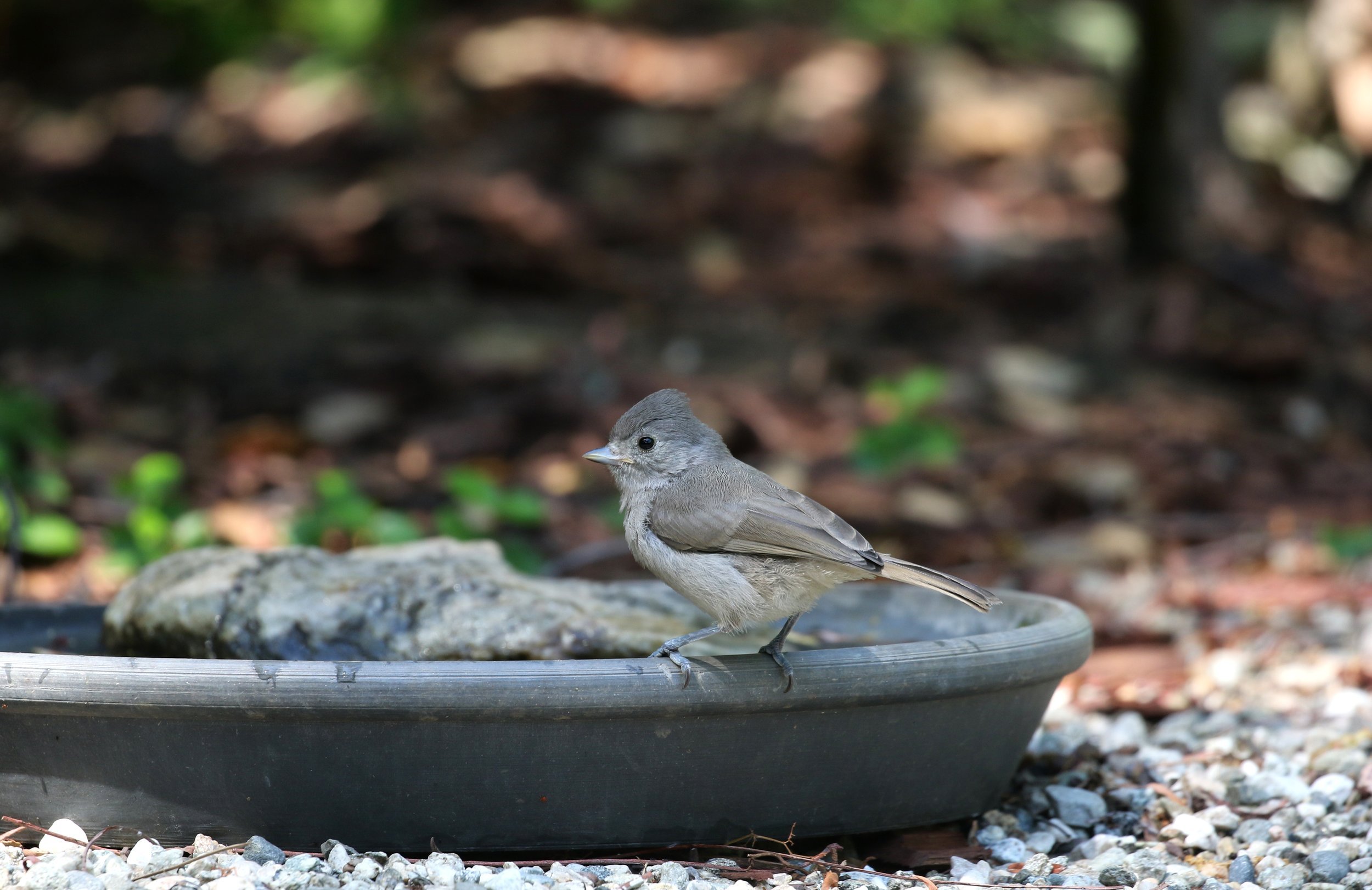


The beauty of the landscape inspired many biophilic design elements within the home, which was updated to reflect a connection between the indoor and outdoor environment.
The living room features large windows that look out onto a collection of succulents and cacti, with a beautiful view of the (sometimes snowcapped) mountains.

The living room furniture combines modern and antique pieces, including a restored antique armchair, reupholstered with a deep green linen velvet, whose luxurious and varied texture lends itself to the age of the chair while connecting with the lush greenery outside. A custom-made ottoman seamlessly compliments the armchair's antique quality. Integrating vintage and restored antique pieces within this home allowed the design team to incorporate sustainable practices in the design process while infusing spaces with pieces that held personal meaning through historical connections.
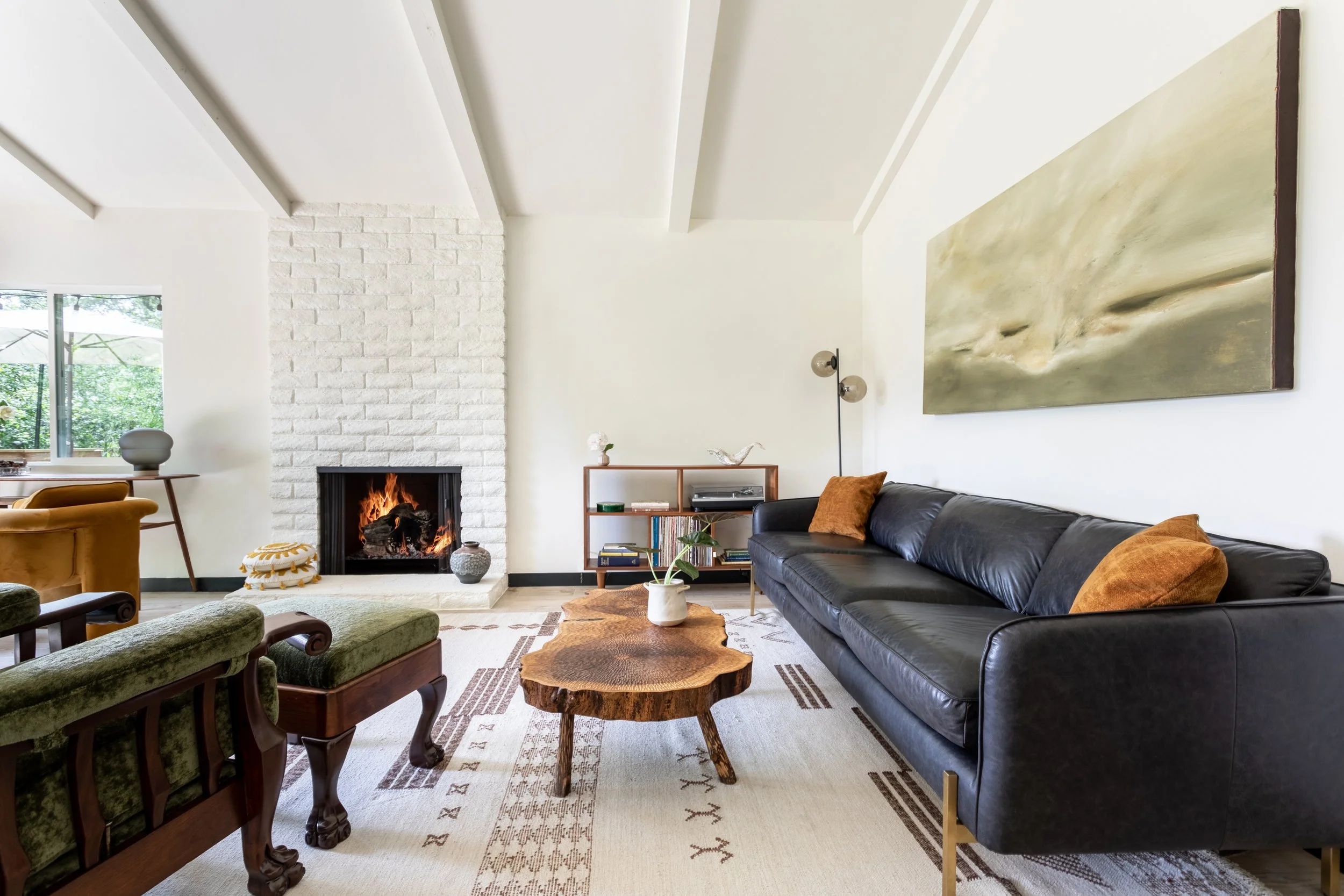
This unique wooden coffee table was made by splitting an unmilled log of English walnut into two parts. Its live edge retains the organic form of the tree from which it was made. The entire surface is textured with chisel marks that poetically incorporate the process of hand-working the wood into its final aesthetic. The shape, material, and process in which this coffee table was made make a connection with the surrounding woodlands, bringing the tranquility of forest bathing into this living room.

The living room flooring, which continues throughout this home, is made from porcelain tile that has the appearance of White Oak wood. This tile creates a harmonious connection with the surrounding woodlands while providing an excellent eco-friendly alternative to wood, as porcelain is a low-impact, enduring material that is easy to clean and maintain.
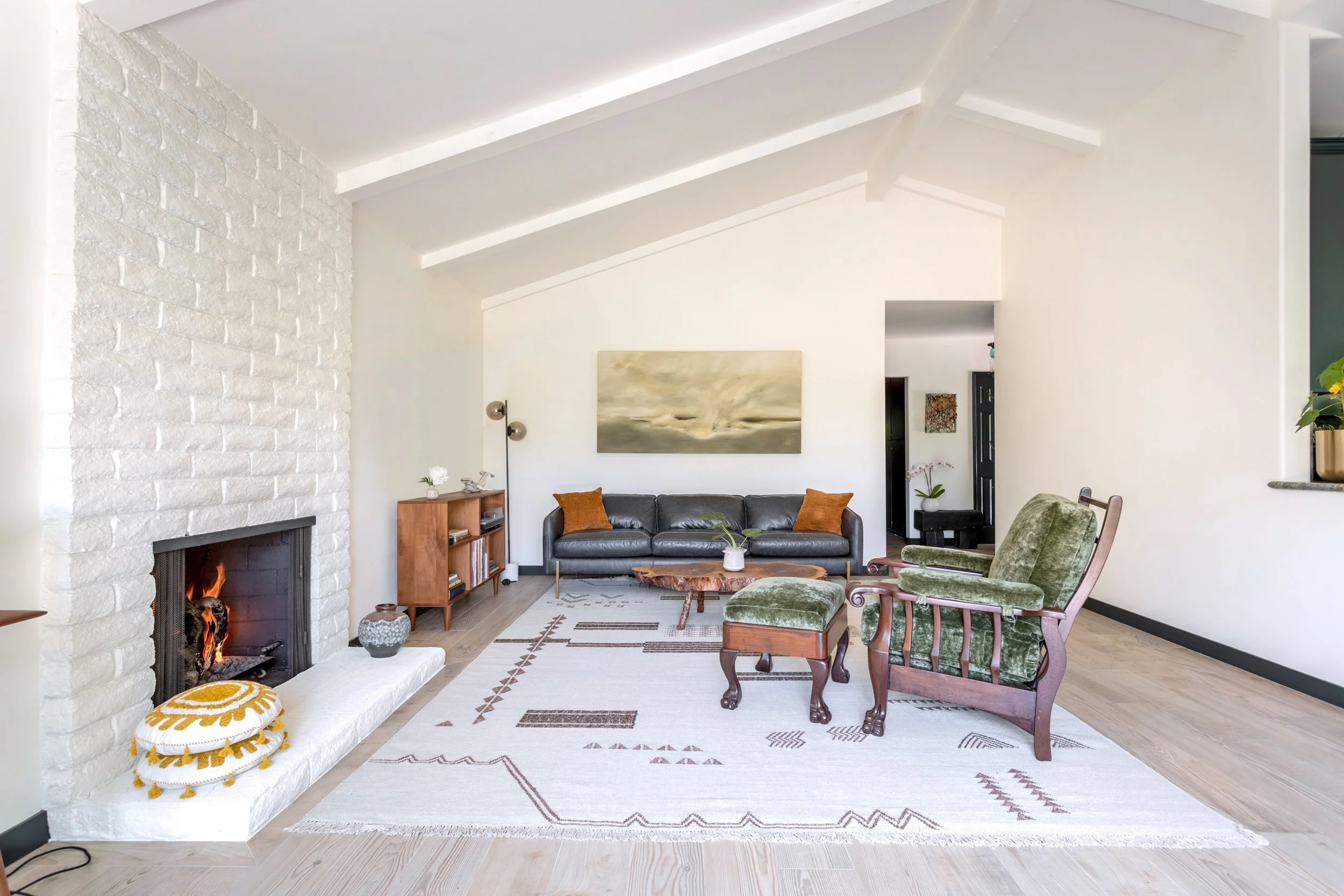
A hazy, calming landscape painting by Peter Burega hangs over the living room sofa. The muted earth tones of grey, brown, and olive green resonate with the deep green of the antique velvet armchair.
A large, wool, flatweave area rug demarcates a soft space for the sofa and coffee table within the living room. This rug features a minimal brown geometric pattern on a natural beige background, combining a nature-inspired palette to bring aspects of the outside landscape into this built environment.

The brick fireplace was painted white, integrating it into the light and airy feel of the room. A rustic hearth surface was created in plaster, reminiscent of the organic patterns in the dry earth of a desert landscape. A 1970s vase from West Germany coated in a bronze-like glaze and layered with grey fat lava rests on the hearth, providing a harmonious link with the brown and white palette of the area rug. Its uneven surface and the organic application of the glaze give it a unique handmade quality.


A pair of contemporary marigold yellow armchairs with custom arch-shaped ottomans create an area of warmth that brings out the earthy-toned highlights throughout the room. These ottomans blend components of the natural and the contemporary world through their round organic form and furry boucle-like texture, which creates a cozy sensory experience. The triangular side table is part of a nesting set and features an orchid resting in a soda fired tumbler by Heather Cornelius.

A German-designed, hand-blown, smokey taupe glass table lamp sits on top of a mid-century-inspired console table made in collaboration with a skilled woodworker. This lamp's organic form was shaped by merging two glass spheres and retains the malleable feeling of molten glass to create soft, diffused lighting within the space. A large Kale tree (Polyscias Guilfoylei) in the corner of the room is one of many indoor plants in this home that create a lush connection with the serenity of nature.

The dining area features a restored mahogany dining table that has been in the family for generations. This antique table features a central column base with claw feet and Queen Ann dining chairs with a ball and claw feet. A Scandanavian-inspired chandelier hangs over the dining room table; its minimalist style draws attention to low-wattage antique filament bulbs as a visible design feature that creates soft, warm lighting. A yellow ceramic mid-century modern dish creates a pop of color in the center of the dining table, while a fiddle leaf fig and monstera plant create green space on either side of the dining area.

The existing kitchen was transformed by painting the cabinets a deep black green and replacing the hardware with brushed antique brass round knobs to create a contemporary woodland feel.

The nature-inspired color palette also highlights the beautiful green tones within the quartzite backsplash and countertops. Luxury upgrades such as a touchless faucet and an instant hot water dispenser create a sense of comfort and ease that encourage convenience and joy in the simple pleasures of cooking a meal or enjoying an instant cup of tea.

The scenic mountain views from the living room windows inspired Sarah to create a one-of-a-kind mosaic design for the entryway floor. This elaborate hand-pieced design originated as a sketch by Sarah, which she then translated into a series of templates for the intricate angled strips of wood-like porcelain tiles. These were then arranged to form mountainous shapes inspired by the hillside views from the property.

The entryway features an Italian-designed hand-blown pendant light made from two glass spheres, one clear and one blue-green, that rest on one another to resemble a dew drop collecting on a drop of water. The transparent organic form undulates downward, emanating white light from below and a soothing blue-green glow from above.
Artwork by Renae Barnard makes textural reference to organic forms within nature by building up the material surface of the painting to resemble cracked earth or moss. This work is installed above an artisan-made bench, crafted using the traditional Japanese process called shou sugi ban, in which wood is finished by charring, washing, and applying natural oils.

The vintage hall tree features a collection of nature-inspired objects such as a pink glass antique vase with floral motifs, a Japanese bronze lilypad dish from the 1940s, and an antique ink well shaped like an owl.
The trim throughout the home's public rooms is painted the same deep black green as the kitchen cabinets, carrying this soothing tone throughout the home.


The hallway walls, closets, and ceiling are painted in the same deep black green dispersed throughout the cabinetry and doorways of the house. This immersive use of color is intended to create a sensory shift as one moves from the white, light-filled living room to the quiet sanctuary of the primary bedroom. The molten glass shape of the ceiling light fixture emits a golden meteoric glow that reflects across the dark walls of the space. A runner made from hand-knotted wool creates a soft detail underfoot, dampening noise from footfall to create a peaceful connection with home areas designed for rest and rejuvenation.

This light and airy home office looks out onto the lush green backyard with a view of Oak, Pepper, and Acacia trees outside. The walls are painted in Gardenia, a warm off-white with a slight peach undertone.


The subtle warmth of this color is accentuated by a dusty pink paint color used to highlight the baseboards, door frames, and window casing. This joyous pop of color connects with the Dhalias, Calliandra Eriophylla, and Hibiscus located in the surrounding garden.

This space was designed with multiple ceiling light options to provide ample and adaptable working light regardless of changes in furniture arrangement.

The bi-level walnut tambour door desk, Danish-designed grey leather chair, and Danish-designed secretary desk made from Rosewood are all 1960s midcentury pieces. The secretary desk includes a countertop that can be extended to create more workspace. A wall-based sculptural work by artist Renae Barnard connects the built and natural environment by constructing an abstract nest-like form out of found materials tied together with yarn and twine and then concealed within layers of paint.

A globe floor lamp positioned next to a large worktable provides a contemporary redesign of the mid-century modern aesthetic. The table and harp-backed chair are cherished vintage items that have been in the household for years.

A potted variegated Abutilon and a hanging Pathos plant bring in the lush greenery of the surrounding garden to create pockets of tranquility within the workspace. The hanging baskets outside the office windows create a joyous break from work to watch birds nesting and hummingbirds drinking from the Fuchsia flowers.

The design team incorporated butterfly stickers onto windows throughout the house to minimize bird strikes or collisions, supporting local birdlife and creating a space to enjoy birdwatching.

The home gym features organic linen curtains that frame windows looking out on the serene woodland.

The custom meditation pillow is made from the Kale Tree Matilija Poppy textile in Midnight, bringing this beautiful California native wildflower indoors in a palette harmonious with the home gym door. Elegant hardware is incorporated throughout the house in flat black with crystal disc knobs.


A mid-century-inspired wall sconce sits above a vintage burl root mirror shaped like the hollow of a tree.

The existing cabinets were updated with deep black green paint and round brass hardware with black U-shaped pulls.

The existing vanity was repurposed by painting it charcoal gray and installing new artisan-made hardware. The pewter finish of the leaf-shaped hardware creates a subtle nature reference. An Andy Warhol print of a green cat creates a pop of color in the room.

White linen curtains frame the bathroom window, and a pollinator house is installed outside. A pollinator house consists of a series of bamboo tubes designed to create a habitat for bees and insects, helping to support a biodiverse pollinator population within the household garden and the surrounding natural environment.

The primary bedroom color scheme combines Gardenia walls with deep black-green trim to create a nature-inspired retreat that connects with the serene surrounding environment. The dusty rose tones of the linen bedding, cotton blanket, and wool curtains draw from flowers in the lush garden outside, such as the California Wildrose, to create a cozy, inviting environment that resonates with the warmth of wood furniture throughout the room.
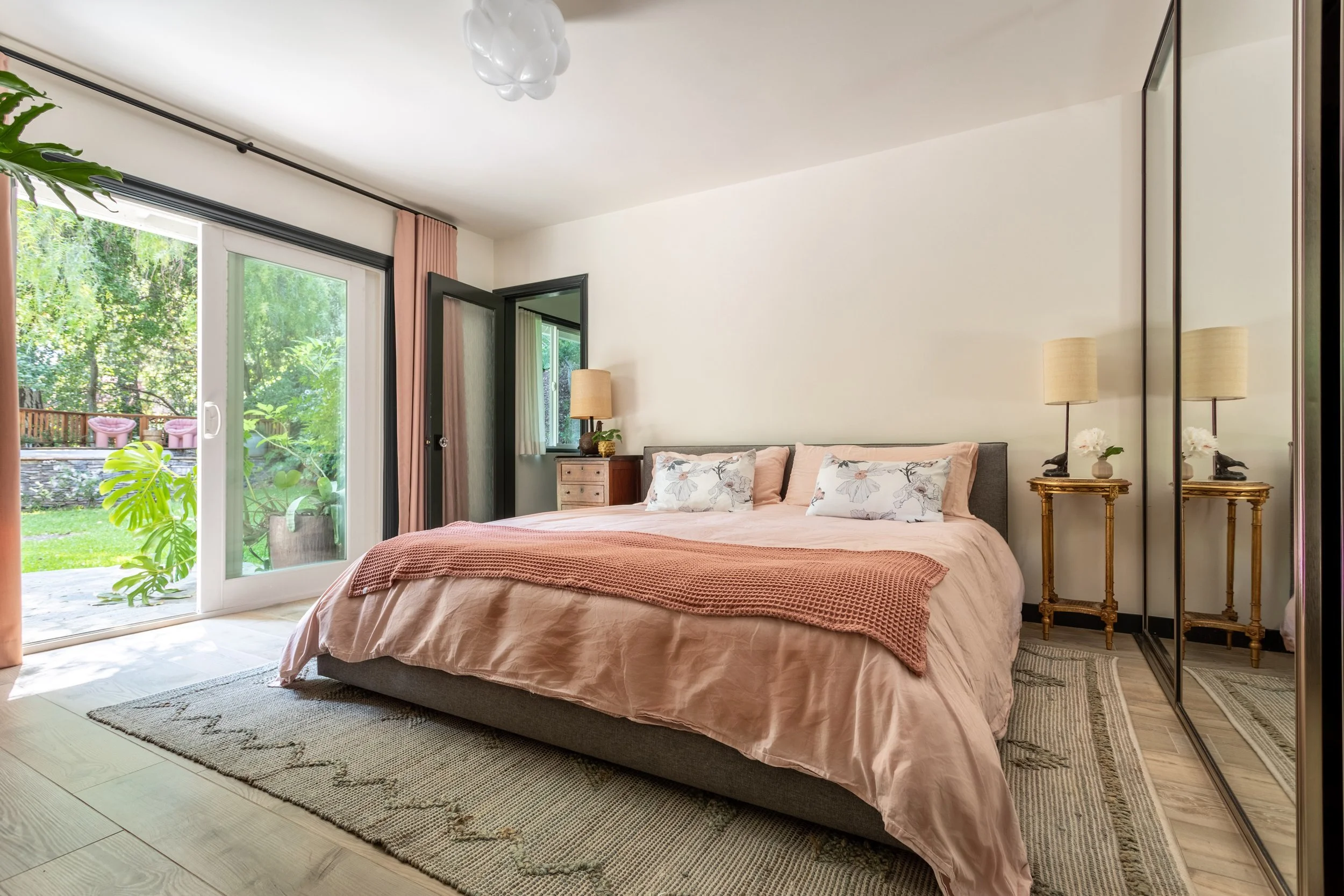
The grey upholstered bed and floor rug made from wool and jute help ground this colorful bedroom palette within soft, earthy tones. A cloud-like glass light fixture fills the room with soft, diffused lighting, and a pair of pink Roly Poly chairs can be seen in the garden through the glass sliding doors, creating a playful color connection between the inside and outside.

The natural beauty of woodgrain is featured in the live edge artisan-made walnut stool and the antique European Art Deco dresser, which incorporates a stunning decorative pattern created by mirroring woodgrain. A painting by Denes de Holesch depicts two frolicking horses.

A midcentury dresser and a French Directoire nightstand continue to carry warm tones throughout the room, connecting with the beauty of the trees outside. A vintage ceramic lamp in the shape of a partridge introduces a playful nature reference through its folk-like stylized form.

Custom pillow shams made from the Kale Tree Matilija Poppy Textile - Natural create a harmonious blend between the pink bed linens and Gardenia surrounding walls while incorporating the beauty of CA native wildflowers into the space.


Living within the beauty of nature brings joy and serenity into our everyday life. Incorporating elements of the surrounding environment into our home through biophilic design extends the mindful experience we encounter outdoors into our everyday living space, immersing us in restorative healing spaces.

Tech-free Sanctuaries: How an Un Smart Home Inspires Living Well

Home automation is all about efficiency, ease, and comfort. Smart homes intend to give us more time in the day by enabling lighting, climate control, window treatments, and appliances to be pre-programmed and remotely controlled by apps on our smart devices. However, the growing presence of technology in every aspect of our lives is causing some to opt out and switch off, preferring to live in what has been dubbed an un-smart home. Designed to reflect the grounded tranquility of an off-the-grid retreat within the comfort of our own home, an un-smart home takes a step back from our reliance on technology to simplify our day-to-day lives. Creating a space where we can enjoy the potential mental health benefits of living in a mindful, tech-free sanctuary.

Smart homes, in the context of our modern, fast-paced lives, offer comfort and ease. They automate everyday household functions such as lighting, climate, and window treatments and gather information on our daily preferences to anticipate our needs, potentially saving us time and stress in our daily lives.
Smart Security systems provide easy access to home surveillance and enable us to program unique entry codes for house staff depending on their needed level of access to our home. These systems also generate activity logs that allow us to keep track of individuals as they come and go.
Smart thermostats are designed to understand our living patterns and create a comfortable and energy-efficient home climate that meets our household's needs and preferences. Many smart thermostats have independent sensors that can be placed in different rooms to individualize their set temperatures.

Window treatments can be scheduled to open and close automatically at times that best suit us, regulating light levels within our home on our behalf throughout the day. Smart lighting enables us to control the lighting within our home from the convenience of our phone. Some obvious benefits include turning on lights as we approach our house so that we are not entering a darkened home or being able to adjust lighting from the comfort of our sofa. Smart lighting can also be pre-programmed to suit our varying lighting needs throughout the day through a series of scenes that adjust all lighting to desired settings. These scenes can also incorporate thermostats and window treatments to create a complete environment, such as a bright, airy good morning scene, a warmly lit cocktail hour, or a cozy goodnight scene that closes all window treatments and turns off the lights before we go to bed.

Smart appliances are intended to streamline and support us with day-to-day domestic tasks, saving us time and stress. For example, some smart fridges can generate grocery lists and send them to our phones or even let us view their contents at the grocery store. Smart ovens can sync with our recipes to ensure dinner is perfectly cooked.

Smart homes also have the potential to make our interiors more ergonomic as lighting, blinds, climate, and appliances do not need to be physically adjusted, making our home more accessible to guests and loved ones with limited mobility, giving them the freedom to interact with our home independently.
However, despite these advantages, there are some potential downsides to incorporating so much technology within our home. Installing and maintaining a centralized smart system is a substantial investment that requires the services of a professional home automation company. If a system is malfunctioning, repairs may be more complicated than those of an analog home, and there may be a delay while waiting for a crew member to come and fix the issue.
Smart locks rely on each individual to remember their entry code. With so many passwords and pins in everyday life, it is understandable that these codes are occasionally forgotten or misremembered, which can cause inconvenient delays or even trigger an alarm system.

Visitors, guests, or elderly family members unfamiliar with home automation may find operating systems within a smart home challenging or inconvenient. Automated systems will not work if there is an internet or power outage, for example, window treatments will not open and close, hands-free faucets will not work, gates will not lock or unlock, etc.

There are also elements of a low-tech home that have the potential to be less convenient. Key management can become complicated when sharing keys with staff and determining and coordinating primary and secondary keys that access different areas of our home. Whenever staff changes, or a key is misplaced, the entire property may need to be rekeyed, which can be costly and inconvenient.

Unsmart appliances can create more work within our home. For example, you cannot check the contents of an analog fridge while at the grocery store. An analog wine fridge cannot give detailed descriptions of the wines in our collection or help us locate that one bottle of wine we've been saving for a special occasion.

Having to physically get up to adjust lighting, close blinds, or adjust the thermostat may make a low-tech home less ergonomic and less accessible for those with different levels of mobility.
An analog home that does not have security cameras lacks the peace of mind that comes with being able to conveniently observe and check on your home while you're away.

However, in a world where screens, apps, and technology permeate every aspect of our lives, the simplicity and privacy of an un-smart home can be a welcome respite, creating a retreat where we can disconnect from the virtual world and be fully present in the physical one. Analog homes do not require the significant investment of buying, installing, and maintaining a smart home system, leaving the day-to-day operations of our home simple and uncomplicated. For instance, keys have been a reliable way to secure and access our homes for thousands of years. The simplicity of a house key allows us to enter our home with speed and ease without struggling to remember the correct entry code. Keys also continue to function regardless of whether there is a power outage. An un-smart home also offers the reassurance of privacy, free from cameras and data collection.
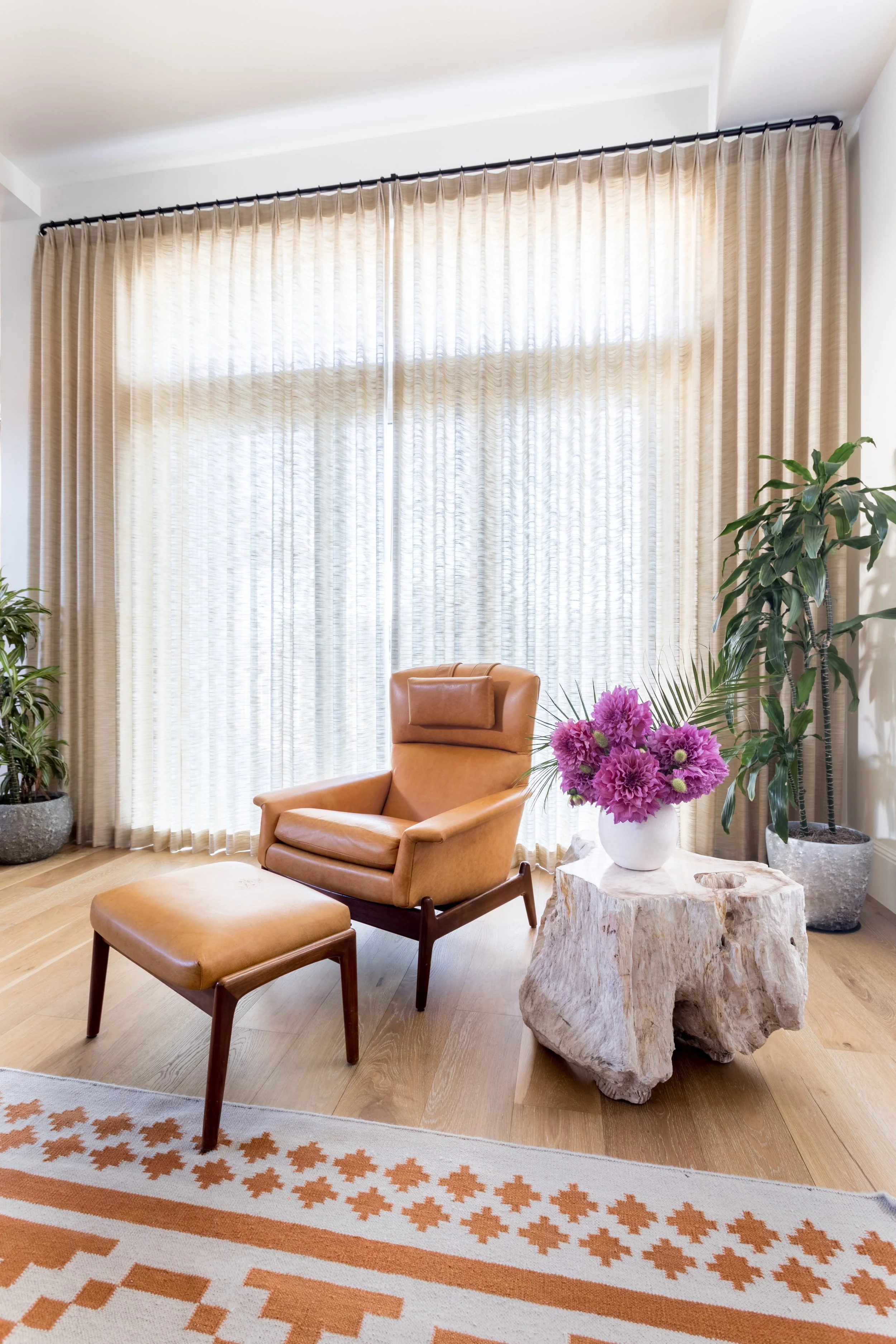
Tech-free window treatments can be easily opened and closed without understanding how automated systems work and continue functioning throughout power or internet outages.

Analog lighting can also be easily operated by those unfamiliar with smart systems. Instead of relying on preset scenes, analog lighting allows us to determine our creative lighting environments that highlight a favorite lamp or lighting statement piece.

Something is to be said about the grounding effect that small routines and daily habits can have on our lives. Simple tasks like opening the curtains in the morning, the ritual of brewing that first cup of coffee, or doing the rounds of the house turning off lights and checking doors at the end of the night before we go to bed help us start and end the day with a sense of connection and control, fostering a feeling of security and ownership in our homes.
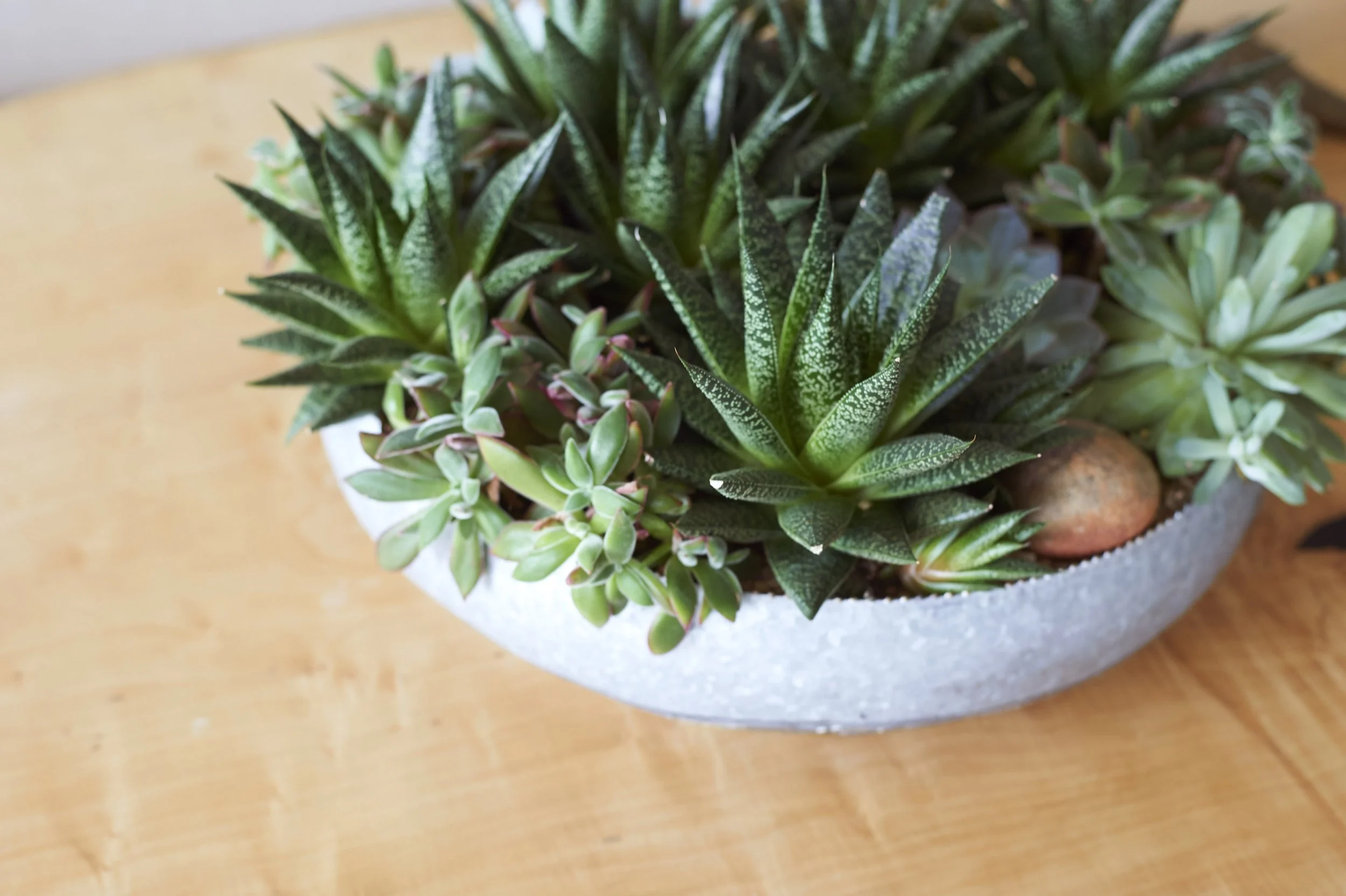
The absence of technology within an analog home creates space to incorporate biophilic design elements that can help enhance the mindful qualities of our off-the-grid sanctuary. Colors inspired by nature, such as neutral earth tones or soothing blues and greens, can help create calming, mindful spaces within our tech-free home.

Textile and wallpaper prints depicting decorative patterns inspired by flora and fauna can bring the beauty and joy of the natural world into our home, creating stunning super blooms of California native flowers such as the Matliija Poppy all year round.

Natural materials, such as wood, can also create an indoor-outdoor connection that incorporates the mindful experience of spending time in nature into our homes. The warmth and natural beauty of woodgrain can create serene swaths of woodland within our home by cladding the walls and ceiling to summon the feeling of a cozy cabin sanctuary.

An un-smart home has the potential to create a mindful retreat from the constant presence of technology in our lives, incorporating biophilic design to help capture the tranquility of a mountain escape or an off-the-grid hideaway within our homes. To create a place where we can relax and unwind, uninterrupted by the hectic pace of the outside world. An analog home creates an environment where we take pleasure in the small daily actions and routines that connect and ground us in our surroundings, making space to be mindful, present, and connected within our home.
Bibliography
Wilson, Abby. “‘Analog Spaces’ Are Making a Comeback – ’70s-Inspired and All about Cozy Vibes, This Is Why Designers Love the Style.” Homesandgardens.com, Homes & Gardens, 22 May 2024, www.homesandgardens.com/interior-design/analog-spaces.
Bateman, Kristen. “The Dawn of the Dumb House.” Town and Country, 7 Apr. 2024, www.townandcountrymag.com/style/home-decor/a60127394/dawn-of-the-dumb-house/.
www.sarahbarnard.com, www.instagram.com/kaletreeshop.
Sarah Barnard, WELL AP + LEED AP, is a leading designer of personalized, sustainable spaces that support mental, physical, and emotional wellbeing. She creates highly personalized, restorative spaces that are deeply connected to art and the preservation of the environment. An advocate for consciousness, inclusivity, and compassion in the creative process, Sarah has appeared in Architectural Digest, Elle Décor, Vogue, HGTV, and many other publications. Sarah was honored as a “Ones to Watch” Scholar by the American Society of Interior Designers (ASID).