


NKBA Honors Sarah Barnard with "Praiseworthy Pick" for Person of the Year Award

Interior designer Sarah Barnard has received praiseworthy recognition from the National Kitchen and Bath Association (NKBA) for the "Person of the Year" award in their official publication, Kitchen and Bath Business (KBB).

Barnard was selected as a praiseworthy pick due to her innovative and influential approach to home design focused on wellness and sustainability. Being both WELL & LEED accredited, Sarah Barnard sets the example for California home design by creating livable spaces that benefit both our bodies and the environment.

Working with clients who prioritize personal and environmental wellness, Barnard encourages inclusive collaborations where clients feel safe to share details about their lives and unique preferences. By exploring solutions that fully support her client's lifestyle, Barnard provides an approach to home design centered around their physical and emotional needs. Additionally, her studio embraces the principle of one size fits one - every person has individual needs and will require an individualized space for optimal health and happiness.
In particular, Sarah Barnard's designs promote a relationship with nature, a connection known to help people feel calmer, happier and healthier. When nature isn't available, incorporating art into home design can help improve wellbeing. There have been studies about the reaction we have when viewing artwork, finding that beautiful art activates pleasure centers in the brain similar to falling in love.

Barnard also emphasizes the importance of sourcing non-toxic materials to produce environments that optimize our home health. For example, creating a space with improved indoor air quality can help to better sleep, reduce headaches, and in some cases, may help with allergies and breathing.
Sarah Barnard's notable accomplishments from 2021 are her bathroom designs created to serve as a peaceful retreat from the current world. Because of the COVID-19 pandemic, homes must now work harder to meet the needs of families. Stay-at-home orders removed many former sources of relaxation, and some clients feel as though the days of enjoying a spa in a group setting are gone forever. Because bathrooms are one of the few spaces in a home affording privacy, Barnard focuses on creating tranquil bathroom retreats that enrich daily moments of ritual and calm.

She recently designed a bathroom looking to pollinators as inspiration. The bathroom is honey-toned, with gold and copper-hued wall tile, warm lighting inspired by honeycombs, and has custom floor tiles made with marble and inlaid bees. The bathroom design is rooted in biophilic principles, inspiring a renewed nature-brain connection with each visit.
When personalized functionality, a visual connection to nature, and a non-toxic environment work together, design can help contribute to healthier, happier lives.

NKBA's praiseworthy pick recognizes Sarah Barnard as a leader in Kitchen and Bath design nationwide. Barnard's involvement with NKBA is longstanding, and she recently spoke at the KBIS Voices from the Industry event on "Creating Inclusive Environments." To learn more about how Barnard's team of wellness focused Los Angeles home designers can create a custom-tailored space to meet your specific needs, please book a consultation.
Sarah Barnard is a WELL and LEED accredited designer and creator of environments that support mental, physical and emotional wellbeing. She creates highly personalized, restorative spaces that are deeply connected to art and the preservation of the environment. An advocate for consciousness, inclusivity, and compassion in the creative process, Sarah’s work has been recognized by Architectural Digest, Elle Décor, Real Simple, HGTV and many other publications. Sarah was recognized as a “Ones to Watch” Scholar by the American Society of Interior Designers (ASID).

Cosmopolitcal Design: A New Modality Harnesses the Connection between Home and Nature

With global society and climate in flux, mapping out new ways to live and create in the world has become an essential project. Amid the competing approaches to this transformation, the philosophical school of cosmopolitics, as its name suggests, addresses this challenge in a uniquely holistic way and presents an entirely new perspective on the human relationship with the world.
Albena Yaneva, in her introduction to What is Cosmopolitical Design?: Design, Nature, and the Built Environment, explains that “Cosmopolitical thinkers...see nature as no longer being unified enough to provide a stabilizing pattern for the experience of humans; it is not ‘out there,’ a simple backdrop for human activities.” Cosmopolitics distinguishes itself from cosmopolitanism by positing a relationship with nature and its non-human denizens defined by cohabitation rather than dominance. As Yaneva writes, “These thinkers abandon the modernist idea of nature as being external to the human experience—a nature that can be mastered by engineers and scientists from outside.”

How does this cosmopolitical perspective manifest in the world of home design? To Yaneva, “It challenges design...to encourage the enactment of new relationships both within and potentially outside the designed space.” Cosmopolitical home design is deeply tied to its locality and integrated with its environment. Yaneva describes cosmopolitical design as “required more than ever to address the primordial question of what it means to live together. That is, the co-existence of humans and non-humans, of how they share space and find ways to live together in peace.”
Because the cosmopolitical way of thinking is so all-encompassing, the approaches to incorporating cosmopolitics into home design are fittingly varied and can be scaled to projects as vast as urban planning or as circumscribed as landscaping a backyard. Manifestations of cosmopolitical home design can range from home renovation with the local climate in mind (for example, placing windows for optimal warmth or cooling of interior spaces) to pollinator-friendly gardens teeming with plants indigenous to their region.

To interior designer Sarah Barnard, WELL AP + LEED AP, bringing cosmopolitics into her home design practice means cultivating spaces that are specific both to her clients and as well as to the local environment and that encourage an accord with the natural world. Sarah says, “Finding ways to harmonize the design of a space to a specific environment instead of working against it is both challenging and rewarding. When a designed space and its greater environment are fully integrated, the effect is almost easier to feel than observe.”
Sarah explains, “I always look for opportunities to create inviting connections between the indoors and the outdoors. This continuity with the natural world is beneficial for emotional and mental health—it’s not just a source of beauty but nourishment.” For an artist’s bungalow, Sarah created a visual continuity between lush indoor plant life and the garden outside, and then took it a step further. Sarah designed the outdoor garden to support pollinators, birds, and other wildlife. The garden is a Certified Monarch Waystation, providing resources to support migrating Monarch butterflies by providing food, water, cover. Sarah said, “Designing homes for wellbeing doesn’t have to stop at the comfort of the client. Incorporating elements of design that nurture the local ecology deepen our relationship with nature and result in spaces that are unified with their surroundings.”

This particular expression of cosmopolitical home design can be achieved even with limited outdoor space. For an oceanview penthouse, Sarah transformed a balcony into an inviting habitat for local and migrating wildlife by adding potted olive trees and an herb garden. “Considering plants not just for their decorative beauty but also what they can offer to the local environment is a concept that works on virtually any scale,” Sarah says. To decorate the interiors, Sarah selected natural and eco-friendly furnishings and textiles, adding that “Organic materials have a gentler environmental impact, and from a wellness perspective, are kinder to the people who live with them.”

When selecting materials and furnishings for home decorating, Sarah often looks to her clients’ priorities to guide her approach to creating spaces that embody a cosmopolitical perspective. For one high-rise suite, the owner’s love of animals was demonstrated not only through the choice of art and decorative objects, but also wanted this care toward animals extended outside home design and beyond aesthetics. Sarah addressed this by using exclusively vegan materials and furnishings for this project. Sarah explains, “No space exists in a vacuum—every object and material we use has a footprint that goes well beyond the front door, so considering the story of the materials we use and the impact that they have on the world is a way to invite cosmopolitical ideas into home design.”

Sustainable materials can also have unexpected origins. For the kitchen of a historic craftsman bungalow, Sarah installed a countertop made of recycled beer bottles, a non-extractive alternative to a more traditional quarried stone countertop. “Not only is the material beautiful and environmentally conscious, but there’s also a little whimsy in how it reinvents something ordinary and adds character to the space,” Sarah says. The implications behind cosmopolitical home design may be weighty, but there is always room for playfulness.

“When I look at my work from a cosmopolitical perspective,” says Sarah, “I see tremendous opportunity for creativity. We are seeing our way of life change in real-time, and as a home designer, I’m lucky to be able to be a part of facilitating that transformation for my clients.”

Sarah Barnard is a WELL and LEED accredited designer and creator of environments that support mental, physical and emotional wellbeing. She creates highly personalized, restorative spaces that are deeply connected to art and the preservation of the environment. An advocate for consciousness, inclusivity, and compassion in the creative process, Sarah’s work has been recognized by Architectural Digest, Elle Décor, Real Simple, HGTV and many other publications. Sarah was recognized as a “Ones to Watch” Scholar by the American Society of Interior Designers (ASID).

Think Universal

In a recent article in "Times Leader," Nancy Mattia explored universal home design with interior designer Sarah Barnard.
In the article, Mattia discusses the core ideas and considerations behind universal design when designing a residential or commercial environment.

"'Universal design takes into account a broad range of users and abilities,' says Sarah Barnard, a Los Angeles home designer. 'It makes sense for designers and builders to plan our projects with that in mind since great design should accommodate the widest number of users - ourselves, our kids, our parents, our grandparents.'"

Considering a range of users, Sarah can create designs welcoming to a variety of guests that ensure the design's longevity as the client's needs shift as their family grows and ages.

When discussing home design details to consider, Sarah turned to room transitions and flooring, noting that decisions like tile size may affect a space's safety and functionality. Small tiles use more grout, creating larger traction areas on the floor, while oversized tiles can increase the risk of slipping.

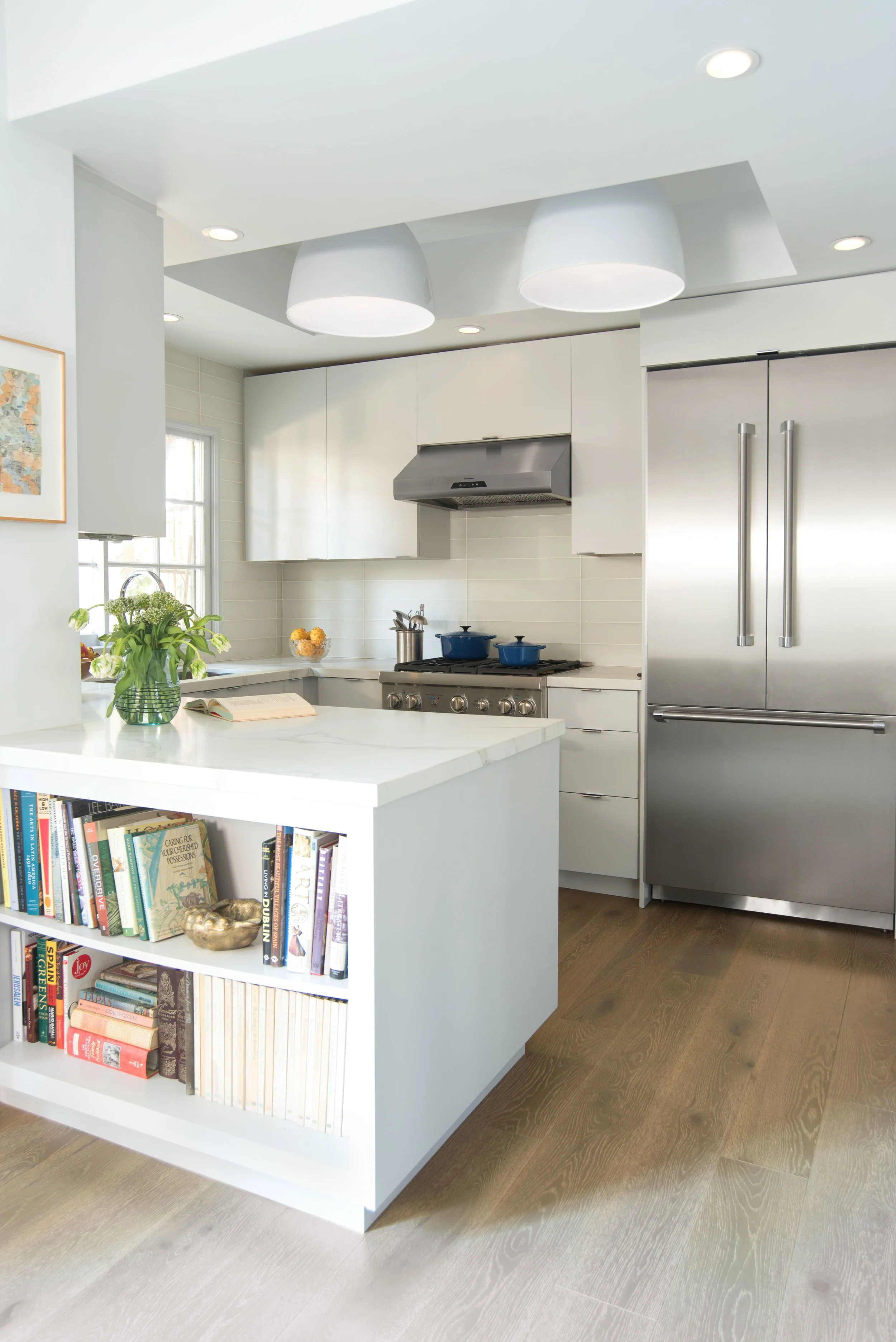
On discussing accessibility and planning with her clients, Sarah shared that "'No one wants to think about a less-than-ideal future, when they may need help getting around and living in their home.' […] So rather than plan for tomorrow, she asks reluctant clients to plan for today: 'What would happen if one of your kids gets a sports injury and can't make it up the stairs to the bedroom or bathroom?' she asks them. Most people eventually see the light."

Originally published on Ion Television, where the complete article is available.
Sarah Barnard designs healthy, happy, personalized spaces that connect deeply to nature and art. Empathy and mindfulness are the foundation of her practice creating healing, supportive environments that enhance life.
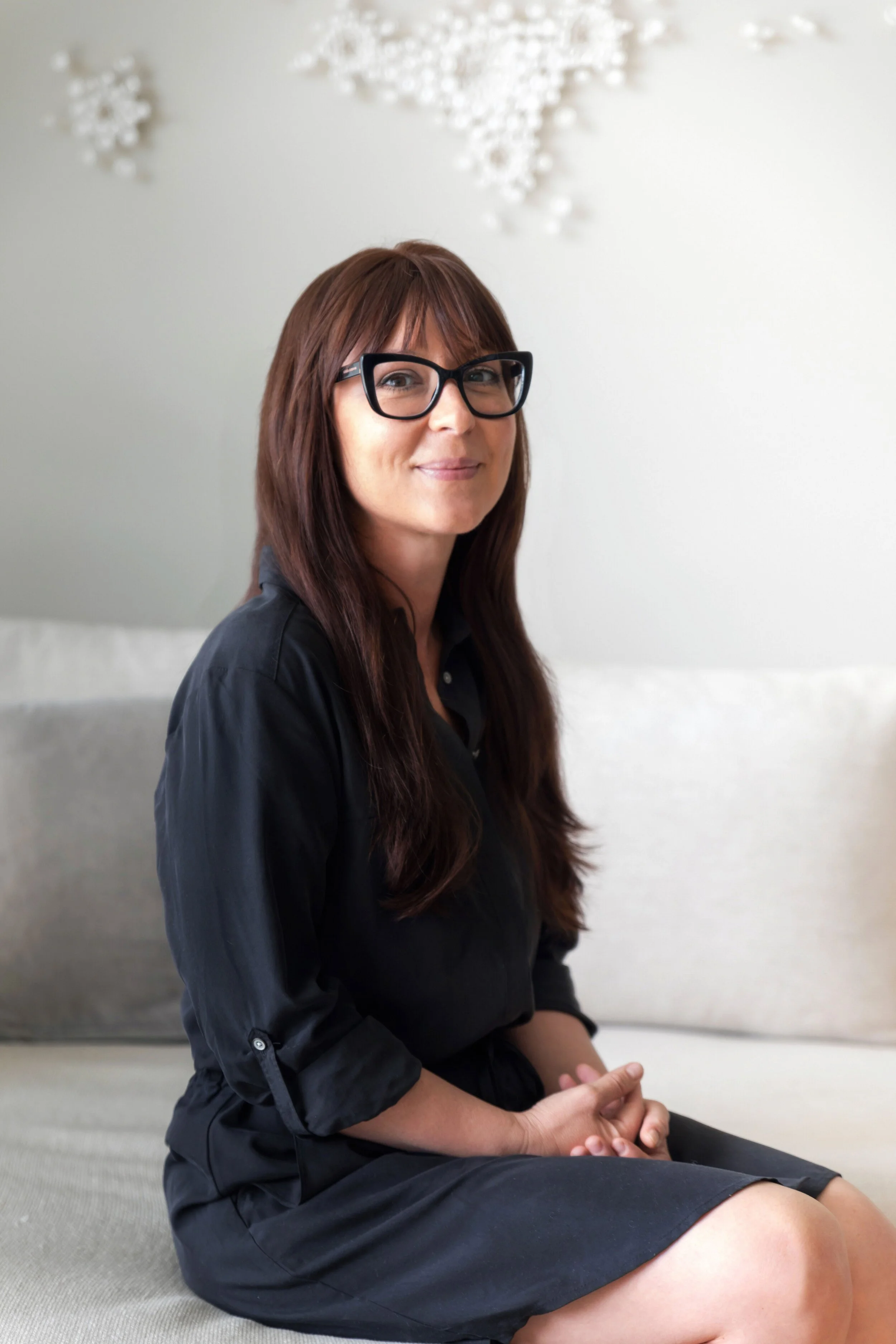
Designer Sarah Barnard on Why Empathy Is Central to Her Work

Article by Gwendolyn Purdom, originally featured Houzz.
Growing up with historic preservationist parents, Sarah Barnard got her introduction to architecture and home design at a young age.
“I grew up in historic homes, and my father was restoring furniture and light fixtures and stair railings and you name it,” the Los Angeles interior designer says. “Certainly, as things progressed in life, I think his talents became mine.”
The experience also shaped the way Barnard now approaches her work as the principal designer at Sarah Barnard Design — a firm built on sustainable, wellness-focused and otherwise mindful practices. (Barnard is a WELL accredited professional, a Building Biology practitioner and a LEED accredited professional.)
“Reducing, reusing, recycling — these types of things were not novel concepts,” Barnard says. “Being sensible and responsible in our choices and in our material specifications is something that’s always been a part of my life and definitely influences the way that I work.”
Barnard, who has been using Houzz to share project photos and to connect with fellow professionals on Pro-to-Pro discussion boards almost since the platform launched, has been seeing more and more clients, parents particularly, looking at their homes through a more thoughtful, holistic lens. Beyond being environmentally conscious, Barnard’s home design projects revolve around creating spaces that are personalized to support mental and physical health and happiness.
“If we all could be so lucky to exist in a space that is uniquely ours,” Barnard says. “There really is no happier environment than a space that is specially made for you.”

Q. You specialize in wellness design, sustainable design, and other mindful design practices. Why did you choose to make those specialties central to your work?
A. Empathy is really the foundation of our studio’s practice. Being able to meet our clients where they are and create environments that support them in living their best lives is really the heart of what we do.
My two primary credentials are LEED AP [accredited professional] and Well AP. LEED focuses more on environmental responsibility. WELL is focused more on human health. Those two things, along with historic preservation, really are the key focuses of my practice.

That said, the personalization piece is really where it’s at in terms of being able to adapt to a broad range of situations. Sometimes that is a client who is seeking a vegan or perhaps a sustainable and vegan environment.
Other times it might be something that’s more of a specific family need, like a child with developmental differences or a person who has 13 cats. Any personalized need that could be better accommodated through home design is something that we’re keen to help with.

Q. How do you work around challenges those specialties may present?
A. There are always limitations, and one thing we learn as design students and we practice throughout life is that limitations really drive design. With a big, broad, open scope the outcome could be anything, but the more limitations the project has to endure, the more specific the outcome.
An example of that is that we have a client who utilizes a prosthetic leg, and of course, this is something that is integral to her day-to-day function but not something that she would like to draw attention to. In the process of designing her home, it was disclosed at some point that she didn’t want certain types of textiles that would make it difficult for her to get up or get down. Something that might be more slippery, for example.
So, something that we may not have been aware of at the start of the project — once we’re armed with the information of what specific textures are going to be safest for her, then we can proceed accordingly in recommending those well-matched solutions.

Q. Where do you find inspiration?
A. On a personal level, I’m definitely very much connected to the natural world. For me, that means spending time in my garden, doing a heck of a lot of birdwatching, really being tuned in to the small daily differences — like what the birds are doing, what the plants are doing, what the caterpillars are doing.
Being in touch with what’s going on in the natural world is a really important way for me to stay grounded in my professional life. Those textures, colors, patterns, things that I experience in the outdoors definitely drive the solutions that I create indoors.

Q. What has been your most memorable client request? You worked with someone with 13 cats?
A. Yes. We made a special screened porch for the cats so that they could enter and exit the house safely without being eaten by a coyote or disturbing the neighborhood bird population. They were able to bask in the sun and live their happy lives safely and in a way that made the homeowner pleased.
I think perhaps the most fun request we’ve had in the last few years was that a young couple in the entertainment industry wanted an adult sleepover room. It was a very large space that would essentially have multi-functions for hosting parties, but the sofas would be modular and movable so that they could be reconfigured as king-sized beds. And if the party got late and movie-watching turned to sleep, 10 or more couples could camp in this room.

Q. Is there one particular project that changed your business in some way?
A. In my late 20s, I had the opportunity to design the West Coast offices for National Geographic Entertainment. And that certainly was an important project for us, because it was not only aesthetically in our dream wheelhouse, but it also was a client that more than ever before really was in alignment with our values and the things that we think are important. That definitely was a fantastic experience.

Q. What advice would you offer to pros who want to make their practice more sustainable or mindful?
A. The most critical skill in mindful design is listening — creating a space in which the client feels comfortable to share, and then really listening and asking follow-up questions, many of them, prior to offering any solutions. Probably the most common rookie designer mistake I see is, designers, want to view a space and immediately make recommendations. And in doing that they would have missed the most critical element of the space, which is the user.

PHOTO BY: STEVEN DEWALL
Q. What particular challenges is the interior design industry facing?
A. Interior designers have always had a singular challenge, which we will probably face for decades to come, and that is that many homeowners don’t actually understand what we do. Because of this sort of lack of education in the homeowner, they may misunderstand our services to be shopping. They may misunderstand our services to be a number of things that are not actually what interior design practice is fundamentally about. And because of this misinformation, I think designers may struggle to communicate their value to a person who perhaps hasn’t worked with a designer before or isn’t familiar with all the benefits a professional can bring to a project.
Because I have been in the game most of my adult life, I am fortunate to be approached regularly by clients who are knowledgeable, who do value what my team has to offer. I think in the rare occurrence where we’ve worked with a client who struggles to understand the process, we just remain patient and explain to whatever length necessary so that they can understand what is happening and why.
A great example of that would be, I had a client once and he said he didn’t need measuring; he just needed furniture. That’s an example of someone who just doesn’t understand the steps of the process. Being patient with him and explaining to him why measuring is critical to the process allowed him to remain in support of the work that we were doing and understand what we were delivering and why.

Q. What advice would you offer other pros on making their own design specialties stand out?
A. It’s like the advice that our moms all gave us as children, but it’s critical to be yourself — thinking about what’s really important to you and what are the things that you really, really are passionate about and being more a part of those things.
For example, for me, it’s nature and birds and that’s my truth. It’s easy for me to talk about nature and birds because that is my real life. It’s much more difficult to try to follow the trends of others and latch on to boho-chic or whatever is the latest thing. Because if the latest thing is not your thing, it’s never going to be authentic anyway.

Sarah Barnard designs healthy, happy, personalized spaces that connect deeply to nature and art. Empathy and mindfulness are the foundation of her practice creating healing, supportive environments that enhance life.

A Carefully Curated Beach Home
Curating a collection of artwork for the home can be a gratifying process. While we are only beginning to understand the science behind our emotional response to art, humans have produced and sought artwork throughout the history of their existence. Researchers from the University College London found that looking at art that we perceive as beautiful activates the pleasure centers in our brains and produces a response that’s akin to falling in love, as many of us can confirm anecdotally.
It only makes sense that while designing a space, we should turn to artwork to help influence our emotional experience. As a home designer with a fine art background, Sarah Barnard recognizes the significance of using art for well-being in home design. For a recent residential project by the beach, Barnard sourced an impressive collection of artwork to enhance the lifestyle of the homeowners.

PHOTO BY: ACE MISIUNAS
TEXTILE ARTWORK BY ANEESA SHAMI.
A textile piece by artist Aneesa Shami warmly greets visitors at the entrance, supporting her assertion that attention to detail can “bring comfort and peace of mind from the chaotic world.”Barnard fills the corner with playful, order seeking pieces, most literally seen in a bespoke getabako cabinet used for organization and storage. Nearby hangs Michelle Jane Lee’s painting Blue (Wave On). Its heavily textured and undulating canvas finds structural contrast in geometric blue forms, painted with pinpoint precision.

PHOTO BY: ACE MISIUNAS
PAINTING BY MICHELLE JANE LEE.
In the kitchen nook, an engraving on lucite by artist Karen Sikie entitled Sunflowers lends an ethereal touch. “I hope my work is a reminder of our intrinsic connection to the natural world,” explains Sikie. Here, Barnard’s selection of artwork connects the home to nature in an area where architectural limitations prevent plants or windows.

PHOTO BY: ACE MISIUNAS
PAINTINGBY KAREN SIKIE.
Continuing to consider the home’s structural components, Barnard installed Kevin Moore’s Scalard Field above the kitchen table. Selecting artwork with an unconventional shape can add architectural interest to an interior without the commitment of a remodel. “The shaped canvas I make are meant to interact with the architectural lines in the home,” says Moore. “There is a symbiotic relationship between the form in my paintings and architecture.”

PHOTO BY: ACE MISIUNAS
PAINTING BY KEVIN MOORE.
Finding Home, an abstract painting by Karrie Ross, mimics the flow of water and compliments an elegantly crafted dining table. Combining multiple works can feel intimidating — especially in an open-concept space such as this — but Ross insists there is no ‘wrong’ way to choose art for your home. “Collectors buy art for whatever reason they want to, whether it’s to match a color, a mood, or just because they can’t take their eyes or mind away from the way it touches them,” she says. Working with an interior designer is an excellent way to relieve the stress of incorporating several beloved pieces of art into the home.

PHOTO BY: ACE MISIUNAS
PAINTINGBY KARRIE ROSS.
Barnard expertly combined artwork in the living area, where a painting by Kevin Moore sits above the fireplace. Built-in bookshelves frame the piece, showcasing work by Renae Barnard, Kitty Cooper, Melissa Halozan, Katie Hoffman, and Abby Sin.

PHOTO BY: ACE MISIUNAS
ART BY RENAE BARNARD, KITTY COOPER, MELISSA HALOZAN, KATIE HOFFMAN, KEVIN MOORE, AND ABBY SIN.
In the bedroom, Ruben Vincent’s mixed-media paintings hang over the bed and an heirloom dresser. “For me painting is a form of thinking that fuses knowledge of materials, a fascination with surface qualities, and an obsession with color,” he explains.

PHOTO BY: ACE MISIUNAS
PAINTINGS BY RUBEN VINCENT.
While clients often use mirrors to open spaces and spread light, Barnard used a reflective painting by Sin to serve the same function while adding depth and color to the room. “Paintings can become so much more than wall decor when expertly placed within a home,” notes Sin, the creator of North, which glitters behind the reading nook. “My work incorporates light-reactive films to create bold color and metallic effects. When placed in an area with ample natural light, iridescent colors shift, and the artwork functions as a prism casting reflected light.”
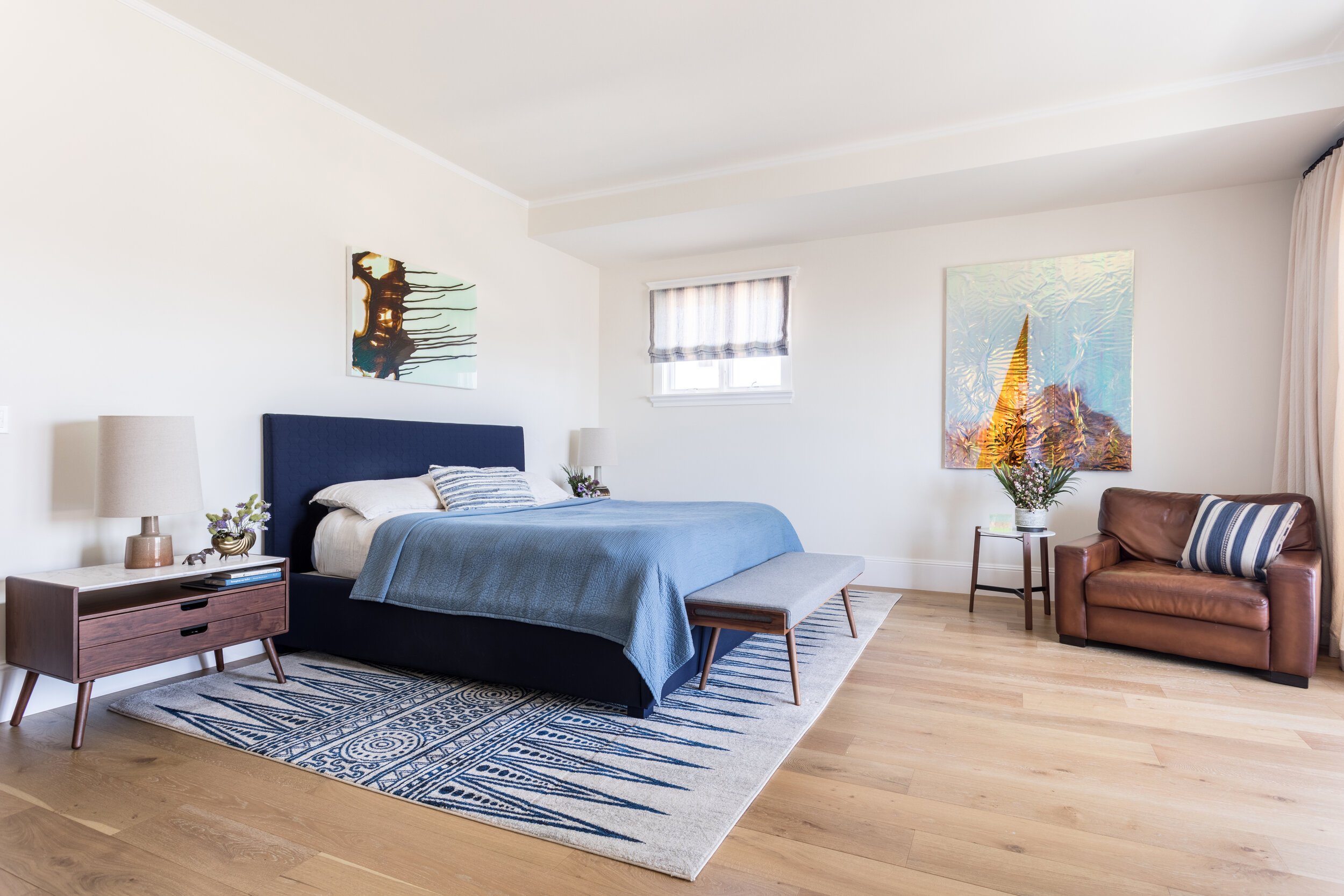
PHOTO BY: ACE MISIUNAS
PAINTINGS BY RUBEN VINCENT AND ABBY SIN.
An oil painting on canvas by Jennifer King entitled Dream Boy sits above the fireplace mantel. It’s surreal imagery, saturated colors, and a brooding subject serve as the bedroom’s focal point. “I enjoy the idea of art being incorporated into people’s lives, not just as an investment but as something they love enough to see every day,” says King. This philosophy is at the root of Barnard’s selections, as these works of art become integrated with the client’s daily routines.
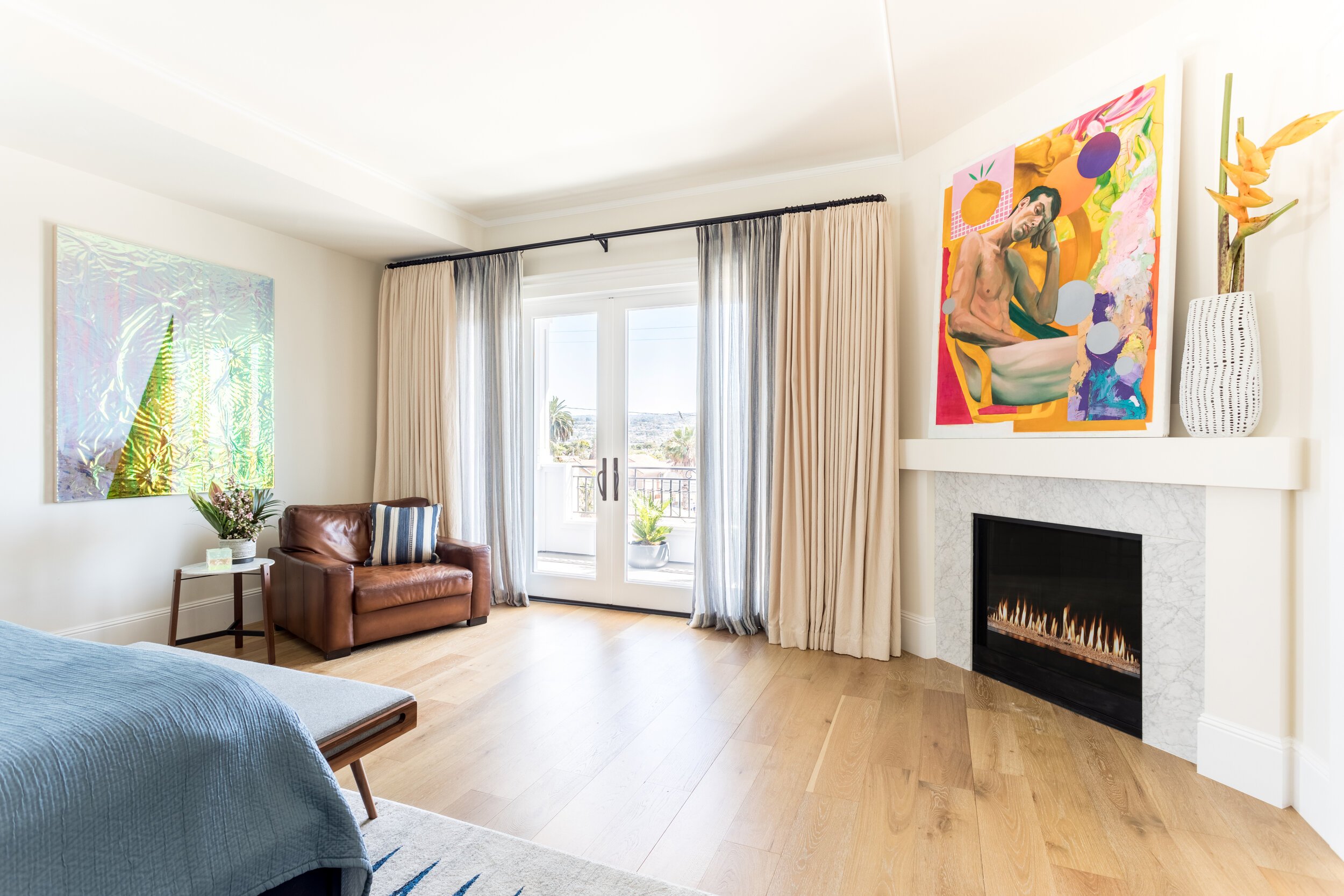
PHOTO BY: ACE MISIUNAS
PAINTINGS BY JENNIFER KING AND ABBY SIN.
In the sports and entertainment room, Gianna Vargas’ painting Phoenix brings depth and intrigue to a casual and comfortable space. Even the ensuite bath is embellished with art and features a custom roman shade trimmed with delicate embroidery and a small painting on panel by Sin.
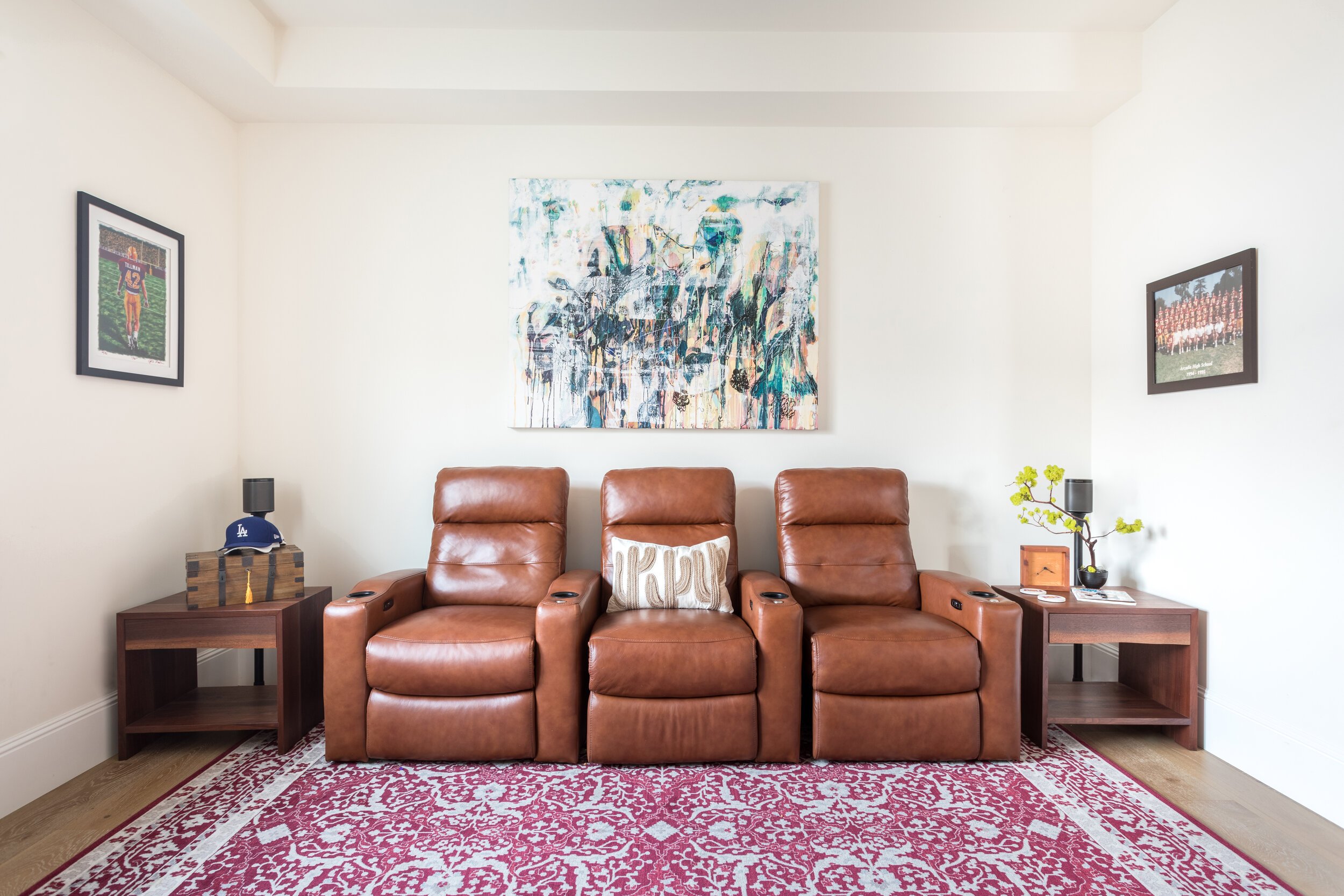
PHOTO BY: ACE MISIUNAS
PAINTING BY GIANNA VARGAS.
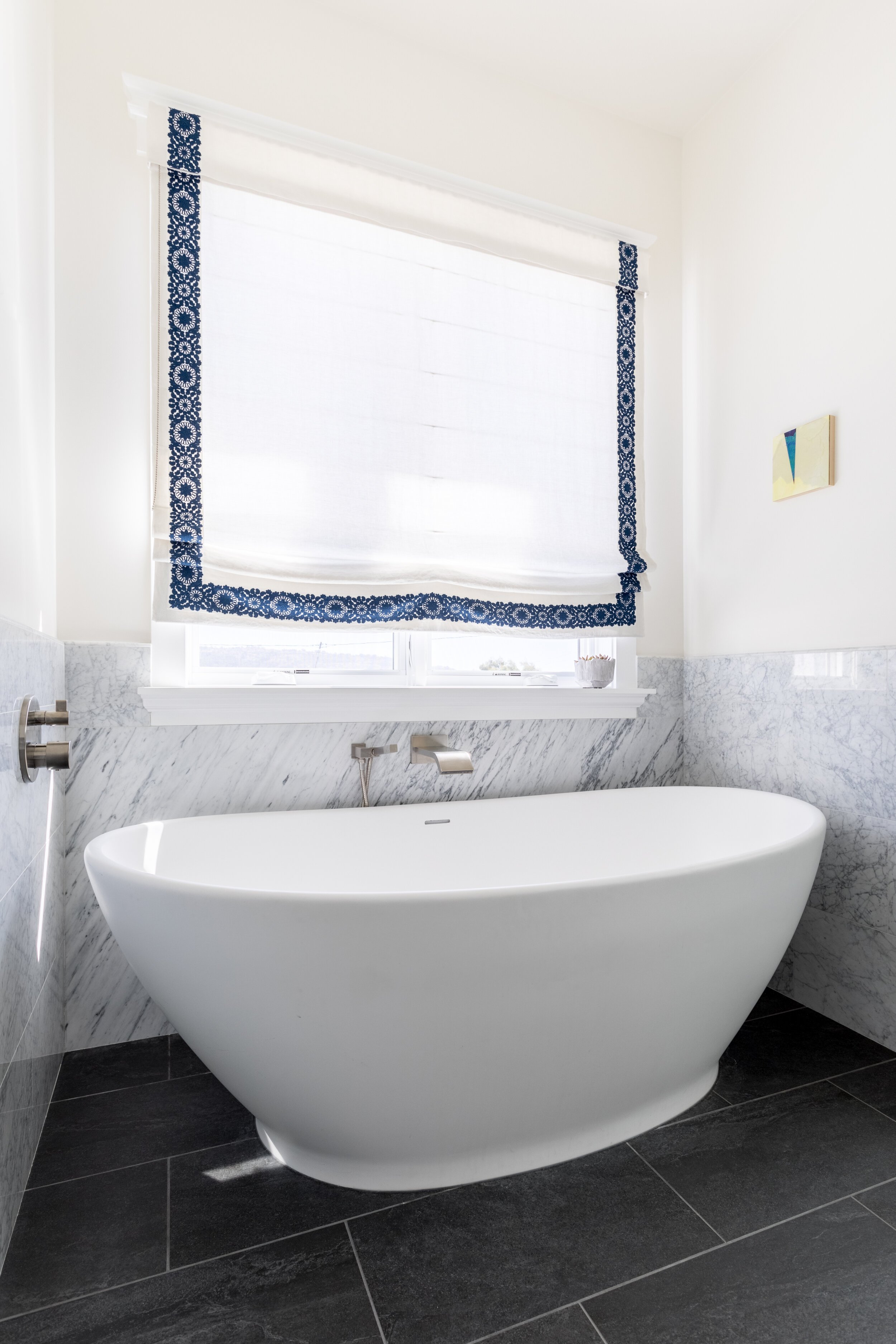
PHOTO BY: ACE MISIUNAS
PAINTING BY ABBY SIN.
The artwork featured in the guest suite feels playful and unpredictable — Rose Gold Popsicle, a resin sculpture by Betsy Enzensberger, is placed opposite Reaching 2, another painting by Karrie Ross. “With my work, the message is simple: Joy,” affirms Enzensberger. “This is what drives me to keep creating. It makes me happy to bring others joy.”

PHOTO BY: ACE MISIUNAS
ART BY BETSY ENZENSBERGER AND KARRIE ROSS.
Barnard utilized her long-standing relationships with local artists to curate a collection to inspire her clients and contribute to their wellbeing. The result is a colorful, kid-friendly space featuring a wide range of pieces that have the potential to appreciate in value— from handmade textile art to abstract paintings and tabletop sculptures.

PHOTO BY: ACE MISIUNAS
PAINTING BY KEVIN MOORE.
Sarah Barnard designs healthy, happy, personalized spaces that connect deeply to nature and art. Empathy and mindfulness are the foundation of her practice creating healing, supportive environments that enhance life.

Classic Blue, Pantone's Color of the Year creates calm and inspires clarity in interior spaces.

INTERIOR DESIGN: SARAH BARNARD, PHOTOS: STEVEN DEWALL, PAINTING: REID WINFREY
Blue brings us a sense of peace, offers us refuge, aids concentration, and brings us clarity. It is a reflective tone that fosters resilience and gives us hope, qualities we look toward during this uneasy time in the world. Pantone's Color of the Year is Classic Blue, chosen to reflect our desire for a stable future as we enter into a new decade. TIME calls the Color of the Year, "both constant and classic." It is reminiscent of a serene sea and the sky at dusk.


Pantone provides a universal language of color that is used by more than ten million designers and producers around the world to define colors accurately across different platforms and industries. Their Color Institute is dedicated to researching purchasing trends across various industries to determine each year's color. Pantone has been naming a Color of the Year since 2000 and has influenced product development and purchasing decisions in fashion, interior design, industrial design, graphic design, and advertising.

Classic Blue is akin to the very first Color of the Year, Cerulean. The hue represented the excitement of a new millennium, while also offering a sense of protection and serenity amidst the feared approach of Y2K. This year, we are experiencing a similar feeling of trepidation from the United States to the United Kingdom, Hong Kong, Syria, and across the globe.

The reigning Color of the Year offers reassurance, confidence, and connection for us in a time of uncertainty. "When we look at the world around us, we know that we're living with a lot of unrest, where some days don't feel quite as secure," said Leatrice Eiseman, Executive Director of the Pantone Color Institute, in an interview with Architectural Digest. "Blue from an emotional, psychological standpoint, has always represented a certain amount of calm and dependability. It's a color that you can rely on."

Classic Blue is the color of deep ocean water or a handful of ripe blueberries. It is a part of the art market, the beauty industry, automotive manufacturing, tech, and space sciences. Its associations with dependability, trustworthiness, and constancy make it a great color to incorporate into your home design.

My work as a LEED and WELL-accredited home designer is deeply rooted in wellness and biophilia. Biophilia is our innate desire to be close to nature, and biophilic design aims to create healthy and comfortable interiors by meaningfully incorporating natural elements into our home and work environments. Integrating Classic Blue into our spaces builds on the principle of biophilic design because of its presence in nature.

Art, textiles, furniture, and accents are all great ways to introduce soothing Classic Blue to your home or office. A project I recently completed features oceanic shades of blue that act almost like neutrals. I took inspiration from the home's beachy surroundings, bringing in a Classic Blue velvet sofa. I then repeated the color through vintage ceramic vases, books, and toss pillows.
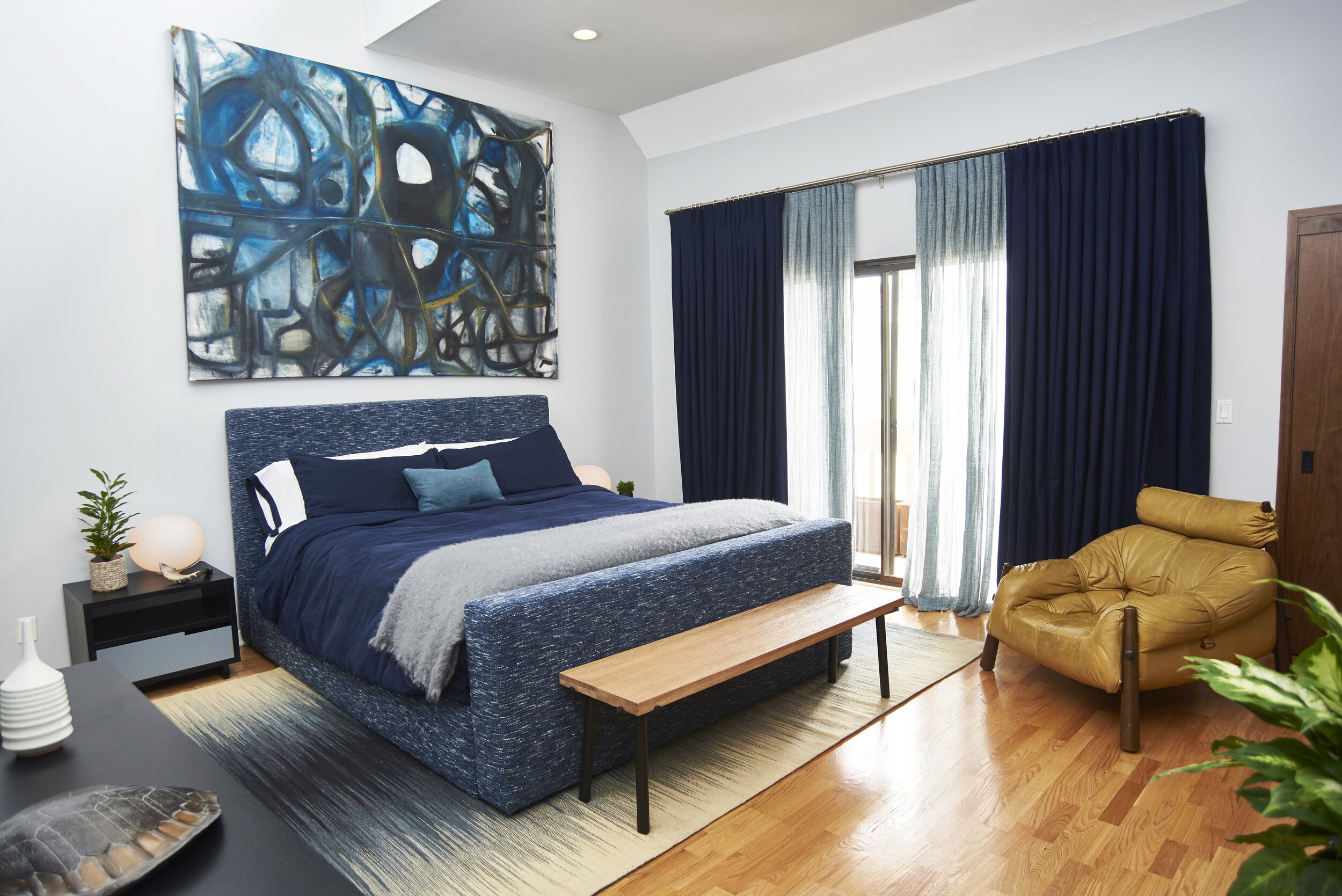
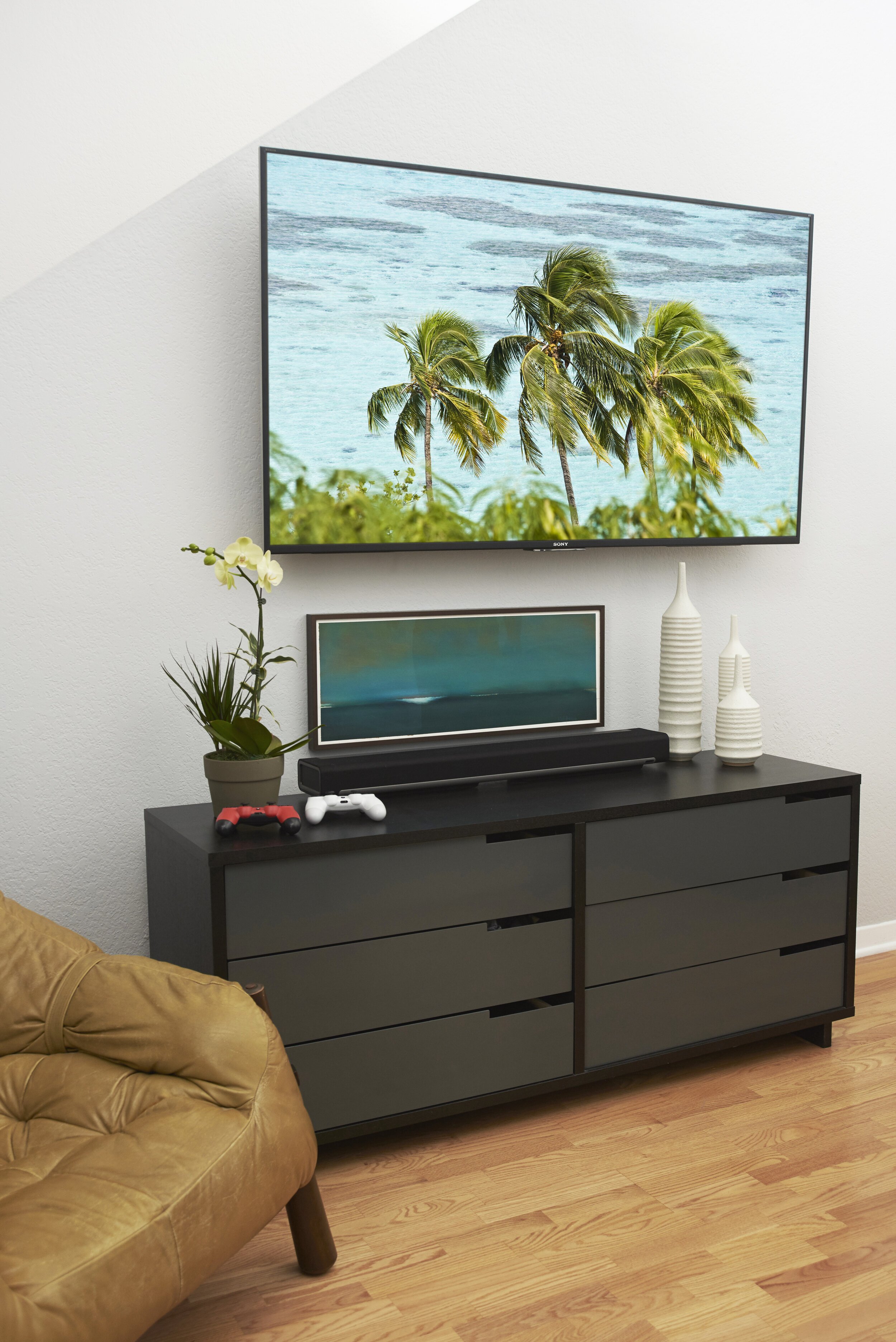
When acting as a base layer, Classic Blue can be paired with a multitude of colors, including other shades of blue. For the client's bedroom, I selected a handmade upholstered bed, Belgian linen bedding, wool drapery, and an abstract painting by Jonathan Elder, all wed by various blue tones. The buttery vintage leather chair and wooden bench at the foot of the bed complete the space, providing visual warmth and balance.
Consider adding serene, calming, earth-focused tones to your home in the new year. Whether you choose Classic Blue as an all-over hue or an accent, you can't go wrong with a color that takes its cues from nature.

Sarah Barnard, WELL AP, and LEED AP specializes in creating calming restorative environments that support physical, emotional, and mental well-being. Her interior design practice centers around her client's health and wellness while incorporating natural elements into every space she designs.

Nordic LA presents: Scandinavian Influences & ARK Journal Launch

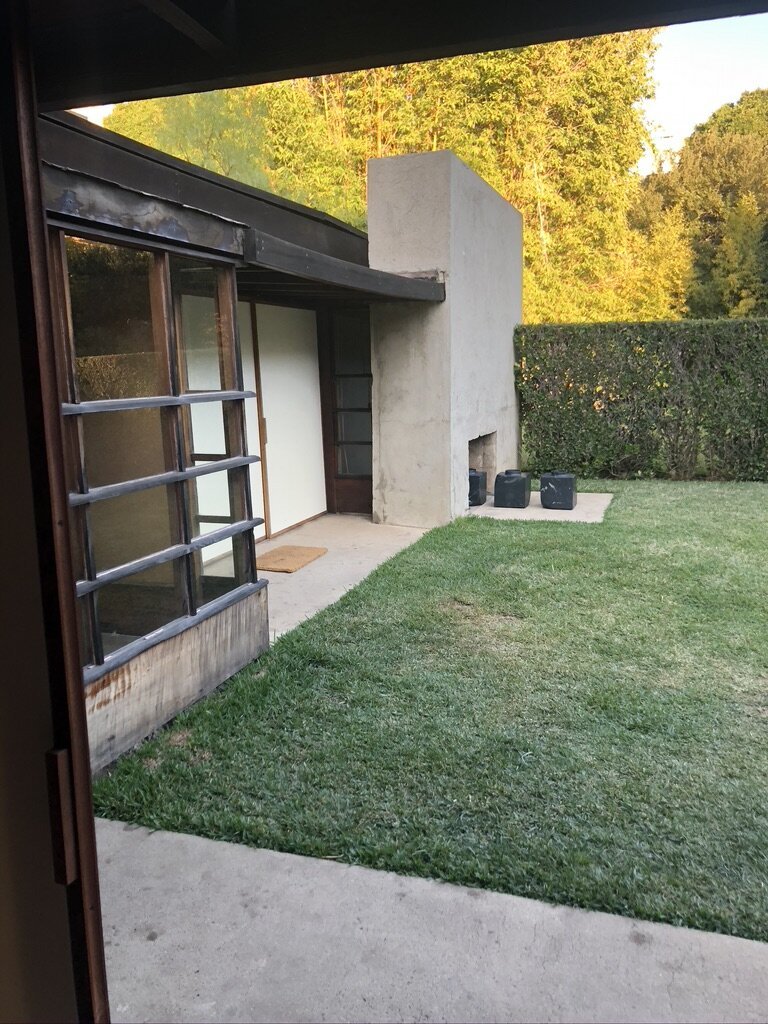
Sarah Barnard Design had the pleasure of attending an Architecture and Design event hosted by Nordic LA for an exclusive reception and launch of the second volume of ARK Journal amongst other notable architects, designers, and artists from the Los Angeles area and beyond. The festivities spanned over two days and were held at the Schindler House in West Hollywood and the Ace Hotel in Downtown Los Angeles.

Friday night began with a private tour led by Rudolph Schindler’s great-grandson, Guillaune Schindler. The house is well known as the birthplace of Southern California Modernism, due to its incorporation of architectural and social theory. Built between 1921 and 1922 using a standardized "slab-tilt" wall construction, the home was conceived as an experiment in communal living designed to host two couples, with four rooms for each individual, a shared kitchen, and garden patios. Most interestingly, the bedrooms were designed as "sleeping porches." These were outdoor, open rooms on the roof that allowed them to enjoy the temperate Southern California weather and the sweeping views of the neighborhood.


After the tour, guests gathered on the Western-facing outdoor space, best known as Rudolph and Pauline's porch, to hear the panelists' discussion. Lasse Anderson, the Director of the Utzon Center for Architecture in Denmark, moderated the speakers who included the West Coast Manager of Pucci International, Ed Schilling, and Cyrus Etemad, a real estate developer with a focus on the restoration of historic and commercial buildings. The conversation was focused on bringing traditional design and architecture into a contemporary context through renewal, rethinking, and relaunching classic brands and sites.
Saturday evening, the Ace Hotel hosted the group for cocktails and conversation. Located in downtown Los Angeles, the Ace Hotel first opened in 1927 as the United Artists Building. Today it is a historic landmark, influenced by Spanish Gothic architecture, and is an "inspiring location at the heart of the ongoing Broadway renaissance, a meeting place for creatives, innovators, artists, and entrepreneurs."


ARK Journal explores spaces around us, the objects we put them in, and the people who make them. The Copenhagen-based journal bridges architecture, design, and art, allowing the launch party to fit in seamlessly with the weekend's course of events.
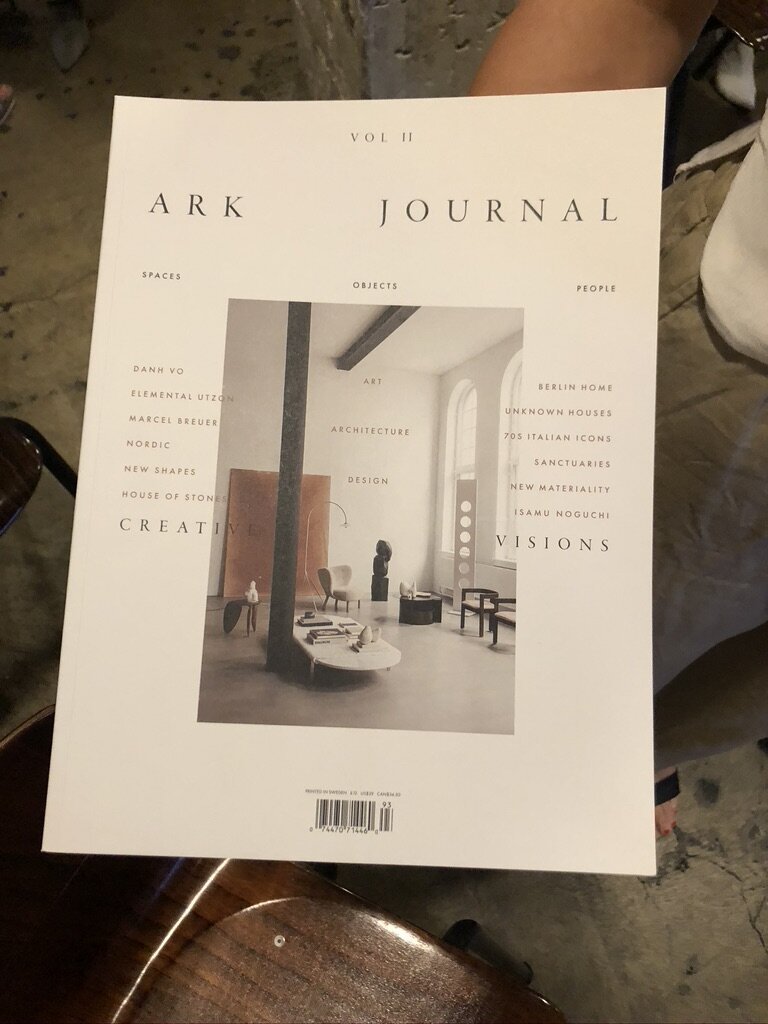

The publication included a beautiful feature of Merette's home in Møn, an island in Denmark, which she built with her partner Søren Aagaard. The sleek house made of clay blocks and chalk plastered walls plays with light and nature, and even includes windows built to frame a specific view of the farmland surrounding the home.
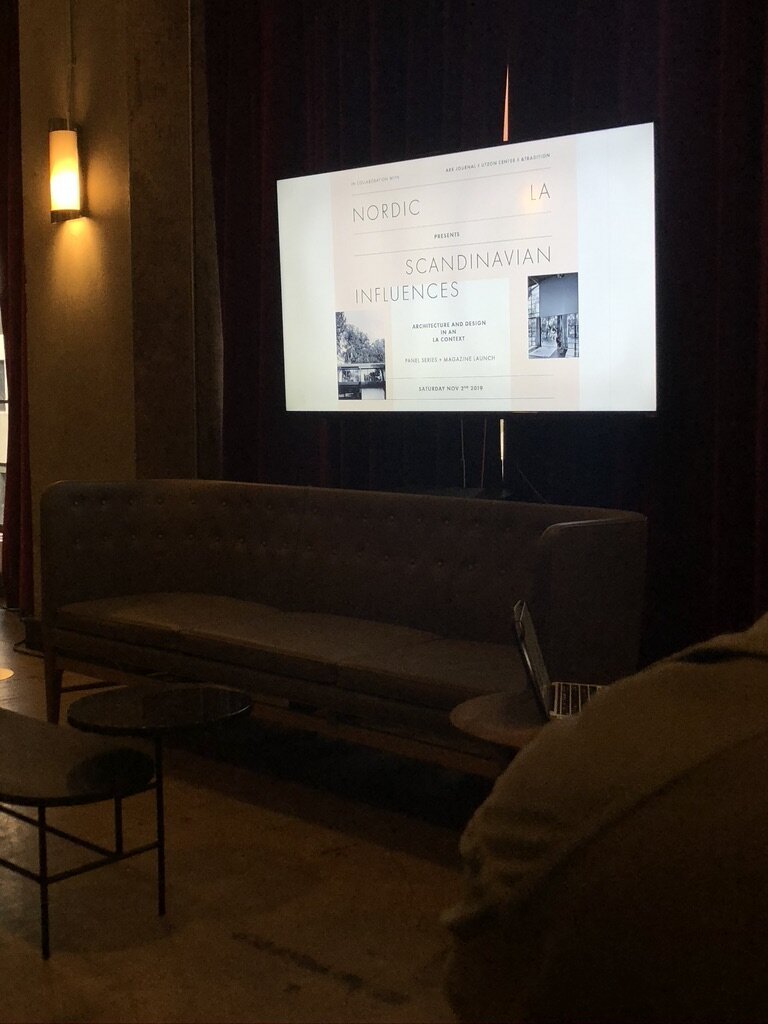
Nordic LA's weekend events centered around Architecture and Design had great success in bringing together creatives from Scandinavian countries and Los Angeles. The event gave a new-found inspiration for global communication and the importance of creative collaborations.
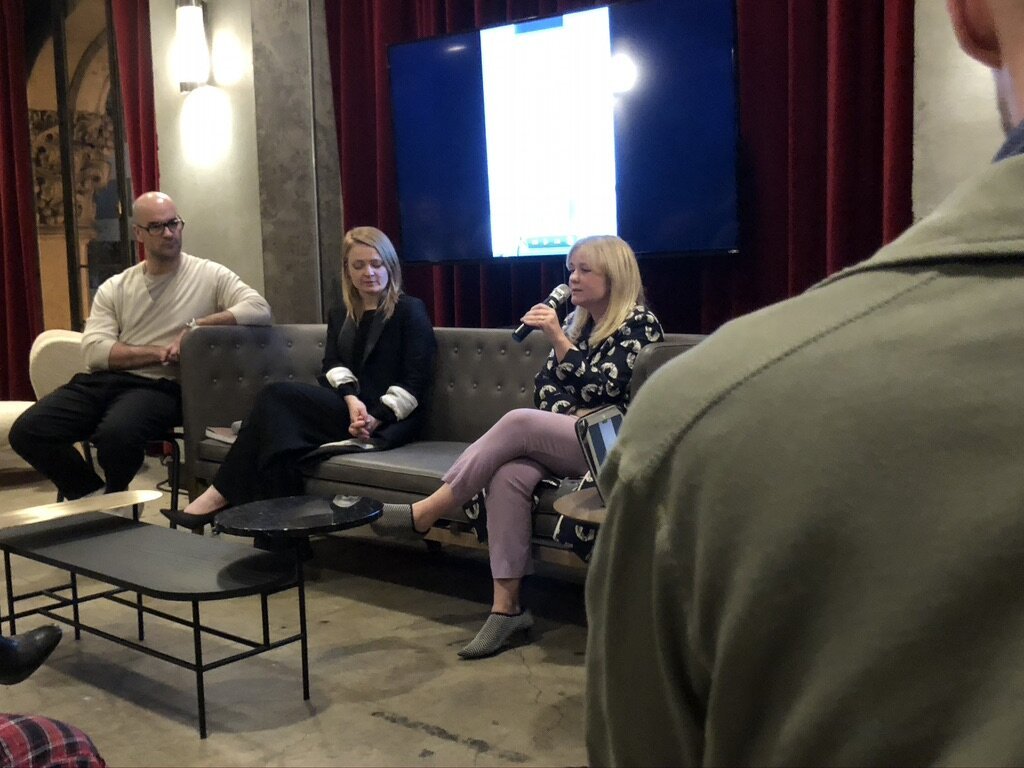

Nordic LA provides opportunities for artists, musicians, and performance-focused creatives to connect with others both in Los Angeles and in the Nordic countries.
Sarah Barnard designs healthy, happy, personalized spaces that are deeply connected to nature and art. Empathy and mindfulness are the foundation of her practice creating healing, supportive environments that enhance life.

Healing Spaces: How Designers Can Cultivate Wellness in the Built Environment


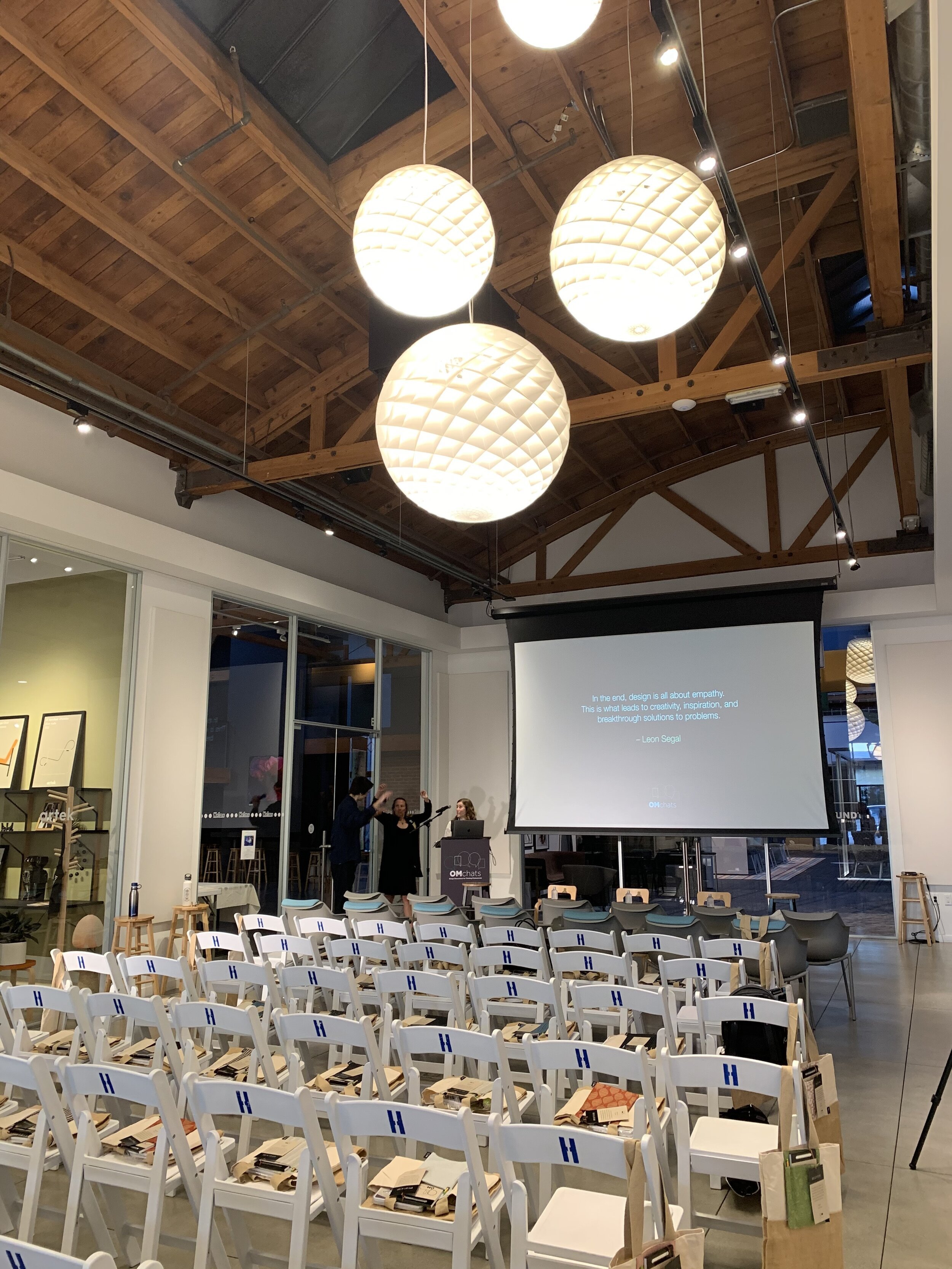
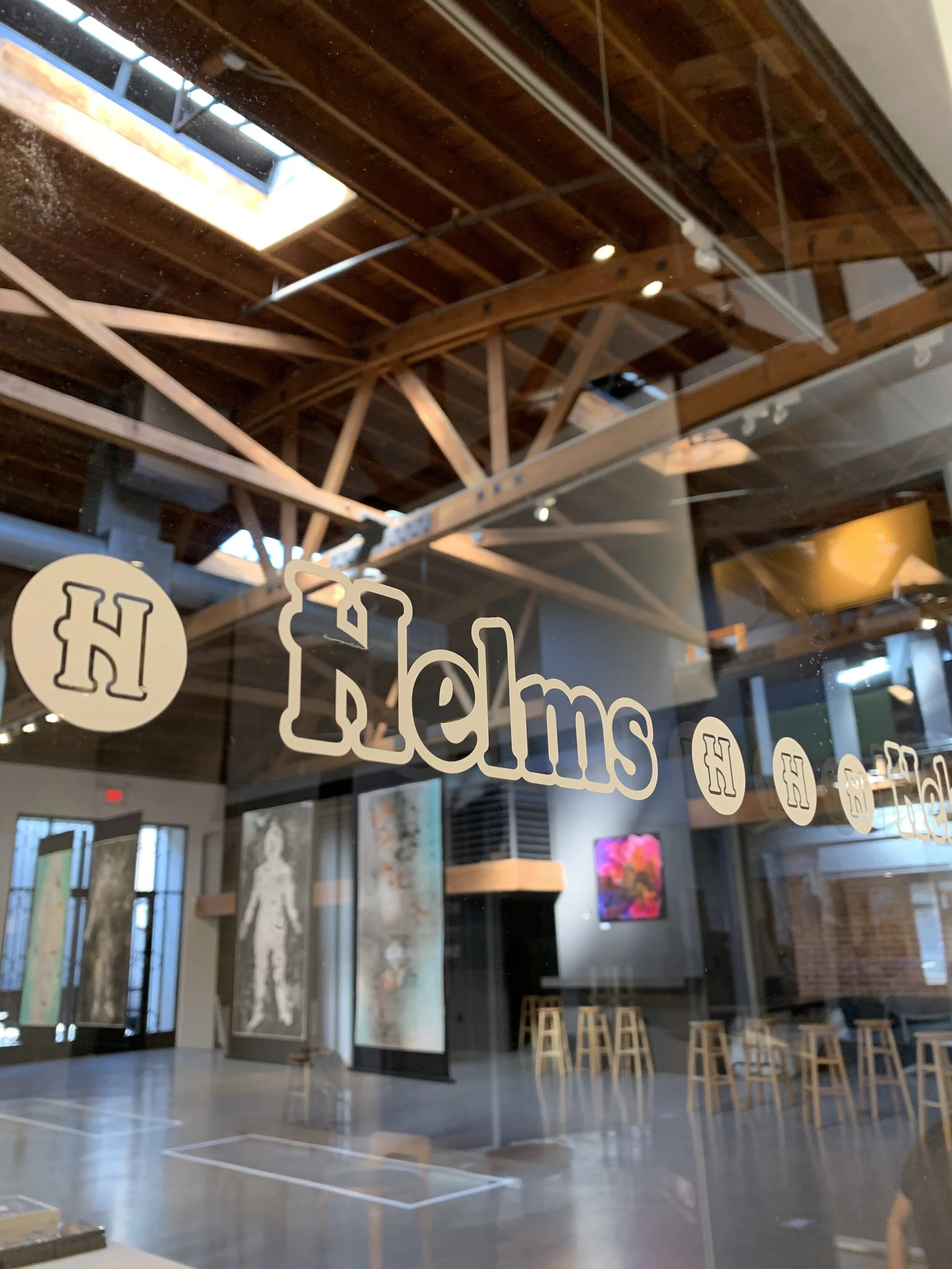
Empathy can uncover the deep needs of humans in private and public spaces. Leading practitioners in LA's a+d community gathered Friday, October 11th at the Helms Design Center for a conversation about the role of empathy in creating extraordinary experiences.
Hosted by OM and PLP SoCal, this inaugural session of OM Chats gathers leading voices in architecture, interior, and product design for a morning discussion about the ideas shaping design and wellness. Speakers include Sarah Barnard, WELL AP + LEED AP, principal of Sarah Barnard Design, Julie Smith-Clementi, AIA, IDSA, architect and product designer, and Adaeze Cadet, AIA, LEED AP, BD+C, vice president at HKS.
The discussion centered around how to design spaces and products that reflect a broader — more empathetic — understanding of the human experience in the workplace, health care spaces, educational facilities, and wherever people gather and live.

PHOTO BY: STEVEN DEWALL
Transcript of Sarah Barnard’s presentation:
In my practice, as a WELL and LEED accredited interior architectural designer, I specialize in creating environments that support the occupant's mental and physical wellbeing. An empathetic approach is the foundation of my process.
As a neurodivergent person, with sensory processing differences, I know all too well that we live in a world designed for neurotypical people. Normative built environments can be extremely uncomfortable, even traumatic, for many people. For example, individuals with Post Traumatic Stress and folks on the Autistic spectrum may boath have sensitivities to sound, light, textures, and odors. People with chronic migraines and people who are chemically sensitive might also have overlapping reactivity to fragrances, sounds, and light.

PHOTO BY: STEVEN DEWALL
The reality is, most humans will have experiences during their developmental years that forever impact their physical, mental, and emotional wellbeing.
Research indicates that traumatic experiences don't just happen to some people; they happen to most people. In the late 1990s, Kaiser Permanente conducted a study on Adverse Childhood Experiences (ACEs). They asked more than 13,000 of their members to complete a 10-question survey on traumatic childhood experiences and to report any health issues they were currently facing.
From this pool of respondents, about two-thirds had at least one ACE. 12% of the population reported an ACE score of 4 or more. An ACE score of 4+ nearly doubles the risk of heart disease and cancer and increases the risk of attempted suicide by twelve times. Understanding that the health impacts of trauma are not a "special population" issue, but a general population issue is critical to our ability to design with empathy.

ARTWORK: DEBORAH CANSLER, PHOTO: CHAS METIVIER
No matter our circumstance, it can be challenging to share details about ourselves that may be perceived as a disability. So, while we can't always ask, we can understand that many of us may have unaddressed environmental needs.
Even neurotypical people, without exposure to trauma, can easily experience cognitive overload in intensely stimulating environments. Activities like commuting, social interactions, processing large amounts of data, being exposed to fragrances, and repetitive auditory disturbances, can impact our mental and emotional resilience in unseen ways. Because of the magnitude of stressors in public life, humans benefit in measurable ways from a restorative home environment. Restoring at home makes us stronger in the workplace and the world at large.

INTERIOR DESIGN: SARAH BARNARD, ARTWORK: RENAE BARNARD + RUBEN VINCENT, PHOTO: STEVEN DEWALL
When designing commercial office environments for clients like National Geographic Entertainment, the Christopher and Dana Reeve Foundation/ Life Rolls On and the National Immigration Law Center, I consider the intersections and overlap of the community members and develop strategies to accommodate the highest possible needs.
Though it is vital to remember, as we have access to an ever-growing body of research that informs our practice of designing spaces that encourage wellbeing, it is nearly impossible to soothe all humans with a single design solution. So, meeting clients where they are and creating a safe, judgment-free dialogue is the first step in designing inclusive, supportive spaces.

INTERIOR DESIGN: SARAH BARNARD, ARTWORK: JOSE RAMIREZ, PHOTO: CHAS METIVIER
In my experience, being mindful and empathetic to diverse sensitivities creates an opportunity to design spaces that inspire a sense of peace. Armed with the understanding that we can't expect anyone to share the details of their pain, nor ask for what they need, designers must consider the most sensitive populations, so more environments feel safe and empowering to all.
How do we do this?
We must think about an expansion of universal design principles to include physical, mental, and emotional health. For example, we know that biophilic design can reduce physiological and psychological stress. Having a comfortable place to meditate can reduce anxiety, depression, and pain. Exposure to natural light can regulate our circadian rhythms and increase serotonin levels.

ARTWORK: RUBEN VINCENT, PHOTO: STEVEN DEWALL
When access to nature isn't readily available, art is an excellent alternative solution. Viewing original works of art can stimulate the brain, providing an imaginative connection to the mind of the artist and a momentary transcendence into another reality. In 2011 a University of London study found that viewing art produces a similar effect in the brain as falling in love, causing a rush of pleasure producing dopamine.
Just as we consider the positive impacts of nature and art on health and wellbeing, we place equal importance on the selection of materials and how they can shift the feeling, light levels, and acoustic qualities of a space.

INTERIOR DESIGN: SARAH BARNARD, ARTWORK: KEVIN MOORE, PHOTO: ACE MISIUNAS
Because truly non-toxic materials are in limited supply, our studio regularly designs textiles, wallpapers, furniture, and light fixtures, working with local craftspeople to fabricate safely and responsibly.
While we are mindful of avoiding materials with VOCs, some non-toxic materials like linseed oil, tung oils, and even citrus-based solvents can cause distress to people who are chemically sensitive, people undergoing chemotherapy and people with COPD.

INTERIOR DESIGN: SARAH BARNARD, ARTWORK: KEVIN MOORE, PHOTO: ACE MISIUNAS
In 20 years of professional practice, I have learned that empathy and mindfulness are critical in creating healing, supportive environments. Contemplating design strategies that can benefit all populations, is not a trend; it's an evolution in expanding our quality of life.
Together, we are part of a movement to be mindful, empathetic, and collaborative, supporting one another to make all built environments healing, restorative spaces.

INTERIOR DESIGN: SARAH BARNARD, PHOTO: STEVEN DEWALL
Sarah Barnard designs healthy, happy, personalized spaces that are deeply connected to nature and art. With a contemporary approach that employs traditional vocabulary, Barnard’s range of style is innovative yet time-honored. The ideas most essential to her practice and design process are wellness, historic preservation, and the infinite ways in which design can enhance life.

The Power of Wellness Design

INTERIOR DESIGN: SARAH BARNARD, ARTWORK: RENAE BARNARD + RUBEN VINCENT, PHOTO: STEVEN DEWALL
Wellness is not a buzzy topic, but is sure seems like it this year. Forbes declared this year to be the year of the wellness revolution, Vogue called it the new luxury status symbol, and Fast Company highlighted the industry’s $4.2 trillion valuation.
Earlier this summer, Sarah Barnard Design attended a panel discussion on Design x Wellness at the Helms Bakery District. The event was held in conjunction with the LA Design Festival and was moderated by California Interiors Editor-in-Chief Kelly Phillips Badal.
Three panelists, all from various design backgrounds, contributed to the lively back-and-forth, which centered around “achieving a healthy and organized life.” There were a number of takeaways to be gleaned from the discussion, including how organizational systems can combat stress and how proper lighting can improve sleep quality.


The panelists had only 45 minutes to discuss the topic, but a lot more could be said about the wellness movement as it relates to interior design. A holistic approach to wellness home design goes much deeper than organizing and lighting. There are a multitude of things to consider — the paint on the walls, the upholstery of a chair, the artwork on display. “It’s the interconnectivity between all the different elements that makes the space healthy and well,” offers Principal Designer, Sarah Barnard.

INTERIOR DESIGN: SARAH BARNARD, ARTWORK: KARRIE ROSS, BRIAN JOHNSON, RENAE BARNARD, PHOTO: CHAS METIVIER
Skilled interior designers leverage their knowledge of sustainable, non-toxic materials and finishes to craft healthy, personalized spaces for their clients. “For chemically sensitive clients and clients who value organic interiors, most often furnishings and artworks are handmade for them,” says Barnard.


A recent project for a highly-educated, well-traveled client featured the use of bespoke antique reproductions. “It gives us control over the materials, natural finishes, the scale, and it allows us to support the local economy,” says Barnard. Every detail was carefully considered, from the organic linen draperies to the custom designed floor sofa and the handmade, FSC-certified walnut dining table. “These are things a client would never find on their own because they are not sold in stores, and they just can’t be had otherwise.”
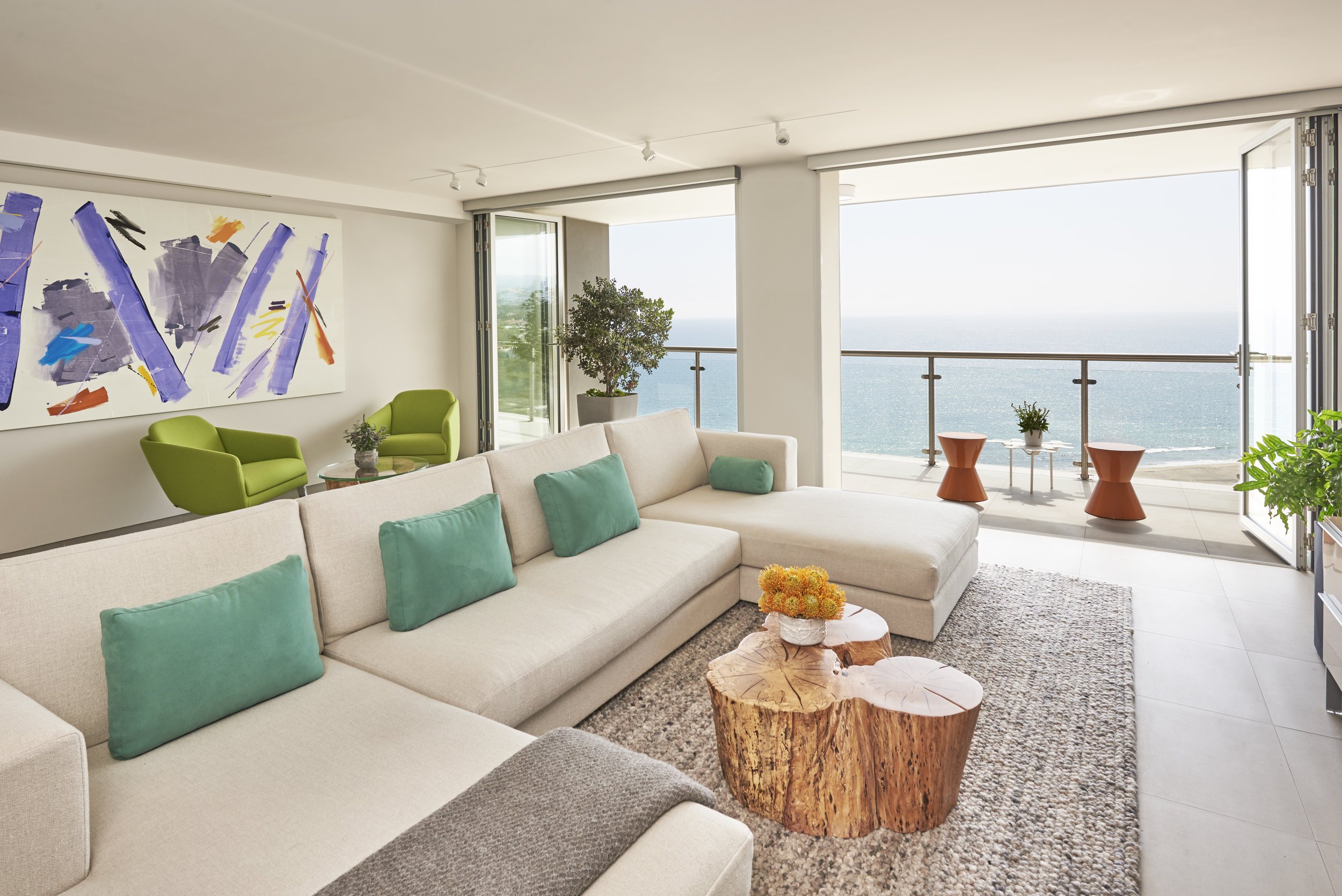
INTERIOR DESIGN: SARAH BARNARD, ARTWORK: MILLY RISTVEDT, RENAE BARNARD, ABBY SIN, PHOTOS: STEVEN DEWALL
For the owners of an oceanfront penthouse, Barnard customized not only the furnishings, but all of the materials and finishes. “In this home, everything is healthy, natural and unadulterated,” notes Barnard. “We used natural waxes instead of stains and sealers, natural latex foams, organic cotton batting, and organic wool batting that was spun from sheep that are only shorn in summer.”


The clients selected the colors of the natural fibers artist Renae Barnard used to create a hand-woven sculpture for their home office. Crafted from wire, sash cord, cotton clothesline, wool, yarn, fleece and linen, it’s a truly one-of-a-kind piece that doesn’t compromise the chemical-free integrity of the home. “It’s very much of them, for them,” says Barnard.


Art, in particular, contributes to our overall sense of well-being. “It stimulates your mind in the same way as the natural world,” adds Barnard. One study from the University of London found that viewing art produces the same effect in the brain as falling in love, causing a rush of dopamine, a.k.a. the “feel-good hormone.” Another from Drexel University revealed that making and viewing art can lower cortisol levels, the hormone linked to the body's stress response. “When we can provide views of nature, that’s the first choice. But in any instance where we have a blank wall and not a window, then the next best thing to have is art. It makes us happier,” explains Barnard.


Wellness is often touted as a trend by lifestyle magazines and social media influencers, but for Barnard, it’s the ethos of her interior design practice. “Our clients know better and they choose healthy,” she says. Organic textiles, sustainable materials, non-toxic finishes, inspiring artwork, bespoke furniture made by local craftspeople — all of these elements support our mental and physical well-being. And designers with robust knowledge of healthy home design have the power to change lives for the better.
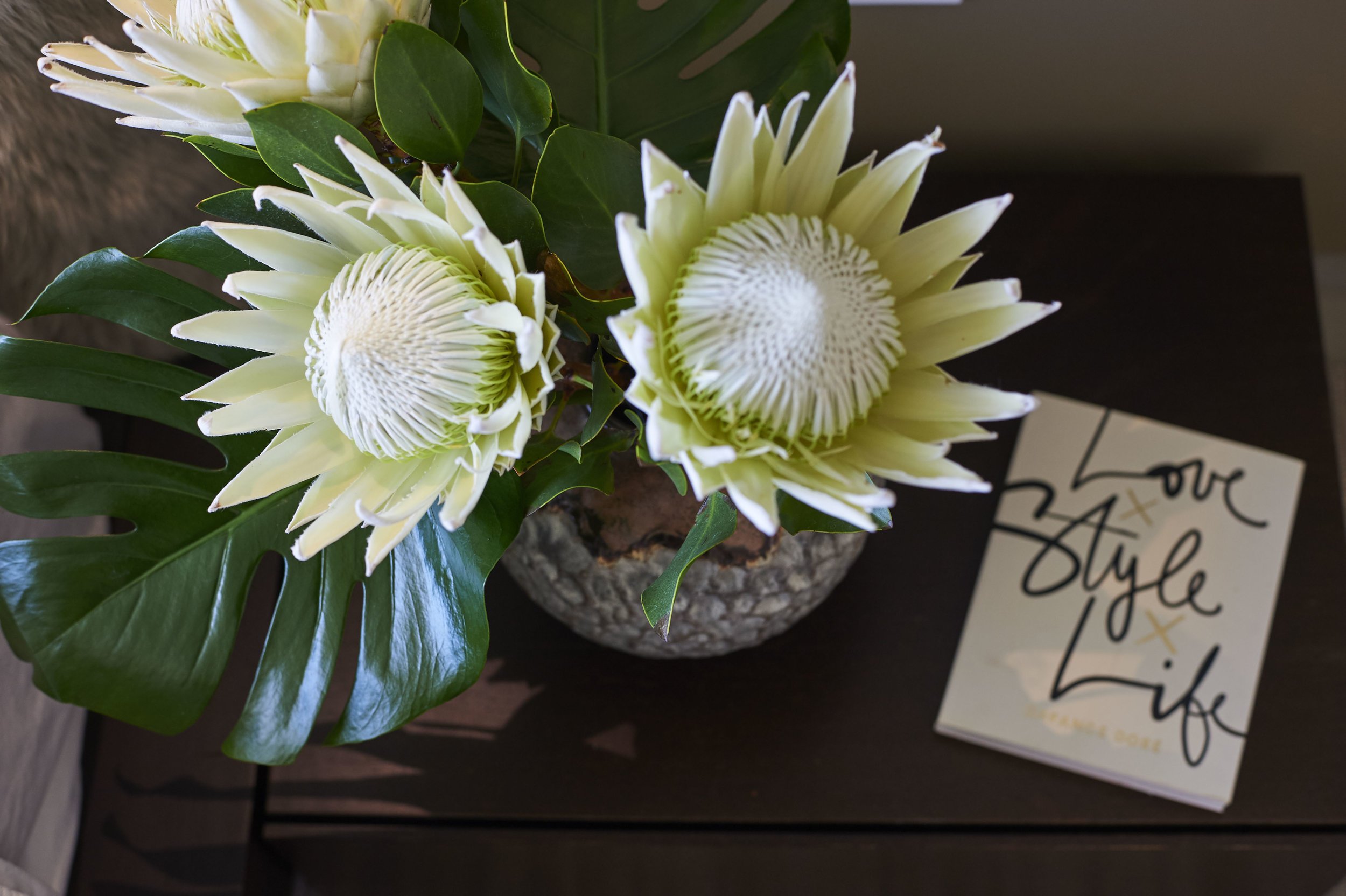
Sarah Barnard, WELL AP + LEED AP designs healthy, happy, personalized spaces that are deeply connected to nature and art. The ideas most essential to her practice and design process are wellness, historic preservation, and the infinite ways in which design can enhance life.
Barnard has been featured in publications internationally and was named a “Ones to Watch Scholar” by the American Society of Interior Designers. In 2018 Locale Magazine named Barnard “Los Angeles’ Favorite Interior Designer”. Barnard holds a Master of Fine Arts degree from Claremont Graduate University as well as undergraduate degrees in Art and Interior Architectural Design.
For more information about Sarah Barnard visit www.sarahbarnard.com

Unpacking the “KonMari” trend: The personalization of ultra-home organizing

A TIDY, MINIMALIST KITCHEN IN WITH OPEN SHELVING TO KEEP COOKBOOKS CLOSE AT HAND.
Before Marie Kondo, there was William Morris, a renowned 19th-century British designer who lived by this philosophy: “Have nothing in your house that you do not know to be useful or believe to be beautiful.”
Kondo has a more stringent and less personalized approach. She encourages followers of her KonMari method to grasp each item in their hands and evaluate their body’s reaction to it. If it makes you feel uplifted, put it in the keep pile. If it causes you to feel weighed down, in the donation bin it goes. But here’s the thing — there’s no one-size-fits-all organizing method. Whether you prefer a pragmatic approach à la William Morris or Kondo’s emotionally-guided decision-making process, figuring out what works for you and your lifestyle is paramount.

FLOATING SHELVES PROVIDE VERTICAL STORAGE IN THIS COMPACT HOME OFFICE FEATURING AN IMPRESSIVE VIEW OF THE SHORELINE.
“The method of organization should support the client’s daily routine and activities,” says interior designer Sarah Barnard, who specializes in healthy, happy, personalized spaces. “What items do they use most regularly? How do they envision the space? Having a clear goal will start to inform the plan.”
Barnard provides organizing services for clients in every stage of life, from young professionals with little spare time to retirees with reduced mobility. “One of the main reasons people ask for our help is because they are overwhelmed and don’t know where to start,” explains Sarah. “Our goal is to streamline the process by setting up personalized systems that can be easily maintained.”

A TIDY STUDIO BOOKCASE KEEPS FAVORITE BOOKS CLOSE AT HAND. A PAINTING BY ABBY SIN, SCULPTURE, CERAMICS AND ANTIQUES LIGHTEN AND BRIGHTEN THE DISPLAY.
Sarah recently tackled a two-week-long organizing project for a busy family of five. Recognizing that the experience can be quite invasive, Sarah and her team went to great lengths to ensure the family felt comfortable. Shoe covers were worn to prevent anyone from tracking in allergens, and cotton gloves were required when handling any personal items.

VERY POSSIBLY THE BEST BOYS' BEDROOM EVER! NEWLY BUILT WALLS ALLOW FOR CUSTOM-MADE AMERICAN WALNUT BUNK BEDS AND FLOATING DESKS FOR EACH BOY.
Clearing away unnecessary clutter was the family’s aim, and Sarah’s team employed the ‘keep, toss, donate’ method to get it all done. “We sorted our client’s clothing by season, removing the winter wear and storing it in the hallway closet,” says Sarah. “Now, primary closets contain only half the amount of items, making them more spacious and easier to navigate.”

PERSONALIZED TOOLS FOR STAYING ORGANIZED! EACH BOY'S DESK INCLUDES A UTILITY WALL WITH A CHALKBOARD, PIN BOARD, METAL PANEL FOR MAGNETS AND WIPE OFF BOARD CALENDAR.
In addition to freeing up closet space in the home, Sarah Barnard Design took on the organizing of a child’s craft room. “The client’s youngest son had received arts and craft gifts for each holiday of his young life,” notes Sarah. “This resulted in a wonderful collection, but also a lot of bits and pieces— to the point where the craft room was largely unusable.” The team carefully combed through his many art supplies, donating lesser-used items to create space for the most cherished ones.
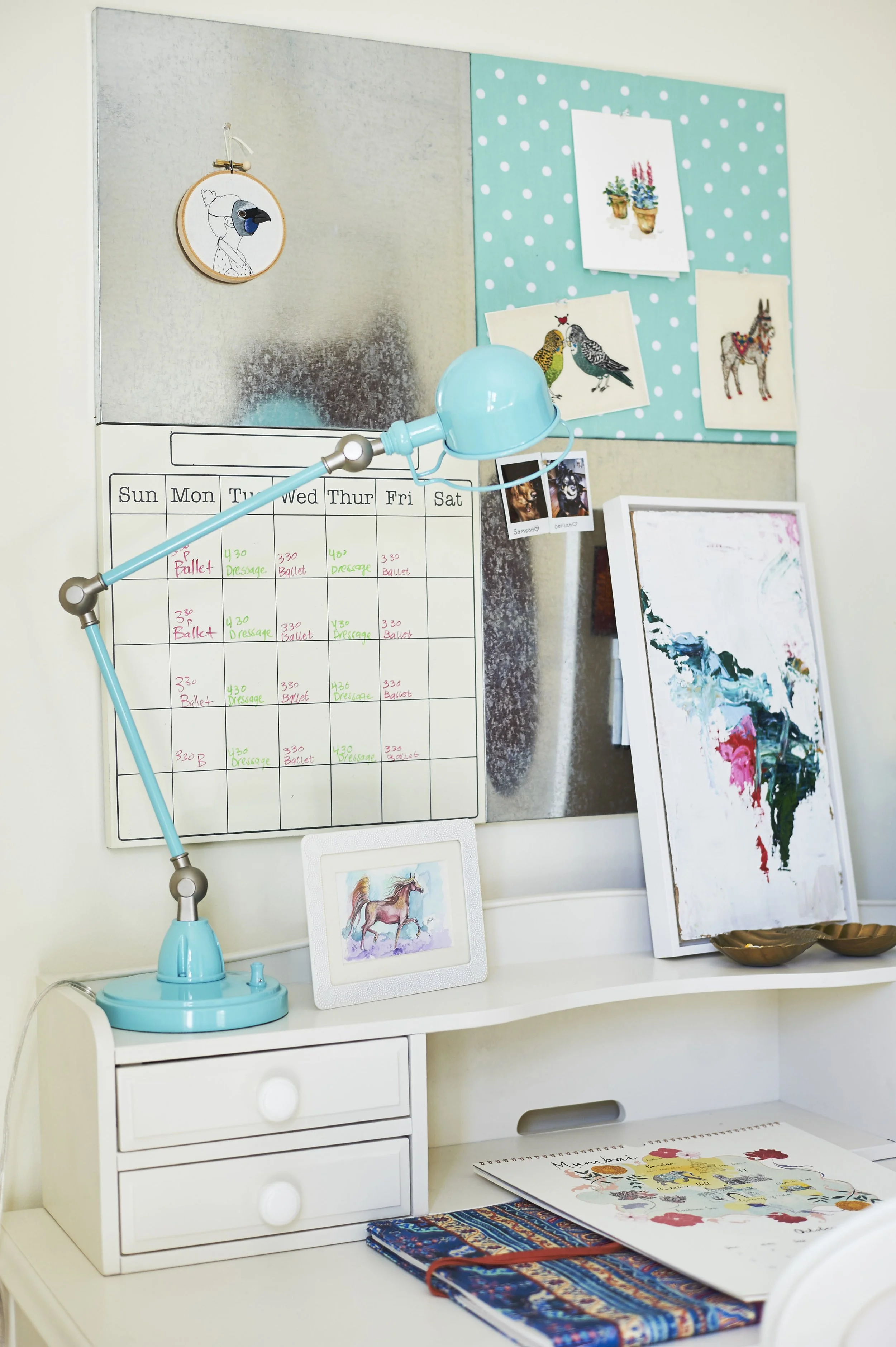
AN ARTICULATING DESK LAMP ADDS A POP OF AQUA TO THE TEEN GIRL'S STUDY AREA.
Once an organizing project is complete, Sarah’s clients have a renewed sense of self. Decluttering is a lifestyle change, but the benefits are well worth the effort. “It often inspires a newfound appreciation for their possessions and increased productivity in the space,” says Sarah.
A CREATIVE SPACE WITH A CUSTOM SOFA IN WOOL FELT, SIDE TABLES MADE OF NATURAL MAPLE AND STEEL AND A DESK CHAIR DESIGNED BY MAURO LIPPARINI. SCULPTURE BY RENAE BARNARD.
Adopting a personalized approach to organizing will spark far more joy than bingeing an eight-part Netflix series and assuming your tidying habits will change through osmosis. Decluttering is hard, both physically and emotionally — it’s not something that comes naturally to most people. Seeking professional organizing help is an investment in yourself, saving you time, energy, and unnecessary stress. And hiring an expert to create customized systems that fit your lifestyle will help you stay organized in the long-term — no self-help books required.
Sarah Barnard designs healthy, happy, personalized spaces that are deeply connected to nature and art.
To learn more about Sarah Barnard Design, please visit www.SarahBarnard.com.
Photos by Steven Dewall and Chas Metivier

Pantone’s Color of the Year: Living Coral

The family cat is the primary resident of this guest suite featuring a pink and coral color scheme.
Coral reefs are disappearing from our oceans at an alarming rate. It is imperative to the ocean’s ecosystems, and as much as a quarter of all ocean species depend upon it for food and shelter. Precious marine lifeforms are also the inspiration for Pantone’s color of the year: Living Coral.

CORAL AND LUSH GREENS CREATE A LIVELY AND INVITING ATMOSPHERE FOR AN OUTSIDE SPACE.
Sarah Barnard, a Los Angeles-based interior designer, WELL AP and LEED AP, specializes in home design that contributes to her client’s health and wellness and strives to make nature a part of each home she creates. “A happy and uplifting color reminiscent of the ocean is the perfect starting point for a happy, healthy home.”

CORAL COLORED TILES AND BEAUTIFUL GLOSSY STONE SLABS MAKE THIS COASTAL BATHROOM WARM AND BRIGHT.
Coral colored tiles and beautiful glossy stone slabs make this coastal bathroom warm and bright.
This color takes its name from the beautiful coral marine invertebrates that build extensive coral reefs, habitats for a vast diversity of life in the ocean. Sometimes referred to as the "rainforests of the sea," coral reefs are quickly dying, and are projected to reduce to 10% by 2050. Half of the world's coral has died since 2016, due to rising sea temperatures, pollution, destructive fishing, invasive species, and changing sea chemistry.
"The timely selection of this color by Pantone should be an important reminder to all of us that nature inspires beautiful interiors. If we aren't careful to preserve the natural world, we will have nothing left to take inspiration from," said Barnard.

CORAL NATURALLY COMPLEMENTS WITH BLUES AND OCEAN TONES. CORAL EMBROIDERY WAS A PERFECT COMPANION (COMPLEMENT?) FOR A THROW PILLOW IN A COASTAL HOME.
Pantone is most widely known for their color swatch books. It is the company responsible for color matching paints and graphics; and now devotes the time and resources of Pantone Color Institute to research the purchasing trends of various industries. With this information, Pantone determines this year's color. The naming process regularly pulls inspiration from the natural and human-made world, naming colors such as "rose quartz" or "millennial pink." Pantone's color of the year for 2018 was ultraviolet, a beautiful, energizing shade of purple reminiscent of bright flowers and the sky at sunset. This year's choice is PANTONE 16-1546 Living Coral, a potent reminder to preserve and protect ocean life.

CORAL COLORED CERAMIC PROVIDES EARTHY CONTRAST AGAINST THE EBONIZED TABLE AND BLACK LAMP.
Coral is vibrant, cheerful, delicate and energizing, and the perfect shade to start the New Year. Living coral, described by the Pantone team as “An animating and life-affirming coral hue with a golden undertone that energizes and enlivens with a softer edge.”

THE BATH AND SHOWER FEATURE LOCALLY SOURCED HANDMADE CERAMIC TILES IN A CORAL GLOSS.
Pantone published, “Vibrant, yet mellow PANTONE 16-1546 Living Coral embraces us with warmth and nourishment to provide comfort and buoyancy in our continually shifting environment. [...] Representing the fusion of modern life, PANTONE Living Coral is a nurturing color that appears in our natural surroundings and at the same time, displays a lively presence within social media.”

CORAL AND PINK SHADES BLEND BEAUTIFULLY WITH WOOD TONES. ART IS A SUBTLE AND SEAMLESS WAY TO INTRODUCE COLORS LIKE CORAL.
While top interior designers don’t necessarily recommend painting one’s home to match the color of the year, art, accents, and of course plants are an easy and safe way to introduce vibrancy to your living or work space through home decorating.

PINKS AND CORAL CREATE AN INVITING ATMOSPHERE.
For those interested in using Living Color in their home, Sarah Barnard said, "Living Coral is a perfect complement to blue shades, and pairs well with coastal or beachy interiors. For the daring, reupholstering a treasured piece in a bright color like Living Coral can revitalize a space. For those who prefer to mix pops of color with neutrals, I recommend starting with small accents."
Pantone's Color of the Year is an excellent opportunity to add lively, earth-focused tones to your home. Make having a happy and healthy home your New Year's resolution.

CREAM AND CORAL CERAMIC JARS ARE A PERFECT STORAGE SOLUTION FOR BATHROOM NECESSITIES.
Sarah Barnard designs healthy, happy, personalized spaces that are deeply connected to nature and art.
To learn more about Sarah Barnard Design, please visit www.SarahBarnard.com.
Photos by Abby Siniscal, Chas Metivier, and Charlie Daniels

Luxury High Rise Home Design

Nestled in a chic high-rise building, this colorful suite features the owner’s impressive collection of books, art, custom furniture, installations, complete with natural and luxurious materials.
An expansive art collection lines the entryway and halls. Paintings, drawings, mixed media art, and the owner’s embroidery cover the deep blue walls. The thoughtfully curated collection includes contemporary artworks from across the globe with a focus on feminist portraiture and fiber art.


Floor to ceiling windows on two sides of the living room reveal unobstructed views of the city outside and are framed by a dracaena specimen and a large sculpture by Renae Barnard. Custom furniture commissioned for the homeowner, who needed the seat height of her chairs and sofa to have a custom raised seat height to enhance its ease of use. Tillandsia, low-maintenance “air” plants, dot the space throughout and are reminiscent of the environment outside.


The dining area features custom wall to wall shelving, displaying the owner’s beloved collection of books, plants, and sculptures. Bright blues and purples make the airy and light space feel both grounded and vibrant. Around the dining room table, a variety of vintage office chairs and a bench seat were upholstered with the same teal linen textile, allowing guests to experience their favorite seat comfortably.


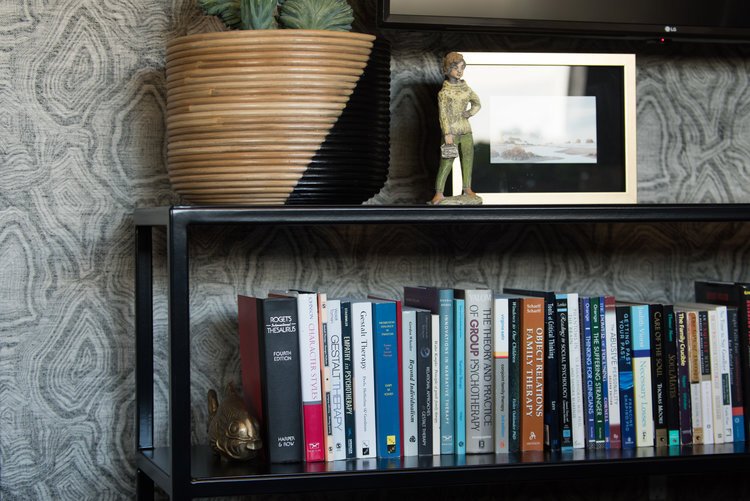
An agate-inspired grasscloth wallpaper adds a natural and organic element to the plush, achromatic office. A custom desk made in a black powder-coated steel was designed to fit the owner’s specific needs perfectly. A custom bookshelf was also chosen to keep her books close at hand while seamlessly blending with the modern desk. Pillows embroidered with Picasso illustrations add sophisticated interest to the sleek dark sofa while a fiddle leaf fig (Ficus lyrata) adds life and color to the elegant workspace.

The primary bedroom features a luxurious, award-winning, American black walnut bed frame by Autoban. The handcrafted headboard is lined with purple velvet, blending the natural texture with dark, feminine styling. A 300 thread count Egyptian cotton reversible duvet in custom color scheme adorns this California king bed (featuring an organic coconut mattress). Above, custom neon artwork reading “phantasmagoria” adds an ethereal glow. Plush black carpeting feels soft and comforting underfoot, and curtains allow the owner to sleep in total darkness. The two-tone purple walls were specially designed to draw attention to the art and to fulfill the owner’s request to have the bedroom “feel like a hug.”


Sarah Barnard designs healthy, happy, personalized spaces that are deeply connected to nature and art.
To learn more about Sarah Barnard Design, please visit www.SarahBarnard.com.

How Color Impacts Feelings and Emotions

THE COLOR OF YOUR BEDROOM COULD BE IMPACTING YOUR ABILITY TO GET A GOOD NIGHT’S REST. THIS RICH INDIGO SCHEME NEUTRALIZES STRESS AND PROVIDES A SANCTIMONIOUS SPACE FOR SLEEP.
The color of your bedroom could be impacting your ability to get a good night’s rest. This rich indigo scheme neutralizes stress and provides a sanctimonious space for sleep.
Imagine your favorite color. Classic, reliable, and looks great on you. By some metaphysical magicalness, this inanimate projection of light makes you feel something. It can’t explain it- but it quiets the storm, inspires the artist, and invites introspection. Like a Netflix original series or the air we breathe, we can’t get enough of it- but why? What gives color such a powerful influence?
The answer exists somewhere between science and socialization in an area of study called color psychology.
Color is a fundamental element in life. It can alter an individual’s mood, behavior, even their appetite. Although some studies suggest that color interpretation is based on ‘pseudo-scientific assertions’ rather than scientific data, color psychology is the study of how the way we experience color has long been a valuable facet of the human experience.

TAKING INTO CONSIDERATION THE HEALTHY LIFESTYLE OF THE RESIDENTS, SARAH OPTED FOR A CONIFEROUS GREEN AS A SYMBOLIC TRIBUTE. GREEN IS A GREAT SHADE TO LIVEN UP A SPACE WITH A NATURAL LOOK.
Taking into consideration the healthy lifestyle of the residents, Sarah opted for a coniferous green as a symbolic tribute. Green is a great shade to liven up a space with a natural look.
Color psychology is the study of how color impacts mood and behavior. When studying color’s effect on mood, a color’s hue, saturation, and brightness must all be accounted for. Color perception can be affected by a series of factors, and the same color may appear different to various people.
Intro to color psychology’s kid brother: Color Theory.
While there are multiple definitions of Color Theory, there is a basic knowledge that helps define the essence of it. Color Theory is not only the series of hues known as the color wheel, but it is also a valuable structure of guidance to mixing color, and the visual emotions it invokes. The color wheel is composed of primary, secondary and tertiary colors. The primary colors are red, yellow, and blue. These three pigments remain solid on the color wheel, as they cannot be formed by the combination of any other colors. Primary colors are the true originators- hues from which all other colors are derived. Secondary colors are created when mixing primary colors; resulting with green, orange, and purple. Tertiary colors are formed by mixing a primary and a secondary color, creating yellow-orange, red-orange, red-violet, blue-violet, blue-green, and yellow-green. Colors are categorized into three hue variant descriptors; cool, warm and neutral.

IT’S EASY TO FEEL ENERGIZED IN THIS BUNGALOW BATHROOM COVERED HEAD-TO-TOE IN ORANGE TILES. THIS CHEERFUL AND VIBRANT SECONDARY COLOR COMBINES THE ENERGY OF RED AND THE HAPPINESS OF YELLOW.
It’s easy to feel energized in this Bungalow bathroom covered head-to-toe in orange tiles. This cheerful and vibrant secondary color combines the energy of red and the happiness of yellow.
By mixing colors and exploring different color combinations, one can reap the benefits of different colors’ impacts by carefully integrating them into a single space.
Interior designer Sarah Barnard (WELL AP + LEED AP) further explains, “In spaces like the minimalist coastal retreat where the dominant color scheme is a pure, dove white- the minimal use of color is emphasized by contrast. The analogous color scheme [colors adjacent to one another on the color wheel] like yellow, green, and blue, inspire a light, energetic space that feels alive and vibrant.”

PERSONAL POSSESSIONS, PLANTS, AND EVEN FOOD CAN PROVIDE ADDITIONAL COLOR. GROUPING THE DRAGON FRUIT AND STAR FRUIT TOGETHER BRINGS TWO DISTINCT POPS OF RED AND YELLOW.
In this personalized family home, each room embodies its own personality, attributed to the diverse use of color. Home to 3 children, each impassioned youth expressed themselves by participating in the selection of colors in their room. In one space; a rustic orange courts a creative, comfy atmosphere. While in the other, a softened lavender beckons a certain subtle sophistication blended with an imaginative air.
It’s not all about the striking shades. “Neutral tone-on-tone schemes create a very harmonious, feeling of cohesiveness. It’s organic and natural, evoking an earthly feeling of connectedness.” Sarah Barnard goes on, “When brighter colors are used to accent these more neutral scenes, we see more distinction in the color due to contrast. These cool, warm, and neutral tones can communicate everything from peace to activity.”
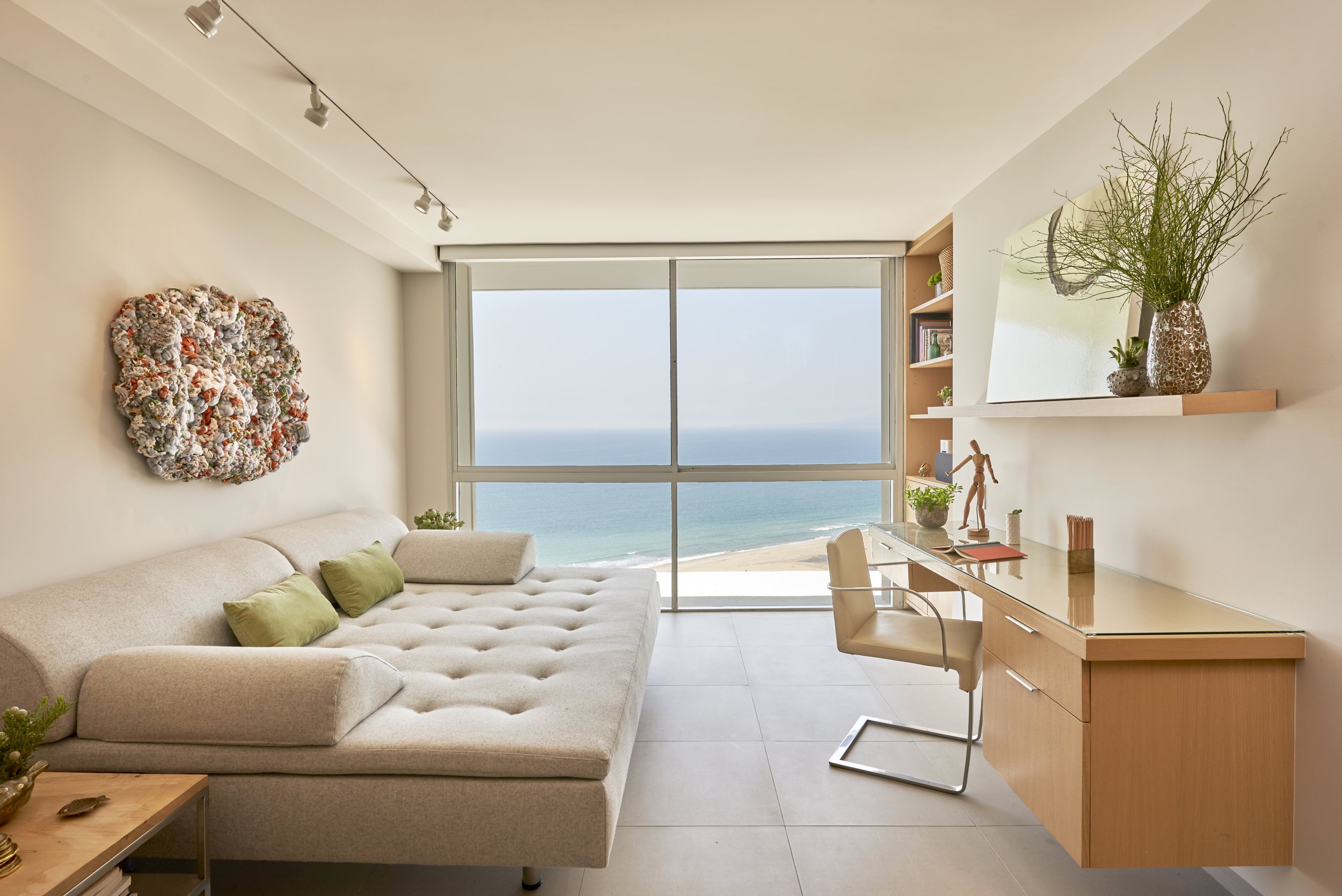
SARAH BARNARD USES THE OCEAN AS A FOCAL POINT OF THIS PENTHOUSE LIVING ROOM BY UTILIZING A BEAUTIFUL NEUTRAL COLOR SCHEME THAT PREVENTS THE EYE FROM BECOMING TOO DISTRACTED OR STRAINED.
In 1666, Sir Isaac Newton discovered that pure white light, when viewed through a prism, separates into the visible color spectrum. However, our understanding of color’s unique mood enhancement and health benefits extend far beyond this point in history. Ancient cultures around the world embraced the power of color and practiced chromotherapy. Chromotherapy, also known as ‘light therapy,’ employs colors to heal various ailments and is still currently used as a holistic or alternative method.
This treatment uses the color red to stimulate the mind and body, and increase circulation. Yellow to stimulate the nerves and detoxify the body. Orange heals the lungs and increases energy levels. Blue is believed to soothe or treat any illnesses or pain, while indigo shades are used to treat skin problems. Regardless of the scientific validity of the practice of chromotherapy, color is an indisputably important feature in our visual environment and can create a sanctuary in which we manifest healing.
There are color interpretations that have an ordinary meaning. For example; traffic lights—green means go, yellow indicates a yield, and red most recognizably signals a stop. However, most color perceptions tend to be subjective and contingent on the application.
A red room might make some feel anxious, while blue walls can induce a sense of calmness or relaxation. There are plenty of reasons why a person might react a certain way towards color, and an explanation can be the location or amount of color used even the culture someone comes from, or their personal experiences. As in all things, there exists a duality to every color archetype. While bold hues of red have given some evidence to have adverse effects in cognitive ability in children and adults, there is also evidence to show it can increase appetite, enhance athletic performance, and spark feelings of excitement and arousal. While a red bedroom may inhibit sleep, a red locker room can rally a team for competition.
Sarah Barnard illuminates the topic further, “It’s important to consider the space you’re occupying and the emotions you would like to experience there. Is this a place of rest, work, or activity? These are some of the elements I consider when introducing color to space.”
Due to this variation in interpretation, many psychologists express skepticism of the validity of color theory’s effect on an individual. In truth, this variation exemplifies the way the usage of color can be just as impactful as the color itself. Complimenting the fluidity of Color Theory, this allowance grants validity to each of our experiences that have helped inform our perception of color.
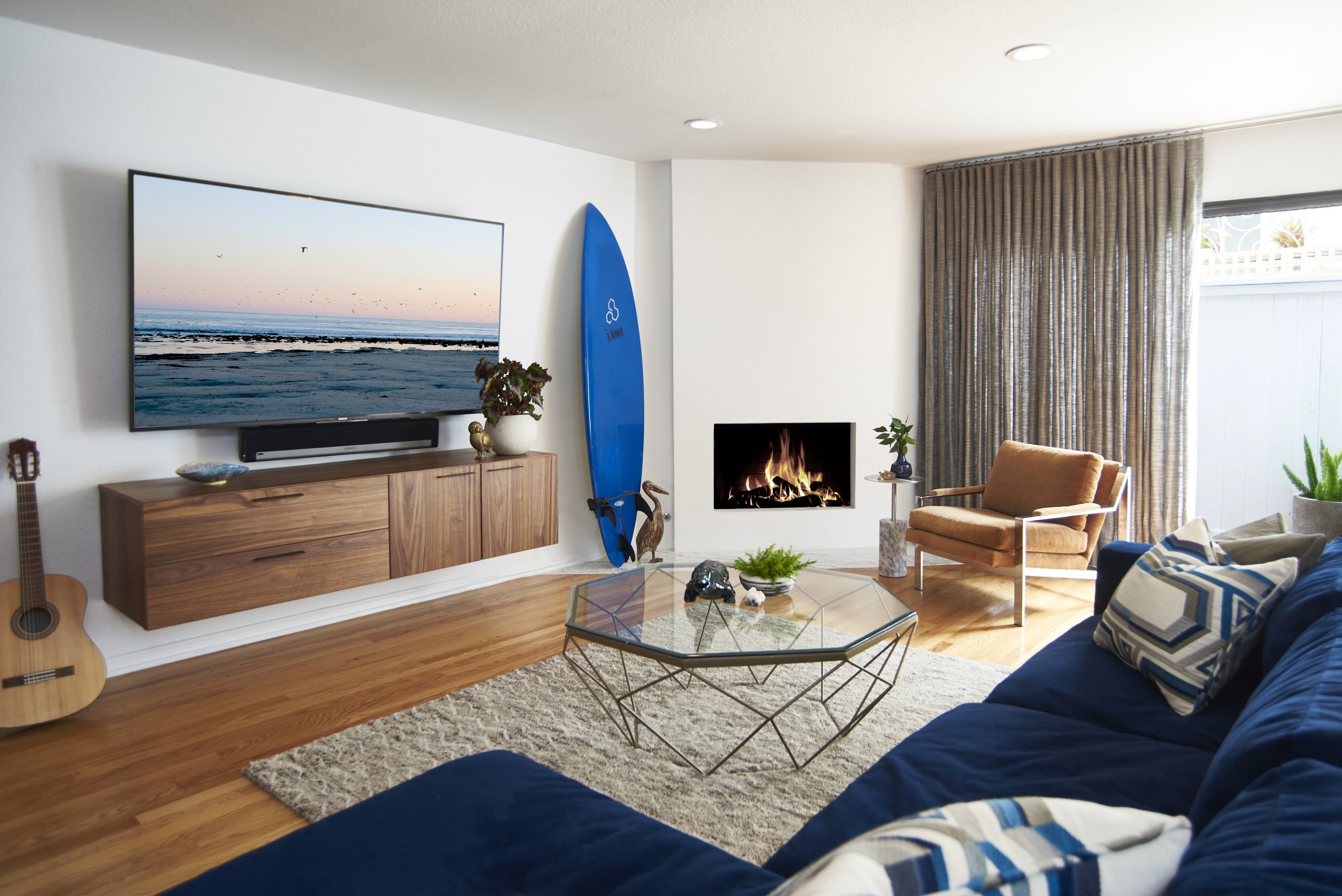
THE COLOR BLUE IS VERY VERSATILE IN THAT, WHILE IT CAN BE USED AS A CALMING ELEMENT, IT CAN ALSO SYMBOLIZE ENERGETIC FORCES LIKE THE OCEAN OR PROVIDE A MASCULINE TOUCH DEPENDING ON ITS TONES.
The color blue is very versatile in that, while it can be used as a calming element, it can also symbolize energetic forces like the ocean or provide a masculine touch depending on its tones.
By juxtaposing projects like the custom-built bedrooms of this California family residence with the masculine townhouse, we can see the breadth of emotion just one shade can bring forth. Both utilize a similar palette, a combination of vibrant blues and natural greens against natural wood and white backdrops. Despite their similarities in color, both spaces pique very different energies. A blue surfboard emanates the raw excitement of the open ocean, while blue bunk beds manifest a dreamy, youthful coziness reminiscent of pillow forts and camping in the backyard. Because of their application, the blue tones inspire very different moods, although they are similar in hue and saturation.
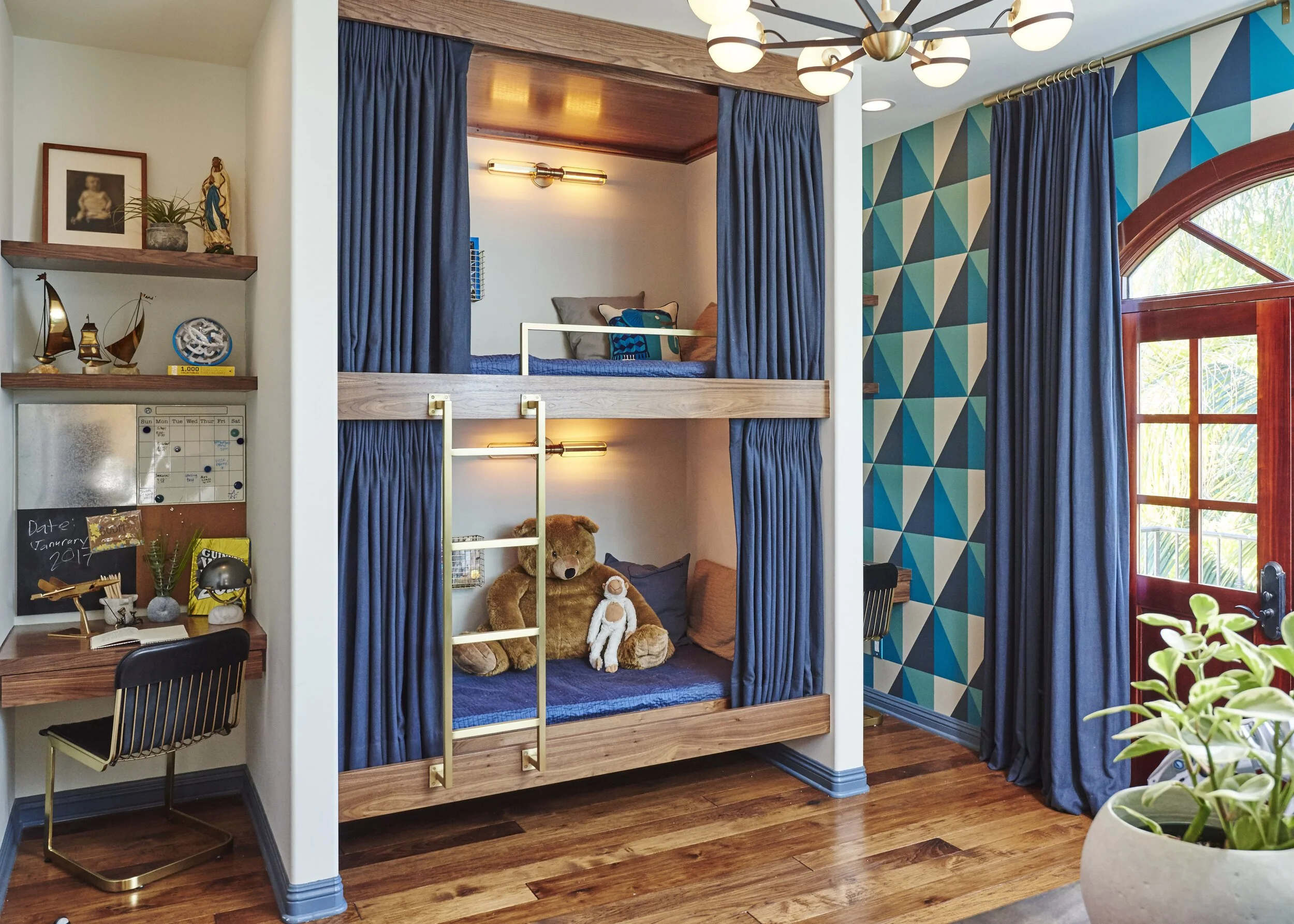
IN THIS BOY’S ROOM IN THE CALIFORNIA FAMILY RESIDENCE, SARAH UTILIZES THE DUALITY OF THE COLOR BLUE TO CREATE A SPACE THAT ENCOURAGES BOTH PLAY AND RELAXATION. SEE YOU IN DREAMLAND!
In this boy’s room in the California family residence, Sarah utilizes the duality of the color blue to create a space that encourages both play and relaxation. See you in dreamland!
Proper color selection is crucial in our everyday lives. Color can be overwhelming or healing, so it is crucial to understand how color can affect the dynamics of a room and the people in it. Interior designers deeply believe that color can drastically alter moods, feelings, and emotions. Before designing your space or switching up your color scheme, pay close attention to the way your mind and body feel when you experience different colors and consult with your designer.
”It goes beyond creating something beautiful to look at- it’s an integration of the self into the space we occupy and nourishing ourselves. The colors we see affect how we feel and how we engage with the people around us.” Sarah Barnard concludes, “It’s absolutely vital.”
Regardless of age, it is evident both adults and children are affected by color in a multitude of ways. While color interpretation can vary between cultures and people, we are unified in the power of color- the magical and visceral ways it influences us as we move through our day. It can provoke us to be more active or optimistic, or it can be the visual lullaby we need to rest peacefully at night. Positive and thoughtful applications of Color Theory have many benefits; inspiring us to play, grow, and find peace.
Sarah Barnard designs healthy, happy, personalized spaces that are deeply connected to nature and art.
To learn more about Sarah Barnard Design, please visit www.SarahBarnard.com.

Beachy Bachelor: Masculine Interior Design With a Coastal Influence

For this Beachy Bachelor, Sarah Barnard introduced a mid-century vintage character with a beautiful collection of modern pottery, driftwood, and vintage ceramic vases. This oceanside townhouse embodies the coastal California luxury lifestyle, effortlessly combining opulent materials with a relaxed beach-side setting.


A custom calacatta gold marble bar expands the living rooms entertaining space, while the natural wool rug anchors the conversation area. The floating American walnut console keeps the masculine space light. A reclaimed Elm wood side table rests atop the home's original Oak floors. Crisp, white walls accentuate the natural wood finishes throughout while allowing the minimalist stair-railing to float in space.


The masculine dining room and adjacent patio make the most of their indoor-outdoor connection with a versatile area rug specially selected to withstand the bright light and high traffic. A sculptured glass and steel chandelier reflects the natural light of the surrounding space.
Handmade roman shades attach to a custom wood enclosure for privacy and shade on the patio. A natural teak root ball fashioned into a rugged side table pairs with a weathered teak armchair and lightweight concrete pottery. Acacia wood deck tiles add a warm angular base to the cool blue patio space. Found in Georgia by Sarah, the vintage mid-century modern whale ashtray is brass and a perfect complement to the cool tones.

The primary retreat features a handmade bed of tweed by Domonique Keiffer from Venice, Italy is covered in Belgian linens and shaded by wool draperies. A bold, abstract painting by Jonathan Elder hangs above the bed. Surf-inspired artifacts and unique vintage pieces complete the look.


A vintage leather chair with its original leather patina, designed by Percival Lafer, manufactured in Brazil in 1958. Sarah worked with her longtime collaborator, artist Reid Winfrey, placing several of his surf-inspired paintings in the beachside home.
Sarah Barnard designs healthy, happy, personalized spaces that are deeply connected to nature and art.
To learn more about Sarah Barnard Design, please visit www.SarahBarnard.com.

Remodeling Your Kitchen to Last Forever

As many people move towards preparing their meals, and as open-plan homes embrace nature and health, the modern kitchen is more important than ever. A kitchen must provide high-quality performance and functionality to cater to your specific needs and to add to the value of your home. Many homeowners know a remodeled kitchen would benefit their lifestyle, but do not want to commit to the expense and disruption of a remodel. The best way to approach a kitchen-remodeling project is to create a plan that focuses on your family’s specific needs to balance form and function and make your kitchen the ideal space for cooking and entertaining while being comfortable for everyone.
It is best to start by establishing what areas in the kitchen are most frequently in use. Take into consideration how many people might use it at once, and if there are children involved, make sure your kitchen accommodates their safety. Typically it is best to have the main functions of the kitchen–your stove, sink, and fridge–no more than six feet apart from each other. This calculation will help create a working triangle that benefits you by allowing easy maneuvering throughout the space. Identify areas that need extra storage for food, snacks, or dishes for display. Some particular functions require more space than others.

It is also essential to make your kitchen a space that you cannot only use, but enjoy. Make a list of what is important to you, and consult a designer if you can. She or he will help you decide what is realistic, possible and practical for your home, and determine what areas are the areas as focal points in the room. If you love to have people around while you are cooking, add seating at the counter. If many people use the kitchen together, consider implementing various food preparation areas. By considering using universal design methods, such as lower countertops, two-tiered kitchen islands, and under counter storage for food and appliances, homeowners and guests can access all areas of the kitchen with ease.
Often overlooked, lighting is hugely important to a kitchen. Determine what lighting options are best suitable for different kitchen zones. Interior designers can be especially useful in this area and will help define what lighting would be best for tasks and overall aesthetic value for the different spaces in your kitchen. Under cabinet lighting is a great technique to display a favorite kitchen item or to find kitchen products quickly. Recessed lighting and pendant lights can help create an even ambient light throughout the space.

Finally, when redesigning a kitchen, there should be a focus on making it a beautiful and pleasing place to be, as well as providing functionality. If the kitchen connects to the dining room or living areas, consider how it can relate visually to people entering the space. There should be a visual connection from the kitchen between its connecting rooms. If the kitchen has barriers from other areas, consider opening up those spaces so the rooms can connect visually and practically. Finally, consider storing appliances to look like they belong in the kitchen without standing out. To accomplish this, use panel-ready appliances or incorporating under counter microwaves or oven drawers to create extra counter space in a kitchen island.
A remodeled kitchen should work with the needs of the homeowners in a way that creates a space that can be used by everyone. Also, a kitchen should support the needs of your entire family’s lifestyle and still be a place of beauty and comfort. By implementing smart technology and planning, a kitchen can save time and energy. By focusing on functionality and durability, your kitchen can be a space that can be enjoyed by everyone for years to come.

Sarah Barnard is a member of the American Society of Interior Designers (ASID), is certified by the National Kitchen and Bath Association (NKBA), and is recognized by the International WELL Building Institute as a WELL Accredited Professional (WELL AP), the International Institute for Bau-Biologie & Ecology as a Building Biology Practitioner (BBP) and by the United States Green Building Council as a Leadership in Energy and Environmental Design Accredited Professional (LEED AP). She has served on the Santa Monica Conservancy's board of directors and specializes in sustainable interior design, health and wellness and historic preservation.
Undertaking a broad range of projects, all of which are grounded in smart design and mindful of healthy living, Sarah’s diverse body of work includes upscale private residences, chic restaurants, luxurious spas and impressive corporate headquarters. Her projects have been featured in local and national publications, and have placed prominently in several noted design competitions. Sarah holds a Master of Fine Arts degree from Claremont Graduate University as well as undergraduate degrees in Art and Interior Architectural Design. Her interior design practice is the culmination of education and interests in art, architecture, textiles and the environment and she has written several articles for important publications including the USGBC, United States Green Building Council.
Sarah Barnard, WELL AP and LEED AP, designs healthy, happy, personalized spaces that connect deeply to nature and art. Empathy and mindfulness are the foundation of her practice creating healing, supportive environments that enhance life.
Photos by Chas Metivier, Scott Van Dyke, Brad Nichol
Sarah Barnard designs healthy, happy, personalized spaces that are deeply connected to nature and art.
To learn more about Sarah Barnard Design, please visit www.SarahBarnard.com.

Interior Design for Pets

PHOTO BY: STEVEN DEWALL
"It's important to start with the needs of the entire family," says Los-Angeles-based interior designer and recent ASID award-winner, Sarah Barnard. "Your pets should be included in the home design process from day one, because they are family members, too." Barnard is currently a mother to two furry friends, a rescue cat with half a tail and a dog that isn't happy unless she's sitting in your lap. She explained her process when she works with clients who have both standard and exotic pets.
"When I start designing a home, my goal is to make an environment that is natural, enduring, and high-functioning—for my clients, their guests, and their pets." The goal is a design that is mutually perfect for pets and humans alike. When it is planned this way from the beginning, it is more comfortable for everyone, including you.
The interactive design doesn't mean the same thing for everyone; every family has different needs. Consulting a designer can help you figure out how much extra planning is required and where to get started. Consider that where you spend your time, so does your pet. They want to be near you, so a dedicated dog room, for example, may be a lost cause.

Next, consider your lifestyle. If you take your dog hiking, having space for to rinse and towel off before venturing further inside your house is a smart choice. Most animals, mainly if they live exclusively indoors, enjoy a perch next to a window. Aquariums or terrariums can be entertaining for them as well. If you spend a lot of time in the kitchen, a custom pet bed or feeding area might be a great fit in your kitchen island.
More exotic pets might require more customization. Large animals like pigs may need an indoor and outdoor space. Reptiles or birds sometimes need a large aquarium or terrarium designed into the architecture of your home. That's when it's necessary to have a designer's help. She or he will plan it out and make sure you seamlessly integrate your pet's home with yours. More importantly, a designer can help you figure out the scope of your project.
When asked about materials, Barnard said the goal is "to create high-functioning, natural and non-toxic environments that endure over time." It's best to make your home safe for everyone. Try to source organic materials as much as possible, such as untreated fabrics and furniture. Vintage pieces that are at least 20 years old have finished off-gassing, so they don't pollute the air and are safer for you and your pets.

As far as specific materials and finishes, nothing is strictly off-limits, but some require more upkeep or need to be replaced every few years. Barnard shared some insights on balancing which materials are most attractive with those that create less work for you:
It's still possible to have wallpaper, but a more durable option would be wood wainscoting.
For flooring, the best choice is often a hard surface option whenever possible. It's easier to keep clean than rugs or carpet and doesn't hold onto fur or odors. Porcelain tiles are a great option. They are elegant and easy to maintain, plus they aren't likely to stain or get scratched. Porcelain tiles are also the same color all the way through, so dents and marks will be less noticeable.
Carefully consider your fabric choices, too. Solution-dyed acrylic textiles are an excellent place to start looking because they are relatively invulnerable. They're typically resistant to stains, germs, and odors.

Some fabrics are more durable than others, but how they are used matters, too. Any materials with uneven surfaces will be more challenging to clean. Delicate fabrics are best saved for window treatments rather than upholstery. Choose shorter drapes that won't be chewed or rubbed against; long curtains may collect hair or inadvertently become a hazard. Remove fabric from reach by choosing chairs and sofas with exposed legs, which won't hold onto furs like slipcovers or upholstered legs.
"Above all, make sure you find a designer who has a history with animals. One who has an animal family member is even better," Barnard suggested. Designers who live with pets will have a more intuitive way of designing a home that includes them. They know more about how pets act and behave then designers without them.
Barnard shared a favorite experience working with a client with pets. "She had close to 12 cats, and wanted a dedicated area where her cats could sun themselves, but was concerned about coyotes in the area. We decided to build a custom screened porch to make a safe space for them. We had cat doors installed, too, so they could come and go as they pleased."
Sometimes making an appropriate environment for a large group of animals is the solution, sometimes the answer is cat-ifying or dog-ifying the whole house. Every home is different, but with the right help, you don't have to sacrifice beauty to live with your beloved pets. When all is said and done, our animal friends are worth a little extra planning.
Sarah Barnard designs healthy, happy, personalized spaces that are deeply connected to nature and art.
To learn more about Sarah Barnard Design, please visit www.SarahBarnard.com.
Photos by Steven Dewall, Chas Metivier, and Brad Nicol

Sarah Barnard: LEED AP, Interior Designer, ASID Scholar Award Winner

Sarah Barnard has been recognised by the American Society of Interior Designers (ASID) as a rising leader in the interior design industry demonstrating exceptional leadership and a willingness to push the boundaries of the profession. Awarded with the highest honor of Scholar, the ASID recognises Sarah's commitment to fostering connectivity and growth throughout the community.


"As a LEED AP, I design healthy, sustainable interiors for non-profit organizations that work to protect our architectural and cultural heritage and fight for social and environmental justice."
Sarah has been committed to helping organizations that protect and advance our society as well as our humanity, standing firm in a quest to aid institutions such as: The Heritage Square Museum, the Santa Monica Conservancy and the Olmstead Preservation Association, working to protect architectural and cultural histories; the Downtown Women’s Center providing permanent supportive housing to homeless women; the National Immigration Law Center providing protection for immigrants, low-income workers and people of all genders and sexual orientations; Life Rolls On-Christopher and Dana Reeve Foundation, aiding and inspiring people with disabilities.
"These types of organizations have never been more important to our well-being, yet in present times, are at great risk. I understand that by providing pro-bono design services, securing donations of goods and services and by always continuing to encourage growth and expansion of a compassionate community, we can encourage each other to create a better world, with hope, beauty and dignity."

Sarah Barnard is a member of the American Society of Interior Designers (ASID), is certified by the National Kitchen and Bath Association (NKBA), and is recognized by the International Institute for Bau-Biologie & Ecology as a Building Biology Practitioner (BBP) and by the United States Green Building Council as a Leadership in Energy and Environmental Design Accredited Professional (LEED AP). She has served on the Santa Monica Conservancy's board of directors and specializes in sustainable interior design and historic preservation.
Undertaking a broad range of projects, all of which are grounded in smart design and mindful of healthy living, Sarah’s diverse body of work includes upscale private residences, chic restaurants, luxurious spas and impressive corporate headquarters. Her projects have been featured in local and national publications, and have placed prominently in several noted design competitions. Sarah holds a Master of Fine Arts degree from Claremont Graduate University as well as undergraduate degrees in Art and Interior Architectural Design. Her interior design practice is the culmination of education and interests in art, architecture, textiles and the environment and she has written several articles for important publications including the USGBC, United States Green Building Council.
Sarah Barnard, WELL AP and LEED AP, designs healthy, happy, personalized spaces that connect deeply to nature and art. Empathy and mindfulness are the foundation of her practice creating healing, supportive environments that enhance life.

Contemporary Luxe: Children's Rooms

A pair of contemporary luxe children's rooms fit for a beachside family home. A boy's bedroom is transformed into a 'little man's' room with the warmth of traditional design elements and cutting edge details to create a youthful, contemporary space.
With a focus on personality and creativity, Sarah Barnard incorporated custom artwork based on conversations she had with each child. The boy's bedroom features a mural of a vintage Aston Martin inspired by the classic James Bond film 'Goldfinger.'

A little girl's bedroom is full of warmth and whimsy. The smocked pink drapery and antique painted beds are a traditional foundation while the light fixture, custom polka-dot chairs, and bubble murals create a playful harmony.

Above each girl's bed, a custom mural made from recycled art glass features imagery inspired by their favorite things. The hand-painted lettering adds a unique element of personalization distinguishing each girl's space.

Sarah Barnard designs healthy, happy, personalized spaces that are deeply connected to nature and art.
To learn more about Sarah Barnard Design, please visit www.SarahBarnard.com.
Photos by Charlie Daniels

Contemporary Luxe: Indoor Outdoor Family Room
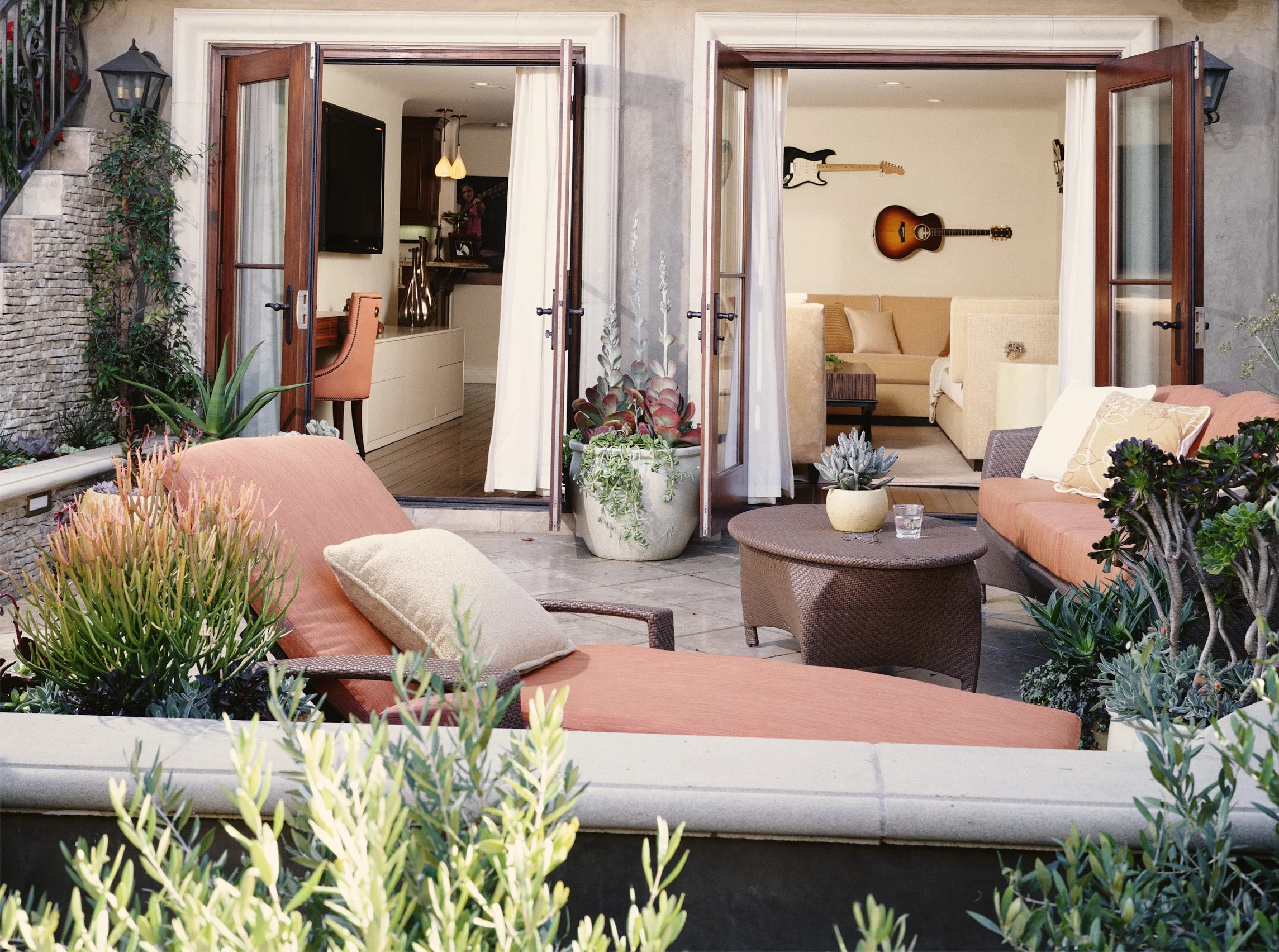
This contemporary luxe family home has a cozy patio pairing luxurious outdoor textiles with Chinese artisan pottery to create a quiet retreat. The modern luxury of this patio level family room reflects the individuality and youth of the homeowners.

With a focus on the homeowner's art collection, Sarah Barnard's home design allows for plenty of display space featuring one of a kind pieces: an antique brass lamp, a vintage Japanese sculpture by Kent Artware and a hand carved mahogany conch shell from Negril.

An innovative guest room features a custom bed with a metallic leather headboard and a claw foot base. Luxurious silk bedding and warming brass accents adorn this contemporary retro bedroom.

A second guest bedroom hosts twin beds with matching leather bolsters. The painstakingly veneered custom headboard features a floating desk drawer and a vintage 1930's office chair that melds Hollywood Glamour with Industrial Chic.

Sarah Barnard designs healthy, happy, personalized spaces that are deeply connected to nature and art.
To learn more about Sarah Barnard Design, please visit www.SarahBarnard.com.
Photos by Charlie Daniels

Historic Craftsman Bungalow: Dining Room

A historic 1918 Craftsman Bungalow features a beautifully remodeled dining room with contemporary updates by Sarah Barnard Design. By utilizing and restoring pieces original to the property, Sarah preserves the home's traditional aesthetic while introducing modern elements to create something personalized and unique. The fresh blue wall color modernizes the otherwise traditional dining room complementing the deep redwoods of the vintage furniture.
An original built-in cabinet, a collection of art objects, a vintage dining table, and a contemporary chandelier sing together in harmony. A ceramic bust by artist Deborah Cansler rests atop an original antique cabinet with plenty of display space for the homeowner's eclectic treasures. An arrangement of wild blue thistles in a ceramic vessel made by artist Nashua Alfaro creates the perfect centerpiece.


Sarah Barnard designs healthy, happy, personalized spaces that are deeply connected to nature and art.
To learn more about Sarah Barnard Design, please visit www.SarahBarnard.com.
Photos by Chas Metivier