

Designing for Longevity: Inside a Thoughtful California Kitchen
Harmonious Home by Sarah Barnard, WELL AP + LEED AP
True luxury in residential interior design lies not in passing trends, but in the profound concept of longevity. For a recent Southern California kitchen renovation, the objective was to create a highly functional culinary environment that accommodates cross-generational entertaining while supporting the homeowners as they age in place. To achieve this balance, interior designer Sarah Barnard utilized a philosophy centered on stealth ergonomics, resource preservation, and circular design principles.
Harmonious Home by Sarah Barnard, WELL AP + LEED AP
Strategic Spatial Geometry and Quiet Ergonomics
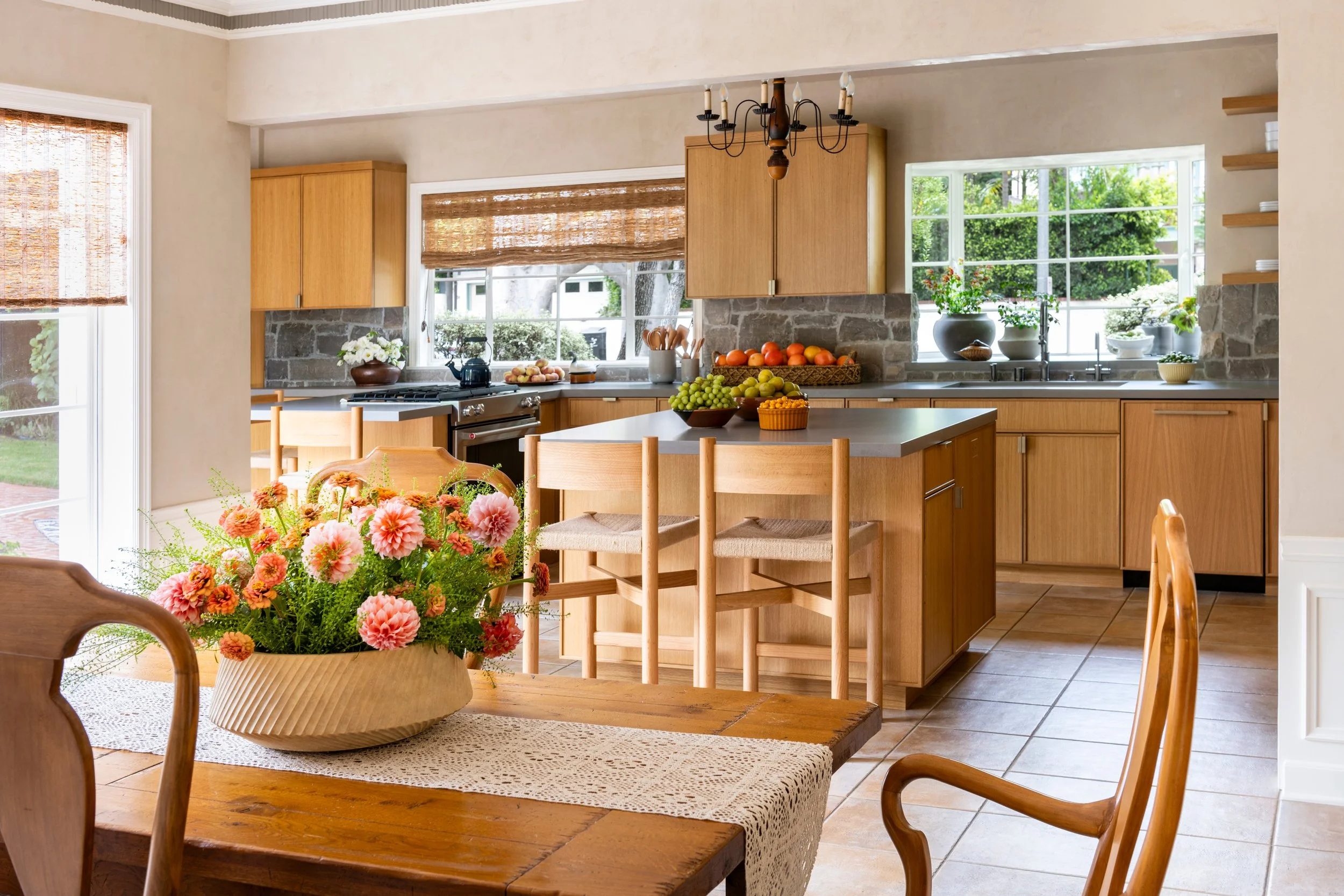
The project began with a re-mapping of the kitchen's traffic patterns, working entirely within the room's existing footprint to respect the architectural integrity of the older building. Barnard implemented a specialized zoning methodology to isolate high-activity work zones. This deliberate configuration minimizes unnecessary physical movement across the space, reducing fatigue during meal preparation.
To align with the principles of inclusive design, the layout focuses on supporting a range of postures and physical comfort. The space intentionally features multiple dedicated preparation zones engineered to accommodate the user while seated comfortably on stools. This ensures the workspace remains highly flexible and supportive for different physical needs throughout the day.
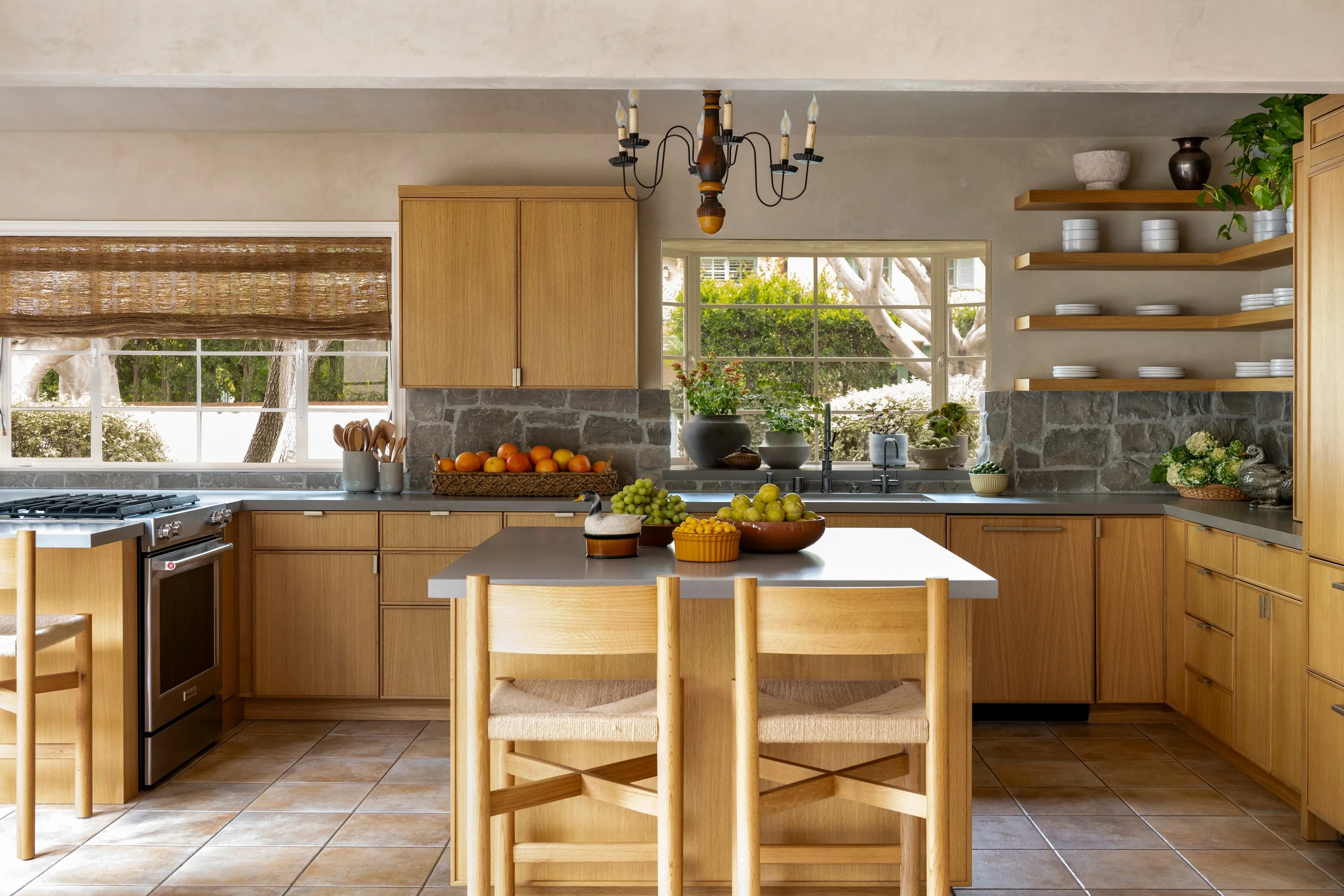
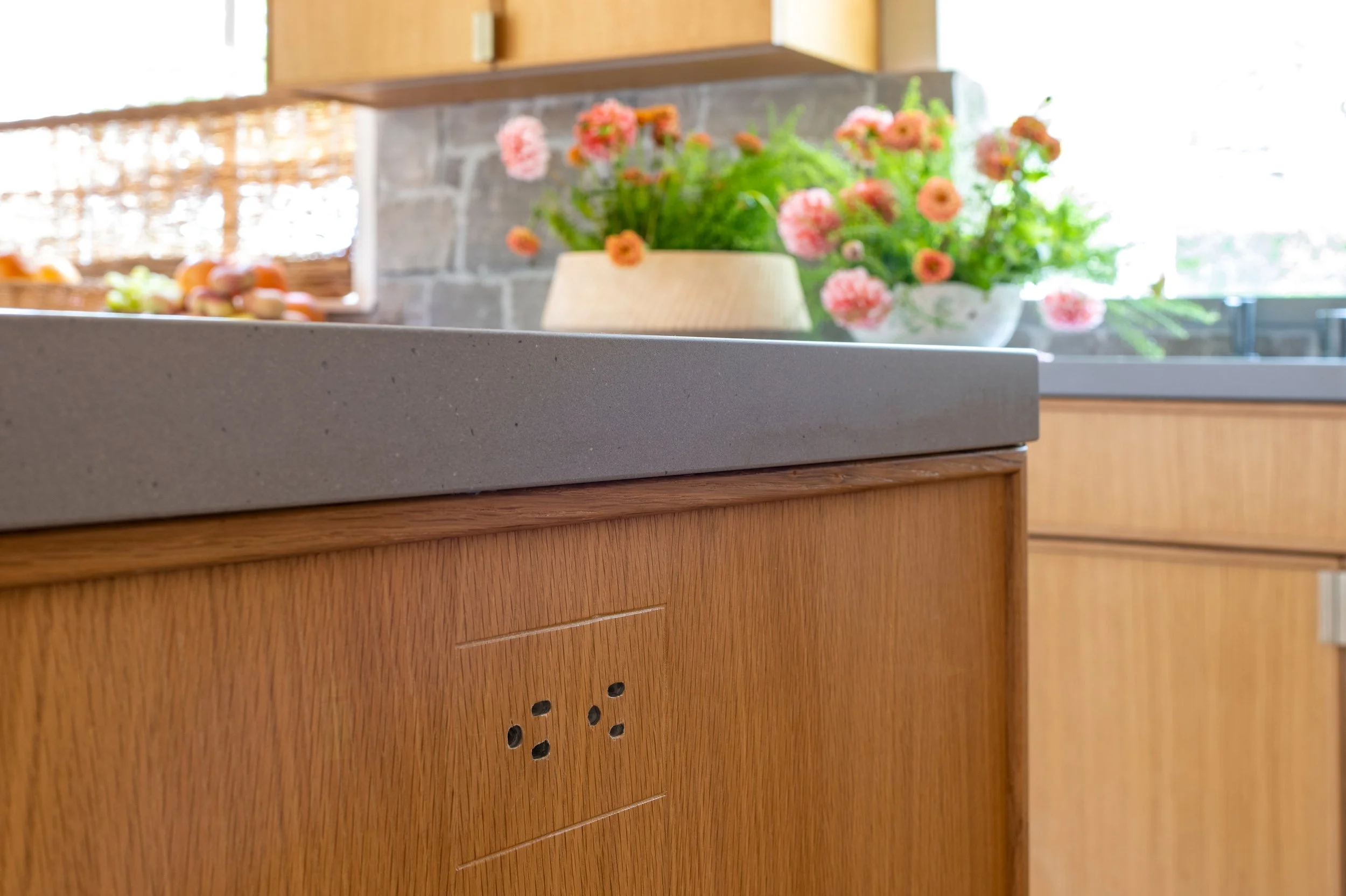
Mechanical and electrical details were similarly tailored to minimize physical strain while maintaining absolute architectural clarity. The custom white oak cabinetry incorporates internal pull-down shelving mechanisms that resolve high-reaching constraints. For daily ease of use, Barnard also structured the infrastructure plan to position electrical outlets at easily reachable thresholds.
Material Inspirations and Local Craftsmanship
The aesthetic direction of the kitchen balances raw, traditional textures with high-performance surfaces, ensuring the room gracefully handles the realities of busy family life and visiting grandchildren.
The custom white oak cabinetry, fabricated by local craftspeople, is fitted with flush, integrated edge pulls in a tumbled white bronze finish to provide a clean, hardware-free look. For the primary work surfaces, a matte, concrete-toned countertop was selected for its industrial elegance and exceptional durability. This is paired with a striking backsplash utilizing an Ashlar pattern of natural stone veneer, featuring finely dressed, linear units ranging from gray to charcoal. Turning to the plumbing, the fixtures, including a modern, instant-filtered hot-and-cold water system, feature an antique pewter patina that lends a grounded, timeless texture to the workspace.
Harmonious Home by Sarah Barnard, WELL AP + LEED AP
A Dialogue with Architecture and Resource Preservation
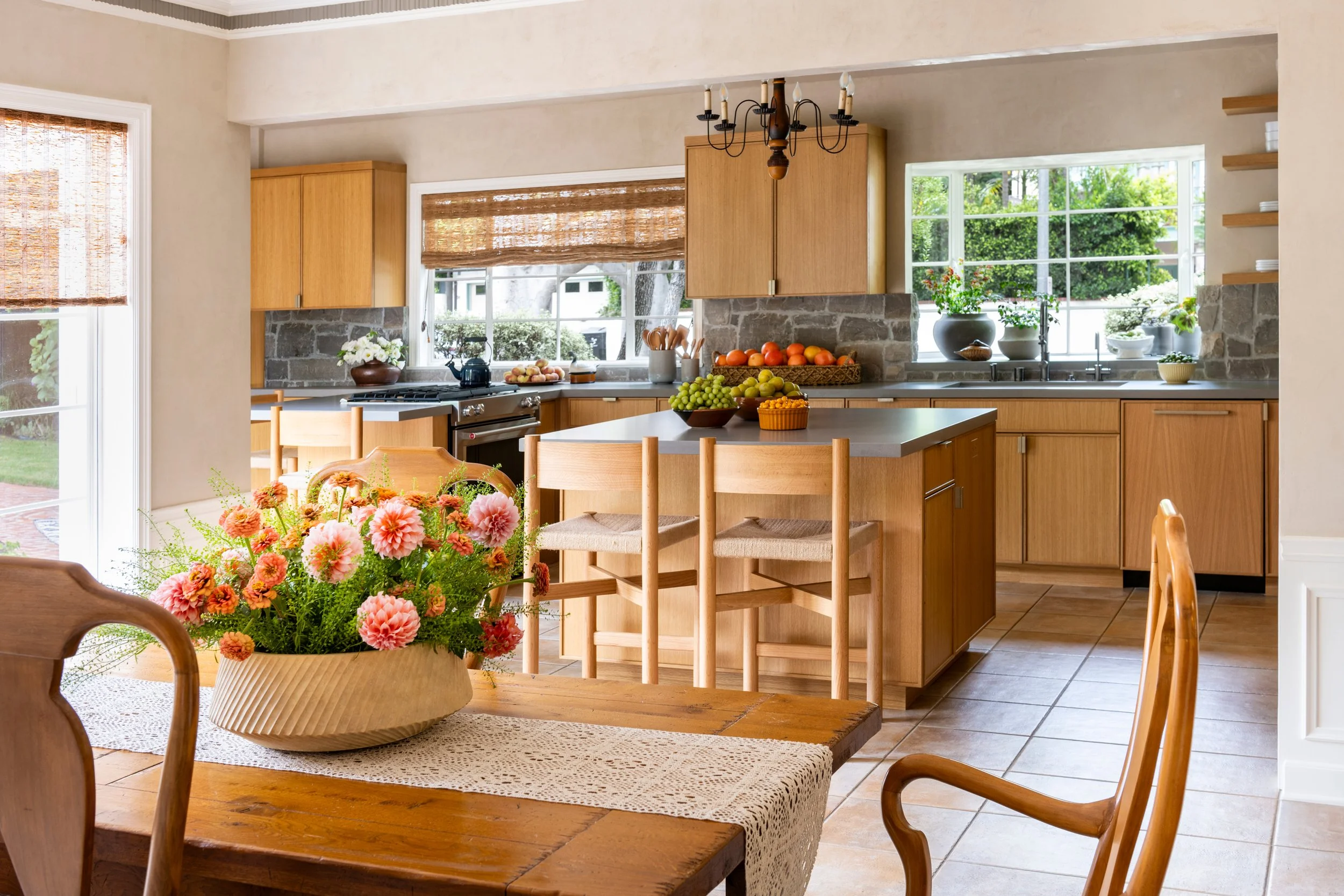
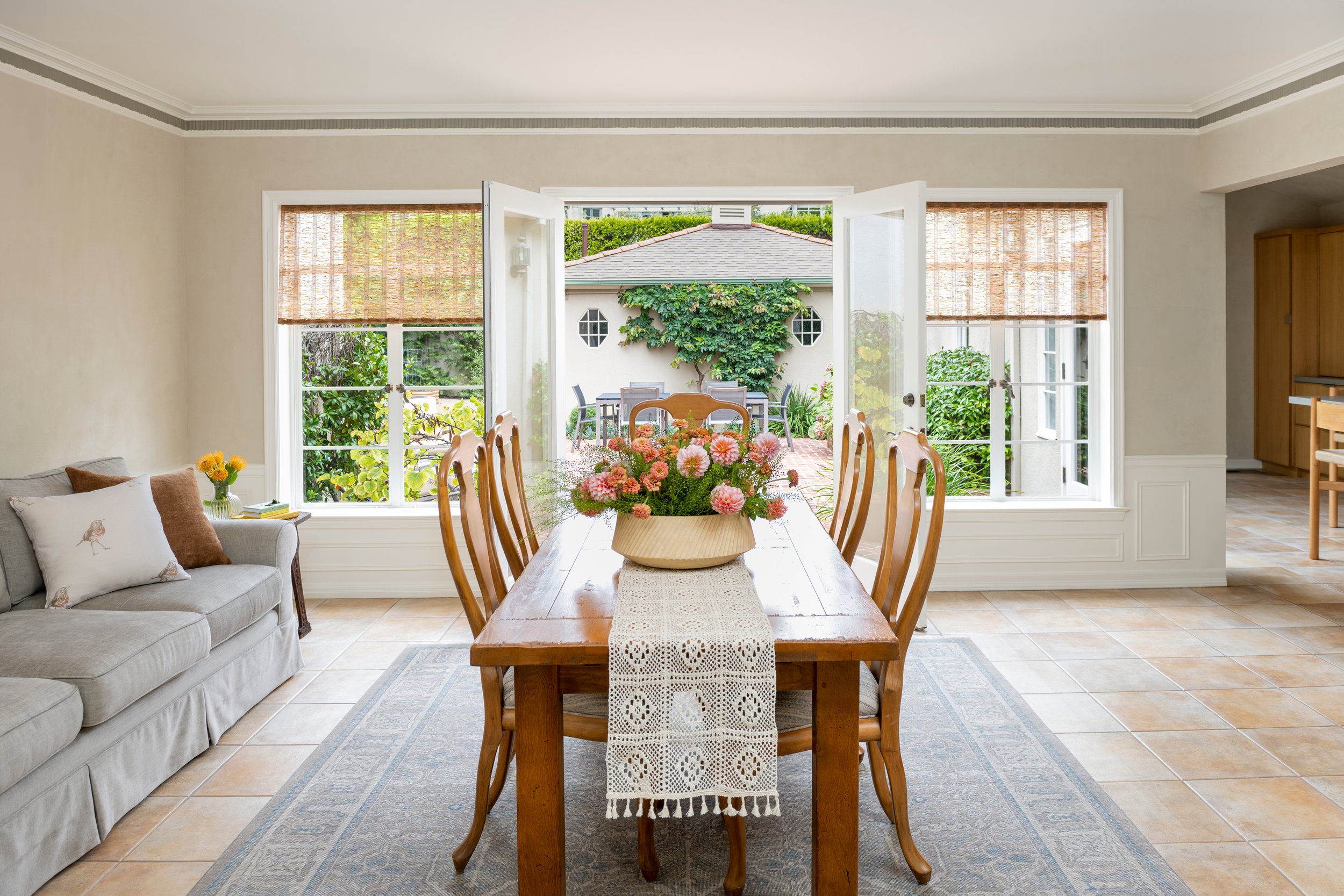
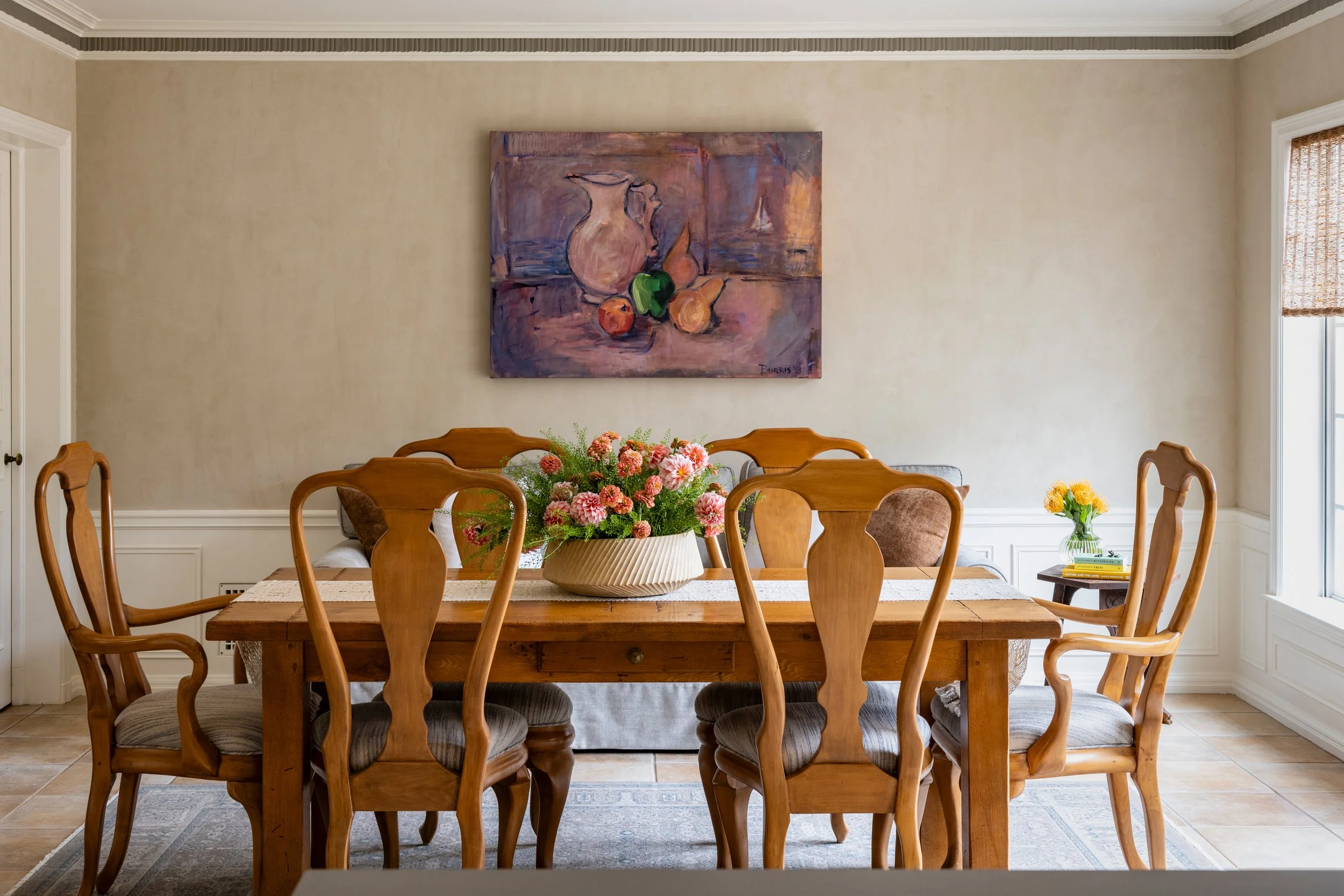
One of the primary inspirations for the project was the home’s 1930’s architecture. While the kitchen itself underwent a major structural modernization, it sits adjacent to a dining area featuring existing heritage moldings. To establish a fluid visual dialogue between the two zones, Barnard specified hand-applied plaster for the kitchen walls, utilizing traditional techniques to create a soft texture that honors the building's history. In the dining space, a deep mushroom hue provides a sophisticated, high-contrast that emphasizes the original moldings.
Circular design and resource preservation guided every step of the interior design and construction process. The original flooring was carefully salvaged and repaired, and the previous cooktop was preserved and integrated into the new layout. Select materials that could not be utilized on-site were successfully diverted from landfills and donated for reuse.
This commitment to sustainability extended directly to the furnishings. The family's long-held dining chairs were rehabilitated and reupholstered in a textured linen-and-cotton blend featuring subtle blue undertones. Nearby, white oak counter stools with woven jute seats bridge the gap between the culinary workspace and the gathering area.
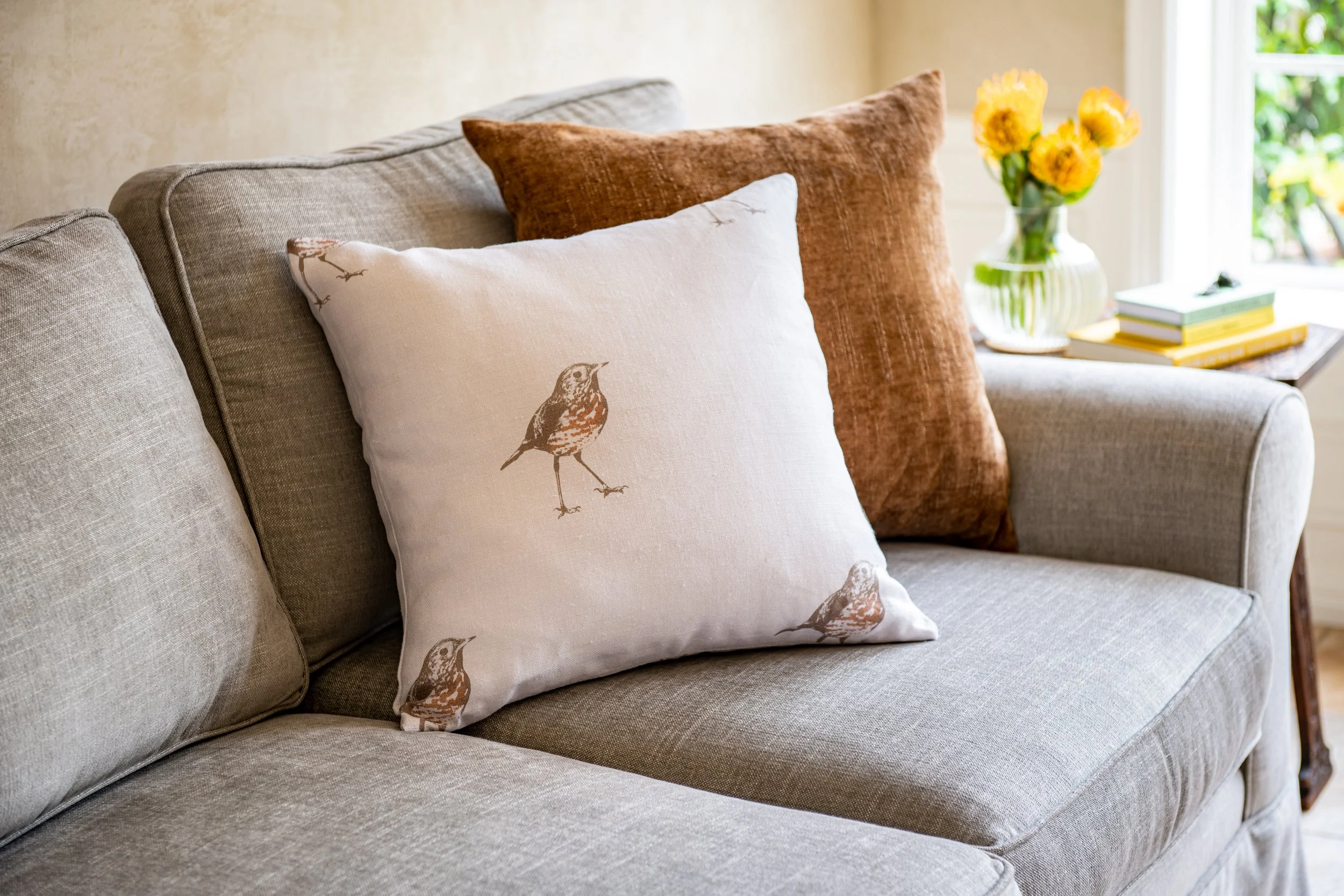
Hermit Thrush Textile by Sarah Barnard for Kale Tree.
Narrative Textiles and Ecological Awareness
Every environment Barnard creates incorporates a deeply personal layer of storytelling. The finished space is punctuated by a collection of vintage frog sculptures and ceramic duck tureens, adding a sense of curated whimsy to the disciplined architecture.
The most meaningful connection to nature appears in the custom textiles designed in the studio. Barnard introduced bespoke accent pillows featuring a detailed motif of the Hermit Thrush, a reclusive migratory bird species. By bringing the imagery of this quiet bird indoors, the design serves a narrative purpose, utilizing custom interior elements to bring visual attention to regional biodiversity and wildlife preservation.
Harmonious Home by Sarah Barnard, WELL AP + LEED AP
A Multi-Generational Sanctuary
The final outcome of the project is a space that actively champions environmental and inclusive awareness. By honoring regional craftsmanship, preserving vintage elements, and implementing smart spatial planning, the kitchen supports independent living and multi-generational comfort.
Sarah Barnard is a WELL and LEED accredited interior designer and creator of environments that support mental, physical, and emotional wellbeing. She creates highly personalized, restorative spaces that are deeply connected to art and the preservation of the environment. A certified California Naturalist, Sarah believes in celebrating nature through responsible design that works symbiotically with the local environment.
An advocate for consciousness, inclusivity, and compassion in the creative process, Sarah has appeared in Architectural Digest, Elle Décor, Vogue, HGTV, and many other publications. Sarah was recognized as a "Ones to Watch" Scholar by the American Society of Interior Designers (ASID) and has been awarded "Best of Houzz Design" for seven consecutive years. Sarah's MFA in visual arts from Claremont Graduate University informs her practice and innovative approach toward interior design as creating a living work of art.

The Inclusive Kitchen: Universal Home Design Improves Quality of Life

INTERIOR DESIGN BY SARAH BARNARD. PHOTOS BY STEVEN DEWALL. ORIGINALLY PUBLISHED IN LADESIGN QUARTERLY, BY THE LOS ANGELES CHAPTER OF THE AMERICAN SOCIETY OF INTERIOR DESIGNERS.
Universal home design is intended to improve the quality of life for all users, regardless of age or ability. When applied to the kitchen, these principles should ensure safety, efficiency, and comfort. The term was first coined in the 1970s by architect and disability rights advocate Ronald Mace. Since then, universal home design practices have been rising steadily due to its inclusion in formal design education and support from professional associations like ASID, who provide research and case studies for universal design and aging in place.
In my practice, as a WELL and LEED accredited designer specializing in healthy, sustainable interiors, I often find that planning for the future can be intimidating for clients, but doing so ensures they will be happy spending a lifetime in their homes.
I recently completed a home remodel for a retiree, who wanted the kitchen to function well when cooking for one. However, she often hosts friends and family, so it also had to be designed with entertaining in mind.

Knowing the kitchen would be widely used, we considered universal home design principles to increase its functionality. The aesthetic was inspired by the cool, collected nature of the home's coastal locale and the utility and simplicity of Scandinavian design.
I specified a U-shape layout to provide unobstructed traffic flow and ample counter space. The kitchen is open to the dining area, and there are no barriers, such as steps or a doorway, to separate them. It's a confined space, which reduces the amount of back and forth travel.
I find that most clients are unwilling to plan for a mobility challenge they may never have. While we can't always get them to agree to a design that accommodates a wheelchair, clients are often comfortable with a clearance of 54 inches for mobility aids such as a walker or cane. If designing for wheelchair mobility, knee to toe clearance allows for easy access.

I used both upper and lower cabinets to give the homeowner plenty of storage. Keeping countertops clear, in turn, mitigates safety risks. The slide-out drawers are gentler on the back — she doesn't have to bend over or reach up high to access what she needs.
A large window provides views of the outdoors and welcomes natural light. Connecting with nature, even through a window, positively impacts our wellbeing by reducing blood pressure, slowing down our heart rate, and alleviating stress. Natural light, combined with the recessed lighting and oversized pendants, relieves eye strain and helps the homeowner safely perform tasks like chopping or peeling.
For the hardware, I chose large, integrated pulls instead of knobs because they're easier for stiff or shaky fingers to grasp. According to the Centers for Disease Control, 54.4 million Americans are affected by arthritis, the majority of whom are 65 and older. While a knob requires the user to bend their fingers to latch onto it, a cabinet with a pull can be opened with limited dexterity using only one or two fingers.

The homeowner preferred a single-lever faucet; however, if increased accessibility is the primary concern, touch-less faucets can be an excellent alternative. Clients may be hesitant to select this high-tech feature if their experience has been limited to unreliable public restrooms. Fortunately, more and more stylish options for residential spaces are becoming available.
If the homeowner were to change her mind, the electrical components could be concealed in a base cabinet or behind an access panel. It's essential to consider your surroundings when installing a touch-less model as some products will not operate correctly if they are in proximity to other metals, like a copper sink or stainless-steel backsplash.
The French door refrigerator can be opened without much exertion thanks to its oversized pulls, and the efficient design means everyday ingredients are displayed for easy access. It has a well-lit interior to aid those with vision loss.

The kitchen countertop is white engineered quartz with subtle gray veining. This human-made material is durable and stain-resistant, requiring less maintenance on behalf of the homeowner. People with impaired vision will be better able to identify the kitchen tools and ingredients in front of them, as the brilliant white creates high contrast. I sourced a cream-colored matte glass tile backsplash to prevent surface glare.
Natural French oak flooring was used throughout the open-concept space, eliminating any unsafe transitions. The material has a matte finish and was designed to be slip-resistant — an absolute must in the kitchen where spills are common. It also feels comfortable underfoot and has more spring to it than other flooring types, which is easier on the joints.
Open shelving on the back of the peninsula adds a pop of color to the space. This bookshelf created an opportunity to display some of her most treasured collectibles, which spark joy each and every time she sees them.

The antique rosewood dining table, sourced from Thailand by the homeowner, is located within close reach of the kitchen, so heavy platters of food needn't be carried far. The open floor plan makes it easy to converse with guests who are seated at the table while she's whipping up hors d' oeuvres in the kitchen. The built-in server provides an additional surface to set down dishes and clears up the dining table to prevent any accidents.
Universal home design can and should be both stylish and seamless. Reexamine the products, materials, and finishes you already use, and consider how they might be implemented in a way that supports people of all abilities. With this project, the homeowner was conscious of her potential future needs and entrusted us with creating a healthy, natural, and minimalist space that would suit her well in the long-term.
Sarah Barnard, WELL AP, and LEED AP designs healthy, happy, personalized spaces that connect deeply to nature and art. Empathy and mindfulness are the foundation of her practice creating healing, supportive environments that enhance life.