


Interior Design Renderings: How Photorealistic Drawings Enhance Home Remodeling and Decorating

RENDERING

BUILT DESIGN
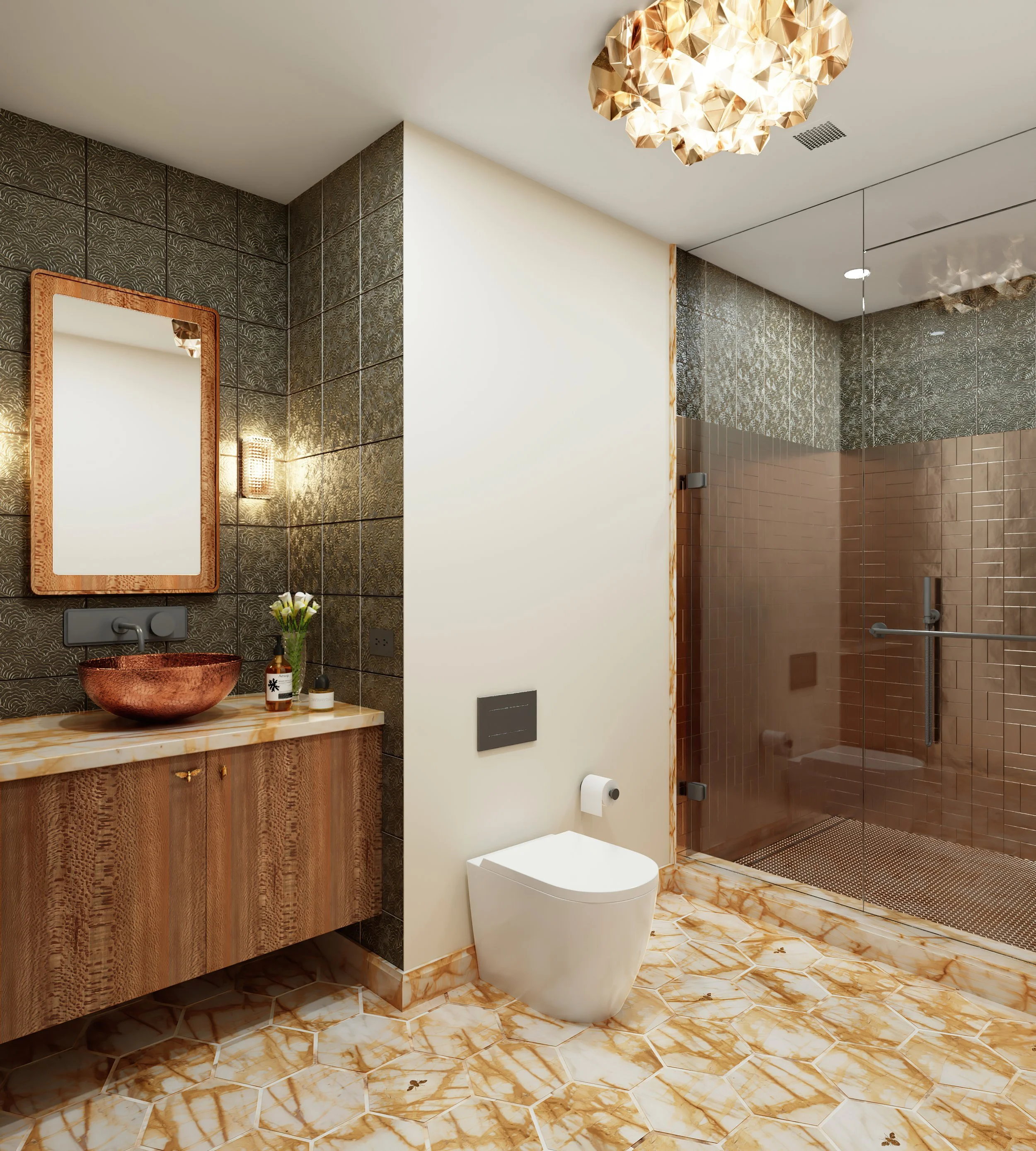
When designing a new space for a client, one of the clearest ways to help illustrate what the interior design may look and feel like is through renderings.

RENDERING

BUILT DESIGN
In the rendering process, designers take information from AutoCAD files and apply the selected materials to create a realistic drawing that can help clients envision the final design.

AUTOCAD DRAWING

RENDERING

BUILT DESIGN
While the AutoCAD files can share many crucial project details, having a 3D rendering can help illustrate how materials are working together and envision how the layout may affect the experience of being in the space.
RENDERING

BUILT DESIGN
This additional information and understanding can help clients recognize any aspects of the design they may want to change before the construction process.

RENDERING

BUILT DESIGN
While it's possible to complete a project without renderings, they add immense value to the design process, visually communicating designs with clarity, contributing to positive design outcomes and our client's happiness and satisfaction.
Sarah Barnard, WELL AP + LEED AP, is a leading designer of personalized, sustainable spaces that support mental, physical, and emotional wellbeing. An advocate for consciousness, inclusivity and compassion in the creative process, Sarah’s work has been recognized by Architectural Digest, Elle Décor, Vogue, HGTV, and many other publications. Sarah was recognized as a “Ones to Watch” Scholar by the American Society of Interior Designers (ASID).

The Healing Power of Interior Design: Design's Impact on People, Places and the Planet

Leading wellness home designer, Sarah Barnard, WELL AP + LEED AP speaks as part of the American Society of Interior Designers (ASID) Virtual Conference.
Transcript: Hi, I'm Sarah Barnard, WELL AP, LEED AP and ASID Ones to Watch Scholar. Design has the power to profoundly impact healing. As we collectively navigate this new way of living many of us face challenges maintaining our wellbeing amid trauma and chronic ambiguous loss. When we embrace empathy as the foundation of our design process we help to increase agency and reduce adversity. Together, we can make all built environments supportive, restorative spaces.
What’s Next? Design’s Impact on People, Places and Planet (Opening Keynote) and State of the Society. "ASID turns the traditional keynote on its head with a virtual, crowd-sourced program mining the best names in design as they explore the meaning of "Design Impacts Lives." Then join ASID leaders for the annual State of the Society address...Design has the power to impact lives and tackle challenges on a global scale. What’s next? Hear from those impacting design and those impacted by design in a collaborative keynote that shows the power of community in the digital age. This special, crowd-sourced program will highlight diverse thoughts from clients, end users, consultants, manufacturers, educators, students and of course, designers as we share what’s next for design and the personal stories demonstrating the impact the profession has on the people and world around us."

Sarah Barnard is a WELL and LEED accredited designer and creator of environments that support mental, physical and emotional wellbeing. She creates highly personalized, restorative spaces that are deeply connected to art and the preservation of the environment. An advocate for consciousness, inclusivity, and compassion in the creative process, Sarah’s work has been recognized by Architectural Digest, Elle Décor, Real Simple, HGTV and many other publications. Sarah was recognized as a “Ones to Watch” Scholar by the American Society of Interior Designers (ASID).

Cosmopolitcal Design: A New Modality Harnesses the Connection between Home and Nature

With global society and climate in flux, mapping out new ways to live and create in the world has become an essential project. Amid the competing approaches to this transformation, the philosophical school of cosmopolitics, as its name suggests, addresses this challenge in a uniquely holistic way and presents an entirely new perspective on the human relationship with the world.
Albena Yaneva, in her introduction to What is Cosmopolitical Design?: Design, Nature, and the Built Environment, explains that “Cosmopolitical thinkers...see nature as no longer being unified enough to provide a stabilizing pattern for the experience of humans; it is not ‘out there,’ a simple backdrop for human activities.” Cosmopolitics distinguishes itself from cosmopolitanism by positing a relationship with nature and its non-human denizens defined by cohabitation rather than dominance. As Yaneva writes, “These thinkers abandon the modernist idea of nature as being external to the human experience—a nature that can be mastered by engineers and scientists from outside.”

How does this cosmopolitical perspective manifest in the world of home design? To Yaneva, “It challenges design...to encourage the enactment of new relationships both within and potentially outside the designed space.” Cosmopolitical home design is deeply tied to its locality and integrated with its environment. Yaneva describes cosmopolitical design as “required more than ever to address the primordial question of what it means to live together. That is, the co-existence of humans and non-humans, of how they share space and find ways to live together in peace.”
Because the cosmopolitical way of thinking is so all-encompassing, the approaches to incorporating cosmopolitics into home design are fittingly varied and can be scaled to projects as vast as urban planning or as circumscribed as landscaping a backyard. Manifestations of cosmopolitical home design can range from home renovation with the local climate in mind (for example, placing windows for optimal warmth or cooling of interior spaces) to pollinator-friendly gardens teeming with plants indigenous to their region.

To interior designer Sarah Barnard, WELL AP + LEED AP, bringing cosmopolitics into her home design practice means cultivating spaces that are specific both to her clients and as well as to the local environment and that encourage an accord with the natural world. Sarah says, “Finding ways to harmonize the design of a space to a specific environment instead of working against it is both challenging and rewarding. When a designed space and its greater environment are fully integrated, the effect is almost easier to feel than observe.”
Sarah explains, “I always look for opportunities to create inviting connections between the indoors and the outdoors. This continuity with the natural world is beneficial for emotional and mental health—it’s not just a source of beauty but nourishment.” For an artist’s bungalow, Sarah created a visual continuity between lush indoor plant life and the garden outside, and then took it a step further. Sarah designed the outdoor garden to support pollinators, birds, and other wildlife. The garden is a Certified Monarch Waystation, providing resources to support migrating Monarch butterflies by providing food, water, cover. Sarah said, “Designing homes for wellbeing doesn’t have to stop at the comfort of the client. Incorporating elements of design that nurture the local ecology deepen our relationship with nature and result in spaces that are unified with their surroundings.”

This particular expression of cosmopolitical home design can be achieved even with limited outdoor space. For an oceanview penthouse, Sarah transformed a balcony into an inviting habitat for local and migrating wildlife by adding potted olive trees and an herb garden. “Considering plants not just for their decorative beauty but also what they can offer to the local environment is a concept that works on virtually any scale,” Sarah says. To decorate the interiors, Sarah selected natural and eco-friendly furnishings and textiles, adding that “Organic materials have a gentler environmental impact, and from a wellness perspective, are kinder to the people who live with them.”

When selecting materials and furnishings for home decorating, Sarah often looks to her clients’ priorities to guide her approach to creating spaces that embody a cosmopolitical perspective. For one high-rise suite, the owner’s love of animals was demonstrated not only through the choice of art and decorative objects, but also wanted this care toward animals extended outside home design and beyond aesthetics. Sarah addressed this by using exclusively vegan materials and furnishings for this project. Sarah explains, “No space exists in a vacuum—every object and material we use has a footprint that goes well beyond the front door, so considering the story of the materials we use and the impact that they have on the world is a way to invite cosmopolitical ideas into home design.”

Sustainable materials can also have unexpected origins. For the kitchen of a historic craftsman bungalow, Sarah installed a countertop made of recycled beer bottles, a non-extractive alternative to a more traditional quarried stone countertop. “Not only is the material beautiful and environmentally conscious, but there’s also a little whimsy in how it reinvents something ordinary and adds character to the space,” Sarah says. The implications behind cosmopolitical home design may be weighty, but there is always room for playfulness.

“When I look at my work from a cosmopolitical perspective,” says Sarah, “I see tremendous opportunity for creativity. We are seeing our way of life change in real-time, and as a home designer, I’m lucky to be able to be a part of facilitating that transformation for my clients.”

Sarah Barnard is a WELL and LEED accredited designer and creator of environments that support mental, physical and emotional wellbeing. She creates highly personalized, restorative spaces that are deeply connected to art and the preservation of the environment. An advocate for consciousness, inclusivity, and compassion in the creative process, Sarah’s work has been recognized by Architectural Digest, Elle Décor, Real Simple, HGTV and many other publications. Sarah was recognized as a “Ones to Watch” Scholar by the American Society of Interior Designers (ASID).

The Healing Power of Home: Sustaining and Nourishing our Bodies and Minds

CUSTOM KITCHEN DESIGN BY SARAH BARNARD, PHOTO BY STEVEN DEWALL.
As we collectively navigate this new way of living, I am thinking of you and your family and wishing wellness and security. With so many unknowns, I am grateful for the sureness of a community that uplifts with compassion, resilience, and ingenuity, and offers inspiration to forge forward.
During a time when our world feels new and uncertain, our studio is drawing on the core foundational beliefs and principles behind our approach to home design. We create spaces that support health, emotional security, and wellness, that is the bedrock of our work. These ideals go beyond our creative process and into our working methods of designing homes. As a studio, we are building upon many of the systems we've previously had in place.

BESPOKE AMERICAN WALNUT KITCHEN CABINETS PAIRED WITH HANDMADE CERAMIC TILES BY CALIFORNIA BASED ARTISANS. INTERIOR DESIGN BY SARAH BARNARD, WELL AP + LEED AP. PHOTO BY STEVEN DEWALL.
Our studio has always aimed to work with local artisans and craftspeople when possible, and value these relationships now more than ever. Many supply chains are experiencing disruptions throughout the home design industry. We are working together with trusted vendors to source materials and find creative solutions during this difficult time.
In our homes, this time has offered an opportunity to examine our routines, and to look at our needs. Health, functionality, and wellbeing informed our process before the spread of COVID-19, and these factors are more crucial than ever as we continue to build supportive spaces for you and your family through mindful home design.

INTERIOR DESIGN BY SARAH BARNARD, PHOTO BY STEVEN DEWALL.
Many of us are facing challenges in caring for our loved ones, evolving and uncertain circumstances with work, homeschooling children, and maintaining our physical and emotional wellbeing. In addressing these struggles, we are turning to our homes for solutions, realizing more than ever the need for multi-functional and high performing living spaces.
Our regular team meetings are an opportunity for the studio to brainstorm and problem solve collectively, and recent conversations frequently turn to personal solutions for managing this time at home. We wish to extend this conversation to our community and clients and offer some of our favorite approaches for adapting our home design to these changing times.

COLORS INSPIRED BY NATURE CREATE THE PALETTE FOR THIS TRADITIONAL HOME. INTERIOR DESIGN BY SARAH BARNARD, PHOTO BY STEVEN DEWALL.
HOME HEALING QUICK TIPS
Structure your spaces for ease of movement, connectivity, and peace of mind. Move your workspace in front of your favorite exterior view.
Open your windows and cross-ventilate your home any day weather permits to improve indoor air quality and enjoy the mood-lifting benefits of watching birds and butterflies.
Scoot your coffee table to the side for extra room to play and exercise, and set it up with floor pillows for a new homework station for children.
Move your favorite painting to the room where you spend the most time, whether it's a home office, kitchen, or nursery, and enjoy the beauty and transcendence of art.
Use your occasion dishes more often, and if you're spending more time than you'd like inside the kitchen, bring your cutting board to the back yard.
Think about how your home is supporting your physical health and invest in materials that benefit indoor air quality. Be mindful when bringing new items in your home, avoid air fresheners, and fill vases with aromatic mint and rosemary.
Make sure your bedroom is supporting your sleep habits by clearing out clutter and adjusting lighting to meet your needs.
Carve out time with nature, even if it is tending to a favorite indoor plant or watching hummingbirds in your garden.

Be resourceful, get creative, trust your instincts, and listen to what your mind and body needs, and mold your home to fulfill those needs. And you can always call us if you need some ideas. Our studio and local craftspersons are here to serve.
While we discover methods to care for ourselves, we have learned the necessity and power of turning to others for support and assistance. We offer our support by helping create functional homes so that your safe place is also your ideal space.
We hope that this time to reassess, rearrange, and reconnect, can carry us into a healthier and more positive future, supported by homes that sustain and nourish our bodies and minds.

Sarah Barnard, WELL AP, and LEED AP designs healthy, happy, personalized spaces that connect deeply to nature and art. Empathy and mindfulness are the foundation of her practice creating healing, supportive environments that enhance life.

The Inclusive Kitchen: Universal Home Design Improves Quality of Life

INTERIOR DESIGN BY SARAH BARNARD. PHOTOS BY STEVEN DEWALL. ORIGINALLY PUBLISHED IN LADESIGN QUARTERLY, BY THE LOS ANGELES CHAPTER OF THE AMERICAN SOCIETY OF INTERIOR DESIGNERS.
Universal home design is intended to improve the quality of life for all users, regardless of age or ability. When applied to the kitchen, these principles should ensure safety, efficiency, and comfort. The term was first coined in the 1970s by architect and disability rights advocate Ronald Mace. Since then, universal home design practices have been rising steadily due to its inclusion in formal design education and support from professional associations like ASID, who provide research and case studies for universal design and aging in place.
In my practice, as a WELL and LEED accredited designer specializing in healthy, sustainable interiors, I often find that planning for the future can be intimidating for clients, but doing so ensures they will be happy spending a lifetime in their homes.
I recently completed a home remodel for a retiree, who wanted the kitchen to function well when cooking for one. However, she often hosts friends and family, so it also had to be designed with entertaining in mind.

Knowing the kitchen would be widely used, we considered universal home design principles to increase its functionality. The aesthetic was inspired by the cool, collected nature of the home's coastal locale and the utility and simplicity of Scandinavian design.
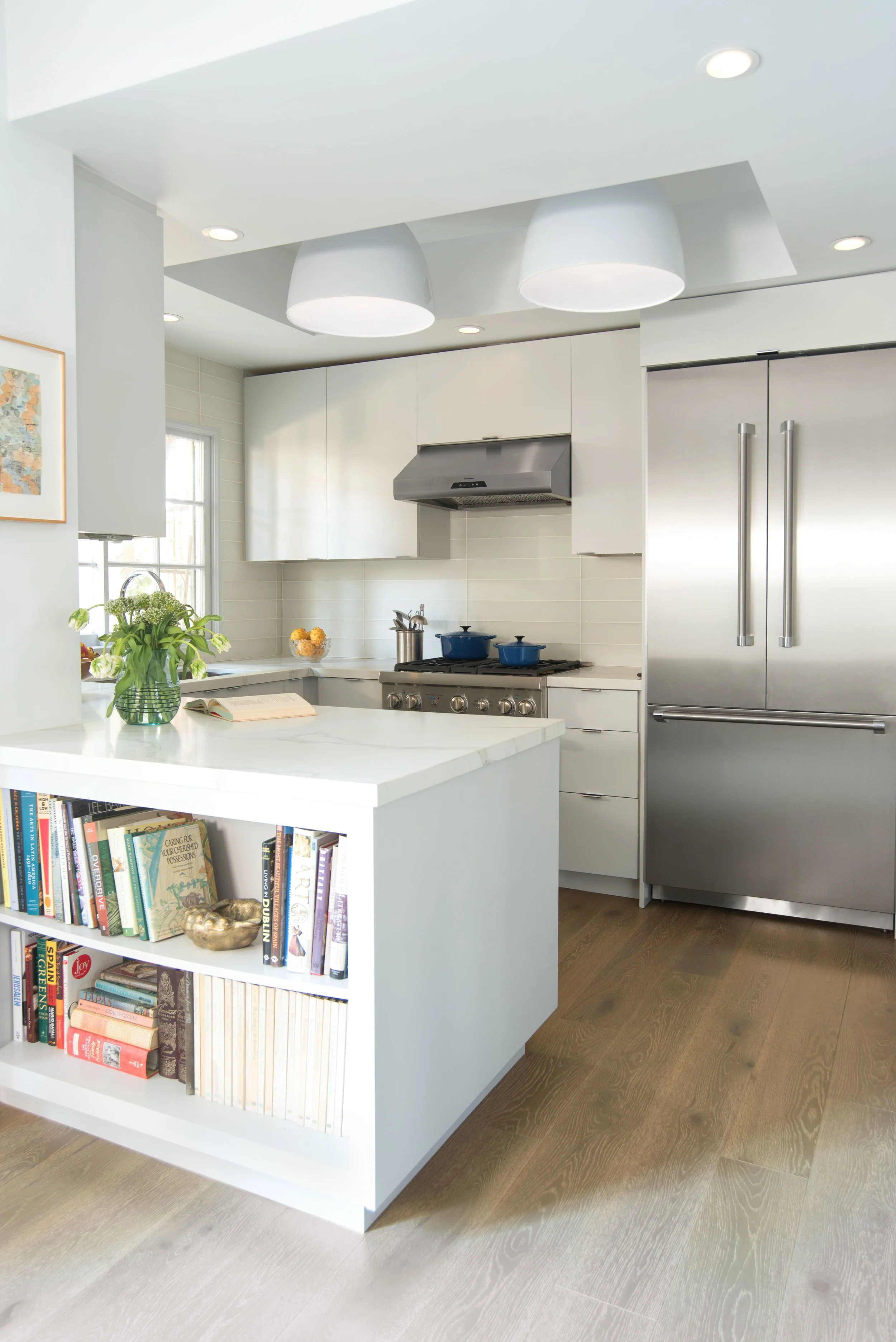
I specified a U-shape layout to provide unobstructed traffic flow and ample counter space. The kitchen is open to the dining area, and there are no barriers, such as steps or a doorway, to separate them. It's a confined space, which reduces the amount of back and forth travel.
I find that most clients are unwilling to plan for a mobility challenge they may never have. While we can't always get them to agree to a design that accommodates a wheelchair, clients are often comfortable with a clearance of 54 inches for mobility aids such as a walker or cane. If designing for wheelchair mobility, knee to toe clearance allows for easy access.

I used both upper and lower cabinets to give the homeowner plenty of storage. Keeping countertops clear, in turn, mitigates safety risks. The slide-out drawers are gentler on the back — she doesn't have to bend over or reach up high to access what she needs.
A large window provides views of the outdoors and welcomes natural light. Connecting with nature, even through a window, positively impacts our wellbeing by reducing blood pressure, slowing down our heart rate, and alleviating stress. Natural light, combined with the recessed lighting and oversized pendants, relieves eye strain and helps the homeowner safely perform tasks like chopping or peeling.
For the hardware, I chose large, integrated pulls instead of knobs because they're easier for stiff or shaky fingers to grasp. According to the Centers for Disease Control, 54.4 million Americans are affected by arthritis, the majority of whom are 65 and older. While a knob requires the user to bend their fingers to latch onto it, a cabinet with a pull can be opened with limited dexterity using only one or two fingers.

The homeowner preferred a single-lever faucet; however, if increased accessibility is the primary concern, touch-less faucets can be an excellent alternative. Clients may be hesitant to select this high-tech feature if their experience has been limited to unreliable public restrooms. Fortunately, more and more stylish options for residential spaces are becoming available.
If the homeowner were to change her mind, the electrical components could be concealed in a base cabinet or behind an access panel. It's essential to consider your surroundings when installing a touch-less model as some products will not operate correctly if they are in proximity to other metals, like a copper sink or stainless-steel backsplash.
The French door refrigerator can be opened without much exertion thanks to its oversized pulls, and the efficient design means everyday ingredients are displayed for easy access. It has a well-lit interior to aid those with vision loss.

The kitchen countertop is white engineered quartz with subtle gray veining. This human-made material is durable and stain-resistant, requiring less maintenance on behalf of the homeowner. People with impaired vision will be better able to identify the kitchen tools and ingredients in front of them, as the brilliant white creates high contrast. I sourced a cream-colored matte glass tile backsplash to prevent surface glare.
Natural French oak flooring was used throughout the open-concept space, eliminating any unsafe transitions. The material has a matte finish and was designed to be slip-resistant — an absolute must in the kitchen where spills are common. It also feels comfortable underfoot and has more spring to it than other flooring types, which is easier on the joints.
Open shelving on the back of the peninsula adds a pop of color to the space. This bookshelf created an opportunity to display some of her most treasured collectibles, which spark joy each and every time she sees them.

The antique rosewood dining table, sourced from Thailand by the homeowner, is located within close reach of the kitchen, so heavy platters of food needn't be carried far. The open floor plan makes it easy to converse with guests who are seated at the table while she's whipping up hors d' oeuvres in the kitchen. The built-in server provides an additional surface to set down dishes and clears up the dining table to prevent any accidents.
Universal home design can and should be both stylish and seamless. Reexamine the products, materials, and finishes you already use, and consider how they might be implemented in a way that supports people of all abilities. With this project, the homeowner was conscious of her potential future needs and entrusted us with creating a healthy, natural, and minimalist space that would suit her well in the long-term.
Sarah Barnard, WELL AP, and LEED AP designs healthy, happy, personalized spaces that connect deeply to nature and art. Empathy and mindfulness are the foundation of her practice creating healing, supportive environments that enhance life.

Think Universal

In a recent article in "Times Leader," Nancy Mattia explored universal home design with interior designer Sarah Barnard.
In the article, Mattia discusses the core ideas and considerations behind universal design when designing a residential or commercial environment.

"'Universal design takes into account a broad range of users and abilities,' says Sarah Barnard, a Los Angeles home designer. 'It makes sense for designers and builders to plan our projects with that in mind since great design should accommodate the widest number of users - ourselves, our kids, our parents, our grandparents.'"

Considering a range of users, Sarah can create designs welcoming to a variety of guests that ensure the design's longevity as the client's needs shift as their family grows and ages.

When discussing home design details to consider, Sarah turned to room transitions and flooring, noting that decisions like tile size may affect a space's safety and functionality. Small tiles use more grout, creating larger traction areas on the floor, while oversized tiles can increase the risk of slipping.

On discussing accessibility and planning with her clients, Sarah shared that "'No one wants to think about a less-than-ideal future, when they may need help getting around and living in their home.' […] So rather than plan for tomorrow, she asks reluctant clients to plan for today: 'What would happen if one of your kids gets a sports injury and can't make it up the stairs to the bedroom or bathroom?' she asks them. Most people eventually see the light."

Originally published on Ion Television, where the complete article is available.
Sarah Barnard designs healthy, happy, personalized spaces that connect deeply to nature and art. Empathy and mindfulness are the foundation of her practice creating healing, supportive environments that enhance life.

Women-led businesses we love: Cultura Collection, a new lifestyle brand with an ethos of wellness and sustainability

Sarah Barnard Design recently attended an exclusive launch party in Santa Monica for Cultura Collection, a new online collective that retails quality products from conscious, purposeful brands and serves as a community hub for global citizens interested in travel, music, dance and wellness.

Founder Renimah Al-Mattar, a longtime friend of Barnard’s, launched Cultura Collection after 15 years in the corporate world. “I started this brand because I believe in the power of wellness,” says Al-Mattar. “For me, a healthy lifestyle started with immersing myself in the type of exercises that brought me joy like music and dance and yoga, but it also extended to eating clean and using products that are eco-conscious and free of chemicals and harmful additives. All of the products I carry support this ethos.”


The launch party was held on the rooftop of a commercial building in downtown Santa Monica, where guests snapped selfies against a succulent backdrop, nibbled on hors d'oeuvres prepared by a local restaurant, and browsed the selection of wellness products, handcrafted clothing, paper goods and delicious vegan chocolates.


Al-Mattar is committed to mentoring, supporting and empowering women and the majority of the brands represented in Cultura Collection are women-owned and operated. “We still live in an age where it is more difficult for women-led businesses to have access to capital or even marketing and distribution at times,” says Al-Mattar. “My goal is to use my online platform to tell the stories behind these unique brands.”


This message resonates with Barnard, whose own online boutique storefront, Kale Tree, supports the work of local artisans producing sustainable, ethically-made home goods. Lifting up fellow women-led businesses is something Barnard is particularly passionate about.
“I’m so happy to see what Renimah has accomplished in her support of small makers and women in particular,” says Barnard. “I’m looking forward to following her business as it grows.”

The successful launch of the Cultura Collection brought together like-minded individuals to celebrate well-made products, artisan communities and entrepreneurship. Barnard was grateful to have been in attendance for Al-Mattar’s first and most important business milestone. You can shop the Cultura Collection online at culturacollection.com (they’ve got some great holiday gifts!) or follow them onsocial media.

Meet the Bedroom that Feels Like a Hug

Award-winning Interior Designer and American Society of Interior Designers (ASID) Ones to Watch Scholar Sarah Barnard has unveiled a happiness-inducing home design project— the bedroom that feels like a hug.
“We need a safe, restorative space to help our bodies rest and recharge,” says Barnard. A hug has many of the same characteristics, it makes us feel secure and comforted, and when we let go of the embrace, there’s a rush of oxytocin that leaves us with a sense of lightness.

Oxytocin is a neurotransmitter that acts on the brain’s emotional center, promoting feelings of contentment, reducing anxiety and stress. When you hug often, your level of oxytocin increases, which strengthens social bonds. Hugging also stimulates dopamine and serotonin production in the body. Dopamine is a pleasure hormone that’s part of the brain’s reward mechanism, while serotonin is responsible for maintaining mood balance.

The jumping-off point for the bedroom was the curvilinear bed frame, an award-winning design by Autoban, carved from American black walnut. Its silhouette mimics the action of hugging, and the interior is lined with purple velvet, blending the natural texture with dark, feminine styling. To further the feeling of intimacy, Barnard chose a non-toxic, king-size organic coconut mattress topped with a reversible duvet in a custom, color-blocking scheme.

The word ‘phantasmagoria’ is scrawled across the wall behind the bed — a neon homage to the images that flicker by in our dreams. The client, a self-proclaimed bookworm, chose the word herself after much deliberation. High-pile black carpeting delivers a softness underfoot, and layered window treatments allow the client to sleep undisturbed in total darkness. “Window coverings serve many purposes,” says Barnard. “Not only do they block out sunlight and create privacy, but they add a decorative element to the room that unifies the composition.”

The two-tone wall color, a marriage of plum and lavender, envelops the space. These hues were intentionally chosen to saturate the formerly bright bedroom, establishing a cozy, cocoon-like atmosphere. “The ceiling color extends to the walls, linking the two colors together in a way that the sharp ceiling line never could,” explains Barnard.
Hanging above the bespoke American Walnut nightstands are a pair of cloud-like pendant lights that emit a soft glow. A wall of concealed storage eliminates visual clutter, which can heighten our anxiety levels and impact sleep quality. Upholstered benches at the foot of the bed and by the entryway provide a comfortable spot to rest or dress in the morning.

It was the client who initially requested the space “feel like a hug,” which Barnard describes as a “brilliant explanation of what good bedroom design should do.” The revamped primary bedroom, a physical embodiment of a hug, provides all the comfort, safety, and well-being her client needs to settle into a restful slumber and wake up feeling warm and fuzzy.
See the rest of this home here Featured in LA Dreams Magazine

Unpacking the “KonMari” trend: The personalization of ultra-home organizing

A TIDY, MINIMALIST KITCHEN IN WITH OPEN SHELVING TO KEEP COOKBOOKS CLOSE AT HAND.
Before Marie Kondo, there was William Morris, a renowned 19th-century British designer who lived by this philosophy: “Have nothing in your house that you do not know to be useful or believe to be beautiful.”
Kondo has a more stringent and less personalized approach. She encourages followers of her KonMari method to grasp each item in their hands and evaluate their body’s reaction to it. If it makes you feel uplifted, put it in the keep pile. If it causes you to feel weighed down, in the donation bin it goes. But here’s the thing — there’s no one-size-fits-all organizing method. Whether you prefer a pragmatic approach à la William Morris or Kondo’s emotionally-guided decision-making process, figuring out what works for you and your lifestyle is paramount.

FLOATING SHELVES PROVIDE VERTICAL STORAGE IN THIS COMPACT HOME OFFICE FEATURING AN IMPRESSIVE VIEW OF THE SHORELINE.
“The method of organization should support the client’s daily routine and activities,” says interior designer Sarah Barnard, who specializes in healthy, happy, personalized spaces. “What items do they use most regularly? How do they envision the space? Having a clear goal will start to inform the plan.”
Barnard provides organizing services for clients in every stage of life, from young professionals with little spare time to retirees with reduced mobility. “One of the main reasons people ask for our help is because they are overwhelmed and don’t know where to start,” explains Sarah. “Our goal is to streamline the process by setting up personalized systems that can be easily maintained.”

A TIDY STUDIO BOOKCASE KEEPS FAVORITE BOOKS CLOSE AT HAND. A PAINTING BY ABBY SIN, SCULPTURE, CERAMICS AND ANTIQUES LIGHTEN AND BRIGHTEN THE DISPLAY.
Sarah recently tackled a two-week-long organizing project for a busy family of five. Recognizing that the experience can be quite invasive, Sarah and her team went to great lengths to ensure the family felt comfortable. Shoe covers were worn to prevent anyone from tracking in allergens, and cotton gloves were required when handling any personal items.

VERY POSSIBLY THE BEST BOYS' BEDROOM EVER! NEWLY BUILT WALLS ALLOW FOR CUSTOM-MADE AMERICAN WALNUT BUNK BEDS AND FLOATING DESKS FOR EACH BOY.
Clearing away unnecessary clutter was the family’s aim, and Sarah’s team employed the ‘keep, toss, donate’ method to get it all done. “We sorted our client’s clothing by season, removing the winter wear and storing it in the hallway closet,” says Sarah. “Now, primary closets contain only half the amount of items, making them more spacious and easier to navigate.”

PERSONALIZED TOOLS FOR STAYING ORGANIZED! EACH BOY'S DESK INCLUDES A UTILITY WALL WITH A CHALKBOARD, PIN BOARD, METAL PANEL FOR MAGNETS AND WIPE OFF BOARD CALENDAR.
In addition to freeing up closet space in the home, Sarah Barnard Design took on the organizing of a child’s craft room. “The client’s youngest son had received arts and craft gifts for each holiday of his young life,” notes Sarah. “This resulted in a wonderful collection, but also a lot of bits and pieces— to the point where the craft room was largely unusable.” The team carefully combed through his many art supplies, donating lesser-used items to create space for the most cherished ones.
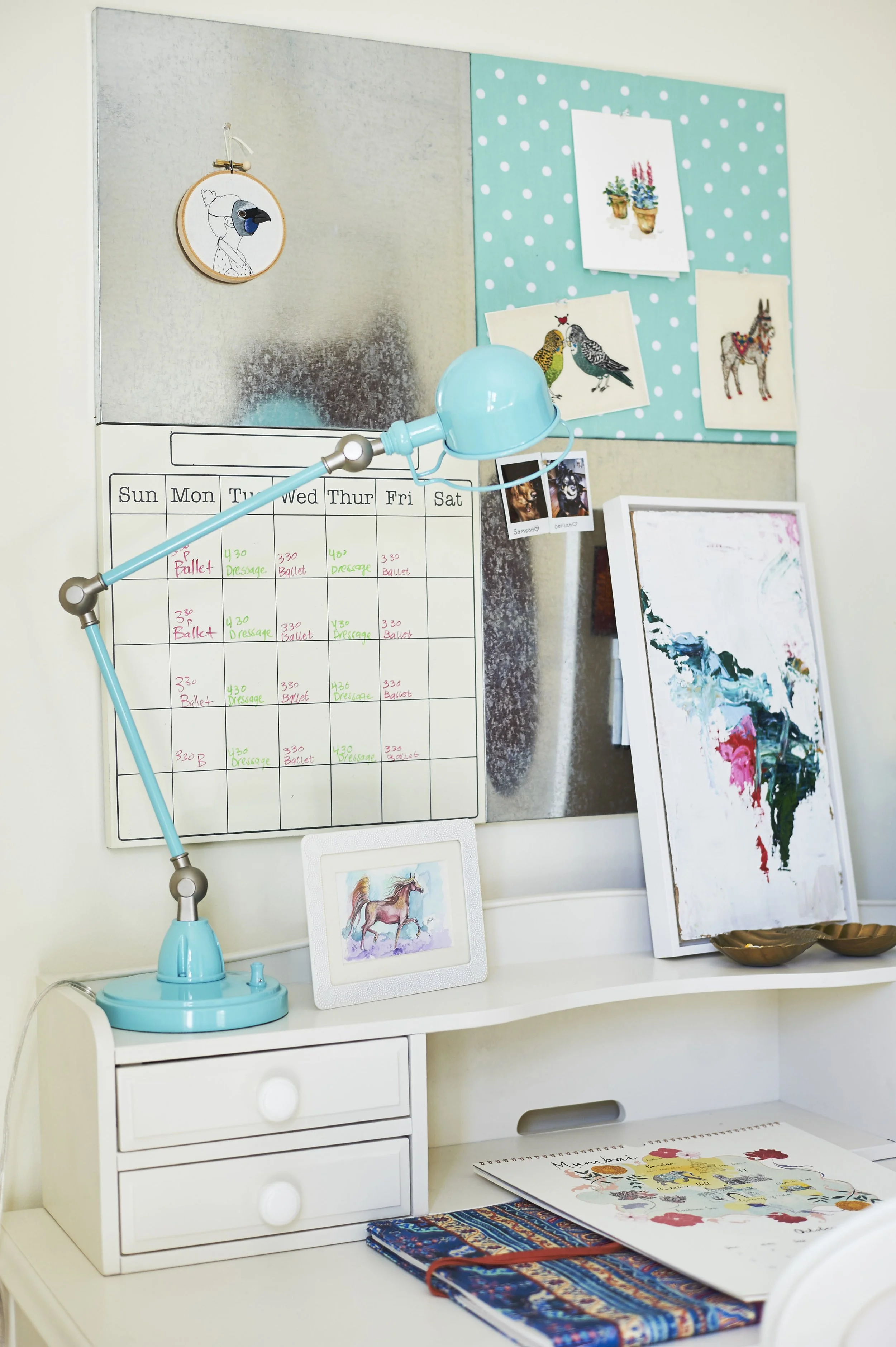
AN ARTICULATING DESK LAMP ADDS A POP OF AQUA TO THE TEEN GIRL'S STUDY AREA.
Once an organizing project is complete, Sarah’s clients have a renewed sense of self. Decluttering is a lifestyle change, but the benefits are well worth the effort. “It often inspires a newfound appreciation for their possessions and increased productivity in the space,” says Sarah.

A CREATIVE SPACE WITH A CUSTOM SOFA IN WOOL FELT, SIDE TABLES MADE OF NATURAL MAPLE AND STEEL AND A DESK CHAIR DESIGNED BY MAURO LIPPARINI. SCULPTURE BY RENAE BARNARD.
Adopting a personalized approach to organizing will spark far more joy than bingeing an eight-part Netflix series and assuming your tidying habits will change through osmosis. Decluttering is hard, both physically and emotionally — it’s not something that comes naturally to most people. Seeking professional organizing help is an investment in yourself, saving you time, energy, and unnecessary stress. And hiring an expert to create customized systems that fit your lifestyle will help you stay organized in the long-term — no self-help books required.
Sarah Barnard designs healthy, happy, personalized spaces that are deeply connected to nature and art.
To learn more about Sarah Barnard Design, please visit www.SarahBarnard.com.
Photos by Steven Dewall and Chas Metivier

“Scandifornian” design goes coastal

Scandinavia and California don’t have much in common (the weather, for starters) but when it comes to home design, these two regions have strikingly similar taste. This is exemplified through the use of neutral color palettes, natural fibers, sustainably-sourced wood, and intentional accessories in both decorating styles.
Interior designer Sarah Barnard recently renovated a 3,600-square-foot family home, not far from the bluffs that overlook the Pacific Ocean. Although the home was originally constructed in 1949, its revamped aesthetic is best described as ‘Scandifornian.’
The beachy blue and white exterior hints at what’s to come once you step inside. Distressed red brick forms a path to the entryway, which is framed by carved wood corbels that are original to the house. The foyer alcove includes a live edge wood table and a curated collection of seashells and minerals, blending organic elements with simple, clean lines.

FEATURING HANDMADE, LIVE EDGE TABLES MADE BY A LOCAL ARTISAN
But what instantly captures your attention is the light-drenched living room, featuring a vaulted ceiling with exposed wood beams. “The original bones of the house were excellent,” explains Sarah. A custom concrete fireplace designed by Sarah runs nearly the entire length of the wall. It’s boxy, modern shape is tempered by irregularly etched lines that “mimic the movement of the nearby sea.”

The lightly-finished hardwood flooring, all natural, non-toxic sofa, shaggy wool floor cushion and wheel-thrown ceramics exude laid-back, Scandifornia style. Here, the aesthetic is minimal, but never cold or uninviting. Taking a seat on the floor is encouraged and each decorative object or family photo has a story behind it.


A fine artist herself, Sarah collaborated with a trusted woodworker to create the living room wall sconces, carved from American Walnut. “The organic forms and natural finishes match perfectly with the coastal ambiance of the space,” notes Sarah.

To build these custom creations, Sarah delivered sketches and sculptural models to the woodworker to convey her ideas. The prototype was referenced throughout the fabrication process to ensure accuracy, resulting in one-of-a-kind fixtures that serve as functional works of art.


NATURAL DINING CHAIRS BY THE CHERNER CHAIR COMPANY HAVE A SLIM SILHOUETTE.
The dining room was “designed to feel soft and light,” with a neutral color palette, elongated dining table, natural dining chairs and a chandelier that appears to be floating in mid-air. The fireplace surround is yet another of Sarah’s custom designs. “I chose tile glazed in brilliant blue to create an updated linear pattern neatly framed by a custom concrete mantle,” she adds.


Sarah once again worked alongside a local artisan to produce the orb-like sconces that brighten up the space. “I often take formal inspiration from the home's location and reinterpret that within the space,” explains Sarah, who used the home’s coastal locale as the jumping off point. She handcrafted a number of small ceramic prototypes for the client to review before agreeing on the current iteration.


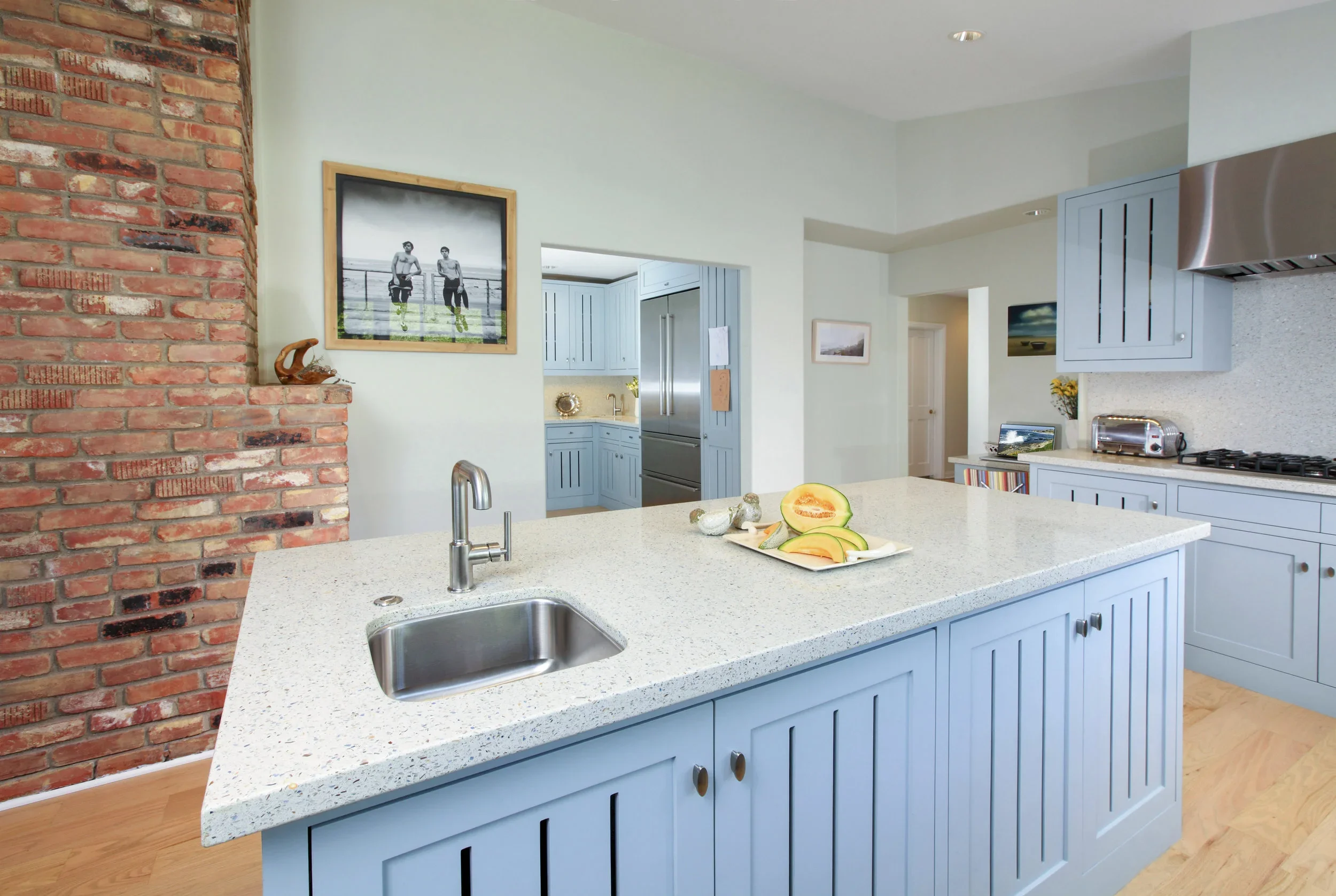
The kitchen expertly combines old and new. “There is an exposed brick fireplace that remains a decorative element in the new kitchen,” says Sarah. “We wrestled with the idea of preserving or upgrading the original red brick. We collectively decided to keep it — in the kitchen only — as a homage to the architect’s original intent.” The light blue cabinet doors feature subtle detailing and the quartz countertops are flecked with real seashells. The office nook is the perfect spot to search for a new recipe or respond to emails, while the adjacent pantry offers plenty of storage and a stainless steel French-door refrigerator.


The ground floor is rounded out by a serene guest bathroom with a custom floating vanity, matching wood-framed mirror, and a vessel sink that sits atop an onyx countertop. Although the space consists of mostly hard surfaces, it is warmed up through the use of light wood tones, soft lighting and texture-rich pebble flooring.

A HANDMADE TABLE BY A LOCAL ARTISAN ANCHORS THE SPACE BETWEEN THE LIVING ROOM AND DINING ROOM.
A handmade table by a local artisan anchors the space between the living room and dining room.
The California and Scandinavian home decorating styles share many of the same values, most notably an appreciation of natural beauty and fine craftsmanship. Throughout this project, Sarah worked side-by-side with local artisans and craftspeople to realize her custom furnishings and lighting designs. “Unique handmade objects bring authenticity and personalization to a home,” says Sarah. The finished product masterfully combines coastal California influences with the simplistic forms and function of Scandinavian home design.
Sarah Barnard designs healthy, happy, personalized spaces that are deeply connected to nature and art.
To learn more about Sarah Barnard Design, please visit www.SarahBarnard.com.
Photos by Steven Dewall and Chas Metivier

Why outdoor living spaces are right for your health, and how to design yours to perfection

HAND PRINTED OUTDOOR TEXTILES HIGHLIGHT THE WEATHERED TEAK FURNISHINGS AND COMPLIMENT THE POOL TILE. PHOTO BY RENAE BARNARD.
Hand printed outdoor textiles highlight the weathered teak furnishings and compliment the pool tile. Photo by Renae Barnard.
The Environmental Protection Agency estimates that the average American spends 87 percent of their time indoors. We put considerable effort into designing the interiors of our homes, with little regard for the outdoor spaces.
"No matter where you are or how large your outdoor space, you can benefit from a daily connection with nature," says sustainable interior designer Sarah Barnard. Want to spend more time outdoors this summer? Rethinking your balcony, garden, or terrace is an excellent place to start. Here are a couple of reasons why outdoor living equates to a healthy life.
It benefits your mental and physical health.
Imagine stepping out onto your front porch with a cup of tea in hand, feeling the morning sun on your skin. Sounds nice, right? Moderate sun exposure does the body good — refreshing our circadian rhythms, lowering cortisol levels and blood pressure, and improving concentration. Sarah's morning routine includes a stroll through the garden with her miniature poodle, Lucy, in tow. "It allows me to start the day cheerful, grateful and breathing fresh air," she explains.

A GLORIOUS GUEST COTTAGE INSPIRED BY CAPE COD AND FLATTERED BY PAINSTAKING ATTENTION TO DETAIL. PHOTO BY RENAE BARNARD.
A glorious guest cottage inspired by Cape Cod and flattered by painstaking attention to detail. Photo by Renae Barnard.
It encourages us to spend more time with our loved ones.
We get it — planning and hosting an event is stressful. Even if you burn the hors d' oeuvres to a crisp, run out of red wine, or forget to bring out the on-theme cocktail napkins, it's always worth it in the end, isn't it? A Mayo Clinic study shows that socializing with your closest friends and family improves your overall sense of well-being and purpose.
And since summer is the time for alfresco entertaining, what could be better than celebrating the season in your beautifully designed outdoor space, surrounded by your nearest and dearest? Thanks to improvements in technology and design, outdoor furniture and decor have come a long way (see ya, fold-up camping chairs). Today, our outdoor living spaces can be just as comfortable and luxurious as our indoor spaces.

FRESH AND FUN COLORS COME TO LIFE IN THE OPEN AIR MEDIA ROOM. THE LOCALLY MADE SECTIONAL SOFA WAS DESIGNED TO FIT THE HOMEOWNER’S SPECIFIC DESIRES: ALL NATURAL & NON-TOXIC MATERIALS, HANDMADE IN CALIFORNIA. PHOTO BY STEVEN DEWALL.
Fresh and fun colors come to life in the open air media room. The locally made sectional sofa was designed to fit the homeowner’s specific desires: all natural & non-toxic materials, handmade in California. Photo by Steven Dewall.
Now that we've established why you should be spending more time outdoors allow us to explain how to do it in style. When designing an outdoor living space, Sarah advises her clients first to select a focal point. "Is it a beautiful tree? A softly trickling fountain? An impressive outdoor kitchen? The elements that you choose to dominate the space physically and visually influence its overall feeling and mood" says Sarah.
Mimic your interior spaces outdoors.
We're not suggesting you expose your vintage leather sofa to the elements, but integrating pieces that create a feeling of coziness — like a knit throw or an outdoor fireplace — will make chilly evenings more enjoyable. During the daytime when the summer sun is beating down, you'll want to add shade through the use of a modern pergola, permanent roof, shade sail or patio umbrella. And avid home cooks may consider investing in a fully-equipped outdoor kitchen, complete with a gas grill, pizza oven, prep sink, storage cabinets, counter space and a compact refrigerator (you know, for all the rosé you'll be drinking this summer).

THE COZY PATIO PAIRS LUXURIOUS OUTDOOR TILES WITH CHINESE ARTISAN POTTERY TO CREATE A QUIET RETREAT. PHOTO BY CHARLIE DANIELS.
The cozy patio pairs luxurious outdoor tiles with Chinese artisan pottery to create a quiet retreat. Photo by Charlie Daniels.
When in doubt, hire a designer
"Even creative people find it difficult to craft a beautiful, functional and healthy home that adequately reflects their uniqueness," notes Sarah. When laying out your design plans for a courtyard or veranda, hiring an experienced designer is the first step. Not only does an expert have access to a broader selection of custom outdoor furnishings and fabrics, but they can also ensure the final product will be flawless. "Your interior designer has a vested interest in the success of your project being completed to the highest caliber and can be an invaluable asset when dealing with vendors and contractors," adds Sarah.

THIS STYLISH PATIO SHOWCASES HANDMADE ROMAN SHADES ATTACH TO A CUSTOM WOOD ENCLOSURE FOR PRIVACY AND SHADE. PHOTO BY STEVEN DEWALL.
This stylish patio showcases handmade roman shades attach to a custom wood enclosure for privacy and shade. Photo by Steven Dewall.
A designer will create a multi-functional outdoor space with your preferences and goals in mind. They're able to conceptualize the big picture and execute every detail with precision. It's time to unlock the untapped potential of your seldom-visited balcony, courtyard, or terrace. Whether you crave a secret garden or a lively space to entertain, a designer can turn your idea into a reality. "Your home should enhance your lifestyle and express your uniqueness," says Sarah. "My work is centered on health and happiness — anything we can do to help our clients live better, we will."

A natural teak wood ball fashioned into a rugged side table pairs with a weathered teak armchair and lightweight pottery. Photo by Steven Dewall.
Sarah Barnard designs healthy, happy, and personalized spaces that are deeply connected to nature and art. To learn more about Sarah Barnard Design, please visit www.SarahBarnard.com.
A natural teak wood ball fashioned into a rugged side table pairs with a weathered teak armchair and lightweight pottery. Photo by Steven Dewall.

Pantone’s Color of the Year: Living Coral

The family cat is the primary resident of this guest suite featuring a pink and coral color scheme.
Coral reefs are disappearing from our oceans at an alarming rate. It is imperative to the ocean’s ecosystems, and as much as a quarter of all ocean species depend upon it for food and shelter. Precious marine lifeforms are also the inspiration for Pantone’s color of the year: Living Coral.

CORAL AND LUSH GREENS CREATE A LIVELY AND INVITING ATMOSPHERE FOR AN OUTSIDE SPACE.
Sarah Barnard, a Los Angeles-based interior designer, WELL AP and LEED AP, specializes in home design that contributes to her client’s health and wellness and strives to make nature a part of each home she creates. “A happy and uplifting color reminiscent of the ocean is the perfect starting point for a happy, healthy home.”

CORAL COLORED TILES AND BEAUTIFUL GLOSSY STONE SLABS MAKE THIS COASTAL BATHROOM WARM AND BRIGHT.
Coral colored tiles and beautiful glossy stone slabs make this coastal bathroom warm and bright.
This color takes its name from the beautiful coral marine invertebrates that build extensive coral reefs, habitats for a vast diversity of life in the ocean. Sometimes referred to as the "rainforests of the sea," coral reefs are quickly dying, and are projected to reduce to 10% by 2050. Half of the world's coral has died since 2016, due to rising sea temperatures, pollution, destructive fishing, invasive species, and changing sea chemistry.
"The timely selection of this color by Pantone should be an important reminder to all of us that nature inspires beautiful interiors. If we aren't careful to preserve the natural world, we will have nothing left to take inspiration from," said Barnard.

CORAL NATURALLY COMPLEMENTS WITH BLUES AND OCEAN TONES. CORAL EMBROIDERY WAS A PERFECT COMPANION (COMPLEMENT?) FOR A THROW PILLOW IN A COASTAL HOME.
Pantone is most widely known for their color swatch books. It is the company responsible for color matching paints and graphics; and now devotes the time and resources of Pantone Color Institute to research the purchasing trends of various industries. With this information, Pantone determines this year's color. The naming process regularly pulls inspiration from the natural and human-made world, naming colors such as "rose quartz" or "millennial pink." Pantone's color of the year for 2018 was ultraviolet, a beautiful, energizing shade of purple reminiscent of bright flowers and the sky at sunset. This year's choice is PANTONE 16-1546 Living Coral, a potent reminder to preserve and protect ocean life.

CORAL COLORED CERAMIC PROVIDES EARTHY CONTRAST AGAINST THE EBONIZED TABLE AND BLACK LAMP.
Coral is vibrant, cheerful, delicate and energizing, and the perfect shade to start the New Year. Living coral, described by the Pantone team as “An animating and life-affirming coral hue with a golden undertone that energizes and enlivens with a softer edge.”

THE BATH AND SHOWER FEATURE LOCALLY SOURCED HANDMADE CERAMIC TILES IN A CORAL GLOSS.
Pantone published, “Vibrant, yet mellow PANTONE 16-1546 Living Coral embraces us with warmth and nourishment to provide comfort and buoyancy in our continually shifting environment. [...] Representing the fusion of modern life, PANTONE Living Coral is a nurturing color that appears in our natural surroundings and at the same time, displays a lively presence within social media.”

CORAL AND PINK SHADES BLEND BEAUTIFULLY WITH WOOD TONES. ART IS A SUBTLE AND SEAMLESS WAY TO INTRODUCE COLORS LIKE CORAL.
While top interior designers don’t necessarily recommend painting one’s home to match the color of the year, art, accents, and of course plants are an easy and safe way to introduce vibrancy to your living or work space through home decorating.

PINKS AND CORAL CREATE AN INVITING ATMOSPHERE.
For those interested in using Living Color in their home, Sarah Barnard said, "Living Coral is a perfect complement to blue shades, and pairs well with coastal or beachy interiors. For the daring, reupholstering a treasured piece in a bright color like Living Coral can revitalize a space. For those who prefer to mix pops of color with neutrals, I recommend starting with small accents."
Pantone's Color of the Year is an excellent opportunity to add lively, earth-focused tones to your home. Make having a happy and healthy home your New Year's resolution.

CREAM AND CORAL CERAMIC JARS ARE A PERFECT STORAGE SOLUTION FOR BATHROOM NECESSITIES.
Sarah Barnard designs healthy, happy, personalized spaces that are deeply connected to nature and art.
To learn more about Sarah Barnard Design, please visit www.SarahBarnard.com.
Photos by Abby Siniscal, Chas Metivier, and Charlie Daniels

Vegan Interior Design
“You can still have everything you want, even if you are vegan,” Sarah Barnard explained. For those vegans who want to surround themselves with luxurious vegan linens, more natural, beautiful and durable vegan materials are available than ever. If you are the type of vegan who loves the look of animal products, more and more perfect options are available for you as well. Los Angeles home designer and recent ASID award-winner Sarah Barnard took time to go over the growing vegan interior design market and her experience with clients who care about animals. “Happily, the days of sacrificing comfort for principles are over. There are plenty of luxury options for vegans, too.”
Of course, vegan and vegetarian mean different things to different people. It helps to clarify your preferences ahead of time. A knowledgeable designer can help you sort through what is desirable to bring into your home and what isn’t, and can help with any additional design considerations that frequently go hand-in-hand with a love of animals, like the desire for an eco-friendly home. DIY strategies are abundant on sites like Pinterest or Etsy, but some subtle animal materials may slip past you if you aren’t sure what to avoid, or less perfect materials may get selected by default.

“If vegan living is important to you, find an interior designer to help you. It’s the best way to make sure you feel good about your design decisions,” Barnard explained. “Ideally, you would work with a designer who has experience and vegan resources prepared.” One must vet each component of every item. There are the obvious things: fabrics, leather, and fur. But plenty of materials that you wouldn’t expect to use animal byproducts, too. Paint, glue, and lacquer are less obvious and slip by unnoticed most of the time. Old master painting or collectible paintings, for example, can potentially have small amounts of animal byproducts: nevermind that canvas was sometimes made of animal hide, but eggs were used to make tempera paint, and some pigments were derived from animal skin or hair as well. “Essentially, every part of every item could potentially bring animal products into your home.” Barnard cautioned. When asked how she avoids this, she answered, “I work closely with local artists and manufacturers that work with vegan materials. The artists care deeply about animals and the environment and make careful choices in the selection of materials.”
Some things that may be marketed as a cruelty-free product need to be verified also. For example, some silk manufacturers claim they wait until the silkworms have died to harvest their cocoons, but less reputable manufacturers have been caught lying about their processes.
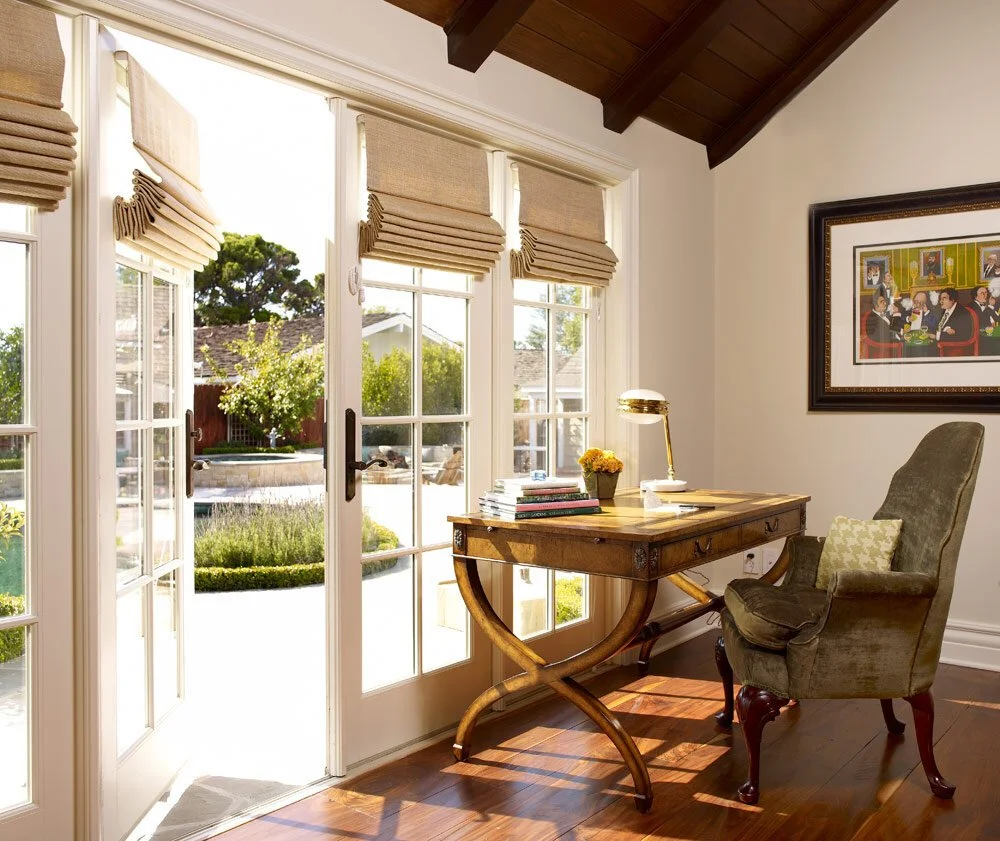
While it can be exhausting searching for an alternative, don’t settle for just any synthetic material. A designer has access to samples and access to a myriad of information on the manufacturers’ technical specifications on art, furniture, and building materials.
Consider your health when designing or decorating your home with synthetic materials. Humanmade options could mean introducing elements that off-gas chemicals into your home. Vinyl and PVC for example, have been known to release chemicals for at least two weeks after installation. There are plenty of safe synthetic materials made by responsible manufacturers.
If you were on the fence about making your home vegan, consider that for a family member or guest with allergies, making your home vegan can be an excellent way to make sure there are no allergens that cause discomfort. Artificial down, for example, can be better than it’s feathery counterpart because alternatives are often water-resistant in addition to being hypoallergenic.

For a family member on the autistic spectrum, the smell of animal leathers and the rough textures of some wools and skins may be bothersome. Ideally, a space designed for them has carefully considered and created the materials, lighting, and flow.
When asked about her favorite part of designing a vegan home, Barnard said, “Vegan interiors often end up being automatically eco-friendly.” It turns out vegan homes can have a smaller carbon footprint, simply because any process involving cultivating materials from animals means using resources to care for the animal to grow, and the carbon dioxide they exhale during their cultivation contributes to a large carbon footprint. Wood should be researched as well and sourced from responsible, sustainable sources, or reclaimed from previous projects and buildings.
Whatever your reason for choosing a vegan home, it should be relevant to the designer who helps you create your perfect home, too. You don’t have to sacrifice style or comfort; more than ever, it is possible to luxurious, durable, cruelty-free, materials.

Sarah Barnard designs healthy, happy, personalized spaces that are deeply connected to nature and art.
To learn more about Sarah Barnard Design, please visit www.SarahBarnard.com.
Photos by Chas Metivier and Steven Dewall.

Interior Design for Pets

PHOTO BY: STEVEN DEWALL
"It's important to start with the needs of the entire family," says Los-Angeles-based interior designer and recent ASID award-winner, Sarah Barnard. "Your pets should be included in the home design process from day one, because they are family members, too." Barnard is currently a mother to two furry friends, a rescue cat with half a tail and a dog that isn't happy unless she's sitting in your lap. She explained her process when she works with clients who have both standard and exotic pets.
"When I start designing a home, my goal is to make an environment that is natural, enduring, and high-functioning—for my clients, their guests, and their pets." The goal is a design that is mutually perfect for pets and humans alike. When it is planned this way from the beginning, it is more comfortable for everyone, including you.
The interactive design doesn't mean the same thing for everyone; every family has different needs. Consulting a designer can help you figure out how much extra planning is required and where to get started. Consider that where you spend your time, so does your pet. They want to be near you, so a dedicated dog room, for example, may be a lost cause.

Next, consider your lifestyle. If you take your dog hiking, having space for to rinse and towel off before venturing further inside your house is a smart choice. Most animals, mainly if they live exclusively indoors, enjoy a perch next to a window. Aquariums or terrariums can be entertaining for them as well. If you spend a lot of time in the kitchen, a custom pet bed or feeding area might be a great fit in your kitchen island.
More exotic pets might require more customization. Large animals like pigs may need an indoor and outdoor space. Reptiles or birds sometimes need a large aquarium or terrarium designed into the architecture of your home. That's when it's necessary to have a designer's help. She or he will plan it out and make sure you seamlessly integrate your pet's home with yours. More importantly, a designer can help you figure out the scope of your project.
When asked about materials, Barnard said the goal is "to create high-functioning, natural and non-toxic environments that endure over time." It's best to make your home safe for everyone. Try to source organic materials as much as possible, such as untreated fabrics and furniture. Vintage pieces that are at least 20 years old have finished off-gassing, so they don't pollute the air and are safer for you and your pets.

As far as specific materials and finishes, nothing is strictly off-limits, but some require more upkeep or need to be replaced every few years. Barnard shared some insights on balancing which materials are most attractive with those that create less work for you:
It's still possible to have wallpaper, but a more durable option would be wood wainscoting.
For flooring, the best choice is often a hard surface option whenever possible. It's easier to keep clean than rugs or carpet and doesn't hold onto fur or odors. Porcelain tiles are a great option. They are elegant and easy to maintain, plus they aren't likely to stain or get scratched. Porcelain tiles are also the same color all the way through, so dents and marks will be less noticeable.
Carefully consider your fabric choices, too. Solution-dyed acrylic textiles are an excellent place to start looking because they are relatively invulnerable. They're typically resistant to stains, germs, and odors.

Some fabrics are more durable than others, but how they are used matters, too. Any materials with uneven surfaces will be more challenging to clean. Delicate fabrics are best saved for window treatments rather than upholstery. Choose shorter drapes that won't be chewed or rubbed against; long curtains may collect hair or inadvertently become a hazard. Remove fabric from reach by choosing chairs and sofas with exposed legs, which won't hold onto furs like slipcovers or upholstered legs.
"Above all, make sure you find a designer who has a history with animals. One who has an animal family member is even better," Barnard suggested. Designers who live with pets will have a more intuitive way of designing a home that includes them. They know more about how pets act and behave then designers without them.
Barnard shared a favorite experience working with a client with pets. "She had close to 12 cats, and wanted a dedicated area where her cats could sun themselves, but was concerned about coyotes in the area. We decided to build a custom screened porch to make a safe space for them. We had cat doors installed, too, so they could come and go as they pleased."
Sometimes making an appropriate environment for a large group of animals is the solution, sometimes the answer is cat-ifying or dog-ifying the whole house. Every home is different, but with the right help, you don't have to sacrifice beauty to live with your beloved pets. When all is said and done, our animal friends are worth a little extra planning.
Sarah Barnard designs healthy, happy, personalized spaces that are deeply connected to nature and art.
To learn more about Sarah Barnard Design, please visit www.SarahBarnard.com.
Photos by Steven Dewall, Chas Metivier, and Brad Nicol
Biophilia + Interior Design = Healthy, Happy Homes!

Our day to day lives are often spent moving from one artificial environment to another. The familiar routine of home to car, car to work, and back leaves many unsatisfied. Over the course of the last three decades scientists have begun to investigate psychological connections between human beings and the natural world.
The principle of Biophilia was first introduced in the 1984 book by Edward O. Wilson, which hypothesizes that humans have a deep psychological affinity for other living organisms. While scientists believe this empathy may have developed as a way for nature to protect and preserve itself, others have begun to consider how this principle might benefit people. Designers in particular have been quick to recognize the possibilities for transforming the environments we inhabit in ways that could have genuine and positive psychological effects.

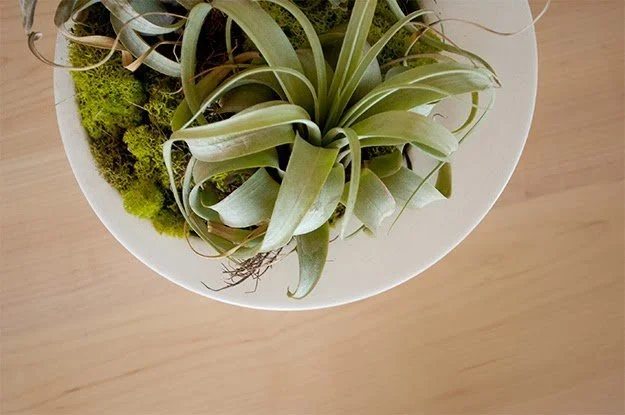
Biophilic design has become a popular approach to domestic and commercial design. It employs strategies ranging from the modest to elaborate to create spaces that acknowledge and satisfy our deep-seated need for nature in our lives.
One approach to Biophilic home design is the incorporation of natural elements within an artificial environment. From architectural design that capitalizes on natural light, to the simple incorporation of plants in an office environment, modest decisions can have a dramatic effect on our spaces. One study done at Washington State University by Virginia I. Lohr and Caroline H. Pearson-mims measured the stress levels in test subjects while performing a task in an office environment. When plants were present in the room, subjects displayed an increase in productivity (12% quicker reactions to their computer task) and were less stressed according to their blood pressure. More research has been conducted on the subject of human-plant interaction and how a natural element can provide real benefits to your daily life.
Other strategies take cues from natural forms to design architectural and interior spaces and furniture. From organic materials or floral patterns to entire rooms that reflect natural themes, there are endless possibilities for Biophilic design. The image above from the Cape Cod Guest Retreat project is a perfect example of incorporating vine patterned fabric and specific color palettes to create a harmonious blend between outdoor and indoor spaces.

The ocean view penthouse design recalls the bright sands of the shore while the splash of green of potted plants gives a sense of healthy, tranquil living. Outstretched wings offer the viewer a feeling of weightlessness and flight, and the addition of wooden furniture with their airy and open forms completes the natural beach scene. Air quality is an often overlooked but vital element of Biophilic design. The ocean view penthouse is an example of how suggestions of air can make a space feel open and clean, while the potted plants in tandem with a HEPA filtration system help to provide actual clean air. Fostering a peaceful environment is the surest way to foster peace in yourself.
Biophilic design has become a popular and effective response to the innate desire of humans to live in natural harmony. When it comes to designing or remodeling your home, consider the many benefits of Biophilic design. More than just a style, it has real effects on your quality of life in your home or office.
Sarah Barnard designs healthy, happy, personalized spaces that are deeply connected to nature and art.
To learn more about Sarah Barnard Design, please visit www.SarahBarnard.com.