


Creative Workspaces: Home Office Interior Design Reimagined
As a WELL and LEED-accredited interior designer specializing in spaces that support emotional and physical wellbeing, I have a particular passion for creative workspaces. Creative work can be inherently joyful and healing, and having a dedicated space, whether an entire room, a desk, or even a chair outdoors that is devoted to accessing a creative flow state, can be an excellent way to find support in the home. Even the intentionality of dedicating an area to creativity gives that work weight and importance, automatically making it a greater priority. The more care put into thinking about a creative space, or any space, the more likely it is to become a functional presence in life, which can be a great way to encourage positive and joyful habits.
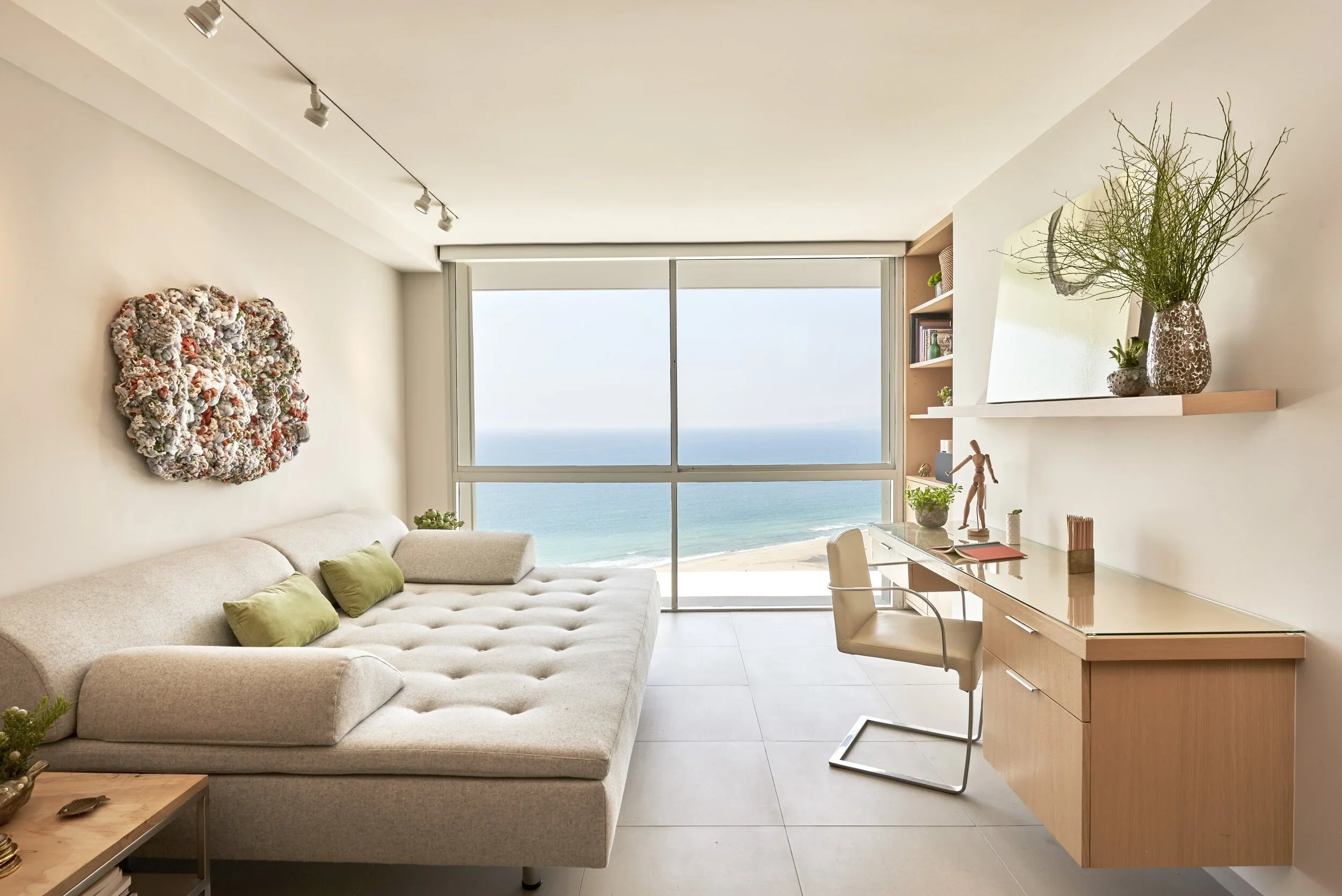
One of the things I talk about with many of my clients is designing a space that is specific to their needs and preferences, and working with them to feel comfortable eschewing any expectations they may feel obligated to meet about what a room should look or be like. Many of us adapt to the environments we are in, rather than adapting our spaces to meet our needs. Increasingly, people are craving spaces and routines that feel aligned with who we are, rather than trying to match expectations that feel out of step with what actually works for us. When I’m working, I try to take to heart the idea of meeting my own environmental and emotional needs. Not only does it support my best creative work, but it also helps reinforce how important it is for the client to have this same experience, and makes me feel more connected to my goals as a designer.
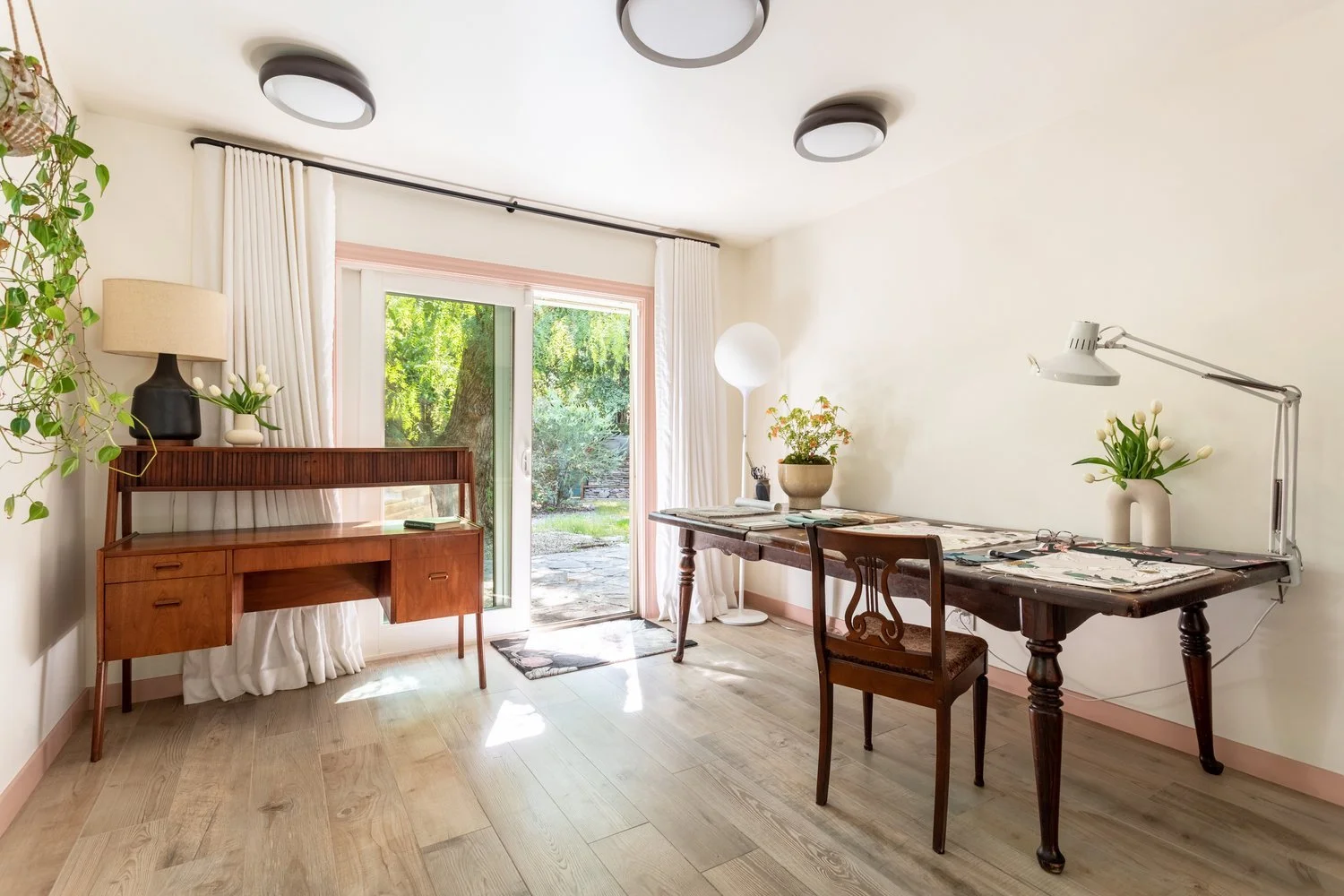
I’ve come to learn that different parts of the creative and work process may be best supported by different surroundings. When I’m waking up my brain and body, I like to start the day in the garden. Nature is a huge part of my creative work, but it’s also where I find the most joy and feel most connected to the world and to myself. I love the quiet acts of caretaking as I tend to my plants, and seeing them progress and change reflects the seasonality and natural rhythms of the earth. Seeing the plant life and the birds, and collecting pine cones and seed pods, all help me ground and relax in a way that lends itself to creative thinking throughout the day. While I don’t necessarily spend the time in my garden looking for inspiration, it always finds me. Many of the colors, textures, and imagery in my client work and in the products of my home goods studio, Kale Tree, are inspired by time spent in my garden.

After feeling fully immersed in nature and ready to begin my day in the studio, I’ve found that limited sensory input gives me the most mental space and clarity for creative expansion and problem-solving. Soft, natural lighting, silence, minimal to no scents, and no distracting textures all contribute to a profound external quiet that lets my internal world take focus, and that is really when I can enter a creative flow state where I do my best work. Then, I can tap into the imagery and inspiration that guide my designs and connect with my clients' desires without the distraction of a conflicting external space.
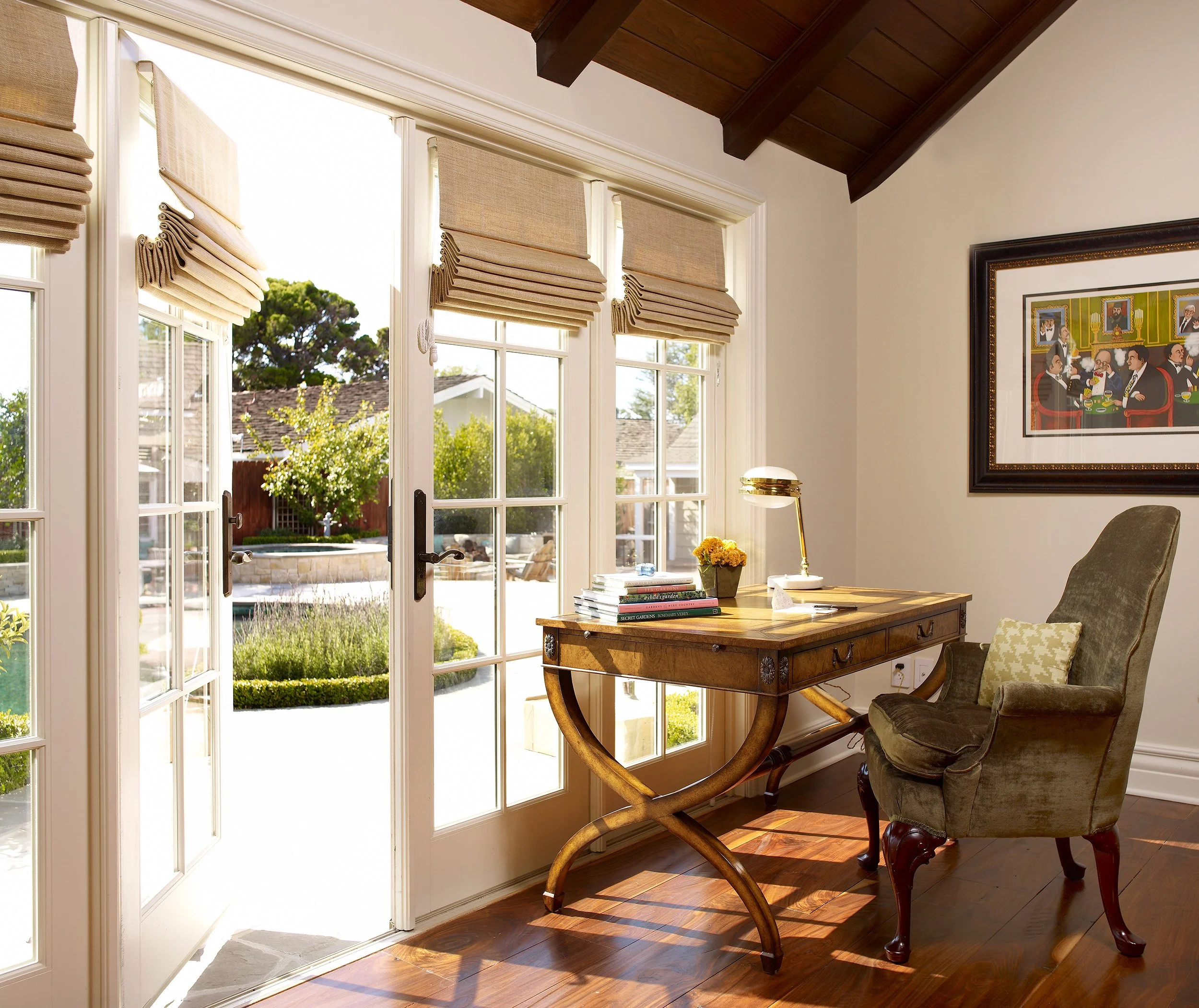
Knowing that I need such minimal sensory input has really emphasized the importance of encouraging clients to honor their personal sensory sensibilities. Every person needs a space as individual as they are, and it’s so important to evaluate what works best for them. If there is a moment when someone really feels they are in a flow state and connecting with a positive feeling, creatively, taking a step back afterward to take stock of their environment can be a good way to reflect on what’s most supportive.

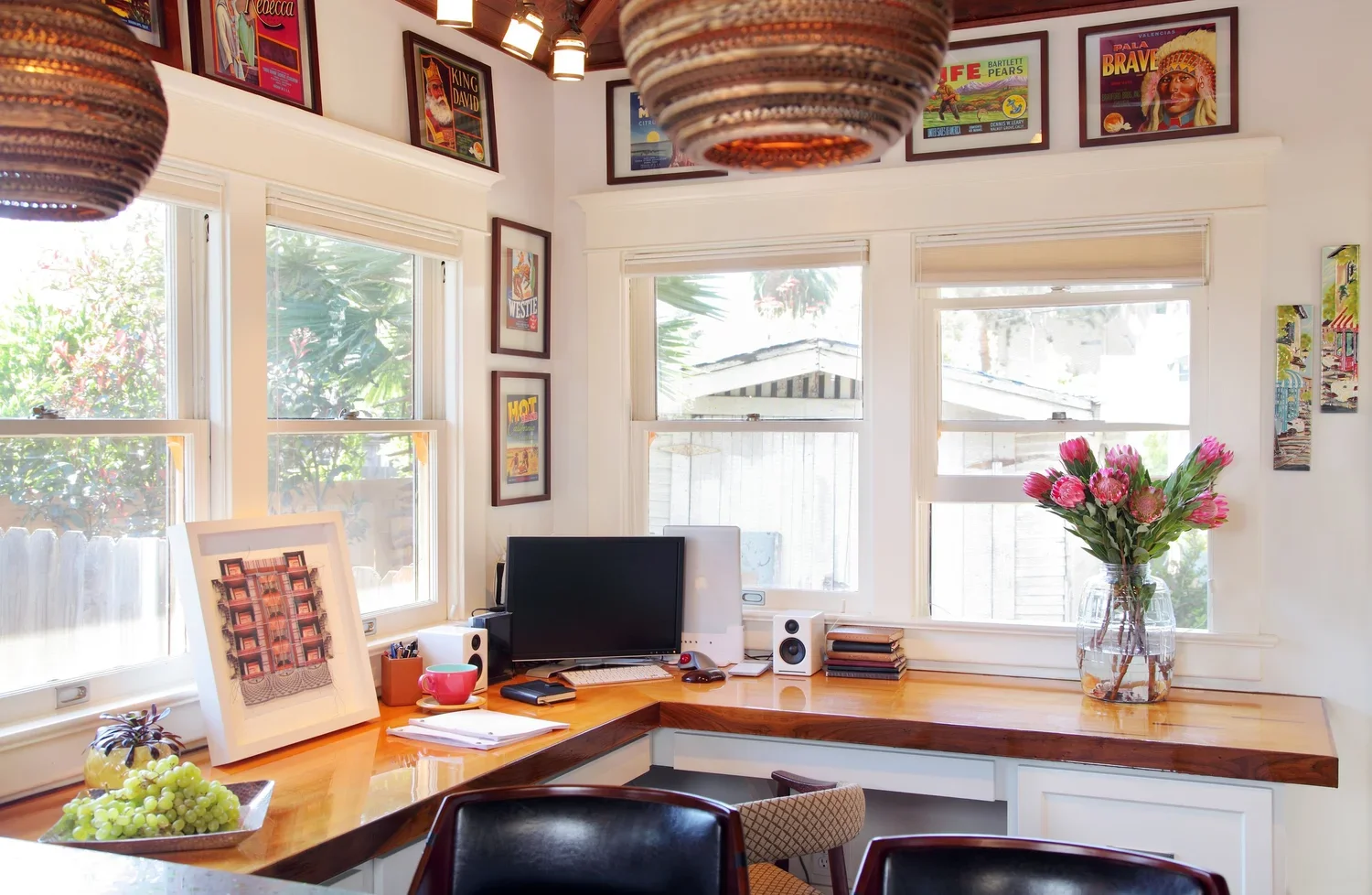
So often, expectations around design can override actual habits and preferences. A common anecdote from clients remodeling their homes is that, although they currently have a designated home office, they usually work at the kitchen table. Knowing this becomes a great opportunity to reconsider the idea of a home workspace and embrace personal sensibilities, rather than expectations about what a home office should be or look like. Is it the warmth and comfort of being around family? The openness of the space, or a more expansive view? Maybe it’s not abandoning a home office altogether, but creating a space that adapts more to a work environment that is actually pleasurable. Taking the time to evaluate what is supportive and what makes it easier for someone to access a flow state can lead to perhaps more unconventional spaces, but also more productive ones. Re-examining how we approach these concepts and environments is one of the most exciting parts of my job and one of the best ways to help my clients physically and emotionally.
Sarah Barnard is a WELL and LEED accredited designer and creator of environments that support mental, physical, and emotional wellbeing. She creates highly personalized, restorative spaces that are deeply connected to art and the preservation of the environment. A certified California Naturalist, Sarah believes in celebrating nature through responsible design that works symbiotically with the local environment.
An advocate for consciousness, inclusivity, and compassion in the creative process, Sarah has appeared in Architectural Digest, Elle Décor, Vogue, HGTV, and many other publications. Sarah was recognized as a "Ones to Watch" Scholar by the American Society of Interior Designers (ASID) and has been awarded "Best of Houzz Design" for seven consecutive years. Sarah's MFA in visual arts from Claremont Graduate University informs her practice and innovative approach toward interior design as creating a living work of art.

Wildfire Preparedness: Home Hardening, Defensible Space and CA Native Plantings

AN AMERICAN CROW (CORVUS BRACHYRHYNCHOS) RESTS ABOVE THE TREES IN THE VERDUGO MOUNTAINS.
The California landscape is beautiful and unique, home to a plethora of plants and animals found nowhere else in the world. The Giant Sequoia and Coastal Redwood are majestic, and awe-inspiring trees found only in California. The General Sherman tree (a giant sequoia) found in Sequoia national park is thought to be the largest living tree on earth, measuring 274.9 ft high(1) and is estimated to be 2200 years old.(2)

COSTA'S HUMMINGBIRD (CALYPTE COSTAE) RESTS ON WOOLLY BLUE CURLS (TRICHOSTEMA LANATUM).
The California floristic province is an area that stretches along the coast and comprises most of the state.(3) Conservation International defines this province as a biodiversity hot spot for the high number of plants that are endemic to the region (61% of California's plant life is found nowhere else in the world).(4)

A MARINE BLUE BUTTERFLY (LEPTOTES MARINA).
These distinct natural wonders and the beautiful Mediterranean climate make California a desirable place to live; it is important as residents of this beautiful state that we all play our part in conserving it.

RED BOX PICNIC AREA, RECOVERING AFTER THE BOBCAT FIRE.
Wildfires in California are increasing in size, frequency, and intensity, with the two largest wildfires in California history occurring in 2020 and 2021.(5) Human-made changes to the natural environment play a significant role in this increase. Two prominent examples are climate change and increased construction in the area that transitions between developed and undeveloped land, known as the Wildland Urban Interface (WUI).(6)

CALIFORNIA FAN PALM (WASHINGTONIA FILIFERA) SLOWLY RECOVERING FROM BURNS IN THE ANZA BORREGO STATE PARK.
It's important that we become more knowledgeable and work together within our local community to reduce the risk of wildfires. Sarah Barnard, Interior Designer, LEED, and WELL AP, recently achieved her Wildfire Defense Certificate to increase her awareness and preparedness for wildfires and expand her education as a Certified California Naturalist. The United States Green Building Council - Los Angeles (USGBC-LA) hosted the Wildfire Defense Landscaper Certificate Program in partnership with the Theodore Payne Foundation for Wild Flowers & Native Plants.(7)

MIGRATING MONARCH BUTTERFLIES (DANAUS PLEXIPPUS) ROOSTING.
USGBC-LA's mission is to utilize the built environment "transform Southern California into a more sustainable region for all"(8) through a series of educational programs, workshops, and community initiatives. The Theodore Payne Foundation for Wild Flowers & Native Plants is a non-profit organization whose goal is "to transform our region into sustainable, healthy communities" by "educating all people about the role native plants play in the local ecology, their place in our gardens, and how everyone can take part in making Southern California more life-sustaining."(9)

CALIFORNIA BUCKWHEAT (ERIOGONUM FASCICULATUM).
Designing our homes and their surroundings with wildfire prevention in mind is extremely important in California. Built structures commonly burn before vegetation, ignited by wind-blown embers, radiant heat, or direct flame contact. The WUI (areas of land where houses and nature blend together) is becoming more dense, growing by about 2 million acres per year.(10) Currently, more than 60,000 communities within the WUI are at risk from wildfire in California,(11) and it is estimated that this number will increase to six times as many in the next 30 years.(12)

A TOWNSEND'S WARBLER (SETOPHAGA TOWNSENDI ) IN CALIFORNIA LIVE OAK TREE (QUERCUS AGRIFOLIA).
Fire Hazard Severity Zones (FHSZ) are mapped and utilized by the California Department of Forestry and Fire Protection (CAL FIRE) to determine what communities are more at risk from wildfires, and what steps can be taken to reduce that risk through regulations regarding construction and defensible space. These maps also determine if the state, local government, or an individual is responsible for maintaining these requirements.(13) "If you live in a State Responsibility Area (SRA), you are responsible for ensuring that your property is in compliance with California's building and fire codes that call for homeowners to take proactive steps to protect their property from a wildfire."(14)

SCRUB JAY (APHELOCOMA CALIFORNICA) RESTS ON A NEIGHBORING ROOF.
Wildfire protection has become such an important issue that Governor Gavin Newsom signed Assembly Bill 38, which requires “the seller of any real property located in a high or very high fire hazard severity zone to provide a prescribed disclosure notice to the buyer, if the home was constructed before January 1, 2020, of information relating to fire hardening improvements on the property and a list of specified features that may make the home vulnerable to wildfire and flying embers and which features, if any, that exist on the home of which the seller is aware. The bill, on or after July 1, 2025, would require the disclosure notice to also include the State Fire Marshal’s list of low-cost retrofits. The bill would also require a seller who has obtained a specified final inspection report to provide to the buyer a copy of that report or information on where a copy may be obtained.” (15)
The CalFire website has more information about requesting a Defensible Space Inspection as well as a FHSZ Viewer to help identify if a property is located in a high or very high fire hazard severity zone.

DESIGNING OUR HOMES AND THEIR SURROUNDINGS WITH WILDFIRE PREVENTION IN MIND IS EXTREMELY IMPORTANT IN CALIFORNIA.
The concept of defensible space is one step we can take to protect our homes from wildfires. This strategy involves dividing the area around the home into a series of zones to create a buffer between the building and surrounding vegetation. Hardscape (pathways, gutters, etc.) maintenance, such as regularly clearing access roads, pathways, and gutters from debris that may ignite from falling embers, is an important component of defensible space. Ignition from wind-blown embers is a primary source of homes catching fire. Hardscape maintenance also includes trimming tree branches so that they are at least ten feet from the roof and relocating woodpiles to at least 30 feet from the house. Cal Fire offers a defensible space assessment for homeowners to help them decide what changes they may need to make in the area surrounding their property.
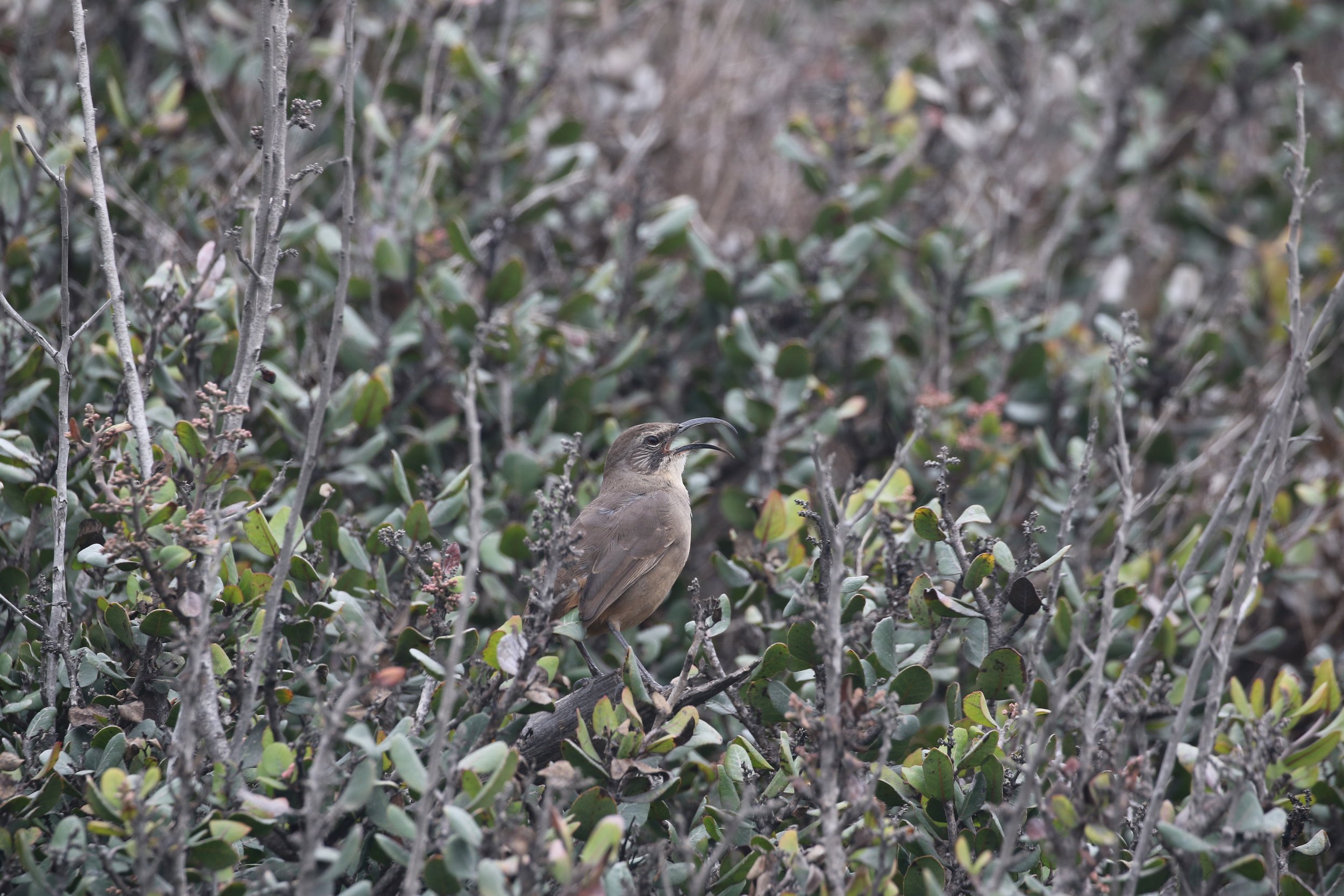
A CALIFORNIA THRASHER (TOXOSTOMA REDIVIVUM ) PERCHED ON LEMONDADE BERRY (RHUS INTEGRIFOLIA).
In March 2020, the city of Malibu (which is located within a FHSZ), introduced The Fire-Resistant Landscaping Ordinance,(16) which restricts the kind of vegetation that can be planted around a home as a means to reduce the risk and spread of fires within the community.

A LESSER GOLDFINCH (SPINUS PSALTRIA ) FEEDS ON CHIA (SALVIA COLUMBARIAE).
While "any plant will burn under the right conditions,"(17) some plant species native to California have evolved in the dry climate to retain moisture and do not ignite as easily or contribute to fueling the intensity of wildfires as much as plants that contain a lot of oils, and resins. If kept well irrigated, spaced out, and regularly cleared of debris that may be combustible, these native plants can play a role in creating defensible space around our homes as well as providing habitat for wildlife and pollinators.(18)
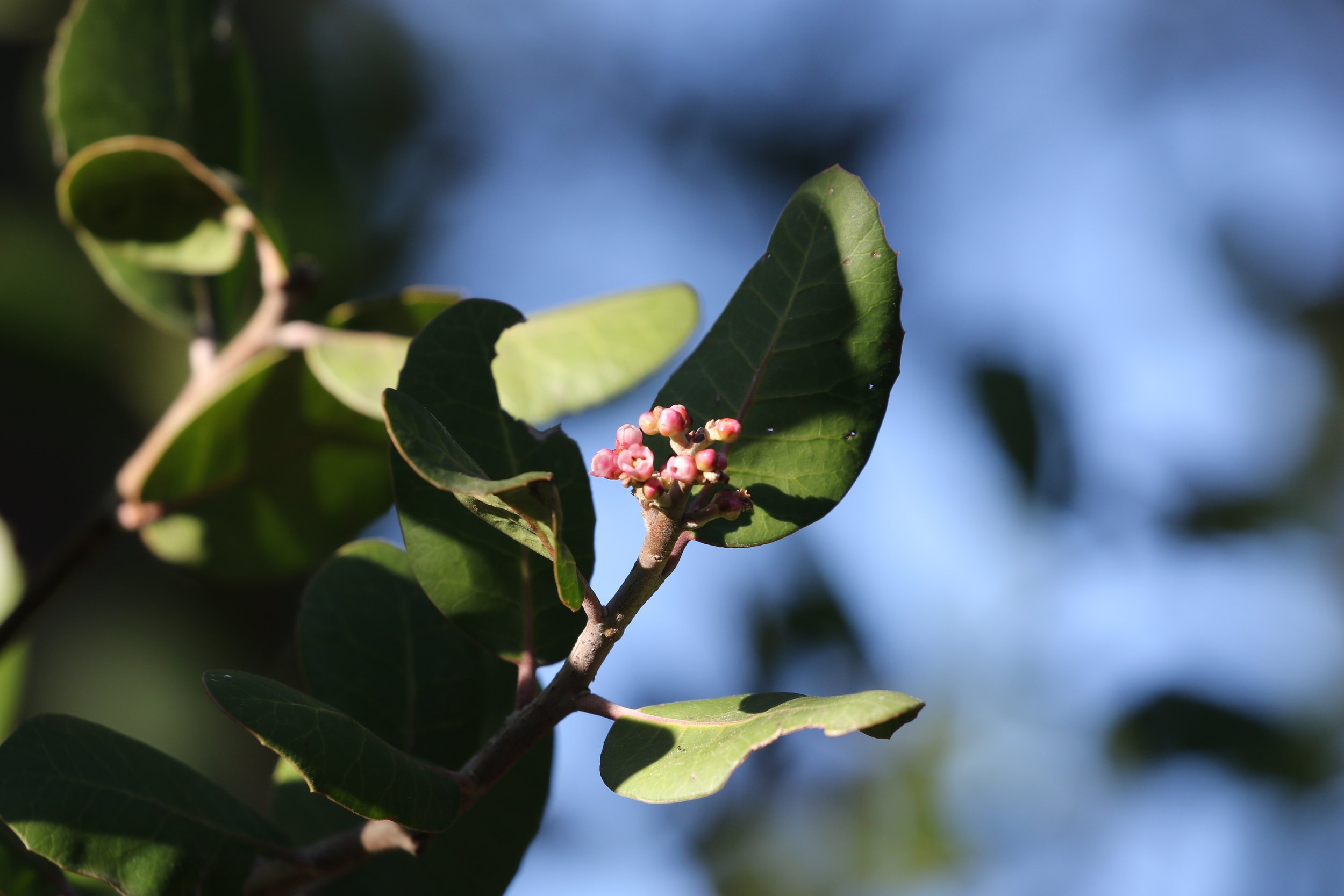
LEMONDADE BERRY (RHUS INTEGRIFOLIA).
Some of Sarah's favorite fire-resistant plants in her garden include the California Live Oak (Quercus agrifolia), an evergreen tree that has thick bark that insulates against heat and a dense canopy that resists ignition by flying embers;(19) these trees can live up to 250 years. The Lemonade Berry (Rhus integrifolia) is a drought-tolerant evergreen shrub that is fairly fire resistant and can contribute to creating a boundary that intercepts flying embers, and its berries are also a significant food source for local wildlife.(20)

TOYON (HETEROMELES ARBUTIFOLIA).
Toyon (Heteromeles arbutifolia) is a beautiful perennial shrub that is easy to grow and can be utilized as an excellent hedge plant. Toyon is fire-resistant when given enough water, and its flowers and berries attract a variety of moths, butterflies, and birds.
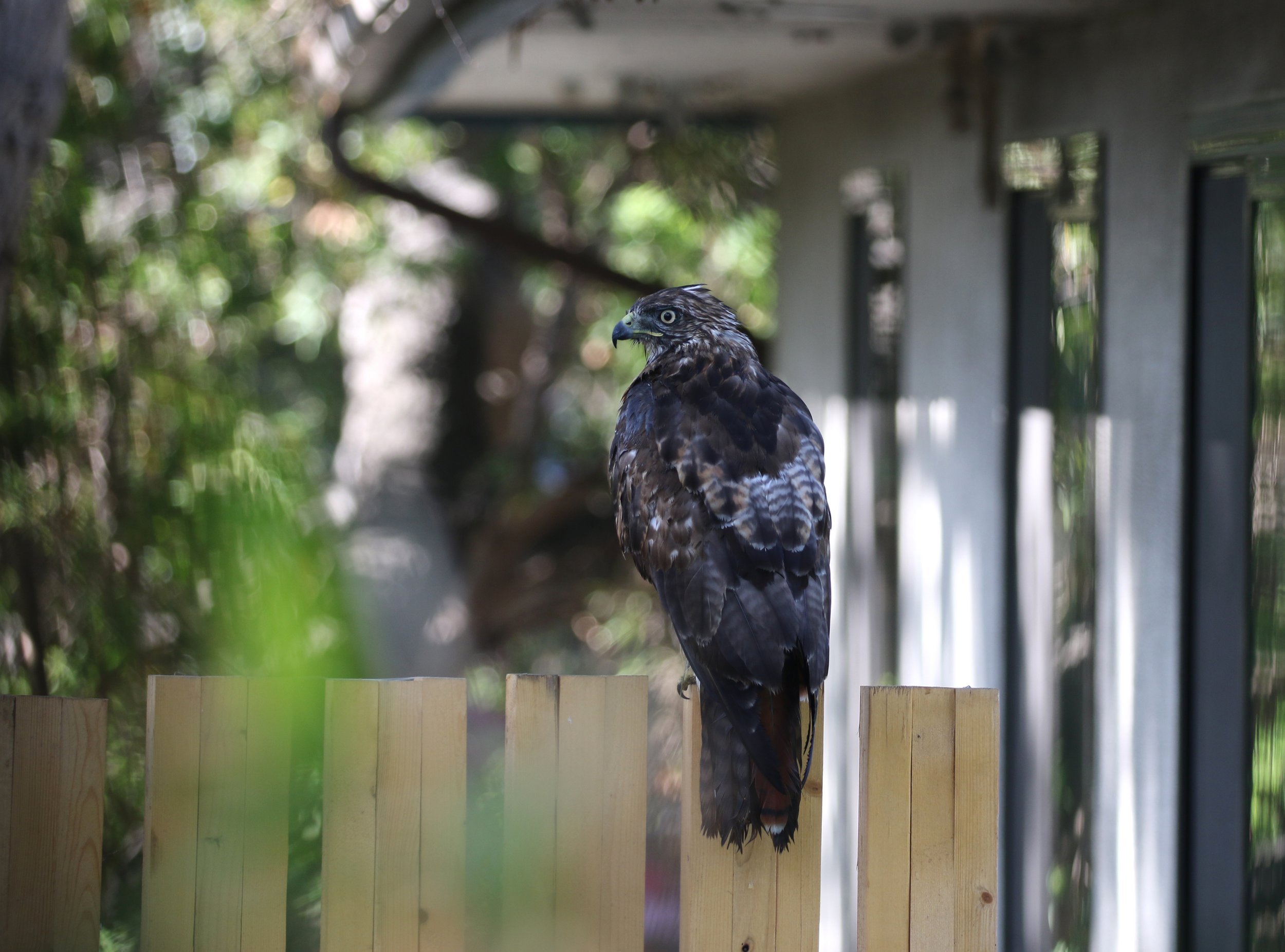
A RED-TAILED HAWK (BUTEO JAMAICENSIS) SITTING ON WOOD FENCE.
Home "Hardening" is another step we can take to protect our homes from wildfires. Home Hardening focuses on the material elements of the building and how they can be maintained to minimize the risk of ignition. Built components of Home Hardening include using Class A non-combustible roofing materials; as well as sealing off entry points for embers by installing non-combustible leaf guards on gutters, metal vents, and shutters, and covering the chimney with non-combustible corrosion-resistant metal mesh screen. Windows also need to be considered when hardening your home as they can break due to heat, creating entry points for embers. Steps to reduce this risk include installing dual pane windows, limiting the number and size of windows facing vegetation, and installing screens.

A MULE DEER (ODOCOILEUS HEMIONUS) GRAZING ON PURISIMA ISLAND MALLOW (MALVA 'PURISIMA')UNDER THE SHADE OF A CALIFORNIA LIVE OAK TREE (QUERCUS AGRIFOLIA).
California is a beautiful place to live, and we can all work within our local community towards positive solutions that help protect our homes and the environment against wildfires. Our design studio is deeply inspired by nature, and we cherish the diverse ecosystems found in California and draw from their beauty.
Sarah Barnard, WELL AP + LEED AP, is a leading designer of personalized, sustainable spaces that support mental, physical, and emotional wellbeing. She creates highly personalized, restorative spaces that are deeply connected to art and the preservation of the environment. An advocate for consciousness, inclusivity, and compassion in the creative process, Sarah has appeared in Architectural Digest, Elle Décor, Vogue, HGTV, and many other publications. Sarah was honored as a “Ones to Watch” Scholar by the American Society of Interior Designers (ASID).
Works Cited
1. “The Largest Trees in the World.” National Parks Service, U.S. Department of the Interior, https://www.nps.gov/seki/learn/nature/largest-trees-in-world.htm.
2. “General Sherman Tree (U.S. National Park Service).” National Parks Service, U.S. Department of the Interior, https://www.nps.gov/places/000/general-sherman-tree.htm.
3. “Hotspot: California on the Edge.” National Parks Service, U.S. Department of the Interior, https://www.nps.gov/goga/learn/management/index.htm.
4. “Explore the Biodiversity Hotspots.” CEPF, https://www.cepf.net/our-work/biodiversity-hotspots.
5. Top 20 Largest California Wildfires. https://www.fire.ca.gov/media/4jandlhh/top20_acres.pdf.
6. “What Is the WUI?” U.S. Fire Administration, 8 June 2022, https://www.usfa.fema.gov/wui/what-is-the-wui.html.
7. Johnson, Erin. “Wildfire Defense Certificate: Landscaper Module.” United States Green Building Council Los Angeles Chapter, Sept 2022, https://usgbc-la.org/
8. “Our Mission - USGBC-La.” USGBC, 4 Aug. 2022, https://usgbc-la.org/our-mission/.
9. “About.” Theodore Payne Foundation, https://theodorepayne.org/about/.
10. Li, Shu, et al. “Mapping the Wildland-Urban Interface in California Using Remote Sensing Data.” Nature News, Nature Publishing Group, 6 Apr. 2022, https://www.nature.com/articles/s41598-022-09707-7.
11. Li, Shu, et al. “Mapping the Wildland-Urban Interface in California Using Remote Sensing Data.” Nature News, Nature Publishing Group, 6 Apr. 2022, https://www.nature.com/articles/s41598-022-09707-7.
12. “California Properties at Risk of Wildfire Expected to See Sixfold Increase in 30 Years.” Los Angeles Times, Los Angeles Times, 17 May 2022, https://www.latimes.com/california/story/2022-05-16/california-properties-at-risk-of-wildfire-expected-to-grow.
13. California Department of Forestry and Fire Protection (CAL FIRE). “Fire Hazard Severity Zones.” Cal Fire Department of Forestry and Fire Protection, https://osfm.fire.ca.gov/divisions/community-wildfire-preparedness-and-mitigation/wildfire-preparedness/fire-hazard-severity-zones/.
14. “Fire Safety Laws.” Ready for Wildfire, 22 July 2021, https://www.readyforwildfire.org/more/fire-safety-laws/.
15. “AB-38 Fire Safety: Low-Cost Retrofits: Regional Capacity Review: Wildfire Mitigation.” Bill Text - AB-38 Fire Safety: Low-Cost Retrofits: Regional Capacity Review: Wildfire Mitigation., https://leginfo.legislature.ca.gov/faces/billTextClient.xhtml?bill_id=201920200AB38.
16. “Fire-Resistant Landscaping .” Site ID, https://www.malibucity.org/1035/Fire-Resistant-Landscaping.
17. “Preparing Home Landscaping.” University of California, Agriculture and Natural Resources, https://ucanr.edu/sites/fire/Prepare/Landscaping/.
18. “Habitat Gardening.” California Native Plant Society, 27 June 2022, https://www.cnps.org/gardening/native-design-basics/habitat-gardening.
19. David. “Fire-Resistant Landscaping.” California Native Plant Society, 17 May 2022, https://www.cnps.org/flora-magazine/fire-resistant-landscaping-23654.
20. “Lemonade Berry, Rhus Integrifolia.” California Native Plant Society, https://calscape.org/Rhus-integrifolia-(Lemonade-Sumac).
Further Resources
https://usgbc-la.org/programs/wildfire-defense-education-and-tours/
https://usgbc-la.org/wp-content/uploads/2022/04/Wildfire-Toolkit-2022-1.pdf
www.readyforwildfire.org

Inclusive Design Language : Building a Foundation for Wellbeing

The first step in any home design process is learning who you are designing for and their design needs. Particularly when designing for something as intimate as a residential space, effective home design requires a great deal of honesty, vulnerability, and open communication with all parties. When clients are open with us, we can design genuinely supportive spaces. If clients feel embarrassed or guarded, they may not feel comfortable being honest about their lifestyle, limiting the ability of the designed space to serve them.

For example, someone who fears judgment may not want to admit to the amount of time they spend curled up watching movies in the evenings, despite being a common way to escape the day and recover. They may perhaps instead overemphasize time spent devoted to their yoga practice. A home designer may then place ample attention on building a dream yoga studio instead of investing in a beautiful, ergonomic, and supportive movie viewing space that would contribute more to daily life. While this is a lighthearted example, there are many instances where this may play out in a more harmful or isolating way. Creating an open dialogue is crucial in preventing any missteps when designing a home.
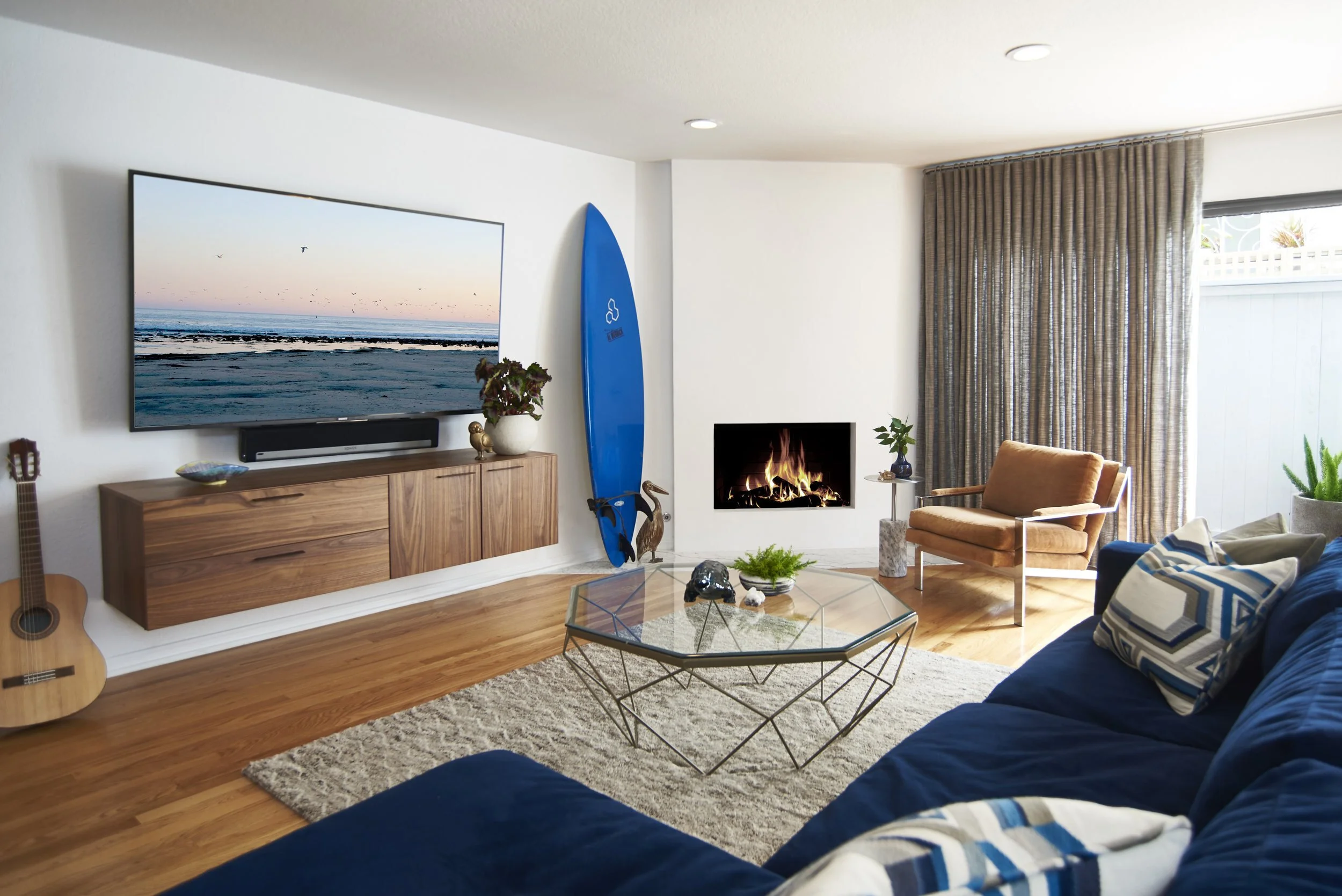
One piece of creating open and safe relationships with clients is by using inclusive design language. Inclusive language is defined by the Linguistic Society of America as language that "acknowledges diversity, conveys respect to all people, is sensitive to differences, and promotes equal opportunities." Considering language choice does not only help create a more understanding environment between designer and client, but the entire studio team, vendors, and tradespeople. Using inclusive home design language is a small but crucial step in creating open communication and trust between everyone involved in a project.

There is a long history of home design, grounded in tradition. Learning the historical context of the language used both within design and frequently in any workplace helps us understand if the language is supportive or can cause hurt or harm. Our design studio encourages continued education and learning for our whole team. At our weekly meetings, we share information we've learned in classes we've taken, articles or books we've read, or even conversations that may have opened our thinking. Recently, we have put effort into considering the language surrounding home design.

Recently there was a push in the real estate and home design community to eliminate the term "master bedroom" due to its loaded history, replacing it with "primary bedroom." This step towards considering the legacy of language so frequently overlooked had us wondering, where does other common design language originate? How can we improve our communication to match our intentions as home designers and create welcoming, inclusive, and adaptive spaces?

Through conversations and research, here are a few of the terms we have opted to replace as a studio and the alternatives we have adapted:
Powder room: While the term originated to reference a room where one powdered their wig, the phrase later took on gendered connotations around "powdering one's nose." The language has been replaced with "half-bath" for a more approachable and less gendered option.
Ladies and gentlemen or guys/gals: We have opted for folks, team, or friends for an option that does not assume or exclude gender identities.
"Man" as in, man the front desk, manmade, manpower: Our studio is replacing these with human-made, human power, staff the front desk for options that do not assert gender dominance or preference.
Grandfather: This phrase, commonly used in home design practices to indicate a non-conforming, pre-existing condition that may remain in violation of the building code, originated in the American South in the 1890s to defy the 15th Amendment and prevent Black Americans from voting. We've opted to use legacy or exempted.
Tipping Point: The phrase was first popularized when referencing white families leaving a neighborhood when a certain number of Black people moved in. We have opted for climax, peak, or crossroads.
His and hers closets or bathrooms: While commonly used in housing and real estate, the wording is gendered and assumes a hetero-normative lifestyle. We have switched to dual closets or dual bathrooms to describe the spaces without attaching any presumptions to their use.
Walk-up building: We are opting for non-elevator building to avoid language associated with ability.
Allowed: Frequently used conversationally, allowed implies power over another person to grant permission, and is being replaced with invited.
Discovered: In the context of "we discovered this artist's work," the word reinforces colonialist language and systems. We are opting for "we have learned of".
Blind approval: We are instead using unquestioned approval, automatic approval.
Idioms: Our studio is making an effort to avoid any idioms and instead speak literally. Many of these phrases have loaded historical origins, and because they are often regional, they may also be confusing or unclear, muddling communication.
If you are interested in learning more about inclusive language, here are a few of many available resources:
While language is only a piece of creating a safe and welcoming space, it is an important one to set the stage for accessibility and break a language pattern that carries an outdated and harmful legacy. This process is an ongoing one, and we are continuing to learn and adapt, both in our language use and in our design practice. We encourage you to join us in a collaborative effort to adapt, update, and improve our communication and continue in the ongoing conversation surrounding compassionate home design.
Sarah Barnard is a WELL and LEED accredited designer and creator of environments that support mental, physical and emotional wellbeing. She creates highly personalized, restorative spaces that are deeply connected to art and the preservation of the environment. An advocate for consciousness, inclusivity, and compassion in the creative process, Sarah has been quoted by Architectural Digest, Elle Décor, Vouge, Real Simple, HGTV and many other publications. Sarah was recognized as a “Ones to Watch” Scholar by the American Society of Interior Designers (ASID).

Cosmopolitcal Design: A New Modality Harnesses the Connection between Home and Nature

With global society and climate in flux, mapping out new ways to live and create in the world has become an essential project. Amid the competing approaches to this transformation, the philosophical school of cosmopolitics, as its name suggests, addresses this challenge in a uniquely holistic way and presents an entirely new perspective on the human relationship with the world.
Albena Yaneva, in her introduction to What is Cosmopolitical Design?: Design, Nature, and the Built Environment, explains that “Cosmopolitical thinkers...see nature as no longer being unified enough to provide a stabilizing pattern for the experience of humans; it is not ‘out there,’ a simple backdrop for human activities.” Cosmopolitics distinguishes itself from cosmopolitanism by positing a relationship with nature and its non-human denizens defined by cohabitation rather than dominance. As Yaneva writes, “These thinkers abandon the modernist idea of nature as being external to the human experience—a nature that can be mastered by engineers and scientists from outside.”

How does this cosmopolitical perspective manifest in the world of home design? To Yaneva, “It challenges design...to encourage the enactment of new relationships both within and potentially outside the designed space.” Cosmopolitical home design is deeply tied to its locality and integrated with its environment. Yaneva describes cosmopolitical design as “required more than ever to address the primordial question of what it means to live together. That is, the co-existence of humans and non-humans, of how they share space and find ways to live together in peace.”
Because the cosmopolitical way of thinking is so all-encompassing, the approaches to incorporating cosmopolitics into home design are fittingly varied and can be scaled to projects as vast as urban planning or as circumscribed as landscaping a backyard. Manifestations of cosmopolitical home design can range from home renovation with the local climate in mind (for example, placing windows for optimal warmth or cooling of interior spaces) to pollinator-friendly gardens teeming with plants indigenous to their region.

To interior designer Sarah Barnard, WELL AP + LEED AP, bringing cosmopolitics into her home design practice means cultivating spaces that are specific both to her clients and as well as to the local environment and that encourage an accord with the natural world. Sarah says, “Finding ways to harmonize the design of a space to a specific environment instead of working against it is both challenging and rewarding. When a designed space and its greater environment are fully integrated, the effect is almost easier to feel than observe.”
Sarah explains, “I always look for opportunities to create inviting connections between the indoors and the outdoors. This continuity with the natural world is beneficial for emotional and mental health—it’s not just a source of beauty but nourishment.” For an artist’s bungalow, Sarah created a visual continuity between lush indoor plant life and the garden outside, and then took it a step further. Sarah designed the outdoor garden to support pollinators, birds, and other wildlife. The garden is a Certified Monarch Waystation, providing resources to support migrating Monarch butterflies by providing food, water, cover. Sarah said, “Designing homes for wellbeing doesn’t have to stop at the comfort of the client. Incorporating elements of design that nurture the local ecology deepen our relationship with nature and result in spaces that are unified with their surroundings.”

This particular expression of cosmopolitical home design can be achieved even with limited outdoor space. For an oceanview penthouse, Sarah transformed a balcony into an inviting habitat for local and migrating wildlife by adding potted olive trees and an herb garden. “Considering plants not just for their decorative beauty but also what they can offer to the local environment is a concept that works on virtually any scale,” Sarah says. To decorate the interiors, Sarah selected natural and eco-friendly furnishings and textiles, adding that “Organic materials have a gentler environmental impact, and from a wellness perspective, are kinder to the people who live with them.”

When selecting materials and furnishings for home decorating, Sarah often looks to her clients’ priorities to guide her approach to creating spaces that embody a cosmopolitical perspective. For one high-rise suite, the owner’s love of animals was demonstrated not only through the choice of art and decorative objects, but also wanted this care toward animals extended outside home design and beyond aesthetics. Sarah addressed this by using exclusively vegan materials and furnishings for this project. Sarah explains, “No space exists in a vacuum—every object and material we use has a footprint that goes well beyond the front door, so considering the story of the materials we use and the impact that they have on the world is a way to invite cosmopolitical ideas into home design.”

Sustainable materials can also have unexpected origins. For the kitchen of a historic craftsman bungalow, Sarah installed a countertop made of recycled beer bottles, a non-extractive alternative to a more traditional quarried stone countertop. “Not only is the material beautiful and environmentally conscious, but there’s also a little whimsy in how it reinvents something ordinary and adds character to the space,” Sarah says. The implications behind cosmopolitical home design may be weighty, but there is always room for playfulness.

“When I look at my work from a cosmopolitical perspective,” says Sarah, “I see tremendous opportunity for creativity. We are seeing our way of life change in real-time, and as a home designer, I’m lucky to be able to be a part of facilitating that transformation for my clients.”

Sarah Barnard is a WELL and LEED accredited designer and creator of environments that support mental, physical and emotional wellbeing. She creates highly personalized, restorative spaces that are deeply connected to art and the preservation of the environment. An advocate for consciousness, inclusivity, and compassion in the creative process, Sarah’s work has been recognized by Architectural Digest, Elle Décor, Real Simple, HGTV and many other publications. Sarah was recognized as a “Ones to Watch” Scholar by the American Society of Interior Designers (ASID).

How an expertly designed home can be better than a luxury vacation

Forget about unexpected flight delays, cramped legroom, and coping with jet lag — this summer, consider channeling vacation vibes at home instead. Creative home design can make your bedroom feel like a five-star hotel or transform your backyard into a resort-style retreat; no reservation required.
Sarah Barnard Design, WELL AP + LEED AP, creates restorative, hospitable spaces reminiscent of her clients' favorite destinations. Here we reflect on four of her past travel-inspired projects to show how thoughtful home design can replicate the health benefits of taking a vacation.

Paris: Park View pied-à-terre
Perhaps the best part of staying in a luxury hotel is the luxurious sleep experience. While you might not be able to request turndown service, selecting a plush organic mattress, high-quality linens, hypoallergenic pillows, and sunlight-blocking window treatments can ensure a restful slumber every night of the week.

"An ideal sleeping space is serene, outfitted with natural materials, and maintains a visual connection to the outdoors," explains Sarah. "A completely natural bed can often provide improved air quality and make a marked improvement for chemically sensitive people and/or people who suffer from allergies."


For a Francophile at heart, Sarah designed the bedrooms of a park view pied-à-terre to resemble a boutique hotel in the 16th arrondissement, focusing on high thread-count sheets, soft, romantic lighting, curated artwork, and beautifully-arranged flowers. The antique-inspired furnishings were custom made by local craftspeople using non-toxic, sustainable materials.

Tulum: Serene Scandifornian
Being on vacation often means immersing yourself in nature, which benefits physical health and mental well-being. Establishing a connection to the outdoors, whether it be a verdant view through a kitchen window or an oil painting of a seascape, can boost your mood and brainpower, according to a 2001 study by University of Michigan psychology professor Rachel Kaplan.


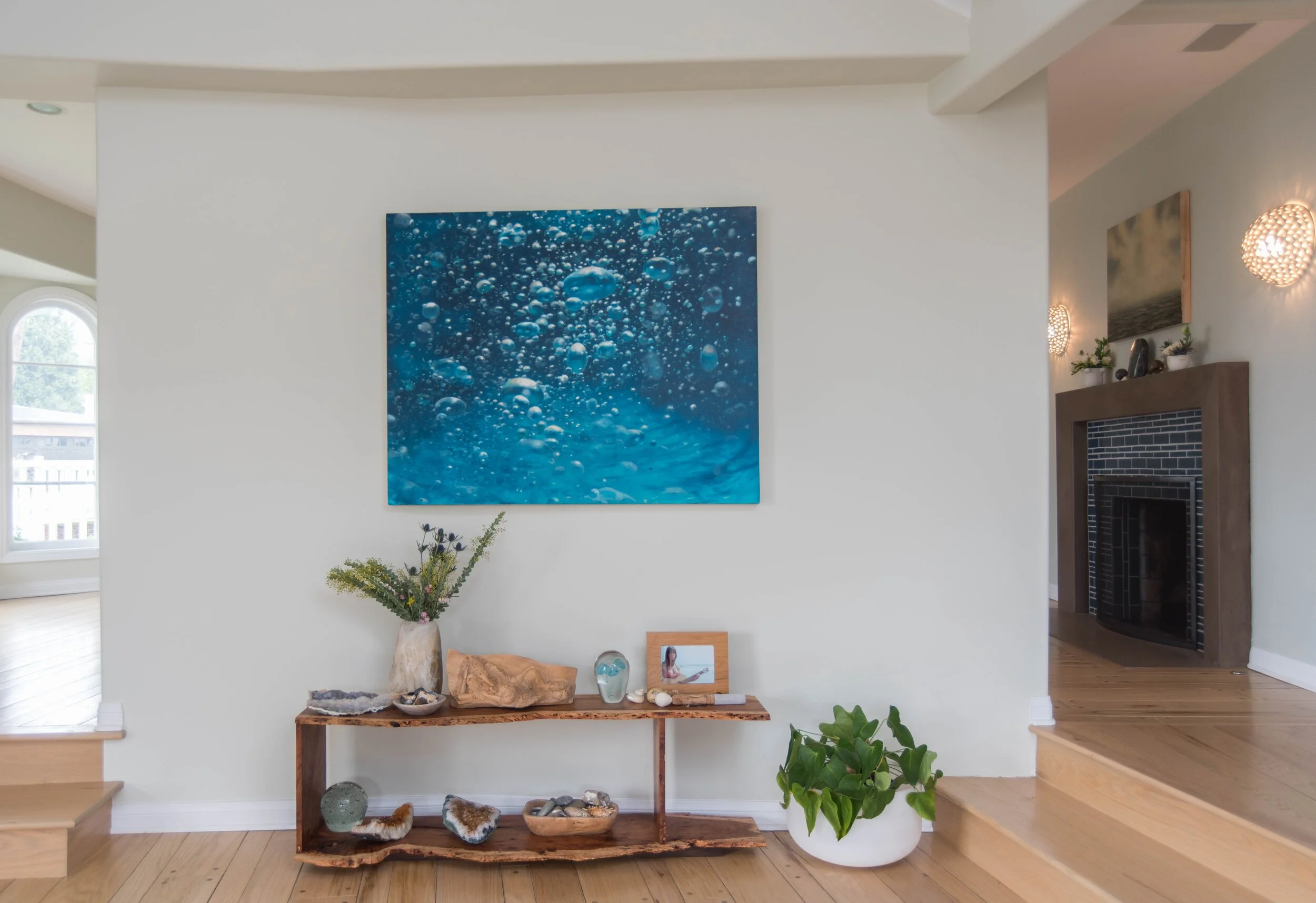


Sarah brought Tulum's beachy-bohemian stylings to a Southern California family home by embracing neutral colors and oceanic motifs, including coral-inspired wall sconces and a custom concrete fireplace with wave-like etchings. The floor pillows provide a laid-back feel, while the live-edge coffee table is reminiscent of a piece of driftwood. Collected shells and a photorealist painting by Eric Zener add to the room's organic feel.

Cape Cod: Cape Cod Guest Retreat
If spending more time outdoors is at the top of your staycation to-do list, consider revamping your alfresco living space and summer garden. Tending to plants can cultivate happiness at the same rate as many common forms of exercise, according to a recent study published in the Landscape and Urban Planning academic journal. Plus, you can use the fruits of your labor to whip up a delicious meal or arrange a colorful centerpiece.
"Many clients are beginning to realize that there is a dramatic benefit to home design that nourishes our desire to be close to nature," explains Sarah.
The home designer helped the owner transform an urban backyard into a coastal New England getaway, complete with a guest cottage and private pool. Using the retreat's natural surroundings as a jumping-off point, Sarah incorporated botanical prints, earthy hues, and rich wood furniture.


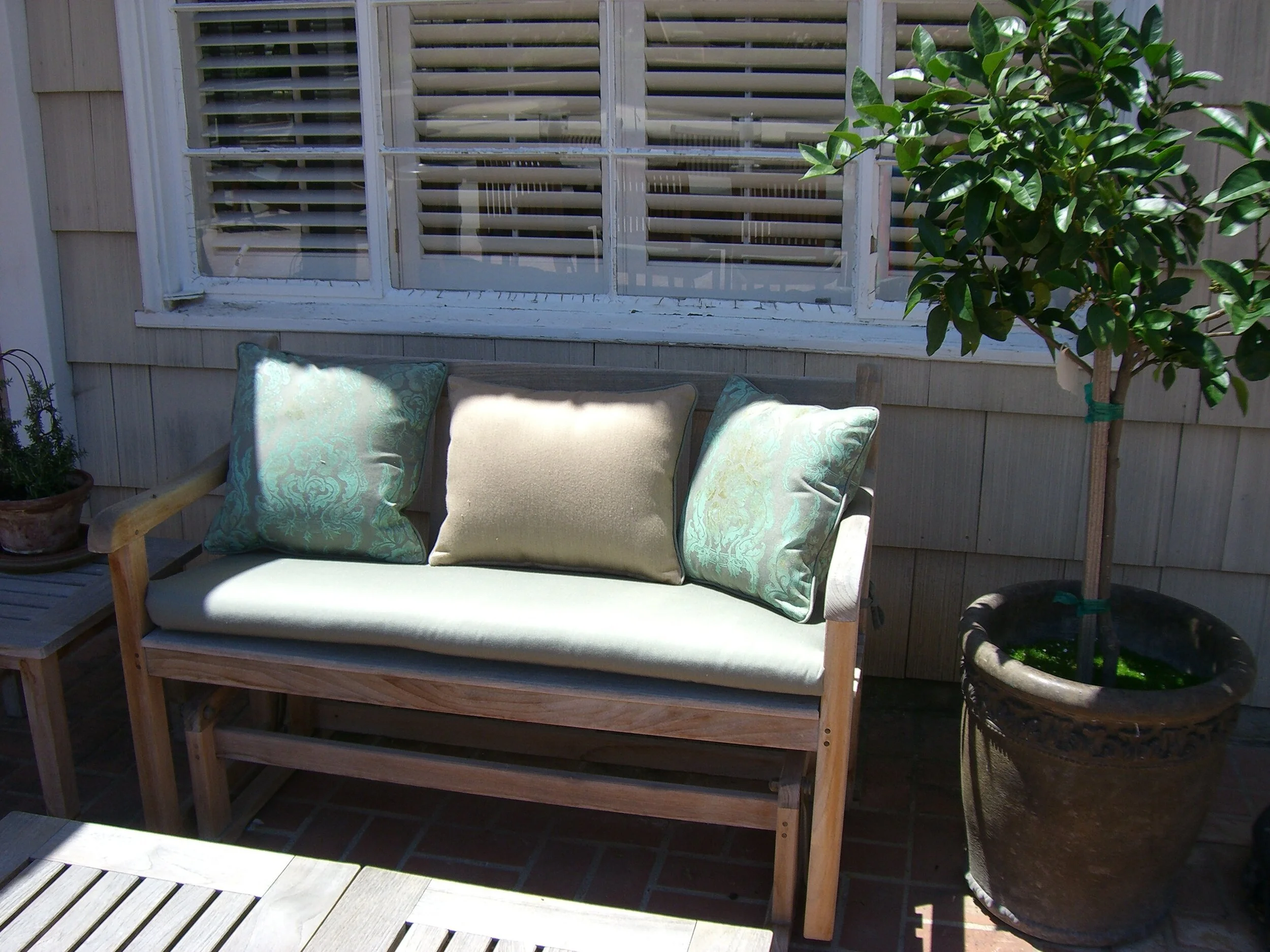
Outside, weathered teak loungers covered with hand-printed outdoor textiles provide a comfortable spot to unwind by the pool. The lush gardens and meandering pathways give the backyard a sense of seclusion, making it feel like you're far away from the city's hustle and bustle.
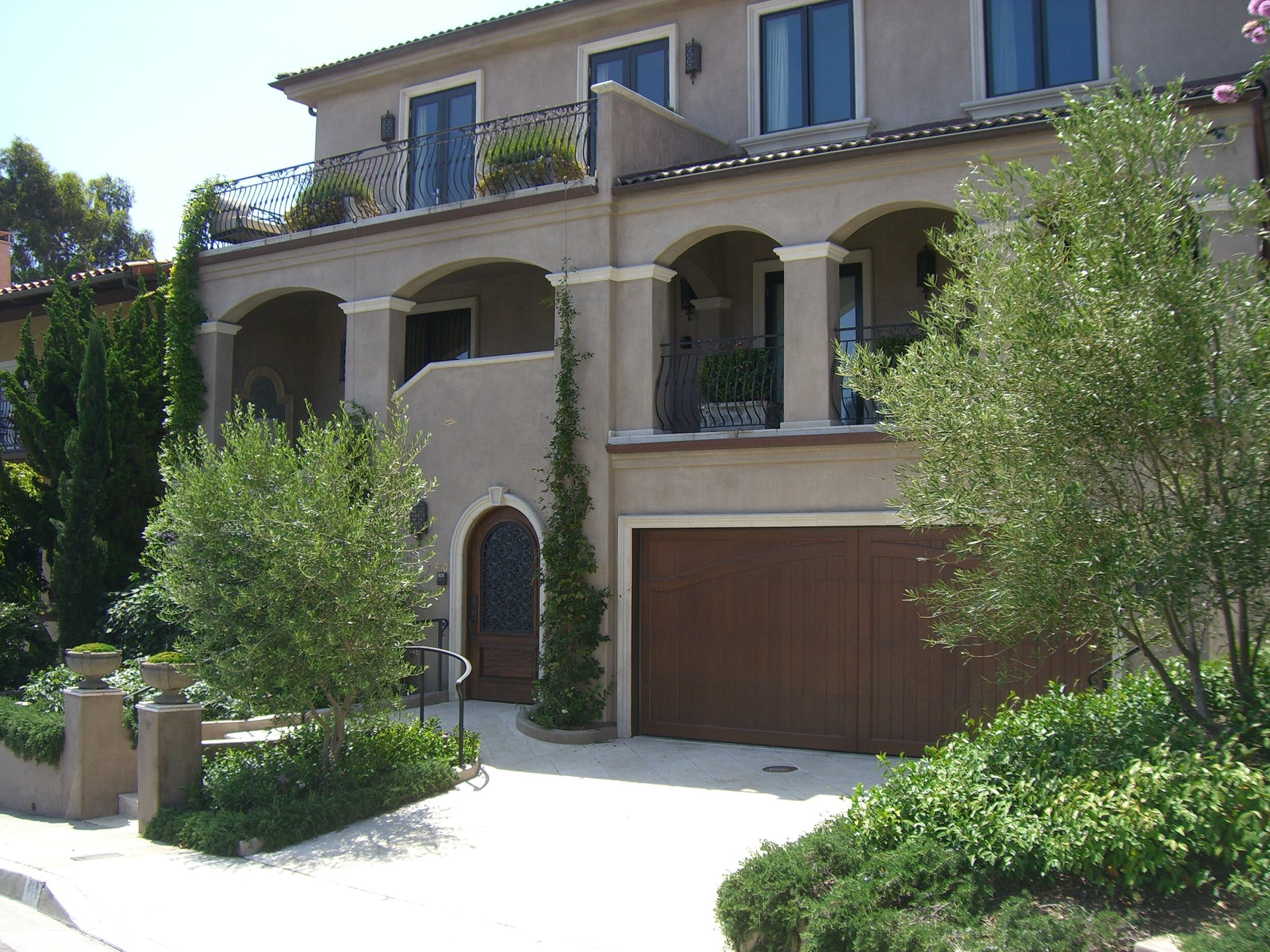
Lake Como: California Mediterranean Estate
Beyond a comfy bed, the cornerstone of a memorable hotel stay is a spa-like bathroom. Practice self-care by investing in wellness features that soothe sore muscles, calm the nervous system and ensure a restful night's sleep. An interior designer can help you create a serene bathroom environment that caters to your specific health needs and makes you feel like you're on a mini-vacation.

For a couple who has spent many summers on Lake Como's shores, Sarah designed a sophisticated ensuite bathroom with a therapeutic soaker tub, steam shower, and heated floor tiles. Marble-framed windows provide proper ventilation and tranquil views of nature, complementing the streamlined vanity concealing a warming drawer for freshly-laundered towels.

The dripping chandeliers are befitting of a luxury villa on the Italian Riviera and provide layered lighting for applying makeup or simply soaking in the tub. "Lighting is a crucial component of good bathroom design and can help improve the human experience," notes Sarah.


While a week-long getaway might provide you with temporary pleasure and relaxation, beautiful and considered home design can make your space feel like a year-round sanctuary. Taking inspiration from your top travel destinations will evoke happy memories and allow you to reap the many health benefits of a vacation without ever leaving home.

Sarah Barnard, WELL AP and LEED AP, designs healthy, happy, personalized spaces that connect deeply to nature and art. Barnard has been featured in publications internationally and was named a "Ones to Watch Scholar" by the American Society of Interior Designers. Empathy and mindfulness are the foundation of her practice creating healing, supportive environments that enhance life.