


Inclusive Design Language : Building a Foundation for Wellbeing

The first step in any home design process is learning who you are designing for and their design needs. Particularly when designing for something as intimate as a residential space, effective home design requires a great deal of honesty, vulnerability, and open communication with all parties. When clients are open with us, we can design genuinely supportive spaces. If clients feel embarrassed or guarded, they may not feel comfortable being honest about their lifestyle, limiting the ability of the designed space to serve them.

For example, someone who fears judgment may not want to admit to the amount of time they spend curled up watching movies in the evenings, despite being a common way to escape the day and recover. They may perhaps instead overemphasize time spent devoted to their yoga practice. A home designer may then place ample attention on building a dream yoga studio instead of investing in a beautiful, ergonomic, and supportive movie viewing space that would contribute more to daily life. While this is a lighthearted example, there are many instances where this may play out in a more harmful or isolating way. Creating an open dialogue is crucial in preventing any missteps when designing a home.
One piece of creating open and safe relationships with clients is by using inclusive design language. Inclusive language is defined by the Linguistic Society of America as language that "acknowledges diversity, conveys respect to all people, is sensitive to differences, and promotes equal opportunities." Considering language choice does not only help create a more understanding environment between designer and client, but the entire studio team, vendors, and tradespeople. Using inclusive home design language is a small but crucial step in creating open communication and trust between everyone involved in a project.

There is a long history of home design, grounded in tradition. Learning the historical context of the language used both within design and frequently in any workplace helps us understand if the language is supportive or can cause hurt or harm. Our design studio encourages continued education and learning for our whole team. At our weekly meetings, we share information we've learned in classes we've taken, articles or books we've read, or even conversations that may have opened our thinking. Recently, we have put effort into considering the language surrounding home design.

Recently there was a push in the real estate and home design community to eliminate the term "master bedroom" due to its loaded history, replacing it with "primary bedroom." This step towards considering the legacy of language so frequently overlooked had us wondering, where does other common design language originate? How can we improve our communication to match our intentions as home designers and create welcoming, inclusive, and adaptive spaces?

Through conversations and research, here are a few of the terms we have opted to replace as a studio and the alternatives we have adapted:
Powder room: While the term originated to reference a room where one powdered their wig, the phrase later took on gendered connotations around "powdering one's nose." The language has been replaced with "half-bath" for a more approachable and less gendered option.
Ladies and gentlemen or guys/gals: We have opted for folks, team, or friends for an option that does not assume or exclude gender identities.
"Man" as in, man the front desk, manmade, manpower: Our studio is replacing these with human-made, human power, staff the front desk for options that do not assert gender dominance or preference.
Grandfather: This phrase, commonly used in home design practices to indicate a non-conforming, pre-existing condition that may remain in violation of the building code, originated in the American South in the 1890s to defy the 15th Amendment and prevent Black Americans from voting. We've opted to use legacy or exempted.
Tipping Point: The phrase was first popularized when referencing white families leaving a neighborhood when a certain number of Black people moved in. We have opted for climax, peak, or crossroads.
His and hers closets or bathrooms: While commonly used in housing and real estate, the wording is gendered and assumes a hetero-normative lifestyle. We have switched to dual closets or dual bathrooms to describe the spaces without attaching any presumptions to their use.
Walk-up building: We are opting for non-elevator building to avoid language associated with ability.
Allowed: Frequently used conversationally, allowed implies power over another person to grant permission, and is being replaced with invited.
Discovered: In the context of "we discovered this artist's work," the word reinforces colonialist language and systems. We are opting for "we have learned of".
Blind approval: We are instead using unquestioned approval, automatic approval.
Idioms: Our studio is making an effort to avoid any idioms and instead speak literally. Many of these phrases have loaded historical origins, and because they are often regional, they may also be confusing or unclear, muddling communication.
If you are interested in learning more about inclusive language, here are a few of many available resources:
While language is only a piece of creating a safe and welcoming space, it is an important one to set the stage for accessibility and break a language pattern that carries an outdated and harmful legacy. This process is an ongoing one, and we are continuing to learn and adapt, both in our language use and in our design practice. We encourage you to join us in a collaborative effort to adapt, update, and improve our communication and continue in the ongoing conversation surrounding compassionate home design.

Sarah Barnard is a WELL and LEED accredited designer and creator of environments that support mental, physical and emotional wellbeing. She creates highly personalized, restorative spaces that are deeply connected to art and the preservation of the environment. An advocate for consciousness, inclusivity, and compassion in the creative process, Sarah has been quoted by Architectural Digest, Elle Décor, Vouge, Real Simple, HGTV and many other publications. Sarah was recognized as a “Ones to Watch” Scholar by the American Society of Interior Designers (ASID).

Cosmopolitcal Design: A New Modality Harnesses the Connection between Home and Nature

With global society and climate in flux, mapping out new ways to live and create in the world has become an essential project. Amid the competing approaches to this transformation, the philosophical school of cosmopolitics, as its name suggests, addresses this challenge in a uniquely holistic way and presents an entirely new perspective on the human relationship with the world.
Albena Yaneva, in her introduction to What is Cosmopolitical Design?: Design, Nature, and the Built Environment, explains that “Cosmopolitical thinkers...see nature as no longer being unified enough to provide a stabilizing pattern for the experience of humans; it is not ‘out there,’ a simple backdrop for human activities.” Cosmopolitics distinguishes itself from cosmopolitanism by positing a relationship with nature and its non-human denizens defined by cohabitation rather than dominance. As Yaneva writes, “These thinkers abandon the modernist idea of nature as being external to the human experience—a nature that can be mastered by engineers and scientists from outside.”

How does this cosmopolitical perspective manifest in the world of home design? To Yaneva, “It challenges design...to encourage the enactment of new relationships both within and potentially outside the designed space.” Cosmopolitical home design is deeply tied to its locality and integrated with its environment. Yaneva describes cosmopolitical design as “required more than ever to address the primordial question of what it means to live together. That is, the co-existence of humans and non-humans, of how they share space and find ways to live together in peace.”
Because the cosmopolitical way of thinking is so all-encompassing, the approaches to incorporating cosmopolitics into home design are fittingly varied and can be scaled to projects as vast as urban planning or as circumscribed as landscaping a backyard. Manifestations of cosmopolitical home design can range from home renovation with the local climate in mind (for example, placing windows for optimal warmth or cooling of interior spaces) to pollinator-friendly gardens teeming with plants indigenous to their region.

To interior designer Sarah Barnard, WELL AP + LEED AP, bringing cosmopolitics into her home design practice means cultivating spaces that are specific both to her clients and as well as to the local environment and that encourage an accord with the natural world. Sarah says, “Finding ways to harmonize the design of a space to a specific environment instead of working against it is both challenging and rewarding. When a designed space and its greater environment are fully integrated, the effect is almost easier to feel than observe.”
Sarah explains, “I always look for opportunities to create inviting connections between the indoors and the outdoors. This continuity with the natural world is beneficial for emotional and mental health—it’s not just a source of beauty but nourishment.” For an artist’s bungalow, Sarah created a visual continuity between lush indoor plant life and the garden outside, and then took it a step further. Sarah designed the outdoor garden to support pollinators, birds, and other wildlife. The garden is a Certified Monarch Waystation, providing resources to support migrating Monarch butterflies by providing food, water, cover. Sarah said, “Designing homes for wellbeing doesn’t have to stop at the comfort of the client. Incorporating elements of design that nurture the local ecology deepen our relationship with nature and result in spaces that are unified with their surroundings.”

This particular expression of cosmopolitical home design can be achieved even with limited outdoor space. For an oceanview penthouse, Sarah transformed a balcony into an inviting habitat for local and migrating wildlife by adding potted olive trees and an herb garden. “Considering plants not just for their decorative beauty but also what they can offer to the local environment is a concept that works on virtually any scale,” Sarah says. To decorate the interiors, Sarah selected natural and eco-friendly furnishings and textiles, adding that “Organic materials have a gentler environmental impact, and from a wellness perspective, are kinder to the people who live with them.”

When selecting materials and furnishings for home decorating, Sarah often looks to her clients’ priorities to guide her approach to creating spaces that embody a cosmopolitical perspective. For one high-rise suite, the owner’s love of animals was demonstrated not only through the choice of art and decorative objects, but also wanted this care toward animals extended outside home design and beyond aesthetics. Sarah addressed this by using exclusively vegan materials and furnishings for this project. Sarah explains, “No space exists in a vacuum—every object and material we use has a footprint that goes well beyond the front door, so considering the story of the materials we use and the impact that they have on the world is a way to invite cosmopolitical ideas into home design.”

Sustainable materials can also have unexpected origins. For the kitchen of a historic craftsman bungalow, Sarah installed a countertop made of recycled beer bottles, a non-extractive alternative to a more traditional quarried stone countertop. “Not only is the material beautiful and environmentally conscious, but there’s also a little whimsy in how it reinvents something ordinary and adds character to the space,” Sarah says. The implications behind cosmopolitical home design may be weighty, but there is always room for playfulness.

“When I look at my work from a cosmopolitical perspective,” says Sarah, “I see tremendous opportunity for creativity. We are seeing our way of life change in real-time, and as a home designer, I’m lucky to be able to be a part of facilitating that transformation for my clients.”

Sarah Barnard is a WELL and LEED accredited designer and creator of environments that support mental, physical and emotional wellbeing. She creates highly personalized, restorative spaces that are deeply connected to art and the preservation of the environment. An advocate for consciousness, inclusivity, and compassion in the creative process, Sarah’s work has been recognized by Architectural Digest, Elle Décor, Real Simple, HGTV and many other publications. Sarah was recognized as a “Ones to Watch” Scholar by the American Society of Interior Designers (ASID).

Interior Design for Wellbeing: A special presentation at the Helms Bakery Design District

INTERIOR DESIGNER SARAH BARNARD PHOTOGRAPHED BY ACE MISUNIAS.
Hosted by OM and PLP SoCal, the inaugural session of OM Chats gathers leading voices in architecture, interior, and product design for a morning discussion about the ideas shaping home design and wellness. Speakers include Sarah Barnard, WELL AP + LEED AP, principal of Sarah Barnard Design, Julie Smith-Clementi, AIA, IDSA, architect and product designer, and Adaeze Cadet, AIA, LEED AP, BD+C, vice president at HKS.
The discussion centered around how to design spaces and products that reflect a broader — more empathetic — understanding of the human experience in the workplace, health care spaces, educational facilities, and wherever people gather and live.
Sarah Barnard is a WELL and LEED accredited designer and creator of environments that support mental, physical and emotional wellbeing. She creates highly personalized, restorative spaces that are deeply connected to art and the preservation of the environment. An advocate for consciousness, inclusivity, and compassion in the creative process, Sarah’s work has been recognized by Architectural Digest, Elle Décor, Real Simple, HGTV and many other publications. Sarah was recognized as a “Ones to Watch” Scholar by the American Society of Interior Designers (ASID).

How an expertly designed home can be better than a luxury vacation

Forget about unexpected flight delays, cramped legroom, and coping with jet lag — this summer, consider channeling vacation vibes at home instead. Creative home design can make your bedroom feel like a five-star hotel or transform your backyard into a resort-style retreat; no reservation required.
Sarah Barnard Design, WELL AP + LEED AP, creates restorative, hospitable spaces reminiscent of her clients' favorite destinations. Here we reflect on four of her past travel-inspired projects to show how thoughtful home design can replicate the health benefits of taking a vacation.

Paris: Park View pied-à-terre
Perhaps the best part of staying in a luxury hotel is the luxurious sleep experience. While you might not be able to request turndown service, selecting a plush organic mattress, high-quality linens, hypoallergenic pillows, and sunlight-blocking window treatments can ensure a restful slumber every night of the week.

"An ideal sleeping space is serene, outfitted with natural materials, and maintains a visual connection to the outdoors," explains Sarah. "A completely natural bed can often provide improved air quality and make a marked improvement for chemically sensitive people and/or people who suffer from allergies."


For a Francophile at heart, Sarah designed the bedrooms of a park view pied-à-terre to resemble a boutique hotel in the 16th arrondissement, focusing on high thread-count sheets, soft, romantic lighting, curated artwork, and beautifully-arranged flowers. The antique-inspired furnishings were custom made by local craftspeople using non-toxic, sustainable materials.

Tulum: Serene Scandifornian
Being on vacation often means immersing yourself in nature, which benefits physical health and mental well-being. Establishing a connection to the outdoors, whether it be a verdant view through a kitchen window or an oil painting of a seascape, can boost your mood and brainpower, according to a 2001 study by University of Michigan psychology professor Rachel Kaplan.


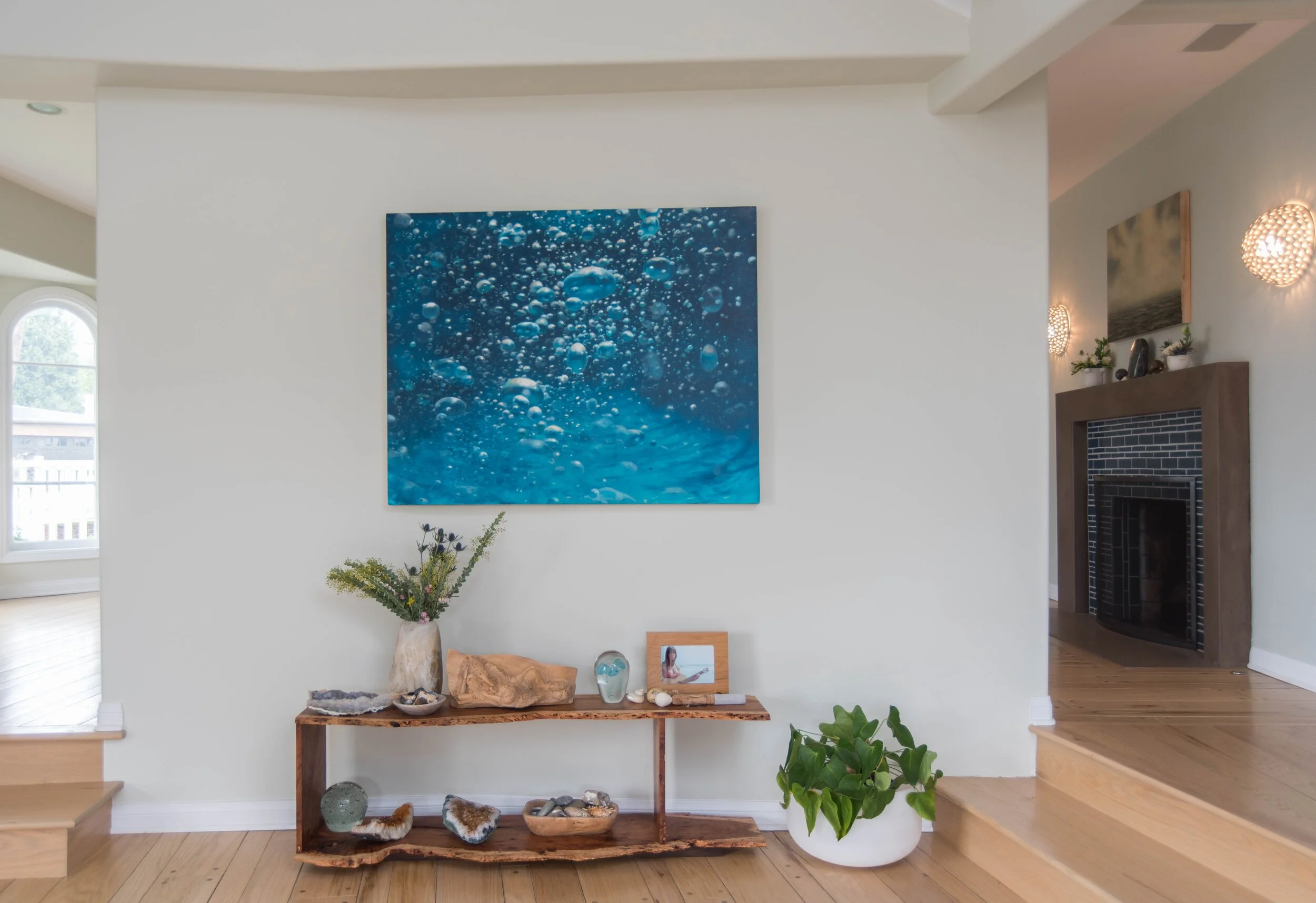


Sarah brought Tulum's beachy-bohemian stylings to a Southern California family home by embracing neutral colors and oceanic motifs, including coral-inspired wall sconces and a custom concrete fireplace with wave-like etchings. The floor pillows provide a laid-back feel, while the live-edge coffee table is reminiscent of a piece of driftwood. Collected shells and a photorealist painting by Eric Zener add to the room's organic feel.

Cape Cod: Cape Cod Guest Retreat
If spending more time outdoors is at the top of your staycation to-do list, consider revamping your alfresco living space and summer garden. Tending to plants can cultivate happiness at the same rate as many common forms of exercise, according to a recent study published in the Landscape and Urban Planning academic journal. Plus, you can use the fruits of your labor to whip up a delicious meal or arrange a colorful centerpiece.

"Many clients are beginning to realize that there is a dramatic benefit to home design that nourishes our desire to be close to nature," explains Sarah.
The home designer helped the owner transform an urban backyard into a coastal New England getaway, complete with a guest cottage and private pool. Using the retreat's natural surroundings as a jumping-off point, Sarah incorporated botanical prints, earthy hues, and rich wood furniture.


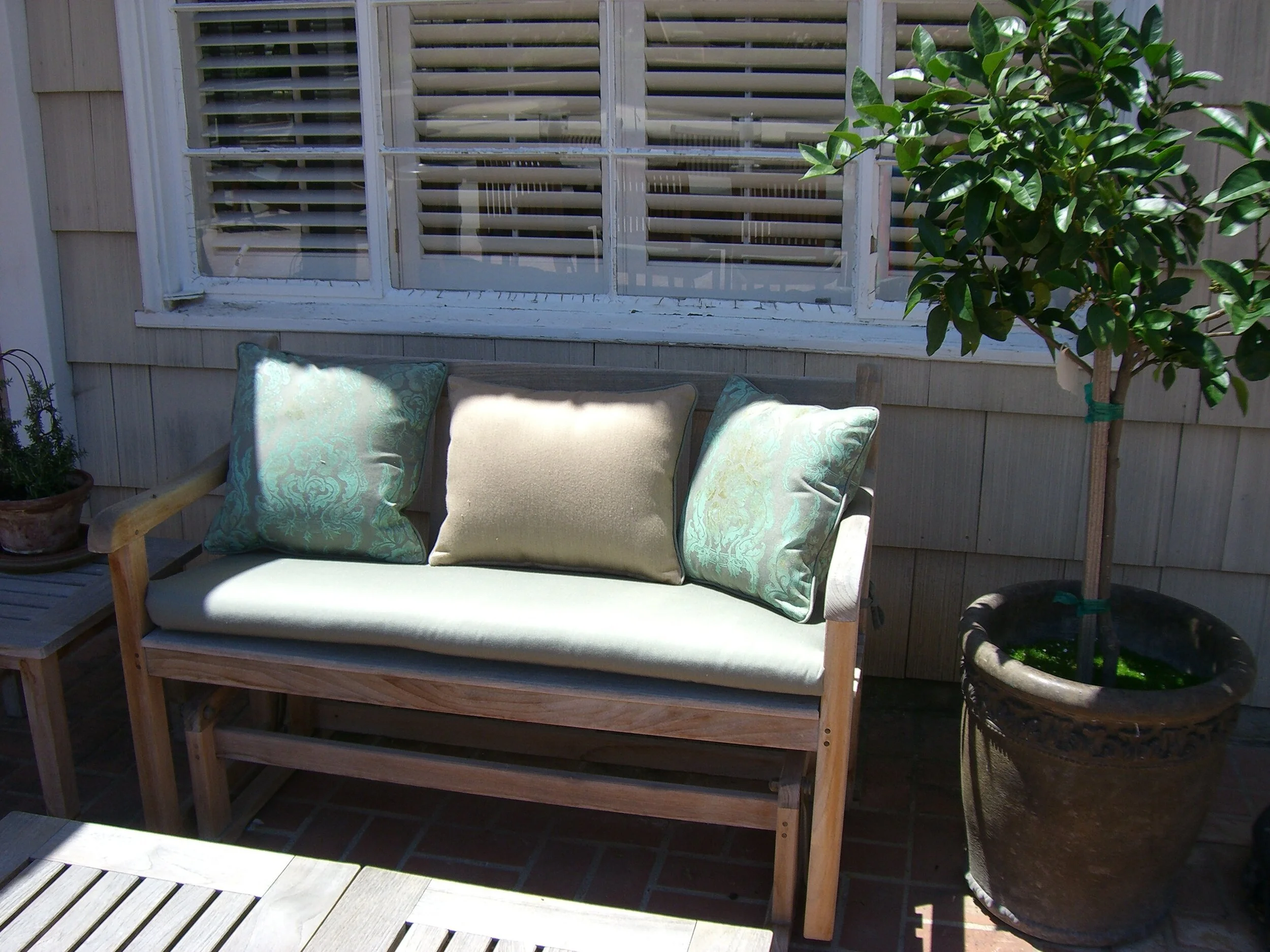
Outside, weathered teak loungers covered with hand-printed outdoor textiles provide a comfortable spot to unwind by the pool. The lush gardens and meandering pathways give the backyard a sense of seclusion, making it feel like you're far away from the city's hustle and bustle.
Lake Como: California Mediterranean Estate
Beyond a comfy bed, the cornerstone of a memorable hotel stay is a spa-like bathroom. Practice self-care by investing in wellness features that soothe sore muscles, calm the nervous system and ensure a restful night's sleep. An interior designer can help you create a serene bathroom environment that caters to your specific health needs and makes you feel like you're on a mini-vacation.

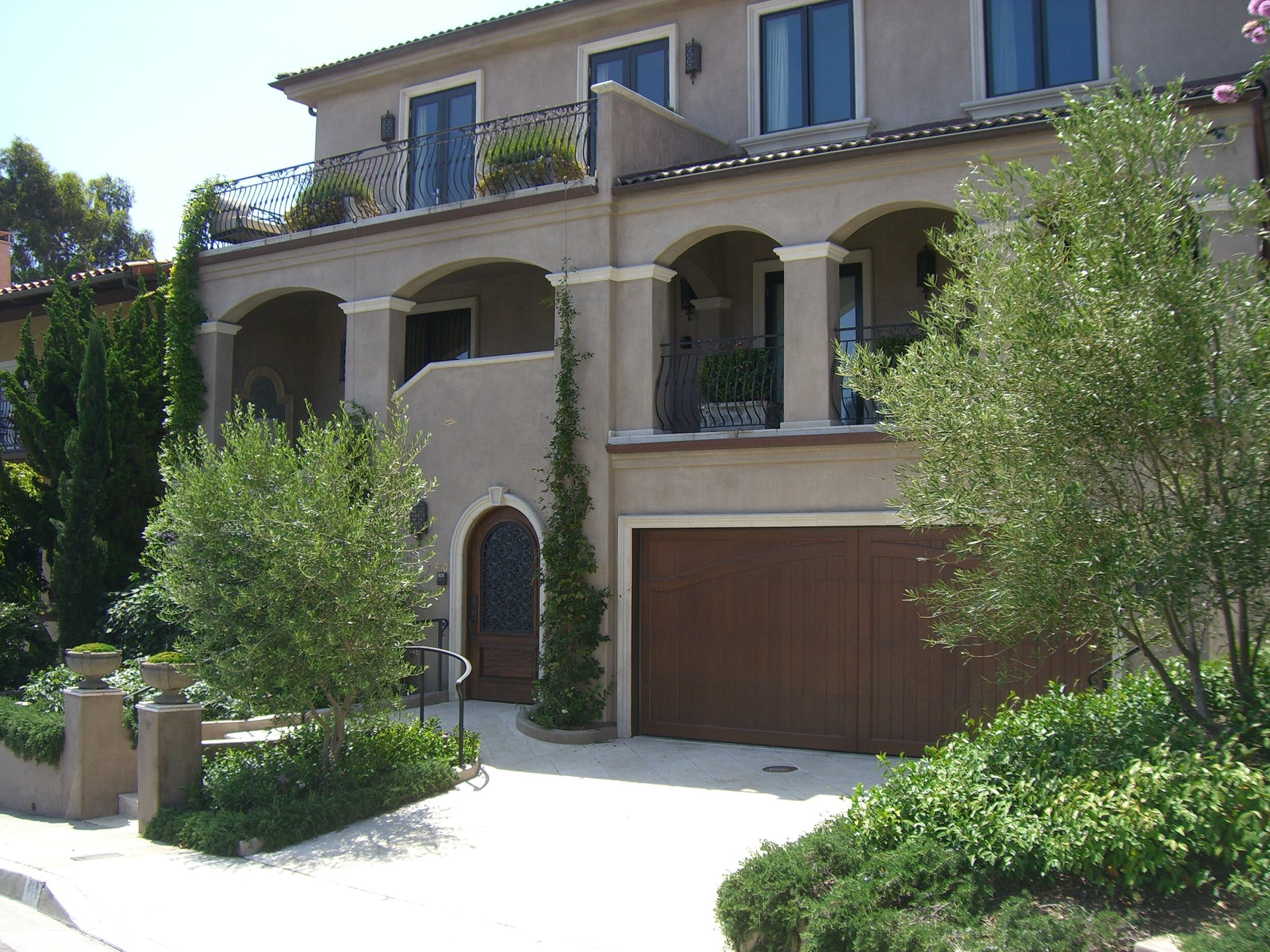
For a couple who has spent many summers on Lake Como's shores, Sarah designed a sophisticated ensuite bathroom with a therapeutic soaker tub, steam shower, and heated floor tiles. Marble-framed windows provide proper ventilation and tranquil views of nature, complementing the streamlined vanity concealing a warming drawer for freshly-laundered towels.

The dripping chandeliers are befitting of a luxury villa on the Italian Riviera and provide layered lighting for applying makeup or simply soaking in the tub. "Lighting is a crucial component of good bathroom design and can help improve the human experience," notes Sarah.


While a week-long getaway might provide you with temporary pleasure and relaxation, beautiful and considered home design can make your space feel like a year-round sanctuary. Taking inspiration from your top travel destinations will evoke happy memories and allow you to reap the many health benefits of a vacation without ever leaving home.

Sarah Barnard, WELL AP and LEED AP, designs healthy, happy, personalized spaces that connect deeply to nature and art. Barnard has been featured in publications internationally and was named a "Ones to Watch Scholar" by the American Society of Interior Designers. Empathy and mindfulness are the foundation of her practice creating healing, supportive environments that enhance life.

The Healing Power of Home: Sustaining and Nourishing our Bodies and Minds

CUSTOM KITCHEN DESIGN BY SARAH BARNARD, PHOTO BY STEVEN DEWALL.
As we collectively navigate this new way of living, I am thinking of you and your family and wishing wellness and security. With so many unknowns, I am grateful for the sureness of a community that uplifts with compassion, resilience, and ingenuity, and offers inspiration to forge forward.
During a time when our world feels new and uncertain, our studio is drawing on the core foundational beliefs and principles behind our approach to home design. We create spaces that support health, emotional security, and wellness, that is the bedrock of our work. These ideals go beyond our creative process and into our working methods of designing homes. As a studio, we are building upon many of the systems we've previously had in place.

BESPOKE AMERICAN WALNUT KITCHEN CABINETS PAIRED WITH HANDMADE CERAMIC TILES BY CALIFORNIA BASED ARTISANS. INTERIOR DESIGN BY SARAH BARNARD, WELL AP + LEED AP. PHOTO BY STEVEN DEWALL.
Our studio has always aimed to work with local artisans and craftspeople when possible, and value these relationships now more than ever. Many supply chains are experiencing disruptions throughout the home design industry. We are working together with trusted vendors to source materials and find creative solutions during this difficult time.
In our homes, this time has offered an opportunity to examine our routines, and to look at our needs. Health, functionality, and wellbeing informed our process before the spread of COVID-19, and these factors are more crucial than ever as we continue to build supportive spaces for you and your family through mindful home design.

INTERIOR DESIGN BY SARAH BARNARD, PHOTO BY STEVEN DEWALL.
Many of us are facing challenges in caring for our loved ones, evolving and uncertain circumstances with work, homeschooling children, and maintaining our physical and emotional wellbeing. In addressing these struggles, we are turning to our homes for solutions, realizing more than ever the need for multi-functional and high performing living spaces.
Our regular team meetings are an opportunity for the studio to brainstorm and problem solve collectively, and recent conversations frequently turn to personal solutions for managing this time at home. We wish to extend this conversation to our community and clients and offer some of our favorite approaches for adapting our home design to these changing times.

COLORS INSPIRED BY NATURE CREATE THE PALETTE FOR THIS TRADITIONAL HOME. INTERIOR DESIGN BY SARAH BARNARD, PHOTO BY STEVEN DEWALL.
HOME HEALING QUICK TIPS
Structure your spaces for ease of movement, connectivity, and peace of mind. Move your workspace in front of your favorite exterior view.
Open your windows and cross-ventilate your home any day weather permits to improve indoor air quality and enjoy the mood-lifting benefits of watching birds and butterflies.
Scoot your coffee table to the side for extra room to play and exercise, and set it up with floor pillows for a new homework station for children.
Move your favorite painting to the room where you spend the most time, whether it's a home office, kitchen, or nursery, and enjoy the beauty and transcendence of art.
Use your occasion dishes more often, and if you're spending more time than you'd like inside the kitchen, bring your cutting board to the back yard.
Think about how your home is supporting your physical health and invest in materials that benefit indoor air quality. Be mindful when bringing new items in your home, avoid air fresheners, and fill vases with aromatic mint and rosemary.
Make sure your bedroom is supporting your sleep habits by clearing out clutter and adjusting lighting to meet your needs.
Carve out time with nature, even if it is tending to a favorite indoor plant or watching hummingbirds in your garden.

Be resourceful, get creative, trust your instincts, and listen to what your mind and body needs, and mold your home to fulfill those needs. And you can always call us if you need some ideas. Our studio and local craftspersons are here to serve.
While we discover methods to care for ourselves, we have learned the necessity and power of turning to others for support and assistance. We offer our support by helping create functional homes so that your safe place is also your ideal space.
We hope that this time to reassess, rearrange, and reconnect, can carry us into a healthier and more positive future, supported by homes that sustain and nourish our bodies and minds.

Sarah Barnard, WELL AP, and LEED AP designs healthy, happy, personalized spaces that connect deeply to nature and art. Empathy and mindfulness are the foundation of her practice creating healing, supportive environments that enhance life.

The Inclusive Kitchen: Universal Home Design Improves Quality of Life

INTERIOR DESIGN BY SARAH BARNARD. PHOTOS BY STEVEN DEWALL. ORIGINALLY PUBLISHED IN LADESIGN QUARTERLY, BY THE LOS ANGELES CHAPTER OF THE AMERICAN SOCIETY OF INTERIOR DESIGNERS.
Universal home design is intended to improve the quality of life for all users, regardless of age or ability. When applied to the kitchen, these principles should ensure safety, efficiency, and comfort. The term was first coined in the 1970s by architect and disability rights advocate Ronald Mace. Since then, universal home design practices have been rising steadily due to its inclusion in formal design education and support from professional associations like ASID, who provide research and case studies for universal design and aging in place.
In my practice, as a WELL and LEED accredited designer specializing in healthy, sustainable interiors, I often find that planning for the future can be intimidating for clients, but doing so ensures they will be happy spending a lifetime in their homes.
I recently completed a home remodel for a retiree, who wanted the kitchen to function well when cooking for one. However, she often hosts friends and family, so it also had to be designed with entertaining in mind.

Knowing the kitchen would be widely used, we considered universal home design principles to increase its functionality. The aesthetic was inspired by the cool, collected nature of the home's coastal locale and the utility and simplicity of Scandinavian design.
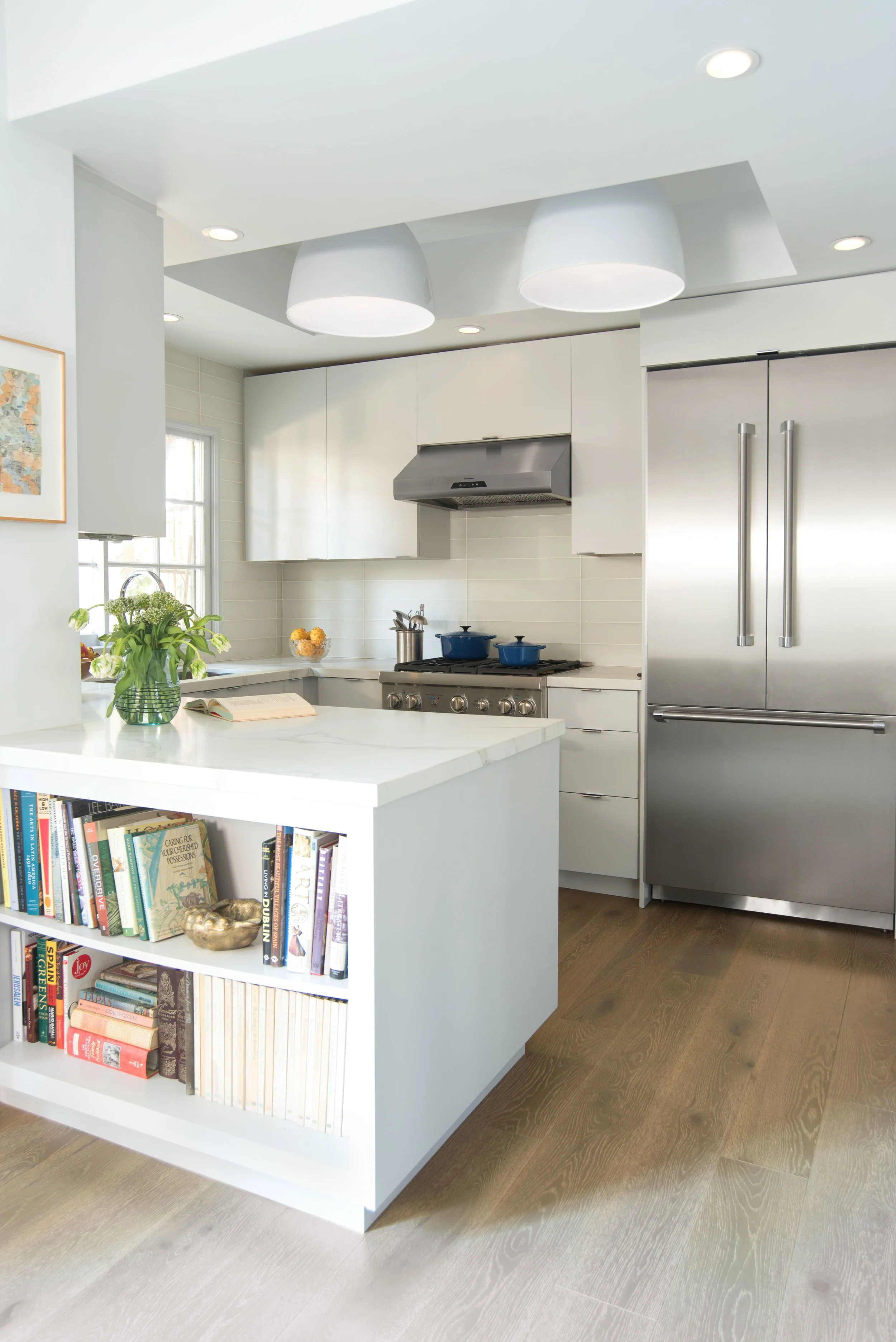
I specified a U-shape layout to provide unobstructed traffic flow and ample counter space. The kitchen is open to the dining area, and there are no barriers, such as steps or a doorway, to separate them. It's a confined space, which reduces the amount of back and forth travel.
I find that most clients are unwilling to plan for a mobility challenge they may never have. While we can't always get them to agree to a design that accommodates a wheelchair, clients are often comfortable with a clearance of 54 inches for mobility aids such as a walker or cane. If designing for wheelchair mobility, knee to toe clearance allows for easy access.

I used both upper and lower cabinets to give the homeowner plenty of storage. Keeping countertops clear, in turn, mitigates safety risks. The slide-out drawers are gentler on the back — she doesn't have to bend over or reach up high to access what she needs.
A large window provides views of the outdoors and welcomes natural light. Connecting with nature, even through a window, positively impacts our wellbeing by reducing blood pressure, slowing down our heart rate, and alleviating stress. Natural light, combined with the recessed lighting and oversized pendants, relieves eye strain and helps the homeowner safely perform tasks like chopping or peeling.
For the hardware, I chose large, integrated pulls instead of knobs because they're easier for stiff or shaky fingers to grasp. According to the Centers for Disease Control, 54.4 million Americans are affected by arthritis, the majority of whom are 65 and older. While a knob requires the user to bend their fingers to latch onto it, a cabinet with a pull can be opened with limited dexterity using only one or two fingers.

The homeowner preferred a single-lever faucet; however, if increased accessibility is the primary concern, touch-less faucets can be an excellent alternative. Clients may be hesitant to select this high-tech feature if their experience has been limited to unreliable public restrooms. Fortunately, more and more stylish options for residential spaces are becoming available.
If the homeowner were to change her mind, the electrical components could be concealed in a base cabinet or behind an access panel. It's essential to consider your surroundings when installing a touch-less model as some products will not operate correctly if they are in proximity to other metals, like a copper sink or stainless-steel backsplash.
The French door refrigerator can be opened without much exertion thanks to its oversized pulls, and the efficient design means everyday ingredients are displayed for easy access. It has a well-lit interior to aid those with vision loss.

The kitchen countertop is white engineered quartz with subtle gray veining. This human-made material is durable and stain-resistant, requiring less maintenance on behalf of the homeowner. People with impaired vision will be better able to identify the kitchen tools and ingredients in front of them, as the brilliant white creates high contrast. I sourced a cream-colored matte glass tile backsplash to prevent surface glare.
Natural French oak flooring was used throughout the open-concept space, eliminating any unsafe transitions. The material has a matte finish and was designed to be slip-resistant — an absolute must in the kitchen where spills are common. It also feels comfortable underfoot and has more spring to it than other flooring types, which is easier on the joints.
Open shelving on the back of the peninsula adds a pop of color to the space. This bookshelf created an opportunity to display some of her most treasured collectibles, which spark joy each and every time she sees them.

The antique rosewood dining table, sourced from Thailand by the homeowner, is located within close reach of the kitchen, so heavy platters of food needn't be carried far. The open floor plan makes it easy to converse with guests who are seated at the table while she's whipping up hors d' oeuvres in the kitchen. The built-in server provides an additional surface to set down dishes and clears up the dining table to prevent any accidents.
Universal home design can and should be both stylish and seamless. Reexamine the products, materials, and finishes you already use, and consider how they might be implemented in a way that supports people of all abilities. With this project, the homeowner was conscious of her potential future needs and entrusted us with creating a healthy, natural, and minimalist space that would suit her well in the long-term.
Sarah Barnard, WELL AP, and LEED AP designs healthy, happy, personalized spaces that connect deeply to nature and art. Empathy and mindfulness are the foundation of her practice creating healing, supportive environments that enhance life.

Think Universal

In a recent article in "Times Leader," Nancy Mattia explored universal home design with interior designer Sarah Barnard.
In the article, Mattia discusses the core ideas and considerations behind universal design when designing a residential or commercial environment.

"'Universal design takes into account a broad range of users and abilities,' says Sarah Barnard, a Los Angeles home designer. 'It makes sense for designers and builders to plan our projects with that in mind since great design should accommodate the widest number of users - ourselves, our kids, our parents, our grandparents.'"

Considering a range of users, Sarah can create designs welcoming to a variety of guests that ensure the design's longevity as the client's needs shift as their family grows and ages.

When discussing home design details to consider, Sarah turned to room transitions and flooring, noting that decisions like tile size may affect a space's safety and functionality. Small tiles use more grout, creating larger traction areas on the floor, while oversized tiles can increase the risk of slipping.

On discussing accessibility and planning with her clients, Sarah shared that "'No one wants to think about a less-than-ideal future, when they may need help getting around and living in their home.' […] So rather than plan for tomorrow, she asks reluctant clients to plan for today: 'What would happen if one of your kids gets a sports injury and can't make it up the stairs to the bedroom or bathroom?' she asks them. Most people eventually see the light."

Originally published on Ion Television, where the complete article is available.
Sarah Barnard designs healthy, happy, personalized spaces that connect deeply to nature and art. Empathy and mindfulness are the foundation of her practice creating healing, supportive environments that enhance life.

Ocean View Penthouse: Contemporary Guest Room

This ocean view penthouse would not be complete without a custom designed guest bedroom retreat. Vintage rattan coffee table ottomans pair perfectly with a sleeper sofa and lightweight linen sheer drapery. The sleeper sofa is not only compact but comfortable and versatile. An organic wool toss blanket adds warmth and visual interest. Handcrafted paper wings by fine artist Susan Hannon complete the space.


Active design elements like natural woods, raw textiles and plant life are incorporated throughout the space. Salvaged "live edge" wood was used to fabricate custom bookshelves displaying a collection of the homeowners' favorite books, fossil and mineral specimens. A handmade wooden bowl in the shape of a seashell is the perfect home to a potted plant adding life to the entertainment center.

Sarah Barnard designs healthy, happy, personalized spaces that are deeply connected to nature and art.
To learn more about Sarah Barnard Design, please visit www.SarahBarnard.com.
Photos by Brad Nicol

Ocean View Penthouse: Contemporary Primary Bedroom

The calming blue views of the ocean and sky were the inspiration for the redesign of this ocean view primary bedroom retreat. By outfitting with eco-friendly finishes in leather, rattan, maple, and wool, the biophilic impact of every detail was considered to optimize health and well-being.
Matching low-profile bedside tables in dark walnut topped with orchids and the homeowner's favorite books flank the primary bed. The accompanying wall mounted swing arm lamps are perfect for reading. The custom commissioned artwork is reminiscent of an underwater world and adds peaceful minimalism and balance as a design element.
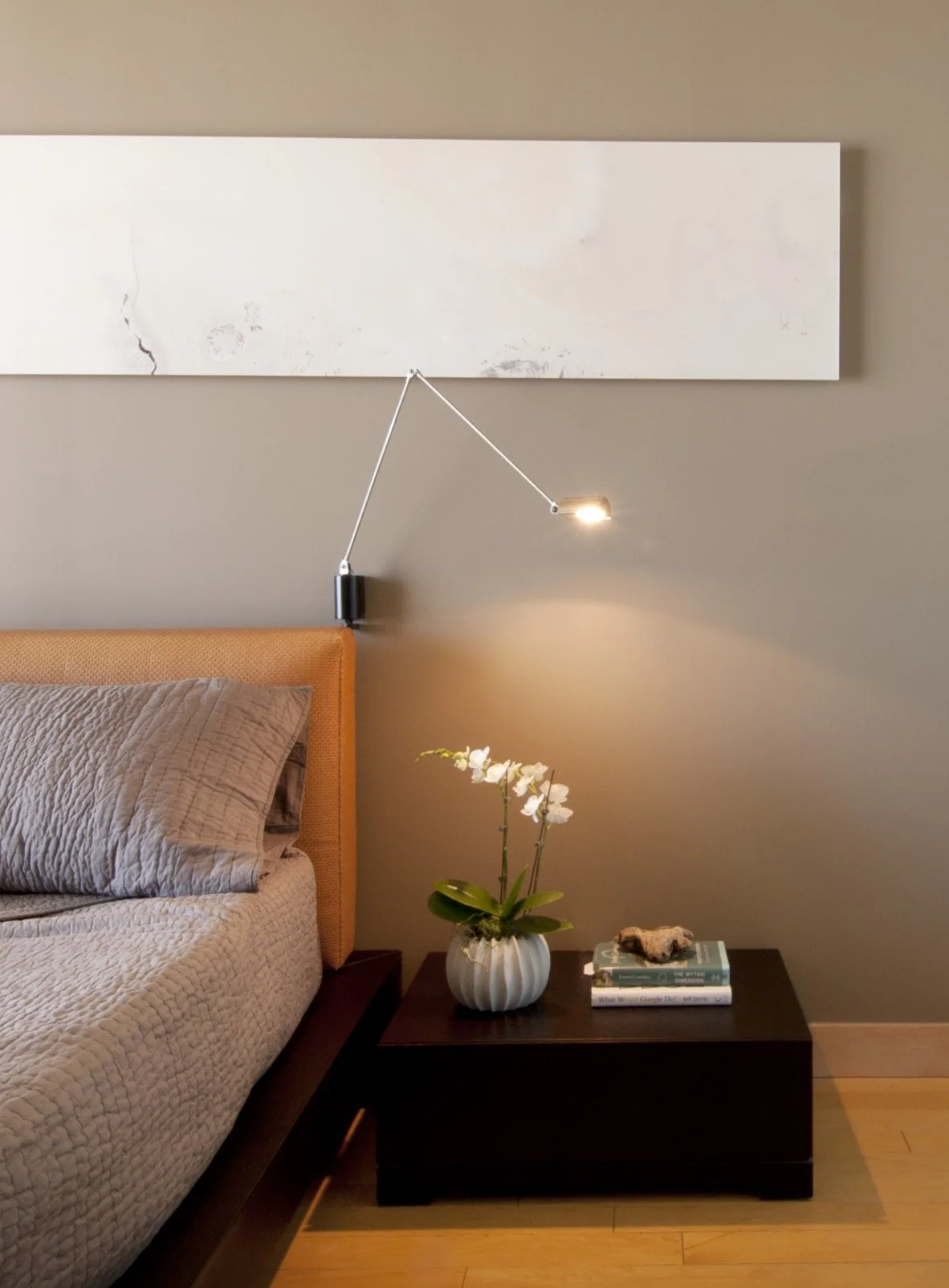
A custom wall-hung console tucks away electronics and compliments the deep wood bed frame. Antique stone pottery and a dollop of moss are the perfect home to this indoor bromeliad; touches of nature are everywhere throughout this environmentally conscious design. Pottery and other artisan elements were handmade by local craftspeople and paired with indigenous plant life.


Sarah Barnard designs healthy, happy, personalized spaces that are deeply connected to nature and art.
To learn more about Sarah Barnard Design, please visit www.SarahBarnard.com.
Photos by Brad Nicol

Ocean View Penthouse: Contemporary Living Room
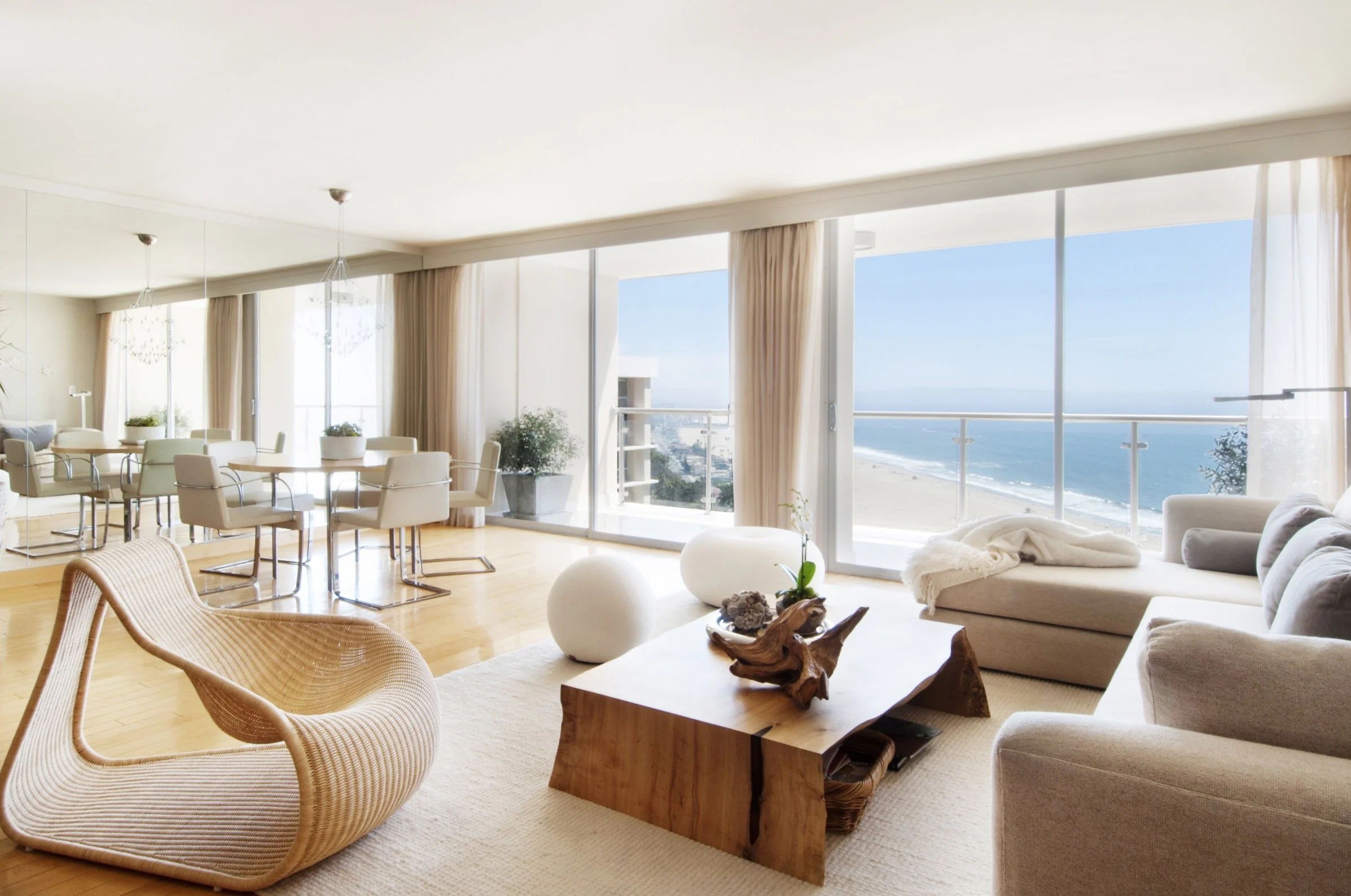
A coastal penthouse with a bird's eye view of the coastline is outfitted with eco-friendly furnishings, natural textiles and organic rugs to create a perfect Zen retreat. White fabric poufs provide extra seating for guests and are low enough to preserve the ocean view. A natural driftwood sculpture compliments a collection of organic objects as the centerpiece to this biophilic design.


Fine art can become a unique design element within a room. This one of a kind artwork fashioned from hand-thrown clay disks explicitly created for the living room captures the calming energy of the ocean air. The installation's delicate minimalism and organic formations add dimension and complement the room's natural textures.

Sustainably sourced organic textiles and fabrics adorn this custom sectional with natural latex cushions, a perfect companion to the organic wool rug and toss blanket. A modern white metal side table with a fun organic shape adds interest.


This modern design preserves the expansive coastline view while utilizing a wall of mirrors to extend the entertaining area visually. The integrated dining area features a custom table of chrome and maple perfectly sized for this compact space.

A collection of eco-friendly materials, organic textiles, and vintage accoutrements make this penthouse the ultimate beach retreat. The delicate chandelier made up of tiny light bulbs, and wire reminds us of stars strung together in the sky. Tillandsia plants make a perfect centerpiece for beachfront dining.


Sarah Barnard designs healthy, happy, personalized spaces that are deeply connected to nature and art.
To learn more about Sarah Barnard Design, please visit www.SarahBarnard.com.
Photos by Brad Nicol