


Ergonomic Home Design: the New Standard of Luxury Living

Our home should reflect who we are as a unique individual. Bespoke design creates an interior environment that is made specifically for us, customized to our particular aesthetic tastes as well as our physical and emotional needs. Customizing functional elements of our homes can positively affect our physical bodies and emotional well- being, limiting daily stress and improving our quality of life.
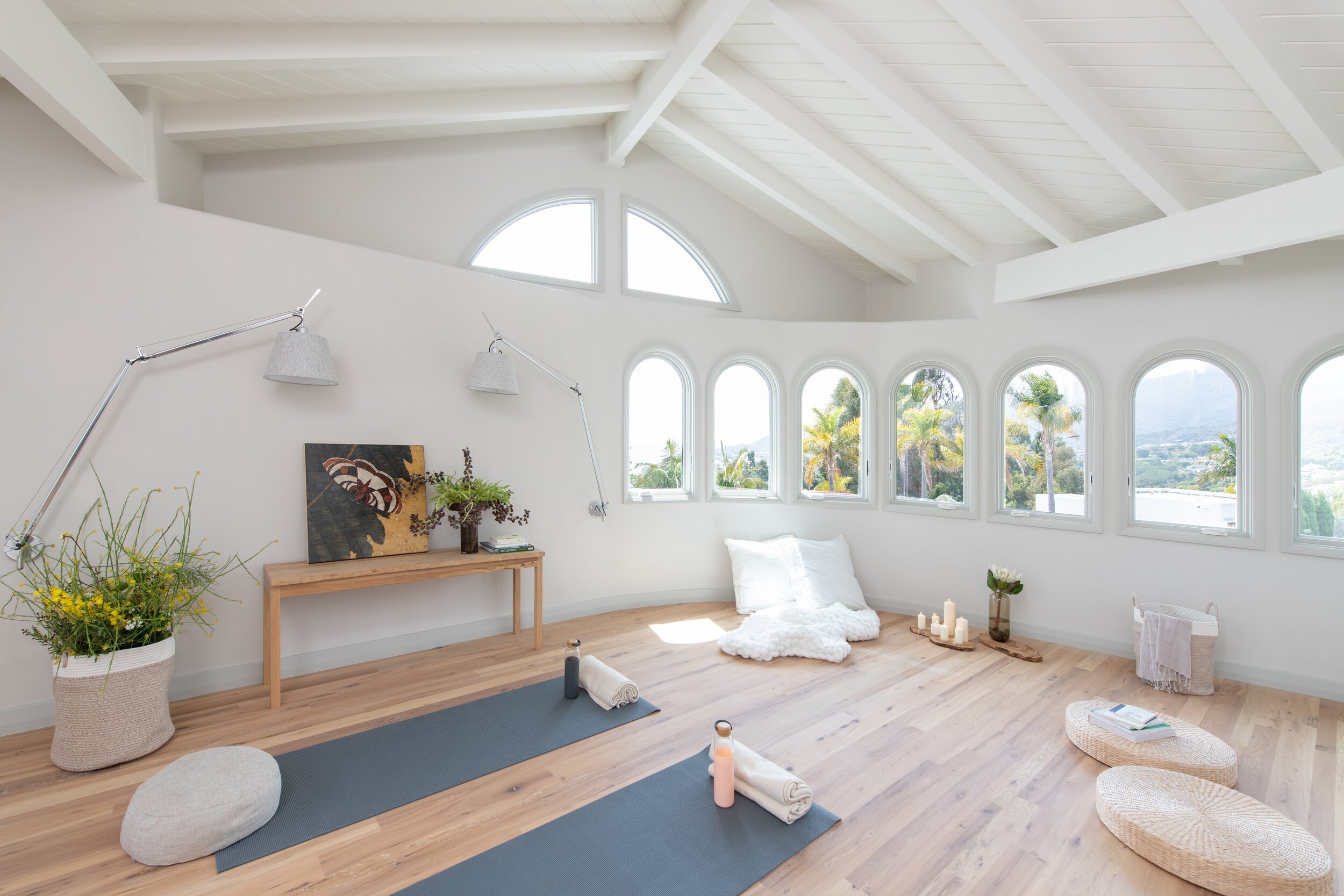
THIS WELLNESS ROOM FEATURES ART BY KAREN SIKIE, CREATING A CALMING, NATURE INSPIRED BACKDROP FOR YOGA OR MEDITATION
Our studio practice embodies these principles by approaching our clients with a sense of inclusiveness and sensitivity that allows ample space to voice their needs. We make an effort to interview all family members to custom craft a home that uniquely fits them and the way they utilize space. These homes often reflect a client's personal philosophy and can contribute to the achievement of their lifestyle goals. This can take the form of creating a soothing bedroom space, yoga or meditation room, or choosing vegan materials. A home that reflects who we truly are contributes to an environment of comfort, support, and peace that promotes joy and wellness in everyday life.

FURNITURE CAN BE CUSTOMIZED TO OUR SPECIFIC BODILY SCALE AND PHYSICAL NEEDS.
Ergonomic design, simply put, is people-focused design. Design that considers how we interact with an object or a space. Commonly associated with the functionality of workspaces and productivity (office chairs, desks, etc.), ergonomics can enrich our home lives through thoughtful, custom design. Our surroundings should be shaped to benefit us, and we shouldn't have to adapt or change ourselves to fit into our surroundings.
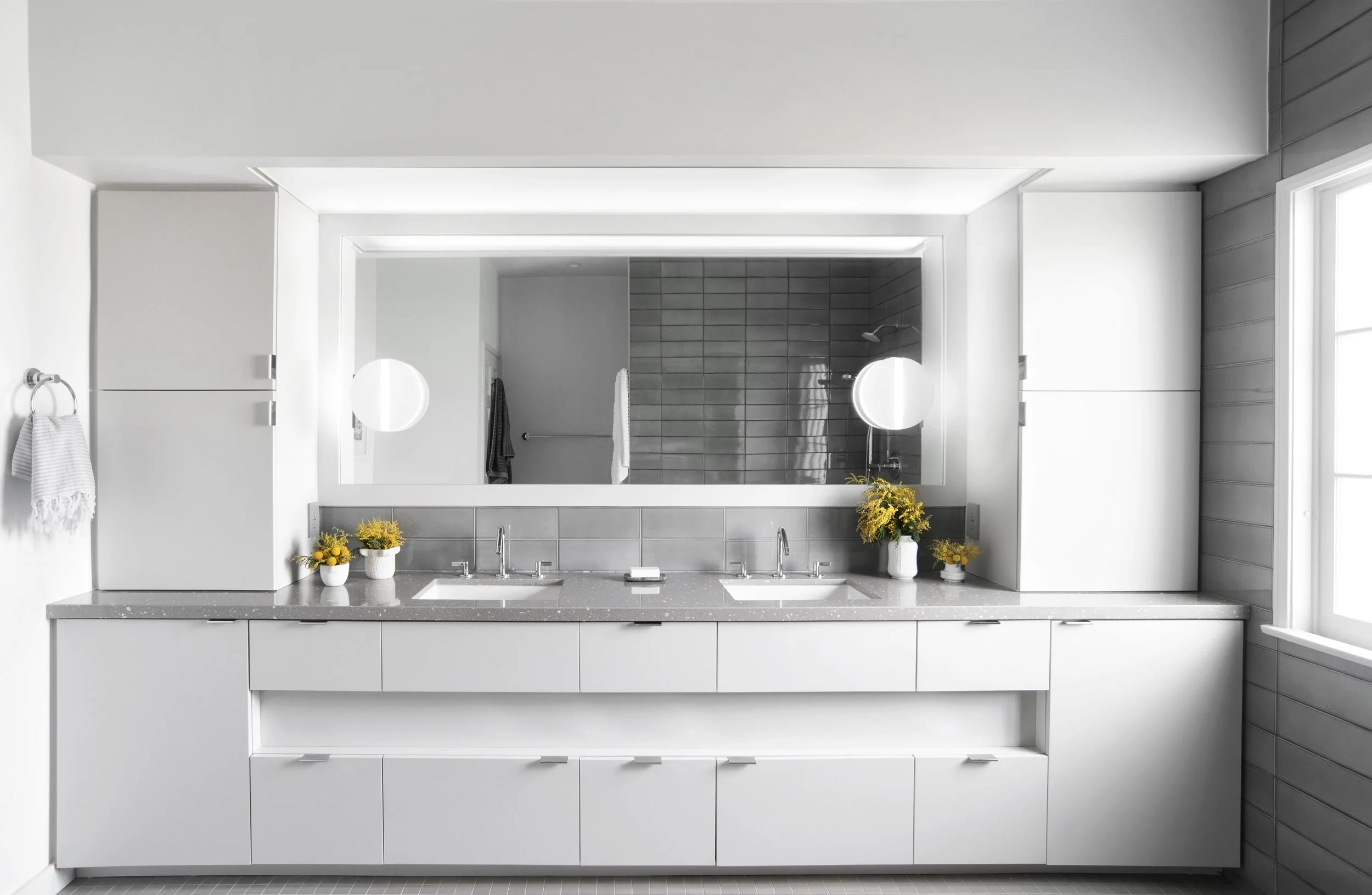
THE SCALE AND PLACEMENT OF CABINETRY, LIGHTING AND COUNTER HEIGHT ALL CONTRIBUTE TO PERSONALIZED COMFORT IN THE HOME.
Thoughts on the scale and proportion of the body and how this relates to our built environment date back to ancient Rome with the architect Vitruvius who argued that "buildings should be based on the symmetry and proportion of the human form. (1)" In 1948, the architect Le Corbusier expanded on Vitruvius's work to create a set of calculations that he referred to as The Modulor. These calculations would create a universal scale for buildings and furniture "aiming to provide the user with an intrinsic sense of well-being and comfort. (2)"
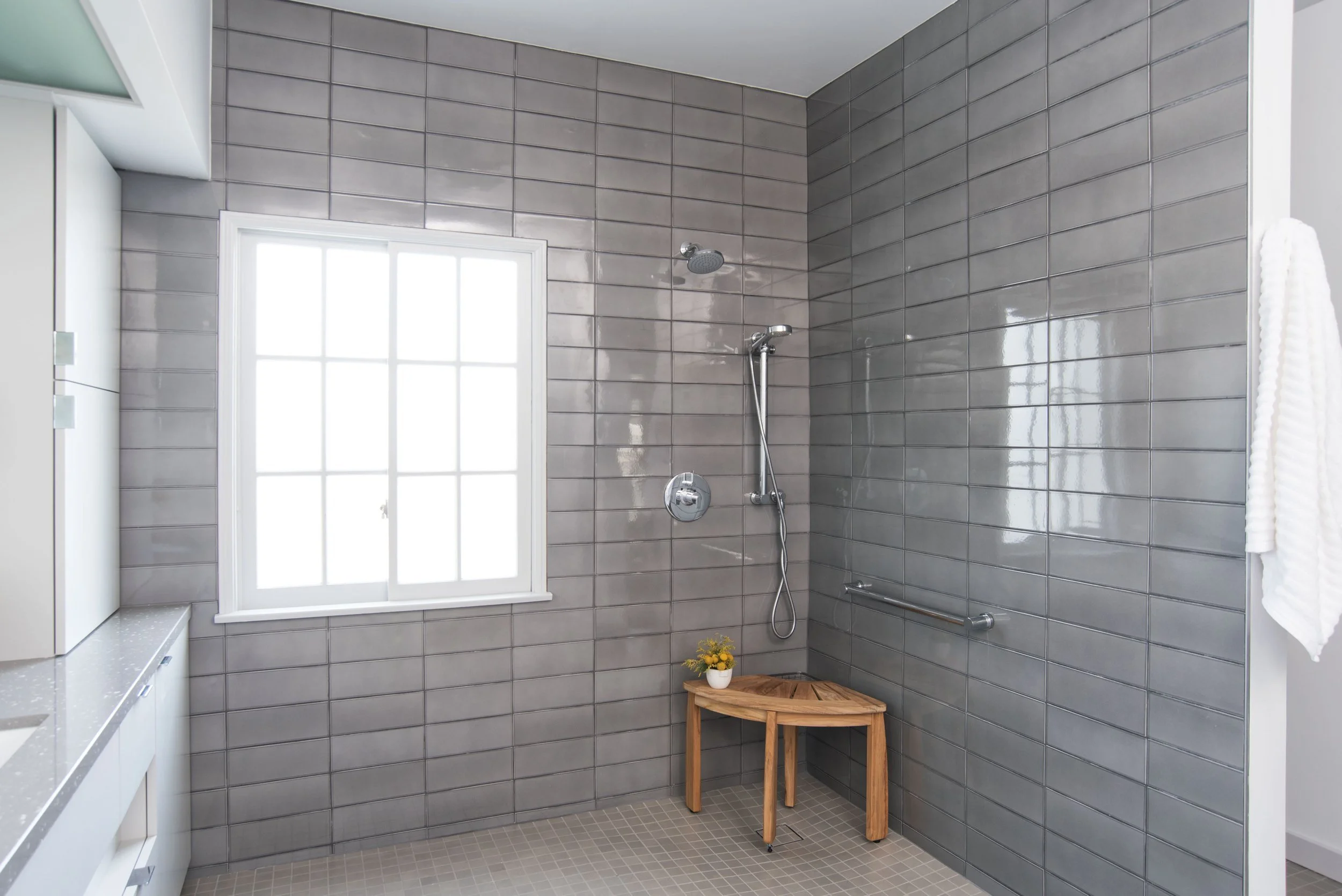
BATHROOM DESIGN CAN BE ADAPTED TO SUIT A DIVERSE RANGE OF PERSONAL AND PHYSICAL NEEDS.
Attitudes towards "universal" sets of bodily measurements, such as The Modulor, began to change in the 1960s as they excluded a diversity of body types, proportions, and abilities. "Is this an architecture shaped by the proportions of man or an attempt to shape its inhabitants? (3)" Today there are many regulations that determine standard measurements throughout the home, such as the Americans with Disabilities Act Standards for Accessible Design and the National Kitchen and Bath Association Planning Guidelines.

MANY KITCHEN FEATURES SUCH AS COUNTERTOP HEIGHT, SOFT CLOSING DRAWERS, FOOD STORAGE AND APPLIANCES CAN BE CUSTOMIZED TO SUIT OUR UNIQUE BODILY PROPORTIONS AND LIFESTYLE GOALS.
While it's more typical to talk about ergonomics in terms of an office chair or ADA compliance, more homeowners are living their best lives by having their homes perfectly fit to their bodies. When we start to think about our homes from an ergonomic viewpoint, we can customize many details to suit our unique physical proportions and emotional needs. Something as simple as customizing the height of kitchen countertops can encourage improved posture and physical ease in using the space. Similarly, we can build furniture and bedding precisely to fit our bodily dimensions, easing strain put on joints when getting in and out. We can customize anything from wall switch locations, automated lighting, window coverings, appliances, mirror height, and environmental sounds through ergonomic design to create the ultimate comfort and well-being at home.

THE SENSORY ELEMENTS OF A ROOM ARE AN IMPORTANT COMPONENT TO TAKE INTO ACCOUNT WITH ANY LIVING SPACE.
Sarah Barnard WELL AP + LEED AP, also takes sensory elements into account when designing a space. Features such as soft close doors and cabinets to reduce noise, storage solutions to create orderly and calm surroundings, and the selection of color and texture can all contribute to the comfort and emotional resonance of a room. Sarah has an in-depth understanding of color theory and color psychology, which explore how color affects our behaviors and emotions to create a color palette that matches your home to your personality — and when a space feels like 'you,' happiness will follow.

LIGHTING, TEXTURE AND COLOR ARE IMPORTANT SENSORY DETAILS TO TAKE INTO CONSIDERATION WHEN DESIGNING A SPACE FOR CHILDREN.
Sensory details such as color and texture play an important role when customizing spaces for children and can be particularly beneficial for neurodivergent children. Sensitivity needs to be taken towards environmental noise as well as lighting. Diffused and adjustable lighting allows levels to be dimmed to suit individual moods and needs. Avoiding wallpapers with busy patterns and choosing light neutral colors combined with soft textures can also encourage a soothing and calming tactile experience in the space.

ERGONOMIC DESIGN THAT THAT CUSTOMIZES THE PHYSICAL AND SENSORY ELEMENTS OF OUR HOME TO MEET OUR EMOTIONAL AND PHYSICAL NEEDS HAS THE ABILITY TO CREATE JOY AND WELLNESS IN EVERYDAY LIFE.
A home should not only reflect the physicality and identity of its owner, it should also be an extension of their personality which enhances day-to-day living. All of these small details, enhanced by ergonomic design, make movement around our home as effortless as possible, encouraging a symbiotic relationship between our home and body which nourishes us, encouraging joy and wellness.
Sarah Barnard, WELL AP + LEED AP, is a leading designer of personalized, sustainable spaces that support mental, physical, and emotional wellbeing. She creates highly personalized, restorative spaces that are deeply connected to art and the preservation of the environment. An advocate for consciousness, inclusivity, and compassion in the creative process, Sarah has appeared in Architectural Digest, Elle Décor, Vogue, HGTV, and many other publications. In 2017 Sarah was honored as a “Ones to Watch” Scholar by the American Society of Interior Designers (ASID).
Works Cited
Souza, Eduardo. “The Evolution in Understanding of Human Scales in Architecture.” ArchDaily, ArchDaily, 15 Oct. 1 2020, https://www.archdaily.com/949316/the-evolution-in-understanding-of-human-scales-in-architecture.
Souza, Eduardo. “The Evolution in Understanding of Human Scales in Architecture.” ArchDaily, ArchDaily, 15 Oct. 2 2020, https://www.archdaily.com/949316/the-evolution-in-understanding-of-human-scales-in-architecture.
Souza, Eduardo. “The Evolution in Understanding of Human Scales in Architecture.” ArchDaily, ArchDaily, 15 Oct. 3 2020, https://www.archdaily.com/949316/the-evolution-in-understanding-of-human-scales-in-architecture.

Vegan Home Design: Beautiful Beach Style
Whether surrounded by mountains, forest or overlooking the ocean, California is a unique and beautiful place to live. Spending time in nature through mindful activities such as hiking and birding promotes feelings of happiness and well-being. Elements of the natural environment that surrounds us can influence the interior design of our living spaces, bringing these values of mindfulness and well-being into the home.

In this design concept, Sarah Barnard, WELL AP + LEED AP developed two variations of objects, furniture, and artwork for the entryway of a home by the ocean. All of the materials and objects selected for this home project are Vegan. This option features a deep blue dutch door reflecting the color of the sea and a glass window that floods the space with natural light. These blue tones carry through the room in imagery and forms from the natural world, such as the painting of a Blue Heron installed above the sideboard. This option features a collection of contemporary ceramic objects, such as the stylized flush mount ceiling light and the ceramic lamp that resembles the form of a sea urchin. These objects are grounded by the vintage ceramic bowl and planter containing flowers. The sideboard, made from Danish oiled walnut, offers tidy storage options, while the tone of its wood finish harmonizes with the soothing blue of the room to create a welcoming entrance.

The staircase wall sconce, made from art silvered glass and brass, has frosted edges that resemble sea glass; this produces soft diffused lighting, which contributes to the relaxed and welcoming atmosphere of the entryway.

In this first option for the living room, material elements and colors from the entryway are reflected in the the deep blue Vegan-friendly upholstery and Danish oiled walnut of the sofa. The fine artisanal quality of the exposed wood frame gives the sofa lightness and elegance. At the same time, their shape and placement create an enclosed and intimate environment perfect for relaxation or small social gatherings. The artwork incorporates natural imagery such as water birds and ocean scapes. These elements carry through in the coffee table made from reclaimed hardwood, which features plant life embossed into the concrete surface of the tabletop, all underneath rain drop shaped pendant lighting.

The second option for this entryway incorporates a lighter, sea foam colored dutch door and window. This lighter tone is complimented by the natural wood and white gold finish of a jewelry-like chandelier with crystal tear-dropped glass fixtures. A small geometric ceramic lamp in ocean blue resembles a smokey-cut gem which is complimented by a smattering of vintage ceramics, such as the large bowl and mid-century modern stoneware vase. The landscape painting chosen for this option features a soft blur of brush strokes as if looking through fogged glass to create a calm and comforting space when entering the home. The side table presented in this option is made from natural walnut slabs. The concealed drawer is coupled with visible storage options in the open space underneath, which integrates the walnut finish with the room's white walls.

This alternative living room option also incorporates ocean-inspired deep blue tones within a pair of generous, enveloping sofas whose design creates a soft and comforting aesthetic that has an anchoring effect. The pebble-like milky glass globes of the chandelier create diffused lighting, which is warm and welcoming.

Elements of the natural world are incorporated into this space through the Mapa burl coffee table, which has a form that resembles found wood or stone shaped by the sea. These natural elements continue in the Matilija poppy textile pattern on the decorative sofa cushions which incorporate native Californian flora into the space.
Design concepts such as color, form, material and lighting can be utilized within our home to reflect the beauty of the natural environment that surrounds us, capturing the way it makes us feel, to create a mindful living space that promotes happiness and wellbeing in everyday life.

Wildfire Preparedness: Home Hardening, Defensible Space and CA Native Plantings

AN AMERICAN CROW (CORVUS BRACHYRHYNCHOS) RESTS ABOVE THE TREES IN THE VERDUGO MOUNTAINS.
The California landscape is beautiful and unique, home to a plethora of plants and animals found nowhere else in the world. The Giant Sequoia and Coastal Redwood are majestic, and awe-inspiring trees found only in California. The General Sherman tree (a giant sequoia) found in Sequoia national park is thought to be the largest living tree on earth, measuring 274.9 ft high(1) and is estimated to be 2200 years old.(2)

COSTA'S HUMMINGBIRD (CALYPTE COSTAE) RESTS ON WOOLLY BLUE CURLS (TRICHOSTEMA LANATUM).
The California floristic province is an area that stretches along the coast and comprises most of the state.(3) Conservation International defines this province as a biodiversity hot spot for the high number of plants that are endemic to the region (61% of California's plant life is found nowhere else in the world).(4)

A MARINE BLUE BUTTERFLY (LEPTOTES MARINA).
These distinct natural wonders and the beautiful Mediterranean climate make California a desirable place to live; it is important as residents of this beautiful state that we all play our part in conserving it.

RED BOX PICNIC AREA, RECOVERING AFTER THE BOBCAT FIRE.
Wildfires in California are increasing in size, frequency, and intensity, with the two largest wildfires in California history occurring in 2020 and 2021.(5) Human-made changes to the natural environment play a significant role in this increase. Two prominent examples are climate change and increased construction in the area that transitions between developed and undeveloped land, known as the Wildland Urban Interface (WUI).(6)

CALIFORNIA FAN PALM (WASHINGTONIA FILIFERA) SLOWLY RECOVERING FROM BURNS IN THE ANZA BORREGO STATE PARK.
It's important that we become more knowledgeable and work together within our local community to reduce the risk of wildfires. Sarah Barnard, Interior Designer, LEED, and WELL AP, recently achieved her Wildfire Defense Certificate to increase her awareness and preparedness for wildfires and expand her education as a Certified California Naturalist. The United States Green Building Council - Los Angeles (USGBC-LA) hosted the Wildfire Defense Landscaper Certificate Program in partnership with the Theodore Payne Foundation for Wild Flowers & Native Plants.(7)

MIGRATING MONARCH BUTTERFLIES (DANAUS PLEXIPPUS) ROOSTING.
USGBC-LA's mission is to utilize the built environment "transform Southern California into a more sustainable region for all"(8) through a series of educational programs, workshops, and community initiatives. The Theodore Payne Foundation for Wild Flowers & Native Plants is a non-profit organization whose goal is "to transform our region into sustainable, healthy communities" by "educating all people about the role native plants play in the local ecology, their place in our gardens, and how everyone can take part in making Southern California more life-sustaining."(9)

CALIFORNIA BUCKWHEAT (ERIOGONUM FASCICULATUM).
Designing our homes and their surroundings with wildfire prevention in mind is extremely important in California. Built structures commonly burn before vegetation, ignited by wind-blown embers, radiant heat, or direct flame contact. The WUI (areas of land where houses and nature blend together) is becoming more dense, growing by about 2 million acres per year.(10) Currently, more than 60,000 communities within the WUI are at risk from wildfire in California,(11) and it is estimated that this number will increase to six times as many in the next 30 years.(12)

A TOWNSEND'S WARBLER (SETOPHAGA TOWNSENDI ) IN CALIFORNIA LIVE OAK TREE (QUERCUS AGRIFOLIA).
Fire Hazard Severity Zones (FHSZ) are mapped and utilized by the California Department of Forestry and Fire Protection (CAL FIRE) to determine what communities are more at risk from wildfires, and what steps can be taken to reduce that risk through regulations regarding construction and defensible space. These maps also determine if the state, local government, or an individual is responsible for maintaining these requirements.(13) "If you live in a State Responsibility Area (SRA), you are responsible for ensuring that your property is in compliance with California's building and fire codes that call for homeowners to take proactive steps to protect their property from a wildfire."(14)

SCRUB JAY (APHELOCOMA CALIFORNICA) RESTS ON A NEIGHBORING ROOF.
Wildfire protection has become such an important issue that Governor Gavin Newsom signed Assembly Bill 38, which requires “the seller of any real property located in a high or very high fire hazard severity zone to provide a prescribed disclosure notice to the buyer, if the home was constructed before January 1, 2020, of information relating to fire hardening improvements on the property and a list of specified features that may make the home vulnerable to wildfire and flying embers and which features, if any, that exist on the home of which the seller is aware. The bill, on or after July 1, 2025, would require the disclosure notice to also include the State Fire Marshal’s list of low-cost retrofits. The bill would also require a seller who has obtained a specified final inspection report to provide to the buyer a copy of that report or information on where a copy may be obtained.” (15)
The CalFire website has more information about requesting a Defensible Space Inspection as well as a FHSZ Viewer to help identify if a property is located in a high or very high fire hazard severity zone.

DESIGNING OUR HOMES AND THEIR SURROUNDINGS WITH WILDFIRE PREVENTION IN MIND IS EXTREMELY IMPORTANT IN CALIFORNIA.
The concept of defensible space is one step we can take to protect our homes from wildfires. This strategy involves dividing the area around the home into a series of zones to create a buffer between the building and surrounding vegetation. Hardscape (pathways, gutters, etc.) maintenance, such as regularly clearing access roads, pathways, and gutters from debris that may ignite from falling embers, is an important component of defensible space. Ignition from wind-blown embers is a primary source of homes catching fire. Hardscape maintenance also includes trimming tree branches so that they are at least ten feet from the roof and relocating woodpiles to at least 30 feet from the house. Cal Fire offers a defensible space assessment for homeowners to help them decide what changes they may need to make in the area surrounding their property.
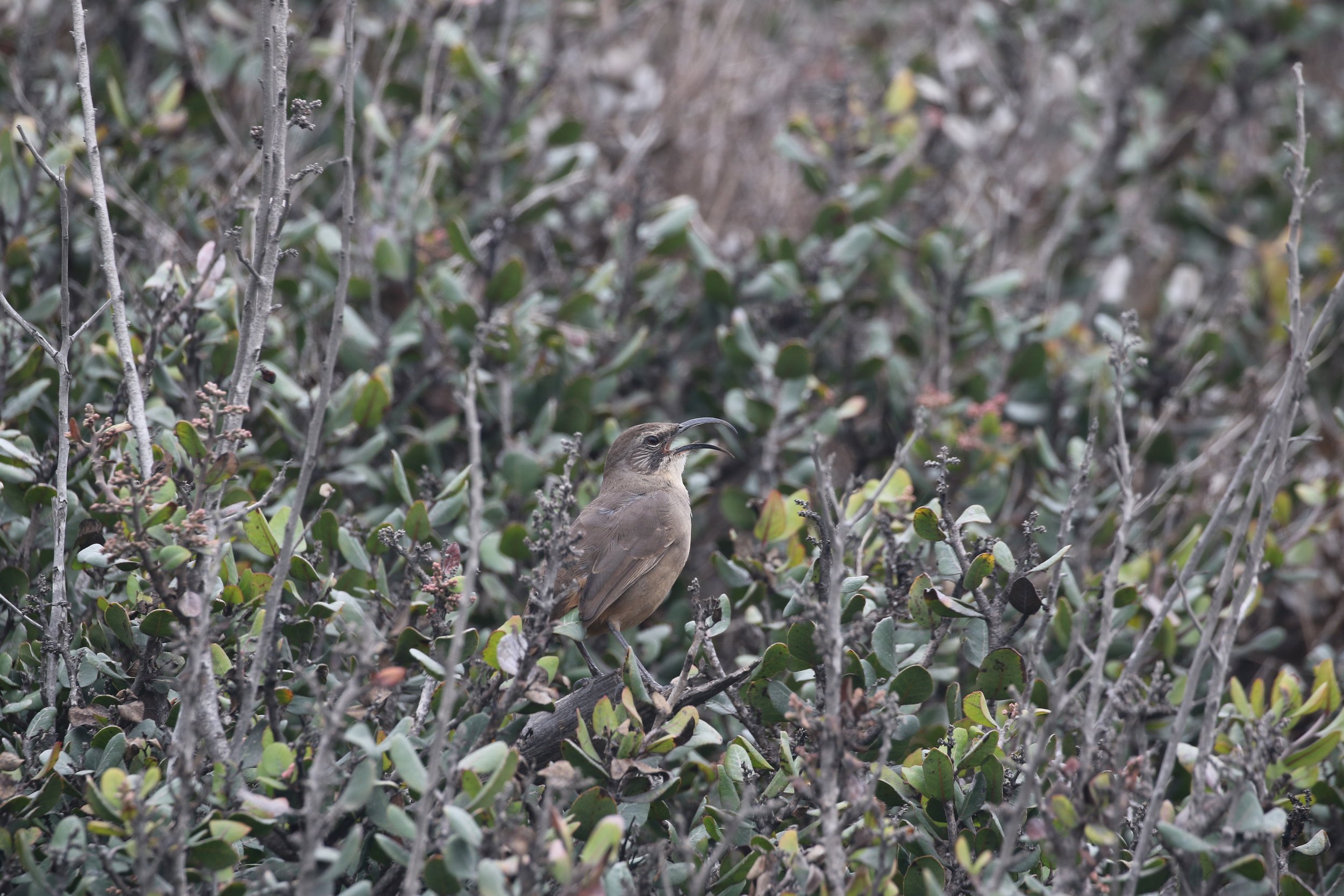
A CALIFORNIA THRASHER (TOXOSTOMA REDIVIVUM ) PERCHED ON LEMONDADE BERRY (RHUS INTEGRIFOLIA).
In March 2020, the city of Malibu (which is located within a FHSZ), introduced The Fire-Resistant Landscaping Ordinance,(16) which restricts the kind of vegetation that can be planted around a home as a means to reduce the risk and spread of fires within the community.

A LESSER GOLDFINCH (SPINUS PSALTRIA ) FEEDS ON CHIA (SALVIA COLUMBARIAE).
While "any plant will burn under the right conditions,"(17) some plant species native to California have evolved in the dry climate to retain moisture and do not ignite as easily or contribute to fueling the intensity of wildfires as much as plants that contain a lot of oils, and resins. If kept well irrigated, spaced out, and regularly cleared of debris that may be combustible, these native plants can play a role in creating defensible space around our homes as well as providing habitat for wildlife and pollinators.(18)
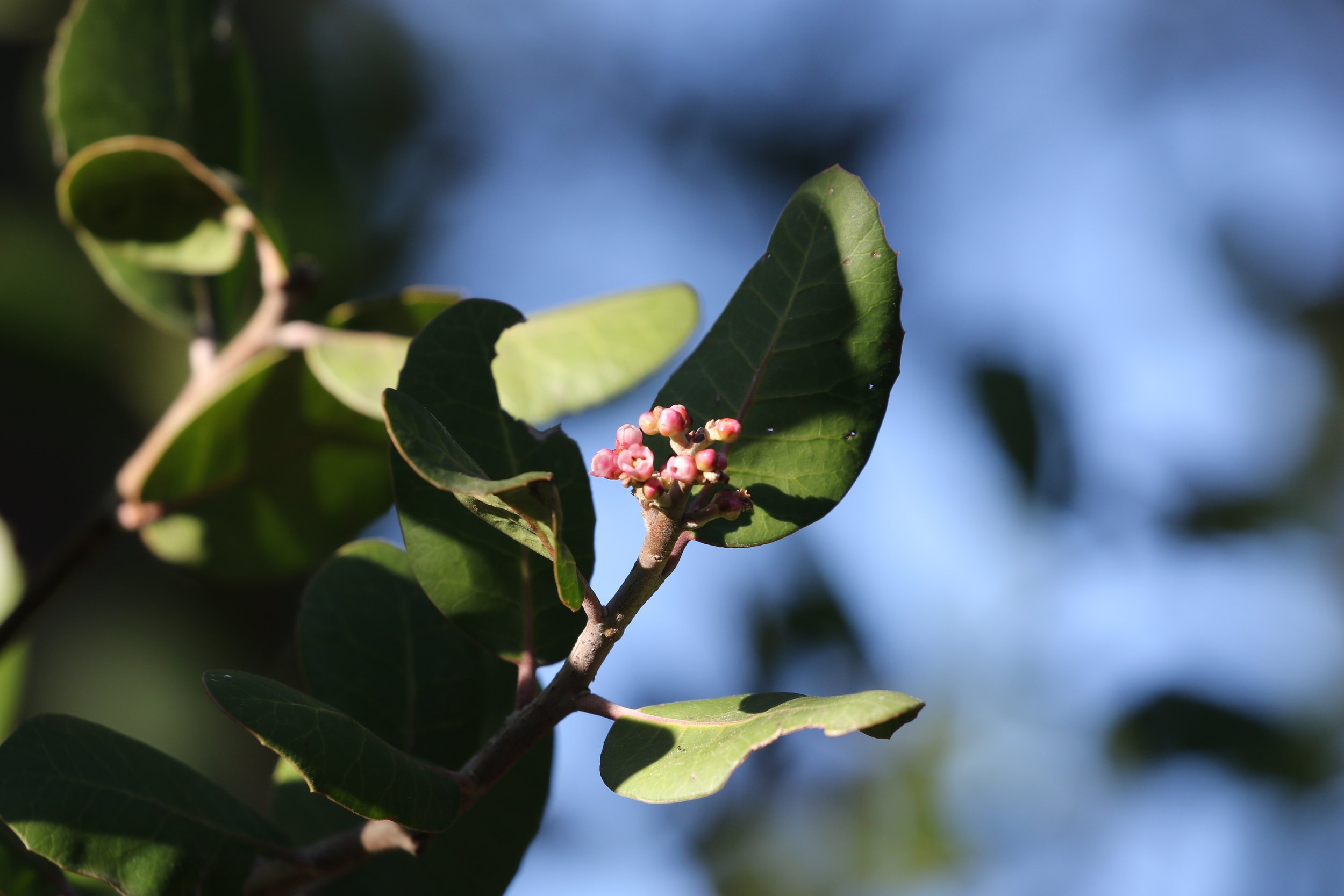
LEMONDADE BERRY (RHUS INTEGRIFOLIA).
Some of Sarah's favorite fire-resistant plants in her garden include the California Live Oak (Quercus agrifolia), an evergreen tree that has thick bark that insulates against heat and a dense canopy that resists ignition by flying embers;(19) these trees can live up to 250 years. The Lemonade Berry (Rhus integrifolia) is a drought-tolerant evergreen shrub that is fairly fire resistant and can contribute to creating a boundary that intercepts flying embers, and its berries are also a significant food source for local wildlife.(20)

TOYON (HETEROMELES ARBUTIFOLIA).
Toyon (Heteromeles arbutifolia) is a beautiful perennial shrub that is easy to grow and can be utilized as an excellent hedge plant. Toyon is fire-resistant when given enough water, and its flowers and berries attract a variety of moths, butterflies, and birds.
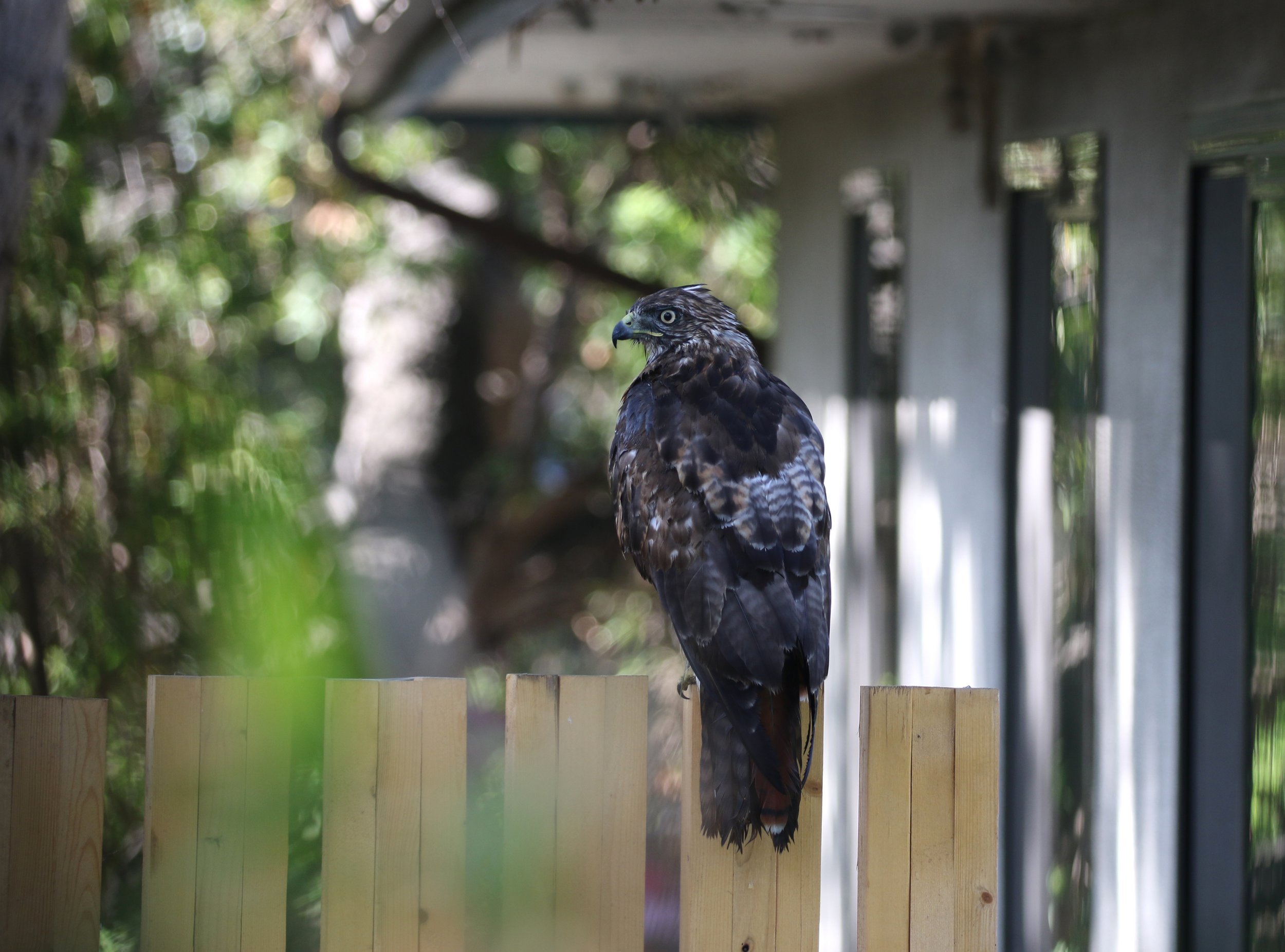
A RED-TAILED HAWK (BUTEO JAMAICENSIS) SITTING ON WOOD FENCE.
Home "Hardening" is another step we can take to protect our homes from wildfires. Home Hardening focuses on the material elements of the building and how they can be maintained to minimize the risk of ignition. Built components of Home Hardening include using Class A non-combustible roofing materials; as well as sealing off entry points for embers by installing non-combustible leaf guards on gutters, metal vents, and shutters, and covering the chimney with non-combustible corrosion-resistant metal mesh screen. Windows also need to be considered when hardening your home as they can break due to heat, creating entry points for embers. Steps to reduce this risk include installing dual pane windows, limiting the number and size of windows facing vegetation, and installing screens.

A MULE DEER (ODOCOILEUS HEMIONUS) GRAZING ON PURISIMA ISLAND MALLOW (MALVA 'PURISIMA')UNDER THE SHADE OF A CALIFORNIA LIVE OAK TREE (QUERCUS AGRIFOLIA).
California is a beautiful place to live, and we can all work within our local community towards positive solutions that help protect our homes and the environment against wildfires. Our design studio is deeply inspired by nature, and we cherish the diverse ecosystems found in California and draw from their beauty.
Sarah Barnard, WELL AP + LEED AP, is a leading designer of personalized, sustainable spaces that support mental, physical, and emotional wellbeing. She creates highly personalized, restorative spaces that are deeply connected to art and the preservation of the environment. An advocate for consciousness, inclusivity, and compassion in the creative process, Sarah has appeared in Architectural Digest, Elle Décor, Vogue, HGTV, and many other publications. In 2017 Sarah was honored as a “Ones to Watch” Scholar by the American Society of Interior Designers (ASID).
Works Cited
1. “The Largest Trees in the World.” National Parks Service, U.S. Department of the Interior, https://www.nps.gov/seki/learn/nature/largest-trees-in-world.htm.
2. “General Sherman Tree (U.S. National Park Service).” National Parks Service, U.S. Department of the Interior, https://www.nps.gov/places/000/general-sherman-tree.htm.
3. “Hotspot: California on the Edge.” National Parks Service, U.S. Department of the Interior, https://www.nps.gov/goga/learn/management/index.htm.
4. “Explore the Biodiversity Hotspots.” CEPF, https://www.cepf.net/our-work/biodiversity-hotspots.
5. Top 20 Largest California Wildfires. https://www.fire.ca.gov/media/4jandlhh/top20_acres.pdf.
6. “What Is the WUI?” U.S. Fire Administration, 8 June 2022, https://www.usfa.fema.gov/wui/what-is-the-wui.html.
7. Johnson, Erin. “Wildfire Defense Certificate: Landscaper Module.” United States Green Building Council Los Angeles Chapter, Sept 2022, https://usgbc-la.org/
8. “Our Mission - USGBC-La.” USGBC, 4 Aug. 2022, https://usgbc-la.org/our-mission/.
9. “About.” Theodore Payne Foundation, https://theodorepayne.org/about/.
10. Li, Shu, et al. “Mapping the Wildland-Urban Interface in California Using Remote Sensing Data.” Nature News, Nature Publishing Group, 6 Apr. 2022, https://www.nature.com/articles/s41598-022-09707-7.
11. Li, Shu, et al. “Mapping the Wildland-Urban Interface in California Using Remote Sensing Data.” Nature News, Nature Publishing Group, 6 Apr. 2022, https://www.nature.com/articles/s41598-022-09707-7.
12. “California Properties at Risk of Wildfire Expected to See Sixfold Increase in 30 Years.” Los Angeles Times, Los Angeles Times, 17 May 2022, https://www.latimes.com/california/story/2022-05-16/california-properties-at-risk-of-wildfire-expected-to-grow.
13. California Department of Forestry and Fire Protection (CAL FIRE). “Fire Hazard Severity Zones.” Cal Fire Department of Forestry and Fire Protection, https://osfm.fire.ca.gov/divisions/community-wildfire-preparedness-and-mitigation/wildfire-preparedness/fire-hazard-severity-zones/.
14. “Fire Safety Laws.” Ready for Wildfire, 22 July 2021, https://www.readyforwildfire.org/more/fire-safety-laws/.
15. “AB-38 Fire Safety: Low-Cost Retrofits: Regional Capacity Review: Wildfire Mitigation.” Bill Text - AB-38 Fire Safety: Low-Cost Retrofits: Regional Capacity Review: Wildfire Mitigation., https://leginfo.legislature.ca.gov/faces/billTextClient.xhtml?bill_id=201920200AB38.
16. “Fire-Resistant Landscaping .” Site ID, https://www.malibucity.org/1035/Fire-Resistant-Landscaping.
17. “Preparing Home Landscaping.” University of California, Agriculture and Natural Resources, https://ucanr.edu/sites/fire/Prepare/Landscaping/.
18. “Habitat Gardening.” California Native Plant Society, 27 June 2022, https://www.cnps.org/gardening/native-design-basics/habitat-gardening.
19. David. “Fire-Resistant Landscaping.” California Native Plant Society, 17 May 2022, https://www.cnps.org/flora-magazine/fire-resistant-landscaping-23654.
20. “Lemonade Berry, Rhus Integrifolia.” California Native Plant Society, https://calscape.org/Rhus-integrifolia-(Lemonade-Sumac).
Further Resources
https://usgbc-la.org/programs/wildfire-defense-education-and-tours/
https://usgbc-la.org/wp-content/uploads/2022/04/Wildfire-Toolkit-2022-1.pdf
www.readyforwildfire.org

Nature Inspired Home: West Coast Wellness

RECLAIMED, FSC CERTIFIED ELM WOOD FLOORING WITH A NO VOC FINISH WAS USED THROUGHOUT THE HOME, BRINGING IN NATURAL COLOR AND PATTERNING WHILE GIVING CAREFUL CONSIDERATION TO ENVIRONMENTAL IMPACT.
A connection with the environment that surrounds us encourages wellness; this can manifest within the home in multiple ways. Biophilic design incorporates aesthetic elements of the outdoors into the home. Using natural, organic, sustainable, and ethically sourced materials contributes to a healthy living environment that promotes eco-friendly production methods. Also, considering sustainable, functional elements for the household benefits the environment and contributes to self-sufficiency for contemporary living.

ENTRYWAY FEATURING HAND MADE SCONCES BY ARTIST DAVID WISEMAN.
The owner of this West Coast residence considered all of these elements when remodeling their oceanside home. Being naturalists and environmentalists, they wanted their home to reflect their passion for nature while contributing to conserving it through sustainable materials and energy sources. Pollination was chosen as a cohesive concept throughout the house, as it is a crucial component of our environment which is also beautiful. This house achieves a dual function of being practical/sustainable and also aesthetically pleasing. Visual signifiers of pollination, such as flowers, bees, moths, and birds, appear within functional and decorative elements throughout the house.

DESIGNED FOR REST AND REJUVENATION, THE WELLNESS ROOM TAKES ADVANTAGE OF SWEEPING OCEAN VIEWS AND AMPLE NATURAL LIGHTING. A WOODEN BENCH MADE BY A LOCAL ARTISAN DISPLAYS ART BY KAREN SIKIE FOR A CALMING, NATURE INSPIRED BACKDROP FOR YOGA OR MEDITATION.
The wellness room has a beautiful view overlooking the ocean. Interior designer Sarah Barnard, WELL and LEED AP took a minimalist approach to this room, using fine yet simple materials to highlight the beautiful outdoor surroundings and existing architectural features such as the ceiling beams. Sarahs' design practice focuses on wellness, and this simplicity helps to create a relaxing and soothing environment. This approach also utilizes the ample natural light of the space, while large articulating sconces are a functional design feature within the room that offers alternative lighting options. This room also features a moth collage by Karen Sikie. Karen creates a form of collage called "paper mosaics" made from an array of recycled decorative papers; her work takes inspiration from the beauty of nature and our connection to it. Her work is featured throughout the house.

THE PRIMARY BATHROOM’S GROUNDING CHARCOAL PALETTE FEATURES PIETRA GREY MARBLE IN THE SHOWER, VANITY AND WINDOW CASINGS.
The primary bathroom incorporates natural materials through bespoke design elements developed with meticulous attention to detail. These include tailor-made stone moldings and found stones used as faucet handles.

FOUND STONES TRANSFORMED INTO FAUCET HANDLES.
The rough-hewn quality of the wall tile creates a 3D texture that highlights the earthy qualities of its material. These tiles are a specialized form of ceramic that was traditionally used for Japanese roofing; the firing process makes each tile unique, adding to the overall hand-made feel.

A CUSTOM VANITY IN SPALTED SILVER MAPLE STORES TOWELS AND PERSONAL ITEMS.
This balance between luxury production and rugged, natural materials are echoed in the custom vanity hand-made by a local artisan. The soft curve of the cabinet corner creates a soothing and calm aesthetic. Built elements such as outlets are recessed into the vanity and camouflaged by the same wood veneer covering the outlet plate, minimizing the intrusion of functional elements within the space.
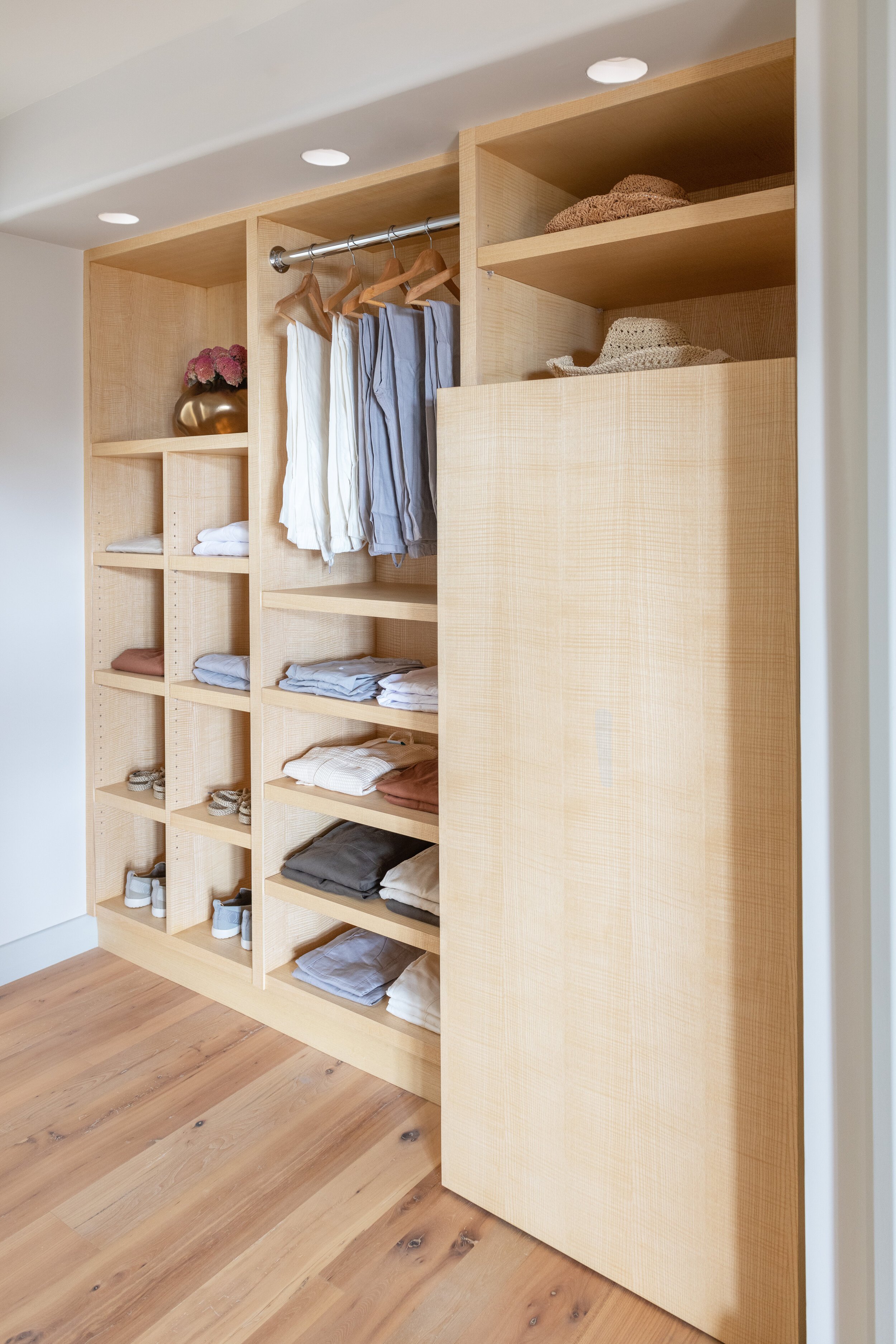
THE CUSTOM CLOSET MADE IN COLLABORATION WITH A LOCAL CRAFTSPERSON FEATURES ADJUSTABLE SHELVING TO ACCOMMODATE CHANGING NEEDS. A COMPARTMENT WITH SWINGING DOOR WAS DESIGNED TO HIDE A SAFE.
The full entry closet is tailor-made from Forest Stewardship Council (FSC) Certified Ash, chosen for its beautiful sheen. This specialized cabinetry features built-in drawers for storing clothes and a mirror framed in the same woodwork. This cabinetry also conceals functional features such as a safe for keeping cherished family heirlooms/valuables.

A QUIET OFFICE SPACE WITH BUILT IN BOOKSHELVES MADE IN COLLABORATION WITH A LOCAL ARTISAN, USING FCS CERTIFIED RECLAIMED ELM WOOD. A ROMAN SHADE MADE WITH KALE TREE FABRIC REFERENCES THE MATILIJA POPPIES, AND CELEBRATES CALIFORNIA WILDFLOWERS.
The owner studies and photographs birds and wanted to reflect this passion in their home office space. The rustic shape of reclaimed wood is integrated into the design of the desk, transforming its natural form into a functional object. An assortment of eco-inspired objects, such as a vintage brass bird lamp, frog bookends, and mineral specimens, decorate the room. This room also features a fabric Roman shade made from Tradescant's hummingbird stripe fabric. Hummingbirds not only relate to the client's interest in studying birds they also play an important role in pollination.

THE LIVING ROOM FEATURES A CUSTOM CONCRETE FIREPLACE INLAID WITH COPPER, INSPIRED BY JAPANESE KINTSUGI POTTERY. A GLOWING OVERHEAD LIGHT HANDMADE FROM WASHI PAPER HARKENS A RESEMBLANCE TO WHALES AND SEASHELLS, A QUIET REFERENCE TO THE OCEAN NEARBY.
A prominent feature of the living room is a custom-built concrete fireplace with a copper inlay inspired by Japanese Kintsugi pottery. Thought to have originated in the 15th century, Kintsugi is the practice of repairing broken pottery with metal staples, gold, or gold/lacquer compound. The repairs become a beautiful design element of the restored piece. The copper inlay within the concrete fireplace touches on this aesthetic and philosophical view, connecting the house's architecture to ideas of sustainable practices such as repairing objects and recycling materials. These ideas carry through in the hand-crafted coffee table made from repurposed wood, the imperfections of its natural form reclaimed and celebrated as a piece of furniture.

THE LAYERED TECHNIQUE IN THIS WORK OF ART BY IVY JACOBSON BRINGS A CALM AND DREAMY QUALITY TO THE ROOM.
This room also features a painting by Ivy Jacobson, whose work seeks to reflect the feeling of peace and calm experienced when surrounded by nature. The wall sconces in the living room made from poured porcelain were specially designed by Sarah, who worked with a local artisan to fabricate them. They take inspiration from the calming ocean view seen from the client's home. This influence of the ocean continues within the living room light fixture, hand-made from washi paper; this feature is light and airy, giving the feeling of floating in the sea and subtly resembling a seashell.
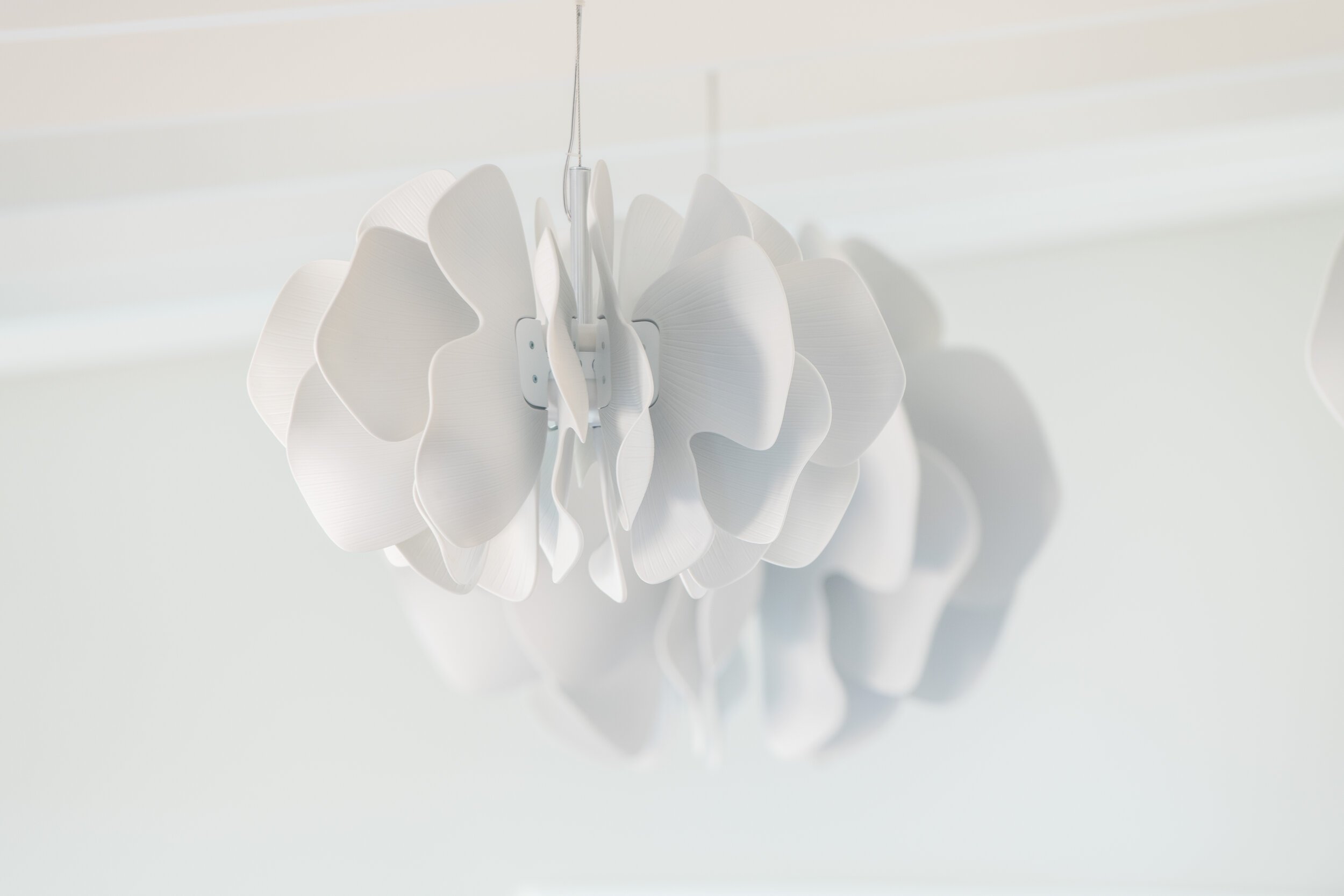
GLOWING PORCELAIN FLORAL LIGHT FIXTURES IN THE FAMILY ROOM.
The porcelain flower lighting fixtures in the family room create an organic flow from the living room as their shape and material are harmonious with those in the former. Sarah customized the color temperature of these pendant lights from 3000k to 2700k. This room also features a painting of birds by Kaoru Mansour, reflecting the homeowners' interest in ornithology.

CUSTOM CABINETS MADE IN COLLABORATION WITH A LOCAL ARTISAN ARE PAINTED IN A WARM GREY TO BRING OUT THE DOVE TONES IN THE MARBLE. THE COUNTER TOPS WERE SPECIFIED TO REACH THE CLIENTS IDEAL HEIGHT FOR FOOD PREPARATION. THE KITCHEN IS DESIGNED FOR EASE OF USE AND CALM, CREATING A MINDFUL EXPERIENCE FOR COOKING.
Sarah designed the kitchen to be an ergonomic space with counter heights customized to meet the owner's functional needs. Fine quality details such as solid bronze cabinet handles and recessed shelves made from slabs of glass combine beauty with functionality. The pantry was designed with additional cold food storage concealed within specialized cabinetry, contributing to the household's self-sufficiency.

A CUSTOM VANITY AND MATCHING MIRROR IN THE HALF BATH MADE IN COLLABORATION WITH A LOCAL CRAFTSPERSON IS COMPLIMENTED WITH A GLASS MOSAIC TILE, INSPIRED BY KELP FORESTS.
The 2nd bathroom draws from the home's proximity to the ocean; the sink features a raised pattern of Koi fish, and kelp-inspired glass mosaic tiles adorn the wall.

A SMALL SOAKING TUB BY THE WINDOW FOR RELAXING AND REFLECTING, WHILE ENJOYING THE VIEWS OF NATURE. THE WINDOW CASINGS AND BASEBOARDS WERE DESIGNED WITH BARDIGLIO MARBLE, ALSO USED ON THE SHOWER AND VANITY.
This bathroom features details such as bronze cabinet hardware, custom stone molding, and a round soaking tub, making economical use of limited space. The drop-down shower seat is made from FSC Certified, responsibly harvested teak.

DAVID WISEMAN GERANIUM SCONCES ARE THE FIRST WORK OF ART YOU SEE WHEN ENTERING THE HOME, AND OFFER A MOMENT OF BEAUTY AND APPRECIATION BEFORE CONTINUING DEEPER INTO THE HOUSE.
The entryway to the house features two bronze wall sconces by David Weisman, an American designer whose work draws deep inspiration from the natural world. The simplicity of the entryway brings attention to the subtle elegance of these sconces, which examine the beauty in something as humble as the Geranium leaf.

A CUSTOM, LASER CUT RAILING WAS DESIGNED WITH A QUEEN ANNE’S LACE PATTERN, A PLANT BELOVED BY BUTTERFLIES AND BEES.
The stairway features a one-of-a-kind railing designed by Sarah; the cutouts are silhouettes of Queen Anne's Lace, a plant favored by pollinators. The stairwell also features wall sconces shaped like abstracted tulips.

THE LAUNDRY ROOM IS LINED WITH TERRAZZO, WITH AMPLE SURFACE SPACE FOR FOLDING CLOTHING. AN OVERHEAD RAILING PROVIDES HANGING SPACE, WHILE DUAL DRYERS SPEED UP THE LAUNDRY PROCESS FOR ADDED EFFICIENCY.
Even though the laundry is a functional space, Sarah gave much consideration to the aesthetic elements of this room. The artisanal floor tile is an 8-inch hexagonal shape made from concrete and recycled clay; this tile is subtly reminiscent of a honeycomb, while its materials are also sustainable. The terrazzo counter is made with recycled materials produced from factory leftovers. The existing footprint of the laundry was reconfigured to include a laundry sink, washer, and two dryers to facilitate the self-sufficiency of the owner and their family.

THE HALF BATH IS A DREAMY RETREAT, WITH NAVY BLUE ONYX FLOORS AND VANITY. PATTERNED TILES CREATE AN IMMERSIVE FIELD OF FLOWERS.
The half bath features a flower field wall tile, creating an immersive abstract floral space. The floor, vanity, and molding are tailor-made from onyx, highlighting the natural beauty of these fine materials.

THE GUEST BEDROOM FEATURES A CUSTOM CLOSET AND BUILT IN STORAGE MADE IN COLLABORATION WITH A LOCAL ARTISAN, USING RECLAIMED, FSC CERTIFIED ELM USED IN THE HOME’S FLOORING, ALL FINISHED WITH A NO VOC MATERIAL. THE TV PULLS OUT TO REVEAL ADDITIONAL STORAGE.
The guest bedroom features hand-crafted cabinetry made from FSC Certified Elm. Details within this room, such as bronze cast drawer pulls shaped like moths and specially designed vents in the shape of a honeycomb, summon the presence of pollinators as we encounter them in the outside world.

AN OVERHEAD FLORAL LIGHT IN THE GUEST BEDROOM. THE HEAT SINK STAMEN WAS CUSTOM MADE WITH A PERSONALIZED COPPER FINISH.
Sarah customized the flower-shaped ceiling light, working with the manufacturer to make the stamen in a personalized copper finish. The scale of this flower light almost creates a surrealist element within the room, as the person inhabiting this space experiences the pollinators' perspective.

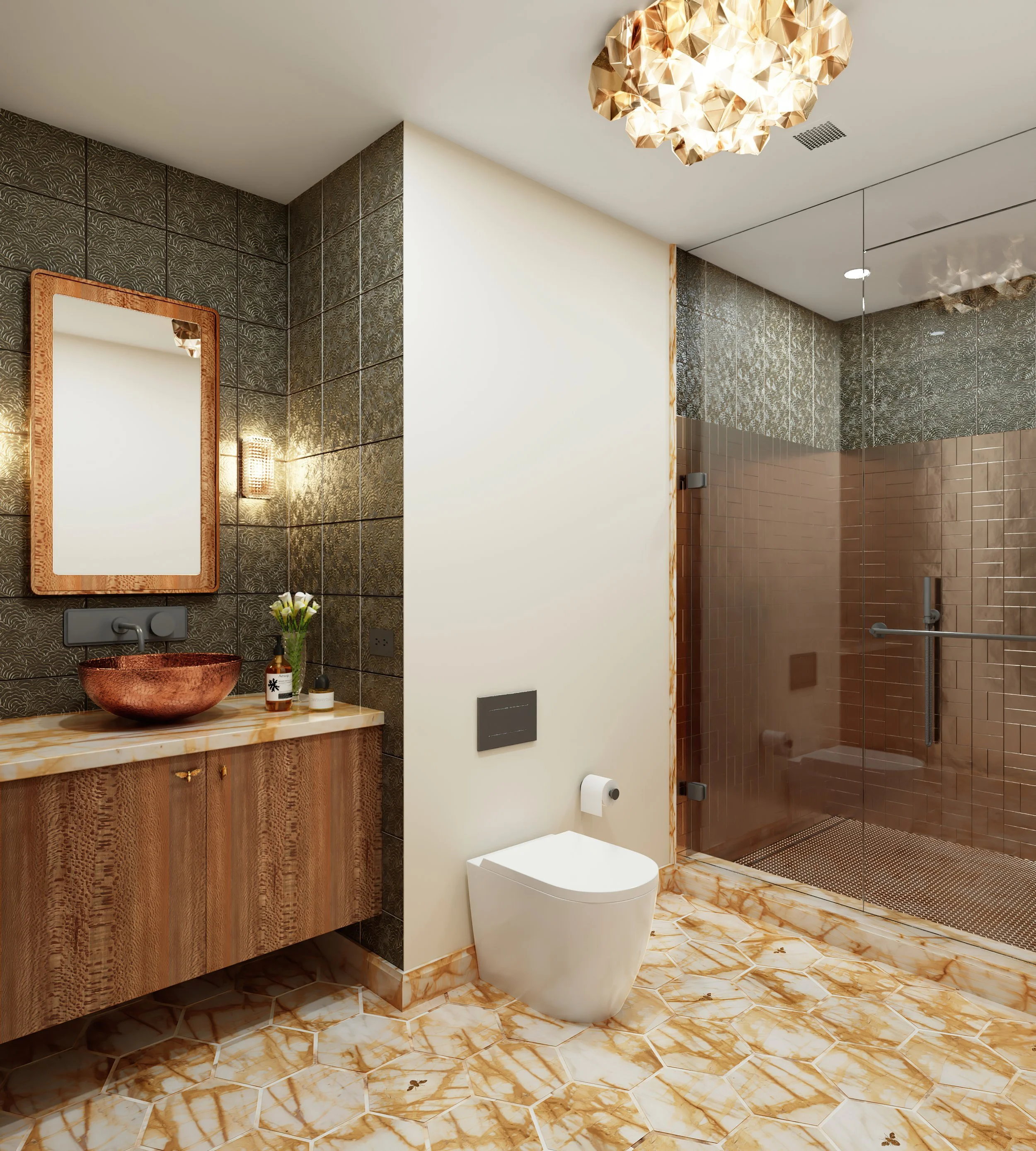
THE HONEY TONED BATHROOM IS AN HOMAGE TO BEES AND BUTTERFLIES IN THIS POLLINATOR SUITE, A WALK-IN WORK OF ART FOR FINDING PEACE AND BEAUTY. COPPER TILES LINE A MAGICAL, SHIMMERY SHOWER SPACE WITH A HONEY GLOW.
The guest bathroom is perhaps the most visually striking within the residence. This room features cabinets hand-made from locally salvaged sycamore and bronze cast moth-shaped hardware.

THE CUSTOM HONEYCOMB TILES WERE MADE WITH GIALLO SIENNA MARBLE, AND INLAID WITH DECORATIVE BEES. HEAD TO TOE DETAILS AND A VARIETY OF TEXTURES CREATE MULTIPLE SENSORY OPPORTUNITIES THAT ENCOURAGE MINDFULNESS.
The hexagonal floor tiles were crafted especially for this residence from a piece of marble sourced by Sarah specifically for its golden honey tones. This material was shaped into hexagonal tiles, some of which include a golden bee inlay. The copper-tone tile within the shower itself creates a luxuriously ornate, glimmering collection of textures.

THE DINING ROOM WALL FEATURES A FIREPLACE, RAISED TO BE EYE LEVEL WITH THE TABLE FOR A MESMERIZING VISUAL DISPLAY DURING MEALS. A WALL TO WALL TILE SURROUND ADDS TEXTURE AND SHIMMER, BOUNCING THE LIGHT OF THE FLAMES.
The dining room features a delicate hand-made porcelain illuminated Ginkgo leaf sculpture specially crafted for the room. The custom dining table partners harmoniously with the classic Cherner chairs. The fireplace was redesigned to replace burning wood with natural gas, an eco-friendlier alternative. A driving force of this renovation was to become more sustainable and less dependent on the grid, with the client installing solar panels and converting all other gas appliances to electric to make the house sustainable and self-sufficient.

THIS DELICATE HAND-MADE PORCELAIN ILLUMINATED GINKGO LEAF SCULPTURE WAS SPECIALLY CRAFTED FOR THE DINING ROOM.
The ways in which we coexist with the natural world in our everyday life have the potential to resonate beyond us. Promoting a sense of calm, harmony, and well-being and possibly motivating practical actions that make a meaningful contribution to preserving environments for future generations. This West Coast Wellness residence is a beautiful example of these ideals. Here, the beauty of art seeks to inspire eco-consciousness and living by example within a home that prioritizes sustainability.
Sarah Barnard is a WELL and LEED accredited designer and creator of environments that support mental, physical and emotional wellbeing. She creates highly personalized, restorative spaces that are deeply connected to art and the preservation of the environment. An advocate for consciousness, inclusivity, and compassion in the creative process, Sarah has appeared in Architectural Digest, Elle Décor, Vogue, HGTV and many other publications. In 2017 Sarah was recognized as a "Ones to Watch" Scholar by the American Society of Interior Designers (ASID).

Do Women Design Differently than Men? The influence of Phyllis Birkby on Design Practice

IMAGE COURTESY OF PEXELS, PHOTO BY THIRDMAN, CREATIVE COMMONS ZERO (CC0)
Women make innovative and profound contributions to the world of architecture and design. Architects such as Dame Zaha Hadid, the first woman to win the Pritzker Prize in 2004, are an inspiration to women in the field.

PUBLIC FARM 1 BY WORKAC AT MOMA PS1 CONTEMPORARY ART CENTER, LONG ISLAND CITY, NY 2008, PHOTO BY ANNE JESSYE, CREATIVE COMMONS ATTRIBUTION 2.0
Many women bring a unique perspective, interest, and understanding of architectural space and how it interacts with the natural world around it. Architects such as Amale Andros, Dean of Colombia University's Graduate School of Architecture Planning and Preservation (GSAPP), also the co-founder of WORKac; an architectural organization that seeks to re-imagine architecture "at the intersection of the urban, the rural, and the natural."(1) Maya Lin is an architect, land artist, and sculptor whose work centers on nature and sustainability with the goal "of making a place for individuals within the landscape."(2)

ENVIRONMENTAL ART "FLUTTER" BY MAYA LIN, SOIL AND ST. AUGUSTINE GRASS, 459 X 105 FEET, U.S. COURTHOUSE, MIAMI, FLORIDA, 2005, PHOTOGRAPHS IN THE CAROL M. HIGHSMITH ARCHIVE, LIBRARY OF CONGRESS, PRINTS AND PHOTOGRAPHS DIVISION; FORMS PART OF THE CAROL M. HIGHSMITH ARCHIVE, PUBLIC DOMAIN
This shift in thinking reflects the changes that were happening within American society and contemporary culture during the 1960s and 70s. Phylis Birkby belonged to this earlier generation of lesser-known women architects; who made important contributions to the innovative ideas emerging within women and queer-led collectives at the time.
Born in 1932 in New Jersey, Noel Phyllis Birkby showed an interest in architecture as a child. At the time, she was discouraged from pursuing a career in architecture because she was a woman, so she decided to study Art instead. It wasn't until 1958, when Phyllis had a chance meeting with a woman architect who encouraged her to pursue formal training, that Phyllis considered architecture as a career. In 1959 she enrolled in night classes at the Cooper Union School of Architecture, and in 1966 she enrolled in the graduate program at Yale, where she was one of only six women in a class of 200.

WATERSIDE PLAZA IN MANHATTAN, IMAGE COURTESY OF PEXELS, PHOTO BY LIFE OF PIX, CREATIVE COMMONS ZERO (CC0)
From 1966 to 1972, Phyllis worked for the Davis Brody and Associates firm in New York City. She contributed to significant projects such as the Long Island University Library Learning Center in Brooklyn and the Waterside Plaza in Manhattan during this time. The Long Island University Library Learning Center was not designed as one cohesive campus, which made it a unique project. Instead, it was a collection of buildings that had to be somehow connected. She described this as "designed more as fabric than a building"(3) as her design sought to "knit" or "weave" the buildings together. The use of descriptive metaphors such as weaving and knitting often occurs in the written work of Phyllis Birkby. This is a conscious reference to what was traditionally considered "women's work" and thus not viewed as a relevant or important viewpoint within architectural design at the time.

WOMEN KNITTING, VOCATIONAL STUDIES PUBLIC SCHOOLS, PHOTOGRAPHER UNKNOWN, TAKEN BETWEEN 1918 AND 1920, NATIONAL PHOTO COMPANY COLLECTION, GIFT; HERBERT A. FRENCH; 1947, PUBLIC DOMAIN
In 1973 Phyllis Birkby came out publicly as a lesbian and resigned from her job at Davis Brody Associate to start her independent architectural practice. She started participating in feminist consciousness-raising groups, which led to developing a series of environmental fantasy workshops in the mid-1970s to "discover the unique perspective women could bring to the built environment."(4) This innovative approach to conceptual architectural drawing led her to re-think the relationship between architecture, nature, and how these spaces interact.

IMAGE COURTESY OF PEXELS, PHOTO BY KAROLINA GRABOWSKA, CREATIVE COMMONS ZERO (CC0)
In 1974 Phyllis co-founded the Women's School of Planning and Architecture (WSPA) with fellow architects and designers Katrin Adam, Ellen Perry Berkeley, Bobbie Sue Hood, Marie I. Kennedy, Joan Forrester Sprague, and Leslie Kanes Weisman. The WSPA was an "influential experimental summer school for women in environmental design professions and trades."(5) The first session of classes was held in Maine in 1975, and the second in Santa Cruz in 1976. The group chose to hold classes in locations with a robust natural environment (often holding classes on the beach) or buildings with a neutral presence.

IMAGE COURTESY OF PEXELS, PHOTO BY MODODEOLHAR CREATIVE COMMONS ZERO (CC0)
This school provided an alternative and active learning experience fostering community and inspiring innovation amongst women in environmental design. Participants were encouraged to approach design through an investigation of their personal identity and an awareness of the "way we see form and the way we react to design issues from our personal perspective" Phyllis called this awareness an "environmental self-portrait."(6)

IMAGE COURTESY OF PEXELS, PHOTO BY NATHAN COWLEY CREATIVE COMMONS ZERO (CC0)
This new approach to architecture and its relationship with the natural environment Phyllis Birkby developed manifest in several of her projects. One of these was a commission in Long Island to build a studio for a friend that was a sculptor. There were no formal drawings made for this project, only conceptual. The structure was built organically over time, figuring out issues and construction as they progressed. The building included a large skylight to maximize access to natural light within the space and bring the surrounding natural environment into the building.

IMAGE COURTESY OF PEXELS, PHOTO BY LARS MAI, CREATIVE COMMONS ZERO (CC0)
Large windows which capture beautiful views of natural landscapes were also a design feature of a house that Phyllis designed by the ocean in the Hamptons. The original design for this house included frameless corner windows, which would capture beautiful scenic views of the surrounding ocean. When designing this building, Phyllis also considered how someone would move from the interior of the house out into nature, from the deck to the woods, to the ocean.

IMAGE COURTESY OF PEXELS, PHOTO BY CHERYLANNE HSIEH, CREATIVE COMMONS ZERO (CC0)
Phyllis Birkby made an important contribution to the visibility of queer women within architecture in many ways. She was a member of and held conferences for the Organization of Lesbian and Gay Architects and Designers in NY (OLGAD); in 1972, she helped found the Alliance of Women in Architecture, a group aimed to bring a sense of inclusion and cohesion to the burgeoning community that was women in architecture. The Alliance of Women in Architecture provided a safe space where emerging and established women in the architectural field could engage and thrive.

IMAGE COURTESY OF PEXELS, PHOTO BY KAROLINA GRABOWSKA, CREATIVE COMMONS ZERO (CC0)
Although the Alliance of Women in Architecture disbanded in the 1990s, the legacy and work of organizations such as this lives on. When this group was founded in 1972, less than 2% of registered architects in the United States were women. That number today has grown to 23.3%, and some of the most prestigious architecture programs in the country have appointed women as deans or directors (Colombia, Yale, Princeton, Berkley, the University of Virginia, and the University of California).
Sarah Barnard is a WELL and LEED accredited designer and creator of environments that support mental, physical and emotional wellbeing. She creates highly personalized, restorative spaces that are deeply connected to art and the preservation of the environment. An advocate for consciousness, inclusivity, and compassion in the creative process, Sarah has appeared in Architectural Digest, Elle Décor, Vogue, HGTV and many other publications. In 2017 Sarah was recognized as a "Ones to Watch" Scholar by the American Society of Interior Designers (ASID).
Works Cited
WORKarc. “About.” About - WORKac, https://work.ac/about/.
“Women in Architecture : 10 Successful Female Architects You Should Know.” Arch2O.Com, 20 Aug. 2021, https://www.arch2o.com/women-in-architecture-10-successful-female-architects-you-should-know/.
Schroeder, Stephanie. “Noel Phyllis Birkby.” Now What?! Advocacy, Activism & Alliances in American Architecture Since 1968, Now What?! Advocacy, Activism & Alliances in American Architecture Since 1968, 31 Oct. 2019, https://www.nowwhat-architexx.org/articles/2018/3/18/noel-phyllis-birkby.
“Birkby, Phyllis.” Birkby, Phyllis - Social Networks and Archival Context, https://snaccooperative.org/view/10020062.
“Birkby, Phyllis.” Birkby, Phyllis - Social Networks and Archival Context, https://snaccooperative.org/view/10020062.
“Alberto Bertoli & Phyllis Birkby (1980).” YouTube, YouTube, 25 Sept. 2017, https://www.youtube.com/watch?v=7O5d4OD41oA.
Further Resources
Vider, Stephen. “Fantasy Is the Beginning of Creation.” PLATFORM, PLATFORM, 27 June 2022, https://www.platformspace.net/home/fantasy-is-the-beginning-of-creation.
“Public Farm One at MOMA PS1.” Architect, 7 Feb. 2014, https://www.architectmagazine.com/project-gallery/public-farm-one-at-moma-ps1-3673.
“Building Sisterhood: How Feminists Sought to Make Architecture a Truly Collective Endeavor.” Metropolis, 9 Sept. 2021, https://metropolismag.com/viewpoints/women-feminism-american-architecture/.
“Gender in the Architecture Profession.” Architecture Careers Guide, 9 July 2020, https://www.archcareersguide.com/gender-in-the-architecture-profession/#:~:text=Currently%2C%20only%2017%20percent%20(2020,of%20registered%20architects%20are%20women.%E2%80%9D.
“Architect Demographics and Statistics [2022]: Number of Architects in the US.” Architect Demographics and Statistics [2022]: Number Of Architects In The US, 9 Sept. 2022, https://www.zippia.com/architect-jobs/demographics/.
The American Institute of Architects: Status of Women in The Architectural Profession. Task Force Report 1975. The American Institute of Architects, https://content.aia.org/sites/default/files/2018-03/Archives_StatusWomenArchitecturalProfession_1975.pdf.

Designing Naturally: Enhancing Interior Spaces Through Biophilia

MATILIJA POPPY WALLPAPER IN NATURAL FROM KALE TREE.
A connection with nature has always been appealing in design. However, world factors like increased time spent indoors and a newfound awareness and appreciation of nature as we experience environmental shifts from climate change have potentially contributed to a desire for nature to be a more prominent part of daily life.

MALLOW WALLPAPER IN MIDNIGHT FOREST FROM KALE TREE.
While there are endless possibilities and applications for biophilic design, there are a few methods that can be applied to most design projects:
1. Mirroring local flora and fauna. Part of the benefit of biophilic design is creating a connection to our environment, minimizing feelings of isolation prevalent in contemporary and urban living. By drawing a connection to local plants and wildlife, interior spaces can feel increasingly connected to the land outside our doors, offering a feeling of inclusion and expansion. While any natural themes can provide benefits, sourcing inspiration from nature in the vicinity of the building can help foster a more intimate connection.

CUSTOM PELICAN DESIGN BY KALE TREE.
2. Utilize scale. Many clients may be hesitant to utilize floral or natural patterns for fear of them feeling overly old-timey. However, natural prints don’t need to be literal to be effective. Playing with scale can help alter the mood or energy of the space, offering more traditional or contemporary options. A large print can feel modern or dramatic and provides an opportunity to admire details of the image, which then can feel like a work of art in the space, particularly if designing for a room with high ceilings. Areas where people are spending shorter periods may benefit from the drama of a large-scale print. Smaller patterning, particularly in muted tones, can offer a quieter approach, creating a visual texture when a subtle background is needed.

MATILIJA POPPY WALLPAPER FROM KALE TREE.
3.Consider all aspects of the environment. Celebrating nature through biophilic design offers an opportunity to consider the environmental effects of design choices and practices. When sourcing products, natural, organic, and green guard certified materials may cause less harm to the natural environment during production while helping to improve indoor air quality. When considering biophilic options, opting for the most natural materials possibles help bolster the connection to nature while being more considerate of the environmental effects of the design process.

MALLOW WALLPAPER BY KALE TREE.
These biophilic design applications can help create comforting and soothing spaces for clients that reflect and respect the natural environment. As biophilic principles remain a regular part of interior design, we hope that design and production practices prioritize sustainability and care for nature.
Sarah Barnard, WELL AP + LEED AP, is a leading designer of personalized, sustainable spaces that support mental, physical, and emotional wellbeing. An advocate for consciousness, inclusivity and compassion in the creative process, Sarah’s work has been recognized by Architectural Digest, Elle Décor, Vogue, HGTV, and many other publications. She is a California Certified Naturalist, and in 2017, Sarah was recognized as a “Ones to Watch” Scholar by the American Society of Interior Designers (ASID).

Wellness Interior Designer Achieves California Naturalist Certification

LADDER-BACKED WOODPECKER (DRYOBATES SCALARIS) LOCATED IN SEQUOIA NATIONAL PARK, CALIFORNIA.

VARIABLE CHECKERSPOT (EUPHYDRYAS CHALCEDONA) LOCATED IN ANGELES NATIONAL FOREST, CALIFORNIA.
In partnership with the Los Angeles Arboretum Foundation and UC Davis, the program offers an opportunity for California residents to study the state's diverse ecology while becoming engaged in its preservation. The course educates and encourages a range of environmental advocacy through a series of lectures, field experience, community engagement, and group projects. Working closely with local nature centers and resources, Naturalists learn more about their local environment and engagement opportunities.

ACORN WOODPECKER (MELANERPES FORMICIVORUS) GRANARY. REDBOX PICNIC AREA, ANGELES NATIONAL FOREST, CALIFORNIA.
The course explores topics ranging from local insects, birds, mammals, grasses, and flowering plants to the impacts of fire, development, and invasive plant species, focusing on the importance of biodiversity as a foundation for our environmental health and wellbeing. As an extension of the course, Barnard was inspired to support the Sierra Club's "Stop Clearcutting" campaign to highlight ecological destruction and the necessity of protecting biodiverse environments.

CYPRUS TREE BRANCH (SUBFAMILY CUPRESSOIDAE) LOCATED IN SEQUOIA NATIONAL PARK, CALIFORNIA.
Clearcutting involves logging natural forests, replacing a diverse range of plant life with a monoculture of trees inferior to the supportive ecosystem of a healthy, biodiverse forest. Removing and replacing existing forests can increase wildfire danger, accelerate climate change, degrade water, and threaten wildlife.

BURNED TREE LOCATED IN THE REDBOX PICNIC AREA, THE SITE OF THE 2020 BOBCAT FIRE IN THE ANGELES NATIONAL FOREST.
Utilizing her skills as an artist in support of the mission of the Sierra Club, Barnard hopes to draw attention to the hazardous environmental impact of clearcutting by contributing photography to the campaign, including California flora, fauna, and funga from Sequoia National Park and the Angeles National Forest. She will be continuing to document forests, bodies of water, and wildlife for the organization throughout the coming year.

INTRODUCED SPANISH BROOM (SPARTIUM JUNCEUM)BEHIND A BURNED TREE LOCATED IN ANGELES NATIONAL FOREST, CALIFORNIA.
Barnard's practice and work focus on a holistic approach to wellness and sustainability. Her work as a naturalist supports her interior design intent, creating spaces that celebrate nature while considering its preservation.

BURNED MANZANITA (ARCTOSTAPHYLOS) LOCATED IN ANGELES NATIONAL FOREST, CALIFORNIA.
"I've always understood the complexity of our ecosystem and how one living thing may affect another. However, I underestimated the staggering extent of loss that has already occurred and how essential land preservation is as a foundation for greater natural preservation. While we can and should advocate for protecting crucial wildlife like birds, butterflies, and bees, a thriving and protected ecosystem is a necessary underpinning for all natural preservation. I felt drawn to the Sierra Club's prioritization of land conservation in their Stop Clearcutting campaign and their efforts to educate and advocate."

STRIPED RACER (MASTICOPHIS LATERALIS) LOCATED IN ANGELES NATIONAL FOREST, CALIFORNIA.
Barnard advocates for environmentally compassionate design as part of a conscious and inclusive process. She shares her passion for the environment and encourages sustainable design practices through her writing, speaking engagements, and Kale Tree, where she develops sustainable home goods and furnishings.

WOLF LICHEN (LETHARIA VULPINA) LOCATED IN SEQUOIA NATIONAL PARK, CALIFORNIA.

WESTERN COLUMBINE (AQUILEGIA FORMOSA) LOCATED IN LOS ANGELES, CALIFORNIA.
Sarah Barnard, WELL AP + LEED AP, is a leading designer of personalized, sustainable spaces that support mental, physical, and emotional wellbeing. An advocate for consciousness, inclusivity and compassion in the creative process, Sarah’s work has been recognized by Architectural Digest, Elle Décor, Vogue, HGTV, and many other publications. In 2017 Sarah was recognized as a “Ones to Watch” Scholar by the American Society of Interior Designers (ASID).

Interior Design Renderings: How Photorealistic Drawings Enhance Home Remodeling and Decorating

RENDERING

BUILT DESIGN
When designing a new space for a client, one of the clearest ways to help illustrate what the interior design may look and feel like is through renderings.

RENDERING

BUILT DESIGN
In the rendering process, designers take information from AutoCAD files and apply the selected materials to create a realistic drawing that can help clients envision the final design.

AUTOCAD DRAWING

RENDERING

BUILT DESIGN
While the AutoCAD files can share many crucial project details, having a 3D rendering can help illustrate how materials are working together and envision how the layout may affect the experience of being in the space.
RENDERING

BUILT DESIGN
This additional information and understanding can help clients recognize any aspects of the design they may want to change before the construction process.

RENDERING

BUILT DESIGN
While it's possible to complete a project without renderings, they add immense value to the design process, visually communicating designs with clarity, contributing to positive design outcomes and our client's happiness and satisfaction.
Sarah Barnard, WELL AP + LEED AP, is a leading designer of personalized, sustainable spaces that support mental, physical, and emotional wellbeing. An advocate for consciousness, inclusivity and compassion in the creative process, Sarah’s work has been recognized by Architectural Digest, Elle Décor, Vogue, HGTV, and many other publications. In 2017 Sarah was recognized as a “Ones to Watch” Scholar by the American Society of Interior Designers (ASID).

Celebrate Southern California’s Natural Beauty for Earth Day

Happy Earth day!
In Southern California, we are lucky to enjoy a bounty of nature, from the forests to the beaches to the many beautiful nature preserves and hiking trails found throughout Los Angeles.
Exploring opportunities to preserve our natural environments can be an enriching and invigorating way to enjoy these surroundings. Throughout Los Angeles, there are many ways to get involved in caring for these spaces.

Santa Monica Mountains
The Santa Monica Mountains are one of the most striking and wide-ranging natural areas in Los Angeles, with over 500 miles of trails, many overlooking stunning ocean views. The Santa Monica Mountains Trails Council offers a running list of volunteer opportunities. Helping to maintain trails is an incredible way to explore these environments, enjoy fresh air, and build a relationship with the local scenery.

Angeles Forest:
The Angeles Forest offers a beautiful escape in the San Gabriel Valley, hosting a range of wildlife and filled with recreation spaces from camping to hiking trails. The Angeles Volunteer Association works to preserve and care for the forest, especially crucial as wildfires significantly impact the area. Volunteering with the association offers an opportunity to help protect this land while exploring its breathtaking scenery.

Griffith Park:
One of the most beloved parks in Los Angeles, Griffith Park's vast trails are known for their iconic views, from the Hollywood sign to the Observatory. A favorite stop for LA visitors, this park is home to some of the most famous trails and a wide swath of local flora and fauna. Friends of Griffith Park regularly hosts trail maintenance and planting events for a chance to preserve this historic location while enjoying time outdoors throughout the park.

Los Angeles River:
The Los Angeles River has seen a revival in the last several years, greatly due to the efforts of Friends of the LA River. This organization has worked to help mend and restore the ecology of the LA River, prioritizing habitats for native plants and wildlife as they build and repair parks and offering many educational opportunities for LA residents. Their volunteer opportunities include river clean-ups and ranging events for engagement with the river, a pleasant opportunity to enjoy the river and support its revitalization.

At Home:
While Earth Day can offer motivation to enjoy the beautiful landscapes throughout the city, it's also a reminder to appreciate the nature in your backyard. There are many ways to enjoy and support the environment without leaving your home. Yard spaces of any size can contribute to the care of local wildlife by providing shelter, food, and water. When well maintained and frequently cleaned, something as simple as a hanging bird feeder can be an excellent way to support local birds and introduce more bird songs to your daily experience. Plantings to attract pollinators, particularly in a range of sizes and colors, may improve both your garden's health and other neighborhood plantings by encouraging the presence of bees and butterflies. Water features (or even just a tiny water dish) can hydrate local creatures, but don't forget to include a rock or stick for smaller birds or animals to leave the water safely.

While we believe in celebrating and caring for the environment every day, Earth Day is a beautiful opportunity to pause and appreciate nature. Take time this Earth Day to enjoy the outdoors, whether from your home or by spending time in a nearby park or natural setting, to celebrate the wonders of our Earth.
Sarah Barnard is a WELL and LEED accredited designer and creator of environments that support mental, physical and emotional wellbeing. She creates highly personalized, restorative spaces that are deeply connected to art and the preservation of the environment. An advocate for consciousness, inclusivity, and compassion in the creative process, Sarah’s work has been recognized by Architectural Digest, Elle Décor, Real Simple, HGTV and many other publications. In 2017 Sarah was recognized as a “Ones to Watch” Scholar by the American Society of Interior Designers (ASID).

Sarah Barnard Design Wins Best of Houzz Design Award

Sarah Barnard Design has been awarded Best of Houzz Design this year. This award season marks the 10th anniversary of the Best of Houzz program and Sarah Barnard's sixth consecutive year earning the Best of Houzz Design award. Recipients of the award represent only 3% of the millions of home design professionals on the Houzz platform. The Best of Houzz Design award recognizes home design professionals that provide extraordinary design services and whose Houzz profile was most popular among the design community in the prior year.

Sarah Barnard's Ocean View Penthouse project is especially popular on Houzz. The Ocean View Penthouse project features an inspirational birds-eye view of the coastline, thoughtfully designed with references to nature to calm the senses. Sarah Barnard carefully curated a collection of eco-friendly furnishings and natural textiles, creating a serene space to promote Zen and wellness.

Custom, low-profile seating made with natural materials create a cozy space for conversation around a maple coffee table with a collection of organic objects next to a striking view of the ocean.


The dining area features a custom table made from maple and chrome, highlighted by a delicate chandelier reminiscent of a starry night. For the primary bedroom, Sarah Barnard selected eco-friendly finishes in leather, rattan, maple, and wool to complement a beautiful piece of custom commissioned artwork.

Throughout the years, Sarah Barnard Design has received ample praise from the Houzz community as she exhibits a fantastic source of inspiration for homeowners looking to improve their lives through wellness-focused home design. In addition to her 2022 Best of Design award, Sarah Barnard's Houzz profile was saved over 50,000 times by Houzz users. Her popularity on Houzz has given her several Houzz badges, including Star Houzzer, the Influencer Award, and the Recommended on Houzz badge. As a WELL & LEED accredited interior designer, Sarah Barnard is an expert in sustainable home design with a focus on personal health and mental wellness. With her passion for eco-friendly home design and immense knowledge of non-toxic materials, like-minded clients can achieve a healthy and happy home personalized to each individual's unique needs and sensory desires.
Sarah Barnard, WELL AP + LEED AP, is a leading designer of personalized, sustainable spaces that support mental, physical, and emotional wellbeing. An advocate for consciousness, inclusivity, and compassion in the creative process, Sarah's work has been recognized by Architectural Digest, Elle Décor, Vogue, HGTV, and many other publications. In 2017 Sarah was recognized as a "Ones to Watch" Scholar by the American Society of Interior Designers (ASID).

Top 5 Design Resolutions
Happy New Year! The past two years have taught us that creating a space that is highly personalized to its residents can help foster a positive, healing mindset that is key to preserving mental and physical wellbeing. As a result, home design that is conducive to wellness is more important than ever. In hopes of inspiring change during this time of year, interior designer Sarah Barnard shares her top 5 design resolutions for 2022.

1. Make design decisions based on your needs, even when they defy expectations.
It's common to get stuck on how we think our homes should look or be and end up ignoring how we are genuinely using our spaces. In a recent Robb report article, "No Visitors, Please: Why America's Biggest Homes Are Designed to Discourage House Guests," Sarah discussed the phenomenon of larger houses unintended for hosting. While at first glance, this may seem counterintuitive for a large space, there is something for designing a home to meet your ideal needs and uses. Whether you are an introvert using extra spaces for personal activities, or an extravert with a banquet hall instead of a dining room, defying expectations may bring you the most joy in your home.

2. Embrace Nature.
Incorporating nature into your home environment may have many benefits throughout the year, especially in the wintertime. With early nightfall and cold evenings spent inside, having an interior association with nature can help brighten your space and foster a connection with the outdoors. When spending more time huddled indoors, having a reminder of the nature outside may boost happiness. Sarah believes that incorporating nature into your home design is timeless, and thinks we will see an increase in nature-based design as a top design trend in 2022.

3. Let your personal goals carry into your home design.
Are you trying to eat vegan? Hoping to exercise more or build more creative practices into your day? How we choose to design our homes has the power help us achieve our lifestyle goals subconsciously. Making a creative space easily visible with instruments or art supplies or intuitively reorganizing these spaces may make those activities feel more accessible and easier to incorporate into your day naturally. We may move more at a standing desk or feel inclined to eat more vegetables if our kitchens highlight attractive produce storage. If you're going vegan, making home design choices that are in line with your eating habits may also serve as a reminder of your goals. Sarah spoke with Business of Home about participating in the first Vegan Interior Design Week and designing your home with veganism in mind.

4. Plan ahead.
While Sarah often discourages clients from designing for the next homeowner, there are a few choices worth considering if selling is in your future. In "4 Things You Shouldn't Do If You Want to Sell Your House," Sarah shared a few items to consider when planning for your home's future.

5. Create time and space for rest.
Despite the past few years causing additional stress for many, few of us have taken extra time to slow down and care for ourselves. By creating space in your home to rest and rejuvenate, you may find yourself prioritizing time for calm and care. As Sarah discussed in a Review Journal piece, you may choose to create a soothing bedroom space. Or, you may opt for a separate room for yoga and meditation, a cozy corner for reading and daydreaming, or a particularly relaxing bathroom space. No matter how you go about it, devoting areas of your home to relaxation will encourage you to acknowledge the importance of calm.
On behalf of everyone on the Sarah Barnard Design team, we wish you a happy, healthful, and healing New Year.
Sarah Barnard, WELL AP + LEED AP, is a leading designer of personalized, sustainable spaces that support mental, physical, and emotional wellbeing. An advocate for consciousness, inclusivity, and compassion in the creative process, Sarah’s work has been recognized by Architectural Digest, Elle Décor, Vogue, HGTV, and many other publications. In 2017 Sarah was recognized as a “Ones to Watch” Scholar by the American Society of Interior Designers (ASID).

Birds, Butterflies, and Biophilic Designs: Sarah Barnard Becomes Exclusive California Rep for Botanical Eco Textile Line

Sarah Barnard is now the exclusive California representative for Tradescant & Son through Kale Tree Shop's online marketplace. The line features a wide range of nature-inspired luxury eco fabrics and wallpapers made with a sustainability-minded production process.
The foundation of Sarah Barnard's practice is a belief that home design should contribute to wellbeing, both emotionally and globally. Barnard's work focuses on sustainability, emphasizing the importance of nature, both through conscious sourcing and as the inspiration for many of her designs.
The designer's use of natural themes and environmentally conscious materials spoke to the sensibilities and priorities of Tradescant & Son, who recognized Barnard as an ideal representative for their line. Tradescant & Son director Amy Hardman says, "Our 100% linens and the relaxed yet stylish look to our designs promote a holistic and contemporary feel. This, together with the fact that we share a commitment to ensuring sustainability wherever possible by using locally woven fabrics and printers, is a fantastic and exciting foundation for our relationship with Sarah Barnard Design."

The fabrics and wallpapers feature a wide variety of natural themes, from a graphic striped wallpaper composed of vibrant hummingbirds to linen textiles inspired by historic entomology archives from the University of Oxford Museum of Natural History, softly patterned with moths or beetles. With a range of bird fabrics, butterfly patterns, and botanical prints, the timeless patterns nod to historical, scientific illustrations, while their colors and design have a contemporary feel suitable for a diverse array of settings.
On the collaboration, Barnard noted that "As a birder, naturalist, and avid gardener, I was drawn to Tradescant & Son's collection of biophilic prints. Particularly when designing homes in metropolitan areas, I like to turn to natural motifs to stand in for nature that may not be as readily available for someone with a city view. The entire Tradescant & Son collection offers an impressive array of options when looking to bring the experience of wildlife into an interior."
These products are available for purchase through the website www.kaletree.com. Additional support is available for design and trade professionals by contacting shop@kaletree.com.

Sarah Barnard is a WELL and LEED accredited designer and creator of environments that support mental, physical and emotional wellbeing. She creates highly personalized, restorative spaces that are deeply connected to art and the preservation of the environment. An advocate for consciousness, inclusivity, and compassion in the creative process, Sarah's work has been recognized by Architectural Digest, Elle Décor, Real Simple, HGTV and many other publications. In 2017 Sarah was recognized as a "Ones to Watch" Scholar by the American Society of Interior Designers (ASID).

NKBA Honors Sarah Barnard with "Praiseworthy Pick" for Person of the Year Award

Interior designer Sarah Barnard has received praiseworthy recognition from the National Kitchen and Bath Association (NKBA) for the "Person of the Year" award in their official publication, Kitchen and Bath Business (KBB).

Barnard was selected as a praiseworthy pick due to her innovative and influential approach to home design focused on wellness and sustainability. Being both WELL & LEED accredited, Sarah Barnard sets the example for California home design by creating livable spaces that benefit both our bodies and the environment.

Working with clients who prioritize personal and environmental wellness, Barnard encourages inclusive collaborations where clients feel safe to share details about their lives and unique preferences. By exploring solutions that fully support her client's lifestyle, Barnard provides an approach to home design centered around their physical and emotional needs. Additionally, her studio embraces the principle of one size fits one - every person has individual needs and will require an individualized space for optimal health and happiness.
In particular, Sarah Barnard's designs promote a relationship with nature, a connection known to help people feel calmer, happier and healthier. When nature isn't available, incorporating art into home design can help improve wellbeing. There have been studies about the reaction we have when viewing artwork, finding that beautiful art activates pleasure centers in the brain similar to falling in love.

Barnard also emphasizes the importance of sourcing non-toxic materials to produce environments that optimize our home health. For example, creating a space with improved indoor air quality can help to better sleep, reduce headaches, and in some cases, may help with allergies and breathing.
Sarah Barnard's notable accomplishments from 2021 are her bathroom designs created to serve as a peaceful retreat from the current world. Because of the COVID-19 pandemic, homes must now work harder to meet the needs of families. Stay-at-home orders removed many former sources of relaxation, and some clients feel as though the days of enjoying a spa in a group setting are gone forever. Because bathrooms are one of the few spaces in a home affording privacy, Barnard focuses on creating tranquil bathroom retreats that enrich daily moments of ritual and calm.

She recently designed a bathroom looking to pollinators as inspiration. The bathroom is honey-toned, with gold and copper-hued wall tile, warm lighting inspired by honeycombs, and has custom floor tiles made with marble and inlaid bees. The bathroom design is rooted in biophilic principles, inspiring a renewed nature-brain connection with each visit.
When personalized functionality, a visual connection to nature, and a non-toxic environment work together, design can help contribute to healthier, happier lives.

NKBA's praiseworthy pick recognizes Sarah Barnard as a leader in Kitchen and Bath design nationwide. Barnard's involvement with NKBA is longstanding, and she recently spoke at the KBIS Voices from the Industry event on "Creating Inclusive Environments." To learn more about how Barnard's team of wellness focused Los Angeles home designers can create a custom-tailored space to meet your specific needs, please book a consultation.
Sarah Barnard is a WELL and LEED accredited designer and creator of environments that support mental, physical and emotional wellbeing. She creates highly personalized, restorative spaces that are deeply connected to art and the preservation of the environment. An advocate for consciousness, inclusivity, and compassion in the creative process, Sarah’s work has been recognized by Architectural Digest, Elle Décor, Real Simple, HGTV and many other publications. In 2017 Sarah was recognized as a “Ones to Watch” Scholar by the American Society of Interior Designers (ASID).

Creating a Safe Space for Neurodivergent Children to Thrive

A home is a place of rest and comfort, providing a sense of belonging. It is full of elements that we interact with daily- texture, lighting, furniture. A beautiful aspect of being human is that we all have unique experiences with these tactile elements. Even better, we can design our home these elements to facilitate more comfort and joy. Lately, our studio has been thinking specifically about how home design can improve the experience of Neurodivergent children within their own homes.

Our health and wellness-focused interior design studio works with families to create soothing spaces that support everyone in the home. We've found that boosting the wellbeing of a child will, in turn, increase the wellbeing of the parents and care providers. When we hold space for our loved ones, we can begin to find ways to coexist with peace and ease. It's critical to understand that no singular solution works for everyone, so facing challenges with empathy is key to understanding the unique needs of the child and family. We approach building healing spaces through human-centered home design modalities, prioritizing human interaction with the built environment. For children who may struggle to communicate their needs verbally, it is essential to create a healthy and comfortable environment to support their mental, physical, emotional, and sensory wellbeing.
Some ideas on creating a safe space for a neurodivergent child to thrive:

Offer Choices. Through adjustable and adaptable features, you can empower your child by offering choices to meet their needs.
● Adjustable, thoughtful lighting: Dimmer switches can offer autonomy and create a customizable experience to meet a child's shifting needs.
● Reconfigurable furniture: an interior designer can help create a layout suitable for furniture that a child can freely rearrange themselves. Modular seating, for example, is easy to customize and move within a space to suit the ever-shifting needs of everyone in the household.
● Privacy vs. open space: Consider a bed with curtains or a canopy to offer a safe, private space for a child to find comfort and solitude.

Make it intuitive. Designing an intuitive space can help your child interact with their environment, providing a greater sense of comfort and independence. A great example of this at work is at the Bancroft Raymond & Joanne Welsh Campus in New Jersey. KSS Architects created visual psychological cues throughout the campus, such as a sensory trail and specific textures and colors related to designated spaces.[1]

● Utilize visual cues. The rug pictured above brings in references to the natural world while creating a known pathway and added safety in shared spaces.
● Create spaces designed to help with transitions utilizing psychological cues. For example, if your child is hesitant to go outdoors, consider a sunroom with expansive views to the outdoors so they may watch from a safe space until they are ready to go outside.

Consider materials.
● A home designer can help you source high-quality materials that can withstand heavy handling and potential emotional episodes.
● A highly sensitive child might also be sensitive to odors from adhesives, stains, paints. Wellness-focused home designers can help source non-toxic low/no VOC materials.
● Thoughtfully selected textures and colors can create a soothing, tactile experience. Individuals respond to textures and colors differently, so it is best to utilize samples to assess the physical response between the residents and any proposed materials.

Keep the senses in mind.
● Appeal to unique sensory needs. Because neurodivergent children may have different sensitivities that fall under hypersensitive or hyposensitive, the interior design team should work collaboratively with parents and caregivers to create an individualized strategy.
● Weighted blankets can aid in creating a therapeutic experience for a child. Our studio has worked with families to design custom weighted blankets in natural and organic materials.
● A well-designed bedroom or playroom can incorporate sound-reducing walls. If you are not ready for remodeling, consider acoustic panels, white noise machines, or heavy, interlined draperies to customize the sound experience.

● Many people have specific sensitivities to color temperature. Our studio recommends the residents experience and respond to the proposed color temperature of the light before installation. Consider an "all off" switch for the power in each room, which turns off all power to provide ease for a child sensitive to hums and electromagnetic waves.
● Incorporate artwork: Art can help influence our emotional experience, as viewing art can have mood-boosting effects. Curate a positive experience for a child by selecting artwork that considers their interests.

Incorporate Biophilic Design.
Biophilic design aims to make healthy and comfortable interiors by meaningfully incorporating natural elements into our home design and work environments. We've found that the healing power of the outdoors is one of the best ways to facilitate a healthy environment. Healthcare studies have reported that exposure to nature can reduce stress, lower blood pressure, provide pain relief, and contribute to healing and recovery from illness. [2]
● Utilize nature within the child's space. You can do this using indoor plants, decorating with found objects from nature, or sourcing furniture made from natural, sustainable materials.
● Evoke a sense of nature through items like art, wallpaper, or other nature-inspired decor items.
● Consider designing a room with a view of the outdoors so your child can observe and respond to natural processes like the shift of daylight or changing seasons.

We know that home design can help support a healthy, happy environment for growing children and that personalized supportive environments can be especially helpful for the wellbeing of neurodivergent children. The CDC has estimated that one in every 42 boys and one in every 189 American girls are on the Autistic spectrum. Mindful and empathetic design practice empowers us to create spaces that provide comfort and inclusivity, encourage independence, and improve mood. Creating spaces that consider different needs reduces environmental stressors and triggers, maximizing space for children's strengths to shine.

Sarah Barnard is a WELL and LEED accredited designer and creator of environments that support mental, physical and emotional wellbeing. She creates highly personalized, restorative spaces that are deeply connected to art and the preservation of the environment. An advocate for consciousness, inclusivity, and compassion in the creative process, Sarah’s work has been recognized by Architectural Digest, Elle Décor, Real Simple, HGTV and many other publications. In 2017 Sarah was recognized as a “Ones to Watch” Scholar by the American Society of Interior Designers (ASID).

[1] Bancroft Raymond & Joanne Welsh Campus in New Jersey is a learning center for individuals with neurological challenges, autism, and intellectual and developmental disabilities. The facility was designed by KSS Architects and completed in 2017. [2] Robert Ulrich (1884) facilitated a study of patients recovering from gallbladder surgery and assigned them randomly to hospital rooms. All rooms had windows, though some had a brick wall view, where others overlooked a tree grove. The patients assigned to the rooms with the brick wall view had slower recovery times and greater dissatisfaction with their care than their tree overlooking counterparts

The Nature Brain Connection: A consciously designed home feels like a joyful expression of our best selves.

As a WELL and LEED accredited home designer, I focus on environments that support mental, physical, and emotional wellbeing. As our climate continues to shift, I find it increasingly crucial to consider how we engage with and support our natural world. In our studio, the design team makes ongoing efforts to evaluate the larger implications of our lifestyles and acknowledge the role we have in affecting our planet.

How can designers create environments focusing on our client's health and happiness while applying equal consideration to planetary health and wellbeing? Our research has turned to the philosophical school of cosmopolitcs for an alternate perspective on human interaction with the material and living world.
Albena Yaneva, in her introduction to What is Cosmopolitical Design?: Design, Nature, and the Built Environment, explains that "Cosmopolitical thinkers...see nature as no longer being unified enough to provide a stabilizing pattern for the experience of humans; it is not 'out there,' a simple backdrop for human activities."

Cosmopolitics distinguishes itself from cosmopolitanism by positing a relationship working with nature instead of imposing dominance over nature. As Yaneva writes, "These thinkers abandon the modernist idea of nature as being external to the human experience—a nature that can be mastered by engineers and scientists from outside."

While cosmopolitics might seem like a far-out, philosophical idea primarily contemplated by academics and architects-- because designers, environmentalists, and vegans all value the connectivity between ourselves and the natural environment, these core concepts are more accessible than they may initially seem.

CERAMIC DODO BY CORINNE MALESY
Many of my clients have found their way to veganism because they are conscious of the effects human decisions have on the planet and are acutely aware that we are merely part of a much larger ecosystem. Mindful, compassionate interior design considers the impacts of our decision-making when designing a space and asks how our choices shape our environment, our community, and the world around us.

KINTSUGI TABLE BY JOSHUA LUKER
Home design paired with conscious intent is a significant first step that can begin simply by considering how local and migrating wildlife might be supported rather than harmed by our lifestyle improvements.

When planning for a home remodel, it's important to care for the plant life that our birds, mammals, reptiles, and insects call home. To preserve existing animal habitats, I advise clients and contractors to protect existing trees, shrubs, and leaf litter when possible and make conscious efforts to minimize sound and light pollution from construction.

Beyond avoiding harm, our home design may actively support wildlife. For example, well-researched landscaping that incorporates native plants can create opportunities to sustain and shelter local animals and migrating birds. Including flowering plants for bees and butterflies and access to clean drinking and bathing water can also encourage animal and plant life success. A simple 10" saucer provides drinking water for visting deer, racoons, and bobcats in my garden. Birds and lizards bathe and even bees and wasps stop for a drink. I use a good sized rock as a small bird and bug escape raft, but I know many people have equal success using a stick for the same purpose.

The physical boundaries of our home can sometimes create a sense of othering between us and our environment. It is easy to disengage when we are deep inside our homes. Creating space outside that we feel inclined to make frequent use of can encourage a consistent connection and consideration of our environment. For example, relaxing outdoor areas inspire restoration and observation, while active spaces like vegetable gardens encourage movement and a relationship with our source of nourishment.

We recently designed a rooftop space as a second living room for a young family to relax and socialize. Low-profile furniture was utilized to keep the view open and encourage a personal connection with the expanse around them.

When inside, designing to highlight our exterior views can help maintain a connection to nature, even while indoors. In spaces where natural views aren’t available, incorporating artwork and materials that reference nature into your home design can help keep the nature brain connection active.

When we work collaboratively with neighbors, we can extend these benefits further. Home design gives us the option to live in harmony with nature rather than attempting to contain it.

Physical Considerationsare one of the initial items to evaluate when creating a cosmopolitically inclined vegan home. Ranging from the materials we use to the layout of the space, physical considerations will often have the most prominent and direct effect on our health.
When our studio designs a vegan home, avoiding materials made with animal products is a clear first step. We find it essential to examine all product elements to ensure that the most responsible options are available to our clients.
Many of us are familiar with closely examining ingredient lists and investigating the steps of food production. Vegan home design follows a similar approach, using extensive research, building relationships with local artisans similar to how we might have previously formed relationships with farmers at local markets.
Supporting our client's health goes beyond sourcing vegan products. It's common knowledge that many vegan alternatives are made with synthetic fibers and harmful chemicals that can release volatile organic compounds, polluting indoor air and causing discomfort. Ethically sourcing natural options with low or NO VOCs helps ensure that our home's materials serve our health now and in the future.
While every room is vital in the home design process, I've found that the kitchen is often the most significant space in a supportive environment. Over the years, the most common recurring request is dedicated space to accommodate a large quantity of produce. For some clients this challenge is resolved with a sophisticated combination of under-counter refrigerator drawers combined with wall-mounted baskets and bins for room temperature items. Our household manages with a simple collection of large bowls filled every few days. Integrating produce storage in a visually appealing way can add color (and nature) to our kitchens.
A beautiful and practical walk-in pantry, can serve as a high functioning auxiliary kitchen, this one utilizes a large refrigerator paired with additional freezer drawers and additional storage drawers for dry goods and root vegetables. Ample counter space provides room to work or countertop storage for items that need to be instantly accessible.
A large island provides the client with room to prepare meals and offers additional seating for guests to socialize or assist during food prep. The kitchen layout also encourages views to the exterior and provides a pleasant view whether drinking coffee or cutting vegetables.
A focus on functional kitchen design, supported by natural materials and a connection to the outdoors, can contribute to the ease of healthy food preparation, directly impacting our physical and mental wellbeing.
A consciously designed home that feels mentally supportive incorporates our values into the design process and feels like a joyful expression of our best selves.

Beyond the peace of mind provided by selecting natural and organic materials, creating a home that encourages rest, rejuvenation, and fosters a connection with nature can help us restore our energies and improve our mood.
In recent years, we've created an increasing number of dedicated wellness spaces for residential clients. Having a room devoted to wellness prioritizes our mental health and holds space for us to take a time out when needed. For example, a wellness room could be a space for napping, floating, practicing yoga, or creating artwork. When we devote space physically to rest and wellness, our minds engage more naturally in these practices.
When additional space to devote entirely to wellness may be lacking, bathrooms can ritualize the process of waking up and winding down, offering a space to cleanse and calm during a chaotic day. Each room creates a personalized hub inspired by patterning and imagery in nature. For example, a recent seaside project is an homage to pollinators, with a color palette inspired by honey, with bees inlaid on the tile and honeycomb patterning featured in the floors and referenced in the lighting. For a half bath, a field of flowers illuminates the ceiling, a theme continued in a subtle, abstracted floral patterning dotted in the tiles. Both rooms encourage the user to pause and enjoy their surroundings, making something as simple as hand washing a meditative act.

By considering a cosmopolitical perspective throughout the home design process, we can make conscious and compassionate decisions that are physically and mentally supportive of ourselves and the environment at large.

Sarah Barnard is a WELL and LEED accredited designer and creator of environments that support mental, physical and emotional wellbeing. She creates highly personalized, restorative spaces that are deeply connected to art and the preservation of the environment. An advocate for consciousness, inclusivity, and compassion in the creative process, Sarah’s work has been recognized by Architectural Digest, Elle Décor, Real Simple, HGTV and many other publications. In 2017 Sarah was recognized as a “Ones to Watch” Scholar by the American Society of Interior Designers (ASID).

Sarah Barnard is a WELL and LEED accredited designer and creator of environments that support mental, physical and emotional wellbeing. She creates highly personalized, restorative spaces that are deeply connected to art and the preservation of the environment. An advocate for consciousness, inclusivity, and compassion in the creative process, Sarah’s work has been recognized by Architectural Digest, Elle Décor, Real Simple, HGTV and many other publications. In 2017 Sarah was recognized as a “Ones to Watch” Scholar by the American Society of Interior Designers (ASID).
Resources
Is That Vegan? An Insider's Guide to Vegan Interior Design.
Homes for People and Wildlife: How to Build Housing in a Nature-friendly Way.
What is Cosmopolitical Design? Conference at the Princeton University School of Architecture , 12 Apr. 2013, https://soa.princeton.edu/content/what-cosmopolitical-design
What is Cosmopolitical Design?: Design, Nature, and the Built Environment.

Vegan Interior Design Week

Join us at the inaugural Vegan Interior Design week, as Sarah shares her experience designing spaces for vegan clients to improve their health and happiness.
Hosted by interior architect and animal rights activist Aline Dürr, this year's event will feature a wide range of global speakers, including Sascha Camilli (PETA) and Johannes Schmidt (Institute of Building Biology and Sustainability). Speakers will discuss a range of topics exploring ethical design.

Sarah's talk, "Interior Design for Well-being: an Empathetic Approach," will discuss how vegan home design plays a part in personal and planetary wellbeing. She will explore how home designers can push the boundaries of interiors to improve both individual and global health through physical, mental, and cosmopolitical considerations. Many people are already acutely conscious that, as humans, we are participants in a much larger ecosystem. Sarah will share how we can expand ethical values into our interiors while caring for ourselves and our planet.
As a LEED and WELL AP, Sarah supports vegan clients through sustainable home design that encourages physical and mental well-being. Sarah's vegan design work has been featured in several publications, including The Hollywood Reporter, LIVEKINDLY, and Aline Dürr's book "Vegan Interior Design."
Vegan Interior Design Week will take place November 01-05, 2021. To register for the event.
Sarah Barnard is a WELL and LEED accredited designer and creator of environments that support mental, physical and emotional wellbeing. She creates highly personalized, restorative spaces that are deeply connected to art and the preservation of the environment. An advocate for consciousness, inclusivity, and compassion in the creative process, Sarah’s work has been recognized by Architectural Digest, Elle Décor, Real Simple, HGTV and many other publications. In 2017 Sarah was recognized as a “Ones to Watch” Scholar by the American Society of Interior Designers (ASID).

The Magic of Mangroves: Kale Tree by Sarah Barnard Design releases new rug for summer

Just in time for Summer, Kale Tree by Sarah Barnard Design is releasing an exclusive mangrove patterned rug honoring one of nature's greatest natural healers.
Crucial for sustaining a vast ecosystem, mangroves provide food and shelter for local wildlife and offer filtration. Found above ground but rooted in saltwater, the plants connect land and sea. Their presence improves water quality, particularly beneficial to coral reefs, another crucial ecosystem. Mangroves will also naturally absorb water when typhoons and hurricanes hit, serving as a protective barrier to those living near the coast.
Coastal development, farming, and industry are all contributing to a rapidly decreasing presence of mangroves. These plants are not only beautiful but offer incredible ecological support for a great range of life in the ocean and on land.
Kale Tree Shop is known for its dedication to the environment. Its newest summer collection highlights the value of this incredible plant life. Interior Designer Sarah Barnard, LEED and WELL AP, says, "As an environmentalist, I've always been inspired by coastal nature and am committed to its preservation. Mangroves are such an incredible natural resource." Sarah believes that the mangroves speak to the earth's ability to heal. "As humans, we have a role as stewards for the planet. We are part of a rich ecosystem, and acknowledging that relationship is a huge step in appreciating our earth through care and intentionality."
Beyond hoping to draw more attention to vital mangroves, Kale Tree Shop will donate a percentage of all net proceeds to the Mangrove Action Project. They are self-described as an organization that “empowers local stakeholders to mitigate mangrove stressors, and teaches them how to use mangrove ecology and biology to facilitate natural regeneration."

The rugs are available in several sizes, in 100% New Zealand natural wool or vegan bamboo silk, which offers a soft sheen. Two colorways, Land with warm mushroomy browns and Sea in soothing blue-greys, have neutral palettes pulled from two worlds the plant occupies. Each rug is made to order, and colors and sizing can be customized to fit individual needs.
Kale Tree Shop offers beautiful and unique home design products inspired by nature that acknowledge the need to care for our earth through conscious sourcing and material selections. In addition to the Mangrove Rug, Kale Tree offers a variety of home decor products, including abutilon-inspired wallpaper and textiles. Kale Tree's previous collections include its Moth Rug and a light inspired by its host plant, the ginkgo tree. Sarah is an avid birder and gardener, and her inspiration comes from time spent outdoors.
As the heat comes in and more and more people make their way to the beach, Sarah hopes the rug serves as a reminder to cherish our coastlines. The rug will be available through https://www.kaletree.com beginning June 21st to welcome in summer.

Sarah Barnard is the founder of Kale Tree and a creator of environments that support mental, physical and emotional wellbeing. An advocate for consciousness, inclusivity, and compassion in the creative process, Sarah has been quoted by Architectural Digest, Elle Décor, Vouge, HGTV and many other publications.

In Harmony with Nature: Sustainable, Judgement-Free, Vegan Home Design

When considering eco-friendly home design, interior and architectural designers recognize that our clients seldom seek to achieve environmental perfection but rather hope to make an increased commitment to sustainability, health, and wellbeing through home design. While there is a consensus regarding individual actions to minimize ecological harm (recycling, limiting single-use plastics, and reducing our meat and dairy intake), there are instances where it may be challenging to weigh some benefits over others. For example, is it better to ship a sustainable material from far away or use a less sustainable material sourced locally? Should recycled, upcycled or vintage leather be used if it means not replacing an item as frequently, or is it preferable to entirely avoid animal products?

PAINTING BY KARRIE ROSS
With our studio's focus on wellness and sustainable home design, many of our clients ask for eco-friendly and vegan design that aligns with their values. Veganism has become increasingly popular. GlobalDate reported that between 2014 and 2017, the vegan population in the US increased by 500%. (1) An additional study by Nils-Gerrit Wunsch found that about 50% of millennials were interested in a primarily plant-based diet. (2)

Similar to vegan eating, there are many approaches to vegan home design. While some people may want zero animal products in their home, from avoiding beeswax finishes to adhesives made from animal bioproducts, many people are just beginning to consider vegan home design options. As with all our design clients, our goal with vegan clients is to understand their values, priorities, and needs and offer well-researched options that align with their ethics and design goals.

WEAVING BY ANEESA SHAMI
One of our studio's core beliefs is that one size fits one. While there are numerous positives to adopting a vegan lifestyle, there are many reasons that veganism is not entirely suitable for everyone. Acknowledging and respecting cultural practices, dietary restrictions, accessibility of food and resources and health choices, it is vital to avoid alienation and sweeping judgment. While we strive to offer vegan home design options to all of our clients, it is crucial to consider ranging beliefs and personal needs, including options that acknowledge a wide range of views.
When we do use materials such as wool or leather, our studio takes extra considerations into the sourcing and use of these materials. Researching these items enables us to make conscious selections in the options we share with our clients and offer alternatives when appropriate. We can also ensure that these products are well crafted and enduring to sustain generations of use.


We frequently work with local artisans and small businesses to create custom items directly suited to our clients' home design needs. By fostering close relationships with craftspeople, we can participate in every element of the process and ensure that we know where and how materials are sourced. Working with artisans also gives us flexibility when designing for vegan clients, making it easier to communicate and customize to avoid animal products.

PAINTING BY RENAE BARNARD
In our online shop, Kale Tree, you will find our design philosophy reflected in our product options. While every product offers a vegan option, we will occasionally incorporate materials like wool, which we find offers many benefits as a natural, biodegradable, and durable home decorating material. Additionally, most of our products are highly customizable and can be tailored to our client's needs, no matter how they choose to incorporate their values into their lives.

With a non-judgmental approach, our studio hopes to reach the widest number of people, whatever their relation to vegan design, and leave the door open for vegan options and materials that a client may not have previously considered. We welcome clients to be open about their preferences to support them in creating personalized, sustainable home design for their specific lifestyles and needs.

Sarah Barnard is a WELL and LEED accredited designer and creator of environments that support mental, physical and emotional wellbeing. She creates highly personalized, restorative spaces that are deeply connected to art and the preservation of the environment. An advocate for consciousness, inclusivity, and compassion in the creative process, Sarah’s work has been recognized by Architectural Digest, Elle Décor, Real Simple, HGTV and many other publications. In 2017 Sarah was recognized as a “Ones to Watch” Scholar by the American Society of Interior Designers (ASID).

Sarah Barnard is a WELL and LEED accredited designer and creator of environments that support mental, physical and emotional wellbeing. She creates highly personalized, restorative spaces that are deeply connected to art and the preservation of the environment. An advocate for consciousness, inclusivity, and compassion in the creative process, Sarah’s work has been recognized by Architectural Digest, Elle Décor, Real Simple, HGTV and many other publications. In 2017 Sarah was recognized as a “Ones to Watch” Scholar by the American Society of Interior Designers (ASID).
2 - https://www.statista.com/statistics/875526/share-alternative-diet-us-generation/

Inclusive Design Language : Building a Foundation for Wellbeing

The first step in any home design process is learning who you are designing for and their design needs. Particularly when designing for something as intimate as a residential space, effective home design requires a great deal of honesty, vulnerability, and open communication with all parties. When clients are open with us, we can design genuinely supportive spaces. If clients feel embarrassed or guarded, they may not feel comfortable being honest about their lifestyle, limiting the ability of the designed space to serve them.

For example, someone who fears judgment may not want to admit to the amount of time they spend curled up watching movies in the evenings, despite being a common way to escape the day and recover. They may perhaps instead overemphasize time spent devoted to their yoga practice. A home designer may then place ample attention on building a dream yoga studio instead of investing in a beautiful, ergonomic, and supportive movie viewing space that would contribute more to daily life. While this is a lighthearted example, there are many instances where this may play out in a more harmful or isolating way. Creating an open dialogue is crucial in preventing any missteps when designing a home.
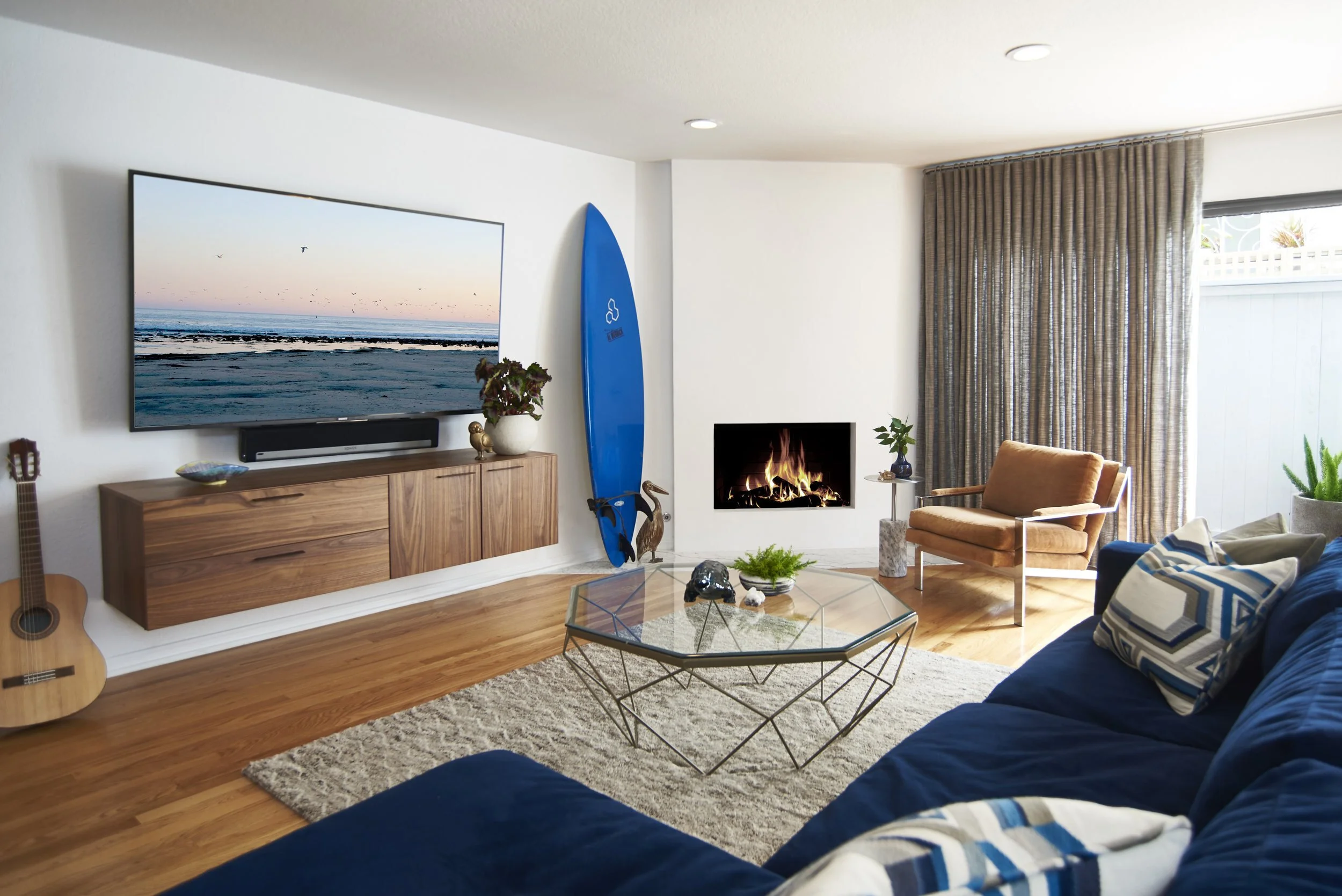
One piece of creating open and safe relationships with clients is by using inclusive design language. Inclusive language is defined by the Linguistic Society of America as language that "acknowledges diversity, conveys respect to all people, is sensitive to differences, and promotes equal opportunities." Considering language choice does not only help create a more understanding environment between designer and client, but the entire studio team, vendors, and tradespeople. Using inclusive home design language is a small but crucial step in creating open communication and trust between everyone involved in a project.

There is a long history of home design, grounded in tradition. Learning the historical context of the language used both within design and frequently in any workplace helps us understand if the language is supportive or can cause hurt or harm. Our design studio encourages continued education and learning for our whole team. At our weekly meetings, we share information we've learned in classes we've taken, articles or books we've read, or even conversations that may have opened our thinking. Recently, we have put effort into considering the language surrounding home design.

Recently there was a push in the real estate and home design community to eliminate the term "master bedroom" due to its loaded history, replacing it with "primary bedroom." This step towards considering the legacy of language so frequently overlooked had us wondering, where does other common design language originate? How can we improve our communication to match our intentions as home designers and create welcoming, inclusive, and adaptive spaces?

Through conversations and research, here are a few of the terms we have opted to replace as a studio and the alternatives we have adapted:
Powder room: While the term originated to reference a room where one powdered their wig, the phrase later took on gendered connotations around "powdering one's nose." The language has been replaced with "half-bath" for a more approachable and less gendered option.
Ladies and gentlemen or guys/gals: We have opted for folks, team, or friends for an option that does not assume or exclude gender identities.
"Man" as in, man the front desk, manmade, manpower: Our studio is replacing these with human-made, human power, staff the front desk for options that do not assert gender dominance or preference.
Grandfather: This phrase, commonly used in home design practices to indicate a non-conforming, pre-existing condition that may remain in violation of the building code, originated in the American South in the 1890s to defy the 15th Amendment and prevent Black Americans from voting. We've opted to use legacy or exempted.
Tipping Point: The phrase was first popularized when referencing white families leaving a neighborhood when a certain number of Black people moved in. We have opted for climax, peak, or crossroads.
His and hers closets or bathrooms: While commonly used in housing and real estate, the wording is gendered and assumes a hetero-normative lifestyle. We have switched to dual closets or dual bathrooms to describe the spaces without attaching any presumptions to their use.
Walk-up building: We are opting for non-elevator building to avoid language associated with ability.
Allowed: Frequently used conversationally, allowed implies power over another person to grant permission, and is being replaced with invited.
Discovered: In the context of "we discovered this artist's work," the word reinforces colonialist language and systems. We are opting for "we have learned of".
Blind approval: We are instead using unquestioned approval, automatic approval.
Idioms: Our studio is making an effort to avoid any idioms and instead speak literally. Many of these phrases have loaded historical origins, and because they are often regional, they may also be confusing or unclear, muddling communication.
If you are interested in learning more about inclusive language, here are a few of many available resources:
While language is only a piece of creating a safe and welcoming space, it is an important one to set the stage for accessibility and break a language pattern that carries an outdated and harmful legacy. This process is an ongoing one, and we are continuing to learn and adapt, both in our language use and in our design practice. We encourage you to join us in a collaborative effort to adapt, update, and improve our communication and continue in the ongoing conversation surrounding compassionate home design.

Sarah Barnard is a WELL and LEED accredited designer and creator of environments that support mental, physical and emotional wellbeing. She creates highly personalized, restorative spaces that are deeply connected to art and the preservation of the environment. An advocate for consciousness, inclusivity, and compassion in the creative process, Sarah has been quoted by Architectural Digest, Elle Décor, Vouge, Real Simple, HGTV and many other publications. In 2017 Sarah was recognized as a “Ones to Watch” Scholar by the American Society of Interior Designers (ASID).

Can the Design of Your Home Aid Recovery From Past Trauma? Research Says 'Yes'
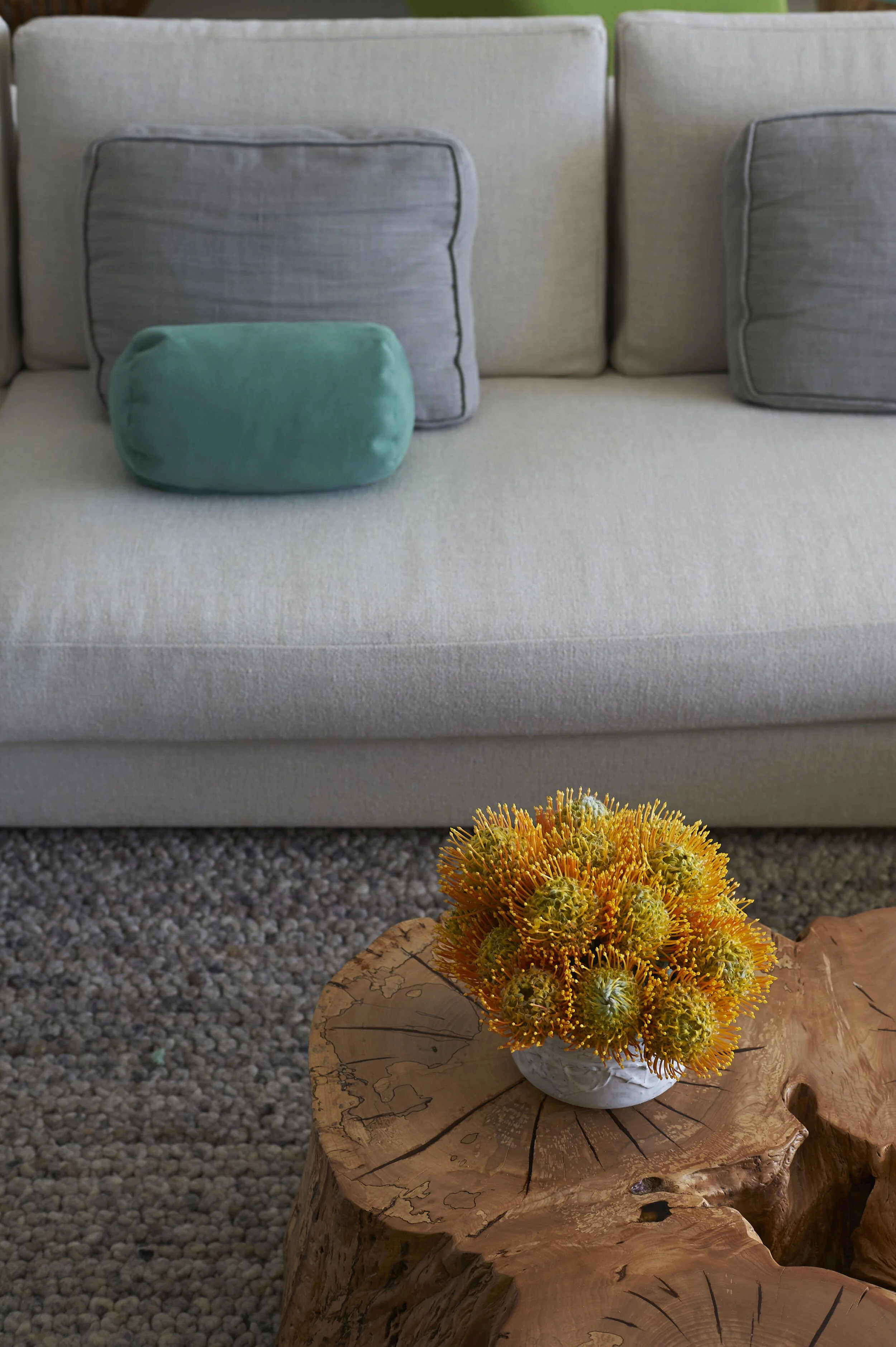
As interior designers, we operate from an awareness that because we create the built spaces that our clients inhabit, we exercise tremendous influence on their lived experiences and the ability to make a tangible difference in our clients' mental, physical, and emotional health. (1) While it is easy to accept this as a given in more passive terms, there is an increasing necessity around the active, rather than incidental, cultivation of safe and healing built spaces. At Sarah Barnard Design Studio, we aim to bring an inclusive and trauma-informed approach to home design.
Between 1995 and 1997, Kaiser Permanente conducted a study looking at the health effects resulting from the trauma of Adverse Childhood Experiences (ACEs). (2) The parameters around this study were narrow, focusing primarily on abuse, neglect, and domestic strife, without including factors such as trauma due to racism, deportation, illness, or war. The study's participants were also far from a broadly representative group, with nearly 75% of participants identifying as White. Yet, even within these minimal boundaries, the findings were stark—approximately 66% of the study's participants reported ACEs in their personal histories.

If we consider the types of trauma the study excluded and the adverse experiences that occur in adulthood, the implications of this study are significant. It is fair to assume that traumatic experiences are widespread among adults. Particularly in the context of the Covid-19 pandemic, the mental and emotional fallout of which we are only beginning to understand and measure, addressing the effects of trauma has taken on a new urgency.

Much of the discussion around trauma-informed home design has focused, understandably, on public and institutional contexts often directly connected with health and social services (3). As understanding around the way that physical spaces affect our mental, emotional, and physical health have expanded, so too has demand for spaces designed with health and healing in mind. Where once function and safety were the primary concern in, for example, mental health facilities, home designers are now looking at how to make these spaces soothing and restorative.

Knowing what we know about how widespread the experience of trauma is, it is reasonable to expand our thinking beyond institutional spaces and apply the principles of trauma informed practice to home design, as well as to the way we interact with clients. Our goal is to create spaces that manage the effects of trauma by reducing sudden sensory arousal, while also being actively healing and restorative.
This process begins with creating a safe and inclusive environment for our clients from a project's inception to completion. While it may be safe to assume that most adults carry some form of trauma with them, we don't know what a client's background is unless they feel safe to tell us. We aim to approach our clients with a sense of inclusiveness and sensitivity, allowing ample space to voice their needs. A certain amount of vulnerability and humility lies on us as designers as we hold ourselves accountable for maintaining this safe space for our clients. This accountability allows us to create homes that are not only aesthetically pleasing but also personalized and inclusive to each individual and their needs. As designers, we must keep an open flow of communication between ourselves and our clients, ensuring that communication remains understood on both ends.

Creating an inclusive space starts with mindfulness and care around the way we communicate(4). There is no default listener. Our intention is to allow people from all walks of life feel heard and understood. We are committed to educating ourselves on inclusive language, as certain words may carry racist or ableist subtext. Finding alternatives to non-inclusive language is one component of this, and it helps to avoid language that presumes the ethnicity, gender identity, or experiences of the listener. To maintain our goal of holistic inclusion throughout our studio, we apply these communication values to our client interactions, internal conversations, and interaction with vendors. By holding ourselves accountable even out of sight of clients, we ensure that inclusivity remains a core principle of our studio.

PAINTING BY MICHELLE JANE LEE
When we begin each project, our goal in taking a trauma-informed approach to home design and decorating includes finding ways to reduce sensory overstimulation. Sensory triggers can be hugely disturbing for neurodivergent people (particularly those on the autism spectrum), as well as people with chronic migraines, Post Traumatic Stress Disorder, Alzheimer's, and other chemical or sensory sensitivities (5). Spaces designed with inclusion in mind for neurodivergence and disability will create an environment that feels safe for all users along various spectrums of need. However, even neurotypical people can experience stress from sensory overstimulation, impacting their health and emotional resilience (6). We address this need in home design by creating varied paths to shelter from intrusive sounds, odors, and light. In addition, we empower our clients to limit and customize their exposure to sensory stimuli (7). One way to achieve this is to create smaller sensory retreats within the home, balancing the calming quality of openness with the comforting sense of being enveloped. We use color psychology, textures, and other sensory elements to comfort our clients. Some of this may overlap with general design knowledge of what is considered calming, and some may be specific to each client's taste and sense of comfort.

PAINTING BY KEVIN MOORE
Our goal as a studio is to create spaces where clients can relax and restore their senses. We achieve this in our projects by intersecting the client's sensory needs with their aesthetic tastes. There is much importance in including art in the spaces we design. At Sarah Barnard Design Studio, art is considered an integral part of home design. Great care is taken not only in the selection of art but also in how and where it is displayed. That said, while there are general notions of what makes a piece of art soothing for a viewer, from the color to subject matter. Ultimately, the most crucial factor is what the client wants to see every day. Clients will benefit most from seeing art that evokes a sense of calm or happiness; however, what that can look like varies widely from person to person. As designers, we offer our guidance and expertise in selecting art for the home.

We can achieve restoration through home design by providing access to nature and integrating natural themes into the spaces themselves. The biophilic design movement has focuses on making nature an integral theme in the home. Biophilic design has tremendous benefits for our emotional, mental, and physical health (8). Views of nature, particularly ones that provide a sense of continuity with the indoors and outdoors, can be one way to achieve this. Prioritizing the use of natural and organic materials can also promote restoration and wellness for our clients. A connection to nature can be undermined by toxic materials that are produced in ecologically harmful ways. On a more symbolic level, we can incorporate nature into an indoor space through organic imagery that evokes the natural world through shape, texture, and color.

Recently, our homes have become even more of a center point in our lives. For many of us, our home has become a workplace, school, and place for recreation all at once, increasing the need for therapeutic and restorative spaces within the home. Unfortunately, mental and emotional restoration has become harder to achieve now that our homes serve more functions than ever. As designers, we must be creative in our approach. We can create boundaries in the home without putting up walls, for example, using a screen to designate an area as a workspace, where the day's stressors can remain out of sight when it's time to relax. We can place extra care and attention into places in the home that offer privacy, letting them act as retreats from the rest of the living space. Thinking beyond a room's most basic function in this way can open up opportunities to create calming, restorative environments in less traditional spaces.

As designers, we have a tremendous opportunity to alleviate trauma by creating healing spaces for our clients while implementing a warm, understanding, and inclusive design process. We may never know or see our clients' struggles, but we can approach each project with empathy, compassion, and practical design knowledge to address their needs. As gratifying as having our clients appreciate our work, it is even more gratifying to know that we can make a tangible difference in their health and happiness.

CERAMIC SLUG BY JOSEPH AND MARJORIE LAKE
Sarah Barnard is a WELL and LEED accredited designer and creator of environments that support mental, physical and emotional wellbeing. She creates highly personalized, restorative spaces that are deeply connected to art and the preservation of the environment. An advocate for consciousness, inclusivity, and compassion in the creative process, Sarah’s work has been recognized by Architectural Digest, Elle Décor, Real Simple, HGTV and many other publications. In 2017 Sarah was recognized as a “Ones to Watch” Scholar by the American Society of Interior Designers (ASID).

Works Cited
(1) https://dcf.vermont.gov/sites/dcf/files/OEO/training/2019/Trauma-Informed.pdf
(2) https://www.cdc.gov/violenceprevention/aces/about.html
(3) https://www.nytimes.com/2021/01/05/business/mental-health-facilities-design.html
(4) https://www.linguisticsociety.org/resource/guidelines-inclusive-language
(5) https://www.hksinc.com/how-we-think/research/sensory-well-being-for-adolescents-with-developmental-disabilities-creating-and-testing-a-sensory-well-being-hub/
(6) http://universaldesign.ie/What-is-Universal-Design/The-7-Principles/
(7) https://www.asid.org/lib24watch/files/pdf/8477
(8) https://www.fastcompany.com/90333072/what-is-biophilic-design-and-can-it-really-make-you-happier-and-healthier