
Designing for Mind, Body, and Home: Sarah Barnard in Business of Home
Spatial Individualization
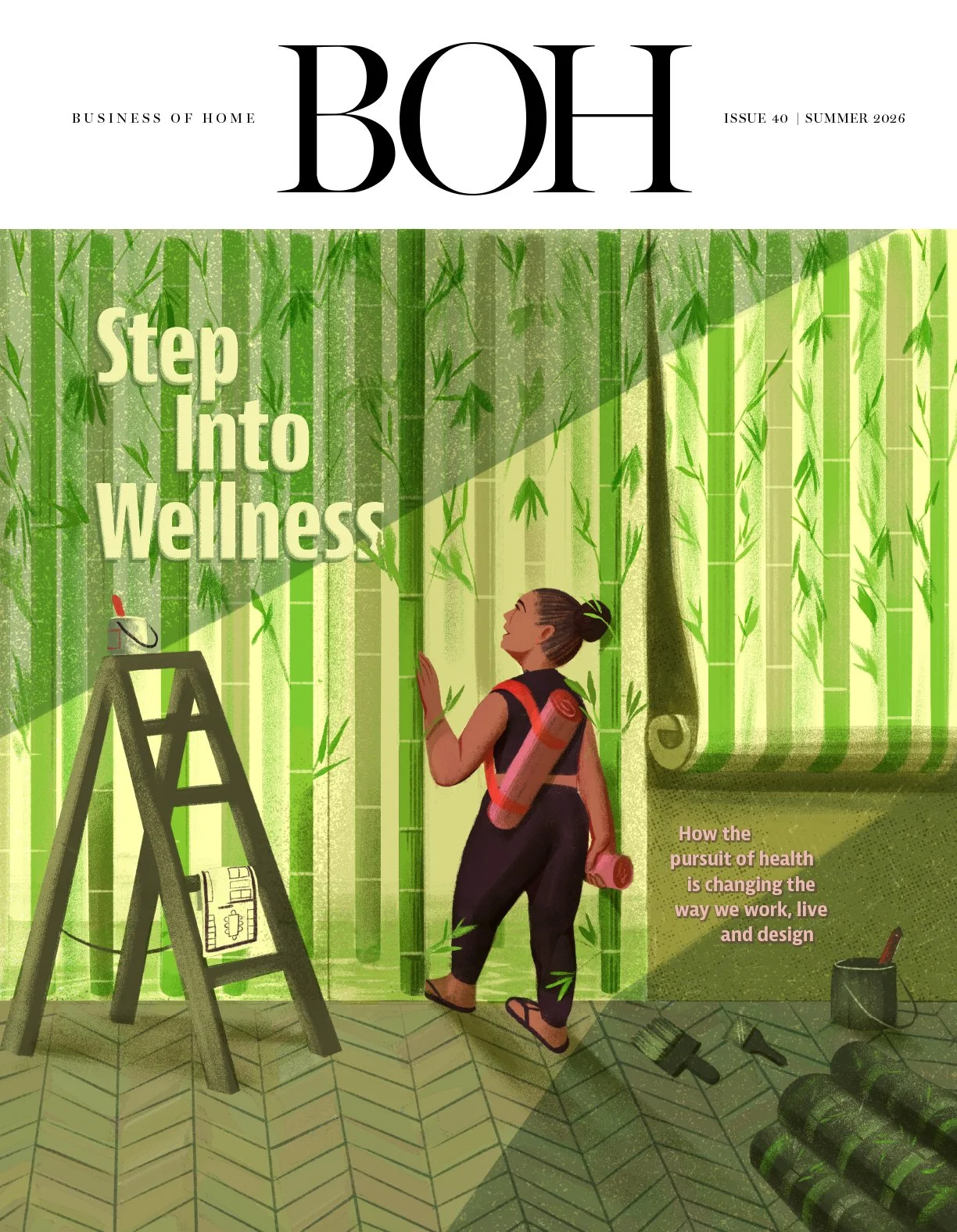
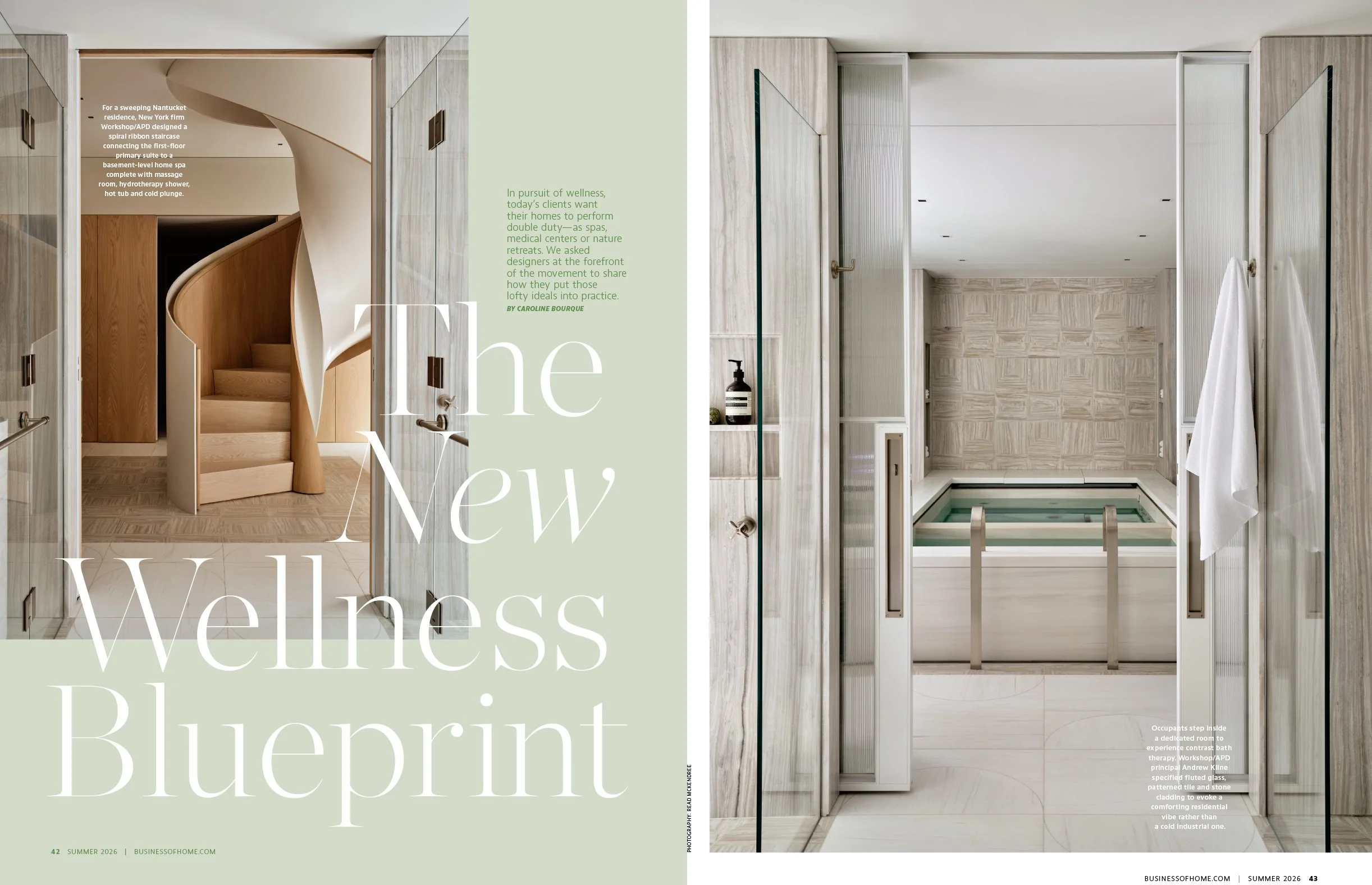
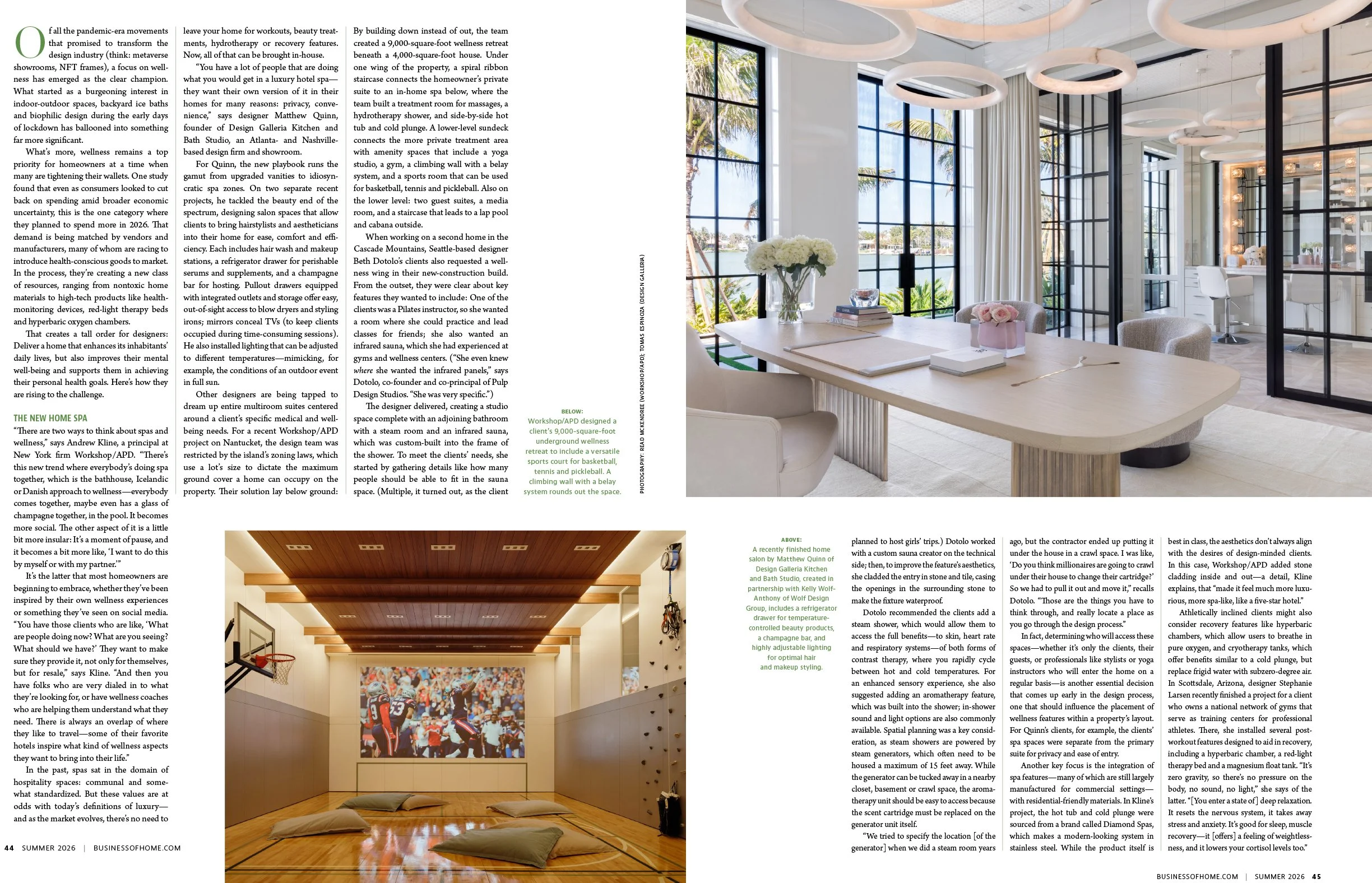
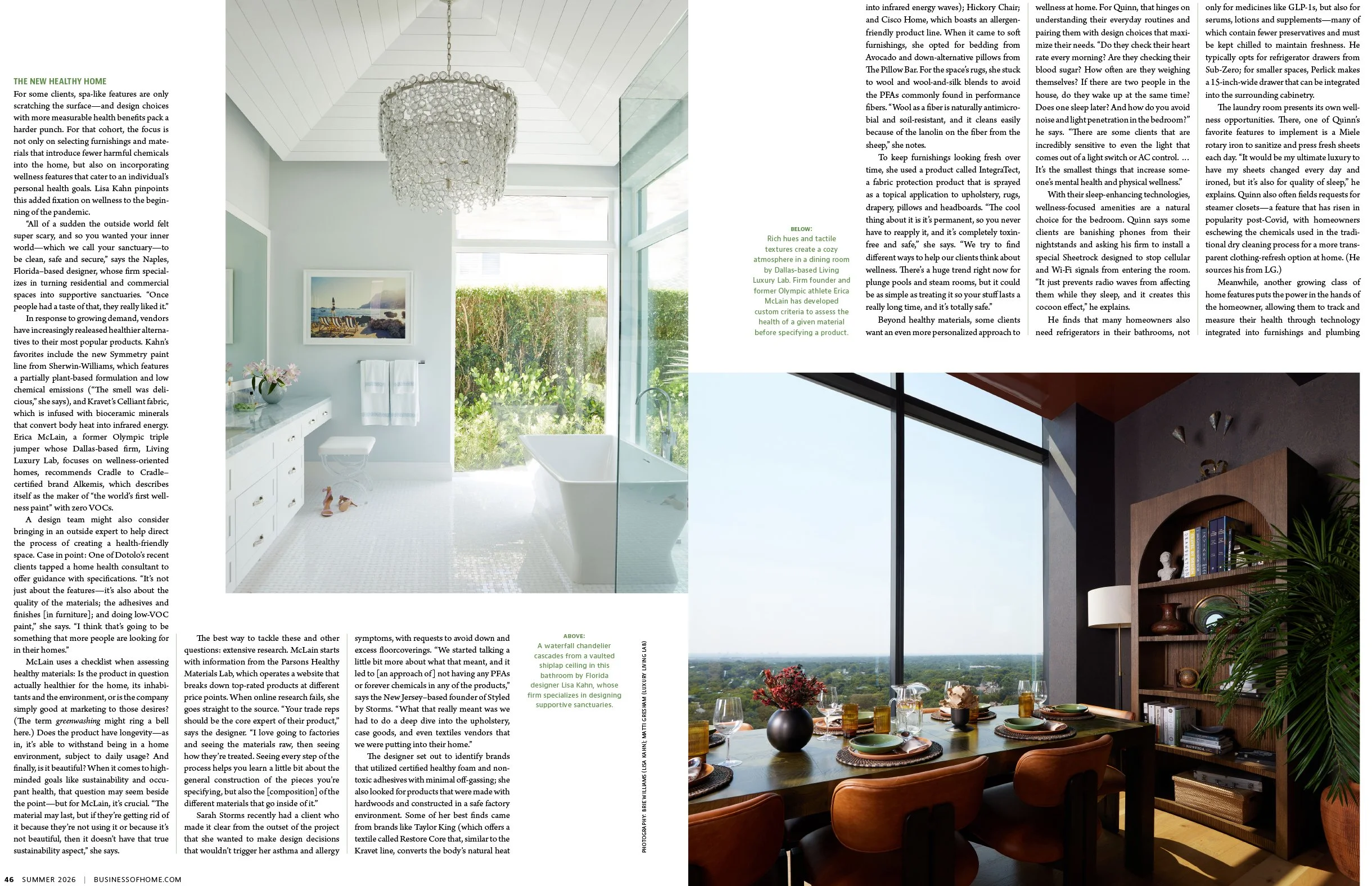
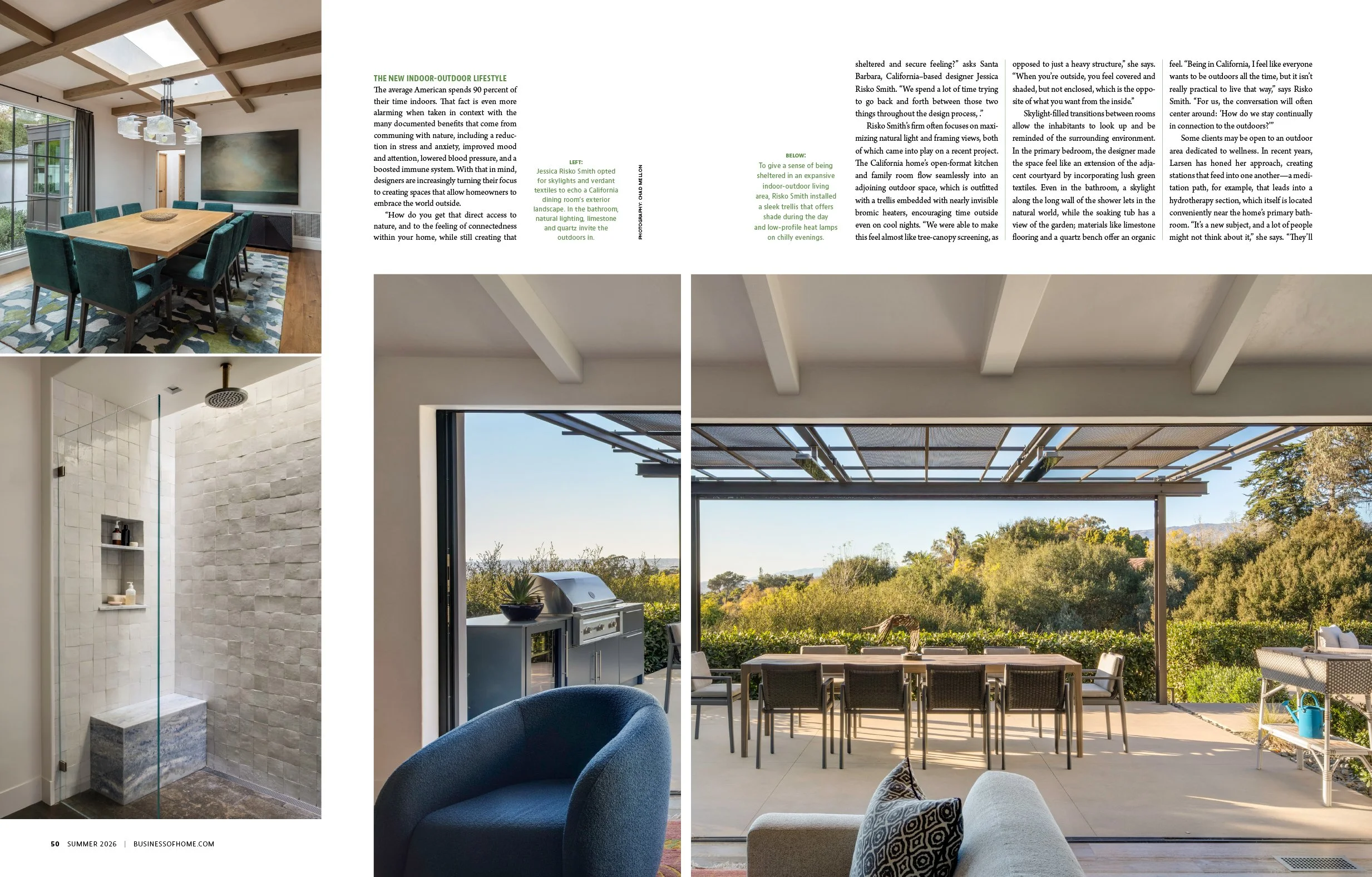
The design of a custom residence is increasingly evolving to support the long-term biological and emotional well-being of its inhabitants. In a recent Business of Home feature titled "Step Into Wellness," the publication brought together a select group of design pioneers driving the residential health movement, including Sarah Barnard alongside notable industry names like Workshop/APD.
Sarah holds specialized credentials as a WELL AP and LEED AP, bringing over two decades of experience to the development of private spaces centered around individual physical needs and sustainable material selections.
Designing for Discretion and Individual Needs
When managing the layout of private medical suites, recovery zones, or dedicated wellness wings, the design process relies on a high level of sensitivity and discretion. Clients navigating specific health challenges look for an environment tailored to their daily routines, integrating into the existing balancing energy of the home.
The feature highlights Sarah’s ground-up approach to creating residential wellness environments, which focus on deep personalization.
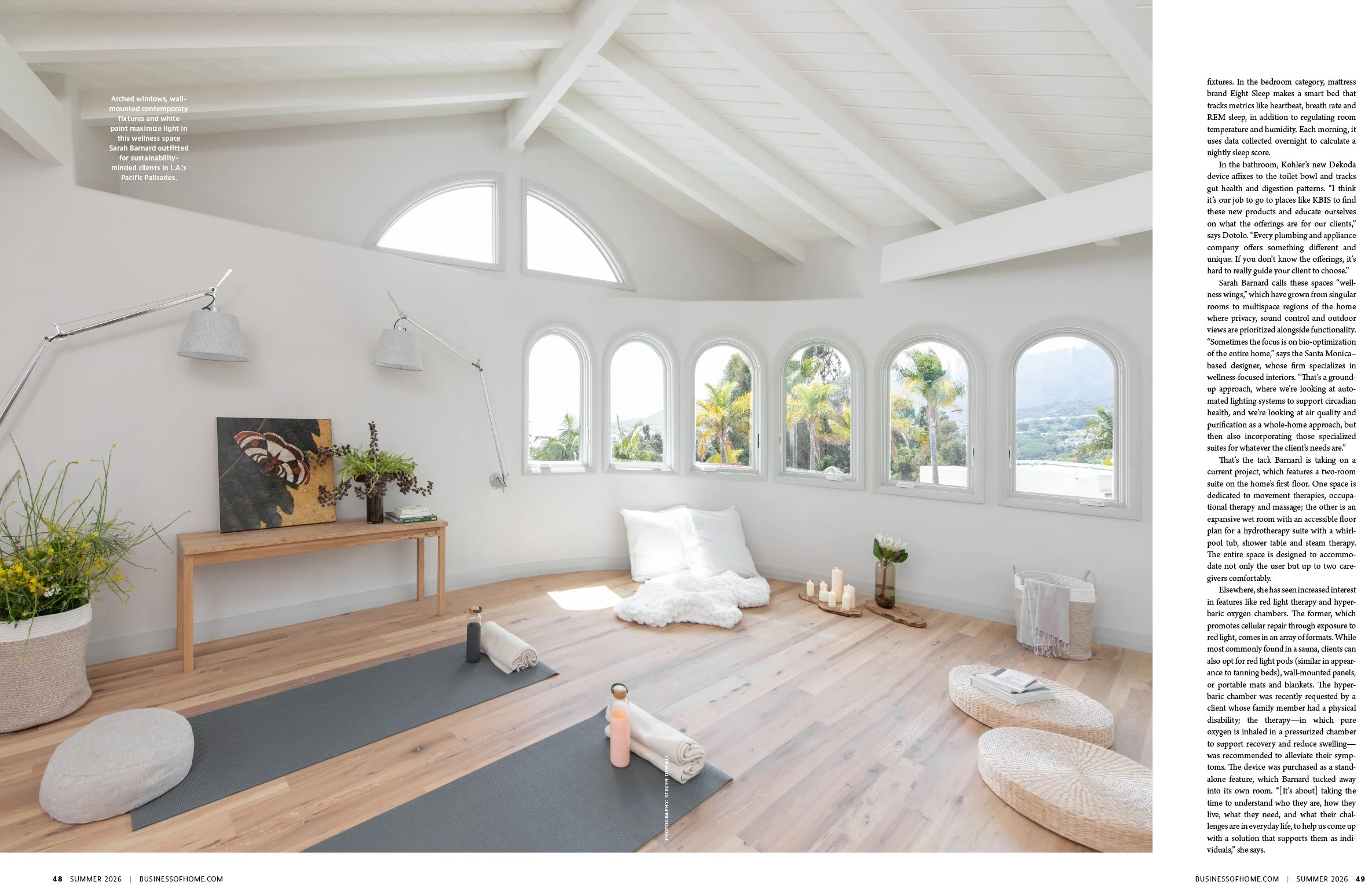
"Sometimes the focus is on bio-optimization of the entire home," Sarah shared in the article. "That's a ground-up approach, where we're looking at automated lighting systems to support circadian health, and we're looking at air quality and purification as a whole-home approach, but then also incorporating those specialized suites for whatever the client's needs are."
Execution and Specialized Suites
For the project featured by Business of Home, Sarah mapped out a highly private, specialized two-room suite on a residence's main floor. One room provides a dedicated area for movement therapies, bodywork, and massage, while the adjacent space features an expansive, accessible wet room. The hydrotherapy suite, complete with a whirlpool tub, shower table, and steam therapy, was carefully structured to comfortably accommodate both the inhabitant and care providers.
Sarah’s training in environmental health and building standards provides her with the expertise required to integrate specialized recovery infrastructure, such as hyperbaric oxygen chambers and red-light therapy systems, while maintaining spatial cohesion and acoustic privacy.
Programming these spaces successfully depends on building a secure, empathetic relationship where clients can openly share the realities of their daily lives. As Sarah notes:
"[It's about] taking the time to understand who they are, how they live, what they need, and what their challenges are in everyday life, to help us come up with a solution that supports them as individuals."
Lifespan Design
A home can serve as a supportive ecosystem that adapts to physical transitions and respects internal health. Through natural and sustainable material specification, advanced air purification, and precise spatial planning, custom interior design thoughtfully supports long-term physical and emotional well-being.
Sarah Barnard is a WELL and LEED accredited interior designer and creator of environments that support mental, physical, and emotional wellbeing. She creates highly personalized, restorative spaces that are deeply connected to art and the preservation of the environment. A certified California Naturalist, Sarah believes in celebrating nature through responsible design that works symbiotically with the local environment.
An advocate for consciousness, inclusivity, and compassion in the creative process, Sarah has appeared in Architectural Digest, Elle Décor, Vogue, HGTV, and many other publications. Sarah was recognized as a "Ones to Watch" Scholar by the American Society of Interior Designers (ASID) and has been awarded "Best of Houzz Design" for seven consecutive years. Sarah's MFA in visual arts from Claremont Graduate University informs her practice and innovative approach toward interior design as creating a living work of art.