


Celebrating Wellness by Design: Sarah Barnard Design Receives Best of Houzz Award
We’re excited to share that Sarah Barnard Design has been recognized by the global Houzz community with the Best of Houzz 2026 award for Design.
As our homes play a bigger role in our lives, this recognition feels especially meaningful. It’s more than just about looks; it affirms our belief in caring design, holistic wellbeing, and the strong link between our spaces and our health.
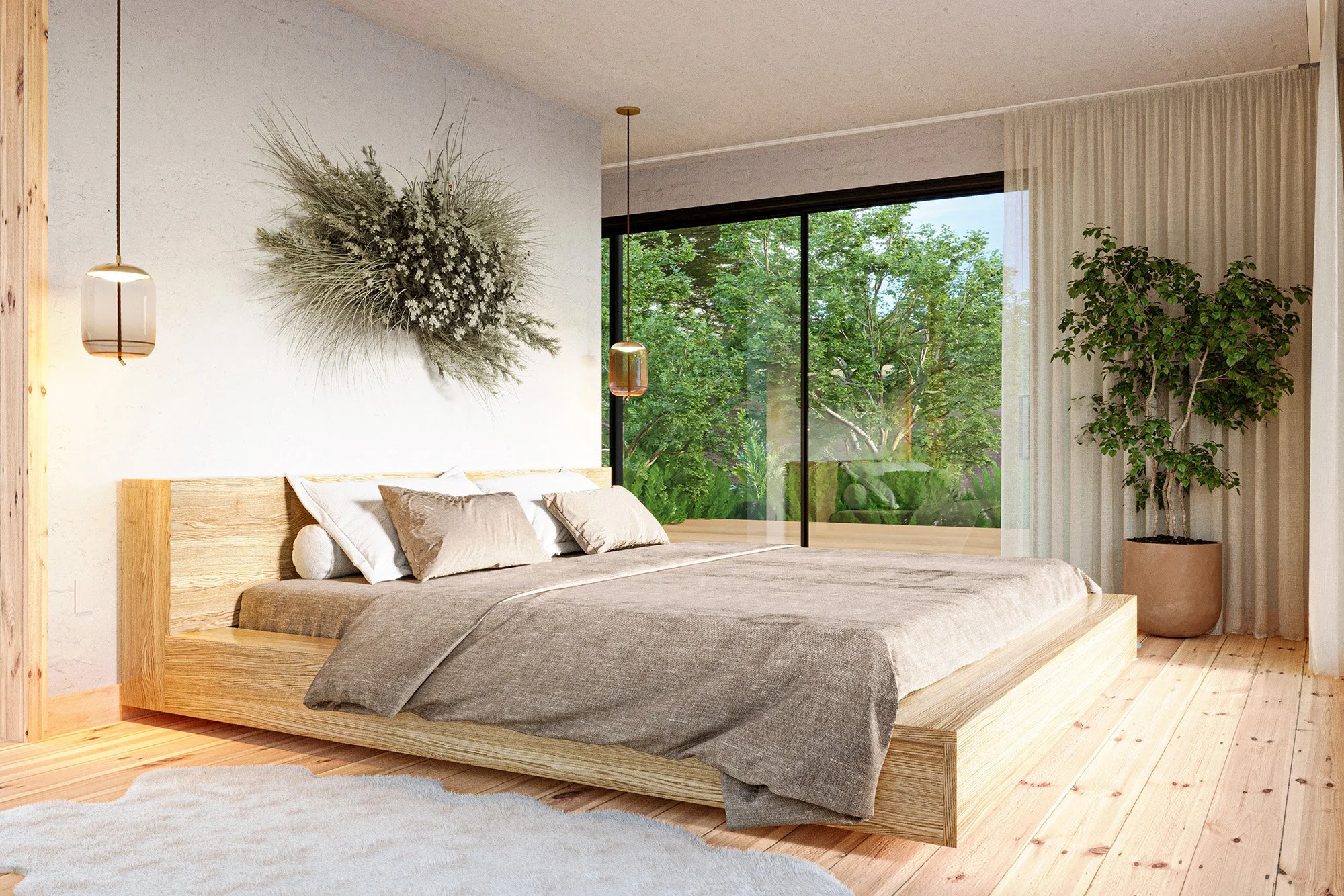
Designing for the Senses and the Soul
This award is especially meaningful because it comes from the homeowners in the Houzz community. Only the top 3% of over 3 million home professionals are recognized for having the most popular designs, as chosen by millions of users. When people save our photos, share ideas, and connect with our work, it shows a real desire for spaces that not only look good but also feel good.
Sarah Barnard Design is known for creating personalized, restorative spaces. By using biophilic design, sustainable materials, and understanding sensory needs, Sarah crafts homes that feel like true sanctuaries. From peaceful coastal retreats to earthy living spaces that bring nature inside, each project reflects the people who live there. This award honors our personal, wellness-focused approach that connects with so many.
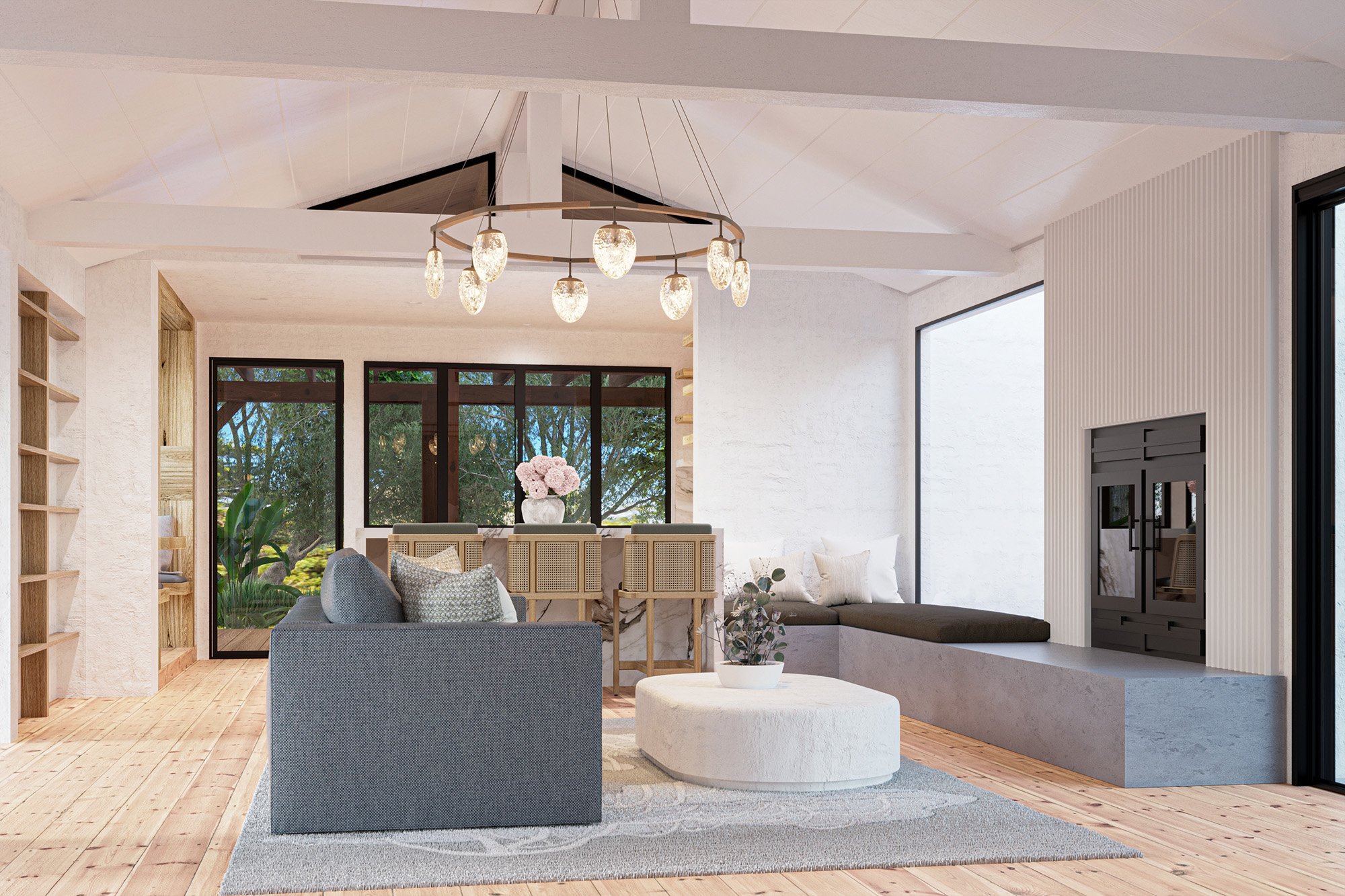
A Tradition of Excellence
This 2026 award is another proud moment in our history with Houzz. We’re truly grateful for the community’s ongoing support, which has now brought us our 12th Houzz honor.
From favorites like the Ocean View Penthouse to our latest projects, your support inspires us to keep exploring what makes a home healthy and happy. This decade of recognition shows our dedication to blending environmental responsibility with great design. We’re committed to growing with our clients and to the value of thoughtful, wellness-focused design.
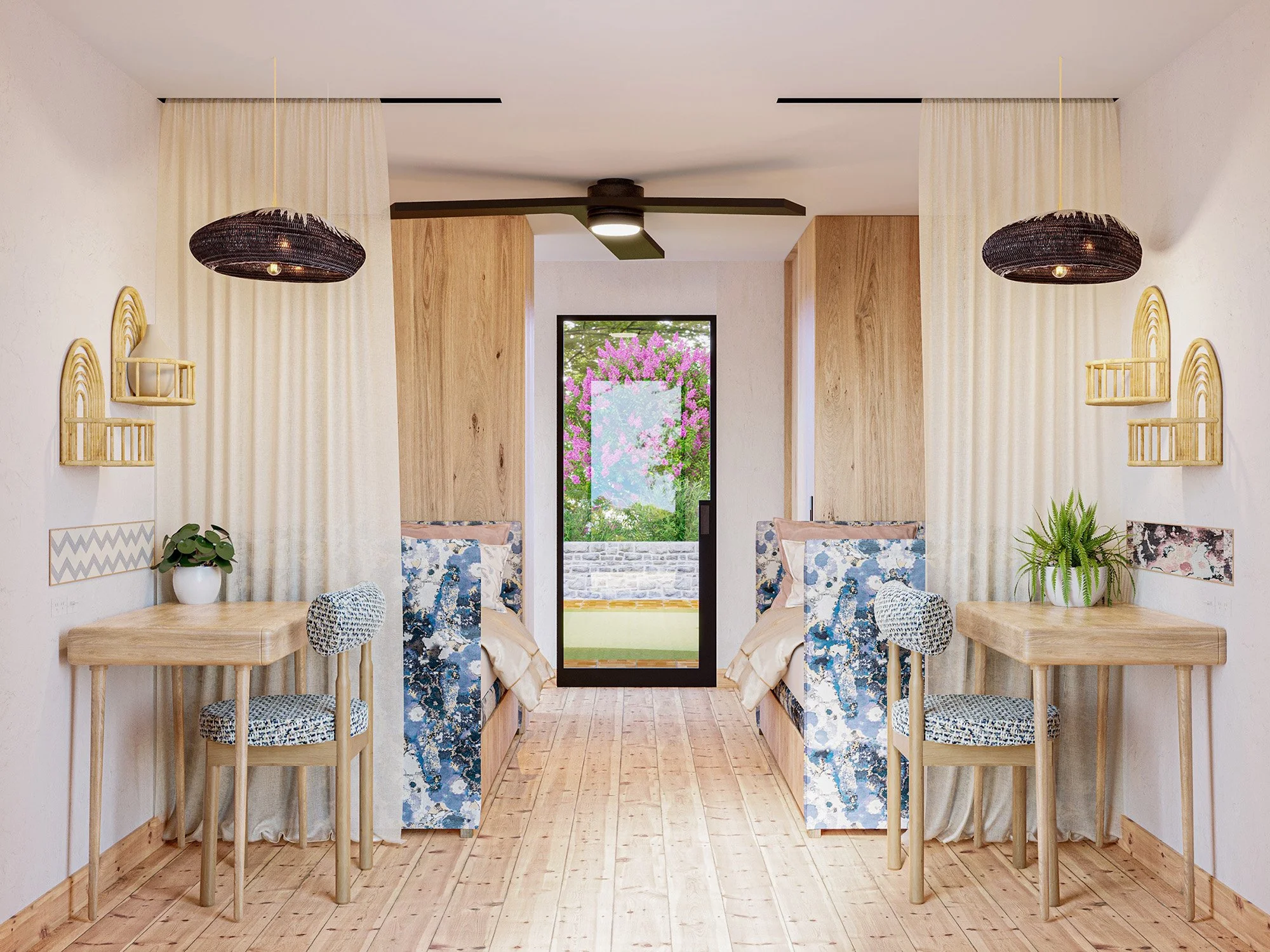
Nature-Inspired Color Trends
Every year, major paint brands choose a color of the year. They devote a lot of time and research to color choices, and often, the choices reflect what consumers want and need in their lives at a given point in time, rather than being predictive.
What do the color choices this year tell us about what we want from our homes? Many of the paint picks this year are grounding, represent a back-to-basics simplicity, and encourage pause to enjoy small, but significant moments.
There are a number of greens and browns on offer this year, but two of the most effective at eliciting calm, and are useful tools for rewilding, are Dunn-Edward’s Midnight Garden and Benjamin Moore’s Silhouette.
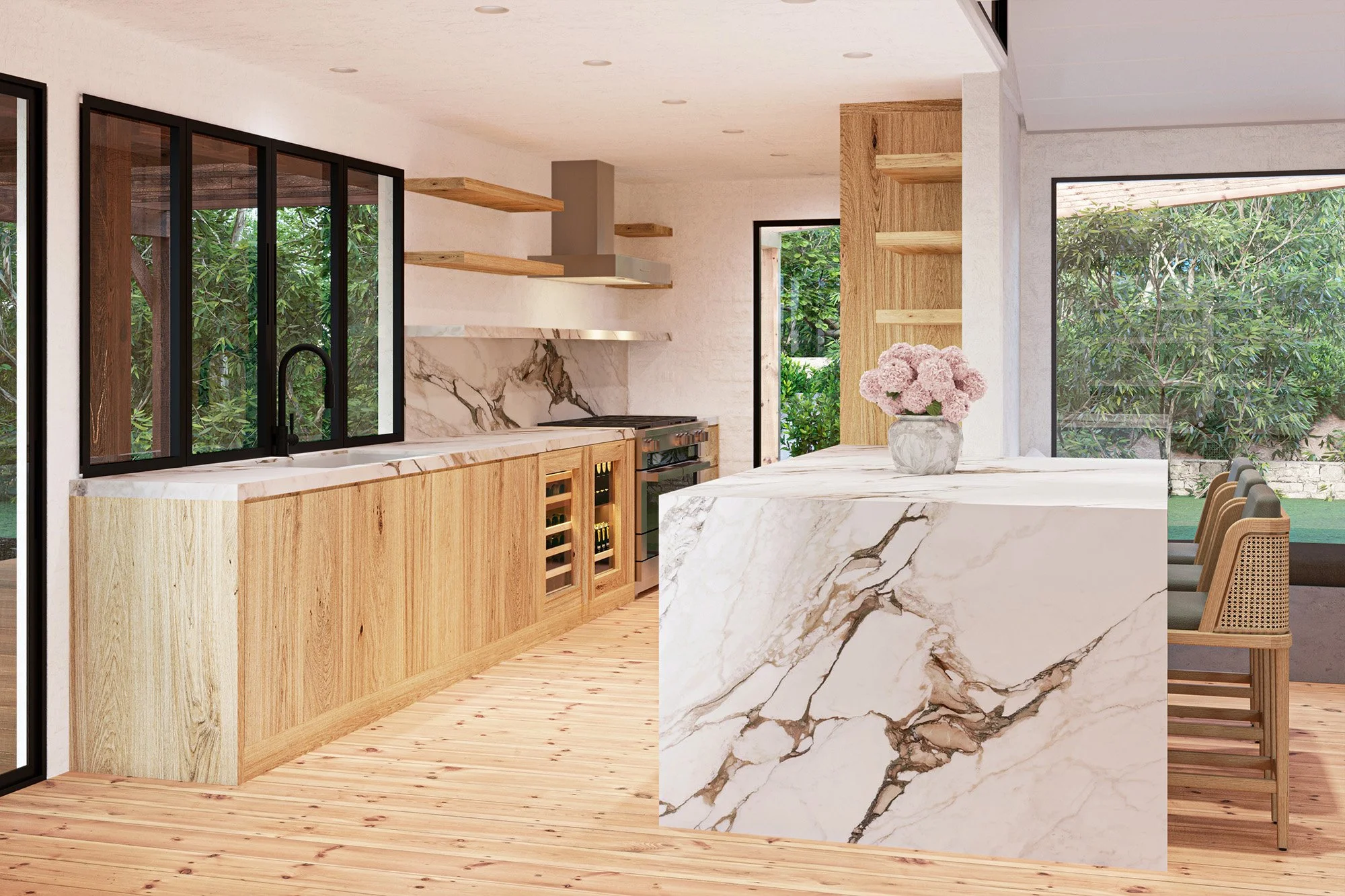
Begin Your Design Journey
Are you inspired to transform your own home into a personalized space that nurtures your well-being? We would love to hear about your vision, your needs, and what home means to you.
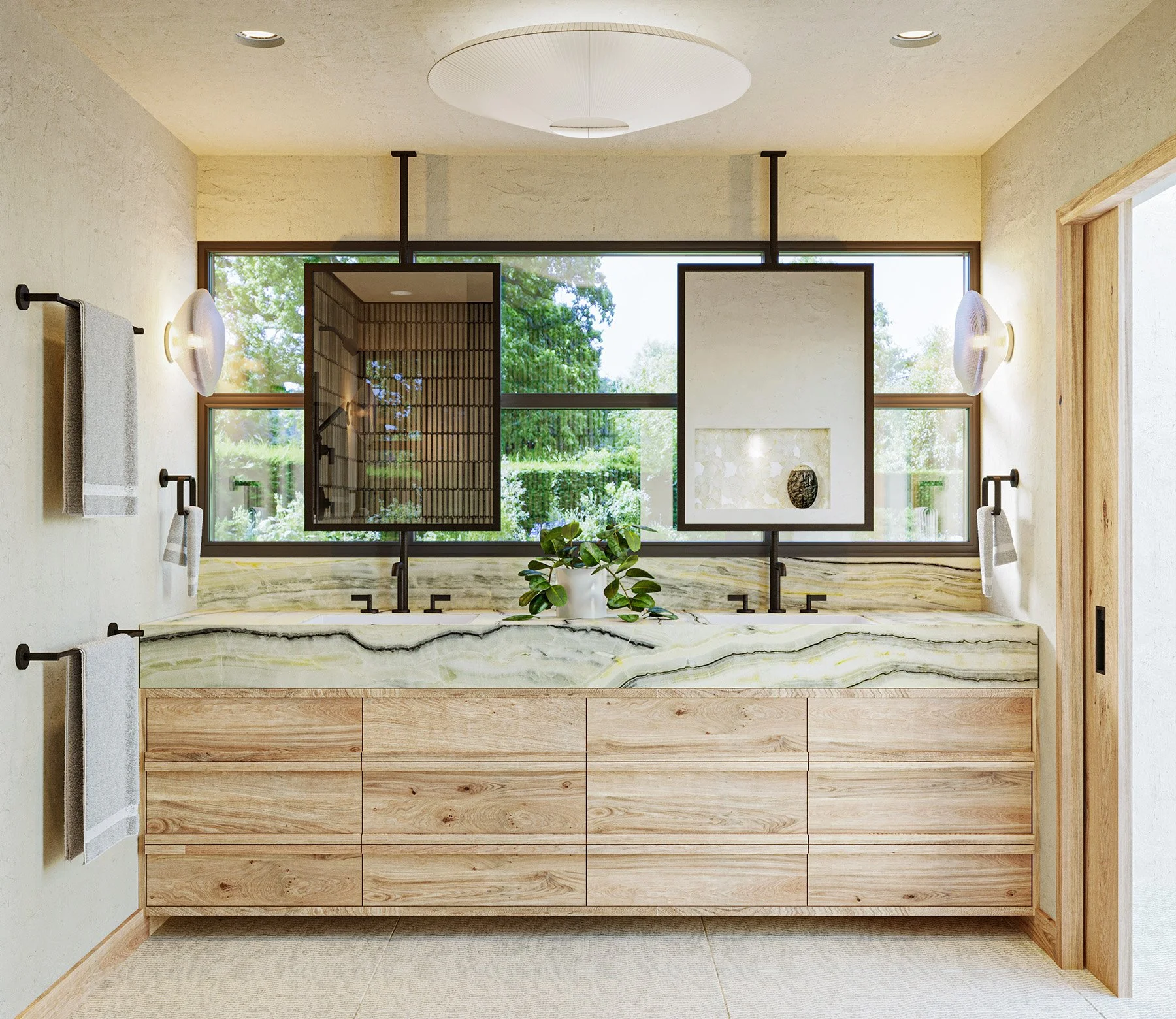
Sarah Barnard, WELL AP + LEED AP, is a leading interior designer of personalized, sustainable spaces that support mental, physical, and emotional wellbeing. She creates highly personalized, restorative spaces that are deeply connected to art and the preservation of the environment. An advocate for consciousness, inclusivity, and compassion in the creative process, Sarah has appeared in Architectural Digest, Elle Décor, Vogue, HGTV, and many other publications. Sarah was honored as a “Ones to Watch” Scholar by the American Society of Interior Designers (ASID).

How Nature-Inspired Colors Can Help Create Calm Through Rewilding
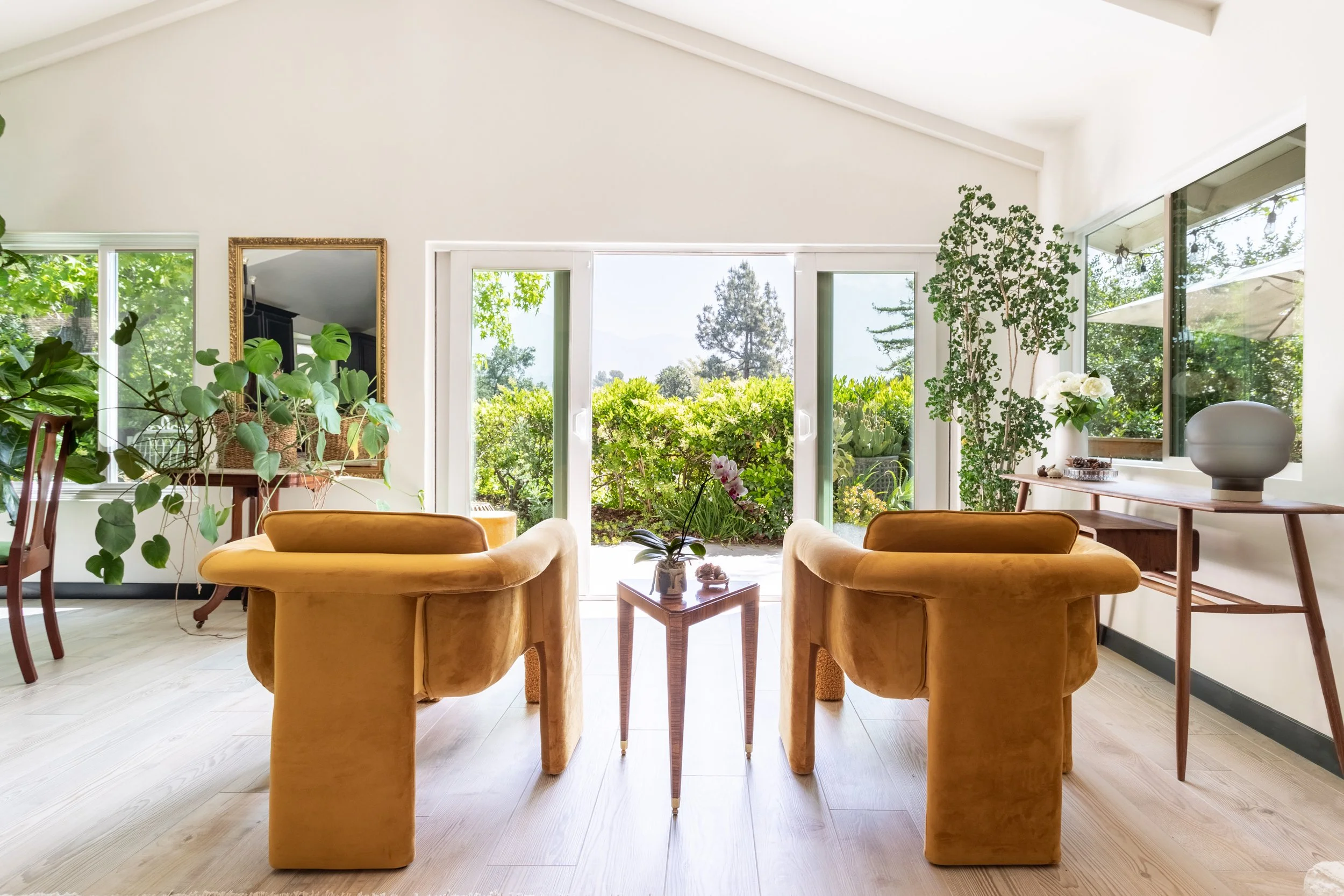
Even in a built environment, there is a place for nature, especially in creating spaces that support health, wellness, and mood. As we look to our homes for shelter and sanctuary, nature-driven design, such as rewilding, is becoming more important.
Rewilding is the practice of minimizing human intervention to let nature lead the way, both aesthetically and experientially, respecting and observing natural life cycles and systems. In practical terms, this might mean restoring native flora and fauna around our homes. This invites the local ecosystem to flourish, while providing us with a deeper, more authentic connection to nature.
Rewilding, as a design strategy, can also be done indoors, creating a warm and supportive space where we are consciously connected with nature. The benefit and beauty of rewilding, indoors and out, is how it subtly, but significantly, re-focuses our connection with nature.

Color Choices for Rewilding
Earth-inspired color choices are impactful as design tools in the context of rewilding, particularly greens and browns, given their place in nature and the psychological and emotional meanings they represent.
“Color can be a very powerful tool in interior design. It’s visually transformative and has a strong psychological influence. When used strategically, it can be useful in establishing an emotional connection to a home,” says Sarah Barnard, WELL and LEED-accredited interior designer. Barnard specializes in creating home designs that support mental and physical wellness. Integrating nature and connecting with the local environment are key to her design philosophy and wellness objectives.
“When using a nature-inspired color palette, especially earthy greens and browns, the effects can be calming and restorative," she says.

Research shows that often, people find green calming and nurturing. Exposure to green has been said to lower blood pressure, and some scientists say that our feel-good connection is hardwired into our brains from our hunter-gatherer days, in that green in nature equals opportunity for rest, shelter, and nourishment. Some say that green helps create focus and clarity, representing life, balance, and harmony.
Meanwhile, browns are inherently earthy and grounding. Brown is associated with strength, self-care, and warmth. In Feng Shui, brown represents the earth element and is used for stability in interior design.

Nature-Inspired Color Trends
Every year, major paint brands choose a color of the year. They devote a lot of time and research to color choices, and often, the choices reflect what consumers want and need in their lives at a given point in time, rather than being predictive.
What do the color choices this year tell us about what we want from our homes? Many of the paint picks this year are grounding, represent a back-to-basics simplicity, and encourage pause to enjoy small, but significant moments.
There are a number of greens and browns on offer this year, but two of the most effective at eliciting calm, and are useful tools for rewilding, are Dunn-Edward’s Midnight Garden and Benjamin Moore’s Silhouette.

Midnight Garden by Dunn-Edwards
Green is popular this year, but Midnight Garden is particularly well-suited for rewilding. That's because this green is grounding, literally. It’s a mossy green, inspired by moss, clover, lichen, and other ground cover. It’s a deep green, with blue undertones.
Dunn-Edwards says the color is inspired by the simple elegance of nature and is borne of a growing consumer desire for restorative spaces at home. They suggest that green, and this shade in particular, is an effective way to connect with nature through conscious design.
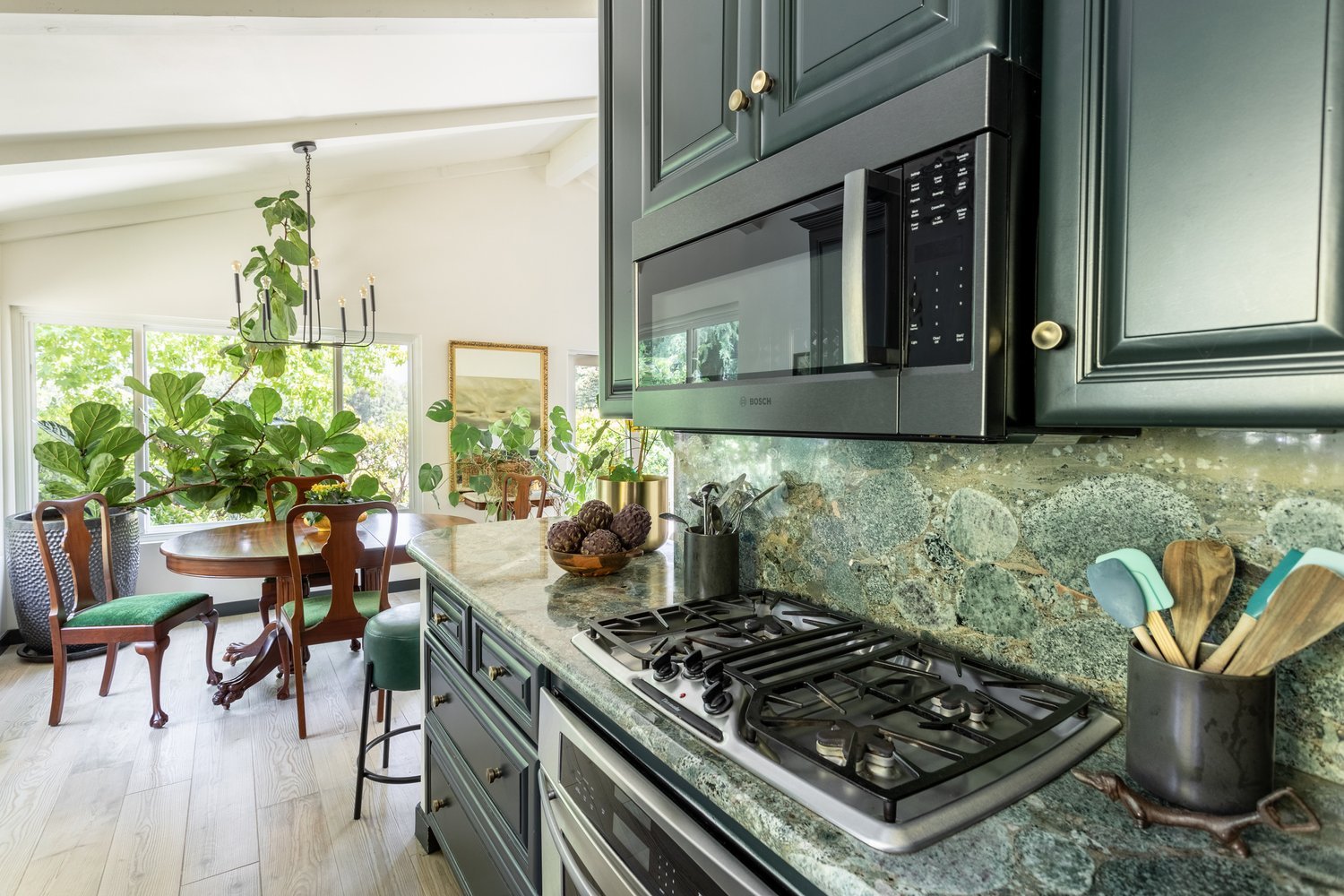
This color closely replicates plant matter, making the rewilding experience immersive. It’s a darker, more saturated hue that gives off forest vibes and can replicate some of the calm associated with forest bathing. Beyond natural ground cover, think of mature tree canopies, dense foliage, and twilight, all opportunities for stillness and reflection. Its plant-like coloring draws focus to regeneration, photosynthesis, and renewal.
In addition to its calming qualities, Dunn-Edwards promotes this color’s versatility as an accent or a main color.
“Midnight Garden is the green that works everywhere, from cabinetry and walls to accents and exteriors,” said Lauren Hoferkamp, color marketing manager at Dunn-Edwards, in a press release. “Its versatility makes it equally at home on interiors and exteriors, pairing effortlessly with natural textures, warm neutrals, or sleek minimalism.”
Benjamin Moore’s Silhouette
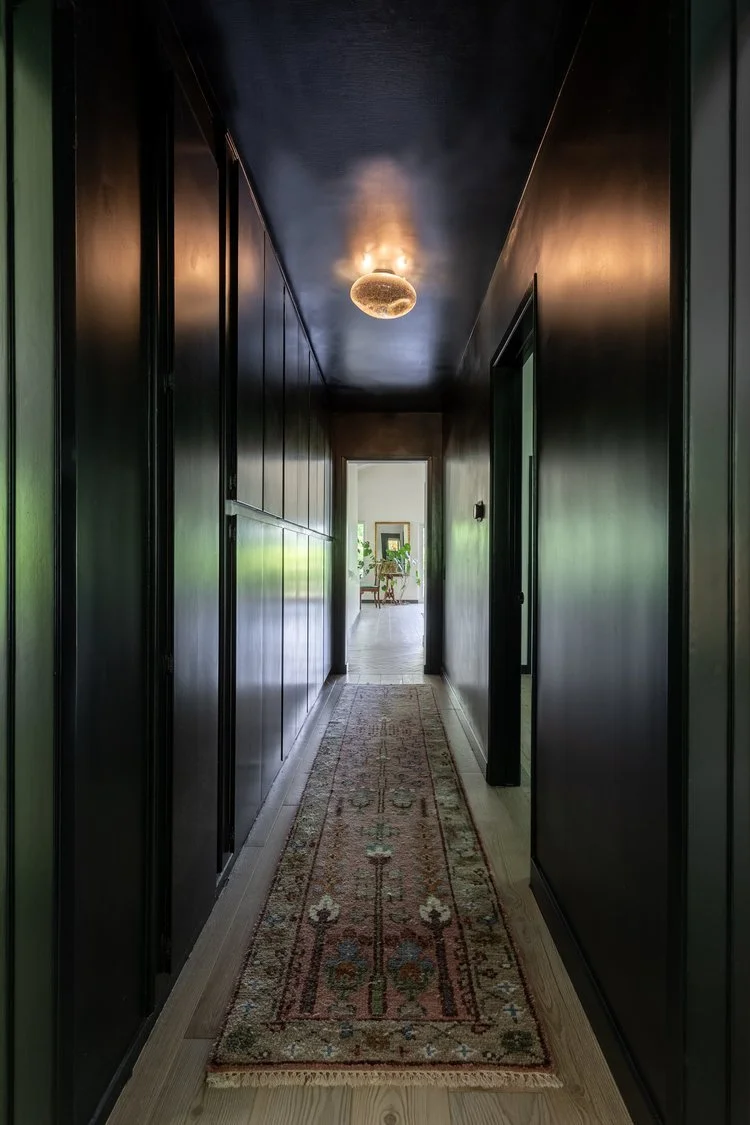
Silhouette is a rich, earthy brown, with hints of charcoal. It leans heavily into timeless design, and like Midnight Garden, it is grounding.
The color is inspired by the luxury of finding joy in simple things, which we only experience when we pause and take the time to notice.

Silhouette offers “a luxurious blend of burnt umber and delicate charcoal undertones,” said Andrea Magno, director of color marketing & design at Benjamin Moore, in a press release. “This hue has the versatility and softness to bring a space from expected to exceptional.”
It’s deep and dark, reminiscent of many of the materials we find in nature: the earth, weathered tree bark, clay, unfinished wood, and soil on the forest floor. It lends a sense of cozy connectedness, much like we experience when immersed in nature. Silhouette lends itself well to rewilding because it serves as a quiet backdrop, letting other colors and natural materials be impactful.

Using Earth-Inspired Colors at Home
“These earthy paint colors work well in spaces throughout the whole home, and can be applied with intention,” says Barnard. “Think about how rooms are used, and how applying various hues can foster a connection with nature and generate calm.”
Here are some suggestions:
For example, in a high-traffic, task-oriented space such as the kitchen, Midnight Garden can be energizing and uplifting, while earthy browns, such as Silhouette, can offer grounding.
Both are good choices for biophilic decor in bedrooms to create a serene environment geared for sleep.
Nature-inspired browns can help create a sense of cozy enclosure, a good choice for a snug reading nook or library.
In spaces where gathering is the goal, such as dining rooms and living rooms, mossy greens can encourage us to pause and absorb the joy of the moment, while rich browns can prompt us to slow down and relax.

Sources
https://www.verywellmind.com/color-psychology-green-2795817
https://www.verywellmind.com/the-color-psychology-of-brown-2795816
https://www.dunnedwards.com/colors/browser/de5657/
https://www.dunnedwards.com/press-releases/dunn-edwards-announces-midnight-garden-as-2026-color-of-the-year/
https://www.benjaminmoore.com/en-ca/press/benjamin-moore-announces-colour-of-the-year-2026
https://www.elledecor.com/design-decorate/color/a69034685/benjamin-moore-color-of-the-year-2026
Sarah Barnard, WELL AP + LEED AP, is a leading interior designer of personalized, sustainable spaces that support mental, physical, and emotional wellbeing. She creates highly personalized, restorative spaces that are deeply connected to art and the preservation of the environment. An advocate for consciousness, inclusivity, and compassion in the creative process, Sarah has appeared in Architectural Digest, Elle Décor, Vogue, HGTV, and many other publications. Sarah was honored as a “Ones to Watch” Scholar by the American Society of Interior Designers (ASID).
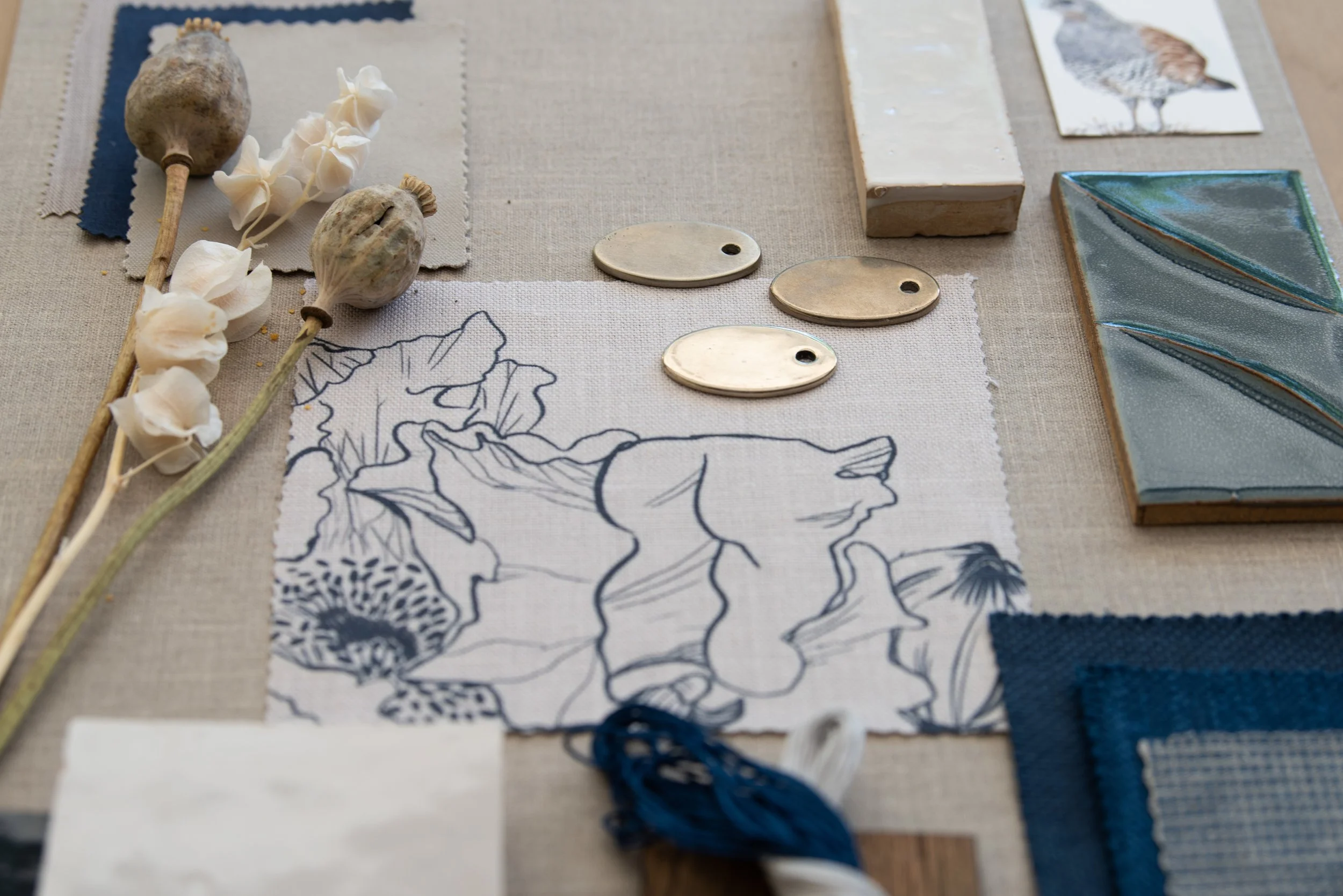
Mindfully Creating Supportive Spaces to Aid With Visual Impairment
While interior design generally relies on common principles, the end user and their specific needs should guide the design. Home design can play a crucial role in creating a space that fosters independence, comfort, safety, and confidence. Specific choices can facilitate navigation and, when done intentionally, blend thoughtfully into the overall design.
Why interior design choices matter with visual impairment
When affected by visual impairment, physical space and how it is structured and perceived can either create obstacles in daily living or, conversely, make life easier, including aspects such as lighting, layout, furnishings, and more.
Sarah Barnard is a WELL and LEED-accredited interior designer. Her inclusive studio’s work is guided by how clients of all abilities use their spaces daily. Using tools such as field testing and an interactive process that engages clients and incorporates their feedback, Barnard translates individual needs into design elements for clients to choose from.
When designing for individuals with visual impairment, Barnard understands the nuance of color, contrast, lighting, materiality, and layout, and how they all can combine to create comfort and usability. Having a thoughtfully designed home, with attention paid to elements that address specific visual challenges, can create a sense of safety and serenity that is frequently sought after.
While needs will vary from person to person, here are some design strategies to consider.

Layered, adaptive lighting
“Comprehensive home lighting that utilizes multiple light sources is crucial when designing for individuals with vision reduction due to aging,” says Barnard. “Combining overhead lighting, task lighting, and wall sconces creates a diverse lighting network that allows individuals to adjust illumination to suit their needs and preferences,” says Barnard.
“These preferences can be easily set and adjusted by incorporating a smart lighting system, which can be programmed to automatically adjust to lighting changes and individual preferences throughout the day. Smart lighting can be controlled through the convenience of a smartphone or voice activation, providing a convenient and accessible way to enhance visibility and comfort for individuals with vision impairment,” she says.

Prioritize natural light
While the inclusion of artificial lighting can help direct light on demand, access to natural light, and the distribution of light throughout the room are important. That’s in part because “Natural light boosts the overall brightness of a space, and more light means better visibility overall. Natural light is also typically softer and less fatiguing on the eyes than artificial light,” says Barnard.
Think of a space in terms of access to light, how light can be pulled into a room from outside, and then placement of these conduits. In design terms, this might mean large windows, skylights, and light wells. Light also needs an unfettered path to travel, so open concept floor plans work well, or in divided floor plans, transom and clerestory windows on interior walls, and French doors can help the flow of natural light.
However, glare can be problematic, so “ sheer or light-diffusing window treatments can help minimize glare within a space, improving visibility and comfort,” says Barnard.

Choosing finishes and glare reduction
Typically, finishes are chosen in a home to suit a particular aesthetic, but for individuals with vision impairment, there is a functional aspect: minimizing glare. “Glare from reflective surfaces can reduce visibility for individuals with vision impairment, making distinguishing objects from their background difficult, and can also cause discomfort,” says Barnard. Glare can also contribute to eye strain and visual fatigue.
The solution, says Barnard, can be matte over glossy or polished finishes. “Choosing matte finishes for flooring, countertops, and paint can help minimize glare from reflective surfaces within interior spaces, enhancing comfort, visibility, and safety.”
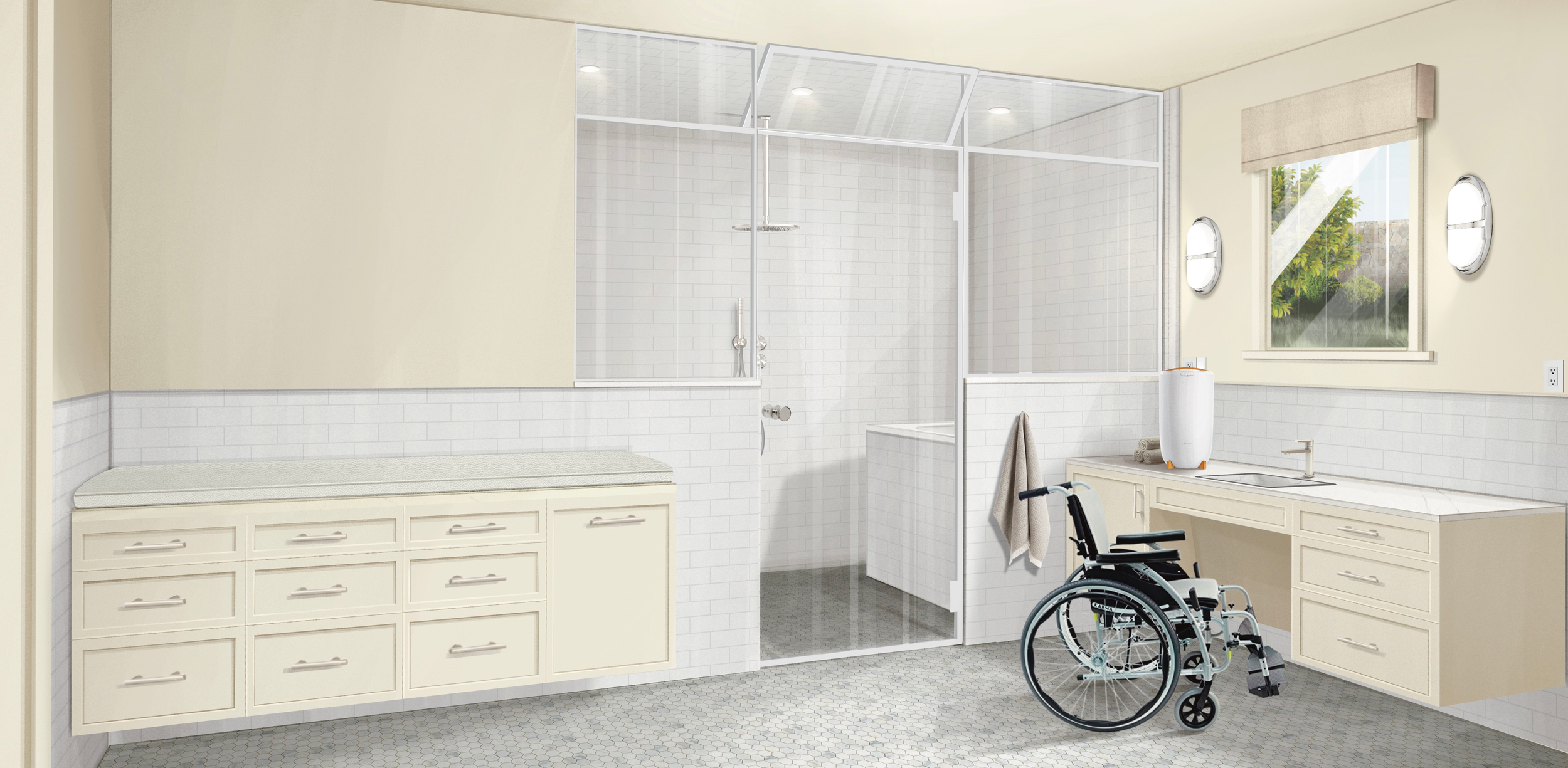
Create clear pathways for movement
“Maintaining clear paths free from obstacles is essential for safe and easy navigation throughout a space.” says Barnard. Custom-designed built-in storage units are a great way to reduce clutter. They are also designed to fit perfectly within a home's existing architecture and can be customized to suit individual preferences. Because they're integrated into the walls, built-in storage does not take up floor space, leaving paths of travel clear and open.
Embrace consistency from room to room with the layout and placement of items. Consider placing items such as furniture, lamps, switches, and wall controls in similar locations throughout the house. Predictability can aid intuitive and safer movement through a space.
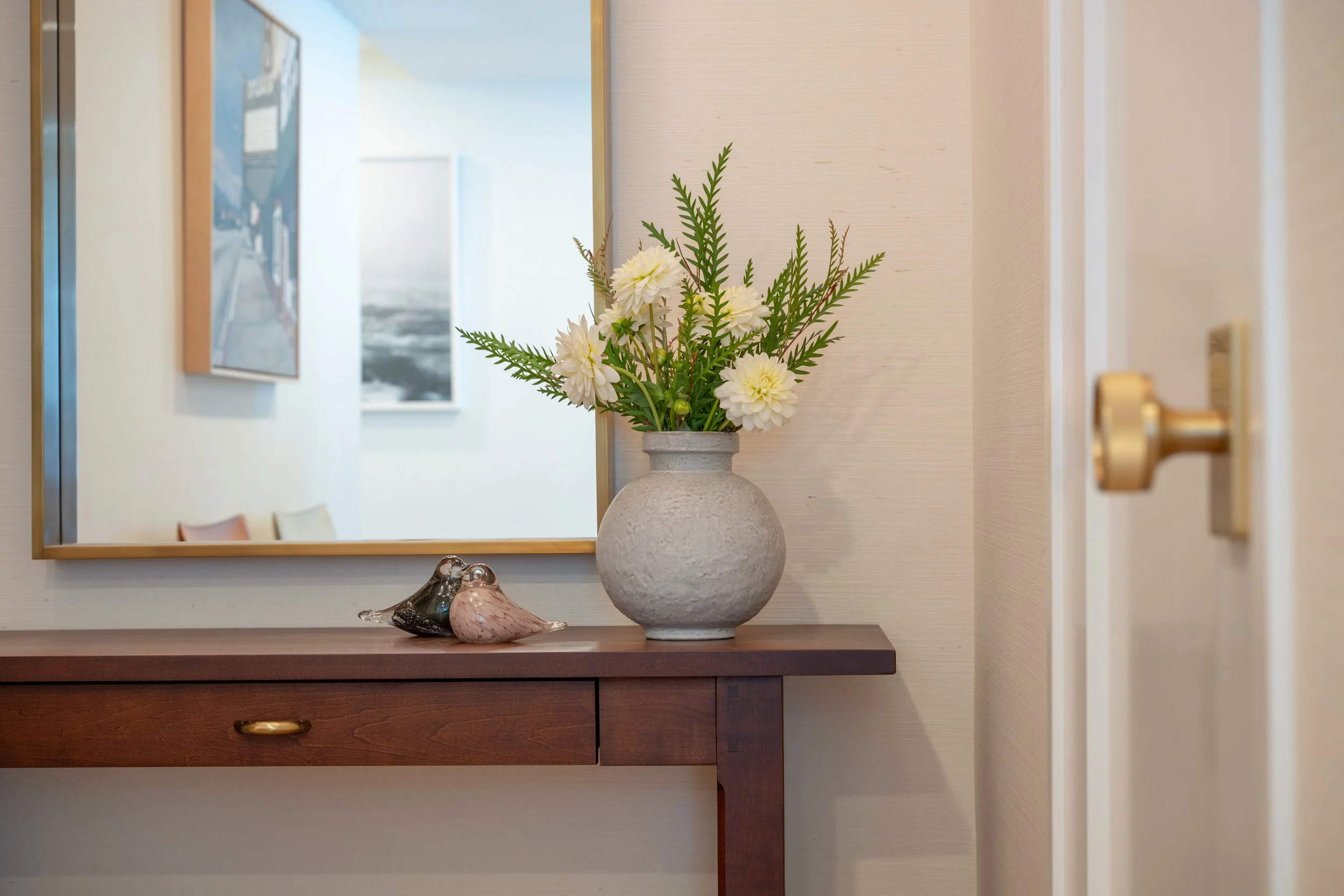
Lean into contrast
With low vision, it can be difficult to see certain colors; using brighter colors and increasing contrast can help. “Incorporating a high-contrast color palette can help improve mobility and wayfinding,” says Barnard. Color perception is individual, so a personalized approach is warranted. “When considering what high-contrast color to paint these areas, conducting field tests with swatches is essential as some individuals may perceive certain colors better than others.”
To implement contrasts, she suggests:
Furniture that contrasts with the floor and wall color can help improve the visibility of these objects, creating safe pathways around them.
Painting doors, door frames, and handrails in a high-contrast accent color can help make them visually identifiable within a space.
Transitions between rooms can also be highlighted with contrasting colors or textured materials, such as a wood floor adjoining a carpeted area.
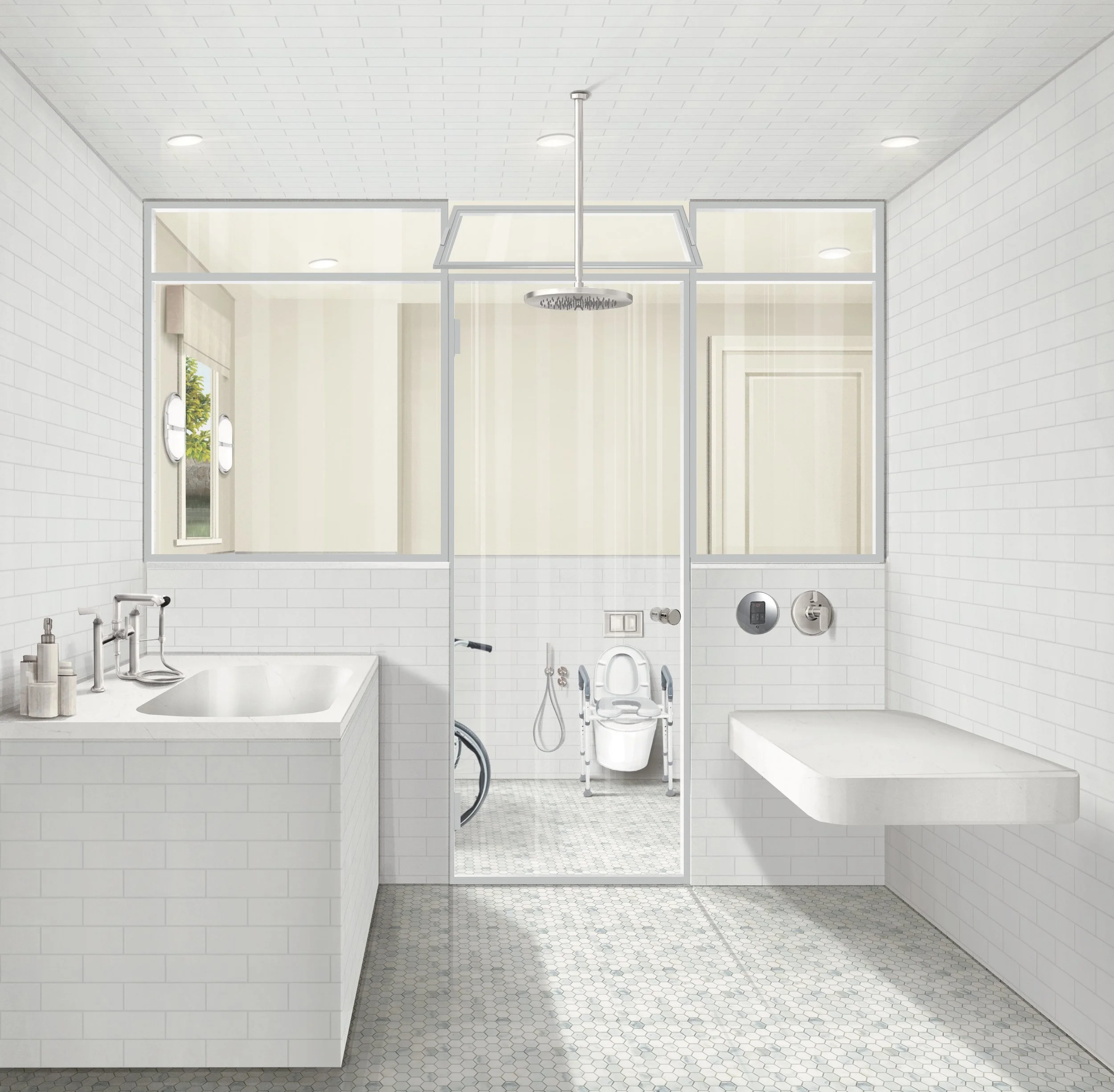
High contrast in areas such as bathrooms and kitchens, in particular, can help with safety. High-contrast counters and sinks in the kitchen can help to identify work zones, while high-contrast shower thresholds, toilet, and sink can aid safer movement.
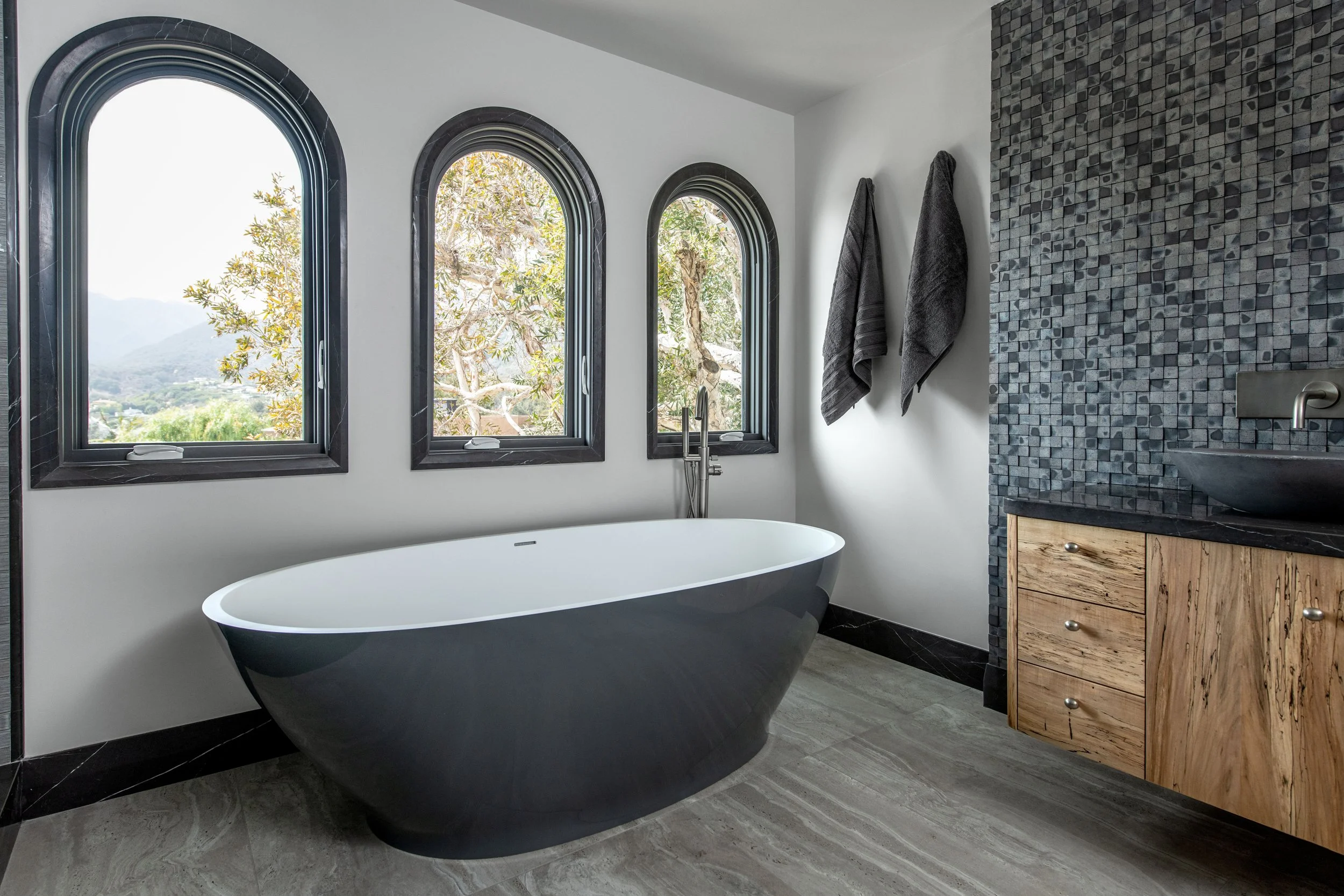
Leverage acoustics
For individuals with visual impairment, leveraging acoustics in a built environment to navigate space can be helpful. Design with sound-proofing acoustic tiles and panes, and wall treatments to reduce echo and background noise, so that orientation in the space is easier, using sound.
Consider including sound-absorbing accents, such as soft furnishings, textiles, and window treatments, which can help to absorb vibration and echoes, making sounds crisper and clearer.

What these design strategies look like in practice
Barnard engages in a research and discovery process with clients to inform color, pattern, and other design element choices, with exploratory field testing that creates opportunities for clients to provide feedback on visual clarity and aesthetic preferences.
While each project and individual needs will vary, here are some examples.
If certain color combinations are difficult to distinguish, it can be helpful to avoid designs that place colors close together, which can create visual perception challenges. For example, with blue/yellow color deficiency, it is advisable to avoid patterns with yellow and blue close together.
In cases of severe vision impairment, high-contrast interiors can offer a simple yet effective solution. For example, walls and ceilings painted in a deep, saturated color, with trims along walls and doorways painted in a bright, contrasting color helps to indicate their location and assist with wayfinding. Field testing helps determine which contrasting colors resonate best in terms of visibility and personal aesthetic preferences.
Design is most useful and beautiful when it makes life easier and more comfortable, which is why every space should be considered in how we use that space, and what tools might help.
For example, mirrors are often used as a design tool to create a focal point or add decorative elements. However, mirrors and reflective surfaces aren’t always appropriate or desired by everyone. It’s possible to achieve some of the decorative aims of mirrors with other items. In a bathroom, where mirrors often hang, a large window can accentuate natural light, while a tiled wall could create an alternative focal point.
When design is approached intentionally and personally, there is an opportunity to shape spaces that enhance functionality and comfort for individuals with visual impairment.
Sarah Barnard Design’s website uses the Accessibe accessibility feature, which adapts the site to each user, customizing their experience. Click the blue circle with a white human figure to access customization options, including high contrast, text size adjustment, screen reader support, and more.
Sources
https://afb.org/blog/entry/independence-tips
https://www.ncoa.org/article/helping-people-with-blindness-and-vision-loss-continue-to-participate-in-everyday-activities/
https://pmc.ncbi.nlm.nih.gov/articles/PMC12082883/
Sarah Barnard, WELL AP + LEED AP, is a leading designer of personalized, sustainable spaces that support mental, physical, and emotional wellbeing. She creates highly personalized, restorative spaces that are deeply connected to art and the preservation of the environment. An advocate for consciousness, inclusivity, and compassion in the creative process, Sarah has appeared in Architectural Digest, Elle Décor, Vogue, HGTV, and many other publications. Sarah was honored as a “Ones to Watch” Scholar by the American Society of Interior Designers (ASID).

Thoughtful Intentions: Annenberg Wildlife Crossing
A quiet moment of recognition arrived this season. A national home design publication named Sarah a top interior design expert. It is an honor that reflects many years of thoughtful, careful work and the relationships that shaped it.

As the season settles in, this time of year offers a gentle pause and a chance to gather with loved ones. Our studio enjoys using this moment to reflect on the year behind us and set thoughtful intentions for the one ahead.

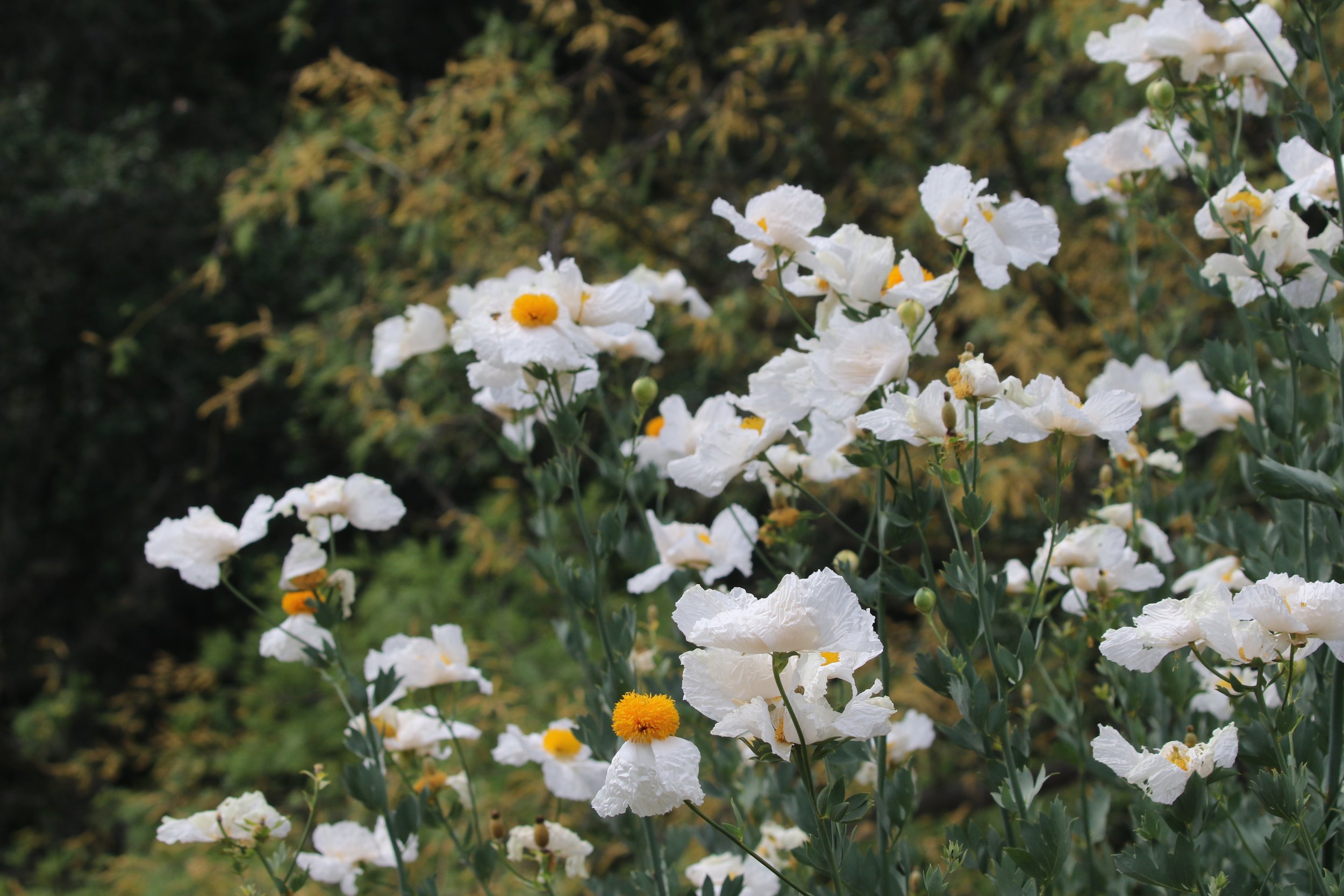
In the spirit of giving, we are excited to continue our tradition of making a holiday donation in honor of our friends and clients. This year, we are contributing to the Annenberg Wildlife Crossing, a significant conservation project currently under construction over the 101 Freeway near Agoura Hills. The project, which began in 2022, aims to reconnect the natural habitats of the Santa Monica Mountains and the Simi Hills, allowing mountain lions, deer, bobcats, birds, and many other species to move safely across the landscape. For decades, road expansion has divided these ecosystems, leaving wildlife isolated and vulnerable.

The crossing represents a collaborative effort involving state agencies, conservation organizations, scientists, and community supporters, all united by a vision of restoring a healthy ecological balance. Construction is currently at an exciting stage, with soil and native vegetation being installed on the bridge deck. As the planting progresses, the structure increasingly resembles the surrounding hillsides it aims to connect. The project is expected to be completed by 2026, and the first animals will likely cross the area shortly after the landscape is established.
Sustainable and compassionate practices remain at the core of what we do, and we hope our upcoming projects will continue to bring you joy and motivation.
May the spirit of the season fill your home with warmth and bring peace for the months ahead. Have a very happy and healthy holiday season!
Sarah Barnard, WELL AP + LEED AP, is a leading designer of personalized, sustainable spaces that support mental, physical, and emotional wellbeing. She creates highly personalized, restorative spaces that are deeply connected to art and the preservation of the environment. An advocate for consciousness, inclusivity, and compassion in the creative process, Sarah has appeared in Architectural Digest, Elle Décor, Vogue, HGTV, and many other publications. Sarah was honored as a “Ones to Watch” Scholar by the American Society of Interior Designers (ASID).
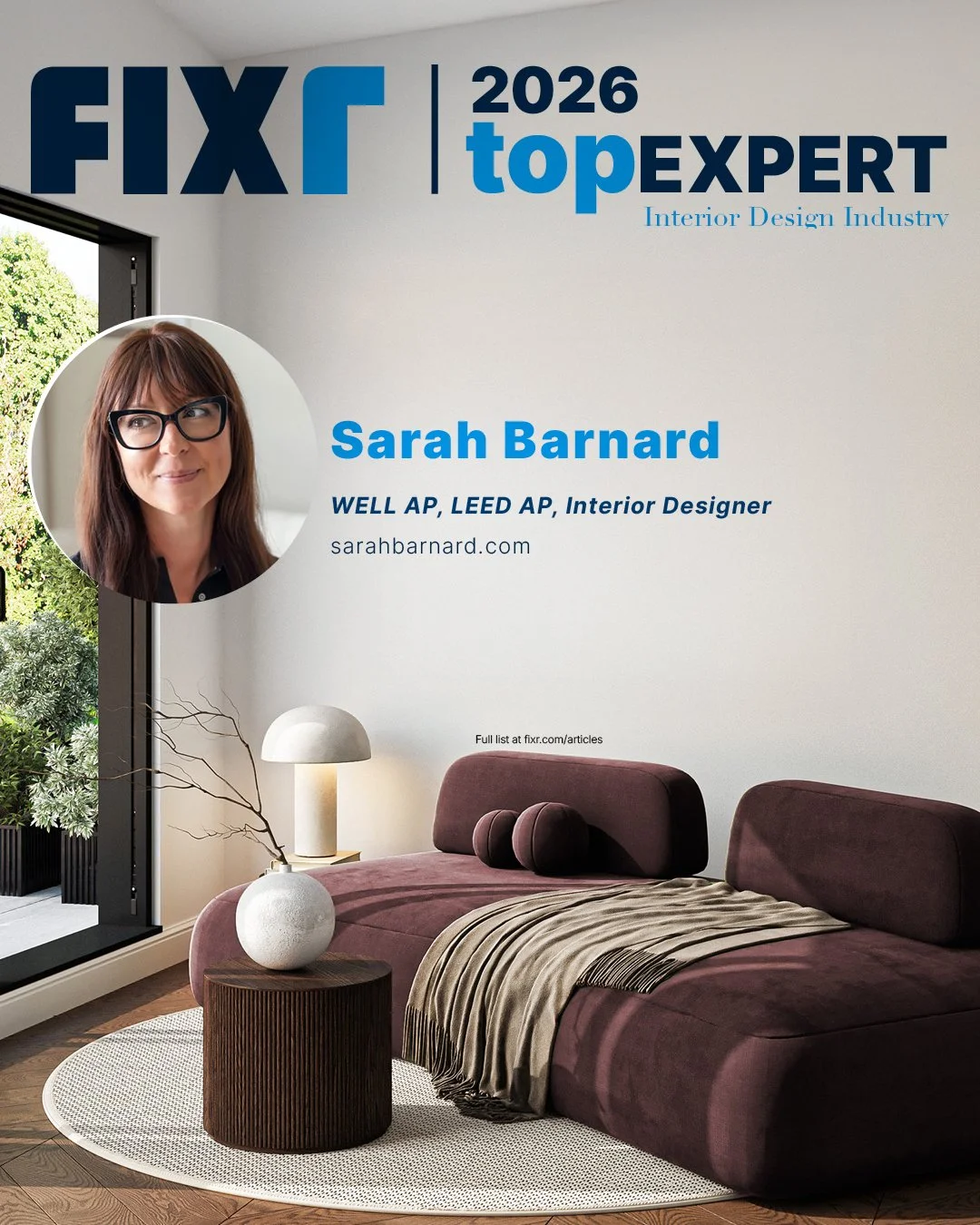
Sarah Barnard Named Top Interior Design Expert
A quiet moment of recognition arrived this season. A national home design publication named Sarah a top interior design expert. It is an honor that reflects many years of thoughtful, careful work and the relationships that shaped it.
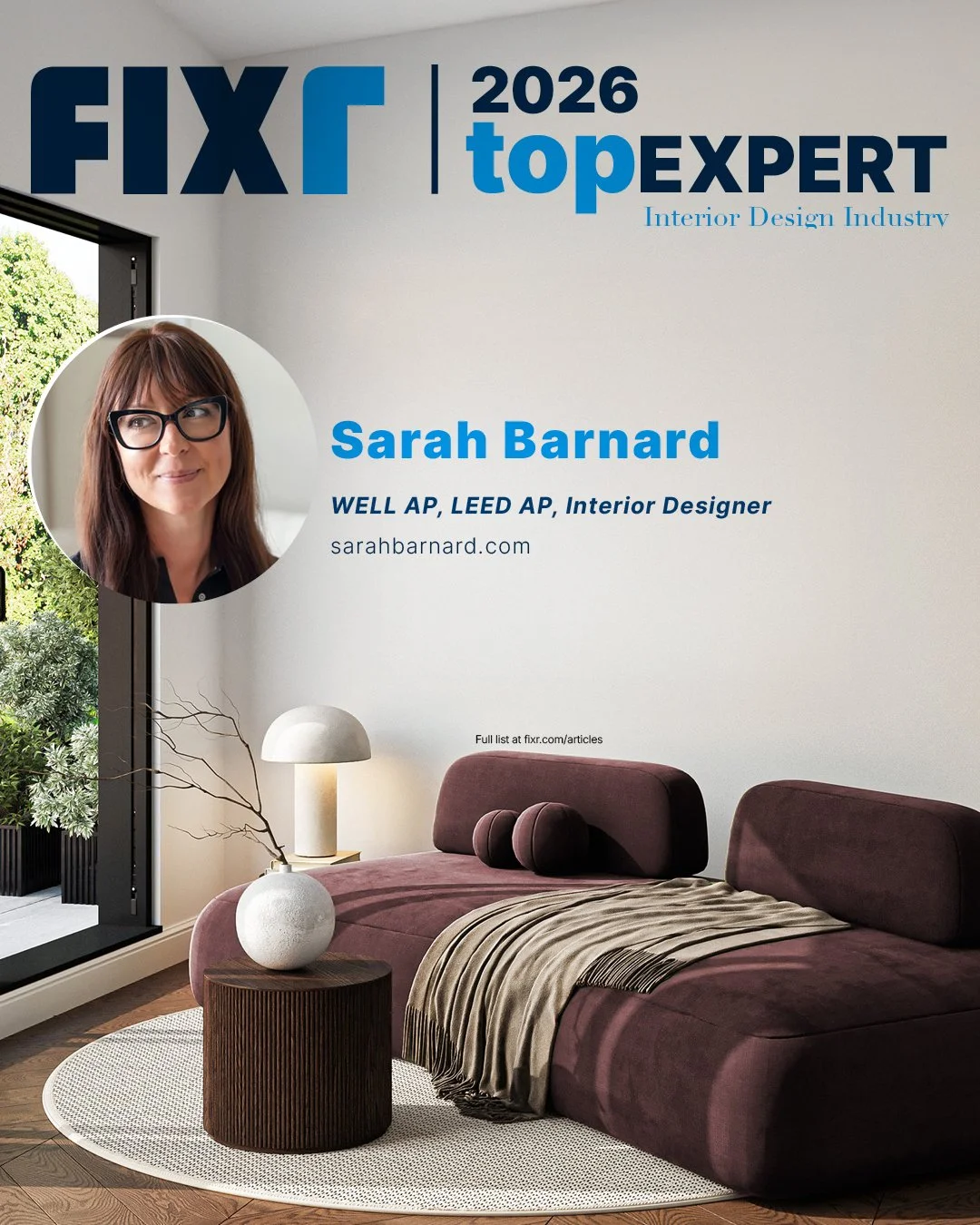
A quiet moment of recognition arrived this season. A national home design publication named Sarah a top interior design expert. It is an honor that reflects many years of thoughtful, careful work and the relationships that shaped it.
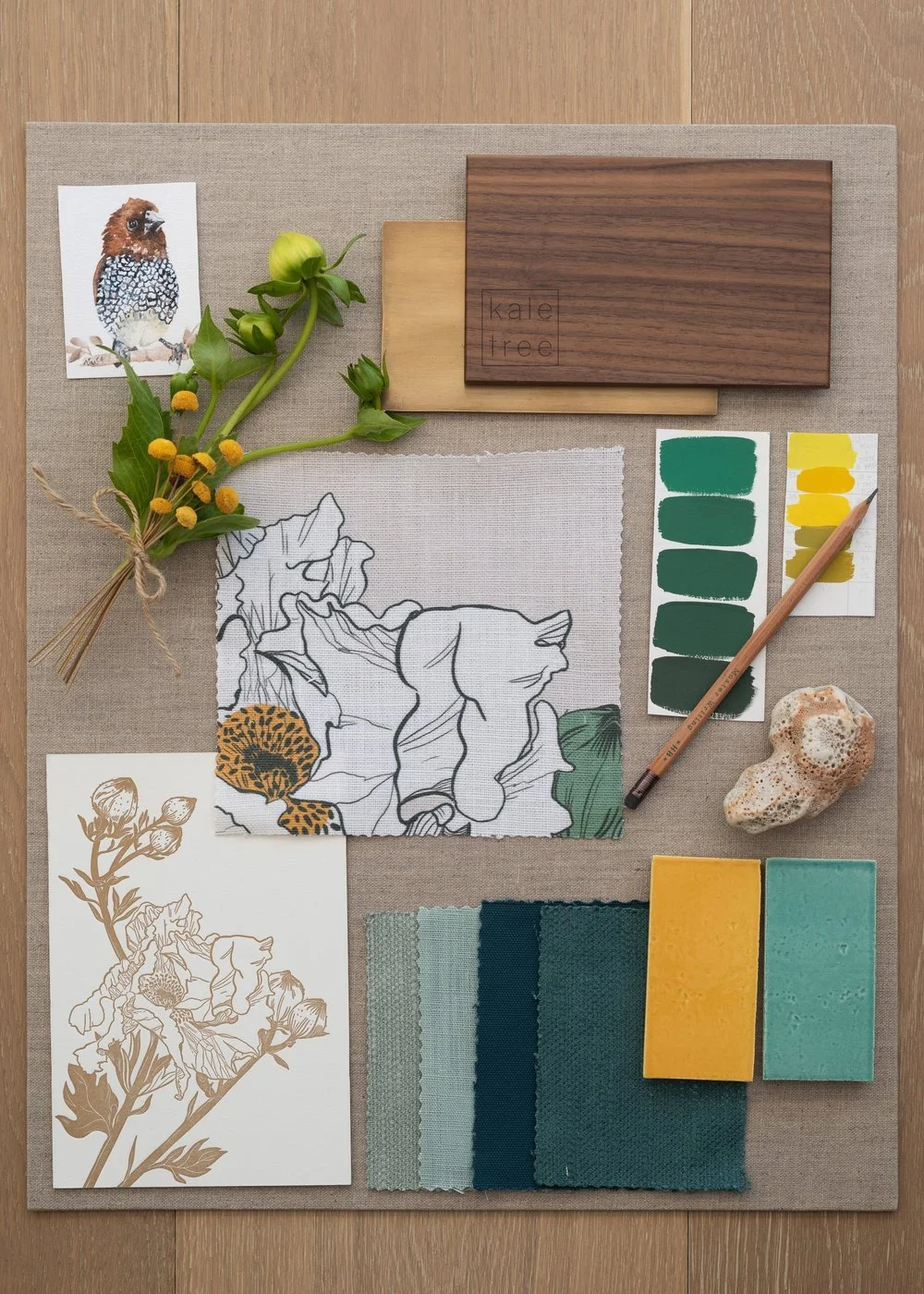
Annual expert lists highlight designers who are helping guide the field's direction. They consider the ability to create spaces that support wellbeing, the stewardship of natural materials, and the commitment to design that serves real people with real needs. Sarah’s work has long centered on these values. Her designs are meant to nurture, to include, and to restore. Sarah’s WELL and LEED credentials have guided her toward an approach that cares for both people and the planet. Her work celebrates nature, craft, artfulness, and compassion. She has been featured in publications like Architectural Digest, Mansion Global, and Business of Home, and each project has carried the same intention: to make a meaningful difference in the lives of the people who live in these spaces.

This year’s list includes many thoughtful voices from across the design world. Creatives like Brigette Romanek, Studio McGee, Joy Moyler, Bobby Berk, and Nicole Hollis stand alongside Sarah. It is a generous community of designers who care deeply about their craft.

For our clients and neighbors, this recognition is truly shared. Every project begins with someone opening their home and trusting us with their hopes, challenges, and daily rituals. Those stories shape each space. We are grateful for every collaborator and every person who has allowed us to be part of their world.
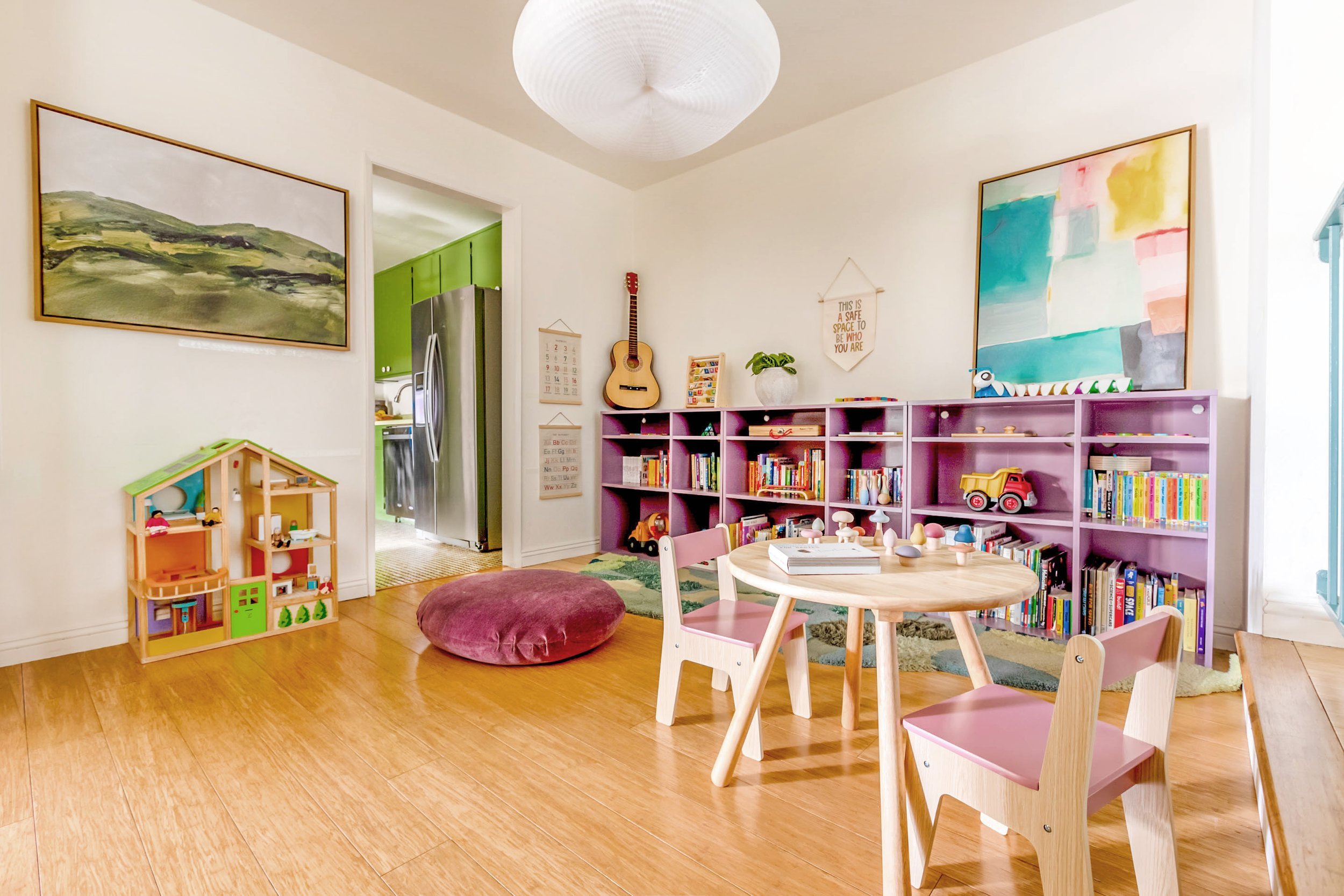
We remain committed to creating spaces that support comfort, inclusivity, accessibility, and the natural world. These are the values that guide us, and they continue to shape the work we are doing now.

Sarah Barnard, WELL AP + LEED AP, is a leading designer of personalized, sustainable spaces that support mental, physical, and emotional wellbeing. She creates highly personalized, restorative spaces that are deeply connected to art and the preservation of the environment. An advocate for consciousness, inclusivity, and compassion in the creative process, Sarah has appeared in Architectural Digest, Elle Décor, Vogue, HGTV, and many other publications. Sarah was honored as a “Ones to Watch” Scholar by the American Society of Interior Designers (ASID).

Creative Workspaces: Home Office Interior Design Reimagined
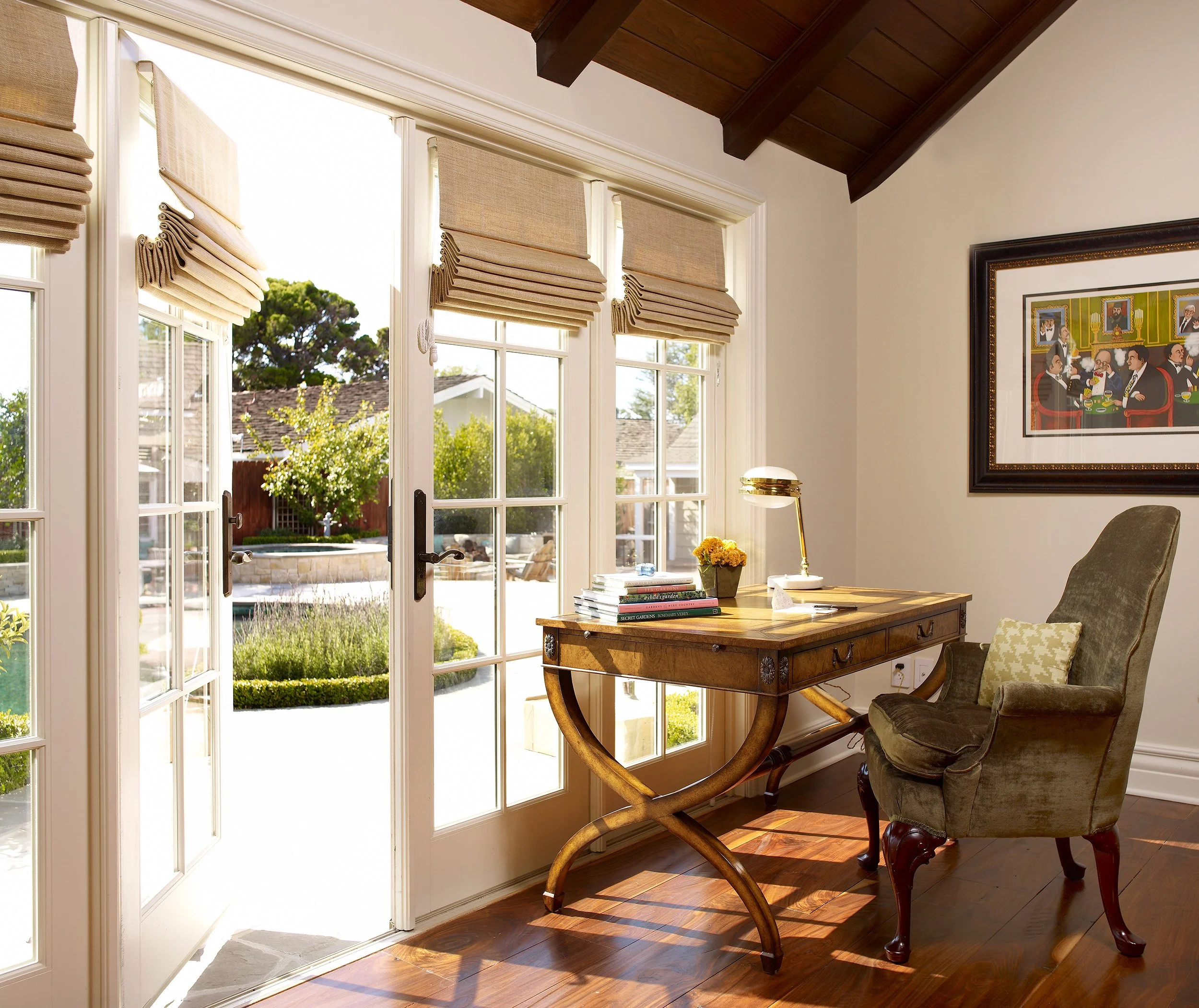
As a WELL and LEED-accredited interior designer specializing in spaces that support emotional and physical wellbeing, I have a particular passion for creative workspaces. Creative work can be inherently joyful and healing, and having a dedicated space, whether an entire room, a desk, or even a chair outdoors that is devoted to accessing a creative flow state, can be an excellent way to find support in the home. Even the intentionality of dedicating an area to creativity gives that work weight and importance, automatically making it a greater priority. The more care put into thinking about a creative space, or any space, the more likely it is to become a functional presence in life, which can be a great way to encourage positive and joyful habits.
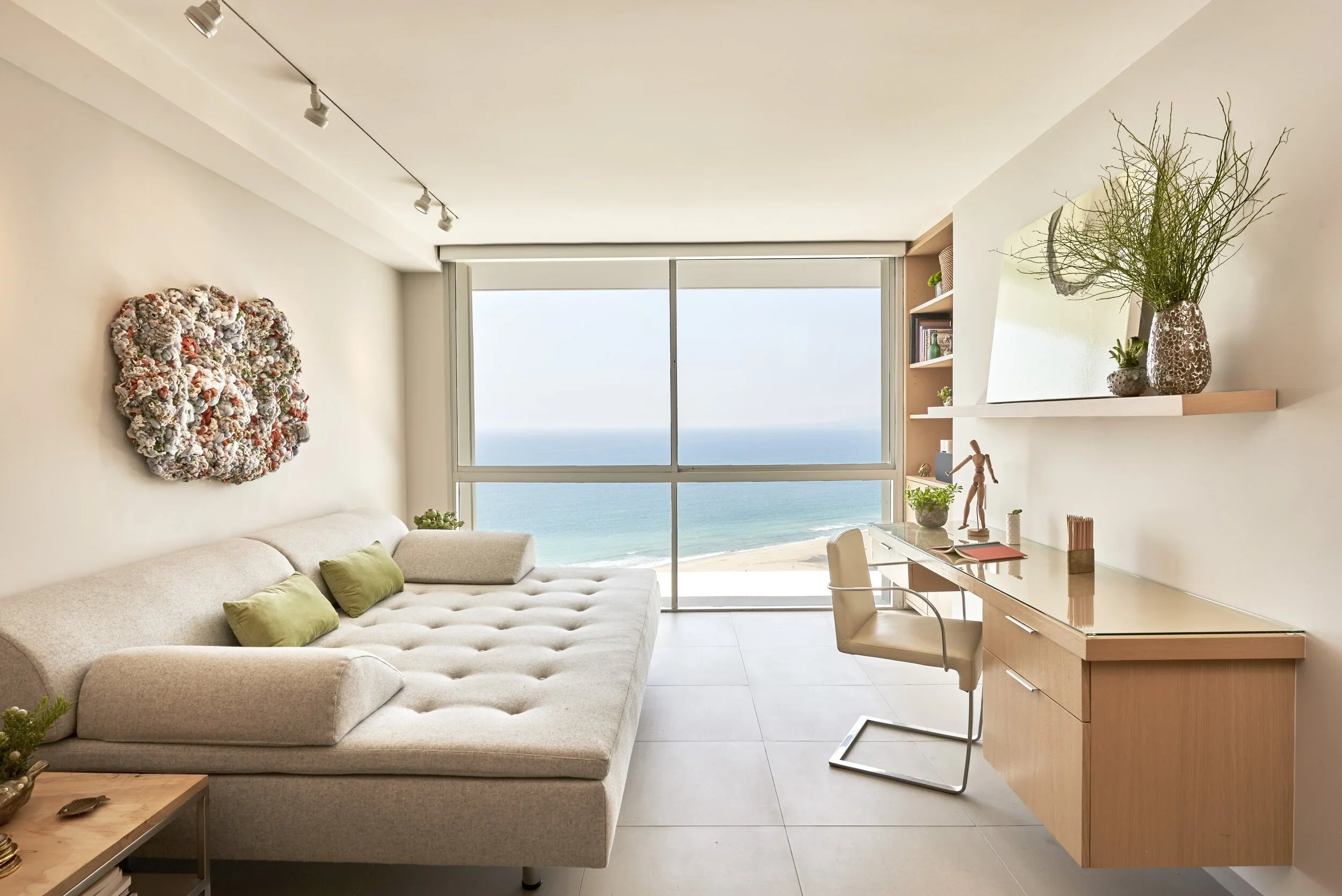
One of the things I talk about with many of my clients is designing a space that is specific to their needs and preferences, and working with them to feel comfortable eschewing any expectations they may feel obligated to meet about what a room should look or be like. Many of us adapt to the environments we are in, rather than adapting our spaces to meet our needs. Increasingly, people are craving spaces and routines that feel aligned with who we are, rather than trying to match expectations that feel out of step with what actually works for us. When I’m working, I try to take to heart the idea of meeting my own environmental and emotional needs. Not only does it support my best creative work, but it also helps reinforce how important it is for the client to have this same experience, and makes me feel more connected to my goals as a designer.
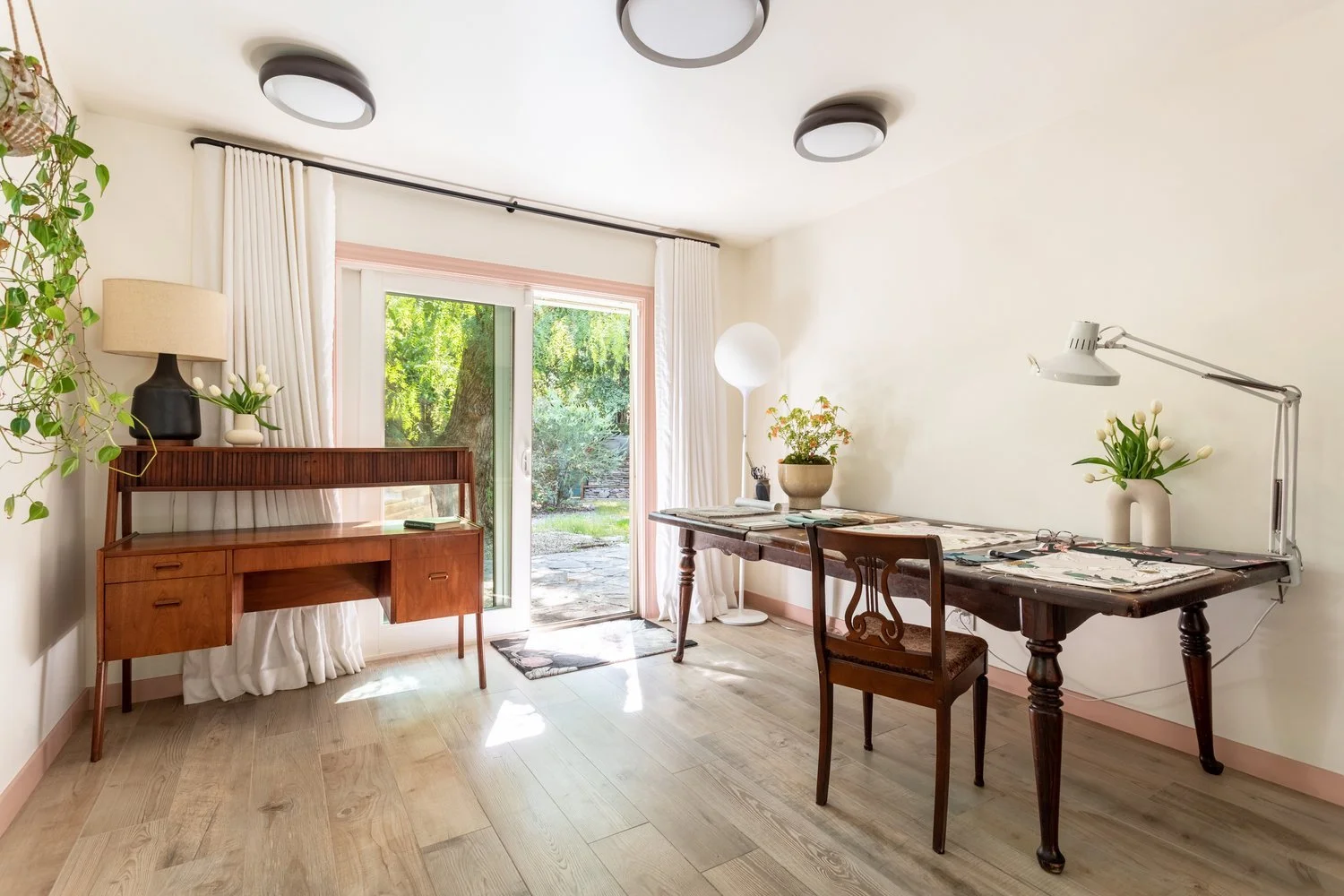
I’ve come to learn that different parts of the creative and work process may be best supported by different surroundings. When I’m waking up my brain and body, I like to start the day in the garden. Nature is a huge part of my creative work, but it’s also where I find the most joy and feel most connected to the world and to myself. I love the quiet acts of caretaking as I tend to my plants, and seeing them progress and change reflects the seasonality and natural rhythms of the earth. Seeing the plant life and the birds, and collecting pine cones and seed pods, all help me ground and relax in a way that lends itself to creative thinking throughout the day. While I don’t necessarily spend the time in my garden looking for inspiration, it always finds me. Many of the colors, textures, and imagery in my client work and in the products of my home goods studio, Kale Tree, are inspired by time spent in my garden.

After feeling fully immersed in nature and ready to begin my day in the studio, I’ve found that limited sensory input gives me the most mental space and clarity for creative expansion and problem-solving. Soft, natural lighting, silence, minimal to no scents, and no distracting textures all contribute to a profound external quiet that lets my internal world take focus, and that is really when I can enter a creative flow state where I do my best work. Then, I can tap into the imagery and inspiration that guide my designs and connect with my clients' desires without the distraction of a conflicting external space.
Knowing that I need such minimal sensory input has really emphasized the importance of encouraging clients to honor their personal sensory sensibilities. Every person needs a space as individual as they are, and it’s so important to evaluate what works best for them. If there is a moment when someone really feels they are in a flow state and connecting with a positive feeling, creatively, taking a step back afterward to take stock of their environment can be a good way to reflect on what’s most supportive.

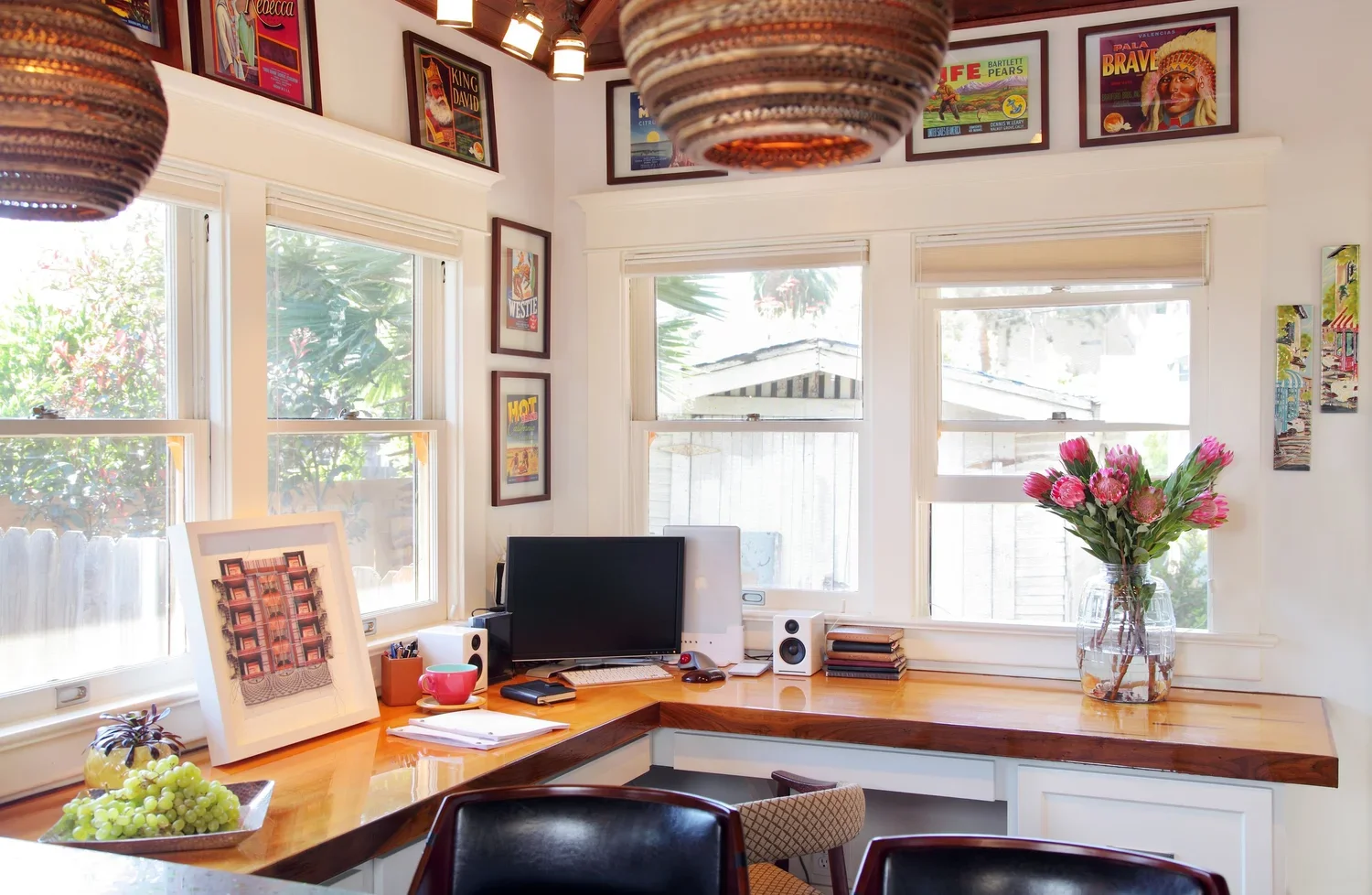
So often, expectations around design can override actual habits and preferences. A common anecdote from clients remodeling their homes is that, although they currently have a designated home office, they usually work at the kitchen table. Knowing this becomes a great opportunity to reconsider the idea of a home workspace and embrace personal sensibilities, rather than expectations about what a home office should be or look like. Is it the warmth and comfort of being around family? The openness of the space, or a more expansive view? Maybe it’s not abandoning a home office altogether, but creating a space that adapts more to a work environment that is actually pleasurable. Taking the time to evaluate what is supportive and what makes it easier for someone to access a flow state can lead to perhaps more unconventional spaces, but also more productive ones. Re-examining how we approach these concepts and environments is one of the most exciting parts of my job and one of the best ways to help my clients physically and emotionally.
Sarah Barnard is a WELL and LEED accredited designer and creator of environments that support mental, physical, and emotional wellbeing. She creates highly personalized, restorative spaces that are deeply connected to art and the preservation of the environment. A certified California Naturalist, Sarah believes in celebrating nature through responsible design that works symbiotically with the local environment.
An advocate for consciousness, inclusivity, and compassion in the creative process, Sarah has appeared in Architectural Digest, Elle Décor, Vogue, HGTV, and many other publications. Sarah was recognized as a "Ones to Watch" Scholar by the American Society of Interior Designers (ASID) and has been awarded "Best of Houzz Design" for seven consecutive years. Sarah's MFA in visual arts from Claremont Graduate University informs her practice and innovative approach toward interior design as creating a living work of art.