


Healing Spaces: How Designers Can Cultivate Wellness in the Built Environment


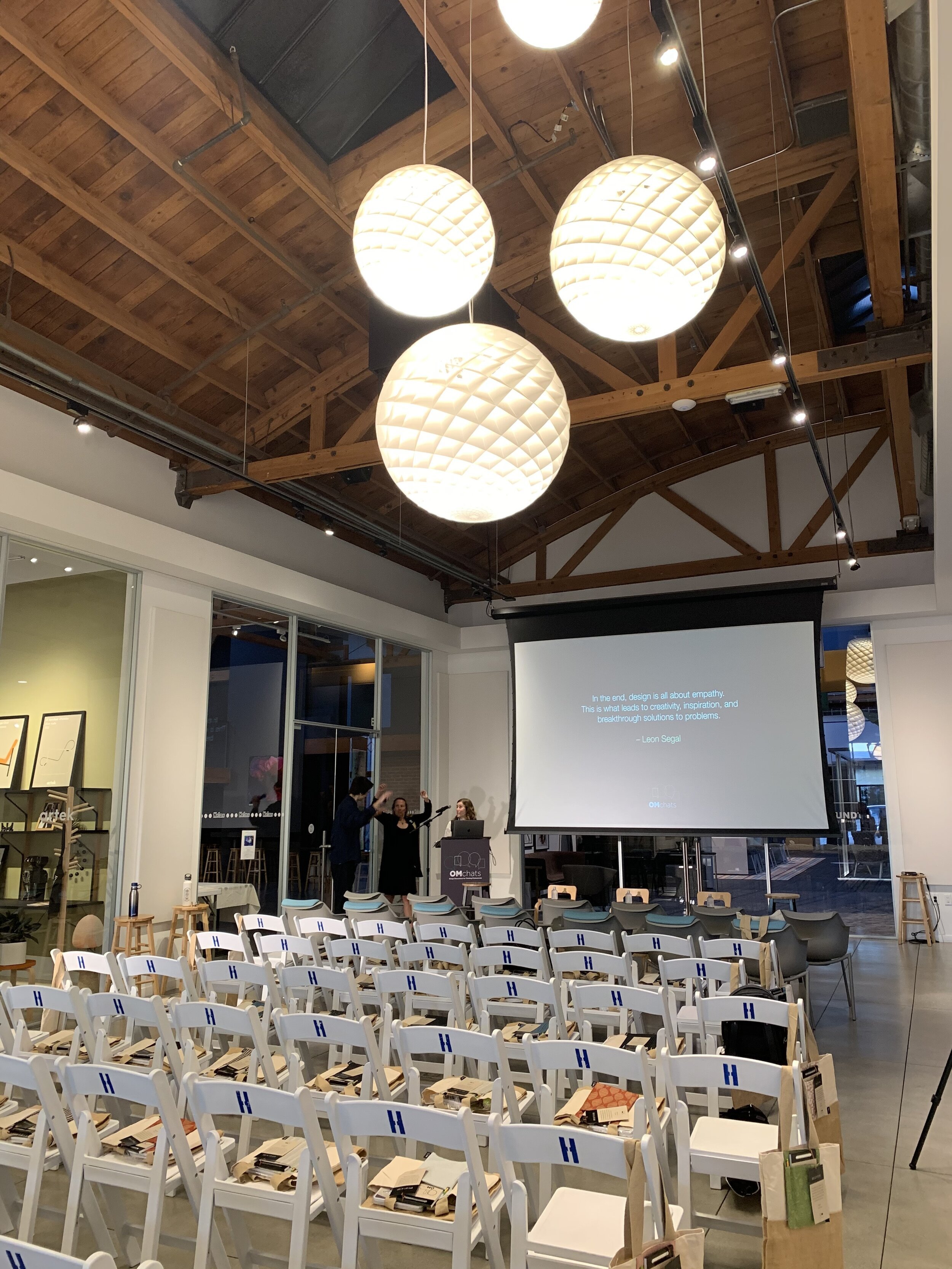

Empathy can uncover the deep needs of humans in private and public spaces. Leading practitioners in LA's a+d community gathered Friday, October 11th at the Helms Design Center for a conversation about the role of empathy in creating extraordinary experiences.
Hosted by OM and PLP SoCal, this inaugural session of OM Chats gathers leading voices in architecture, interior, and product design for a morning discussion about the ideas shaping design and wellness. Speakers include Sarah Barnard, WELL AP + LEED AP, principal of Sarah Barnard Design, Julie Smith-Clementi, AIA, IDSA, architect and product designer, and Adaeze Cadet, AIA, LEED AP, BD+C, vice president at HKS.
The discussion centered around how to design spaces and products that reflect a broader — more empathetic — understanding of the human experience in the workplace, health care spaces, educational facilities, and wherever people gather and live.

PHOTO BY: STEVEN DEWALL
Transcript of Sarah Barnard’s presentation:
In my practice, as a WELL and LEED accredited interior architectural designer, I specialize in creating environments that support the occupant's mental and physical wellbeing. An empathetic approach is the foundation of my process.
As a neurodivergent person, with sensory processing differences, I know all too well that we live in a world designed for neurotypical people. Normative built environments can be extremely uncomfortable, even traumatic, for many people. For example, individuals with Post Traumatic Stress and folks on the Autistic spectrum may boath have sensitivities to sound, light, textures, and odors. People with chronic migraines and people who are chemically sensitive might also have overlapping reactivity to fragrances, sounds, and light.

PHOTO BY: STEVEN DEWALL
The reality is, most humans will have experiences during their developmental years that forever impact their physical, mental, and emotional wellbeing.
Research indicates that traumatic experiences don't just happen to some people; they happen to most people. In the late 1990s, Kaiser Permanente conducted a study on Adverse Childhood Experiences (ACEs). They asked more than 13,000 of their members to complete a 10-question survey on traumatic childhood experiences and to report any health issues they were currently facing.
From this pool of respondents, about two-thirds had at least one ACE. 12% of the population reported an ACE score of 4 or more. An ACE score of 4+ nearly doubles the risk of heart disease and cancer and increases the risk of attempted suicide by twelve times. Understanding that the health impacts of trauma are not a "special population" issue, but a general population issue is critical to our ability to design with empathy.

ARTWORK: DEBORAH CANSLER, PHOTO: CHAS METIVIER
No matter our circumstance, it can be challenging to share details about ourselves that may be perceived as a disability. So, while we can't always ask, we can understand that many of us may have unaddressed environmental needs.
Even neurotypical people, without exposure to trauma, can easily experience cognitive overload in intensely stimulating environments. Activities like commuting, social interactions, processing large amounts of data, being exposed to fragrances, and repetitive auditory disturbances, can impact our mental and emotional resilience in unseen ways. Because of the magnitude of stressors in public life, humans benefit in measurable ways from a restorative home environment. Restoring at home makes us stronger in the workplace and the world at large.

INTERIOR DESIGN: SARAH BARNARD, ARTWORK: RENAE BARNARD + RUBEN VINCENT, PHOTO: STEVEN DEWALL
When designing commercial office environments for clients like National Geographic Entertainment, the Christopher and Dana Reeve Foundation/ Life Rolls On and the National Immigration Law Center, I consider the intersections and overlap of the community members and develop strategies to accommodate the highest possible needs.
Though it is vital to remember, as we have access to an ever-growing body of research that informs our practice of designing spaces that encourage wellbeing, it is nearly impossible to soothe all humans with a single design solution. So, meeting clients where they are and creating a safe, judgment-free dialogue is the first step in designing inclusive, supportive spaces.

INTERIOR DESIGN: SARAH BARNARD, ARTWORK: JOSE RAMIREZ, PHOTO: CHAS METIVIER
In my experience, being mindful and empathetic to diverse sensitivities creates an opportunity to design spaces that inspire a sense of peace. Armed with the understanding that we can't expect anyone to share the details of their pain, nor ask for what they need, designers must consider the most sensitive populations, so more environments feel safe and empowering to all.
How do we do this?
We must think about an expansion of universal design principles to include physical, mental, and emotional health. For example, we know that biophilic design can reduce physiological and psychological stress. Having a comfortable place to meditate can reduce anxiety, depression, and pain. Exposure to natural light can regulate our circadian rhythms and increase serotonin levels.

ARTWORK: RUBEN VINCENT, PHOTO: STEVEN DEWALL
When access to nature isn't readily available, art is an excellent alternative solution. Viewing original works of art can stimulate the brain, providing an imaginative connection to the mind of the artist and a momentary transcendence into another reality. In 2011 a University of London study found that viewing art produces a similar effect in the brain as falling in love, causing a rush of pleasure producing dopamine.
Just as we consider the positive impacts of nature and art on health and wellbeing, we place equal importance on the selection of materials and how they can shift the feeling, light levels, and acoustic qualities of a space.

INTERIOR DESIGN: SARAH BARNARD, ARTWORK: KEVIN MOORE, PHOTO: ACE MISIUNAS
Because truly non-toxic materials are in limited supply, our studio regularly designs textiles, wallpapers, furniture, and light fixtures, working with local craftspeople to fabricate safely and responsibly.
While we are mindful of avoiding materials with VOCs, some non-toxic materials like linseed oil, tung oils, and even citrus-based solvents can cause distress to people who are chemically sensitive, people undergoing chemotherapy and people with COPD.

INTERIOR DESIGN: SARAH BARNARD, ARTWORK: KEVIN MOORE, PHOTO: ACE MISIUNAS
In 20 years of professional practice, I have learned that empathy and mindfulness are critical in creating healing, supportive environments. Contemplating design strategies that can benefit all populations, is not a trend; it's an evolution in expanding our quality of life.
Together, we are part of a movement to be mindful, empathetic, and collaborative, supporting one another to make all built environments healing, restorative spaces.

INTERIOR DESIGN: SARAH BARNARD, PHOTO: STEVEN DEWALL
Sarah Barnard designs healthy, happy, personalized spaces that are deeply connected to nature and art. With a contemporary approach that employs traditional vocabulary, Barnard’s range of style is innovative yet time-honored. The ideas most essential to her practice and design process are wellness, historic preservation, and the infinite ways in which design can enhance life.

How Empathy Creates Extraordinary Experiences: Leaders in Wellness Design Explore Designing for Human Experience

PROGRAM DETAILS
7:30 - 8:00 check-in and breakfast
8:00 - 9:00 presentations and conversation
Why Should You Attend?
Empathy can uncover the deep needs of consumers, students, employees, caregivers. The design world is ideally situated to leverage these profound understandings to build better and healthier products, spaces, solutions. This session will address:
How do we think about empathy not only as a practice of being but as a practice of doing?
How do we design products that reflect a broader understanding of human experience in the workplace, healthcare spaces, educational facilities, and more?
What is empathetic product design and how does it fit with empathetic space design?
What are some examples of empathy at play in product and space design?
What are the implications of empathetic design for the future?
SPEAKER BIOS


VENUE MAP AND PARKING
The Design Center is located in the center left of the map below, in the atrium surrounded by the green numbers 11-15. Free parking is available to the right, at the circled P.


Why a Custom Weighted Blanket may be the Secret to Your Best Sleep Ever

PHOTO: STEVEN DEWALL
Weighted blankets were the must-have holiday gift of 2018. You couldn't scroll through Instagram without being bombarded with ads for these sensory aids. But weighted blankets aren't exactly new, in fact, home designer Sarah Barnard has been creating custom versions for years.


As a child, she came across a roll of peacock blue mohair fabric in her family's garage that she used to complete a patchwork quilt she was sewing. Little did she know that her father intended to use the luxurious fabric as the upholstery for a 1949 Chevrolet he was restoring.
Although her father was furious, she was ultimately allowed to keep the blanket, which weighed close to 20 pounds. "I found the tremendous weight and enveloping warmth encouraged my body to sleep more peacefully and longer," explains Barnard.

PHOTOS: SCOTT VAN DYKE
These days, she's still creating natural, custom bedding for her clients using designer textiles and stitching techniques taught to her by her father. This expertise allows Barnard to deliver better-designed therapeutic blankets with endless customization options in terms of fullness and weight.


A custom design allows the client to choose the fabric, color, interlining material, and weight. Barnard's team of trusted artisans, handmakes each calm blanket locally and sustainably. Recently, Barnard designed a biophilic primary bedroom suite for a couple who prefer blankets in different weights. Her solution? One large duvet cover with two blanket inserts tucked inside, providing a seamless look that caters to individual needs.

PHOTO: CHAS METIVIER
One of Barnard's clients explained that she had been having trouble sleeping for some time and tried sleep aids, teas, and melatonin. She never felt fully rested using these remedies, but when used together with a customized weighted blanket, she experienced notable improvement.

PHOTO: CHARLIE DANIELS
Children especially may benefit from the use of a sensory blanket. A study from 2011 published in the Nordic Journal of Psychiatry found that children with ADHD fell asleep faster and awoke fewer times during the night when covered with a weighted blanket. Barnard enjoys designing colorful, custom blankets for the children of her clients. "Involving the child in the selection of the textiles allows them to personalize their environment and surround themselves with things that comfort them the most," she notes.

Barnard's weighted blanket, which she made herself, is fabricated of two heavyweight Schumacher fabrics sewn together sans lining. Even without a traditional interlining, it weighs in at 13 pounds. When the blanket is not in use, it adds contrast and texture to the room — quite unlike the characterless models one can purchase online.

The textiles Barnard used were prewashed and preshrunk to remove any allergens or dust. She chooses to wash her weighted blanket regularly in the washing machine despite the fabric's dry clean only warning. "I accept a rough and tumbled appearance in trade for the ease of maintaining my everyday life," she says. Barnard points out that this is a common request among her clients. "Families want to be able to launder their weighted blankets, so we test each sample to see how it survives the washing machine," she adds.

As mass-produced weighted blankets have risen in popularity, their quality has suffered immensely. Most ready-made options are filled with plastic poly pellets or glass beads. Custom made blankets are most often filled with organic cotton interlining or organic cotton batting in varying lofts to reach the desired weight. Organic wool and organic hemp interlinings are also available. For homeowners who want organic textiles and a natural lifestyle, being able to identify where the materials come from, and how they are made help us to sleep easier at night.


A wellness-minded interior designer can help create a custom weighted blanket that suits your health needs, and personal style to ensure an even better night's sleep.

Sarah Barnard designs healthy, happy, personalized spaces that are deeply connected to nature and art. With a contemporary approach that employs traditional vocabulary, Barnard’s range of style is innovative yet time-honored. The ideas most essential to her practice and design process are wellness, historic preservation, and the infinite ways in which design can enhance life.

The Power of Wellness Design

INTERIOR DESIGN: SARAH BARNARD, ARTWORK: RENAE BARNARD + RUBEN VINCENT, PHOTO: STEVEN DEWALL
Wellness is not a buzzy topic, but is sure seems like it this year. Forbes declared this year to be the year of the wellness revolution, Vogue called it the new luxury status symbol, and Fast Company highlighted the industry’s $4.2 trillion valuation.
Earlier this summer, Sarah Barnard Design attended a panel discussion on Design x Wellness at the Helms Bakery District. The event was held in conjunction with the LA Design Festival and was moderated by California Interiors Editor-in-Chief Kelly Phillips Badal.
Three panelists, all from various design backgrounds, contributed to the lively back-and-forth, which centered around “achieving a healthy and organized life.” There were a number of takeaways to be gleaned from the discussion, including how organizational systems can combat stress and how proper lighting can improve sleep quality.


The panelists had only 45 minutes to discuss the topic, but a lot more could be said about the wellness movement as it relates to interior design. A holistic approach to wellness home design goes much deeper than organizing and lighting. There are a multitude of things to consider — the paint on the walls, the upholstery of a chair, the artwork on display. “It’s the interconnectivity between all the different elements that makes the space healthy and well,” offers Principal Designer, Sarah Barnard.

INTERIOR DESIGN: SARAH BARNARD, ARTWORK: KARRIE ROSS, BRIAN JOHNSON, RENAE BARNARD, PHOTO: CHAS METIVIER
Skilled interior designers leverage their knowledge of sustainable, non-toxic materials and finishes to craft healthy, personalized spaces for their clients. “For chemically sensitive clients and clients who value organic interiors, most often furnishings and artworks are handmade for them,” says Barnard.


A recent project for a highly-educated, well-traveled client featured the use of bespoke antique reproductions. “It gives us control over the materials, natural finishes, the scale, and it allows us to support the local economy,” says Barnard. Every detail was carefully considered, from the organic linen draperies to the custom designed floor sofa and the handmade, FSC-certified walnut dining table. “These are things a client would never find on their own because they are not sold in stores, and they just can’t be had otherwise.”
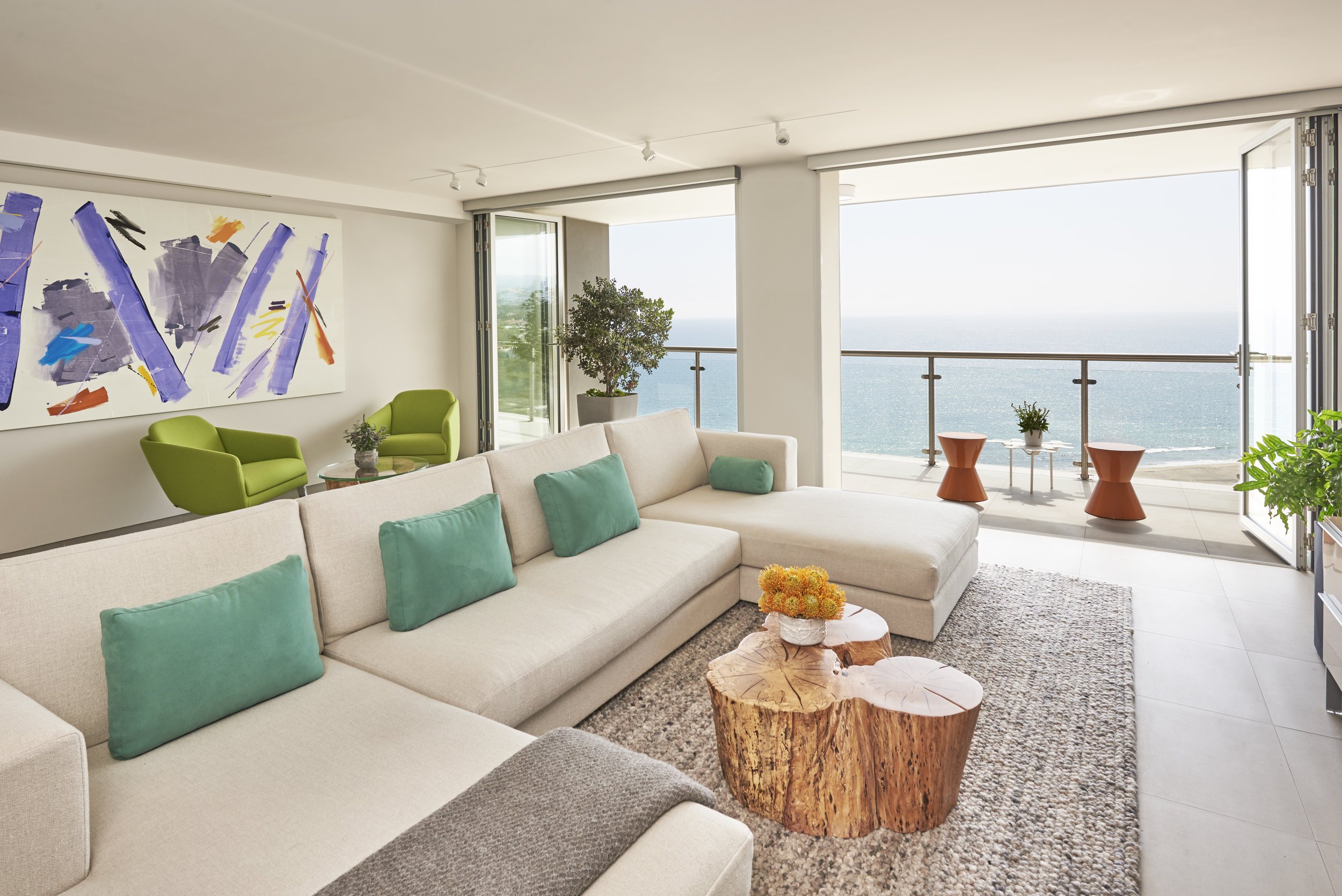
INTERIOR DESIGN: SARAH BARNARD, ARTWORK: MILLY RISTVEDT, RENAE BARNARD, ABBY SIN, PHOTOS: STEVEN DEWALL
For the owners of an oceanfront penthouse, Barnard customized not only the furnishings, but all of the materials and finishes. “In this home, everything is healthy, natural and unadulterated,” notes Barnard. “We used natural waxes instead of stains and sealers, natural latex foams, organic cotton batting, and organic wool batting that was spun from sheep that are only shorn in summer.”


The clients selected the colors of the natural fibers artist Renae Barnard used to create a hand-woven sculpture for their home office. Crafted from wire, sash cord, cotton clothesline, wool, yarn, fleece and linen, it’s a truly one-of-a-kind piece that doesn’t compromise the chemical-free integrity of the home. “It’s very much of them, for them,” says Barnard.


Art, in particular, contributes to our overall sense of well-being. “It stimulates your mind in the same way as the natural world,” adds Barnard. One study from the University of London found that viewing art produces the same effect in the brain as falling in love, causing a rush of dopamine, a.k.a. the “feel-good hormone.” Another from Drexel University revealed that making and viewing art can lower cortisol levels, the hormone linked to the body's stress response. “When we can provide views of nature, that’s the first choice. But in any instance where we have a blank wall and not a window, then the next best thing to have is art. It makes us happier,” explains Barnard.


Wellness is often touted as a trend by lifestyle magazines and social media influencers, but for Barnard, it’s the ethos of her interior design practice. “Our clients know better and they choose healthy,” she says. Organic textiles, sustainable materials, non-toxic finishes, inspiring artwork, bespoke furniture made by local craftspeople — all of these elements support our mental and physical well-being. And designers with robust knowledge of healthy home design have the power to change lives for the better.
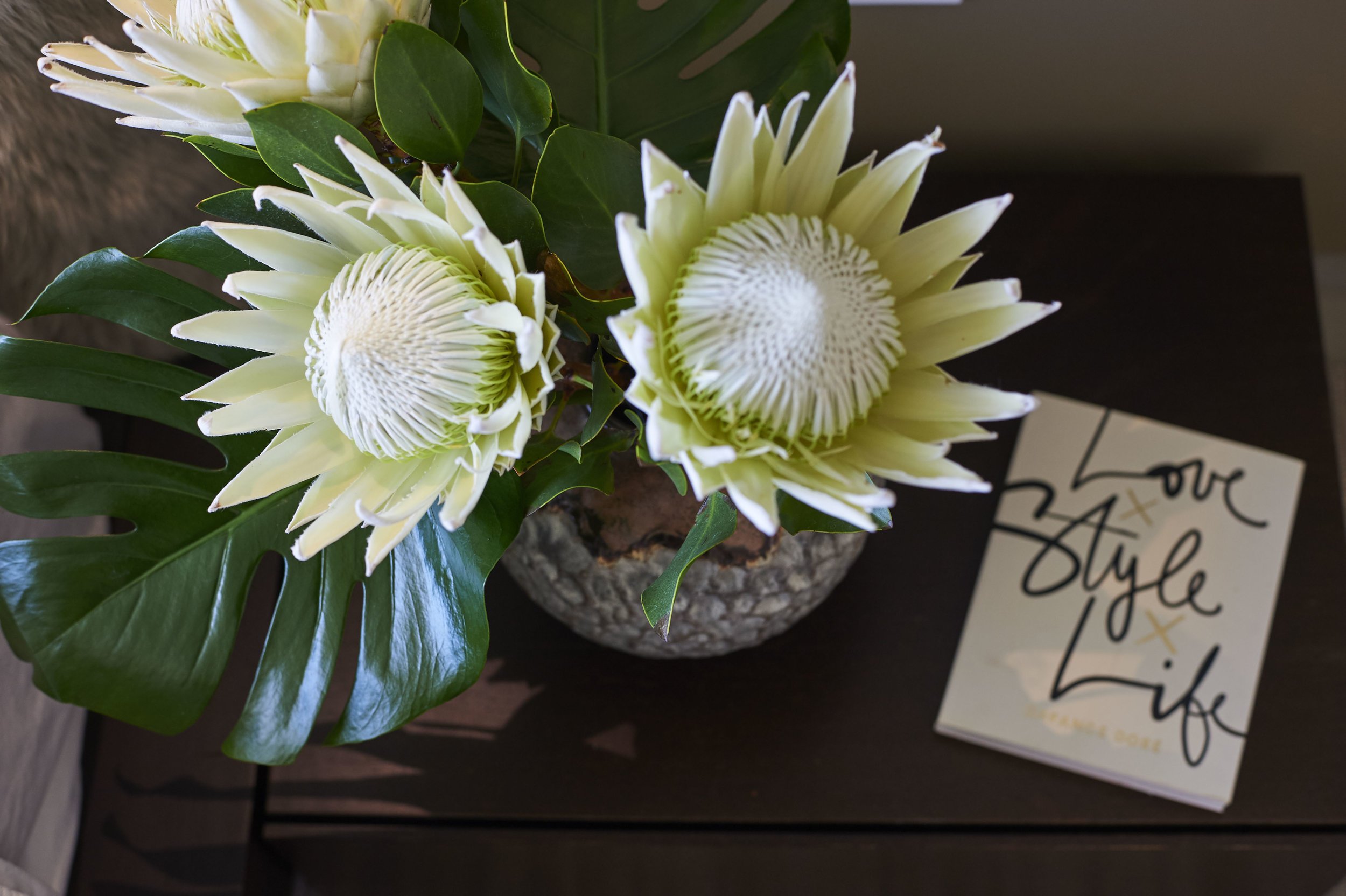
Sarah Barnard, WELL AP + LEED AP designs healthy, happy, personalized spaces that are deeply connected to nature and art. The ideas most essential to her practice and design process are wellness, historic preservation, and the infinite ways in which design can enhance life.
Barnard has been featured in publications internationally and was named a “Ones to Watch Scholar” by the American Society of Interior Designers. In 2018 Locale Magazine named Barnard “Los Angeles’ Favorite Interior Designer”. Barnard holds a Master of Fine Arts degree from Claremont Graduate University as well as undergraduate degrees in Art and Interior Architectural Design.
For more information about Sarah Barnard visit www.sarahbarnard.com

Meet the Bedroom that Feels Like a Hug

Award-winning Interior Designer and American Society of Interior Designers (ASID) Ones to Watch Scholar Sarah Barnard has unveiled a happiness-inducing home design project— the bedroom that feels like a hug.
“We need a safe, restorative space to help our bodies rest and recharge,” says Barnard. A hug has many of the same characteristics, it makes us feel secure and comforted, and when we let go of the embrace, there’s a rush of oxytocin that leaves us with a sense of lightness.

Oxytocin is a neurotransmitter that acts on the brain’s emotional center, promoting feelings of contentment, reducing anxiety and stress. When you hug often, your level of oxytocin increases, which strengthens social bonds. Hugging also stimulates dopamine and serotonin production in the body. Dopamine is a pleasure hormone that’s part of the brain’s reward mechanism, while serotonin is responsible for maintaining mood balance.

The jumping-off point for the bedroom was the curvilinear bed frame, an award-winning design by Autoban, carved from American black walnut. Its silhouette mimics the action of hugging, and the interior is lined with purple velvet, blending the natural texture with dark, feminine styling. To further the feeling of intimacy, Barnard chose a non-toxic, king-size organic coconut mattress topped with a reversible duvet in a custom, color-blocking scheme.

The word ‘phantasmagoria’ is scrawled across the wall behind the bed — a neon homage to the images that flicker by in our dreams. The client, a self-proclaimed bookworm, chose the word herself after much deliberation. High-pile black carpeting delivers a softness underfoot, and layered window treatments allow the client to sleep undisturbed in total darkness. “Window coverings serve many purposes,” says Barnard. “Not only do they block out sunlight and create privacy, but they add a decorative element to the room that unifies the composition.”

The two-tone wall color, a marriage of plum and lavender, envelops the space. These hues were intentionally chosen to saturate the formerly bright bedroom, establishing a cozy, cocoon-like atmosphere. “The ceiling color extends to the walls, linking the two colors together in a way that the sharp ceiling line never could,” explains Barnard.
Hanging above the bespoke American Walnut nightstands are a pair of cloud-like pendant lights that emit a soft glow. A wall of concealed storage eliminates visual clutter, which can heighten our anxiety levels and impact sleep quality. Upholstered benches at the foot of the bed and by the entryway provide a comfortable spot to rest or dress in the morning.

It was the client who initially requested the space “feel like a hug,” which Barnard describes as a “brilliant explanation of what good bedroom design should do.” The revamped primary bedroom, a physical embodiment of a hug, provides all the comfort, safety, and well-being her client needs to settle into a restful slumber and wake up feeling warm and fuzzy.
See the rest of this home here Featured in LA Dreams Magazine

Unpacking the “KonMari” trend: The personalization of ultra-home organizing

A TIDY, MINIMALIST KITCHEN IN WITH OPEN SHELVING TO KEEP COOKBOOKS CLOSE AT HAND.
Before Marie Kondo, there was William Morris, a renowned 19th-century British designer who lived by this philosophy: “Have nothing in your house that you do not know to be useful or believe to be beautiful.”
Kondo has a more stringent and less personalized approach. She encourages followers of her KonMari method to grasp each item in their hands and evaluate their body’s reaction to it. If it makes you feel uplifted, put it in the keep pile. If it causes you to feel weighed down, in the donation bin it goes. But here’s the thing — there’s no one-size-fits-all organizing method. Whether you prefer a pragmatic approach à la William Morris or Kondo’s emotionally-guided decision-making process, figuring out what works for you and your lifestyle is paramount.

FLOATING SHELVES PROVIDE VERTICAL STORAGE IN THIS COMPACT HOME OFFICE FEATURING AN IMPRESSIVE VIEW OF THE SHORELINE.
“The method of organization should support the client’s daily routine and activities,” says interior designer Sarah Barnard, who specializes in healthy, happy, personalized spaces. “What items do they use most regularly? How do they envision the space? Having a clear goal will start to inform the plan.”
Barnard provides organizing services for clients in every stage of life, from young professionals with little spare time to retirees with reduced mobility. “One of the main reasons people ask for our help is because they are overwhelmed and don’t know where to start,” explains Sarah. “Our goal is to streamline the process by setting up personalized systems that can be easily maintained.”

A TIDY STUDIO BOOKCASE KEEPS FAVORITE BOOKS CLOSE AT HAND. A PAINTING BY ABBY SIN, SCULPTURE, CERAMICS AND ANTIQUES LIGHTEN AND BRIGHTEN THE DISPLAY.
Sarah recently tackled a two-week-long organizing project for a busy family of five. Recognizing that the experience can be quite invasive, Sarah and her team went to great lengths to ensure the family felt comfortable. Shoe covers were worn to prevent anyone from tracking in allergens, and cotton gloves were required when handling any personal items.

VERY POSSIBLY THE BEST BOYS' BEDROOM EVER! NEWLY BUILT WALLS ALLOW FOR CUSTOM-MADE AMERICAN WALNUT BUNK BEDS AND FLOATING DESKS FOR EACH BOY.
Clearing away unnecessary clutter was the family’s aim, and Sarah’s team employed the ‘keep, toss, donate’ method to get it all done. “We sorted our client’s clothing by season, removing the winter wear and storing it in the hallway closet,” says Sarah. “Now, primary closets contain only half the amount of items, making them more spacious and easier to navigate.”

PERSONALIZED TOOLS FOR STAYING ORGANIZED! EACH BOY'S DESK INCLUDES A UTILITY WALL WITH A CHALKBOARD, PIN BOARD, METAL PANEL FOR MAGNETS AND WIPE OFF BOARD CALENDAR.
In addition to freeing up closet space in the home, Sarah Barnard Design took on the organizing of a child’s craft room. “The client’s youngest son had received arts and craft gifts for each holiday of his young life,” notes Sarah. “This resulted in a wonderful collection, but also a lot of bits and pieces— to the point where the craft room was largely unusable.” The team carefully combed through his many art supplies, donating lesser-used items to create space for the most cherished ones.
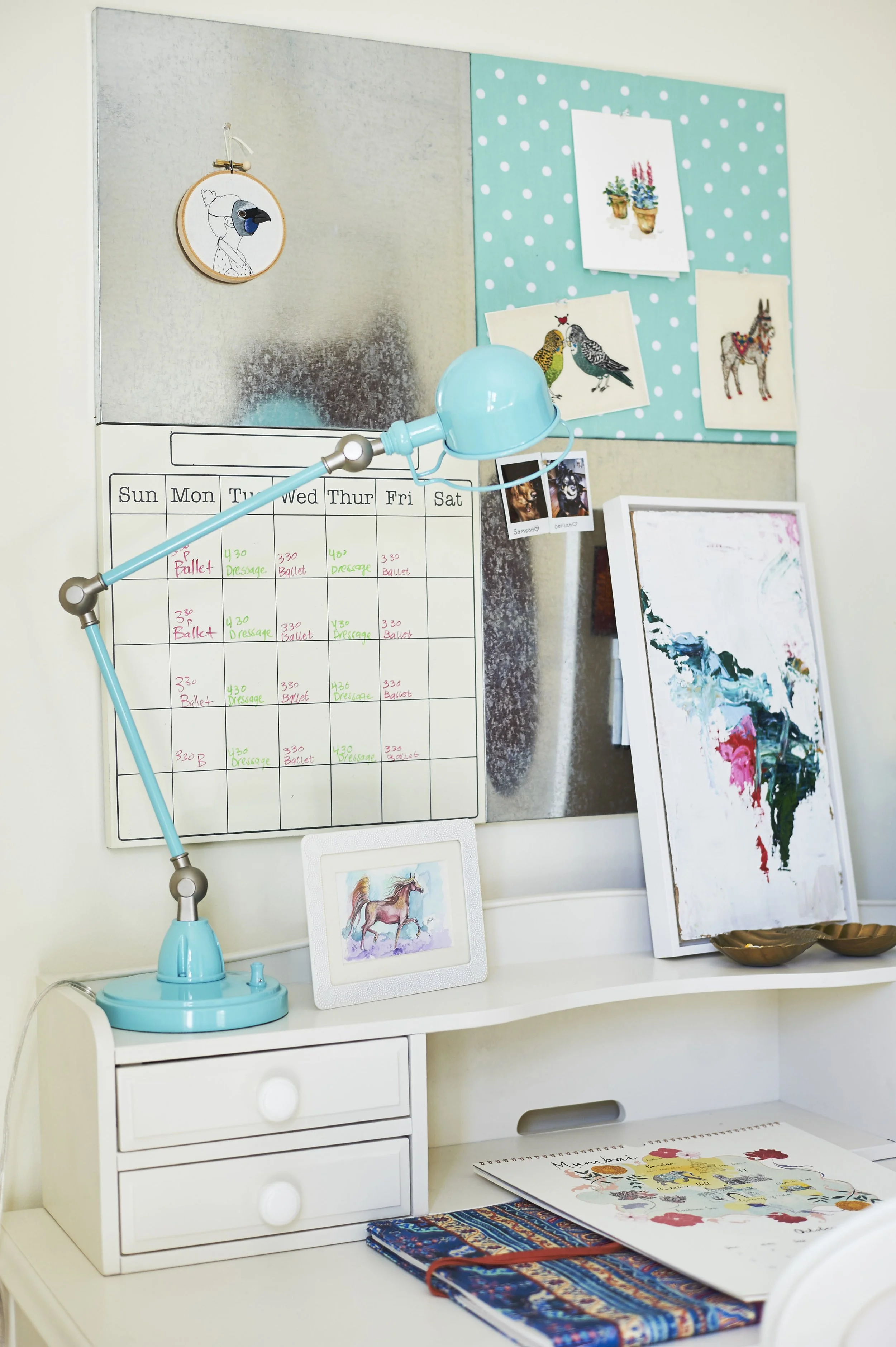
AN ARTICULATING DESK LAMP ADDS A POP OF AQUA TO THE TEEN GIRL'S STUDY AREA.
Once an organizing project is complete, Sarah’s clients have a renewed sense of self. Decluttering is a lifestyle change, but the benefits are well worth the effort. “It often inspires a newfound appreciation for their possessions and increased productivity in the space,” says Sarah.
A CREATIVE SPACE WITH A CUSTOM SOFA IN WOOL FELT, SIDE TABLES MADE OF NATURAL MAPLE AND STEEL AND A DESK CHAIR DESIGNED BY MAURO LIPPARINI. SCULPTURE BY RENAE BARNARD.
Adopting a personalized approach to organizing will spark far more joy than bingeing an eight-part Netflix series and assuming your tidying habits will change through osmosis. Decluttering is hard, both physically and emotionally — it’s not something that comes naturally to most people. Seeking professional organizing help is an investment in yourself, saving you time, energy, and unnecessary stress. And hiring an expert to create customized systems that fit your lifestyle will help you stay organized in the long-term — no self-help books required.
Sarah Barnard designs healthy, happy, personalized spaces that are deeply connected to nature and art.
To learn more about Sarah Barnard Design, please visit www.SarahBarnard.com.
Photos by Steven Dewall and Chas Metivier

“Scandifornian” design goes coastal

Scandinavia and California don’t have much in common (the weather, for starters) but when it comes to home design, these two regions have strikingly similar taste. This is exemplified through the use of neutral color palettes, natural fibers, sustainably-sourced wood, and intentional accessories in both decorating styles.
Interior designer Sarah Barnard recently renovated a 3,600-square-foot family home, not far from the bluffs that overlook the Pacific Ocean. Although the home was originally constructed in 1949, its revamped aesthetic is best described as ‘Scandifornian.’
The beachy blue and white exterior hints at what’s to come once you step inside. Distressed red brick forms a path to the entryway, which is framed by carved wood corbels that are original to the house. The foyer alcove includes a live edge wood table and a curated collection of seashells and minerals, blending organic elements with simple, clean lines.

FEATURING HANDMADE, LIVE EDGE TABLES MADE BY A LOCAL ARTISAN
But what instantly captures your attention is the light-drenched living room, featuring a vaulted ceiling with exposed wood beams. “The original bones of the house were excellent,” explains Sarah. A custom concrete fireplace designed by Sarah runs nearly the entire length of the wall. It’s boxy, modern shape is tempered by irregularly etched lines that “mimic the movement of the nearby sea.”

The lightly-finished hardwood flooring, all natural, non-toxic sofa, shaggy wool floor cushion and wheel-thrown ceramics exude laid-back, Scandifornia style. Here, the aesthetic is minimal, but never cold or uninviting. Taking a seat on the floor is encouraged and each decorative object or family photo has a story behind it.


A fine artist herself, Sarah collaborated with a trusted woodworker to create the living room wall sconces, carved from American Walnut. “The organic forms and natural finishes match perfectly with the coastal ambiance of the space,” notes Sarah.

To build these custom creations, Sarah delivered sketches and sculptural models to the woodworker to convey her ideas. The prototype was referenced throughout the fabrication process to ensure accuracy, resulting in one-of-a-kind fixtures that serve as functional works of art.


NATURAL DINING CHAIRS BY THE CHERNER CHAIR COMPANY HAVE A SLIM SILHOUETTE.
The dining room was “designed to feel soft and light,” with a neutral color palette, elongated dining table, natural dining chairs and a chandelier that appears to be floating in mid-air. The fireplace surround is yet another of Sarah’s custom designs. “I chose tile glazed in brilliant blue to create an updated linear pattern neatly framed by a custom concrete mantle,” she adds.


Sarah once again worked alongside a local artisan to produce the orb-like sconces that brighten up the space. “I often take formal inspiration from the home's location and reinterpret that within the space,” explains Sarah, who used the home’s coastal locale as the jumping off point. She handcrafted a number of small ceramic prototypes for the client to review before agreeing on the current iteration.


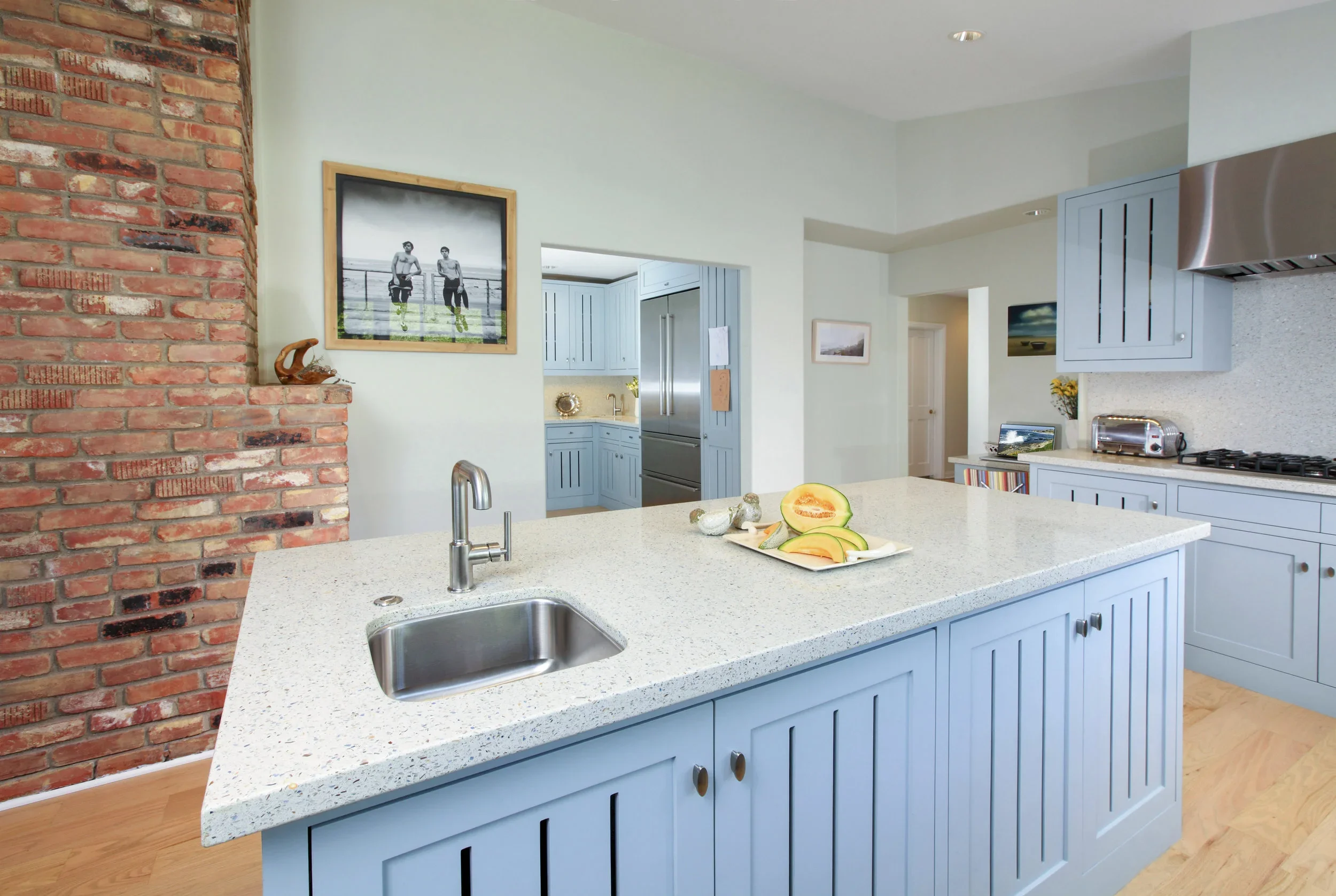
The kitchen expertly combines old and new. “There is an exposed brick fireplace that remains a decorative element in the new kitchen,” says Sarah. “We wrestled with the idea of preserving or upgrading the original red brick. We collectively decided to keep it — in the kitchen only — as a homage to the architect’s original intent.” The light blue cabinet doors feature subtle detailing and the quartz countertops are flecked with real seashells. The office nook is the perfect spot to search for a new recipe or respond to emails, while the adjacent pantry offers plenty of storage and a stainless steel French-door refrigerator.


The ground floor is rounded out by a serene guest bathroom with a custom floating vanity, matching wood-framed mirror, and a vessel sink that sits atop an onyx countertop. Although the space consists of mostly hard surfaces, it is warmed up through the use of light wood tones, soft lighting and texture-rich pebble flooring.

A HANDMADE TABLE BY A LOCAL ARTISAN ANCHORS THE SPACE BETWEEN THE LIVING ROOM AND DINING ROOM.
A handmade table by a local artisan anchors the space between the living room and dining room.
The California and Scandinavian home decorating styles share many of the same values, most notably an appreciation of natural beauty and fine craftsmanship. Throughout this project, Sarah worked side-by-side with local artisans and craftspeople to realize her custom furnishings and lighting designs. “Unique handmade objects bring authenticity and personalization to a home,” says Sarah. The finished product masterfully combines coastal California influences with the simplistic forms and function of Scandinavian home design.
Sarah Barnard designs healthy, happy, personalized spaces that are deeply connected to nature and art.
To learn more about Sarah Barnard Design, please visit www.SarahBarnard.com.
Photos by Steven Dewall and Chas Metivier

Three trailblazing queer women who shaped design history

AT THE MOULIN-ROUGES, TWO WOMEN WALTZING BY HENRI DE TOULOUSE-LAUTREC. WORKS FROM THE NATIONAL GALLERY IN PRAGUE. PHOTO BY: JAN SEDLÁK, HENRI DE TOULOUSE-LAUTREC, ODEON, PRAHA 1985. PUBLIC DOMAIN.
Today and every day, we celebrate the pioneering queer women who helped to shape the interior design industry. The erasure of women — particularly queer women — from history is a troubling phenomenon and underscores the importance of sharing the stories of these lesbian and bisexual women who left their mark on design.

INTERIOR OF ELSIE DE WOLFE' MUSIC PAVILION LOOKING OUT ON TO THE POOL, THE VILLA TRIANON , RENDERED BY WILLIAM BRUCE ELLIS RANKEN (1881-1941). PUBLIC DOMAIN.

ELSIE DE WOLFE, C. 1880.
BY UNKNOWN. PUBLIC DOMAIN.
1. Elsie de Wolfe
Elsie de Wolfe is the OG of interior decorating. Born in 1859, she began her career as an actress, which earned her fame and influence among the high society crowd. Realizing she had more of a knack for set design than acting, de Wolfe transitioned into interior decorating — a profession that didn't even exist at the time. Her well-heeled clientèle included Henry Clay Frick, Amy Vanderbilt, Cole Porter, Wallis Simpson, and George Bernard Shaw.
She disapproved of over-designed Victorian interiors, preferring instead to remove clutter and simplify spaces to make entertaining easier. De Wolfe's aesthetic could be described as colorful, airy, and opulent. "I opened the doors and windows of America, and let the air and sunshine in," she once said of her legacy.
She drew much of her inspiration from 18th-century French design, introducing pale paint colors, exotic animal prints, wicker furniture, nature motifs, and strategically placed mirrors into her projects.
De Wolfe's personal life was equally as colorful: she enjoyed a so-called "Boston marriage," living openly and happily with her lover, Elisabeth "Bessie" Marbury, a successful theatrical and literary agent. Their relationship spanned 40 years, and together, the couple renovated several homes in Manhattan and the 'Villa Trianon,' a French estate outside of Versailles. De Wolfe and Marbury continued their relationship until Marbury passed away in 1933, naming de Wolfe as her sole heir.

PORTRAIT OF MISS MAY MORRIS, PORTRAITS OF MANY PERSONS OF NOTE PHOTOGRAPHED BY FREDERICK HOLLYER, VOL. 3, PLATINUM PRINT, LATE 19TH CENTURY. VICTORIA AND ALBERT MUSEUM, LONDON, MUSEUM NO. 7821-1938. PUBLIC DOMAIN.
2. Mary 'May' Morris
Living in the shadow of her famous father, William Morris, Mary 'May' Morris never got the recognition she deserved as a textile designer. The family business, Morris & Co., created printed fabrics and wallpaper, stained glass and artful embroidery — many of their iconic designs are still treasured today, and distributed by the Sanderson brand.
May was a true talent — designing wallpaper, editing her father's poems, and heading up the embroidery department of Morris & Co. at the ripe old age of 23. She was a staunch feminist and socialist, and co-founded the Women's Guild of Arts in 1907, dismayed by the fact that the Art Workers Guild prohibited women from joining their ranks.
She was also a lesbian and lived with her partner, Mary Lobb, in a historic manor house in West Oxfordshire, England for more than twenty years. Lobb was initially brought on by May to work as the 'female gardener' at Kelmscott Manor, but the two struck up a close relationship, and Lobb was invited to move in. The couple was fond of camping in the countryside and visited Iceland together several times. May Morris died in October 1938, and Mary Lobb passed away just five months later in March 1938.

WALLPAPER DESIGN. ATTRIBUTED TO WILLIAM MORRIS. C. 1881. PHOTO BYUNKNOWN. PUBLIC DOMAIN.
3. Eileen Gray
The creations of modernist hero Eileen Gray look just as in vogue today as they did in the 1920s and 30s when she designed them. The Irish-born architect and furniture designer opened up a gallery in 1922 along Rue du Faubourg Saint-Honoré in Paris where she sold her pieces.
Her skills were numerous and her style was ever-evolving. Gray was a sought-after interior designer and self-taught architect. Some of her famous works include the often imitated adjustable table E 1027, the tubular Bibendum chair, and E-1027, a modernist-masterpiece-slash-vacation-home on the Côte d'Azur in the South of France.

PORTRAIT OF EILEEN GRAY. C. 1910. BY UNKNOWN. PUBLIC DOMAIN.

TABLE E.1027, DESIGN BY EILEEN GRAY (1878-1976). PUBLIC DOMAIN.
Gray had many relationships with both men and women. In Paris during the 1920s, she ran with a crowd of celesbian artists and became the lover of the French singer, Damia. Allegedly, the two were fond of driving around the city in a Chenard-Walcker with Damia's pet panther sitting in the back seat — how casual!
Gray's legacy was nearly erased from the history books but has since been revived with the release of two films about her remarkable life. Her ex-boyfriend and fellow architect, Jean Badovici, was often falsely credited for the design of E.1027, although she had designed it for him as a sort of modernist love shack. Thankfully, her work has not been forgotten, and the formerly derelict E.1027 is now a museum that's open to visitors.
The legacies of these three queer women live on through their work. So the next time you spot an adjustable table E.1027 replica, transform a dark, dreary room with a gallon of white paint, or wallpaper your powder room in a Morris print, think of these fearless creatives who helped shape the interior design industry into what it is today.
Sarah Barnard designs healthy, happy, and personalized spaces that are deeply connected to nature and art. To learn more about Sarah Barnard Design, please visit www.SarahBarnard.com.

RUSSIAN WRITER ZINAIDA GIPPIUS (ЗИНАИДА НИКОЛАЕВНА ГИППИУС, 1869-1945), BY LÉON BAKST (1906). PUBLIC DOMAIN.

Why outdoor living spaces are right for your health, and how to design yours to perfection

HAND PRINTED OUTDOOR TEXTILES HIGHLIGHT THE WEATHERED TEAK FURNISHINGS AND COMPLIMENT THE POOL TILE. PHOTO BY RENAE BARNARD.
Hand printed outdoor textiles highlight the weathered teak furnishings and compliment the pool tile. Photo by Renae Barnard.
The Environmental Protection Agency estimates that the average American spends 87 percent of their time indoors. We put considerable effort into designing the interiors of our homes, with little regard for the outdoor spaces.
"No matter where you are or how large your outdoor space, you can benefit from a daily connection with nature," says sustainable interior designer Sarah Barnard. Want to spend more time outdoors this summer? Rethinking your balcony, garden, or terrace is an excellent place to start. Here are a couple of reasons why outdoor living equates to a healthy life.
It benefits your mental and physical health.
Imagine stepping out onto your front porch with a cup of tea in hand, feeling the morning sun on your skin. Sounds nice, right? Moderate sun exposure does the body good — refreshing our circadian rhythms, lowering cortisol levels and blood pressure, and improving concentration. Sarah's morning routine includes a stroll through the garden with her miniature poodle, Lucy, in tow. "It allows me to start the day cheerful, grateful and breathing fresh air," she explains.

A GLORIOUS GUEST COTTAGE INSPIRED BY CAPE COD AND FLATTERED BY PAINSTAKING ATTENTION TO DETAIL. PHOTO BY RENAE BARNARD.
A glorious guest cottage inspired by Cape Cod and flattered by painstaking attention to detail. Photo by Renae Barnard.
It encourages us to spend more time with our loved ones.
We get it — planning and hosting an event is stressful. Even if you burn the hors d' oeuvres to a crisp, run out of red wine, or forget to bring out the on-theme cocktail napkins, it's always worth it in the end, isn't it? A Mayo Clinic study shows that socializing with your closest friends and family improves your overall sense of well-being and purpose.
And since summer is the time for alfresco entertaining, what could be better than celebrating the season in your beautifully designed outdoor space, surrounded by your nearest and dearest? Thanks to improvements in technology and design, outdoor furniture and decor have come a long way (see ya, fold-up camping chairs). Today, our outdoor living spaces can be just as comfortable and luxurious as our indoor spaces.

FRESH AND FUN COLORS COME TO LIFE IN THE OPEN AIR MEDIA ROOM. THE LOCALLY MADE SECTIONAL SOFA WAS DESIGNED TO FIT THE HOMEOWNER’S SPECIFIC DESIRES: ALL NATURAL & NON-TOXIC MATERIALS, HANDMADE IN CALIFORNIA. PHOTO BY STEVEN DEWALL.
Fresh and fun colors come to life in the open air media room. The locally made sectional sofa was designed to fit the homeowner’s specific desires: all natural & non-toxic materials, handmade in California. Photo by Steven Dewall.
Now that we've established why you should be spending more time outdoors allow us to explain how to do it in style. When designing an outdoor living space, Sarah advises her clients first to select a focal point. "Is it a beautiful tree? A softly trickling fountain? An impressive outdoor kitchen? The elements that you choose to dominate the space physically and visually influence its overall feeling and mood" says Sarah.
Mimic your interior spaces outdoors.
We're not suggesting you expose your vintage leather sofa to the elements, but integrating pieces that create a feeling of coziness — like a knit throw or an outdoor fireplace — will make chilly evenings more enjoyable. During the daytime when the summer sun is beating down, you'll want to add shade through the use of a modern pergola, permanent roof, shade sail or patio umbrella. And avid home cooks may consider investing in a fully-equipped outdoor kitchen, complete with a gas grill, pizza oven, prep sink, storage cabinets, counter space and a compact refrigerator (you know, for all the rosé you'll be drinking this summer).

THE COZY PATIO PAIRS LUXURIOUS OUTDOOR TILES WITH CHINESE ARTISAN POTTERY TO CREATE A QUIET RETREAT. PHOTO BY CHARLIE DANIELS.
The cozy patio pairs luxurious outdoor tiles with Chinese artisan pottery to create a quiet retreat. Photo by Charlie Daniels.
When in doubt, hire a designer
"Even creative people find it difficult to craft a beautiful, functional and healthy home that adequately reflects their uniqueness," notes Sarah. When laying out your design plans for a courtyard or veranda, hiring an experienced designer is the first step. Not only does an expert have access to a broader selection of custom outdoor furnishings and fabrics, but they can also ensure the final product will be flawless. "Your interior designer has a vested interest in the success of your project being completed to the highest caliber and can be an invaluable asset when dealing with vendors and contractors," adds Sarah.

THIS STYLISH PATIO SHOWCASES HANDMADE ROMAN SHADES ATTACH TO A CUSTOM WOOD ENCLOSURE FOR PRIVACY AND SHADE. PHOTO BY STEVEN DEWALL.
This stylish patio showcases handmade roman shades attach to a custom wood enclosure for privacy and shade. Photo by Steven Dewall.
A designer will create a multi-functional outdoor space with your preferences and goals in mind. They're able to conceptualize the big picture and execute every detail with precision. It's time to unlock the untapped potential of your seldom-visited balcony, courtyard, or terrace. Whether you crave a secret garden or a lively space to entertain, a designer can turn your idea into a reality. "Your home should enhance your lifestyle and express your uniqueness," says Sarah. "My work is centered on health and happiness — anything we can do to help our clients live better, we will."

A natural teak wood ball fashioned into a rugged side table pairs with a weathered teak armchair and lightweight pottery. Photo by Steven Dewall.
Sarah Barnard designs healthy, happy, and personalized spaces that are deeply connected to nature and art. To learn more about Sarah Barnard Design, please visit www.SarahBarnard.com.
A natural teak wood ball fashioned into a rugged side table pairs with a weathered teak armchair and lightweight pottery. Photo by Steven Dewall.

Sneak Preview: Pasadena Showcase House for the Arts 2019

THE BODDY HOUSE BUILT IN 1937 BY ARCHITECT JAMES DOLENA AT THE DESCANSO GARDENS.
The Boddy House built in 1937 by architect James Dolena at the Descanso Gardens.
On April 16th, Pasadena Showcase House for the Arts (PSHA) opened its 2019 Design Showcase House for an exclusive press-only preview. As a notable interior design firm and social media influencer, Sarah Barnard Design was invited to attend the press viewing and capture a sneak peek of the house, which opens later this month. While the select group of visitors was allowed to take photos, no guests will be allowed to take pictures or use cell phones once the event officially opens.
This year’s design showcase location is the historic Boddy House on the grounds of the beautiful Descanso Gardens. Notable Los Angeles architect James E. Dolena designed the home in 1937 in his trademark Hollywood Regency Style for E. Manchester Boddy, owner of the former Los Angeles Illustrated Daily News and founder of the Descanso Gardens. Now owned by the Los Angeles County and considered a house museum, Pasadena Showcase House for the Arts selected the Boddy House to be transformed by interior designers for the 43rd annual showcase event.


Each designer was assigned a room of this bi-level garden estate to makeover resulting in the complete rehabilitation of the historic property. Hearkening back to the Hollywood’s “Golden Era” the designers offer a contemporary reinterpretation of the original Hollywood Regency Style abound with opulent detail, vibrant patterns, and bold color schemes. Botanical inspiration abounds as lush gardens surround the property in the full bloom of Spring. Floral wallpapers, nature-inspired furnishings, and organic sculptures bring new life to the home.


The Boddy House will be open from April 21st to May 19th, 2019. Tickets can be purchased in advance online at http://pasadenashowcase.org/
Pasadena Showcase House for the Arts, a non-profit, all-volunteer organization, runs this showcase house as a fundraiser for their charity work and welcomes nearly 25,000 visitors each year. All money raised from this event will support local music programs. Designers from all over California come to take part in the making of this project to benefit the community. See this year’s crop of designers, who generously donated their time and expertise, here.


Sarah Barnard designs healthy, happy, personalized spaces that are deeply connected to nature and art.
To learn more about Sarah Barnard Design, please visit www.SarahBarnard.com.
Photos by Abby Siniscal

Superbloom: Happy Healthy Interiors Inspired by Nature

Happy spring! A “super bloom” has popped up all over California in the past few weeks, a result of a record-breaking amount of rain this past Winter season. Bright orange poppies, desert lilies, yellow and white evening primrose, and pink Bigelow monkey flower, are some of the flowers blossoming in considerable numbers to the delight of hikers, tourists, and nature-lovers throughout California. The super bloom has people flocking to parks such as Walker Canyon in Lake Elsinore, Near Desert Lily Sanctuary, and Diamond Valley Lake.


Los-Feliz-local Sarah Barnard, interior designer, WELL AP, LEED AP, keeps her own wildflower garden, where she planted a variety of poppies from seeds and is experiencing her super bloom. “The colors and textures that come with each season are delightful and inspiring,” said Barnard. “I grow a wide variety of fruits and vegetables, (carrots, radishes, beans, tomatoes, cucumbers, peppers of all kinds, cantaloupe, lemons limes, avocado, lettuces & herbs) as well as cactus, succulents, and flowering/ornamental plants.”

Barnard recently took time to visit Griffith Park, Antelope Valley Poppy Reserve, and Anza Borrego State Park to see the super bloom herself. Sarah, who specializes in interior design that contributes to her client’s health and wellness, and strives to make nature a part of each home she creates, shared photos of her recent trips.

“This year’s superbloom is a colorful reminder that nature informs life and design,” Barnard said. Incorporating this principle into the design of your home is one way to contribute to your happiness and health. The study of the effect of nature in design on our health is called Biophilia, and we have previously written about this phenomenon.

One way to bring this happy and healthy nature into your home design is to incorporate natural and organic forms, which are visually pleasing and encourage our connection to the outdoors. Selecting art, lighting or furniture for your home that resembles natural forms is one way to make an inviting and exciting space. Art and shapes inspired by nature could mean a light fixture that looks like a plant or a sculpture that looks like an animal.

FRESH FLOWERS AND BRIGHT PINK LEATHER REMINISCENT OF WILDFLOWERS CREATE A WARM AND INVITING DINING NOOK.

CHEERFUL CORAL PINK TILE PAIRS BEAUTIFULLY WITH FLOWERS.
Sarah Barnard is a strong advocate of having nature incorporated directly into a space as well. Add your favorite flowers, succulents, and ferns. “In my home, I keep a healthy variety of plants: bromeliads, tillandsia, monstera, and ferns are among my favorites. Having this connection to nature makes my home feel lush and light.”


Using natural materials, aside from being beautiful and adding diverse texture to space, is also an excellent way to contribute to mental and physical well being. Having materials like wood, cotton, and glass rather than plastic and vinyl will avoid toxic off-gassing.

THIS DINING ROOM FEATURES FRESH FLOWERS, BRIGHT COLORS, AND NATURAL WOOD TONES.

THIS COLORFUL PALETTE WAS INSPIRED BY FLOWERS.

FRESH FLOWERS ADD LIFE AND WARMTH TO A CONTEMPORARY SPACE.
To battle the stresses of everyday life, you can use mindful home design practices to create open spaces connected with the environment, plant-life, and the seasons. Barnard reminds, "Our surroundings deeply and immediately impact our mental, physical, and emotional health. A visual connection with the outdoors can improve mood and productivity, and what we bring into a home or space (finishes, furniture, artwork) determines both the quality of the air we breathe and how we function in our daily lives." The flower fields make great inspiration for such a space, with their bright colors, gorgeous views, and fresh air.
There is energy, beauty, and vitality in wildflowers. Spring is the perfect time to find inspiration from flower fields and create a connection to the outdoors. You can do this by beginning a garden, using interior design to personalize your home or office, meaningfully incorporating plants, natural light, and elements inspired by nature. Choose natural materials like wood, cotton, and linen, and take inspiration from this season's super bloom by using bold and bright colors. As more of us make our careers our focus, nature and design are imperative to promote calmness, serenity and healthy living.

And when in doubt, go hiking!

Sarah Barnard designs healthy, happy, personalized spaces that are deeply connected to nature and art.
To learn more about Sarah Barnard Design, please visit www.SarahBarnard.com.
Photos by Steven Dewall, Abby Siniscal, Chas Metivier

Pantone’s Color of the Year: Living Coral

The family cat is the primary resident of this guest suite featuring a pink and coral color scheme.
Coral reefs are disappearing from our oceans at an alarming rate. It is imperative to the ocean’s ecosystems, and as much as a quarter of all ocean species depend upon it for food and shelter. Precious marine lifeforms are also the inspiration for Pantone’s color of the year: Living Coral.

CORAL AND LUSH GREENS CREATE A LIVELY AND INVITING ATMOSPHERE FOR AN OUTSIDE SPACE.
Sarah Barnard, a Los Angeles-based interior designer, WELL AP and LEED AP, specializes in home design that contributes to her client’s health and wellness and strives to make nature a part of each home she creates. “A happy and uplifting color reminiscent of the ocean is the perfect starting point for a happy, healthy home.”

CORAL COLORED TILES AND BEAUTIFUL GLOSSY STONE SLABS MAKE THIS COASTAL BATHROOM WARM AND BRIGHT.
Coral colored tiles and beautiful glossy stone slabs make this coastal bathroom warm and bright.
This color takes its name from the beautiful coral marine invertebrates that build extensive coral reefs, habitats for a vast diversity of life in the ocean. Sometimes referred to as the "rainforests of the sea," coral reefs are quickly dying, and are projected to reduce to 10% by 2050. Half of the world's coral has died since 2016, due to rising sea temperatures, pollution, destructive fishing, invasive species, and changing sea chemistry.
"The timely selection of this color by Pantone should be an important reminder to all of us that nature inspires beautiful interiors. If we aren't careful to preserve the natural world, we will have nothing left to take inspiration from," said Barnard.

CORAL NATURALLY COMPLEMENTS WITH BLUES AND OCEAN TONES. CORAL EMBROIDERY WAS A PERFECT COMPANION (COMPLEMENT?) FOR A THROW PILLOW IN A COASTAL HOME.
Pantone is most widely known for their color swatch books. It is the company responsible for color matching paints and graphics; and now devotes the time and resources of Pantone Color Institute to research the purchasing trends of various industries. With this information, Pantone determines this year's color. The naming process regularly pulls inspiration from the natural and human-made world, naming colors such as "rose quartz" or "millennial pink." Pantone's color of the year for 2018 was ultraviolet, a beautiful, energizing shade of purple reminiscent of bright flowers and the sky at sunset. This year's choice is PANTONE 16-1546 Living Coral, a potent reminder to preserve and protect ocean life.

CORAL COLORED CERAMIC PROVIDES EARTHY CONTRAST AGAINST THE EBONIZED TABLE AND BLACK LAMP.
Coral is vibrant, cheerful, delicate and energizing, and the perfect shade to start the New Year. Living coral, described by the Pantone team as “An animating and life-affirming coral hue with a golden undertone that energizes and enlivens with a softer edge.”

THE BATH AND SHOWER FEATURE LOCALLY SOURCED HANDMADE CERAMIC TILES IN A CORAL GLOSS.
Pantone published, “Vibrant, yet mellow PANTONE 16-1546 Living Coral embraces us with warmth and nourishment to provide comfort and buoyancy in our continually shifting environment. [...] Representing the fusion of modern life, PANTONE Living Coral is a nurturing color that appears in our natural surroundings and at the same time, displays a lively presence within social media.”

CORAL AND PINK SHADES BLEND BEAUTIFULLY WITH WOOD TONES. ART IS A SUBTLE AND SEAMLESS WAY TO INTRODUCE COLORS LIKE CORAL.
While top interior designers don’t necessarily recommend painting one’s home to match the color of the year, art, accents, and of course plants are an easy and safe way to introduce vibrancy to your living or work space through home decorating.

PINKS AND CORAL CREATE AN INVITING ATMOSPHERE.
For those interested in using Living Color in their home, Sarah Barnard said, "Living Coral is a perfect complement to blue shades, and pairs well with coastal or beachy interiors. For the daring, reupholstering a treasured piece in a bright color like Living Coral can revitalize a space. For those who prefer to mix pops of color with neutrals, I recommend starting with small accents."
Pantone's Color of the Year is an excellent opportunity to add lively, earth-focused tones to your home. Make having a happy and healthy home your New Year's resolution.

CREAM AND CORAL CERAMIC JARS ARE A PERFECT STORAGE SOLUTION FOR BATHROOM NECESSITIES.
Sarah Barnard designs healthy, happy, personalized spaces that are deeply connected to nature and art.
To learn more about Sarah Barnard Design, please visit www.SarahBarnard.com.
Photos by Abby Siniscal, Chas Metivier, and Charlie Daniels

Luxury High Rise Home Design

Nestled in a chic high-rise building, this colorful suite features the owner’s impressive collection of books, art, custom furniture, installations, complete with natural and luxurious materials.
An expansive art collection lines the entryway and halls. Paintings, drawings, mixed media art, and the owner’s embroidery cover the deep blue walls. The thoughtfully curated collection includes contemporary artworks from across the globe with a focus on feminist portraiture and fiber art.


Floor to ceiling windows on two sides of the living room reveal unobstructed views of the city outside and are framed by a dracaena specimen and a large sculpture by Renae Barnard. Custom furniture commissioned for the homeowner, who needed the seat height of her chairs and sofa to have a custom raised seat height to enhance its ease of use. Tillandsia, low-maintenance “air” plants, dot the space throughout and are reminiscent of the environment outside.


The dining area features custom wall to wall shelving, displaying the owner’s beloved collection of books, plants, and sculptures. Bright blues and purples make the airy and light space feel both grounded and vibrant. Around the dining room table, a variety of vintage office chairs and a bench seat were upholstered with the same teal linen textile, allowing guests to experience their favorite seat comfortably.


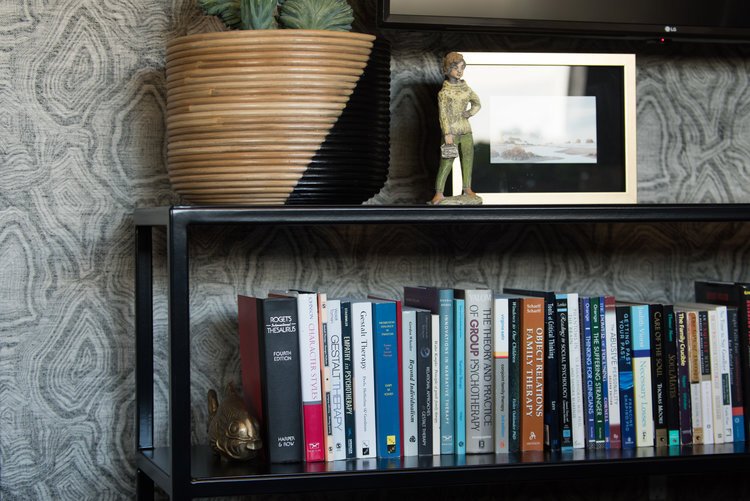
An agate-inspired grasscloth wallpaper adds a natural and organic element to the plush, achromatic office. A custom desk made in a black powder-coated steel was designed to fit the owner’s specific needs perfectly. A custom bookshelf was also chosen to keep her books close at hand while seamlessly blending with the modern desk. Pillows embroidered with Picasso illustrations add sophisticated interest to the sleek dark sofa while a fiddle leaf fig (Ficus lyrata) adds life and color to the elegant workspace.

The primary bedroom features a luxurious, award-winning, American black walnut bed frame by Autoban. The handcrafted headboard is lined with purple velvet, blending the natural texture with dark, feminine styling. A 300 thread count Egyptian cotton reversible duvet in custom color scheme adorns this California king bed (featuring an organic coconut mattress). Above, custom neon artwork reading “phantasmagoria” adds an ethereal glow. Plush black carpeting feels soft and comforting underfoot, and curtains allow the owner to sleep in total darkness. The two-tone purple walls were specially designed to draw attention to the art and to fulfill the owner’s request to have the bedroom “feel like a hug.”


Sarah Barnard designs healthy, happy, personalized spaces that are deeply connected to nature and art.
To learn more about Sarah Barnard Design, please visit www.SarahBarnard.com.
How to Rebuild After a Fire: Finding Opportunities for Improved Health and Happiness

It has been a scary and challenging time for many living in California. Earthquakes are the most famous of the natural disasters that afflict California, but this past season’s wildfires and mudslides have taken a startling amount of lives and homes. Many of our dear friends have been forced to evacuate their houses, not knowing when they could return or what they would find when they arrived back.

Losing a home due to a natural disaster, like a wildfire, is extremely stressful and emotionally draining. While it may feel like there is no possibility of a bright side or a silver lining, recovering is possible. Consider this list of short-term and long-term goals that can help us begin rebuilding a sanctuary and feel happier and stronger with time.
“We don’t even know how strong we are until we are forced to bring that hidden strength forward. In times of tragedy, of war, of necessity, people do amazing things. The human capacity for survival and renewal is awesome.”
— Isabel Allende, feminist journalist, writer and humanitarian

#1: Short Term
You may face a seemingly endless amount of tedious tasks that feel at odds with your surreal circumstances. Take care of things one at a time, as they come up. Remember to allow yourself regular mental health breaks from working to restore order. Focus first on the most critical tasks:report the incident to your insurance company
continue paying your mortgage
wait until the fire department and the police clear you to return home before you enter
secure your property from looters
Emotionally, you will need the support of family, friends, and the community. There are typically community programs to help you in a crisis, so allow yourself to lean on them when you can.

Allow yourself to grieve and make time for self-care. You may find it helpful to talk about what happened, rest, eat well, and practice stress relief through regular exercise, deep breathing, or any other method that works for you.
Most importantly, try to allow yourself to feel joy when you can. Be with your loved ones and relish anything that brings you happiness. As you are sitting with and processing grief, also be open to experiencing happiness when small, good things happen. Visiting public beaches, gardens, or parks will allow you to reconnect with the natural world amidst the present chaos. If your area’s air quality isn’t safe for outdoor excursions or recreational areas are closed due to dangerous conditions, consider traveling to a safer neighborhood.
Here are a few places to consider:

South Bay
Fred Hesse, Jr. Community Park - A favorite spot of locals in Rancho Palos Verdes for the walking path with expansive coastal sunset views. Rabbits, birds, and other wildlife are frequently observed in this park.
Madrona Marsh Preserve and Nature Center - A vernal marsh supporting valuable and threatened species in Torrance, CA. As an urban oasis, Madrona Marsh provides food and rest for migration birds on the Pacific Flyway
White Point Nature Preserve - Self-guided and docent-guided nature walks in San Pedro, a beautiful expansive space with California native plants, a nature club for kids, located just across the street from beach access.

Los Angeles
Descanso Gardens - This garden, nestled in La Canada, allows guests year round, and features renowned botanical collections and peaceful, meandering walking paths.
Getty Center - The Getty Center features an extensive art collection, modern architecture, and manicured gardens all in one location with a breathtaking view of the city.
Huntington Gardens - The Huntington Library features an art collection, restaurant, and large grounds with more than 15 gardens with their own curated botanical collections.

Santa Barbara County
Lotusland - Once a private residence, Lotusland is one of the most unique private gardens in the world, with a huge variety of plant species and beautiful flowers.
Santa Barbara Botanic Garden - The Santa Barbara Botanic Garden features extensive gardens and guided tours exploring California’s native plants and their uses.

San Francisco
San Francisco Botanical Garden - This large garden is perfect for meditation, tours, classes, and family outings. A collection of plants from around the world are featured here.
Conservatory of Flowers - This garden's motto is, “Connecting people and plants in a place of exceptional beauty.” Tours, exhibits, and a plethora of tropical and aquatic plants provides a beautiful and natural space to recuperate.
Regional Parks Botanic Garden - This park provides a haven for redwood trees and other endangered plants, with winding trails and a backdrop of stunning landscapes. Fans of California scenery will find plenty to admire here.

“I think when tragedy occurs, it presents a choice. You can give in to the void: the emptiness that fills your heart, your lungs, constricts your ability to think or even breathe. Or you can try to find meaning.”
— Sheryl Sandberg, COO of Facebook
#2: Long Term
When you are ready to begin again, take the time to figure out what you value most. Make long-term plans to achieve this while continuing mental and emotional health practices, like spending time with family and close friends, exercising, taking walks, and journaling.
Consider your ideal situation. What would make you feel happy and healthy? What do you value? How do you want to live? What brings you comfort, joy, and peace of mind? What did you always want to improve but didn’t have the time or opportunity to fix?

For those recovering from a total loss, it may be helpful to journal about the spaces and items that were most cherished, most familiar, or most depended on in daily use. This can be a starting point for grieving and the first step in considering which elements we may want to rebuild or replace, as well as other elements that we may be ready to let go.
For those recovering from a partial loss, are there things you wish to keep but are now damaged? Artisans and art conservators can bring some treasured pieces back to life. Restoration can also save furniture damaged by smoke, mold, and water. Restoring a beloved object can be a cathartic step and very meaningful to recovery.

When the time comes to rebuild, consider opportunities to experience more pleasure and beauty in daily life. Incorporating biophilia and healthy materials while creating a serene, personal space are simple ways of working toward improved health and happiness. Planning our homes to prioritize our physical and mental needs can create a life that fully supports us.
Our capacity for growth and emotional recovery is limitless. Knowing that we all need support in a crisis, do not attempt to go it alone. Consider leaning on friends, family, counselors, and community members. Allow yourself time to deeply mourn what has happened, and know that we are grieving with you.
Just as the wild lands of California will grow again from the ashes, so will the people of Los Angeles, Pacific Palisades, Alta Dena, and beyond.

This article was originally published 12/19/18 and updated 01/10/25
Sarah Barnard is a WELL and LEED accredited designer and creator of environments that support mental, physical, and emotional wellbeing. She creates highly personalized, restorative spaces that are deeply connected to art and the preservation of the environment. A certified California Naturalist, Sarah believes in celebrating nature through responsible design that works symbiotically with the local environment.
An advocate for consciousness, inclusivity, and compassion in the creative process, Sarah has appeared in Architectural Digest, Elle Décor, Vogue, HGTV, and many other publications. In 2017 Sarah was recognized as a "Ones to Watch" Scholar by the American Society of Interior Designers (ASID) and has been awarded "Best of Houzz Design" for seven consecutive years. Sarah's MFA in visual arts from Claremont Graduate University informs her practice and innovative approach toward interior design as creating a living work of art.

Is That Vegan? – An Insider's Guide to Vegan Home Design

THE FAMILY CAT IS PROTECTIVE OF HER NEW FAVORITE SPOT ON THE NEW CUSTOM LINEN BEDDING OF THIS COASTAL GUEST SUITE.
Whip up a slice of avocado toast and pull up an ethically-sourced chair, because everything you wanted to know about vegan home design lays ahead. What we know as modern veganism has been a growing movement since 1944; defined as “the principle of the emancipation of animals from exploitation by man.” Vegans do not eat meat or animal byproducts as an expression of their respect for the autonomy of all animals and may extend this practice into other facets of their lives. While veganism is familiar to most as a dietary lifestyle, many vegans and non-vegans alike strive for home solutions free of animal byproducts. Often made with fewer harsh chemicals and natural plant-based materials, vegan interior design options can benefit anyone concerned about the welfare of animals and the health of their home and family.

AN ANTIQUE IRON DOORSTOP RESTS ON A CARVED MANGO WOOD COFFEE TABLE. PLANTS ARE THE PERFECT FINISH TO A VEGAN HOME.
Vegan home design is about creating a happy and healthy space that respects the lives of people and animals alike, and it’s no surprise it’s caught the attention of the creative thinkers in Hollywood. Known for their activism and progressive ideas, starlets and screenwriters alike to gravitate toward vegan home design. Sarah Barnard explains, “It’s a common misconception that demand for vegan interior design has been a recent phenomenon, but in my experience, environmentally responsible living has been a consistent interest in the industry.” When it comes to Hollywood personalities, Barnard adds, “My clients value ethics and aesthetics. They’ve always been interested in healthy home design stemming from a love for animals.”

LIVING AREA FULL OF ORGANIC, TEXTURAL AND LUSH MATERIALS.
Despite its long-standing popularity, there is no doubt that vegan home design has begun to garner mainstream attention. When asked about the increase in visibility Barnard elaborated, “While people have had an interest in vegan interior design, the resources hadn’t caught up until fairly recently. For a long time, vegan homeowners had to compromise their beliefs for a beautiful home—that’s not the case anymore… We have the technology.
Barnard’s firm has worked with a roster of vegan celebrity clients and is no stranger to accommodating the grueling lifestyle to which many Hollywood stars commit. Animal rights activism aside; artistic, sensitive, and compassionate people need recuperation time and space that embodies their healthful ideals within their home and studio environments. The solution for many of them is a space aligned with veganism.

BESPOKE CABINETS IN AMERICAN WALNUT ARE PAIRED WITH DEEP GREEN GRANITE COUNTERTOPS.
Hold the quinoa. What exactly is vegan interior design? Many fabrics and finishes on commercially made furniture come from animals or their byproducts. Vegetarians may allow animal byproducts like wool or beeswax when the animals are treated kindly, and the fibers are processed organically. However, most vegan clients desire truly vegan interiors, spaces free from all animal products.
Many vegan clients take it to a higher echelon of sustainability by rebuking any products containing animal byproducts. Fabrics like silk may be out—but they make space for innovation of new plant-based products. “Just because it’s vegan doesn’t make it healthy by default.” Barnard’s firm works closely with responsible manufacturers and local artisans that care deeply about animals and the environment, and she warns of the danger of low-quality human-made materials, “Many vegan kinds of leather are made from chemical-rich synthetic materials. Non-toxic materials that are safe for clean indoor air do exist, one must know where to look.”

PLANTS AND ART PIECES INSPIRED BY NATURE, LIKE THESE DELICATE CORAL INSPIRED WALL SCONCES, ARE ESPECIALLY HEALTHY ADDITIONS TO A VEGAN HOME.
An excellent way to ensure a product is vegan is to inquire with the manufacturer. Sometimes, a product that may appear vegan at first glance may contain with an animal byproduct like beeswax or a harmful chemical. It’s an intimidating task to take on alone and all the more reason to work with a professional designer who understands the unique needs of a vegan lifestyle. Research is the first step, but Sarah reminded, “Interior designers have access to trade resources when it comes to finding out what ingredients are in a specific piece of furniture. It’s time consuming and diligent work, but the tradeoff is existentially rewarding.”
Silicon Valley start-ups have been exploring using mycelium, or mushroom spores, to grow durable leather products, and the small silkworm is beginning to play second fiddle to luxurious banana silk fabrics. In a world quickly shifting toward a more sustainable future, Barnard analyzed it as such; “This is a growing pattern. It makes perfect sense: a happy, healthy, vegan home contributes to the ease and enjoyment of one’s life. This is a natural progression for people who care about animals, their health, and environmental responsibility. As a home designer, I create spaces that help my clients express their values and passions. As more people embrace their connection to nature, interior designers will have more opportunities to push the envelope and create breathtaking, innovative vegan homes.”

RECYCLED VANITIES MAKE FAST FRIENDS WITH WALL MOUNTED MIRRORS MADE FROM SALVAGED BARN WOOD.
Bringing in plants, rocks, and other finds from nature is a simple way to introduce sustainable, vegan practices to your home, but working from the ground up with a designer is one of the only guaranteed ways to completely customize a home for vegan sensibilities. Increasing numbers of homeowners commit to environmental responsibility are paralleled by opportunities to work within the vegan framework. Big names and flashing lights may have put vegan interior design on the map, but it’s the dedicated designers and passionate followers of vegan culture who will continue to carry on the torch.
If you are considering going green, contact a knowledgeable interior designer to get started! For every conscious choice, we make, the planet thanks us for our consideration.

YOUR FURRY COMPANIONS CAN ALSO BENEFIT FROM COZYING UP IN A VEGAN FRIENDLY INTERIOR.
Sarah Barnard designs healthy, happy, personalized spaces that are deeply connected to nature and art.
To learn more about Sarah Barnard Design, please visit www.SarahBarnard.com.

How Color Impacts Feelings and Emotions

THE COLOR OF YOUR BEDROOM COULD BE IMPACTING YOUR ABILITY TO GET A GOOD NIGHT’S REST. THIS RICH INDIGO SCHEME NEUTRALIZES STRESS AND PROVIDES A SANCTIMONIOUS SPACE FOR SLEEP.
The color of your bedroom could be impacting your ability to get a good night’s rest. This rich indigo scheme neutralizes stress and provides a sanctimonious space for sleep.
Imagine your favorite color. Classic, reliable, and looks great on you. By some metaphysical magicalness, this inanimate projection of light makes you feel something. It can’t explain it- but it quiets the storm, inspires the artist, and invites introspection. Like a Netflix original series or the air we breathe, we can’t get enough of it- but why? What gives color such a powerful influence?
The answer exists somewhere between science and socialization in an area of study called color psychology.
Color is a fundamental element in life. It can alter an individual’s mood, behavior, even their appetite. Although some studies suggest that color interpretation is based on ‘pseudo-scientific assertions’ rather than scientific data, color psychology is the study of how the way we experience color has long been a valuable facet of the human experience.

TAKING INTO CONSIDERATION THE HEALTHY LIFESTYLE OF THE RESIDENTS, SARAH OPTED FOR A CONIFEROUS GREEN AS A SYMBOLIC TRIBUTE. GREEN IS A GREAT SHADE TO LIVEN UP A SPACE WITH A NATURAL LOOK.
Taking into consideration the healthy lifestyle of the residents, Sarah opted for a coniferous green as a symbolic tribute. Green is a great shade to liven up a space with a natural look.
Color psychology is the study of how color impacts mood and behavior. When studying color’s effect on mood, a color’s hue, saturation, and brightness must all be accounted for. Color perception can be affected by a series of factors, and the same color may appear different to various people.
Intro to color psychology’s kid brother: Color Theory.
While there are multiple definitions of Color Theory, there is a basic knowledge that helps define the essence of it. Color Theory is not only the series of hues known as the color wheel, but it is also a valuable structure of guidance to mixing color, and the visual emotions it invokes. The color wheel is composed of primary, secondary and tertiary colors. The primary colors are red, yellow, and blue. These three pigments remain solid on the color wheel, as they cannot be formed by the combination of any other colors. Primary colors are the true originators- hues from which all other colors are derived. Secondary colors are created when mixing primary colors; resulting with green, orange, and purple. Tertiary colors are formed by mixing a primary and a secondary color, creating yellow-orange, red-orange, red-violet, blue-violet, blue-green, and yellow-green. Colors are categorized into three hue variant descriptors; cool, warm and neutral.

IT’S EASY TO FEEL ENERGIZED IN THIS BUNGALOW BATHROOM COVERED HEAD-TO-TOE IN ORANGE TILES. THIS CHEERFUL AND VIBRANT SECONDARY COLOR COMBINES THE ENERGY OF RED AND THE HAPPINESS OF YELLOW.
It’s easy to feel energized in this Bungalow bathroom covered head-to-toe in orange tiles. This cheerful and vibrant secondary color combines the energy of red and the happiness of yellow.
By mixing colors and exploring different color combinations, one can reap the benefits of different colors’ impacts by carefully integrating them into a single space.
Interior designer Sarah Barnard (WELL AP + LEED AP) further explains, “In spaces like the minimalist coastal retreat where the dominant color scheme is a pure, dove white- the minimal use of color is emphasized by contrast. The analogous color scheme [colors adjacent to one another on the color wheel] like yellow, green, and blue, inspire a light, energetic space that feels alive and vibrant.”

PERSONAL POSSESSIONS, PLANTS, AND EVEN FOOD CAN PROVIDE ADDITIONAL COLOR. GROUPING THE DRAGON FRUIT AND STAR FRUIT TOGETHER BRINGS TWO DISTINCT POPS OF RED AND YELLOW.
In this personalized family home, each room embodies its own personality, attributed to the diverse use of color. Home to 3 children, each impassioned youth expressed themselves by participating in the selection of colors in their room. In one space; a rustic orange courts a creative, comfy atmosphere. While in the other, a softened lavender beckons a certain subtle sophistication blended with an imaginative air.
It’s not all about the striking shades. “Neutral tone-on-tone schemes create a very harmonious, feeling of cohesiveness. It’s organic and natural, evoking an earthly feeling of connectedness.” Sarah Barnard goes on, “When brighter colors are used to accent these more neutral scenes, we see more distinction in the color due to contrast. These cool, warm, and neutral tones can communicate everything from peace to activity.”
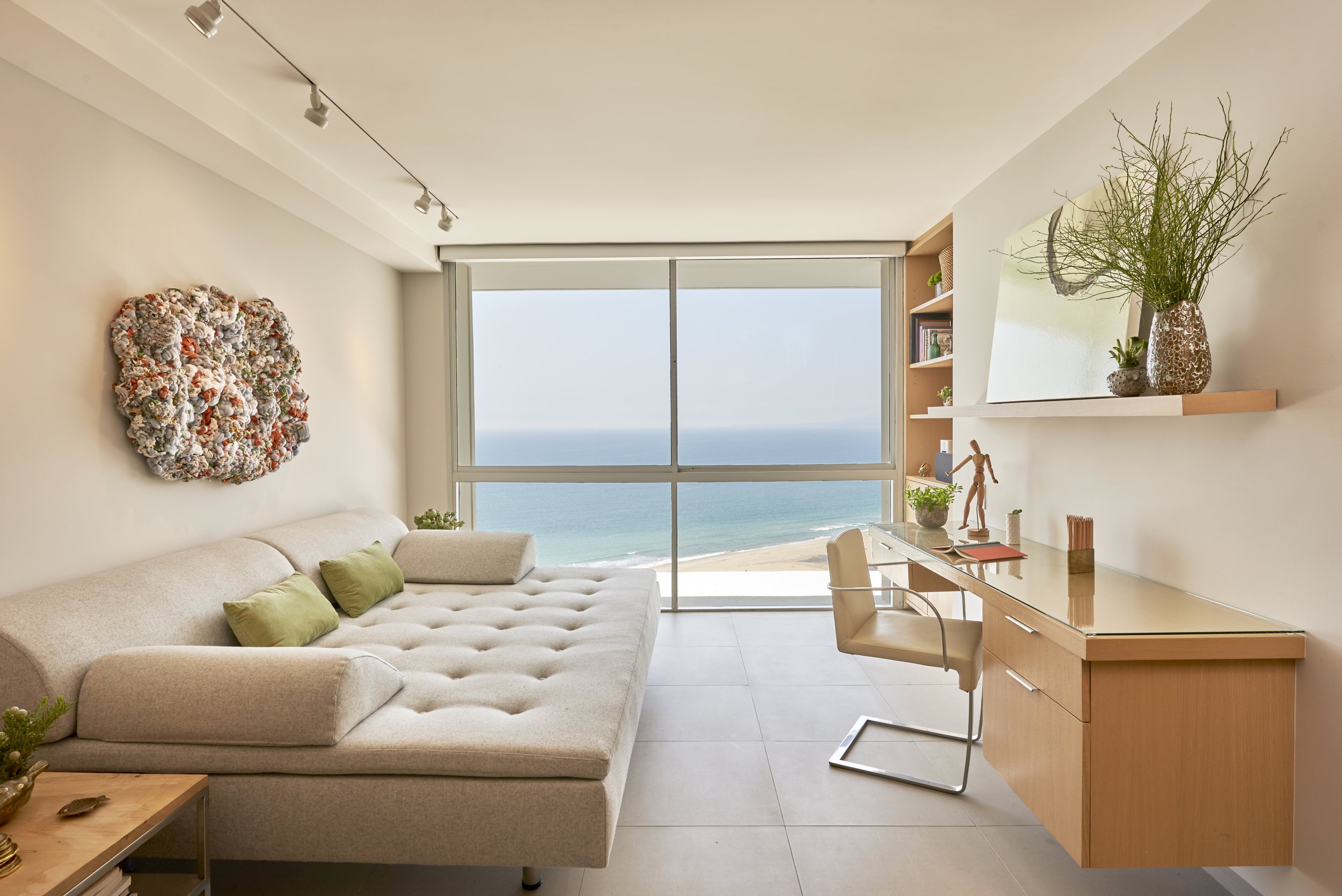
SARAH BARNARD USES THE OCEAN AS A FOCAL POINT OF THIS PENTHOUSE LIVING ROOM BY UTILIZING A BEAUTIFUL NEUTRAL COLOR SCHEME THAT PREVENTS THE EYE FROM BECOMING TOO DISTRACTED OR STRAINED.
In 1666, Sir Isaac Newton discovered that pure white light, when viewed through a prism, separates into the visible color spectrum. However, our understanding of color’s unique mood enhancement and health benefits extend far beyond this point in history. Ancient cultures around the world embraced the power of color and practiced chromotherapy. Chromotherapy, also known as ‘light therapy,’ employs colors to heal various ailments and is still currently used as a holistic or alternative method.
This treatment uses the color red to stimulate the mind and body, and increase circulation. Yellow to stimulate the nerves and detoxify the body. Orange heals the lungs and increases energy levels. Blue is believed to soothe or treat any illnesses or pain, while indigo shades are used to treat skin problems. Regardless of the scientific validity of the practice of chromotherapy, color is an indisputably important feature in our visual environment and can create a sanctuary in which we manifest healing.
There are color interpretations that have an ordinary meaning. For example; traffic lights—green means go, yellow indicates a yield, and red most recognizably signals a stop. However, most color perceptions tend to be subjective and contingent on the application.
A red room might make some feel anxious, while blue walls can induce a sense of calmness or relaxation. There are plenty of reasons why a person might react a certain way towards color, and an explanation can be the location or amount of color used even the culture someone comes from, or their personal experiences. As in all things, there exists a duality to every color archetype. While bold hues of red have given some evidence to have adverse effects in cognitive ability in children and adults, there is also evidence to show it can increase appetite, enhance athletic performance, and spark feelings of excitement and arousal. While a red bedroom may inhibit sleep, a red locker room can rally a team for competition.
Sarah Barnard illuminates the topic further, “It’s important to consider the space you’re occupying and the emotions you would like to experience there. Is this a place of rest, work, or activity? These are some of the elements I consider when introducing color to space.”
Due to this variation in interpretation, many psychologists express skepticism of the validity of color theory’s effect on an individual. In truth, this variation exemplifies the way the usage of color can be just as impactful as the color itself. Complimenting the fluidity of Color Theory, this allowance grants validity to each of our experiences that have helped inform our perception of color.
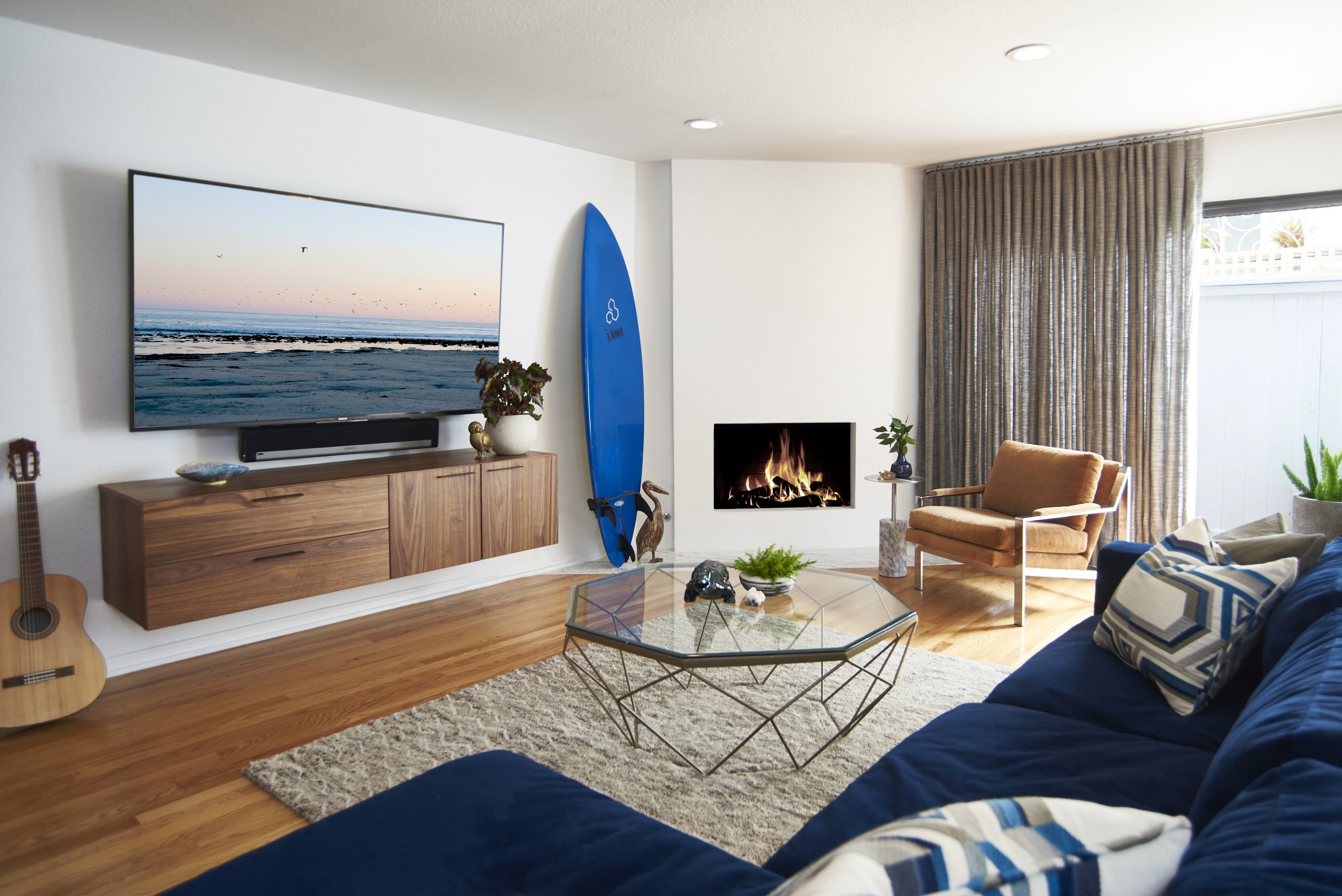
THE COLOR BLUE IS VERY VERSATILE IN THAT, WHILE IT CAN BE USED AS A CALMING ELEMENT, IT CAN ALSO SYMBOLIZE ENERGETIC FORCES LIKE THE OCEAN OR PROVIDE A MASCULINE TOUCH DEPENDING ON ITS TONES.
The color blue is very versatile in that, while it can be used as a calming element, it can also symbolize energetic forces like the ocean or provide a masculine touch depending on its tones.
By juxtaposing projects like the custom-built bedrooms of this California family residence with the masculine townhouse, we can see the breadth of emotion just one shade can bring forth. Both utilize a similar palette, a combination of vibrant blues and natural greens against natural wood and white backdrops. Despite their similarities in color, both spaces pique very different energies. A blue surfboard emanates the raw excitement of the open ocean, while blue bunk beds manifest a dreamy, youthful coziness reminiscent of pillow forts and camping in the backyard. Because of their application, the blue tones inspire very different moods, although they are similar in hue and saturation.
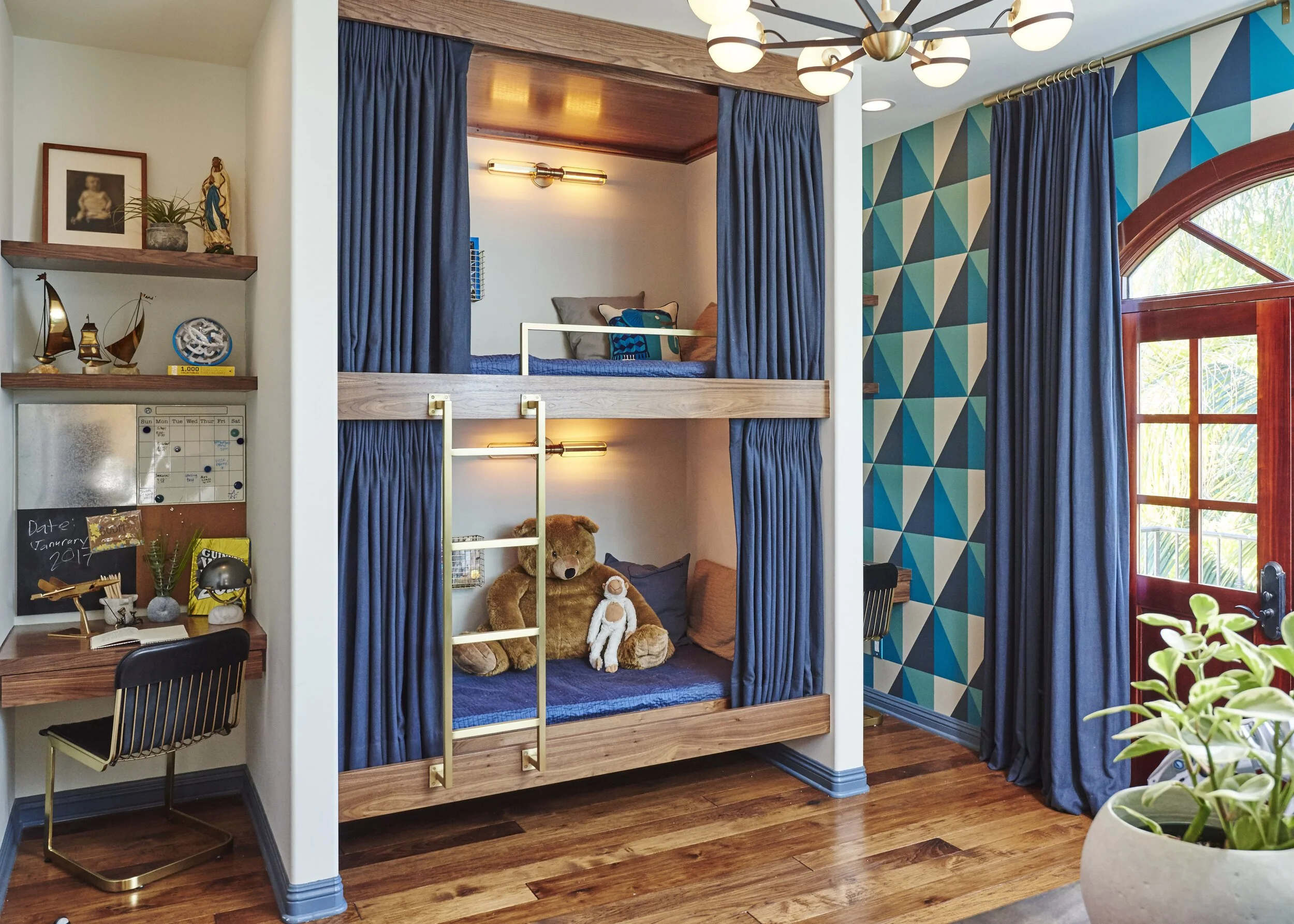
IN THIS BOY’S ROOM IN THE CALIFORNIA FAMILY RESIDENCE, SARAH UTILIZES THE DUALITY OF THE COLOR BLUE TO CREATE A SPACE THAT ENCOURAGES BOTH PLAY AND RELAXATION. SEE YOU IN DREAMLAND!
In this boy’s room in the California family residence, Sarah utilizes the duality of the color blue to create a space that encourages both play and relaxation. See you in dreamland!
Proper color selection is crucial in our everyday lives. Color can be overwhelming or healing, so it is crucial to understand how color can affect the dynamics of a room and the people in it. Interior designers deeply believe that color can drastically alter moods, feelings, and emotions. Before designing your space or switching up your color scheme, pay close attention to the way your mind and body feel when you experience different colors and consult with your designer.
”It goes beyond creating something beautiful to look at- it’s an integration of the self into the space we occupy and nourishing ourselves. The colors we see affect how we feel and how we engage with the people around us.” Sarah Barnard concludes, “It’s absolutely vital.”
Regardless of age, it is evident both adults and children are affected by color in a multitude of ways. While color interpretation can vary between cultures and people, we are unified in the power of color- the magical and visceral ways it influences us as we move through our day. It can provoke us to be more active or optimistic, or it can be the visual lullaby we need to rest peacefully at night. Positive and thoughtful applications of Color Theory have many benefits; inspiring us to play, grow, and find peace.
Sarah Barnard designs healthy, happy, personalized spaces that are deeply connected to nature and art.
To learn more about Sarah Barnard Design, please visit www.SarahBarnard.com.

Sarah Barnard Wins 1st Place in Locale Magazine Los Angeles’s Favorite Interior Designer Poll

A flurry of votes were cast for the top 10 home designers competing for the title of Los Angeles’ Favorite Interior Designer. The contest, run by Locale Magazine and titled, “POLL: Who’s Your Favorite Interior Designer in Los Angeles?” was open from July 10th to July 16th, and allowed design fans to vote once per day through the contest’s closing.
The first-place winner, Sarah Barnard of Sarah Barnard Design, is a luxury interior designer with a focus on smart, sustainable home design and historic preservation. Known for her personable nature, experience with unusual requests, and her careful attention to detail, Sarah’s design practice contributes to the health and well-being of her clients. She understands that beauty and comfort can encourage physical and mental well-being and that our mental, physical, and emotional health are connected to the art and design of our surroundings.

With an elegant and approachable design aesthetic that is truly healthy and happy, Sarah has garnered a loyal following. Her clients are the 1% with a conscience. They own more than one multi-million dollar home; they are celebrities, entertainment executives, influencers and corporate leaders. They care about the environment and their impact on the world and thus choose quality, responsible design.
When the poll closed on July 16th, Sarah held 56.13% of the popular vote. The Locale Magazine article announcing the winners (on August 28th, 2018) captured Sarah’s secret to lasting relationships and returning clientele: “I am committed to meeting people where they are. My team is made up of diverse individuals, and we pride ourselves on enhancing the lifestyle of our clients through home design. An authentic home has the potential to be truly restorative and inspiring. Whether that means ultra-healthy materials for a new mom, blending two contrasting styles for a newlywed couple or utilizing universal design for a client with health concerns, it is always rewarding to help improve a client’s home and lifestyle.”

Featured first among the top 5 finalists and with a growing 39.8k following on Instagram, Sarah Barnard Design is consistently one of the highest ranking, top rated, most searched design firms on Houzz with over 1.8 million hits in the last year. Sarah’s projects have been featured in local, national, and international publications, and have placed prominently in several noted design competitions. She is committed to creating lasting spaces that contribute to the health and wellness of those who use them.
Sarah Barnard designs healthy, happy, personalized spaces that are deeply connected to nature and art.
To learn more about Sarah Barnard Design, please visit www.SarahBarnard.com.
Locale Magazine Top 5 Los Angeles Designers Article
Locale Magazine Top 10 Los Angeles Interior Designers Poll

Design for a Healthy Mind: Interior Design and Mental Health

It seems that every week, a new article is out asking what is the source of our mental health troubles. Depending who you ask, demanding work schedules or an over-stimulating world could be the culprits. It’s all too often not one thing, but a combination of factors that leave us feeling sensitive, low, or unmotivated. At the center of new conversations emerging on mental health is the effect of our environment on our wellbeing. Taking the care to consider our home design is an important step in seeing how our familiar surroundings impact us. From small adjustments to a total overhaul, the home can transform from a source of stress or isolation to a sanctuary for calm and comfort.
An exercise: pay attention to how you feel as you move about your space from room to room. Where do you spend your time? How do you react looking and living through your space? From the height of the ceilings to the presence of plants, subtle but pervasive factors can improve mood, focus, and alleviate anxiety. Humans intuitively respond to environments that promote productivity, intimacy, and efficiency.

This isn’t a recent development: the practice of Feng Shui, for instance, has a history going back thousands of years. At this point, it is likely you’ll need to consult a compassionate interior designer to help guide the daunting task of creating your ideal, holistic home. They can assist from the smallest details to a total transformation of the space and how you live in it. “You’re never alone in the process,” designer Sarah Barnard says. “Having a second pair of seasoned eyes can bring our attention to the affect our homes and their layouts have on us and our visitors.”
The effects our homes have on us are largely defined by how we use and live within them. Architecture theorist Kate Wagner claims that most of our homes are too separated by function; most of our time is not spent in designated hosting spaces, such as a front room, but in the kitchen and the den. “Large, unused spaces designed for social functions foster isolation instead,” she explains. These isolated areas end up becoming pile-ups for unwanted furniture, or inaccessible simply because they’re too formally separated.

Likewise, small, constricting spaces inhibit creativity and discourage freedom of movement. Laying in a darkened room in the comfort of a bed is difficult for anyone to get out of, even when the sun is shining.
Wagner makes an empathic suggestion to “channel [your] earlier self,” outside of the expectations of space and presentation that comes with creating your home in adulthood. In this project by interior designer Sarah Barnard, natural light and free movement is prioritized. Walls do not constrict, but are left open and accommodating.

Much of what compresses a space isn’t tight walls and low ceilings, but its furniture. A clear and open home is a natural reflection of a clear and open mind. Prioritizing objects of beauty, function, and meaning within your house can be reflected in the popular Konmari Method, or “the life changing magic of tidying up”. Its founder, Marie Kondo, takes inspiration from Feng Shui to ensure that organization and tidiness are a permanent life change, not a cycle for us to endure every few months. She believes that every object in our home brings us joy, and that each object has a specific place where it belongs within in our home. The method suggests we ask ourselves simple questions when we encounter an object we can’t bear to part with: “Does this bring me joy?”
Cherished furniture shouldn’t be thrown away for the sake of self-renewal. In fact, they can be essential to giving a room its individuality. Older furniture pieces that you’ve had for years can be given new life when reinterpreted within the space.
During a revision of a Scandifornian style home, Sarah had the opportunity to place older furniture into a bright, updated, and minimalist aesthetic. A treasured antique dining set, found in Thailand, remained in the dining room; its deep rosewood and impeccable design and detailing brings warm elegance in the new space. The dining set has a new life, and the new rooms feel familiar and fully livable.

Maybe you’ve decided to really start from the ground up: new furniture, fixtures, the works. Avoid the stress that can come from heavy-duty furniture pieces that forbid reorganization and movement. They aren’t active in the home, and an imposing weight or size can compress a room while taking away the opportunity for revitalization and customization.
Consider modern, playful furniture that is light and accessible to move, promoting autonomy in your environment to reorganize as you wish. As an experienced interior designer, Sarah has a deep understanding of the principles of Universal Design, which encourages flexibility, simplicity, and low demands of physical labor throughout the home. This is achieved through seven principles: the designed object or space must be equitable, flexible, intuitive and easy to navigate, stimulate as many sense as possible, safe and tolerant of error, physically undemanding, and with adequate space for free use. When a sensitive and informed designer adheres to these principles, their projects have the benefit of being widely applicable to a variety of needs: from every day appliance use to wide ease of access throughout a home. It makes your home more intuitive.

To make the most of your new space, have systems in place that facilitate organization, tidying, and reward. Cleaning can have therapeutic, empowering effects on the psyche. The areas around us reflect the care we have for ourselves. Interior designers carefully choose pieces or can work with skilled artisans to build furniture to suit your needs, from the perfect chair to expansive organizational racks that can transform the use of a room. Also, this can be where your creativity and distinct personal inspirations shine; a pair of homeowners wanted a cabinet that resembled a type of Japanese locker, getabako. The cabinets were numbered in a sequence that was significant to the husband and wife, culminating in a piece that was unique, functional, and intimately designed. In using the locker, the homeowners would feel comfort and satisfaction at its place in the home.
A cluttered environment has been proven to drain energy and negatively impact our overall mood and self-image. In bringing in new furniture, we want to bring in new systems of living and using it. Wall-based organization is a great way to free up space on the floor. Light, free-standing shelves in this home office provide ample space for books and objects of meaning and beauty. The floor is freed up for movement and active use. All furniture here, fitting for a home office, has a cohesive design and an obvious function, encouraging productivity and serenity.

Echoing the exercise of moving through the home, think of the importance of free and open movement: everything we encounter can be a treasure rather than an obstacle. The importance of possessions is knowing and fully appreciating their use and place in our home. Our home is a space for us to respect, personalize, and flourish with and within.
Just as promoting mental health and clarity through interior design goes back thousands of years, color therapy (also known as chromotherapy or color medicine) is as old as any other medicine, with a history going back centuries. There’s research that points to spectrums of colors even affecting different parts of the body! It’s physical and mental effects are essential.
Does this mean you paint your whole apartment blinding shades of sunshine yellow to spur energy? Not entirely - research points to the contrary. Researchers at Logan Regional Hospital in Logan, Utah discovered that overly vibrant color schemes produce heightened states of unease and anxiety.
Splashes of your favorite color are a given within the home, but we can also look outside for inspiration. In this idyllic guest retreat, Sarah Barnard has used the natural landscape as inspiration for a cohesive palette. Even visitors to the home are invited to a room that is earthy, grounded, and familiar. The prominent presence of green in the bedroom reflects the vibrant trees growing just outside with generous sunlight.

Meanwhile, natural dark wood establishes a sense of warmth and comfort, once again using the surrounding nature as inspiration. The consideration of all senses, particularly touch, creates a holistic and familiar space. Organic textures such as stone, encaustic tile, and wood make us feel - literally - grounded in our environment.
Investing in the space of your home as a part of mental health doesn’t have to be a daunting task. Reach out to an empathic interior designer who understands the importance of the house in your health. With a rich history and vast resources, transforming with a healthy, mindful designer can have incredible effects on your day-to-day life and long-term happiness, letting your home come alive as your mirror.
Sarah Barnard designs healthy, happy, personalized spaces that are deeply connected to nature and art.
To learn more about Sarah Barnard Design, please visit www.SarahBarnard.com.

How to Design Your Home for Conscious Living

Living consciously means embracing what you love. It’s living in alignment with personal values and making choices accordingly. As a philanthropist and former first lady, Michelle Obama said, “I have learned that as long as I hold fast to my beliefs and values – and follow my own moral compass – then the only expectations I need to live up to are my own.” However you express it individually, it’s what you appreciate and brings you joy. Being aware of what nourishes you, be it animal kindness or human welfare, awareness can offer you a clear path toward designing your home more consciously.

Our values are as unique as each of us. It’s evident in our daily lives that our taste in food, color, and careers vary, but more subtly, our ethics are just as diverse. Whether you prioritize being healthy, sustaining our planet, and equality for all, living consciously is well within reach.

Wherever you are on this journey, there’s no right or wrong way to do it. If you’re beginning, consider making future purchases aware ones. If you’re buying a pillow or rug, find one from a cruelty-free source or a craftsperson who is conscious of their impact on the planet. If you’re ready to embark on a deeper level of commitment, assess an entire room or your whole house. If that seems daunting, hire a designer who aligns with your values to make substantial changes to transform your home into a sanctuary. An experienced home designer will work to express what lights your imagination on fire. A home designer takes the stress off your plate so you can focus on the beauty and big picture while they take care of the minutia. They can help push your bravery into the limelight, so your house can be what you envisioned.

Conscious living requires little to no sacrifice. For example, being vegan does not mean trading in personal luxury. You can bring quality and opulence into your home while honoring the welfare of the person fabricating your sofa. By making informed decisions, we can improve the conditions of workers of Vietnam, and help a single mother supply artisan handcrafted goods to anyone in the world, while supporting her children financially and emotionally. However, with such freedom and availability, we also have information overload. In design, it takes knowledge and experience to create a harmonious space that matches your preferences. Look for designers and artisans who specialize in handcrafted goods, or sustainable products. Because there are so many options, it truly helps to have a skillful designer evaluate the myriad of choices and to verify legitimate sources.
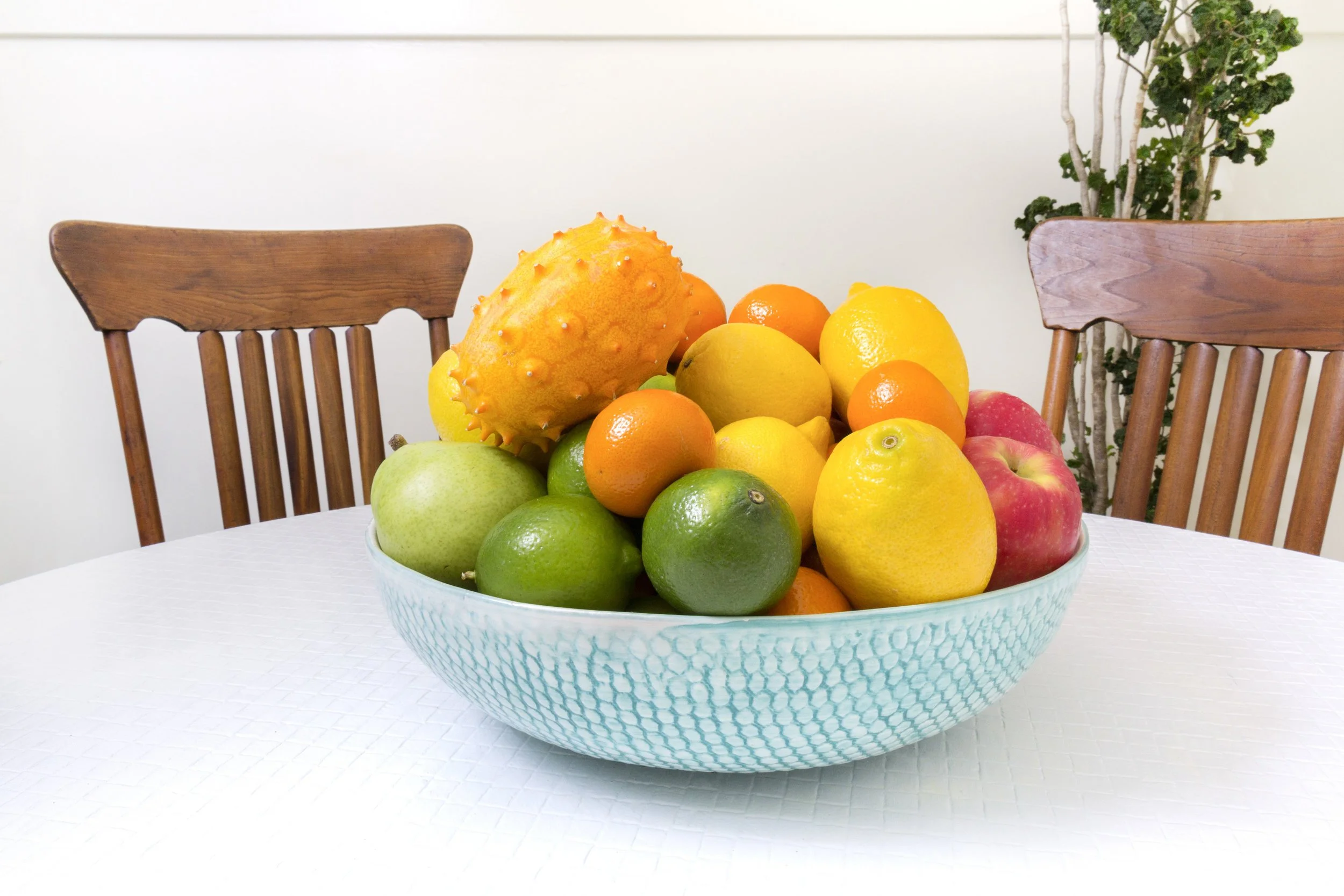
As you design your life intentionally, you convey to those around you what you love, which then draws more of what you want into your life. Being intentional in your home design choices will be reflected in all areas of your life. “You are your choices,” according to German philosopher Sartre. Generously expressing personal truth brings abundance to your life. A home that resonates with positivity brings more vitality to the physical body and uplifts family and friends. A home with thoughtful design works symbiotically to achieve goals and allows energy to flow into projects with passion. For those who are clear about what brings them joy, their spaces radiate it.

Sarah Barnard designs healthy, happy, personalized spaces that are deeply connected to nature and art.
To learn more about Sarah Barnard Design, please visit www.SarahBarnard.com.

Judgement-Free Interior Design: Let's Get Weird!

Home is a self-portrait of sorts. It’s a collection of who we are, where we’ve been and all the people for which we care. For most of us, our home is a safe space to reveal our style, family history, beliefs, and state of mind and can and should represent who you are in a healthy, useful and enduring way. For many, this is a daunting task. Even creative people find it challenging to craft a beautiful, functional and healthy home that adequately reflects their uniqueness.

The first step is finding a home designer who you are comfortable with, who you can feel safe sharing your needs and aesthetic. It can be hard to let someone into your home to sort through the details of how you live, mainly if your style or needs are not like the cookie-cutter examples in home magazines, but ultimately, allowing an interior designer to know who you are will enable them to enhance your life and lifestyle. It also means that you’re free from the burden of planning the minute details of your own space.
When asked how to begin, interior designer Sarah Barnard explained, “The first step in my design process is always learning about the people with whom I’m working. So, start by being honest. Tell your interior designer the truth about your habits, desires, future hopes and dreams.” Barnard, a Los Angeles based interior designer with a passion for fresh and unique design, is no stranger to special requests. She has designed homes for people who have physical limitations or challenges, pet menageries, tree houses, art and antique collections, vegan kitchens, and with children with special needs, not to mention the occasional adaptive re-use projects, which repurposes an old building for a different function, like a church into a home.

Regardless of your comfort level letting a designer take the reins, it is crucial to bring your situation–including all your challenges, whether that means your grandmother’s China with a questionable aesthetic or a mobility issue that requires a re-design. Asked her about finding and building a feeling of trust with your design team, Barnard said, “In my experience, people often have anxiety about how their home, hobbies or lifestyle might be perceived. Our team is made up of diverse individuals, and we pride ourselves on meeting people where they are. An authentic home has the potential to be truly restorative and inspiring.”

When asked for her favorite unusual design challenge, Barnard laughed and said, “Oh, I’ve heard them all by now. My favorite requests are often incredibly personal ones. We’ve had several clients recently who practiced co-sleeping, for example, the co-mingling of parent’s and children’s bedrooms”. One couple’s oldest child did not have his own bedroom and slept on a separate bed in the homeowners’ primary bedroom. Integrating this request required the melding of different needs and maintaining an elegant adult aesthetic, as well as adequate kid-friendly spaces.
Another client is expecting her first child and desired ultra-healthy materials and furniture that would be safe for her expected family. “She wanted materials safe enough her child could eat them. My team supplied her family with the healthiest and most pure materials available, even giving attention to the dye ingredients in fabrics and the finishes on wood. Ultimately she had a home that was beautiful and that she felt safe in.”
Worry of being perceived as messy can also hold a person back from contacting a designer. It often comes down to a lack of storage options, but for some, it can be a cathartic process to let go of the excess clutter. A significant step as the design process begins is to take stock of what items are most important: what things are no longer useful to you, and what items bring you joy? Getting rid of excess items and furniture can be an enjoyable process and will make room for you to figure out what is precious and meaningful.
For many, part of embracing their unique identity may mean collecting, restoring or displaying treasured items. That should be no surprise–there’s an entire art-form dedicated to this idea: kintsugi is the Japanese art of repairing broken pottery with 24 karat gold. The idea is that instead of throwing away something broken, it can be made whole again, and its scars are proof of its history. It’s past and age are reminders that there’s beauty in experience and what is finite.

Items with some wear and tear show their history, their usefulness, and your love for them as a badge of honor. Allowing them to retain their imperfections is a way of embracing your own. It can be especially meaningful to hold onto the items that you found while traveling or that you were gifted.
Embracing an appreciation for flawed beauty allows you to hone in on the crucial items and create a natural, healthy space. Removing clutter yet holding onto and restoring imperfect, meaningful pieces is a delicate line to walk, but it can bring authenticity and personality to your home.

There are so many unique situations that can be improved by custom, robust design. In some cases that situation may be health or physical limitations, in which case ergonomics may be a reason to ask a designer for help. They can apply universal design principles to ensure your home is comfortable for you and your family. “I’ve had several clients with special requests. One client, aside from being over six feet tall, had multiple knee surgeries that made it difficult to get in and out of chairs. My team researched and commissioned furniture with custom seat heights and dimensions to make it easier for him to get up and down.”
“It’s not all unusual requests. Sometimes the client needs something super personal that they feel unsure how to handle themselves.” Barnard described a pair of clients who were married and in their late 60s, living with one of their mothers, in her late 80s. “They wanted her close by so they could look after her, but then she also wanted her independence. The solution was creating a separate wing in their home; we essentially created a suite inside their home that included a primary bedroom, sitting room, and bathroom, but it was all closed off by a door from the rest of the house.”

When asked how involved one needs to be in the home design process Barnard said, “Every designer is different, but I let my clients be involved if they choose. Many prefer to live their lives and allow my team to handle things, but sometimes people prefer to have a more active part in the process. There’s no wrong way.” A designer who will listen to your needs and create a custom, personal space that fits your particular point of view is best.
Asked for unique requests, or something fitting the free and uninhibited side of Los Angeles, Barnard recalled, “One client who was a pilot wanted us to design a space resembling the interior of a plane. More than one client has asked us to make their home resemble the set of their favorite shows: The Crown, Game of Thrones, and Mad Men to name a few.”
Barnard added, “newlyweds are always fun to work with. They are just starting together, and they haven’t figured out how to merge their styles and possessions yet.” Couples just starting or moving to a new city can benefit from the direction of an interior designer, particularly if the couple has very different styles or collections to merge.

An enduring aesthetic and lasting materials are an indicator of a good interior designer. Barnard explained, “Lately I’ve encountered clients asking for ‘bulletproof’ furniture and finishes. I think this comes from a few places. There are so many furniture lines available to the general public now who make (basically) disposable furniture, and so often clients expect that furniture isn’t made to last. Furthermore, people don’t want to sacrifice luxury just because they have children or pets. I find it worthwhile to take the time to explain that pieces with quality materials and craftsmanship will last virtually forever with proper care.” Learning proper adequate care is a perk of working with a qualified designer. Even a carefree man cave can integrate coasters with a favorite sports team to protect finishes on furniture.

It’s important to remember that homes featured in books and magazines are chosen for their mass appeal. Your home can be a testament to your unique hobbies, interests, and passions. Your home should enhance your lifestyle and express your uniqueness. “Form truly follows function. My work is centered on health and happiness. If there is anything we can do to help our clients live better, we will do it.”
No matter who you are—collector, vegan, expectant mother, newlywed, artist, a person with special needs, pet owner—your lifestyle can be enhanced by good home design. An interior designer can help you choose the essential pieces you own to feature, plan for your growing family, art collection or future health, and design the perfect enduring and custom space for your unique style and situation.


.jpg)
Sarah Barnard designs healthy, happy, personalized spaces that are deeply connected to nature and art.
To learn more about Sarah Barnard Design, please visit www.SarahBarnard.com.
Photos by Abigail Siniscal, Brad Nicol, Steven Dewall, Chas Metivier